

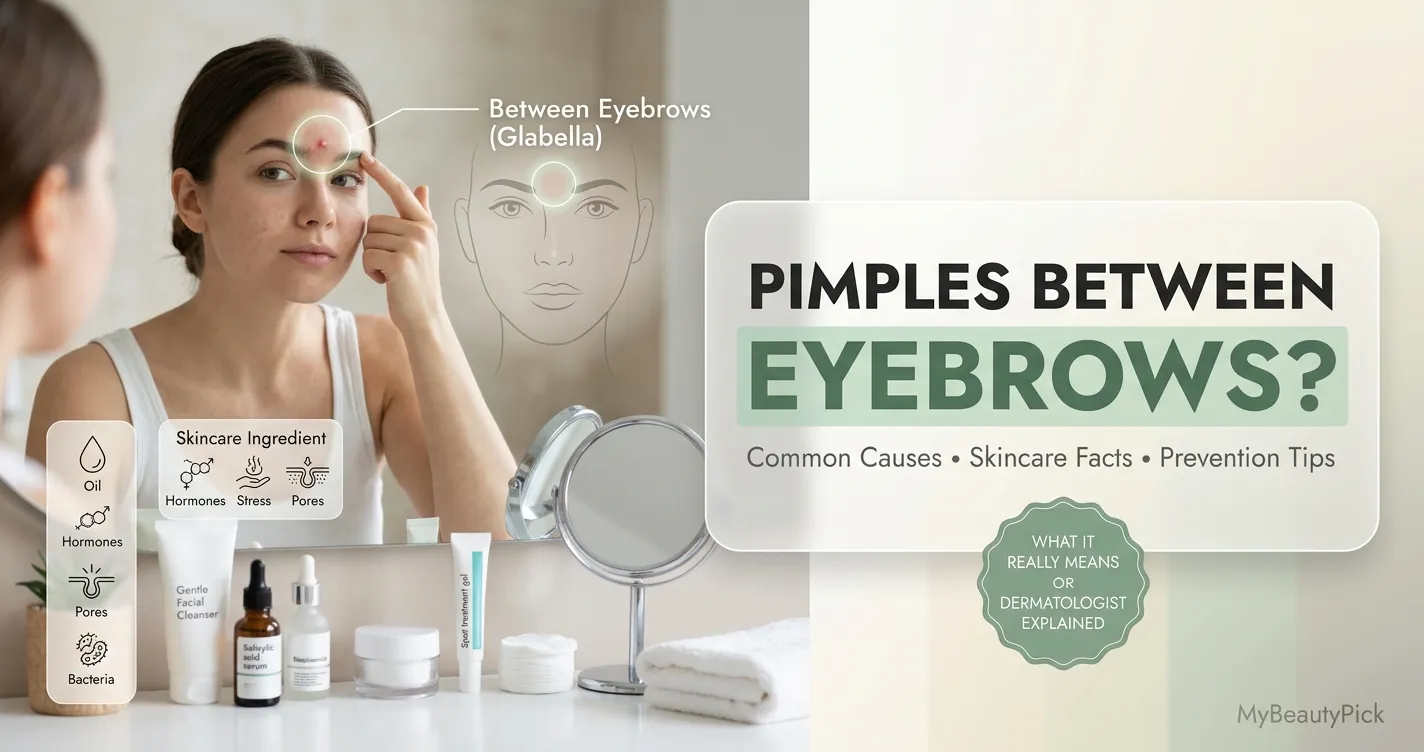
Clients ask me about this exact spot more than almost any other breakout location, usually somewhere between worried and curious. Is it just a clogged pore, or does it actually mean something. The honest answer is both questions deserve a real response.
A pimple between your eyebrows, medically called the glabella, is in almost all cases ordinary acne caused by clogged pores, oil buildup, hormones, or grooming irritation from tweezing, waxing, or threading. It is not dangerous and you can treat it the same way you’d treat acne anywhere else on the face. The traditional Chinese medicine idea that it reflects liver stress is a long-standing belief in face mapping, not a medically confirmed cause, though plenty of people still find the framework meaningful.
Key Takeaway
- This is almost always ordinary acne, not a sign of a serious internal problem
- Popping it carries the same risks as popping a pimple anywhere else: scarring, infection, and a longer healing time
- Threading, microblading, and brow gel are common modern triggers competitors rarely mention
- The liver connection is a traditional belief framework, not a clinical diagnosis
Is It Dangerous, and Can You Pop It?
No, a pimple between the eyebrows is not dangerous on its own. It’s typically standard acne responding to the same triggers that cause breakouts elsewhere on the T-zone. Popping it is not recommended, for the same reasons popping is discouraged anywhere on the face. It increases the risk of scarring, can push bacteria deeper into the skin, and often extends healing time rather than shortening it. A warm compress and a spot treatment will get you further than picking at it ever will.
The one exception worth knowing: a bump in this area that doesn’t behave like a normal pimple, meaning it doesn’t come to a head, doesn’t respond to acne treatment, or keeps recurring in the exact same spot without resolving, is worth having a dermatologist look at. This is rare, but persistent unusual growths in this area have occasionally turned out to be something other than acne.
What Actually Causes Pimples Between the Eyebrows
T-zone oil and clogged pores
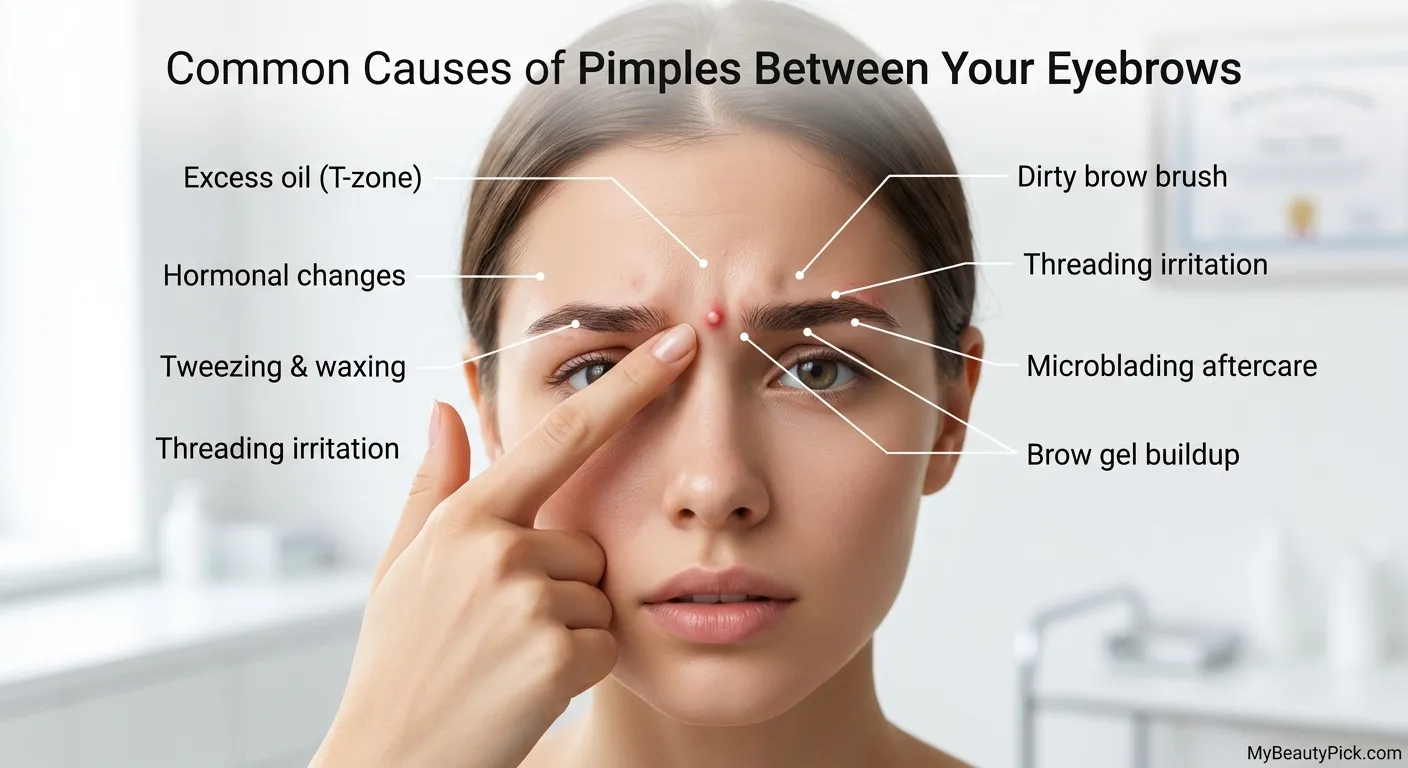
The glabella sits right at the edge of the T-zone, the band across the forehead and nose that tends to produce more oil than the rest of the face. Excess sebum mixing with dead skin cells is the most common, ordinary cause of breakouts in this exact spot.
Hormonal fluctuations
Hormonal shifts around your cycle, stress, or certain medications can increase oil production specifically in T-zone areas, which makes the space between the brows a common flare point during hormonal swings.
Eyebrow grooming: tweezing, waxing, threading, and microblading aftercare
Tweezing and waxing irritate hair follicles and can trigger small breakouts as the skin heals. Threading carries a similar risk, since it pulls hair from the follicle and can leave the area slightly inflamed for a day or two afterward. Microblading and other permanent makeup procedures in the brow area also come with an aftercare window where clogged pores and small breakouts are common as the skin recovers, something most acne guides skip entirely because they only address older grooming methods like waxing and tweezing.
Cosmetics, dirty brushes, and brow gel
Brow gel, pencil, and powder can build up at the inner corners of the brows over a day of wear, and a brush or pencil that isn’t cleaned regularly reintroduces bacteria and oil right back into the same small area repeatedly.
Check your brow tools before blaming your skin
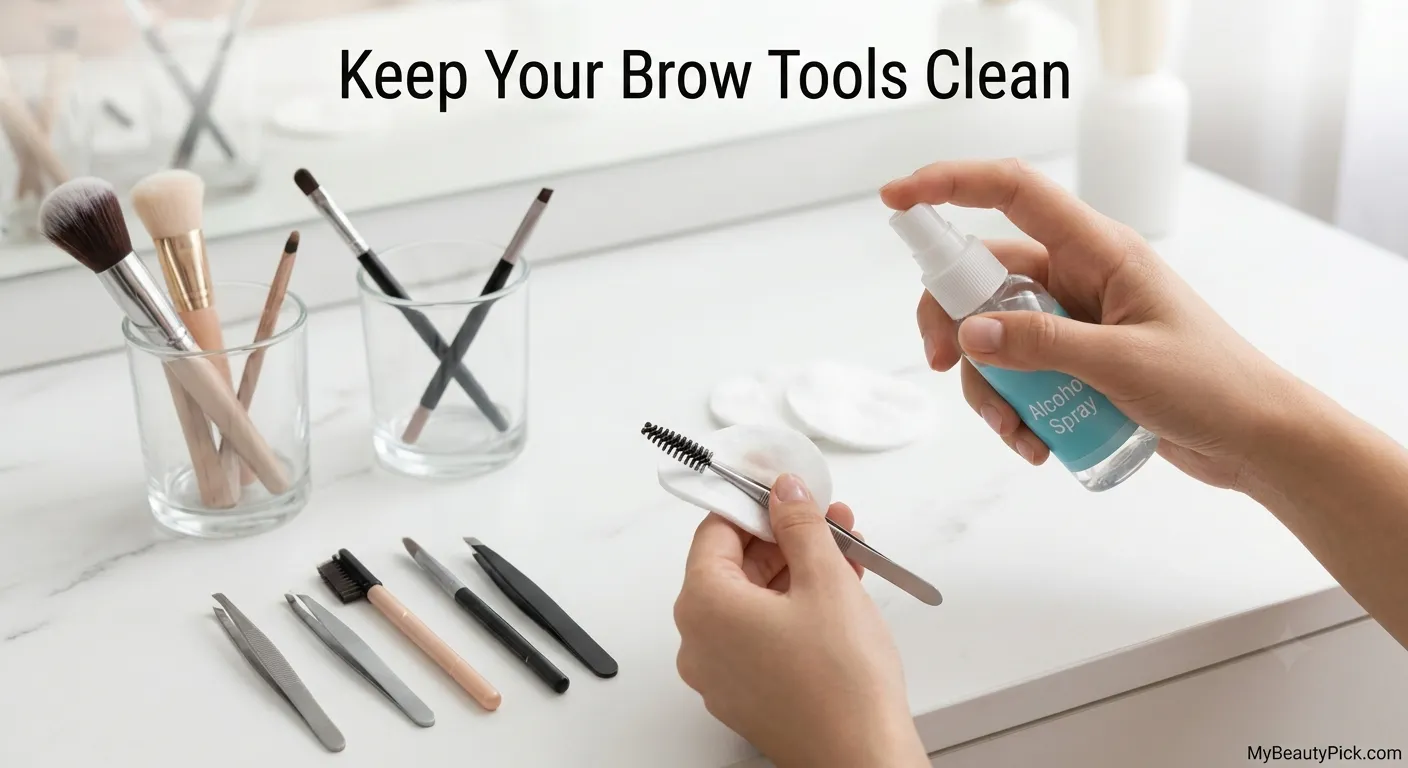
I’ve had more than one client clear up a stubborn glabella breakout simply by washing their brow brush and swapping a months-old brow pencil. The applicator touches the same small patch of skin daily, and it’s one of the most overlooked acne triggers in this specific spot.
Could It Be Something Else? Fungal Acne, Seborrheic Dermatitis, and Cysts
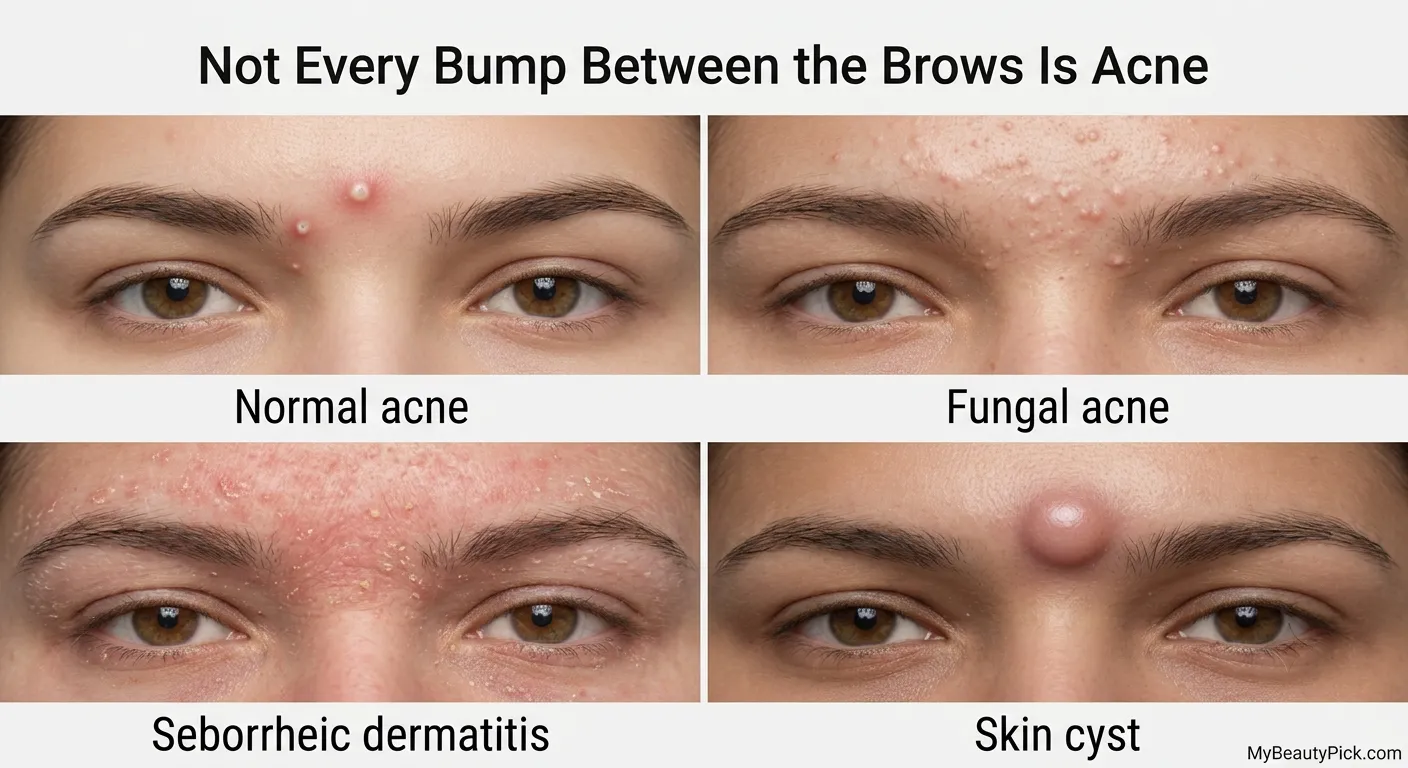
Fungal acne looks similar to bacterial acne but is caused by an overgrowth of yeast in the hair follicles rather than bacteria, and it often shows up as small, uniform, itchy bumps rather than the larger, more varied breakouts typical of regular acne. Standard acne treatments containing benzoyl peroxide or salicylic acid often don’t help fungal acne and can sometimes make it worse, since it needs an antifungal approach instead.
Seborrheic dermatitis can also appear between the brows, especially if you notice flaking, redness, or greasy-looking scale alongside the bumps. This is a different condition from acne entirely, related to yeast and skin barrier function rather than clogged pores, and it typically needs a targeted treatment rather than standard acne care.
Cysts are less common but can form in this area too, usually feeling firmer and deeper under the skin than a typical pimple, and they tend not to resolve with standard acne treatment. If a bump in this spot feels different from your usual breakouts, doesn’t respond to two to three weeks of consistent care, or keeps coming back in the same exact spot, that’s the point to get it checked rather than keep guessing.
The Traditional Chinese Medicine and Liver Connection: Belief vs. Evidence
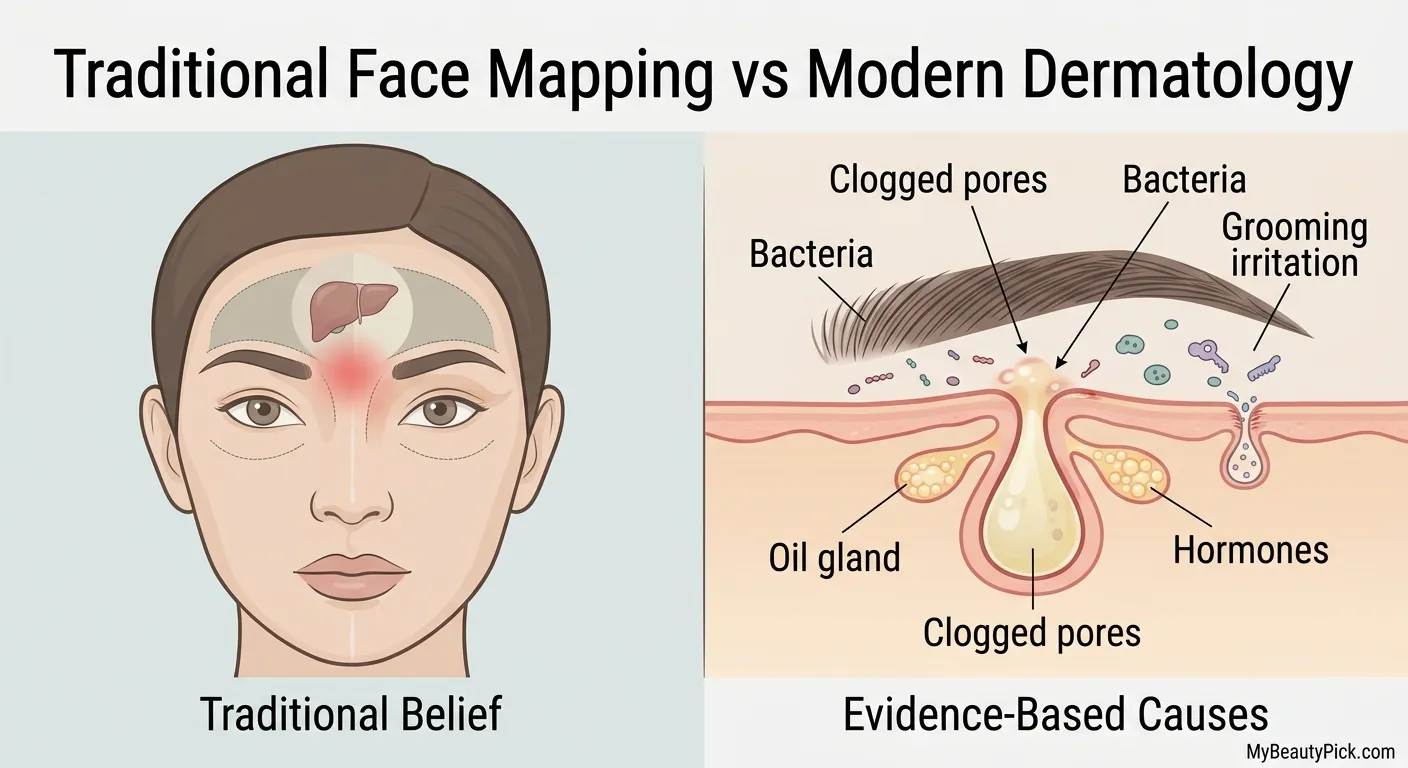
In traditional Chinese medicine face mapping, the area between the brows is associated with liver health, and breakouts there are sometimes read as a sign of internal imbalance, often tied to stress, diet, or alcohol intake in that framework. This belief has real cultural depth and plenty of people find it a useful lens for thinking about lifestyle habits.
It’s worth being direct about what this is and isn’t. There is no clinical or scientific evidence connecting glabella acne to liver function. Modern dermatology attributes breakouts in this area to the ordinary causes above: oil, hormones, grooming, and product buildup. The two frameworks aren’t in direct conflict, since stress and diet genuinely do affect skin in measurable ways, but the specific liver-to-pimple mapping is a traditional belief system rather than a diagnosis.
| Scientific Cause | Traditional Belief | Suggested Action |
|---|---|---|
| Clogged pores, excess T-zone oil | Liver heat or stagnation | Gentle cleansing, non-comedogenic products, consistent routine |
| Hormonal fluctuation | Liver imbalance tied to stress and emotion | Stress management, consistent sleep, hormone-aware skincare timing |
| Grooming irritation (tweezing, threading, microblading) | Not addressed in TCM framework | Gentle aftercare, avoid touching area for 24 to 48 hours |
| Diet and alcohol-related inflammation | Liver detoxification stress | Reducing high-sugar or high-alcohol intake may help overall skin clarity |
How to Treat It, Including a Realistic Overnight Routine
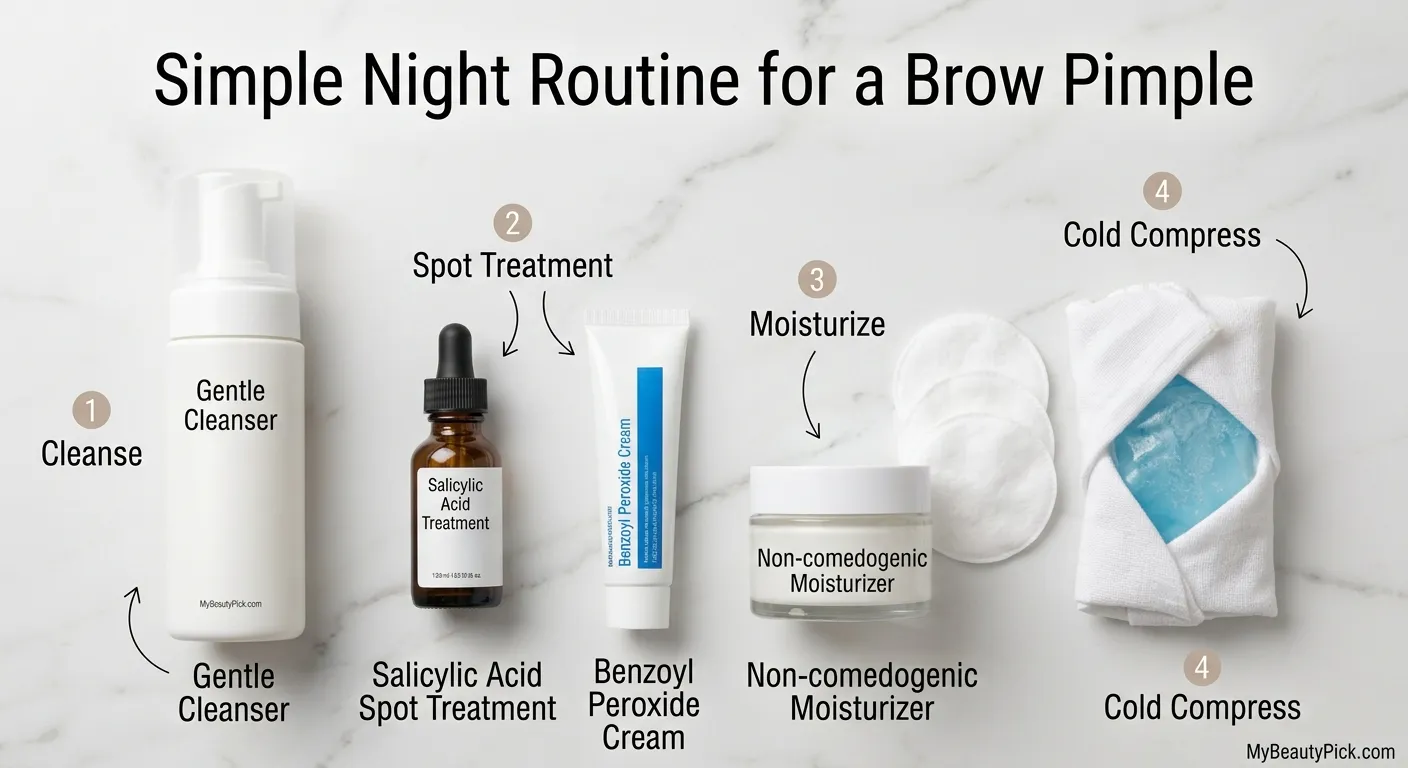
For a sudden breakout, a spot treatment with benzoyl peroxide or salicylic acid applied at night, plus a cold compress for ten minutes if the area feels inflamed, is the most realistic combination for visible improvement by morning. Set expectations honestly: this will calm redness and swelling, it will not make the pimple disappear completely overnight, regardless of what an overnight-fix product claims.
For ongoing breakouts in this area, a consistent routine matters more than any single product. Cleanse twice daily, use a non-comedogenic moisturizer, and avoid touching or picking at the area throughout the day, since hands transfer oil and bacteria directly into already-irritated skin.
| Symptom | Likely Cause | Suggested Action |
|---|---|---|
| Red, inflamed bump, no head yet | Early acne or hormonal breakout | Spot treatment, cold compress, avoid touching |
| Small, itchy, uniform bumps | Possible fungal acne | Antifungal treatment rather than standard acne products |
| Flaking, greasy redness around bumps | Possible seborrheic dermatitis | Targeted dermatitis treatment, see a dermatologist if persistent |
| Firm, deep bump that won’t come to a head | Possible cyst | Avoid picking, consult a dermatologist if it doesn’t resolve |
| Breakout right after threading or microblading | Grooming-related irritation | Gentle aftercare, avoid makeup on the area for a day or two |
How to Prevent Future Breakouts
Clean your brow brushes and pencils regularly, since this is one of the most overlooked triggers for repeated breakouts in this exact spot. Ask your threading or microblading technician about proper aftercare, and avoid applying makeup directly over the area for at least a day after grooming. Keep a consistent, gentle cleansing routine rather than over-treating the area the moment a breakout appears, since aggressive over-exfoliation can irritate the skin further and make future breakouts more likely, not less.
When to See a Dermatologist
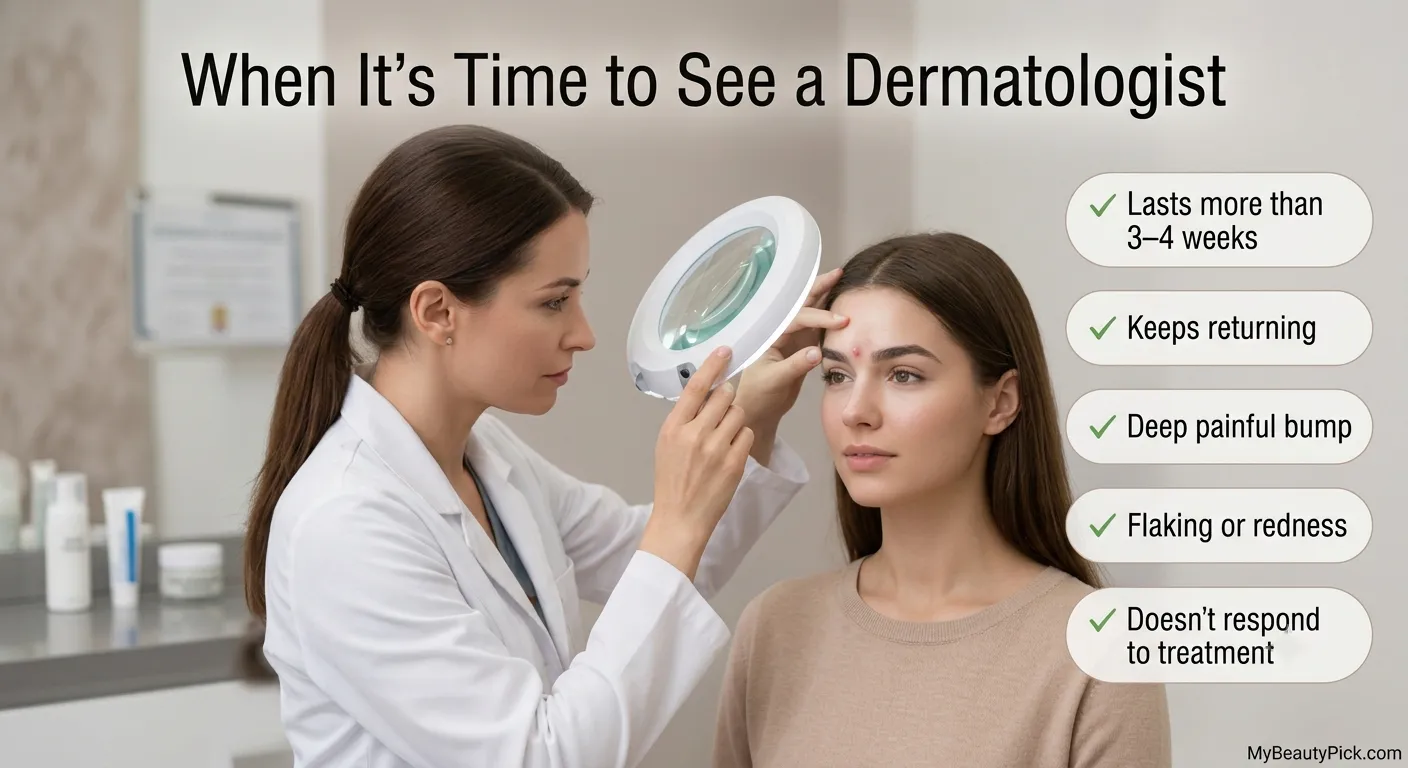
Don’t Wait If These Apply
See a dermatologist if a bump in this area persists for more than three to four weeks despite consistent care, keeps recurring in the exact same spot, feels unusually firm or different from a typical pimple, or is accompanied by flaking and redness that suggests something other than acne. These are the situations where self-treatment stops being useful and a professional diagnosis matters more than guessing.
FAQ
Are pimples between eyebrows related to diet?
Diet can influence acne generally, particularly high-sugar or high-dairy diets in some people, but there’s no specific scientific link between diet and breakouts in this exact spot more than anywhere else on the T-zone. The liver connection some people cite is a traditional belief framework rather than a confirmed dietary cause.
How do I get rid of bumps in between my eyebrows?
Treat it like standard T-zone acne: a spot treatment with benzoyl peroxide or salicylic acid, gentle consistent cleansing, and avoiding picking at the area. If it doesn’t improve after a few weeks or looks different from a typical pimple, a dermatologist visit is worth it.
Is it okay to pop a pimple between your eyebrows?
It’s not recommended. Popping increases the risk of scarring and pushing bacteria deeper into the skin, and it often extends healing time rather than speeding it up. A warm compress and spot treatment are safer, more effective options.
How do I get rid of unibrow acne?
The same approach as any T-zone breakout works here: consistent gentle cleansing, a non-comedogenic moisturizer, a targeted spot treatment, and attention to grooming habits like tweezing, threading, or brow product hygiene that may be contributing.
What is the Chinese medicine meaning of pimples between eyebrows?
In traditional Chinese medicine face mapping, this area is associated with liver health, and breakouts there are sometimes interpreted as a sign of stress, diet, or internal imbalance. This is a traditional belief framework, not a medically confirmed diagnosis.