

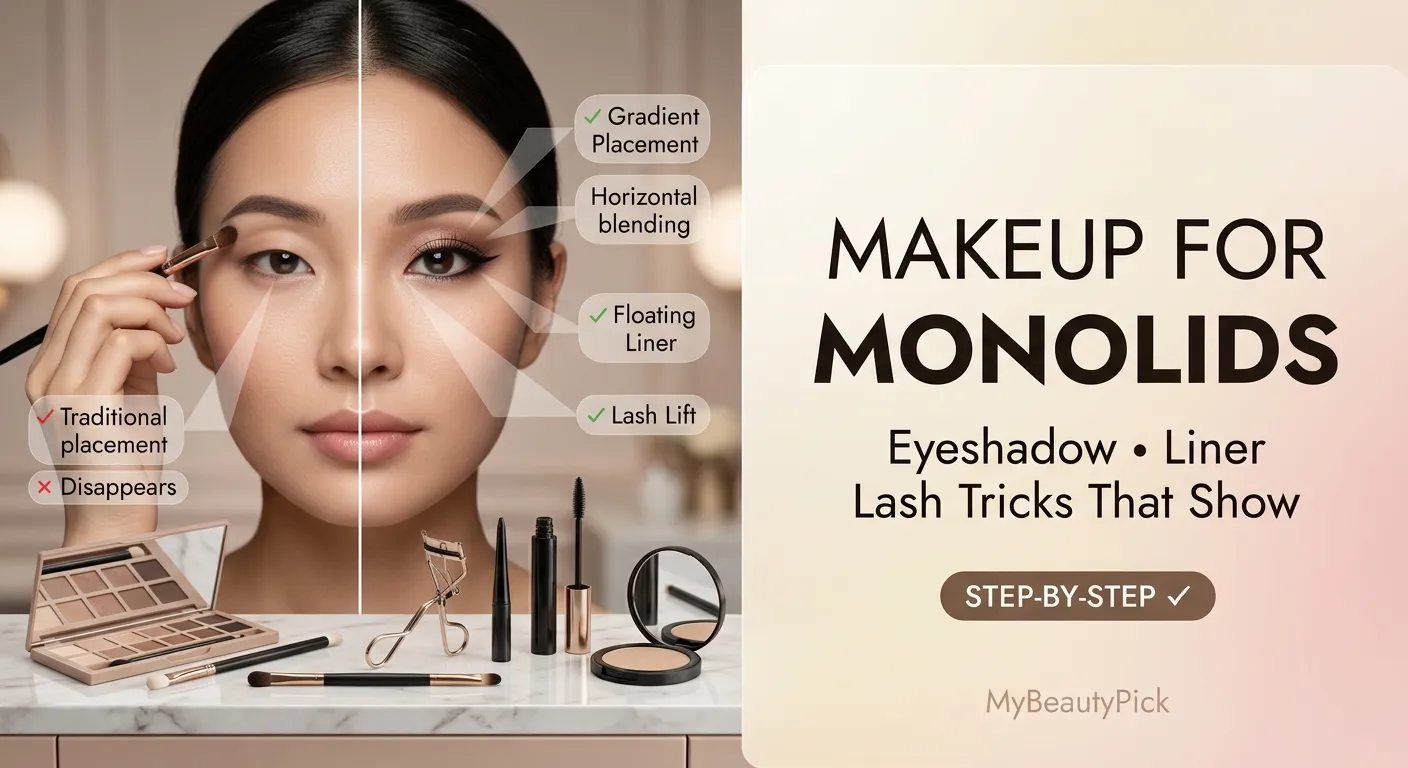
Monolid eyes have a smooth, flat lid surface without the defined crease that most Western eye makeup tutorials are written around. This isn’t a lack of something — it’s a different eye shape with different canvas properties, and most standard makeup advice simply doesn’t account for it. The techniques that work for monolids are genuinely different, not worse or more difficult. The flat lid surface that makes crease techniques irrelevant also makes bold liner and graphic looks exceptionally clean, and the full visible lid makes certain looks more dramatic than they’d be on any other eye shape.
- Monolid eyes don’t have a defined crease — shadow placement runs in vertical bands from lash line to brow bone, not around a crease shape.
- The flat, smooth lid surface makes graphic liner, bold liner, and double liner looks particularly clean and effective.
- Always assess shadow and liner placement with eyes open, not closed — the fully visible lid on a monolid changes what’s seen front-on.
- False lashes are particularly effective on monolids — the full visible lid provides excellent adhesion and lashes show dramatically.
- A faux crease (dark shadow in the upper portion of the lid in a curved line) creates the appearance of dimension where the natural crease doesn’t exist.
Understanding the Monolid Canvas
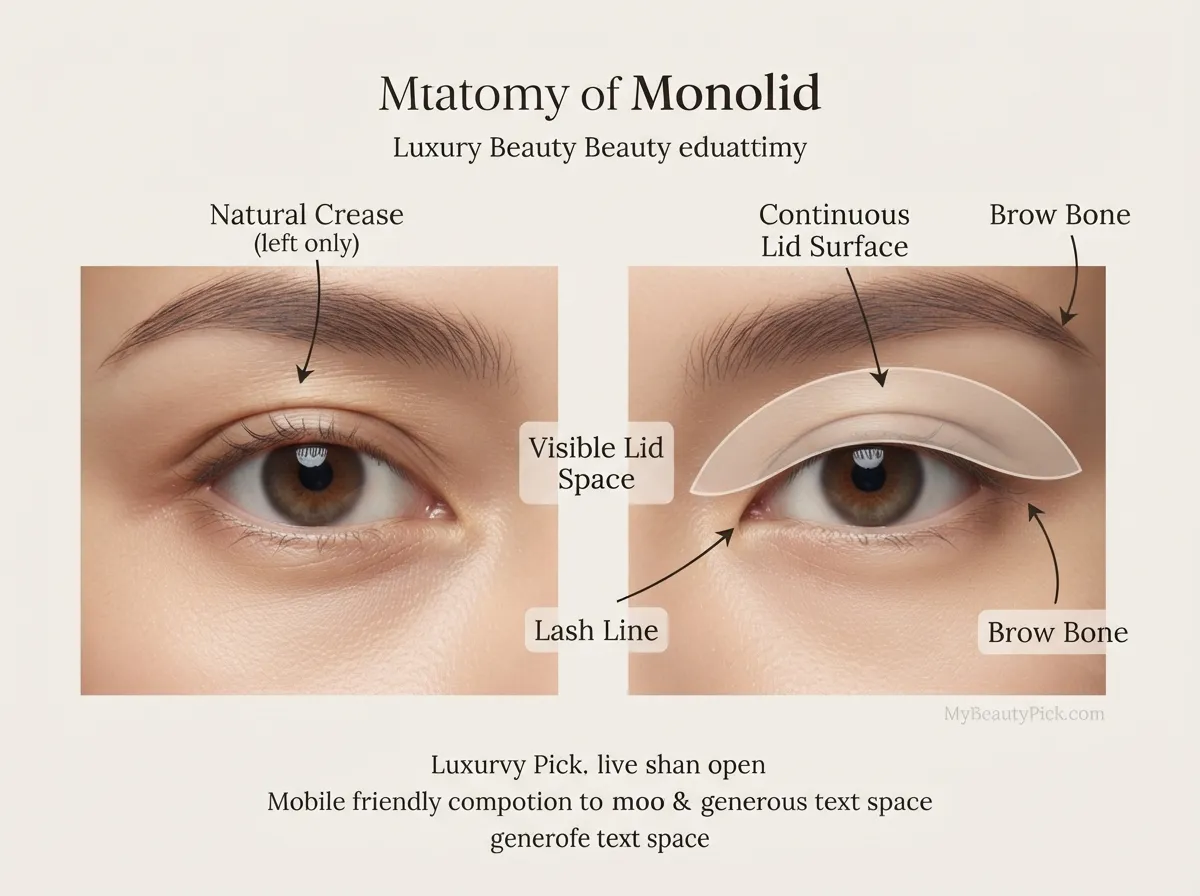
A monolid (or epicanthal fold eye) has a single continuous lid surface without the fold that creates the appearance of a double lid. The entire lid surface from the lash line upward is visible when the eyes are open — which is actually more visible lid space than most creased eyes have, once you account for the fold covering part of the lid on double-lid eyes.
What doesn’t exist on a monolid: the natural crease that standard tutorials use as the placement anchor for everything. The transition shade in the crease, the dark shadow blended around the crease, the lighter lid below the crease — none of these reference points exist on a smooth monolid eye.
What does exist: a large, flat, smooth canvas that shows every technique clearly, a fully visible upper lid from lash line to brow bone, and a structure that works particularly well for graphic, architectural, and bold liner approaches that require a flat surface.
Eyeshadow Placement for Monolid Eyes
The Vertical Band System
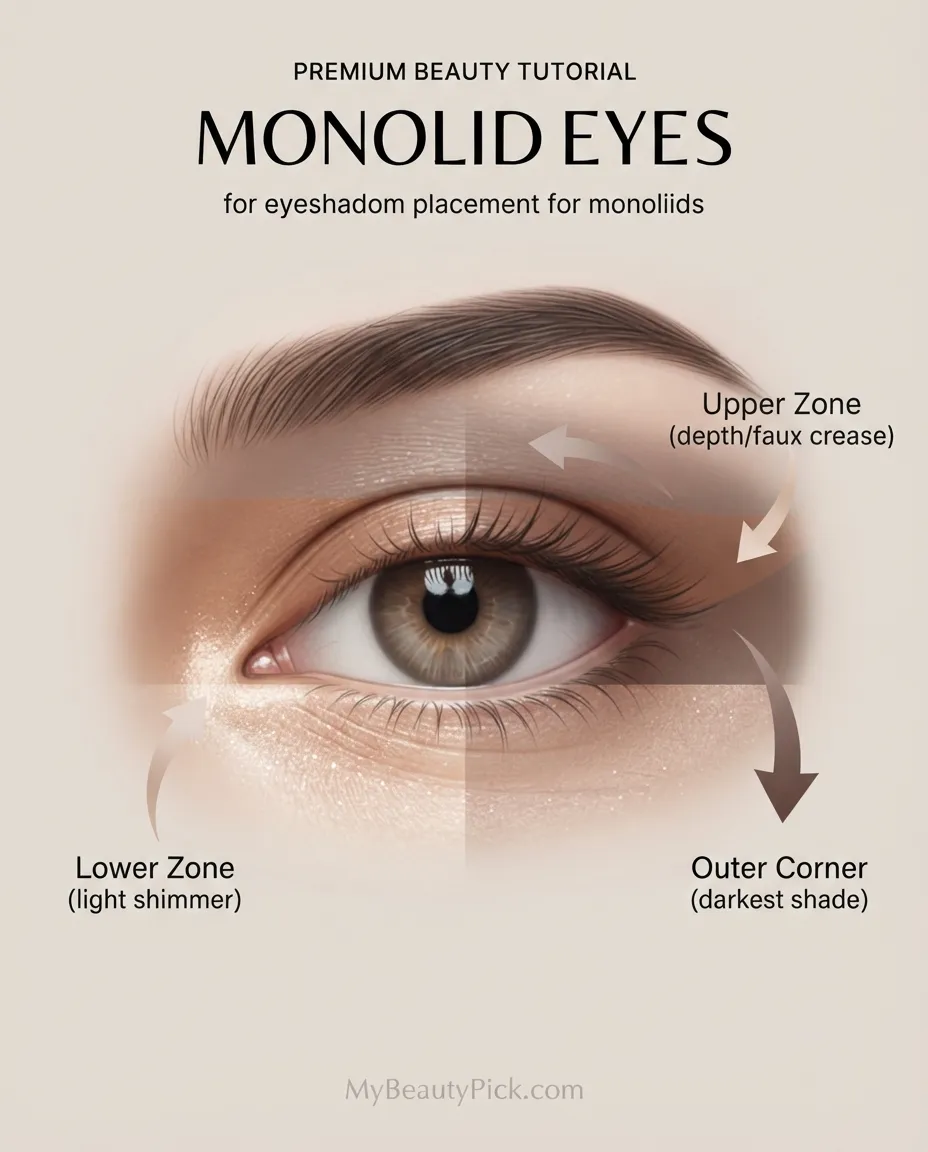
Rather than placing shadow around a crease, think of the monolid eye in horizontal zones stacked vertically from the lash line to the brow:
- Lower zone (lash line to about 5–7mm up): lightest shade, or sheer shimmer if a sparkling look is wanted
- Middle zone (centre of the visible lid): medium tone, or a different texture (shimmer over matte) for dimension
- Upper zone (above the mid-lid, toward the socket): darker shade — this is where the depth goes, replacing the crease function
- Outer corner: darkest shade, creating dimension and elongation
Blend between zones with a fluffy brush so the transitions are soft rather than visible lines. The result is a gradient that creates the appearance of depth on a lid without a natural crease.
Creating a Faux Crease
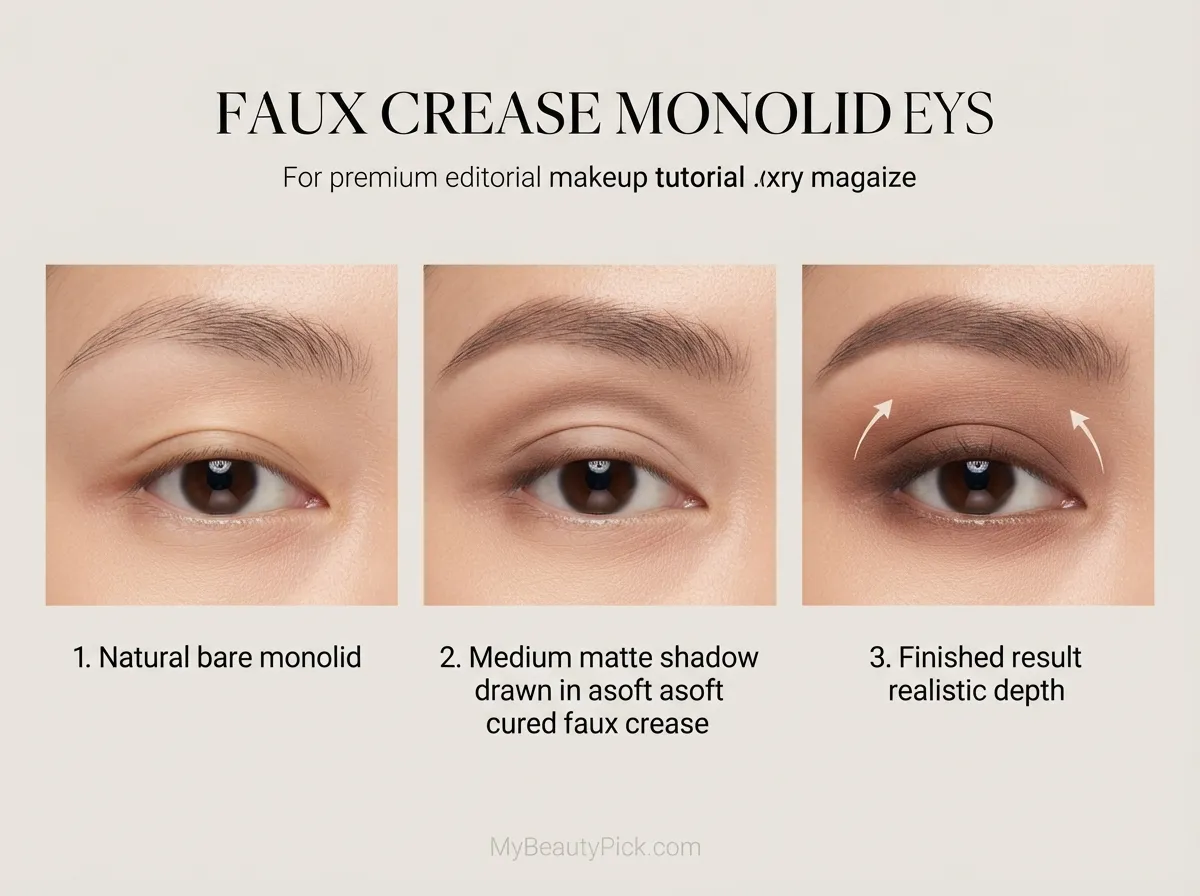
A faux crease adds the appearance of dimension and a defined eye shape where the natural crease doesn’t exist. Using a small crease brush, apply a medium-dark matte shadow in a soft curved line across the upper portion of the lid — positioned about where a crease would be on a creased eye. This isn’t a hard line; use a fluffy brush to soften the upper edge until it reads as shadow depth rather than a drawn crease. The faux crease defines the upper lid and makes the eye appear to have more three-dimensional structure.
Shimmer Placement on Monolids
Shimmer placed on the entire visible lid of a monolid looks spectacular — the flat surface catches light evenly and the full extent of the shimmer is visible from the front. On a creased eye, shimmer on the full lid is partially hidden by the fold; on a monolid, every facet shows. This makes an all-over shimmer lid approach particularly rewarding on monolid eyes.
Liner for Monolid Eyes
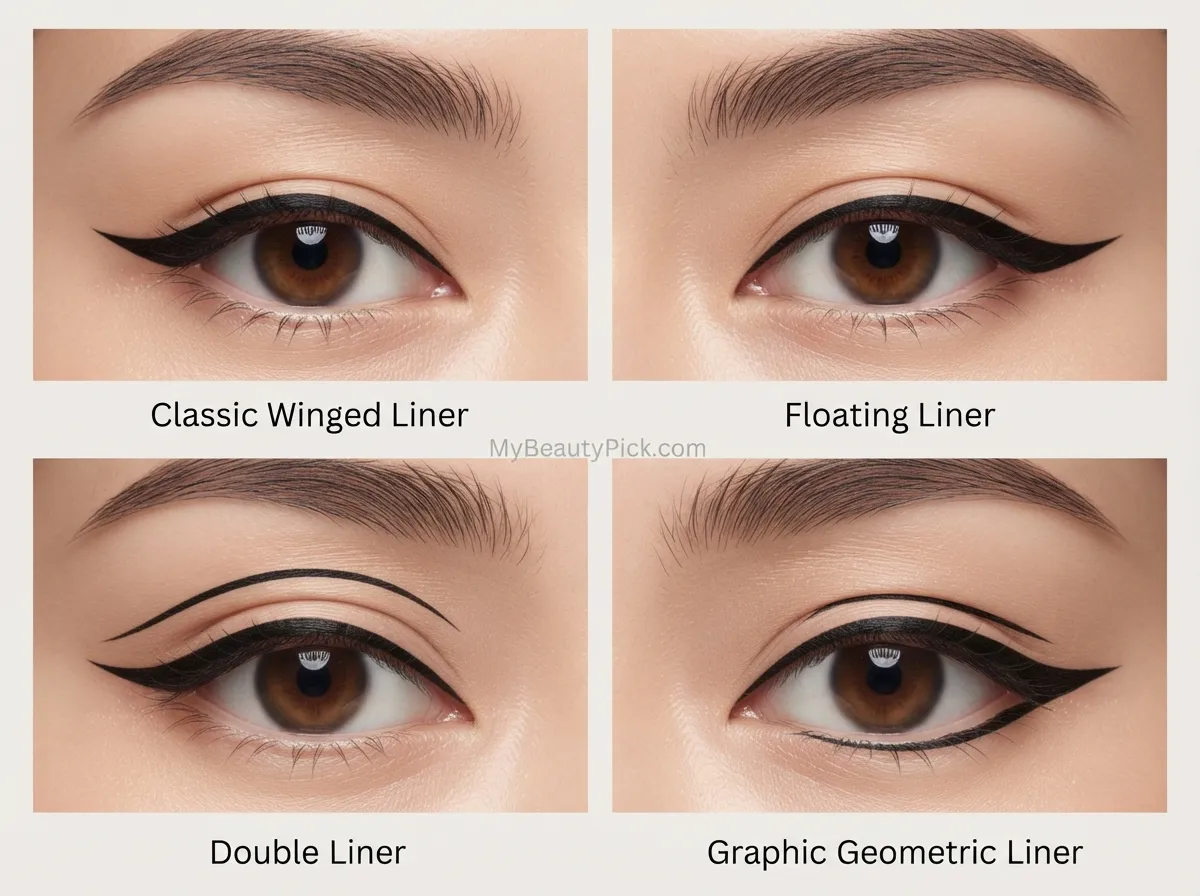
Why Bold Liner Works Particularly Well on Monolids
The flat, smooth, uninterrupted lid surface of a monolid eye is a perfect canvas for graphic and bold liner. On creased eyes, a graphic liner shape applied on the lid can be partially hidden by the fold; on a monolid, the full shape is visible from the front. This makes monolids genuinely suited to the graphic, architectural liner trends that require a clean flat surface to read clearly.
Standard Upper Liner
Upper liner applied on monolids doesn’t need the same adjustments as on hooded eyes — the lid surface is fully visible. Apply gel or liquid liner from the inner corner, thickening slightly toward the outer corner. A wing at the outer corner is very effective on monolids: the clean flat lid surface makes the wing shape precise and visible.
The Floating Liner Technique
A floating liner — applied above the lash line, leaving visible skin between the lash line and the liner — is a graphic technique that works exceptionally well on monolids. The gap between the liner and lashes creates a distinct design element that’s immediately visible on the full flat lid. On creased eyes this technique is partially hidden by the fold; on monolids, the full gap-and-line combination shows clearly.
Graphic Liner Techniques Suited to Monolids
- Double liner: two parallel lines across the lid, creating a layered effect
- Cut crease liner: liner applied in a curved line across the lid to define a faux crease, rather than at the lash line
- Colourful graphic shapes: geometric shapes, dots, or decorative elements — the flat canvas makes them read cleanly
- Extended wing: the classic wing extended significantly outward and upward, very visible and effective on the flat lid
Lower Lash Line for Monolids
The lower lash line on monolid eyes is fully visible and does significant visual work for the overall eye shape. Dark shadow or liner along the full lower lash line elongates and frames the eye. A smudged kohl on the lower lash line creates a smoky, intense look. Connecting upper and lower liner at the outer corner creates a defined outer frame. A light shimmer at the inner corner of the lower lash line brightens and opens.
Unlike hooded eyes, there’s no issue with the lower lash line making the eye appear smaller on most monolids — the full lid is visible and the lower liner adds rather than borders.
False Lashes for Monolid Eyes
False lashes are one of the most effective tools for monolid eye makeup. The reasons are structural: the full visible lid surface provides excellent glue adhesion, and the lashes show dramatically against the full flat lid without any fold obscuring them.
- Full strip lashes with a thin, flexible band — sit close to the lash root and show fully from the front. Volumising and dramatic lengths work particularly well.
- Individual lashes or demi lashes at the outer corner — create elongation and a cat-eye effect
- Bottom false lashes — very effective on monolids, where the lower lash line is fully visible and lower lashes frame the eye with visible impact
The Lash Curler on Monolid Eyes
Many monolid eyes have straight or downward-pointing natural lashes. Curling is important — straight lashes on monolid eyes can press down over the lash line and reduce the visible eye space. The technique adjustment for monolid lashes: instead of a single clamp at the root, curl in three stages (root, middle, tip) for a progressive curl that lifts straight lashes more effectively than a single clamp. A heated lash curler maintains curl better on the straight-lash structure common to many monolid eye types.
Three Complete Monolid Looks
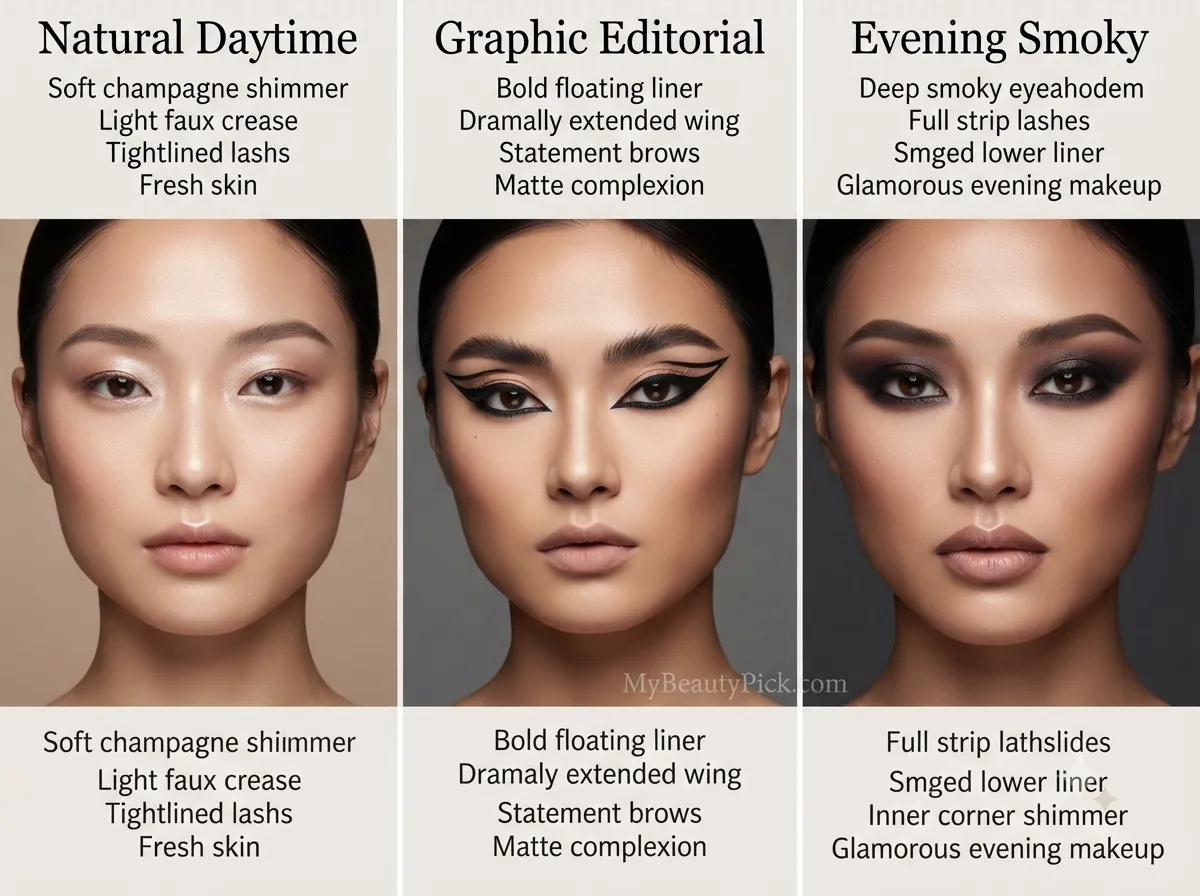
Natural Daytime Look
Light shimmer or skin-toned matte shadow on the full lid. Medium taupe faux crease in the upper zone. Inner corner highlight. Tightlined upper lash root. Lower inner corner shimmer. Curled lashes with lengthening mascara. No liner visible beyond the tightline.
Graphic Editorial Look
Single-colour matte shadow across the full lid in a bold tone (terracotta, deep plum, or true black). Black gel liner applied as a thick extended wing. Floating liner element above the lash line in a contrasting colour. Individual false lashes at the outer corner. Bold brow to complete the architectural shape.
Evening Smoky Look
Dark matte shadow built across the full lid from lash line to brow bone, deepest at the outer corner and faux crease position, lighter toward the inner corner. Black gel liner on the upper lash line blended upward into the shadow. Dark smudged kohl on the lower lash line. Full strip false lashes, volumising. Inner corner shimmer highlight.
Frequently Asked Questions
How do you apply eyeshadow on monolids?
Think in vertical horizontal bands rather than around a crease shape. Darker shadow in the upper portion of the lid, medium in the centre, lighter at the lash line and inner corner. Blend between zones with a fluffy brush for a seamless gradient. A faux crease — dark matte shadow in a soft curved line in the upper zone — adds dimension where the natural crease doesn’t exist.
What eyeliner looks best on monolid eyes?
Bold liner works exceptionally well — the flat, smooth lid surface of monolid eyes is a perfect canvas for graphic and precise liner shapes. Extended wings, double liner, floating liner, and geometric shapes all show clearly on the uninterrupted flat lid. Standard crease-covering techniques used on hooded eyes are not needed — the full lid is visible.
How do you create the illusion of a crease on monolid eyes?
Apply a medium-dark matte shadow in a soft curved line in the upper portion of the lid — positioned where a crease would be on a creased eye. Use a fluffy brush to blend the upper edge so it reads as depth rather than a drawn line. This faux crease creates dimension and defines the upper lid without a natural crease to work with.
Do false lashes work on monolid eyes?
Exceptionally well. The full visible flat lid surface provides good adhesion for lash bands and lashes show dramatically without any fold obscuring them. Full strip lashes, individual lashes at the outer corner, and even lower false lashes are all effective on monolid eyes. Volumising styles are particularly dramatic because the density is fully visible from the front.