


You’ve done everything right. You studied the shade names, held the bottle up to your wrist, even asked a store associate — and yet, the foundation that looked perfectly warm and golden in the tube looks orange, grey, or just plain wrong the moment you step outside. If this sounds familiar, you are not alone.
For people with caramel and golden complexions, foundation shopping can feel like an exercise in frustration. Unlike very fair or very deep skin tones, medium-to-tan skin exists in a rich, complex zone where depth and undertone interact in nuanced ways. The wrong undertone choice doesn’t just look off — it can make your skin look muddy, washed out, or unnaturally warm. And most foundations are still formulated with undertone families in mind that don’t always speak to caramel skin’s real range.
That’s where this foundation shade guide for caramel skin tones comes in. Whether you’re shopping for a new everyday formula or trying to decode why nothing seems to match, this guide gives you the professional framework I use with every single client. We’ll cover what caramel and golden skin tones actually mean, how to identify your undertone with accuracy, and how to test, select, and adjust your foundation like a working makeup artist.
By the time you finish reading, foundation for golden skin tones will no longer be a guessing game. Let’s get into it.
Understanding Caramel vs. Golden Skin Tones
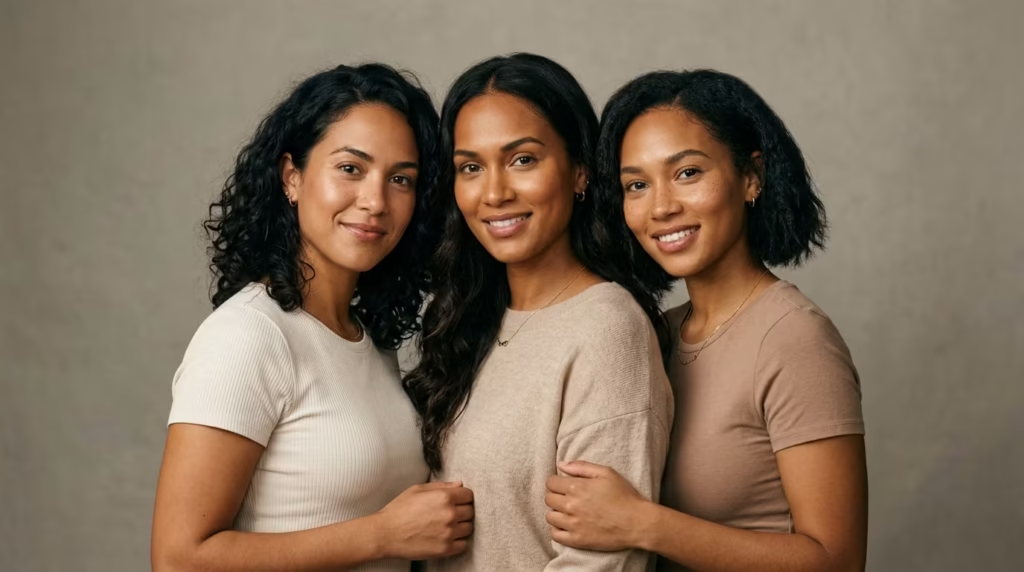
Before we talk about shade matching, we need to get clear on terminology. “Caramel” and “golden” are both descriptive terms used widely in beauty, but they refer to different aspects of your complexion — and confusing them is where a lot of people go wrong.
What Is a Caramel Skin Tone?
Caramel is a depth descriptor. It refers to a medium-to-tan range of skin that falls somewhere between light-medium and richly tan. Think of the colour spectrum from light caramel candy to deep toffee — that’s the range. Skin in this category typically has visible melanin that gives it warmth and body without reading as deep or dark.
Common characteristics of caramel skin tones include a natural warmth at the surface, a tendency to tan easily in the sun rather than burning, and a depth level that often makes it tricky to find foundations — too light shades look chalky, while too-dark shades read as muddy.
Undertones within caramel skin vary widely. You might have warm golden undertones, neutral beige-golden undertones, olive undertones, or even cool/neutral undertones. Caramel is the depth; undertone is the separate layer underneath.
What Is a Golden Skin Tone?
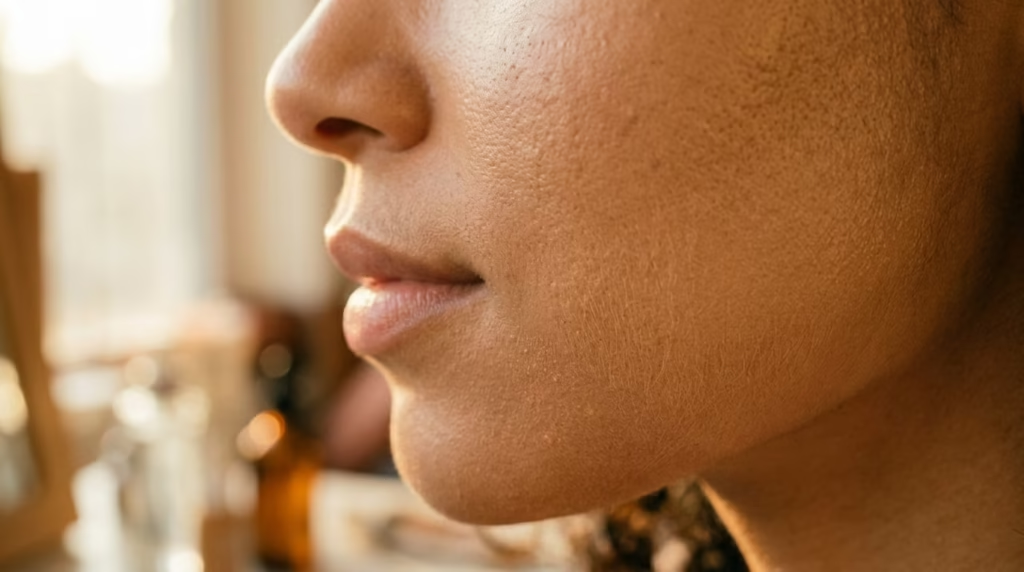
Golden, in contrast, refers to undertone, not depth. A golden complexion is one that has a luminous, warm yellow-gold quality at its base. When you’re in natural light, skin with golden undertones looks radiant and sun-kissed even without product on it. There’s a warmth and richness that doesn’t veer into orange or bronze territory — it’s specifically gold.
A common misconception is that golden skin is always tan or caramel in depth. In reality, golden undertones can occur in fair, medium, or deeper skin tones. The gold is the undertone; the depth is a separate conversation.
Another misconception worth addressing: golden doesn’t automatically mean the same as warm. While golden undertones are warm, not all warm foundations have that same yellow-gold quality. Some warm foundations pull more orange or bronze — and that distinction matters enormously when you’re shopping.
Can You Be Both Caramel and Golden?
Absolutely — and this is actually the most common combination I see. Most of my caramel-skinned clients have golden undertones. The two characteristics layer on each other beautifully, creating that classic warm, glowing medium-tan complexion. When both are in play, you need a foundation that honours the depth (caramel range) AND reflects the undertone (golden warm) without amplifying either to an extreme.
Pro Insight: Think of skin tone as having two axes: depth (light to deep) and undertone (cool to warm, with olive as its own axis). Caramel = your depth. Golden = your undertone. You need to solve for both, independently, every time you shop for foundation.
The Foundation Mistake Most People Make
In over a decade of professional makeup work, I’ve watched the same mistake play out at beauty counters again and again. People match depth and completely skip undertone. They stand under fluorescent store lighting, compare the bottle’s colour to the back of their hand, and pick whatever looks closest. Then they wonder why it looks off in real life.
Here’s what’s actually happening when that foundation looks wrong on you:
Matching only depth means you might find the right darkness but entirely the wrong colour temperature. A shade that’s “medium tan” could have warm, neutral, olive, or pink undertones depending on the brand. Two shades with the same depth number can look completely different on skin.
Testing under store lighting is one of the most persistent problems in foundation shopping. Most retail environments use warm, flattering lighting specifically designed to make products look appealing. Under that light, an orange-pulling foundation might look perfectly tan. Step outside and the reality is very different.
Choosing based on bottle appearance is another trap. The way foundation looks in a glass bottle or on a swatch card is almost never how it looks on your actual skin. Product oxidises, mixes with your skin’s oils, and interacts with your undertone in ways no bottle can predict.
“I always tell my clients: the bottle tells you the depth. Your skin tells you the undertone. You need both pieces of information before you can make a good decision.”
The fix is to approach foundation shopping as a two-step process: first determine your undertone correctly, then find the right depth within that undertone family. We’re going to do exactly that in this guide.
Identifying Your Undertone Correctly
Undertone is the colour that lives beneath the surface of your skin, and it doesn’t change — even when your depth shifts with the seasons. Getting this right is the single most impactful thing you can do for foundation shopping. Here are the main undertone categories relevant to foundation undertones for tan skin:
Warm / Golden
Yellow-gold base. Skin looks luminous and sun-kissed. Veins appear greenish. Best with yellow-warm foundations.
Neutral
Balanced mix of warm and cool. Veins appear blue-green. Works with a wider range — both neutral and neutral-warm shades.
Olive
Greenish-grey cast beneath the surface. Can look sallow in wrong shades. Needs specific olive-formulated bases.
Cool / Pink-Red
Pink, red, or bluish base. Veins appear distinctly blue-purple. Less common in caramel depths, but does occur.
Warm Undertones
Warm-undertoned caramel skin has that characteristic golden glow — the kind that looks effortlessly radiant even without product. The key foundation matching challenge here is avoiding anything that pulls orange or bronze instead of gold. Foundation for golden undertones should describe itself as “warm,” “golden,” “yellow,” or “honey” — not “bronze” or “copper,” which tend to sit in a different colour family.
Neutral Undertones
Neutral undertones are balanced — neither distinctly warm nor cool. This is actually excellent news for foundation shopping, because neutral undertones offer the widest range of compatible shades. Look for shades labelled “neutral,” “N,” or “NW” (neutral-warm), and avoid foundations that are strongly directional in either a warm or cool direction.
Olive Undertones
Olive is its own category, separate from warm or cool — it has a greenish, slightly grey quality that makes standard warm or cool foundations both look off. Olive-undertoned skin can look sallow in overly yellow foundations and ashy in anything with pink. Dedicated olive-friendly foundations, or those labelled “golden-olive” or “warm-neutral with olive,” are the most reliable choice. This is one of the trickier undertones to match for how to choose foundation for olive undertones, and it requires trying a few options.
Cool Undertones
Cool undertones on caramel skin are less common but do occur — particularly in people of South Asian, East Asian, or Southeast Asian descent with tan depths. Cool caramel skin can look ashy in overly warm foundations and tends to do best with shades labelled “cool,” “beige-cool,” or “rosy-neutral.” Avoiding anything too golden or orange-leaning is essential here.
Simple At-Home Tests to Determine Your Undertone
You don’t need a professional consultation to figure out your undertone. These methods are the same ones I use and recommend, and you can do all of them at home with items you already have.
The Vein Test
Look at the veins on the inside of your wrist in natural daylight. Blue-purple veins suggest cool undertones. Green veins indicate warm undertones. A mix of both — or veins that look teal — points to neutral. This is a useful baseline but isn’t foolproof on its own.
The Jewelry Test
Hold gold jewellery next to your bare face, then swap to silver. Whichever makes your skin look more radiant and alive is your answer. Gold suits warm undertones; silver flatters cool undertones; both work equally well on neutral skin. This test tends to be very reliable.
The White Fabric Test
Hold a crisp white cloth or piece of paper against your bare face. If your skin looks yellowish or golden against white, you’re warm. If it looks pinkish or rosy, you’re cool. If it looks greyish or greenish, olive undertones are likely at play. A balanced response suggests neutral.
The Sun Reaction Test
How does your skin respond to sun exposure? Warm and olive undertones tend to tan easily and deeply. Cool undertones are more likely to burn before tanning. This isn’t definitive for foundation matching, but it adds useful context to the full picture.
The Neck and Chest Comparison Method
This one is underused and incredibly useful. Compare your face, neck, and chest in natural light without any product on. The chest in particular often shows your truest undertone since it’s typically less exposed to sun and environmental factors. If your face pulls more yellow-golden than your chest, you may have more melanin variation than undertone variation. This comparison also helps you understand how to match foundation to neck and chest — the goal is to find a shade that bridges all three zones smoothly.
Expert Note: No single test gives you the complete picture. Run all five, and look for patterns. If three or more tests point to warm/golden, you have your answer. Inconsistencies usually indicate neutral undertones.
How to Choose the Right Foundation Depth
Once you’ve confirmed your undertone, the next task is matching your depth correctly. Foundation shades for tan skin span a wide range, and brand naming conventions vary wildly — which is part of why shopping feels so confusing. Here’s how to navigate each depth level within the caramel range.
Fair-to-Medium Golden Skin
This sits at the lighter end of the caramel spectrum — a warm medium that hasn’t yet reached tan territory. You’re looking for shades often labelled “warm beige,” “golden beige,” or “light-medium warm.” Avoid anything labelled simply “beige” with no undertone designation, as those often pull pinkish on warm skin. Watch out for shades that look right in the bottle but turn orange within an hour — more on oxidation later.
Medium Caramel Skin
True medium caramel sits in the classic range that most foundation brands still underserve. You likely fall between what brands call “light-medium” and “medium” — too deep for one, not deep enough for the other. Look for “warm medium,” “honey,” “tan beige,” or shade numbers in the W20–W35 range depending on the brand. Always test before you commit.
Rich Caramel Skin
Rich caramel sits in the deeper end of the medium range — a warm tan that has real depth and richness. This is where orange-pulling foundations are most common, because brands often add too much red to their “deeper medium” shades. Seek out shades specifically described as “golden tan,” “warm caramel,” or “deep golden.” This is a foundation guide for medium tan skin tones where having one or two trusted brands matters enormously.
Deep Golden Skin
Deep golden skin has moved past classic caramel into a richer, deeper depth while retaining strong warm or golden undertones. Shades labelled “warm mahogany,” “golden brown,” or “deep warm” work well here. Brands known for their deep shade ranges — particularly those with South Asian, Middle Eastern, or South American beauty contexts — often do this depth best.
Foundation Undertone Categories Explained
Shade names are inconsistent across brands, but undertone categories are more universal once you know what to look for. Here’s a breakdown of the main foundation undertone families and who each one suits.
Golden Foundations
Specifically yellow-gold. Best for golden and warm-golden undertones. Adds radiance without going orange.
Warm Foundations
Broader warm family — includes yellow, peach, and golden-brown. Check the specific lean before buying.
Neutral Foundations
Neither warm nor cool. Suits neutral undertones and blends well across the jawline for most caramel depths.
Olive Foundations
Warm with a greenish-grey dimension. Rare but essential for olive-undertoned skin. Look for brands that specify “olive.”
Cool Foundations
Pink or rosy base. Rarely the right choice for caramel skin unless undertones are genuinely cool. Avoid if warm.
Pro Tip: When a brand uses letter codes, common conventions are: W = warm, C = cool, N = neutral, O = olive, NW = neutral-warm, NC = neutral-cool. Learn your brand’s coding system and shop within it for consistency.
How to Test Foundation Like a Professional Makeup Artist
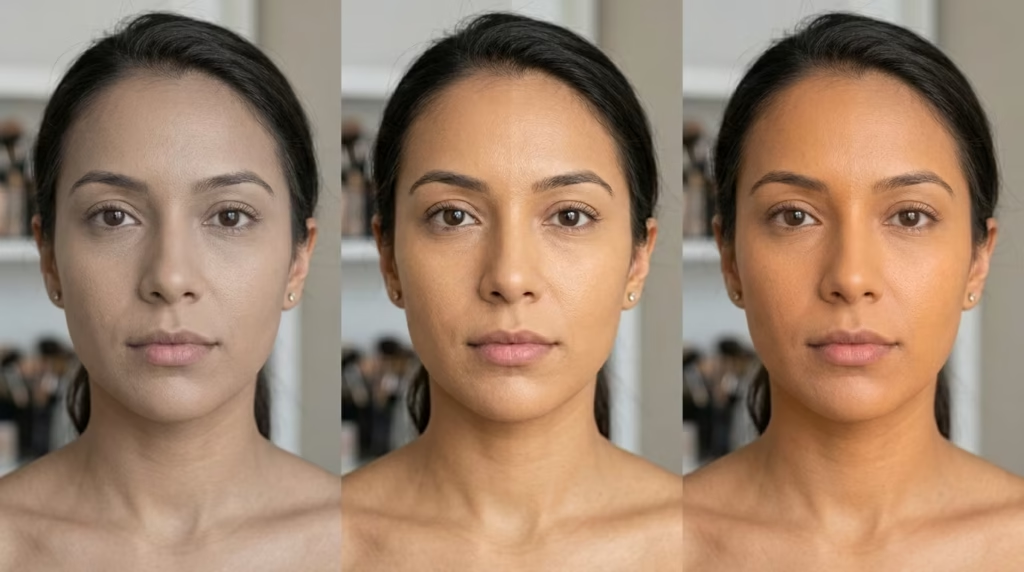
This is the part of the process most people rush — and it’s the most important part. Following this foundation matching guide step by step will save you from dozens of wrong purchases.
1. Swatch Multiple Shades
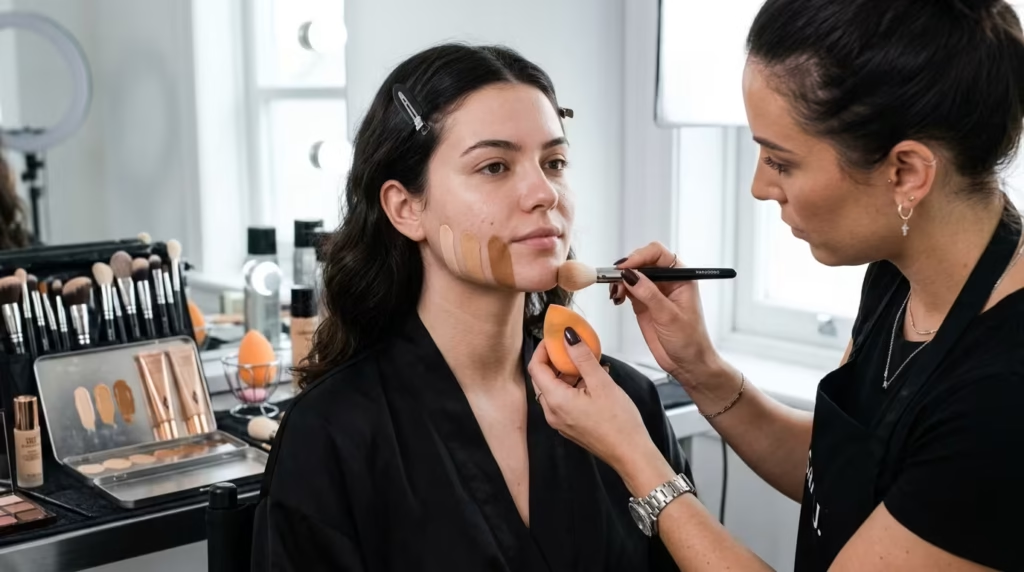
At a counter or store, ask to try three shades: one you think is right, one a half-shade lighter, and one a half-shade darker. Apply small swatches to your jawline — not your hand or wrist, which have different undertones than your face.
2. Apply Along the Jawline
Blend each swatch in a stripe down your jawline, blending slightly onto your neck. The jawline is the true test zone because it’s where foundation needs to transition seamlessly between face and neck.
3. Check in Natural Daylight
Step outside or stand near a window with direct natural light. This is non-negotiable. Store lighting distorts undertones significantly. What you see in natural light is what your foundation actually looks like on your skin.
4. Wait for Oxidation
Give the swatch 20–30 minutes before making your decision. Many foundations oxidise — they darken or shift warmer as they interact with your skin’s pH and oils. A shade that looks perfect initially can turn orange an hour later. This step is essential for caramel skin, which is particularly prone to foundation oxidation.
5. Match to the Neck and Chest
The perfect shade is the one that disappears. It shouldn’t make your face look lighter or darker than your neck. If no single shade bridges the gap perfectly, learn how to match foundation to neck and chest by mixing two shades — one slightly lighter for the face centre, one slightly darker for the jaw and neck zone.
Common Foundation Problems and How to Fix Them
Even with the best intentions, foundation can go wrong. Here are the most common issues I diagnose on caramel and golden skin, along with professional solutions for each.

This is the most common complaint I hear. The causes are almost always undertone mismatch (too much red or bronze in the formula), oxidation, or using a formula designed for fairer skin at a deeper shade that distorts colour.
Fix: Switch to a shade with a cleaner golden or yellow-warm undertone rather than a red-warm undertone. Try a formula known for oxidation resistance, or set immediately with a translucent or golden-toned powder to slow the colour shift. This answers the question so many people ask — why does my foundation look orange on tan skin? The answer is almost always undertone, not depth.Usually caused by a foundation with pink or cool undertones on warm or olive skin. Some matte formulas with silicone-heavy bases also create a grey cast on caramel skin.
Fix: Switch to a warm or golden-undertoned shade. Add a drop of illuminating primer or a golden face oil to the formula. Mixing a tiny amount of a liquid bronzer into the foundation can also neutralise the grey pull.This happens when a yellow-warm formula overwhelms a skin tone that leans neutral or olive, or when depth is too light.
Fix: Move to a neutral-warm shade rather than a pure golden shade. Alternatively, set with a light dusting of translucent powder to tone down the yellow saturation without changing the undertone.When a foundation vanishes visually — offering no coverage and blending almost invisibly — it usually means the shade is too close to your exact skin tone at a low coverage level. Fix: This is actually the goal for no-makeup-makeup looks. For coverage, layer or switch to a medium coverage formula. The shade is correct; the formula is simply very sheer.
Foundation oxidation is a chemical reaction between the formula’s pigments and your skin’s natural oils, sweat, and pH levels. Caramel skin with oilier T-zones is especially prone. Fix: Prep skin with a mattifying primer. Choose oxidation-resistant foundations (many brands now note this). Setting powder immediately after application forms a barrier that slows the shift significantly. A water-setting spray also helps lock colour.
Best Foundation Finishes for Caramel & Golden Skin
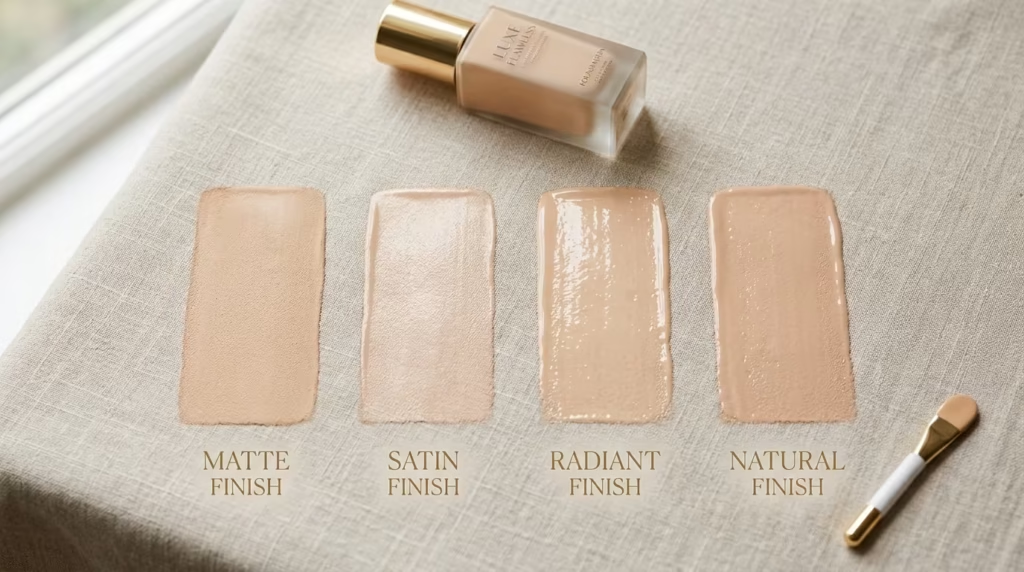
Finish affects how your undertone reads. A matte formula can make golden skin look flat and dull; a radiant formula can amplify the very warmth that makes caramel skin beautiful. Here’s a breakdown of the best foundation finish for golden skin tones and different caramel depths.
Mimics bare skin. Subtle sheen without glow. Works on all skin types. The most forgiving finish for undertone mismatches.
Polished, semi-luminous. Excellent for caramel skin — adds dimension without excess shine. Best for normal to combination skin.
Flat, shine-free. Great for oily skin but can look flat on golden tones. Counter with a highlighter on high points to restore dimension.
Full-glow luminosity. Stunning on golden skin — amplifies that natural warmth. Best for dry-to-normal skin or special occasions.
Makeup Artist Recommendation
For daily wear on caramel and golden skin, satin is the ideal default finish. It reads professional and polished in office lighting, looks radiant outdoors, and photographs beautifully in both flash and natural light scenarios. Save the full radiant finish for evenings and events.
Foundation Recommendations by Skin Type
Seasonal Shade Matching: Why Your Foundation Changes Throughout the Year
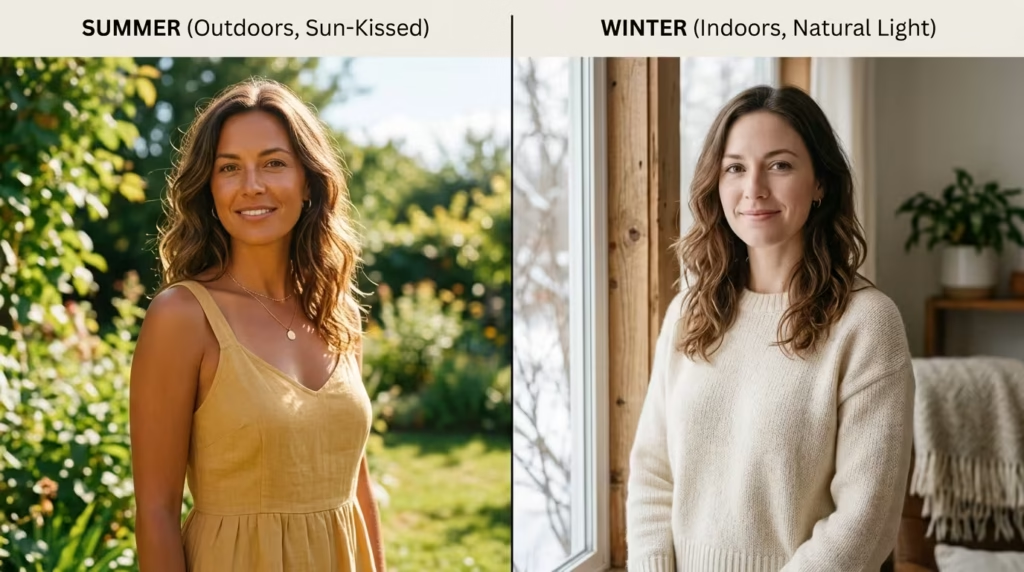
One of the most common sources of confusion for caramel-skinned clients is why the foundation that looked flawless in January looks mismatched by August. The answer is simple: your skin depth shifts with sun exposure, even if your undertone doesn’t.
Going Deeper
Sun exposure adds depth. Your caramel skin may tan several shades deeper by late summer. You’ll likely need to go up one to two shades in depth while keeping the same undertone family.
Fading Back
As tan fades, skin returns to its lighter baseline. Many people look slightly more neutral or less golden in winter. Your shade from summer may look too dark or too warm from October onwards.
The professional approach is to own two shades: your deepest summer shade and your lighter winter shade. Mix them in transition periods — autumn and late spring — to track your skin’s gradual shift. A 60/40 or 70/30 blend ratio between the two shades creates seamless in-between matches. Some makeup artists also keep a small bottle of darker foundation mixed with a facial oil to use as a custom bronzing mixer rather than buying a new shade each season.
Foundation mixing is a genuinely useful skill for caramel skin. Because your tone is so particular, finding a perfect off-the-shelf match at every depth throughout the year is unrealistic. Having a light and a dark shade from the same undertone family, and blending between them, gives you more control than any single bottle can.
How to Adjust a Foundation That’s Not Quite Right
Sometimes you can’t return a foundation. Or you’ve hit on the right formula but wrong shade. These are the professional adjustments I use on set and with clients.
| Problem | Cause | Fix |
|---|---|---|
| Too Light | Depth is one level below yours | Mix in a darker shade from the same brand or blend a small amount of liquid bronzer into the formula before applying |
| Too Dark | Depth is above yours or summer shade being used in winter | Mix with a lighter shade or blend in a small amount of moisturiser or sheer primer to dilute depth while keeping undertone |
| Too Yellow | Undertone too warm for your skin | Add a tiny drop of lavender colour-correcting primer or mix in a neutral-cool shade from the same line to balance the yellow |
| Too Orange | Red-warm undertone instead of yellow-warm; or oxidation | Mix in a yellow-toned corrector, use a purple-toned setting powder to neutralise orange, or layer a golden-toned tinted moisturiser underneath a neutral foundation |
| Too Pink | Cool or rosy undertone on warm skin | Mix in a warmer shade from the same brand, apply a warm-toned peach colour corrector beneath, or use a golden-warm tinted moisturiser as a base layer |
Frequently Asked Questions
Is caramel skin warm or neutral?
Caramel describes depth, not undertone — so caramel skin can be warm, neutral, olive, or cool. The majority of people with caramel depth do have warm or golden undertones, which is likely where the association comes from. But this isn’t universal. You need to test your specific undertone separately from your depth to know for certain.
Can golden skin have olive undertones?
Yes. Golden and olive undertones can coexist. You might see a primary warmth that reads golden in good light, but also have that slightly grey-green quality of olive undertones showing up in certain lighting or when warm foundations look a bit off. In this case, look for shades specifically described as “golden-olive” or “warm golden with neutral depth.” These tend to work beautifully.
Why do foundations always look orange on me?
The most common culprit is a red-warm undertone in the formula rather than a yellow-warm undertone. Many brands — especially older formulas — used red pigment as a shortcut to “warm,” which pulls orange on caramel skin. Oxidation is also a factor, particularly with formulas containing more oils. The fix is to specifically seek out foundations with yellow-gold undertones and test for oxidation before committing to a purchase.
Should foundation match my face or neck?
Both — but the neck is the true reference point. Your neck is less exposed to sun and environmental factors, so it tends to represent your baseline skin tone more accurately. The ideal shade sits at the jaw and transitions naturally onto the neck without a visible line. If your face is slightly darker than your neck due to sun exposure, use your neck as the match reference and blend well at the jaw.
How many foundation shades should I own?
Two is the professional sweet spot for caramel skin — a lighter shade for your untanned baseline and a deeper shade for your summered, tanned depth. From there, you can blend in transition seasons and maintain a perfect match year-round without constantly replacing product.

Expert Makeup Artist’s Final Tips
Undertones first, depth second. Always solve undertone before shopping depth.
Natural daylight only. Never make a final decision under store lighting.
Wait for oxidation. 20–30 minutes changes everything. Don’t skip this step.
Match to neck and chest. The jawline transition is what people actually see.
Adjust seasonally. Own a summer shade and a winter shade. Blend between them.
Mix shades confidently. Two imperfect shades often make one perfect match.
Finish matters for undertone. Radiant finishes amplify warmth; matte can dull it.
Oxidation-resistant formulas exist. Seek them out if orange shift is your recurring issue.
The Right Foundation Changes Everything
Here’s what I want you to take away from this guide: undertones matter more than most people ever realise. Depth is important, but undertone is what makes a foundation look like skin or look like product. It’s what creates that seamless, you-but-better finish that feels effortless.
This foundation shade guide for caramel skin tones exists because medium, tan, caramel, and golden complexions have been navigating an underdeveloped market for too long. The tools in this guide — undertone testing, proper daylight evaluation, oxidation awareness, neck matching, seasonal adjustments — are the exact same professional methods I rely on every day. They work.
When you find your perfect foundation match, you’ll know it immediately. There’s no line, no strange colour shift, no “close enough.” The foundation simply becomes your skin. And for caramel and golden skin tones, getting there requires knowing not just your shade, but your undertone story — the layer beneath the surface that makes your complexion entirely your own.
Now you have the knowledge. Go find your match.