

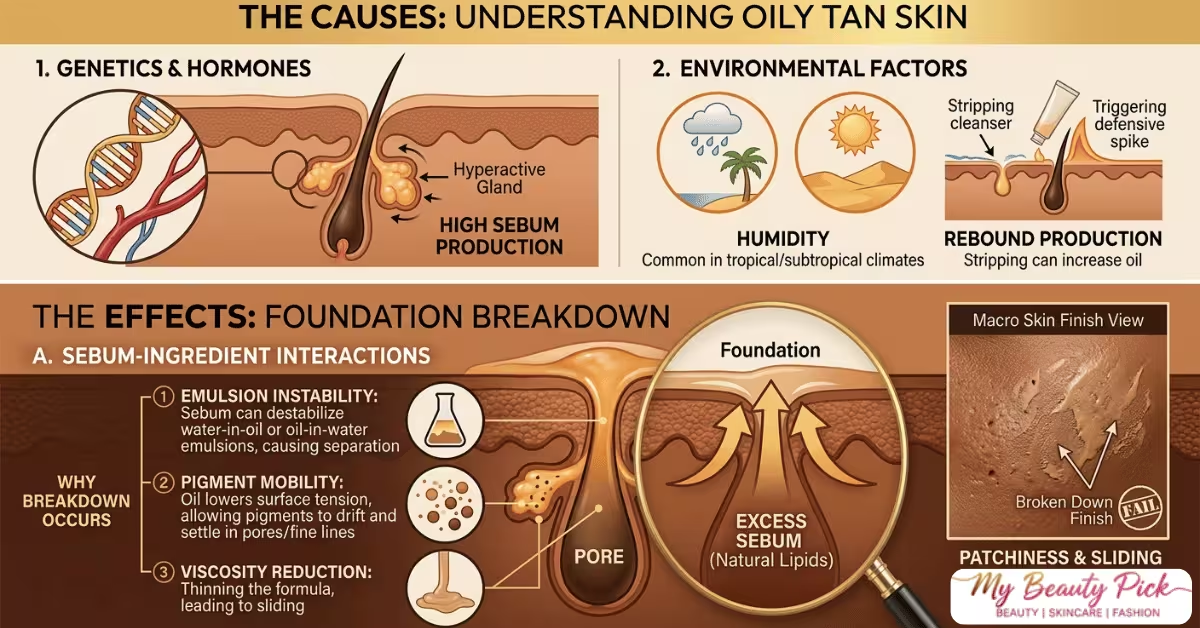
You apply your foundation carefully — primer, two thin layers, setting powder, setting spray. By noon, it has migrated, sheened, and in some places disappeared entirely. On oily tan skin, foundation breakdown is not just a nuisance. It is predictable, and it is accelerated by a combination of biological factors that most foundation advice does not address.
The fix is not more powder. It is understanding what sebum actually does to foundation chemistry on higher-melanin skin, and choosing products and techniques that account for that interaction from the start.
Why Tan Skin Often Produces More Sebum
Sebaceous Gland Activity
Sebum is produced by sebaceous glands in the dermis. These glands are attached to hair follicles and are most densely concentrated on the face — particularly the forehead, nose, and chin. Research consistently shows that skin with higher melanin density has both a greater number of sebaceous glands per unit of skin area and higher glandular activity. This means tan and deeper skin types produce more sebum as a baseline, independent of climate or product use.
This is not a flaw in the skin. Sebum has important protective functions — it contributes to the acid mantle that keeps harmful microorganisms out and moisture in. But from a foundation wear perspective, higher sebum production means the conditions that break down base makeup arrive sooner and more intensely.
Genetic Factors
Sebum production is partly genetically determined, which explains why oily skin tends to run in families and why certain ethnic backgrounds — South Asian, Latin American, and Middle Eastern complexions in particular — are statistically more likely to have oily or combination skin. This is independent of diet, skincare routine, or climate, though all three can modulate the degree of oiliness significantly.
Climate Influence
Heat and humidity dramatically increase sebum production. At higher temperatures, the skin produces more sebum as part of its thermoregulation process — the oil mixes with sweat and helps regulate surface temperature. In humid environments, the skin’s water content stays elevated, which softens the stratum corneum and makes the skin surface more permeable. Both factors accelerate foundation breakdown. For tan skin already producing more sebum at baseline, a hot and humid climate effectively doubles the challenge.
Pore Size Relationship
Larger pores accommodate higher sebum flow. Pore size is largely genetically determined and correlates with sebaceous gland size and activity. Tan skin with active sebaceous glands typically has more visible pores, particularly in the T-zone. From a foundation standpoint, these pores create surface irregularities that break up the foundation film — creating the patchy, uneven appearance that develops through the day as sebum pushes through the coverage layer.
What Sebum Does to Foundation
Foundation Emulsification
Most foundations are emulsions — water and oil suspended together with the help of emulsifying agents. When sebum reaches the foundation film from beneath, it acts as an additional oil phase that disrupts the existing emulsion. The formula begins to separate, with oils pooling in some areas and leaving a thinner, sheer layer in others. This is what produces the patchy, uneven look of mid-day foundation breakdown — the coverage has literally migrated away from certain areas.
Pigment Migration
As the emulsion breaks down, pigment particles that were evenly suspended in the formula begin to move with the oil. They concentrate in creases, pores, and fine lines — making those areas appear darker or more textured. On tan skin with visible pores, this pigment concentration in pore openings creates a dotted or uneven texture that was not visible at application. Pressing — rather than buffing — application minimises this by placing less product into pore openings initially.
Oxidation Acceleration
Sebum does not just break down the formula’s physical structure — it accelerates iron oxide oxidation. The oils in sebum create direct contact between the foundation’s reactive pigments and a lipid-rich environment that promotes chemical reactions. On tan skin already using shades with a higher iron oxide concentration, this sebum-driven oxidation adds to the natural colour shift, creating both a structural breakdown and a colour change simultaneously by midday.
Shine Amplification
As sebum breaks through the foundation film, it creates a reflective oil layer on the skin’s surface. On skin that already has higher melanin-driven surface reflectivity, this adds an additional shine that reads as greasy rather than dewy. The distinction matters for product choice: dewy foundations are formulated with specific reflective ingredients to create a controlled luminosity. Sebum-induced shine is not controlled — it is uneven and concentrated in specific zones, giving the complexion an oily rather than healthy appearance.
Silicone vs. Water-Based Foundation on Oily Tan Skin
| Formula Type | How It Behaves on Oily Tan Skin | Wear Time | Best Conditions |
| Water-based | Lower oil content means slower sebum emulsification; less prone to oxidation | 6–8 hours with primer | Hot climates, year-round use, combination skin |
| Silicone-based | Creates a flexible surface film; good initial wear but can slip as sebum builds | 4–6 hours on very oily skin | Cooler, drier conditions; low-humidity environments |
| Oil-based or serum foundation | Adds to the skin’s oil content — fastest breakdown on oily tan skin | 2–4 hours on oily skin | Dry skin only; avoid on any oily zones |
| Powder-hybrid (cushion, powder foundation) | Less prone to emulsification breakdown; can exacerbate texture in pores | 5–7 hours | Touch-ups; minimal coverage days; very humid climates |
Why Long-Wear Claims Don’t Always Match Real Life
Foundation wear testing in laboratories is conducted under controlled temperature, humidity, and activity conditions. Room temperature is typically around 20°C, humidity is moderate, and subjects are resting rather than exercising, commuting, or working in high-temperature environments. For someone with oily tan skin living in a subtropical or tropical climate — or simply working in a warm office — real conditions are significantly more demanding. A foundation rated for 24-hour wear in a lab environment may genuinely perform for 6 to 8 hours in real conditions. Adjust expectations accordingly, and prioritise in-condition testing over label claims.
Primer Strategy for Oily Tan Skin
Mattifying Primers
Mattifying primers use oil-absorbing ingredients — typically silica, kaolin clay, or starches — to create a surface that reduces sebum breakthrough. They are the most directly effective primer type for oily tan skin because they target the root cause of foundation breakdown. The limitation is that they can dry out the skin surface in drier climates or over time if the skin becomes dehydrated, leading to a paradoxical increase in oil production as the skin compensates. Always apply over a moisturiser, never directly on bare skin.
Silicone Primers
Silicone-based primers fill pores and surface texture, creating a smoother surface for foundation application. They extend wear time by reducing the foundation’s direct contact with the skin and its sebum. However, silicone primers are only compatible with silicone-compatible foundations — applying a water-based foundation over a heavily silicone-based primer creates a barrier that prevents adhesion, resulting in the foundation sliding off within hours. Always match primer chemistry to foundation chemistry.
When Primers Cause Pilling
Pilling — when the foundation rolls into small balls on the face during application — is almost always a compatibility problem between primer and foundation. It happens when the two formulas have incompatible base chemistries, or when the primer has not fully dried before the foundation is applied. If pilling occurs with your current combination, wait an additional 2 minutes after primer application before adding foundation, and consider whether your primer and foundation share the same base chemistry.
Setting Powder for Brown Skin Without Grey Cast
Why Grey Cast Happens
Many translucent setting powders contain silica or bismuth oxychloride with a white or colourless base. On lighter skin, these read as truly translucent. On tan and deeper skin, they sit visibly on the surface and reflect light as a grey or whitish cast — the same mechanism as titanium dioxide in SPF formulas. The powder has an inherent lightness that reads as transparent on light skin but appears as a visible layer on deeper complexions. Camera flash intensifies this significantly.
Tinted Powders
Lightly tinted setting powders with warm undertones — amber, honey, or caramel — absorb oil while adding a small amount of pigment that compensates for the powder’s inherent lightness. These are the most reliable option for tan skin because they do not alter the foundation’s colour significantly but eliminate the grey-cast problem of untinted formulas. Select a shade that is slightly warmer and deeper than your foundation, not lighter.
Banana Powders
Banana powder gets its name from its yellow-gold colour. Originally used by professional makeup artists to set and colour-correct on darker complexions, banana powder works on medium to deep tan skin to absorb oil while the warm pigment neutralises any cool or grey cast from the setting process. It is particularly effective under the eyes and in the T-zone on warm-undertoned tan skin. On cool-undertoned tan skin it can push the complexion too warm — in that case, a neutral warm-tinted powder is the better choice.
When to Use Translucent Powder
True translucent powder — colourless with no warming pigment — can work on tan skin if it is used extremely sparingly and with a large, fluffy brush that deposits almost no product. Under no circumstances should translucent powder be baked on tan or deeper skin, as this concentrates the white-reflective particles and creates a severe grey cast. Baking is a technique for lighter skin tones. For tan skin, a light single press with a powder puff and then a brush sweep to remove excess is the maximum appropriate application.
Midday Maintenance Without Starting Over
Blotting Papers
Blotting papers are the most effective midday tool for oily tan skin. They remove surface sebum by absorption without disturbing the foundation layer beneath, which means coverage is maintained while shine is reduced. Press — do not rub — the paper into oily zones for a few seconds. Rubbing physically removes foundation. Always blot before any other touch-up step, as blotting over powder-touched-up skin compounds product build-up.
Powder Touch-Ups
After blotting, a light dusting of your setting powder is appropriate for oil-prone zones. Use the minimum amount — a large powder brush that has been tapped against your hand to remove most of the product, then swept lightly across the area. Multiple powder applications through the day build up product that settles into pores and fine lines and becomes increasingly difficult to remove without a full reset.
Setting Spray Refresh
A light mist of setting spray at midday can re-emulsify the product on the face and temporarily restore the appearance of the morning application. This works best when the foundation has not fully broken down — it is more of a refresh than a fix. Hold the spray at arm’s length and mist in an X or T pattern across the face from that distance, rather than close up, which deposits too much product in concentrated spots.
8-Hour Wear Test Findings for Oily Tan Skin
| Variable | Effect on Wear Time |
| Water-based formula + mattifying primer | Best overall wear — least breakdown at 8 hours |
| Silicone-based formula + silicone primer | Good initial coverage, moderate slip at 4–5 hours in warm conditions |
| No primer of any kind | Visible breakdown begins at 2 hours, severe by 4 hours |
| Hot, humid conditions (above 28°C) | Reduces wear time by approximately 30–40% regardless of formula |
| Blotting at 4-hour mark | Extends acceptable appearance by 2–3 additional hours without adding product |
| Powder baking technique | Strong initial set; grey cast visible in photos; product builds in fine lines by 6 hours |
Oily Skin Foundation Survival Checklist
| Always moisturise before primer — skipping moisture increases compensatory oil production |
| Choose a mattifying primer matched in chemistry to your foundation base |
| Allow primer to fully dry before applying foundation — minimum 2 minutes |
| Apply foundation in thin layers using pressing, not buffing, motions |
| Set with a warm-tinted powder, not colourless translucent powder |
| Blot first at midday — always before any powder or spray touch-up |
| In hot climates, reduce primer amount and focus on formula choice over layering |
| Test all formulas on your skin in your real environmental conditions — lab claims are not applicable |
Explore our roundup of foundations that perform best on oily tan skin.