

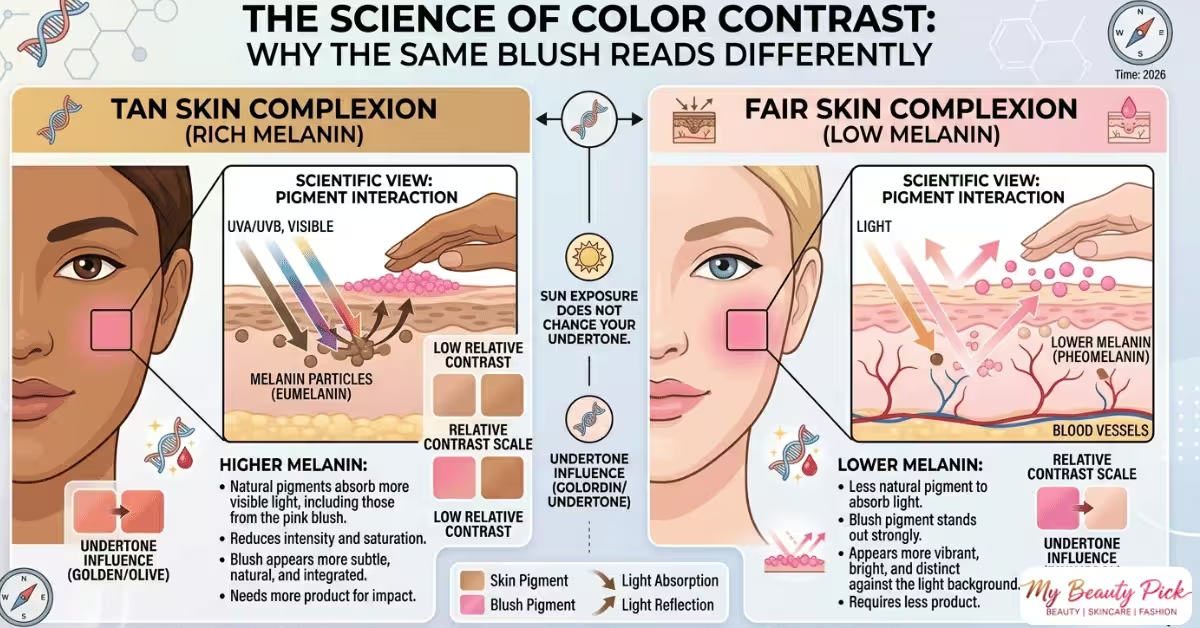
You swatch the coral blush on your hand in the store and it looks warm, vibrant, and wearable. You apply it to your cheeks at home and it has essentially vanished. You build, you layer, you use the whole brush — and still what you see in the mirror is a faint warmth that disappears entirely in photos. Meanwhile the same product on a lighter-skinned friend is clearly, beautifully visible.
This is not a technique problem. It is a colour science problem, and it has a specific explanation that changes how you shop for blush entirely.
Understanding Simultaneous Contrast in Makeup
What Simultaneous Contrast Means
Simultaneous contrast is a perceptual phenomenon first described systematically by colour theorists Josef Albers and Johannes Itten. It refers to how a colour appears to change depending on the colours surrounding it. The same colour, placed against different backgrounds, reads differently to the human eye — not because the colour has changed, but because the surrounding context alters the brain’s perception of it.
A grey square looks darker against a white background and lighter against a black background. The grey is identical. The context is everything.
Why Context Changes Colour Perception
When the brain interprets a colour, it does so relative to the surrounding visual information. It is always reading the relationship between colours, not the absolute values of each. This means that a pink blush applied to pale skin — where the background is light — reads as clearly pink and distinct. The same pink blush applied to tan skin — where the background is a richer, warmer, darker tone — has far less contrast against that background, and the brain registers less difference between the blush and the skin. The blush is still there. It is just less perceptually visible.
Beauty Examples
A nude lipstick that looks elegantly minimal on fair skin looks washed out on tan skin — the lip loses definition because the colour is too close to the surrounding skin tone. An eyeshadow that reads as rich burnt orange on light skin reads as barely-there warmth on deep tan skin. These are all simultaneous contrast in action. The product is not defective. The relationship between the product’s colour and the skin’s colour has changed.
Why Light Pink Blush Often Disappears on Tan Skin
Contrast Levels
A light pink blush has a high value — meaning it is pale and close to white on the brightness scale. Against fair skin (also high value), the contrast is modest but the colour distinction is still readable. Against tan skin (medium-to-low value), the light pink blush is simultaneously too pale and too cool to create any meaningful distinction from the surrounding complexion. The brain simply does not register enough difference to see the blush as a separate colour element.
Pigment Visibility
Skin pigmentation itself affects how overlaid colour reads. Tan skin with higher melanin concentration has a richer base tone that absorbs and mutes soft, high-value colours. This is why pastels and light shades — popular in many mainstream blush ranges — are particularly invisible on tan complexions. The melanin in the skin effectively absorbs the soft pigment before it can read as a visible flush. Deeper, more saturated colour is needed simply to overcome the baseline pigmentation.
Practical Demonstration
Hold a light pink blush compact next to your bare arm. Notice how visible the colour is against your skin. Now hold a terracotta or brick blush next to the same spot. The warmer, deeper shade immediately reads as a visible accent against your skin tone. The pink essentially disappears. This is the simultaneous contrast effect in a practical test — and it tells you more about which blush shades will work for you than any swatch on paper.
The Luminance Gap and Melanin-Rich Skin
What Is Luminance?
Luminance refers to the perceived brightness of a colour — not its hue (whether it is pink or orange) but how light or dark it is on the value scale. High luminance colours are pale and light. Low luminance colours are rich and deep. For a blush to read as visible on any skin tone, its luminance needs to be sufficiently different from the skin’s luminance to register as a distinct colour element.
Light Absorption vs. Reflection
Higher-melanin skin absorbs more light than it reflects. This is what creates its depth and richness. As a result, pale, high-luminance colours placed on that skin surface are largely absorbed into the visual richness of the complexion rather than sitting as a distinct overlay. To achieve visible blush on tan skin, the product needs to either be deeply enough pigmented that its colour survives contact with a light-absorbing surface, or warm enough in tone to create positive contrast with the underlying complexion rather than competing with it.
How Much Pigment Is Needed to Show
Studies in colour perception suggest that for a colour to register as visually distinct on a surface, it needs to differ by at least 20–30% in luminance value from the background. For medium tan skin, this means blushes need to be either significantly warmer or significantly deeper in tone to meet that perceptual threshold. Products formulated primarily for lighter complexions often fall below this threshold on tan skin — they are technically present but visually invisible.
Warm vs. Cool Blushes on Tan Skin
Coral Blushes
Coral sits between pink and orange on the colour wheel. On tan skin with warm undertones, coral creates positive contrast against the skin’s golden base — the orange component reads clearly without clashing, and the pink component adds a flush quality. Coral is one of the most reliable categories for warm and neutral-undertoned tan skin. The key is pigment density: a sheer coral vanishes; a richly pigmented coral glows.
Peach Blushes
Peach is softer than coral — a lighter, more yellow-pink. On light tan (Fitzpatrick III) with warm undertones, it can be visible and flattering. On deeper tan shades, peach tends to disappear into the complexion without creating enough contrast to read as blush. If peach is a preferred aesthetic, look for deep-peach or peachy terracotta shades that have a more saturated, warm-earth quality rather than a pale pastel quality.
Pink Blushes
Cool pink blushes present the widest range of results on tan skin. On cool-undertoned tan complexions, a deeply pigmented rose or mauve pink can work well — the cool hue aligns with the undertone, and sufficient pigment load makes it visible. On warm-undertoned tan skin, pink blushes tend to look artificial or clash with the skin’s warmth. For warm-undertone tan skin, if pink is desired, a dusty rose with a slight warm-brown base is the closest that will read naturally.
Terracotta Blushes
Terracotta is the most naturally flattering blush category for the widest range of tan skin tones. Its warm, red-brown character has high contrast against both the neutral and warm complexion base, and its depth means pigment visibility is not a challenge. Terracotta blushes that are too deeply pigmented or too heavily red can read as sunburn rather than flush — look for medium-depth terracottas with a slight softness rather than brick-red intensity.
Berry Blushes
Berry — a deep, cool pink-purple — creates the most dramatic and clearly visible flush on tan skin simply because the luminance gap is wide. On cool-undertoned tan skin, berry blushes are an excellent choice for evenings or events where a defined, intentional colour is desired. On warm-undertoned tan skin, berry can look disconnected from the rest of the makeup unless the lip colour echoes the same cool tone.
Brick Tones
Brick — a deep, muted orange-red — occupies a similar space to terracotta but leans more red and less earthy. On deeper tan complexions, brick creates a natural-looking, highly visible flush that reads as healthy colour rather than obvious product. It is one of the best under-used blush categories for tan skin and pairs well with warm neutrals and earthy eyeshadow combinations.
Why Pigment Load Matters More Than Shade Name
Drugstore vs. Professional Pigment Levels
Shade names are not standardised across brands. A product called Coral Sunset in one brand may be a sheer wash of pale peach. In another brand, the same name describes a richly saturated, deeply coloured blush. What matters on tan skin is not the name on the compact but the actual pigment concentration in the formula. Higher pigment load means more colour per unit of product — and on a light-absorbing, higher-melanin skin surface, higher pigment load is almost always necessary for visibility.
Testing Pigment Intensity
Swatch the blush on the inside of your wrist in a single brush stroke. If the colour is clearly visible against your inner wrist skin with one pass, the pigment load is probably sufficient for tan skin. If it barely shows against your inner wrist — one of the lighter-toned areas of your body — it will certainly not show on the more pigmented skin of your cheeks. This is a faster in-store test than swatching on paper or the back of a hand.
Matte vs. Shimmer Blush Performance on Tan Skin
Matte Finish
Matte blushes deposit flat colour without added reflectivity. On tan skin, this creates the most accurate read of the blush’s actual pigmentation — what you see is the colour, with no optical interference from shimmer or light scattering. Matte blushes also photograph most reliably, as they do not amplify or alter under flash. They are the best choice for learning which colours actually work for your complexion, since shimmer can mask both success and failure.
Shimmer Finish
Shimmer blushes add both colour and reflectivity. On tan skin with a naturally warm, luminous quality, shimmer blushes can enhance the skin’s inherent glow beautifully — but only if the colour itself is sufficiently pigmented. A sheer shimmer blush on tan skin creates diffuse light rather than visible colour, which reads as general luminosity rather than a defined flush. A richly pigmented shimmer blush in terracotta or warm copper on tan skin, on the other hand, can be genuinely stunning — adding both colour and a dimensional warmth that matte blush cannot replicate.
Layering Strategies
A reliable technique for tan skin is to layer a matte blush first to establish the colour, then dust a shimmer blush or highlight on top in the same or complementary tone. The matte layer ensures the colour is visible; the shimmer layer adds dimension without diluting the colour statement. This prevents the common outcome of shimmer blush alone — beautiful glow, no actual colour.
The Tone-Matching Formula for Choosing Blush
The 2–3 Shade Deeper Rule
A practical starting heuristic for blush selection on tan skin: choose a blush that is approximately 2 to 3 shades deeper in intensity than what you think you need. In the compact, this will look vivid, possibly alarmingly saturated. On the face, it will read as a natural, visible flush. Products that look appropriately subtle in the compact almost always disappear entirely on application. The simultaneous contrast effect works in reverse here — the blush looks more intense in the pan because it is surrounded by the white or light packaging, which exaggerates its depth.
Matching Undertones
Blush should align with the skin’s undertone direction for the most natural finish. For warm golden undertones, stay within corals, terracottas, and warm peaches. For olive undertones, earthy bricks and terracottas are most harmonious. For neutral undertones, both warm and cool tones can work — choose based on the makeup look’s overall direction. For cool undertones in tan skin, mauve, rose, and berry create the most natural flush.
Best Blush Categories for Tan Skin by Undertone
| Undertone | Best Blush Families | Avoid |
| Warm golden | Terracotta, warm coral, peach-brick, copper | Pale pink, baby peach, cool mauve |
| Olive neutral | Terracotta, deep brick, earthy warm rose | Cool berry, bright pink, pale peachy pink |
| Neutral | Coral, warm rose, dusty mauve, terracotta | Extreme cool or extreme warm at high saturation |
| Rich caramel (warm-deep) | Deep terracotta, brick, warm burgundy, copper | Any pale or pastel category — insufficient pigment |
| Cool tan | Berry, deep rose, cool mauve, raspberry | Warm orange-terracotta, bronze |
Blush Selection Cheat Sheet
| Test pigment load on the inner wrist — if it barely shows there, it will not show on your face |
| Always choose shades 2–3 levels deeper in saturation than what looks right in the pan |
| Favour terracotta, brick, coral, and berry over pink, peach, and nude for maximum visibility |
| For warm undertones: stay in the warm family (terracotta, coral, copper) |
| For cool undertones: choose deep cool shades (berry, mauve, deep rose) |
| Layer matte first for colour, shimmer second for dimension |
| Test in natural daylight and under phone flash before committing |
| Pigment density matters more than shade name — read reviews from people with tan skin specifically |
Use our Undertone Finder Tool to identify your exact undertone and get personalised blush shade recommendations for tan skin.