

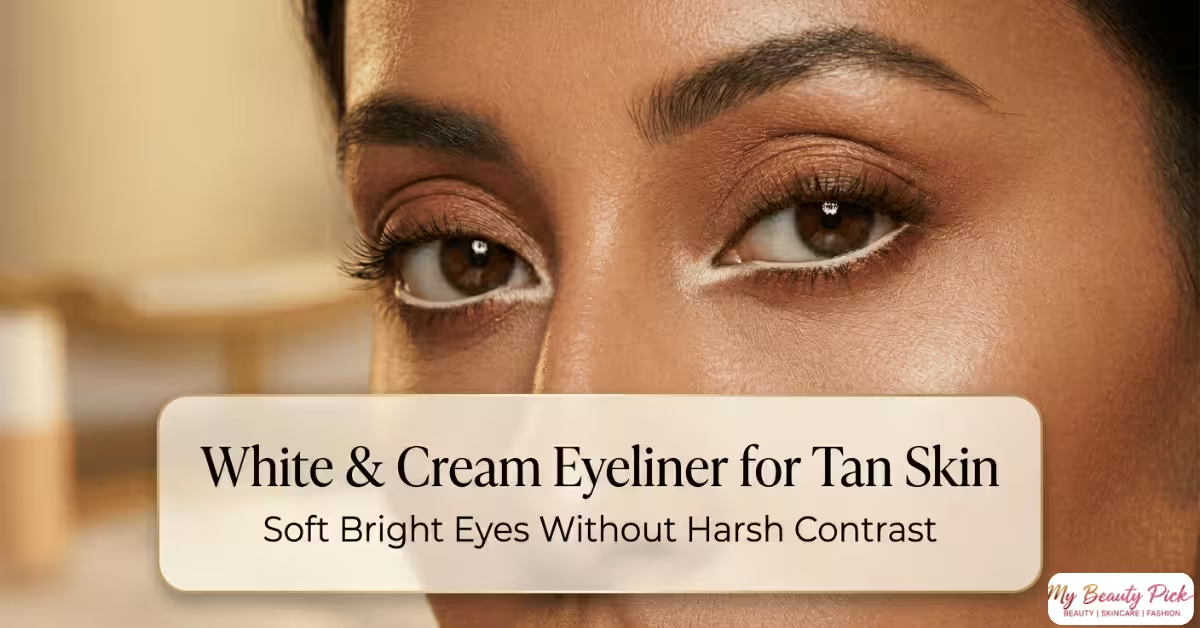
Why White Eyeliner Reads Differently on Tan Skin
White eyeliner creates its effect through contrast — it brightens the area where it is placed by introducing a high-luminance, high-reflectivity element against the surrounding skin and eye. On light complexions, this contrast is relatively gentle because the surrounding skin is also relatively light-toned. The white liner is bright against a light background, but not dramatically so. On tan skin, the contrast between a stark white liner and the surrounding warm, deeper skin is significantly greater — the liner jumps forward more intensely, which can read as unnatural or costume-like if not managed correctly.
This does not mean white liner is wrong for tan skin. It means the formula, shade, and placement all need to be calibrated for a higher-contrast environment than the products were originally designed for. Done correctly, white and cream liner on tan skin is genuinely striking — the contrast works in your favour by creating a vivid, open-eye effect that is more visible and dramatic than the same technique on lighter complexions.
Pure White vs. Cream vs. Ivory — Which Works Best on Tan Skin
| Formula | Effect on Tan Skin | Best Used | Avoid When |
|---|---|---|---|
| Pure white | Maximum contrast — bright, graphic, clearly visible. Can read as stark if not contextualised with strong surrounding eye makeup. | Inner corner accent; lower lash line with full dark smoky eye above; graphic liner looks | Worn alone on waterline with minimal surrounding makeup — creates a disconnected, clinical appearance |
| Cream / off-white | Softer contrast — warm enough to sit naturally against tan skin without the clinical brightness of true white. The most versatile choice for everyday use. | Waterline; brow bone highlight; inner corner softener; paired with any eye look | Photography where brightness is needed — cream reads as subtle in flash conditions |
| Ivory / warm white | The most harmonious with warm tan undertones. The slight yellow warmth in ivory resonates with the skin’s own warmth, creating contrast without discord. | All placements on warm-undertone tan skin — waterline, inner corner, brow bone, lower lash line | Cool-undertone tan skin where a cooler white reads more naturally |
| Pearlescent / shimmer white | Diffuses the contrast effect by adding a light-scattering shimmer. Less harsh than matte white, adds dimension. Strong in photography. | Inner corner; mobile lid for no-makeup glow; brow bone for highlight | Waterline — shimmer in the waterline smudges quickly and migrates to the undereye |
The Five Placements — Where White and Cream Liner Actually Works
Each placement has a specific technique on tan skinThe most requested placement — applying white or cream liner to the inner rim of the lower lid to make the eye appear larger and more awake.
On tan skin: Use cream or ivory, never stark white. The waterline needs a formula with staying power — a waterproof pencil or gel formula, as watery or soft pencil formulas fade from the waterline within 30 minutes. Apply in short overlapping strokes from the inner corner outward, building coverage rather than a single sweep.
What makes it work: Pair with dark liner or shadow on the outer upper lash line. The contrast between the bright waterline and the dark upper line makes both more visible and creates the open-eye effect without the stark disconnection that a bright waterline worn without upper-eye definition creates on tan skin.
A dot or small V-shape of white or pearlescent liner placed at the inner corner of the eye, between the tear duct and the inner lower lash line.
On tan skin: Pure white or pearlescent white both work beautifully in this placement because the surrounding darker makeup contextualises the brightness. Apply with the liner pencil tip or a small pointed brush. A small tight V-shape at the inner corner (one arm along the lower lashline, one arm along the upper lashline, meeting at a point) creates maximum impact.
What makes it work: The inner corner placement frames the white liner with both the skin and the eye makeup on either side, so the contrast reads as intentional brightening rather than random harsh white.
A smudged cream liner along the lower outer lash line to open the eye and lift the outer corner — different from a graphic lower line.
On tan skin: Use a cream or ivory pencil, not pure white. Apply to the outer third to half of the lower lash line and immediately smudge inward and downward with a small smudge brush or fingertip until there is no visible hard line — just a soft pale warmth along the lower lash line. This creates the appearance of light reflecting off the lower eye area without any visible product placement.
What makes it work: On tan skin, a soft cream lower line reads as natural reflectivity rather than liner. The warm undertone of cream blends with the skin’s own warmth rather than creating a harsh contrast strip.
A deliberate, graphic white or cream line on the upper lid — either as an alternative to black liner or layered beneath it.
On tan skin: This is an intentional statement placement — wear it with full makeup confidence. A white graphic upper liner on tan skin reads as bold and high-contrast in the best possible way, because the surrounding depth of the complexion makes the white line pop dramatically. Use a pointed liner brush with a highly pigmented white gel liner for the cleanest edge. Keep everything else in the look minimal — this liner is the statement.
What makes it work: Apply after foundation but before eyeshadow if doing an editorial look. Or apply over a bare lid as the sole eye product. The tan skin background makes white graphic liner look more striking here than on lighter complexions.
A line of cream or ivory liner along the brow bone, beneath the tail of the brow, to lift and open the eye from above.
On tan skin: Cream or ivory is the correct choice — pure white on the brow bone on tan skin reads as body paint rather than a makeup accent. Apply with a pencil tip or small brush in a thin line directly beneath the brow tail and blend upward very gently with a fingertip. It should be barely-there when blended — a warm glow rather than a visible line.
What makes it work: The brow bone placement catches light in a way that visually lifts and arches the brow without changing the brow shape itself. On tan skin, the warm cream tone resonates with the skin and reads as highlight, not liner.
Step-by-Step — The Three Most Wearable Techniques
This is the highest-impact, lowest-effort white liner technique and the most appropriate for daily wear on tan skin. Complete your base makeup and any eye shadow first. Apply your cream or ivory waterproof liner to the entire waterline — inner corner to outer rim — using short overlapping strokes. Allow 10 seconds for the formula to set slightly. Then apply a small dot or tight V-shape of the same liner (or a pearlescent white liner if you want more impact) to the inner corner. Apply mascara last to avoid disturbing the liner placement.
Build your dark eye look first — deep shadow in the outer corner and crease, dark liner on the upper lash line. Then, with a pointed pencil or small brush loaded with pure white or pearlescent liner, place a tight V at the inner corner. The white accent, surrounded by darkness on two sides and the tan skin below, reads as a graphic, intentional brightening rather than a stark disconnected white element. This is where pure white performs best on tan skin — contextualised by deep surrounding makeup, it creates the most striking contrast possible.
Apply your base and concealer as usual. Do not apply any eye shadow. Using a small flat angled liner brush loaded with a white gel liner, draw a graphic line along the upper lash line from the inner corner to the outer corner, slightly thicker in the centre and thinned at both ends. If desired, extend a small flick at the outer corner. Allow to dry fully — this takes approximately 30 seconds for gel formula. Apply mascara very carefully, from below, to avoid dragging through the white line. The look is complete — white liner, mascara, nothing else on the lid. The tan skin provides all the necessary contrast for this look to read as editorial and intentional rather than clinical.
Formula and Product Selection for Tan Skin
Not all white and cream liners perform equally on tan skin. The considerations that matter most are pigmentation density (how fully white or cream the formula is in a single pass), longevity (especially for the waterline where all formulas fade faster), and the warmth of the formula’s white (cream and ivory stay warmer and integrate more naturally than pure cool white).
| Formula Type | Best Placement | Longevity on Waterline | Pigmentation Level |
|---|---|---|---|
| Waterproof gel pencil | Waterline, lower lash line, inner corner | 4–6 hours | High — best for all placements |
| Liquid liner with fine brush | Graphic upper line only | N/A — not for waterline | Very high — most precise for graphic looks |
| Soft kohl pencil | Smudged lower lash line only | 1–2 hours on waterline | Medium — good for soft effects, poor for waterline longevity |
| Cream gel pot | Graphic upper line, inner corner with brush | N/A — not for waterline | Very high — most buildable and pigmented |
| Pearlescent pencil | Inner corner, brow bone, lid highlight | 2–3 hours on waterline | Medium — shimmer diffuses intensity |