

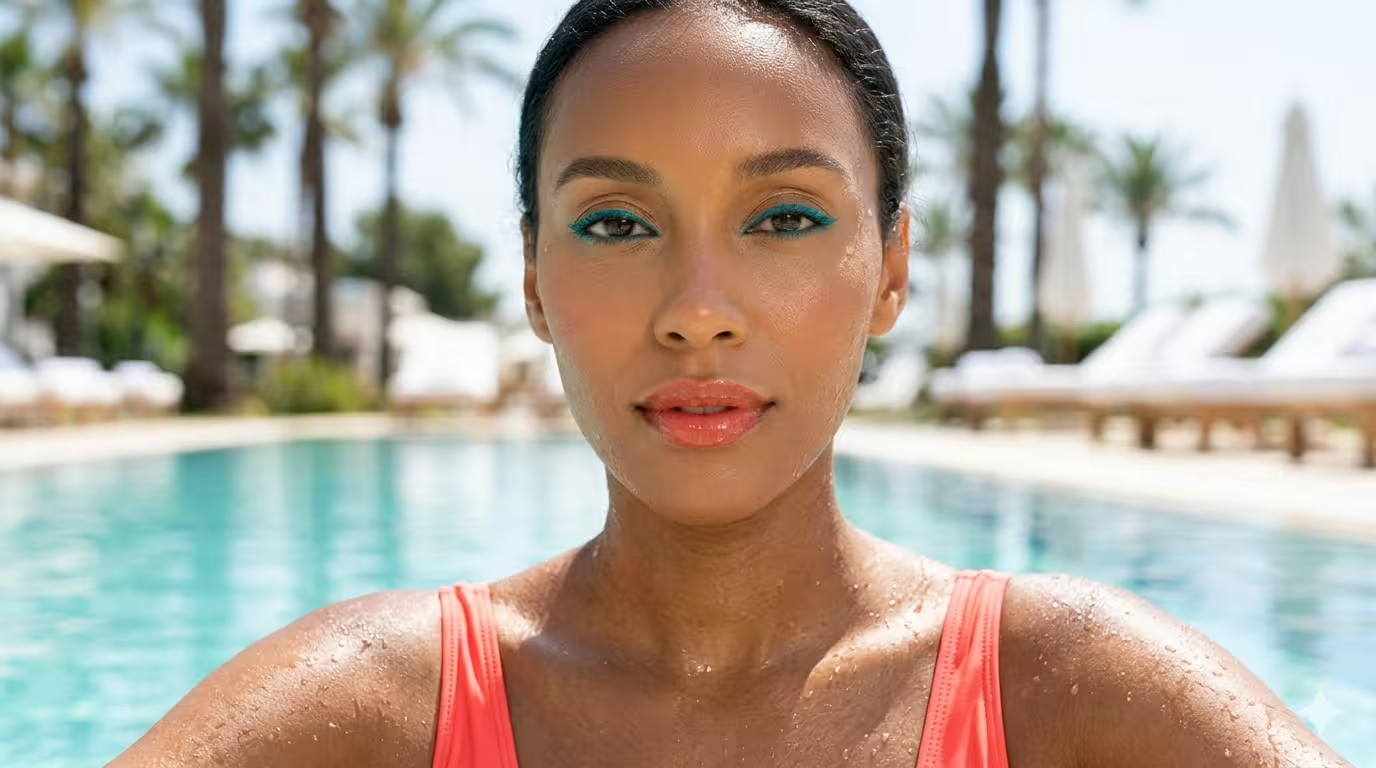
Most makeup labeled “waterproof” is not pool-proof. Splash-resistant is not the same as submerged-and-back. There is a real difference between a formula designed to survive a humid day and one that will hold up after actual contact with chlorinated water or salt water, and that difference is what this guide is about.
For tan skin heading to the beach or pool, the goal is not a full face of makeup that survives swimming. That goal leads to a cakey, unnatural result that dissolves anyway. The better goal is strategic makeup: products that enhance your natural warmth, protect your skin, and still look intentional after a dip. Less, but genuinely waterproof.
Truly waterproof makeup for a pool or beach includes tubing mascara, gel or liquid eyeliner with a waterproof seal, tinted sunscreen instead of foundation, and cream bronzer. Most traditional foundations are not fully water-resistant and will fade after full submersion.
What “Waterproof” Actually Means on a Makeup Label
The term waterproof on a makeup label is not regulated the way it is for sunscreen. SPF products labeled water-resistant must be tested for 40 or 80 minutes of water exposure before the claim is allowed. Makeup brands have no equivalent requirement, which means “waterproof” on an eyeliner or mascara is a marketing claim with no standardized testing behind it.
What this means practically: most makeup marketed as waterproof will survive a splash, humidity, and light perspiration. It will not survive full submersion in a pool or ocean, extended water contact, or being rubbed while wet. “Water-resistant” and “waterproof” are used almost interchangeably on makeup labels, and neither guarantee pool or beach survival.
The products that do hold up in water are those formulated with film-forming polymers that create a seal on the skin surface: tubing mascaras, long-wear gel liners, lip stains, and mineral tinted sunscreens. These categories are genuinely different in how they adhere to the skin and are the only ones worth relying on for a day at the beach or pool.
Should You Wear Foundation at the Beach?
The practical verdict: no. Traditional foundation, even long-wear formulas, will separate, look patchy, and partially wash off after water contact. What is left is usually uneven, visible around the hairline and jaw, and requires a touch-up that is not feasible at the beach.
There are better options, and for tan skin specifically, they are genuinely more flattering than foundation anyway.
Tinted mineral sunscreen: This is the most practical beach base. SPF 50 in a tinted formula provides a slight evening of tone, a hint of warmth, and full sun protection. Reapplication every two hours is required, but that reapplication is skincare, not a makeup burden. Look for formulas designed for medium to deep skin tones that do not leave a white cast.
BB cream with SPF: Slightly more coverage than tinted SPF with a more cosmetic feel. Still lightweight enough to survive and reapply at the beach. Not ideal for full submersion but holds up well for a beach day that is more lying in the sun than swimming.
Bronzing SPF drops mixed into plain mineral sunscreen: This is the most elegant option for tan skin. Two to three drops of a bronzing tint mixed into your regular SPF creates a custom sun-kissed finish that enhances your natural tone without adding a product layer that will slide off. The finish looks intentional, requires zero maintenance after swimming, and is the most skin-appropriate choice for extended beach time.
Skip concealer at the beach entirely. It collects in expression lines when the skin is wet and reapplying it without a mirror in natural light almost always looks uneven. Let your natural skin breathe, protected by SPF, and use the bronzer to do the enhancing work.
Bronzer and Blush That Survives Beach Conditions
Powder bronzer does not survive beach conditions. The particle structure of pressed powder is not designed for contact with water, and the result is migration: bronzer that was applied to the cheekbones ends up blended across the cheeks, temples, and wherever your face was toweled off.
Cream bronzer stays significantly better when water contact occurs. It blends into the skin and the SPF layer beneath it, bonding to the skin’s surface rather than sitting on top as a dry powder. After swimming and toweling off, a cream bronzer may require a light press with fingertips to blend back in, but it does not wash off entirely.
Bronzer stick formulas are the most practical for the beach: compact, no loose product, easy to reapply without a brush if needed. For tan skin, a bronze-terracotta stick applied along the temples, across the cheekbones, and along the jaw enhances the natural warmth of your skin tone in sun without looking overdone. The sun does the rest of the work.
Skip blush in the pool and beach context. The sun and your natural glow on tan skin provides more than enough color. A separate blush product is one more layer to maintain and one more opportunity for uneven wear after water exposure.
The Eye Makeup That Actually Stays
Eyes are the most important area to get right at the beach, because nothing looks worse than smudged mascara and dissolved liner after a swim. The raccoon effect is visible, not easily fixed without a mirror and proper tools, and happens with most standard formulas within the first swim.
Waterproof gel liner is the most water-resistant liner formula available. Gel liners dry to a film rather than remaining soft like pencil formulas, and that film is substantially more resistant to water. Apply with a thin liner brush for the most precise and longest-lasting result. Let it set for sixty seconds before any eye contact with water. Applied correctly and set properly, waterproof gel liner survives swimming in a way that pencil and felt-tip liquid liners do not.
Tubing mascara is the only mascara worth using for a pool or beach day. Standard waterproof mascara resists humidity but does not reliably survive submersion. It smudges when rubbed while wet, which is exactly what happens when you come out of the water and instinctively touch your face. Tubing mascara forms individual tubes around each lash using polymer technology, not just pigment coating. It does not smudge when wet. It slides off cleanly with warm water and gentle pressure when you are ready to remove it. It is genuinely different in its water performance from any other mascara category.
Waterproof brow gel or brow pencil matters more than most people expect. Brows are the first feature to lose definition at the beach, and walking around with faded brows after a swim changes the entire appearance of your face in a way that no other single product loss does. A waterproof brow gel takes thirty seconds to apply and keeps the brows defined regardless of water contact.
Eyeshadow should be skipped or replaced with a waterproof cream shadow pencil if you want any eye color at all. Loose and pressed powder shadow dissolves almost immediately in water. A cream shadow pencil in a bronze or terracotta shade applied on the lid and smudged slightly at the lash line survives significantly better and adds warmth that suits tan skin in summer light.
Skip false lashes entirely at the beach. The adhesive does not survive water contact.
Lips at the Beach
Tinted lip balm with SPF is the best all-round lip product for a beach day. It adds color, protects lips from UV damage which is significant in sun and on reflective water, stays comfortable for hours, and is easy to reapply without any precision. Lips dry out faster in sun and salt air, so any product that combines hydration with color is a practical advantage.
Lip stain is the most water-resistant lip product available. A lip stain bonds to the lip’s pigment layer rather than sitting on top as a film. When applied and allowed to dry for ten minutes before sun exposure and water contact, it remains visible even after swimming. Warm berry, terracotta, and brick-toned lip stains complement tan skin in summer and look naturally flushed rather than heavily made up, which suits the beach aesthetic.
Glosses and standard lipstick do not survive water contact. They can be applied for pre-beach photos or for the journey, but expect them to require reapplication after any swimming. If convenience is the priority, stick with the tinted SPF balm or stain approach.
SPF as the Makeup Foundation
At the beach, SPF is the base, not an afterthought. All makeup applied on top of it is secondary, and the SPF reapplication rule overrides any makeup preservation concern.
Sunscreen must be reapplied every two hours, and immediately after exiting the pool or ocean. Anything applied on top of the SPF layer will be disrupted during reapplication. This is simply the reality of beach makeup. The system that works accounts for this: tinted SPF is both the base and the reapplication product, so reapplying your sunscreen also refreshes your base.
The layering sequence for beach day: skincare, SPF 50 mineral formula, tinted SPF or bronzing drops if using, then only the waterproof eye and lip products. That is a complete, sensible, genuinely beach-functional routine. Adding more layers above this baseline does not improve the result; it creates more product that will be disrupted by water and SPF reapplication.
One important point: SPF must be applied as the last skincare step and before any color cosmetics. Never apply SPF over makeup. Doing so breaks up the makeup film and fails to provide adequate sun protection because the SPF cannot form an even layer over an uneven cosmetic surface.
Your Beach Beauty Bag
Keep it minimal. Every product in the bag should be one you are willing to reapply in a beach environment without a mirror.
- Tinted mineral sunscreen SPF 50: your base and your reapplication product
- Bronzer stick in bronze-terracotta: doubles as a cream eyeshadow base if needed
- Waterproof gel liner: apply before leaving, does not require touch-up
- Tubing mascara: apply before leaving, touch up only if needed
- Waterproof brow gel: clear or tinted, small enough to be unnoticeable in the bag
- Terracotta or berry lip stain: apply before sun exposure for longest wear
- After-sun lotion or aloe vera: for post-beach skin repair, equally important as SPF
After the Beach: Removing Waterproof Products Properly
Waterproof formulas require a specific removal approach. Standard micellar water, makeup wipes, and regular face wash will not fully break down film-forming polymers, gel liner, or tubing mascara.
Use an oil cleanser or a micellar water with an oil phase as the first removal step. Oil breaks down the polymer films that make these products water-resistant. Apply the oil cleanser to dry skin, massage gently for thirty to sixty seconds without adding water, then emulsify with a small amount of water before rinsing. This is the most complete removal method for all the products recommended in this guide.
Do not scrub. Sun-exposed, salt-dried skin is more sensitive than usual skin, and rubbing aggressively to remove stubborn waterproof product causes irritation and can worsen any sun damage. Gentle massage with an oil cleanser removes everything effectively without abrasion.
Double cleanse after a beach day: oil cleanser first to dissolve waterproof products and SPF, then a gentle gel or foam cleanser to clear the oil cleanser residue and any remaining product from the skin. Follow immediately with a calming serum, barrier repair moisturizer, and something targeted for post-sun recovery: aloe vera, centella asiatica, or a panthenol-based formula.
Tubing mascara removal is worth noting specifically. The tubes slide off cleanly when you apply warm water and gentle pressure, holding the lashes between your thumb and fingers. Do not rub. Do not use a cotton pad pressed against the eye. Warm water and gentle squeezing removes it completely in thirty seconds.
The Beach Makeup Principle for Tan Skin
Tan skin at the beach does not need much. The sun enhances your natural warmth. The contrast between your skin and a clean, natural finish is more striking than anything a full makeup routine can create. The goal is not coverage. It is enhancement and protection.
A bronzing SPF that warms your tone, waterproof brows and lashes that keep your features defined, and a stained lip that stays through salt water: that is a complete beach look. It respects the environment you are in, looks right in strong natural light, and requires almost no maintenance between arrival and departure.
The products you choose should be ones you trust completely, because at the beach there is limited opportunity to fix what does not work. Choose them based on whether they are genuinely water-resistant, not just labeled as such, and you will spend the day enjoying the water rather than worrying about your makeup.