

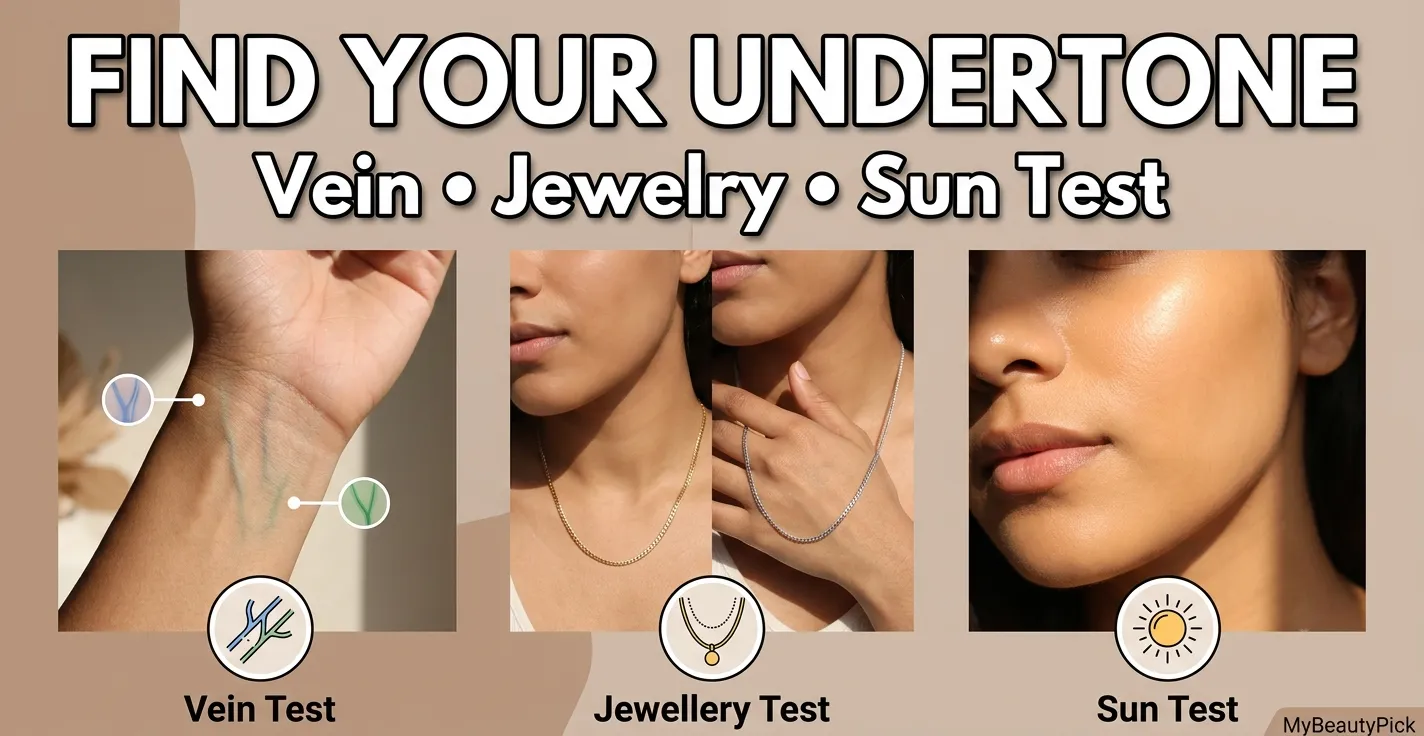
Your undertone is the fixed colour beneath your skin’s surface. It never changes with a tan, a season, or sun exposure. If you have tan skin, knowing your undertone stops you wasting money on foundations that turn orange, concealers that look grey, and blushes that disappear. These three tests can give you a clear answer without a makeup counter, a colour card, or any prior knowledge of colour theory.
What You Need to Know Before You Start
- Undertone and skin tone are not the same thing. Skin tone is the surface colour you see. Undertone is the fixed hue underneath that never shifts.
- The three most reliable at-home tests are the vein test, the jewellery test, and the sun reaction test.
- Tan skin can be warm, cool, neutral, or olive. There is no default undertone for tan skin.
- One test is rarely enough. Run all three and look for the result that appears most often.
- Olive is its own category. It sits outside warm and cool, and many olive-skinned people are misidentified by standard tests.
Undertone vs Skin Tone: Why Tan Skin Confuses Both
Most people with tan skin get told their undertone is warm. That assumption causes a lot of bad foundation matches. Your surface colour (tan, medium-deep, caramel, bronze) has nothing to do with what’s happening underneath. Two people with identical surface tones can have completely different undertones.
Skin tone changes with sun exposure, seasons, and age. Undertone does not. You could be pale in winter and tan in summer, and your undertone stays exactly the same both times. That’s what makes the three tests below reliable: they read what’s fixed, not what’s temporary.
Run every test in natural daylight, on bare skin, with no product on. Indoor bulbs distort undertone readings. Warm-white bulbs push skin towards orange. Cool fluorescents push it towards green. Even a north-facing window on a cloudy day gives you a more accurate result than most indoor lighting.
Test 1: The Vein Test for Undertone
The Vein Test
What you need: Natural daylight, bare inner wrist or inner forearm.
Turn your wrist over and look at the veins along the inside of your forearm. Look at the overall cast of the vein colour, not a single vein in isolation. The colour you see reflects light filtering through your skin’s pigment layers.
Cool undertone. Pink, red, or blue hues sit beneath your surface colour.
Warm undertone. Yellow, gold, or peach hues sit beneath your surface colour.
Olive undertone. A greenish cast distinct from warm or cool sits beneath your surface.
Neutral undertone. A mix of warm and cool sits beneath your surface colour.
Why the Vein Test Is Harder on Tan Skin
Higher melanin levels in tan and deeper skin absorb more light. This makes veins appear less vivid than they do on fairer skin. If you find your veins look dark, muted, or brown rather than a clear colour, move to the inner upper arm where skin is often lighter, or compare both wrists side by side in direct natural light.
The vein test also gets distorted by dry skin (green veins appear more muted), by post-redness or irritation (adds false warmth), and by harsh indoor lighting. Hold the test until skin is calm, hydrated, and in true natural light before reading the result.
Looking at a single vein rather than the overall cast. Individual veins vary. Step back slightly and read the collective tone of several veins together. That gives you a more accurate reading than fixating on one line.
Test 2: The Jewellery Test for Undertone
The Jewellery Test
What you need: Gold and silver jewellery (or foil in both tones), natural daylight, bare face and neck.
Hold a piece of gold jewellery against your jawline or inner wrist for 30 seconds, then swap to silver. Look at what each metal does to your skin in the reflection, not which metal you prefer stylistically.
Warm undertone. Gold’s yellow base harmonises with your underlying warmth.
Cool undertone. Silver’s cool base complements your underlying pink or blue tones.
Neutral undertone. Neither metal clashes because your undertone is balanced.
Olive undertone. Gold is closer, but the skin still looks slightly flat rather than warm and glowing.
Reading the Jewellery Test on Tan Skin
Tan skin often looks good in gold at first glance because yellow-gold contrasts against a darker surface in a pleasing way. That visual harmony can mislead you into assuming warm undertone when you might actually be neutral or olive. What you are looking for is not which metal looks pretty against your skin, but which metal makes your skin look more alive, healthy, and three-dimensional. The right metal brings out warmth or clarity in the complexion. The wrong one makes your face look flat, tired, or slightly off.
No jewellery to hand? Cut strips of gold and silver wrapping foil or card. They work just as well for a quick comparison. The metal quality matters less than the colour tone you are testing against your skin.
Test 3: The Sun Reaction Test for Undertone
The Sun Reaction Test
What you need: Your memory. Think about how your skin typically responds to unprotected sun exposure for 30-60 minutes.
This test reads undertone through the lens of how your melanin behaves under UV. People with more melanin in tan skin often misread this test because they assume tan skin always responds the same way. It does not.
Cool undertone. Your skin turns pink or red rather than golden.
Warm undertone. Your skin deepens to golden, caramel, or peachy bronze.
Olive or warm undertone. High melanin content, skin deepens easily without redness.
Neutral undertone. A short pink stage is followed by an even tan.
What the Sun Test Reveals That Others Miss
The colour your skin turns in the sun tells you something the vein test cannot. If your skin tans to a golden or peach-bronze depth, that warmth is consistent with a warm undertone. If your skin tans to a cinnamon, reddish, or rosy-brown depth even without burning, that points to a cool undertone. The sun test is less about whether you burn, and more about the exact shade your skin produces when it does tan.
For tan skin specifically, the colour of your tan matters more than the presence of one. Many tan-skinned people with cool undertones tan easily but notice their deepened skin pulls distinctly rosy or red rather than golden. That rosy-tan depth is the cool undertone signal.
The sun test is a supporting signal, not a standalone answer. Sunscreen use, medication, and past sun damage all affect surface reactions. Use it alongside the vein and jewellery tests to confirm, not to decide on its own.
The Undertone Profiles for Tan Skin
Tan skin occurs across all four undertone categories. Here is what each looks like in practice and how it affects foundation and makeup choices.
Warm Undertone on Tan Skin
Yellow, golden, or peachy hues beneath the surface. Veins appear green. Gold jewellery makes the face glow. Skin tans to golden-bronze.
- Foundation: yellow-warm base, W or WN codes
- Blush: peach, coral, warm terracotta
- Bronzer: golden-brown, not cool ash
- Lipstick: brick, rust, coral, nude-peach
Cool Undertone on Tan Skin
Pink, red, or blue hues beneath the surface. Veins appear blue-purple. Silver jewellery brightens the face. Tan pulls rosy or cinnamon, not golden.
- Foundation: pink-neutral or cool base, C or NC codes
- Blush: berry, rose, dusty pink
- Bronzer: cool-brown or mauve-brown
- Lipstick: berry, plum, true red, cool mauve
Neutral Undertone on Tan Skin
A balanced mix of warm and cool. Veins are both green and blue. Both metals work. Skin tans evenly without pulling strongly warm or cool.
- Foundation: neutral base, N or NW/NC codes
- Blush: nude-peach or soft terracotta
- Bronzer: medium warm-neutral brown
- Lipstick: most nudes, warm rose, dusty coral
Olive Undertone on Tan Skin
A muted yellow-green beneath the surface, distinct from warm or cool. Veins often appear teal. Gold jewellery works, but skin can look flat rather than glowing. Most standard foundations cause a grey or orange cast.
- Foundation: look for olive-specific shades or yellow-neutral, not peachy-warm
- Blush: terracotta, warm mauve, earthy rose
- Bronzer: warm mid-brown with no orange pull
- Lipstick: brick, warm brown-rose, dried rose
Full Comparison Table: All Three Tests at a Glance
| Undertone | Vein Colour | Best Metal | Sun Reaction | Tan Colour |
|---|---|---|---|---|
| Warm | Green | Gold | Tans easily, rarely burns | Golden, caramel, peachy bronze |
| Cool | Blue or purple | Silver | Burns easily, or tans rosy | Rosy, reddish, cinnamon |
| Neutral | Blue-green mix | Both | Burns first, then tans evenly | Even deepening, no strong pull |
| Olive | Teal or blue-green | Gold (muted effect) | Tans quickly, rarely burns | Deep bronze with muted/ashy quality |
When Your Tests Give Conflicting Results
This happens often with tan and olive skin. You might get a warm result from the vein test and a neutral or cool result from the jewellery test. That is not a failure of the tests. It reflects the complexity of how melanin, skin thickness, and pigment interact. Standard undertone categories were not designed with olive or deeper skin tones in mind.
What to Do When Tests Don’t Agree
- Run all three tests. The result that appears most often (two out of three) is your most likely undertone.
- If you still have mixed signals, run the white cloth test: hold a plain white cloth under your chin in natural light. If your skin looks golden or yellow next to it, warm. Rosy or pinkish, cool. Flat, grey, or greenish, olive. No obvious pull, neutral.
- If warm and olive keep conflicting, swatch one warm-peach foundation and one yellow-neutral foundation on your jawline. The one that disappears is your answer.
- If you consistently confuse silver and gold in the jewellery test, you are most likely neutral. Neutral undertone people genuinely suit both metals.
The Olive Undertone Problem on Tan Skin
Olive is the most misidentified undertone on tan skin. It sits outside the warm-cool-neutral framework that most beauty advice uses, which means standard tests often push olive-toned people towards either warm or neutral when neither is quite right.
The distinction matters for foundation. A warm foundation on olive skin picks up the peach or orange note in the formula and makes the face look orange. A cool foundation goes grey. A neutral foundation often looks flat or beige. What olive skin needs is a yellow-neutral or olive-specific shade: warm but without any peachy or orange pull.
Olive undertone on tan skin often looks dark or ashy in flat lighting, then suddenly warm and luminous in golden or natural light. The green-yellow underneath is what produces that effect. The teal vein reading, the muted-gold jewellery result, and a tan that deepens quickly without any rosy pull are the strongest combined signal for olive.
If you are olive and unsure: look for foundation shade names that include “olive,” “golden beige,” or “warm sand” without “peach” in the description. Brands like NARS, Make Up For Ever, Fenty Beauty, and Charlotte Tilbury have invested more in olive-specific shade ranges than most. Swatch on the jawline in natural daylight and wait three minutes before judging the match.
How to Use Your Undertone Result for Foundation
Once you have confirmed your undertone across at least two of the three tests, you have a reliable filter for foundation shopping. The goal is not a shade that matches your surface colour in the bottle. It is a shade that disappears into your jawline in natural light.
6 Undertone Mistakes That Ruin Foundation on Tan Skin
- Assuming tan skin always means warm undertone. Surface depth and undertone are separate. Plenty of tan-skinned people have cool or neutral undertones.
- Testing foundation in store lighting. Cool fluorescents make everything look cooler. Warm display lights push everything peachy. Test on your jaw, step outside, check in daylight.
- Relying on one test only. The vein test is the most commonly cited, but it is also the most affected by lighting conditions, skin thickness, and melanin depth. Use all three.
- Choosing a foundation that looks right in the bottle. Foundation oxidises on skin. A shade that looks perfect on paper can pull orange or grey within an hour. Always swatch and wear before committing.
- Picking warm foundation for olive skin. Warm foundations have a peach-orange base that reads as orange on olive skin. Look for yellow-neutral shades instead.
- Ignoring seasonal depth shifts. Your undertone never changes, but your surface depth does in summer. Keep the same undertone category and just go a shade or two deeper when you tan.
Frequently Asked Questions
How to find your undertone at home without jewellery?
Use the vein test and sun reaction test together. Look at your inner wrist veins in natural light: green indicates warm, blue or purple indicates cool, and teal or a mix indicates olive or neutral. Then think about how your skin responds to unprotected sun exposure. If your skin tans golden, you are likely warm. If it tans rosy or burns before tanning, you lean cool. Two matching results from these two tests gives you a reliable read without needing any jewellery.
Can tan skin have a cool undertone?
Yes. Surface depth and undertone are completely separate. Tan skin can be warm, cool, neutral, or olive. Cool-undertone tan skin typically has veins that appear blue or purple, looks better in silver jewellery, and tans to a rosy or reddish-cinnamon depth rather than golden. The assumption that tan skin is automatically warm causes more bad foundation matches than any other single mistake.
What does it mean if my veins look teal?
Teal or blue-green vein colour is the strongest vein indicator for olive undertone. It sits between the blue-purple of cool and the green of warm, which reflects the unique yellow-green quality of olive pigmentation. If you also tan easily without burning, and gold jewellery works but does not make your skin glow visibly, olive undertone is very likely your answer.
Does undertone change when you get a tan?
No. Undertone is fixed. Sun exposure changes your surface depth but not the underlying hue. Someone with a cool undertone who gets deeply tanned in summer still has a cool undertone. Their foundation shade number will change to a deeper tone, but the letter or undertone designation (C, cool, pink-neutral) stays the same. This is exactly why knowing your undertone once saves you from re-testing every season.
Why does my foundation always look orange on my tan skin?
Orange foundation is almost always a warm or peach-based shade on the wrong undertone. If your skin is olive or neutral, a warm-peach foundation will pick up the orange note in the formula and amplify it against your skin’s greenish or balanced undertone. Switch to a yellow-neutral shade (look for shade names with “beige,” “golden beige,” or “sand” but without “peach” or “apricot”) and test on your jawline in natural light before buying.
What is the most accurate undertone test for tan skin?
No single test is definitively most accurate for tan skin. The vein test is widely cited as reliable, but higher melanin levels make the vein colour harder to read. Running all three tests (vein, jewellery, and sun reaction) and looking for the result that appears most often gives the most reliable answer. If all three conflict, add the white cloth test: hold plain white fabric under your chin in natural light and note whether your skin pulls golden, rosy, or flat.
What undertone is olive skin?
Olive is its own undertone category. It has a yellow-green quality beneath the surface that sits outside the standard warm-cool-neutral framework. Olive skin can lean warm-olive or cool-olive, but in both cases the subtle green pigment means that standard warm foundations look orange and standard cool foundations look grey. Olive-specific foundation shades or yellow-neutral formulas are the most reliable match.
How do I find my undertone if I can’t see my veins?
Try the inner upper arm, where skin is usually lighter and veins closer to the surface. If veins are still not visible, skip the vein test entirely and run the jewellery test and sun reaction test. These two are not affected by skin depth. You can also try the white cloth test: plain white fabric held at the jawline in daylight will pull a golden, rosy, or neutral cast from your skin that indicates your undertone without needing visible veins.