

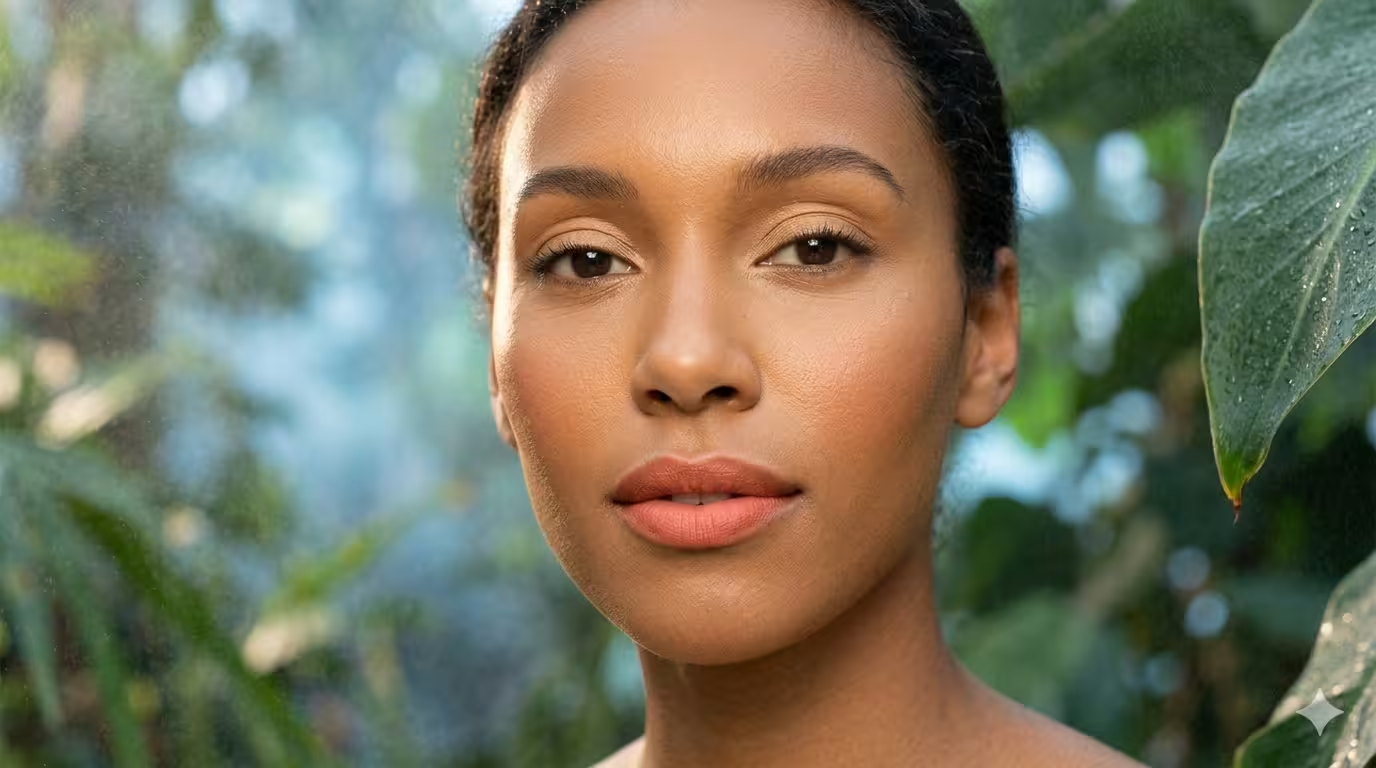
Humidity causes makeup to slip, oxidize, and separate faster on tan skin because moisture in the air breaks down the binding agents in foundations and powders. That is the direct answer. But understanding exactly how this happens, and building a routine around it, is what actually keeps your makeup intact on a humid day.
This guide breaks down the science in plain terms, identifies the specific ingredients that survive humidity, and gives you a humidity-proof routine ordered by step. No guesswork, no vague “choose waterproof formulas” advice.
What Humidity Actually Does to Makeup
Humidity is airborne water vapor. When the air around you carries a high percentage of moisture, your skin absorbs some of it, and the makeup sitting on your skin is caught in the middle.
Most foundations and powders rely on polymer-based film formers to stay in place. These are the ingredients that create the “stay” in long-wear formulas. Water molecules in humid air penetrate and soften these films, which is why makeup that looks flawless in a dry environment will start to slip and separate in high humidity within hours.
Sweat makes this worse. Your body sweats to regulate temperature, and that sweat comes from below the skin, pushing makeup upward and outward. Humidity combined with sweat is more damaging to makeup wear than either factor alone.
For tan skin specifically, there is an additional oxidation layer to the problem. Warm undertones in medium and tan complexions are more susceptible to visible color shift when sebum and sweat mix with foundation pigments. Where a fair skin tone might simply look shiny, tan skin can shift noticeably orange or muddy as the day progresses. This is why foundation shade selection and formula type matter as much as the routine itself.
The Makeup Ingredients That Survive Humidity
Knowing what to look for on the ingredient list is the fastest way to filter out products that will not hold up.
Dimethicone creates a moisture-blocking film on the skin’s surface. It is effective at slowing moisture from disrupting your base, but it can pill if layered incorrectly with other silicone products. Use it in primer, not stacked throughout every layer.
Film-forming polymers such as acrylates copolymer appear in long-wear and waterproof foundations. They are the most important ingredient class for humidity resistance. If your foundation’s ingredient list contains acrylates, trimethylsiloxysilicate, or similar polymer-based film formers near the top, it will perform meaningfully better in humid conditions.
Kaolin clay in primers and foundations absorbs oil as it is produced without adding weight or product. It is a more sustainable humidity defence than powder alone because it works continuously rather than just at the moment of application.
What to avoid on humid days: thick emollient formulas, heavily glycerin-loaded products applied directly under makeup, and anything marketed as “hydrating” or “dewy” as its primary claim. Glycerin attracts water from the air, which sounds positive but in high humidity it draws environmental moisture directly into your base and accelerates breakdown.
Building a Humidity-Proof Base for Tan Skin
The foundation routine on a humid day starts at the cleanser, not the primer. Overnight sebum accumulation gives humidity-related breakdown a head start if you do not remove it properly before applying anything else.
Cleanse with a gel or foam formula. Cream cleansers leave a residue that gives bacteria and oil a surface to work from. A clean, balanced skin surface is what you are aiming for before the first skincare product goes on.
Apply a lightweight oil-control serum. Niacinamide is the best-studied option here: it regulates sebum production at the follicle level rather than just absorbing oil at the surface. Two to three drops of a 5% to 10% niacinamide serum before SPF makes a measurable difference in how long your base holds on a humid day.
Use a mineral-based SPF. Mineral sunscreens sit on the surface of the skin rather than absorbing into it, which means they create less interference with your foundation formula. They also tend to have a slightly mattifying effect, which helps on humid days.
For primer, choose a water-based formula with a blurring or oil-control finish. Apply it to the T-zone and any areas that tend to break down first. Do not apply it all over if your skin is combination: the areas that stay drier will benefit more from a hydrating approach, and over-priming with oil-control formulas on dry zones causes flaking in humidity.
For foundation on humid days, a skin tint or serum foundation with a neutral-to-cool undertone performs better than a full-coverage formula. Go one shade more neutral or slightly cooler than your usual match to counteract the warmth that oxidation adds throughout the day.
The Powder Strategy for Humid Days
Powder is the most misused product in a humid-weather routine. The instinct is to apply more of it, since shine seems like the problem. But excess powder in humidity does not absorb moisture, it absorbs and then becomes saturated, contributing to the cakey, heavy finish that makes makeup look worse by afternoon than it did at morning application.
Use loose translucent powder over pressed on humid days. Loose powder has a finer particle size that sits more naturally on the skin’s surface and provides oil control without building up into visible layers.
Apply powder only where you need it: the T-zone, around the nose, and under the eyes. Skip the cheeks and jawline unless they are specifically oily, and skip the forehead hairline, where powder collects in sweat and becomes visible.
Banana powder under the eyes helps with creasing in humidity. Its yellow-toned pigment is calibrated for the under-eye area’s natural warmth, and the fine texture resists the moisture that causes standard powder to cake there.
The setting spray sandwich approach is the highest-impact technique change for humidity: spray once before powder to create adhesion, apply a light dusting of powder, then spray once more after to fuse the layers. This produces a significantly more cohesive finish that resists humidity better than either product used alone.
Color Makeup That Lasts in Humidity
Eyes
Gel liner holds better than pencil in any humid condition. Pencil liner contains waxes and oils that soften in moisture; gel liner dries to a film that requires deliberate removal. Apply it with a thin brush for the most precise, longest-lasting line.
For mascara, tubing formulas are the only genuinely humidity-resistant option. They coat each lash in a polymer tube rather than depositing pigment, so sweat and moisture do not cause smudging. They slide off cleanly when you add warm water during removal, making them equally easy to take off at the end of the day.
For eyeshadow, matte cream shadow applied with a brush stays better in humidity than loose or pressed powder shadow. The binders in cream formulas grip to the lid and to primer better when moisture is present. Warm matte shades in terracotta, warm brown, and sienna read clearly on tan skin and maintain their tone even when humidity causes some fading.
Cheeks
Cream blush applied under your powder layer, rather than on top of it, holds significantly better in humidity. The cream bonds to the skin and the foundation layer beneath the powder; when humidity breaks down the powder on top, the color underneath remains. For tan skin, warm terracotta, peach, and brick-toned cream blushes complement natural undertones without looking ashy in heat.
Lips
Matte liquid lipstick is the formula that performs best in humidity. It dries to a film on the lips that resists the moisture in humid air better than glosses, satins, or cream lipsticks. For tan skin, brick reds, warm nudes with a brown base, and terracotta tones hold their color well and complement the natural warmth of tan undertones without fighting it.
What to Carry for Midday Touch-Ups in Humid Weather
- Oil-blotting sheets: blot shine from the T-zone; do not re-powder over worn product as this builds up into visible layers
- Mini facial mist: thermal or rosewater mist, not alcohol-based; a light mist from a distance refreshes the finish without disturbing what is set underneath
- Brow gel: brows are the first thing to lose definition in humidity; a clear or tinted waterproof gel restores their shape in seconds
- Tinted lip balm or lip stain touch-up: enough color to feel put-together without requiring precision application
Common Humidity Makeup Problems on Tan Skin (and the Fix)
“My foundation turns orange by noon.” This is oxidation caused by sebum, sweat, and warm undertones reacting with your foundation formula. The fix is choosing a foundation one shade cooler or more neutral than your usual match, and using a niacinamide serum before application to slow sebum production.
“My eyeliner disappears within an hour.” You are using a pencil or cream formula that is not designed for humidity. Switch to a waterproof gel liner applied with a thin brush and let it set for sixty seconds before opening your eyes fully after application.
“My setting spray made everything worse.” Setting spray applied too close to the face or immediately after powder can disturb product before it has set. Spray from at least 8 to 10 inches away in a slow, sweeping pattern. Let powder sit for one to two minutes before applying the final mist.
“My skin looks shiny but feels dry.” This is the dehydration-oil imbalance problem, common in humid climates. Your skin is producing oil to compensate for internal dehydration. The fix is drinking more water and using a hydrating serum underneath your oil-control products, not just oil-control products alone.
The Humidity-Proof Routine at a Glance
- Gel or foam cleanser
- Niacinamide serum (5% to 10%)
- Lightweight moisturizer, oil-free
- Mineral SPF 50
- Water-based oil-control primer (T-zone focus)
- Skin tint or serum foundation, neutral-to-cool shade
- Cream blush and cream bronzer (before powder)
- Setting spray mist
- Loose translucent powder (T-zone only)
- Setting spray mist again
- Gel liner, tubing mascara, matte liquid lip
Humidity is not a makeup enemy you avoid. It is a condition you plan for. With the right ingredient awareness and a layering order that works with how the products interact, your makeup can hold up through a genuinely humid day without a full midday reapplication.