

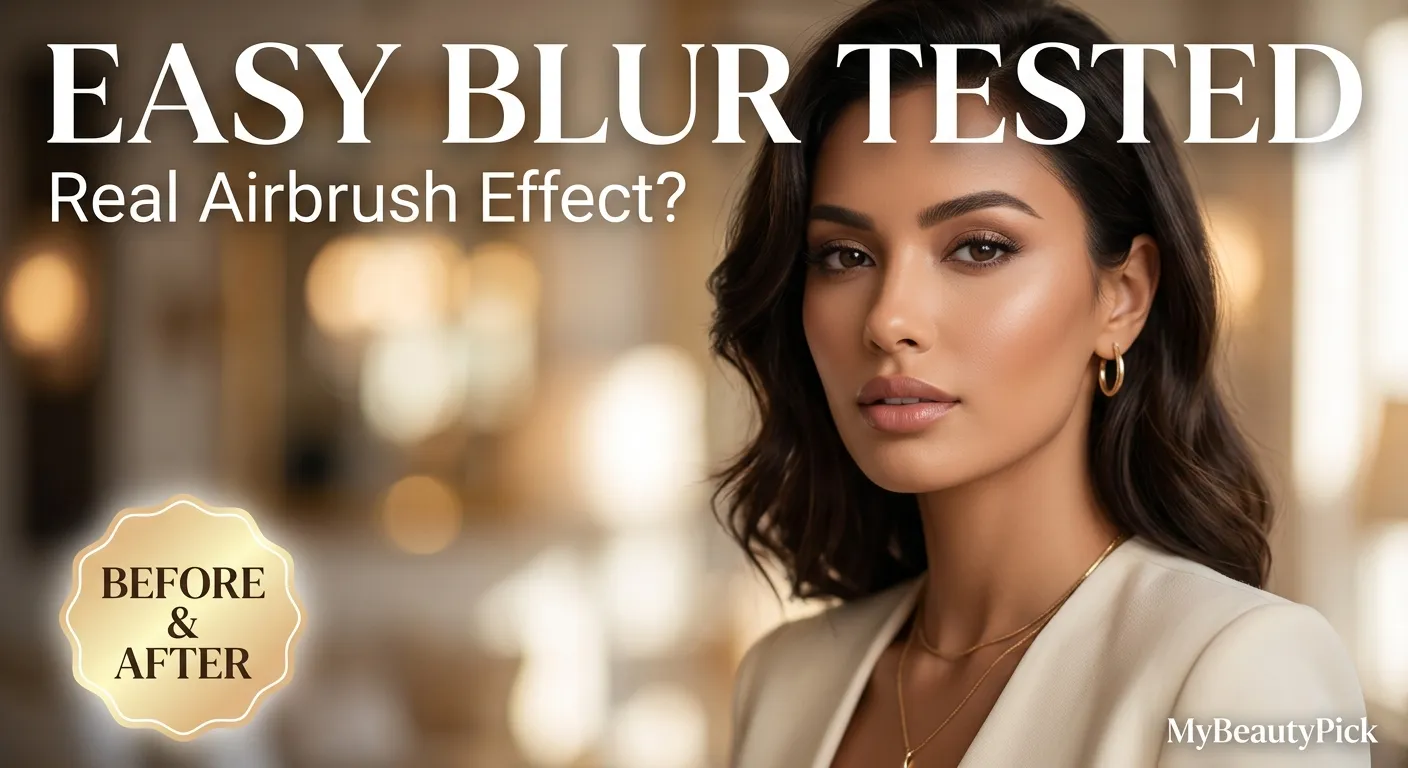
Huda Beauty built its name on Faux Filter, a foundation plenty of people loved and just as many called too heavy and too cakey. Easy Blur was the answer to that complaint, and after testing it across different skin types in the chair, I can tell you the airbrush claim holds up in some conditions and falls apart in others.
Huda Beauty Easy Blur Foundation does deliver a genuine soft-focus, blurred finish on normal, oily, and combination skin, especially in a single thin layer. The airbrush effect breaks down on dry or already-textured skin, where the same blurring polymers that smooth things out elsewhere can settle into dry patches and make pores and texture more visible instead of less.
Key Takeaway
- The blurring effect is real on smooth, hydrated skin, not just marketing language
- Dry or visibly textured skin can get the opposite result, with pores and dry patches looking slightly more obvious, not less
- It’s a soft-matte to velvety finish, not a dewy one, despite the natural marketing angle
- This is a meaningful improvement over Huda’s earlier Faux Filter formula for anyone who found that one too heavy
What’s in the Formula
Easy Blur is built around 1.5% niacinamide for tone and texture, paired with silica and what the brand calls blurring polymers that soften the look of pores and oil. It’s non-comedogenic, fragrance-free, vegan, and comes in 29 shades, a noticeably wider range than most prestige launches offer at first release.
The texture itself feels lighter on application than the coverage level suggests. One thin layer gives true medium coverage, and it builds further without becoming heavy, which is the main complaint Huda Beauty was clearly responding to after Faux Filter.
The Honest Pros and Cons
What works
Genuinely lightweight on application, even at full medium coverage, with none of the heavy, sitting-on-top feeling Faux Filter was known for.
Held up through heat and an oily T-zone in real-world testing without breaking down or going patchy.
Buildable without tipping into a cakey finish, even with a second light layer over blemishes.
What doesn’t
Can run slightly drying in colder months, with at least one reviewer needing extra hydrating drops mixed in during winter.
On dry or already-textured skin, the same blurring effect can make pores and dry patches more noticeable rather than less.
A 2024 shade-batch mislabeling issue briefly affected at least one deeper shade, which is worth knowing before ordering online without swatching in person.
Does the Airbrush Claim Actually Hold Up?
On smooth, normal to oily skin, yes, close to it. Multiple testers describe a soft-focus, filtered look in photos with minimal flashback, and the finish reads as soft-matte rather than flat or powdery. That part of the marketing is not exaggerated for the skin types it was built around.
On dry or textured skin, the claim breaks down. The same blurring polymers that smooth oily, even-textured skin can sit unevenly across dry patches and slightly emphasize visible pores instead of diffusing them, which is the exact opposite of an airbrush effect. If your skin already runs dry or textured, the realistic expectation should be a soft-matte, natural foundation rather than a true blur.
Who This Foundation Actually Suits
Normal, oily, and combination skin gets the most convincing version of the airbrush effect, particularly in warm or humid conditions where the formula has been shown to resist breaking down. If your previous frustration with foundation was specifically about heaviness or a cakey finish, this is a legitimate step up from heavier full-coverage formulas in the same price range.
Dry or mature skin should go in with tempered expectations. A hydrating primer underneath helps, but it doesn’t fully eliminate the texture-emphasizing effect some dry-skinned reviewers experienced. If your skin leans dry for most of the year, a dewier skin tint or a hydrating-formula foundation will likely outperform Easy Blur on the days your skin needs more than a quick swipe of niacinamide-based coverage.
Apply with a damp sponge, not a brush, for the truest blur effect
The most consistent “airbrushed” results in testing came from pressing the product in with a damp Beautyblender rather than buffing it with a brush. A brush can leave the blurring polymers sitting slightly on the surface instead of pressed into skin, which is often the difference between a foundation that looks blurred and one that just looks matte.
| Skin Type | Airbrush Claim Result | Recommendation |
|---|---|---|
| Oily/combination | Holds up well, resists breakdown in heat | Strong match, apply thin first layer |
| Normal | Genuine soft-blur finish | Good match as-is |
| Dry | Can emphasize texture instead of blurring it | Use a hydrating primer, or consider a dewier formula instead |
| Mature/textured | Inconsistent, depends on hydration level | Patch test before committing to full size |
Easy Blur vs. Faux Filter
If You Disliked Faux Filter, This Is Worth Revisiting
Faux Filter built Huda Beauty’s foundation reputation, but it also built a reputation for sitting heavy and looking cakey on a lot of skin types. Easy Blur was developed specifically in response to that feedback, and the difference in weight and finish is noticeable in side-by-side wear. If Faux Filter felt like too much foundation, Easy Blur is the more reasonable everyday option from the same brand, not just a repackaged version of the same formula.
Mistakes That Undercut the Airbrush Effect
- Skipping primer on dry skin. This formula needs a hydrated base more than an oily one does to get anywhere close to the blurred finish.
- Applying with a dry brush only. A damp sponge presses the blurring polymers into skin rather than leaving them on the surface.
- Layering heavily for full coverage. This is built for buildable medium coverage, not a true full-coverage result; heavy layering brings back the cakey look it was designed to avoid.
- Ordering a deeper shade online without checking current batch info. The 2024 mislabeling issue specifically affected a richer shade, so swatching in person is the safer move if you’re new to the range.
- Expecting a dewy finish. This reads soft-matte to velvety, not glowy, despite the natural-skin marketing language.
FAQ
Does Huda Beauty Easy Blur Foundation really give an airbrushed finish?
On normal, oily, and combination skin, yes, with a soft-focus result that holds up well in photos. On dry or textured skin, the same blurring effect can emphasize pores and dry patches instead of softening them.
Is Easy Blur Foundation good for dry skin?
It can work with a hydrating primer underneath, but several reviewers with dry skin found it slightly drying, especially in colder months, and noted that texture became more visible rather than less. A dewier formula will likely perform better on consistently dry skin.
How does Easy Blur compare to Huda Beauty’s Faux Filter Foundation?
Easy Blur is noticeably lighter and less prone to looking cakey than Faux Filter, and was developed specifically to address that common complaint. Anyone who found Faux Filter too heavy is likely to find Easy Blur more wearable for daily use.
What’s the best way to apply Easy Blur Foundation for the most natural finish?
A damp makeup sponge tends to produce the most convincing blurred finish, since it presses the product into skin rather than leaving it sitting on the surface the way a dry brush can.
How many shades does Huda Beauty Easy Blur Foundation come in?
The range launched with 29 shades, which is broader than most prestige foundation launches offer at first release, though a shade-batch labeling issue briefly affected at least one deeper shade in 2024.