

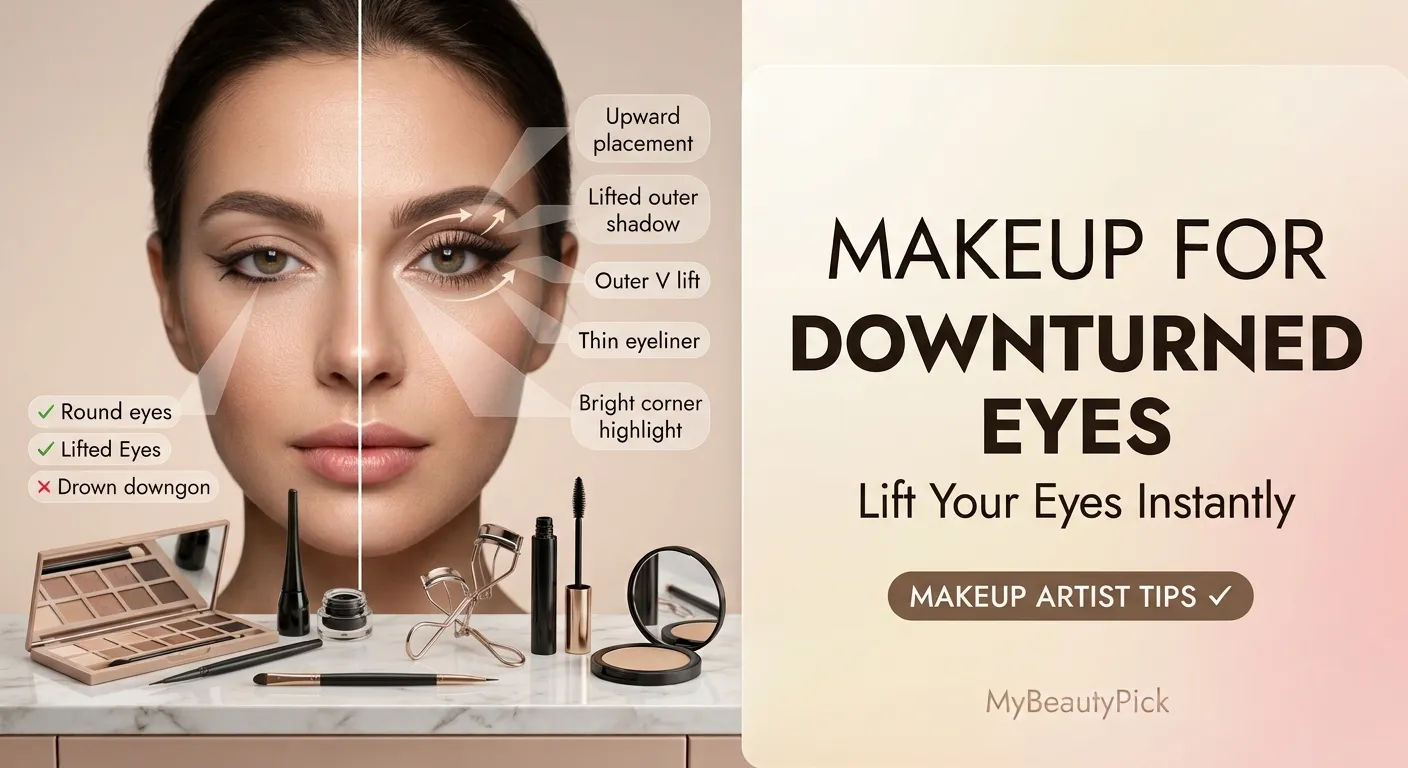
Downturned eyes have outer corners that angle downward rather than sitting level with or above the inner corner. This is a distinctive, beautiful eye shape — many well-known faces have downturned eyes — but without specific placement techniques, eye makeup can follow the downward angle rather than counteracting it, making the eye appear to droop rather than lift. The techniques that work are not about fighting the eye shape but about using shadow and liner direction to guide the eye’s attention upward.
- Blend outer corner shadow upward and outward — toward the brow tail, not following the natural downward outer lash line direction.
- Liner should extend upward at the outer corner, angled above the natural lash line direction, not parallel to the lower lid.
- Avoid dark liner on the outer lower lash line — it follows and emphasises the downward angle.
- Concentrate mascara on the upper lashes, particularly the centre and inner-centre, to open the eye upward.
- Lighter shade at the outer corner of the lower lid lifts; dark shade at the outer corner of the lower lid drops.
Understanding the Downturned Eye Shape
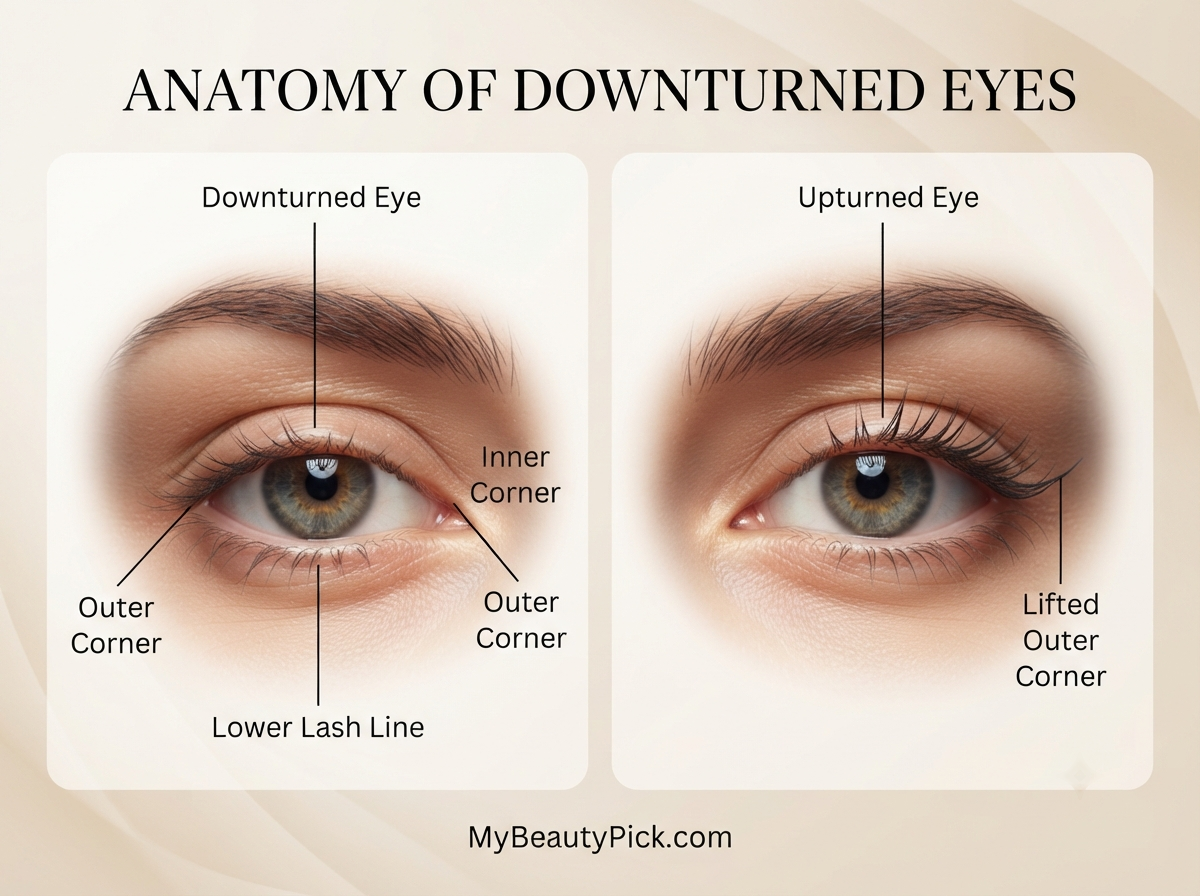
In downturned eyes, the outer corner sits lower than the inner corner — the eye angles downward from inner to outer. The degree varies: slightly downturned eyes have a subtle angle; more significantly downturned eyes can have an outer corner that sits noticeably lower, with the outer lash line dropping toward the cheekbone. The lower lid has more visible lower white toward the outer corner in many downturned eyes.
The makeup principle is directional: everything that follows the downward angle (liner parallel to the lower lash line, shadow blended downward, outer corner emphasis at the lowest point) reinforces the drooping quality. Everything that redirects attention upward (shadow blended toward the brow tail, liner angled upward, brighter outer corner lower lid) counteracts it.
Eyeshadow Placement for Downturned Eyes
The Upward Blend Direction
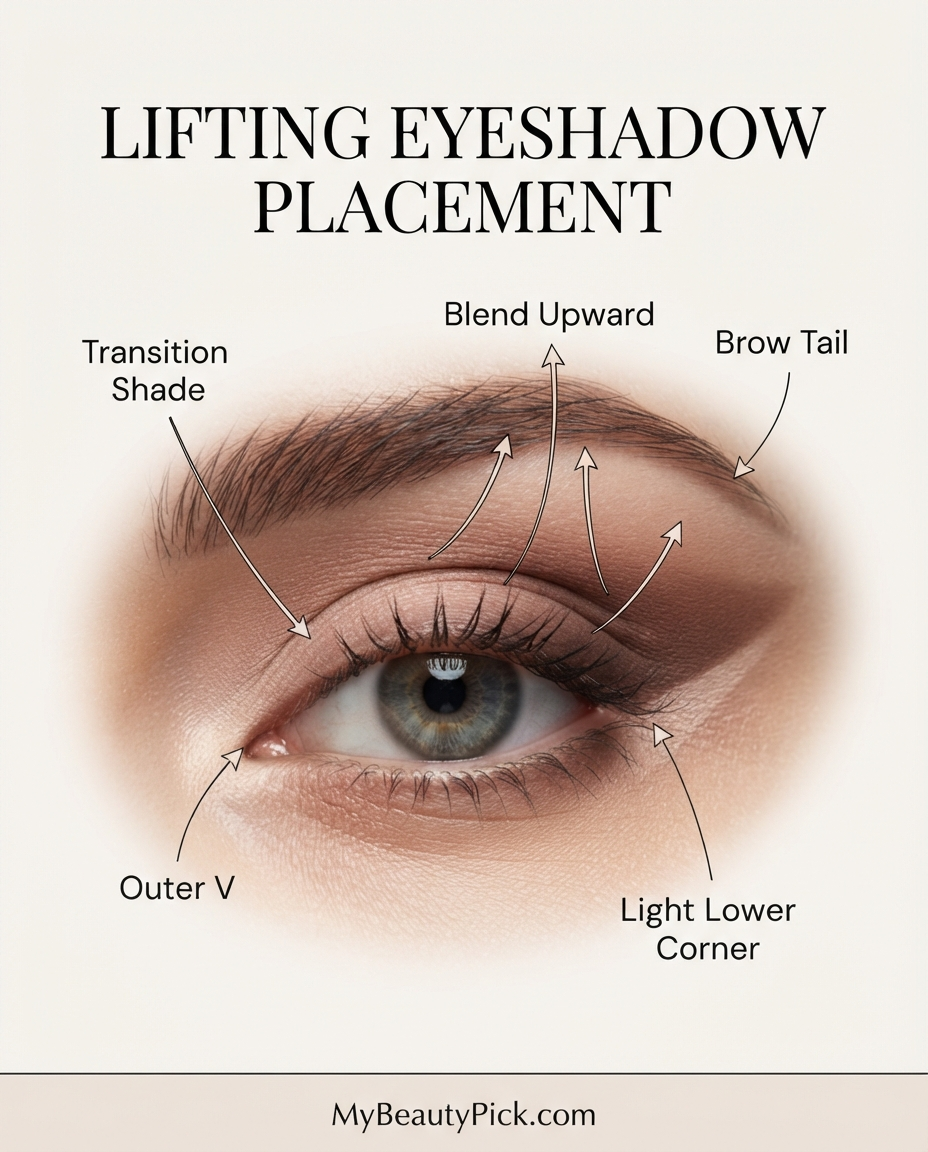
The most important adjustment for downturned eyes is the direction in which outer corner shadow is blended. On a standard eye, the outer crease shadow blends upward and slightly outward in a natural arc. On downturned eyes, the upward component should be exaggerated — think of blending toward 11 o’clock rather than 12 o’clock (using a clock face metaphor for the outer corner of the right eye).
The practical technique: apply the transition shade in the crease and begin the blending direction with an upward sweep rather than following the natural arc of the downturned outer corner. The shadow tail should end higher than the natural outer lash line rather than following it downward.
The Outer Corner V: How to Adjust It
The standard outer V placement — one arm along the outer upper lash line, one arm along the outer crease — needs adjustment. On downturned eyes, the lower arm of the V following the natural outer lash line direction is angling downward. Instead: angle both arms of the V upward. The crease arm extends upward toward the tail of the brow; the upper lid arm angles upward rather than following the lash line’s downward slope at the outer corner.
What to Do With the Lower Outer Lid
The area of the lower lid at the outer corner is where downturned eyes are most visible. Placing dark shadow here emphasises the downward angle by creating visual weight at the lowest point. Instead:
- Leave the outer lower lid lighter than the upper outer corner
- Use a shimmer or highlight shade at the outer corner of the lower lid — this lifts by creating lightness at the downturned point
- Apply any lower lash line shadow only to the inner two-thirds, stopping before the outer corner
Think of the eye as having an upper zone and a lower zone. For downturned eyes, the upper zone should carry all the lift — darker shadow concentrated here blended upward toward the brow. The lower zone (lower lash line and outer lower lid) should be kept lighter, because anything dark here follows the downward angle rather than counteracting it. This upper-heavy, lower-light principle applies to shadow, liner intensity, and lash placement.
Eyeliner for Downturned Eyes
The Lifting Wing
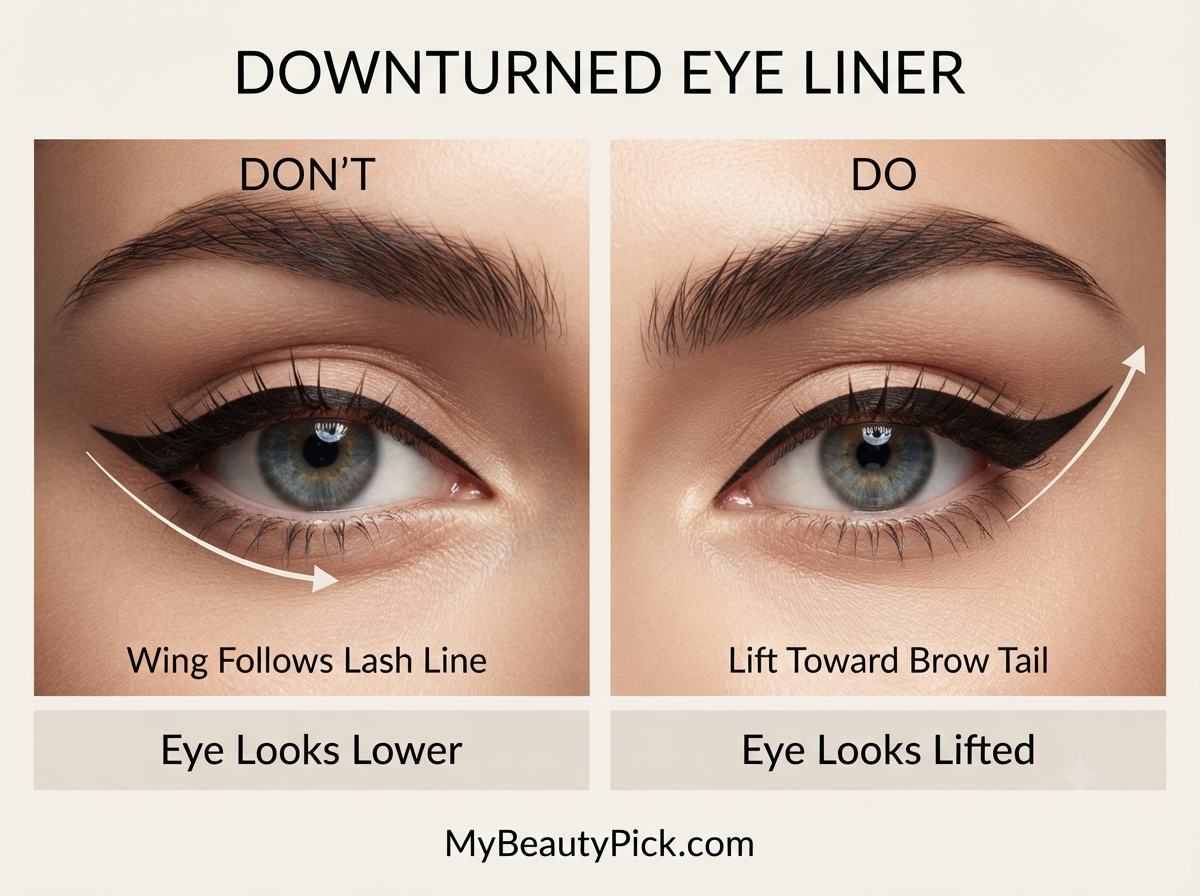
A wing is the most effective liner technique for downturned eyes, but the angle of the wing is critical. The common mistake is extending the wing parallel to the lower lash line — which follows the downward angle directly. The correct approach: lift the wing above the natural angle.
Technique: apply upper liner from the inner corner, staying close to the lash roots. As you approach the outer corner, rather than following the natural downward direction of the lash line, begin lifting the liner direction. At the outer corner, the liner should be heading slightly upward rather than continuing to angle down. Extend the wing from this lifted position, angling upward toward the outer end of the brow — not following the lower lash line direction.
A useful guide: hold a pencil against the outer corner of the eye, angling it upward toward the tail of the brow. The angle of that pencil is the angle of the wing. Most people with downturned eyes find the correct wing angle steeper than feels intuitive.
Upper Liner Adjustments
A thin upper liner at the inner corner, thickening toward the outer corner and then lifting into the wing, gives the eye a more level appearance. For a more subtle version, keep the liner very thin but ensure the wing — however small — angles upward rather than following the lash line.
Lower Lash Line Liner — What to Avoid
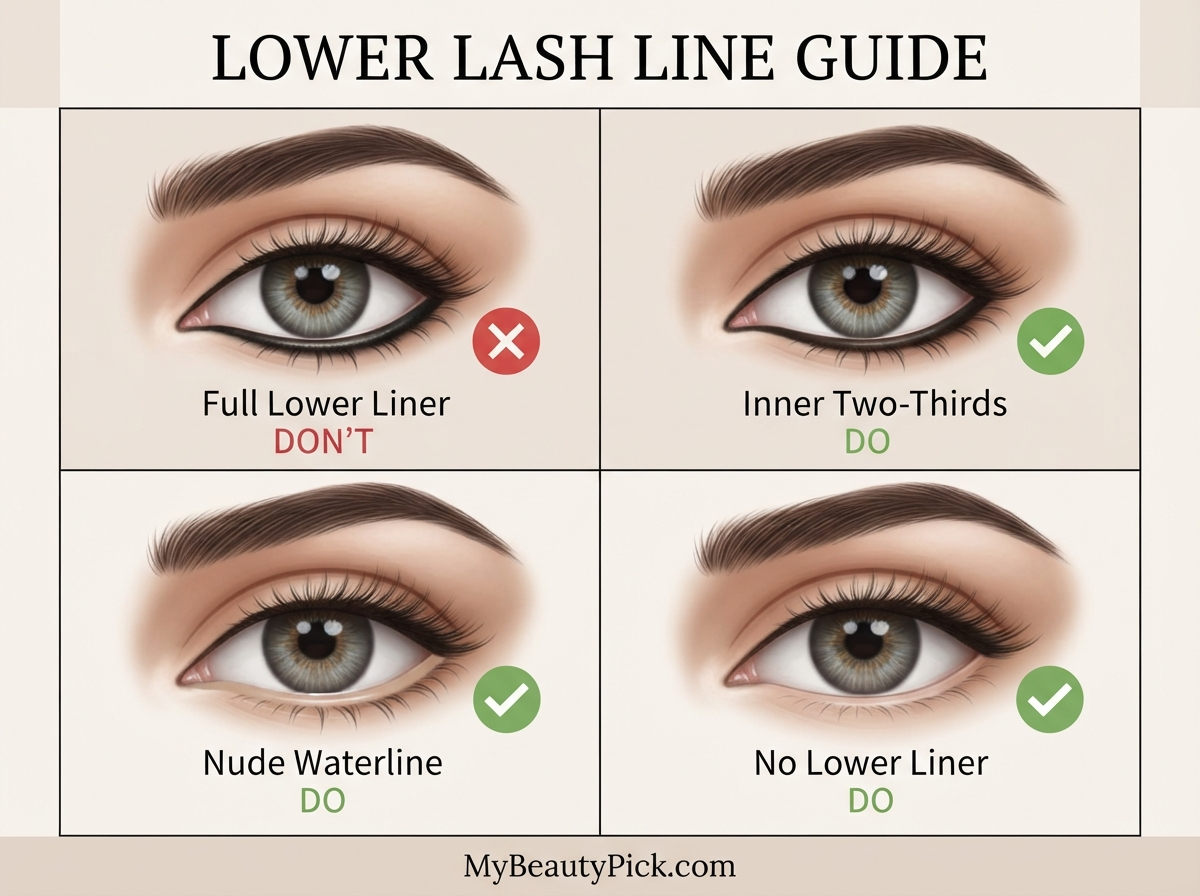
Dark liner drawn along the full lower lash line on downturned eyes creates a clearly visible downward-tracking line from inner corner to outer corner — it literally traces and emphasises the shape you’re trying to counteract. Options:
- No lower liner — often the most flattering for downturned eyes in everyday makeup
- Nude liner on the waterline — opens the eye without any directional emphasis
- Inner corner only — a small amount of liner or shadow at the inner corner adds definition without the downward tracking
- Inner two-thirds only — if lower liner is wanted, stopping it at the two-thirds point before it reaches the downturned outer corner
Mascara and Lashes for Downturned Eyes
Mascara Application
Concentrate mascara on the upper lashes, with particular emphasis on the centre and inner-centre lashes rather than the outer lashes. Over-curling and elongating the outer lashes on downturned eyes can emphasise the drooping outer corner by placing the longest, heaviest lashes at the lowest point. Centre-emphasis mascara opens the eye upward and creates a lifted appearance.
Curling Technique
Lash curling is important for downturned eyes — it lifts the lashes away from their natural downward angle at the outer corner. Curl the outer lashes more aggressively than the centre lashes: hold the curler at the outer corner for a few seconds longer, or use a smaller spot curler for the outer lashes specifically. This counters the natural droop at the outer corner where lashes tend to fall downward.
False Lashes for Downturned Eyes
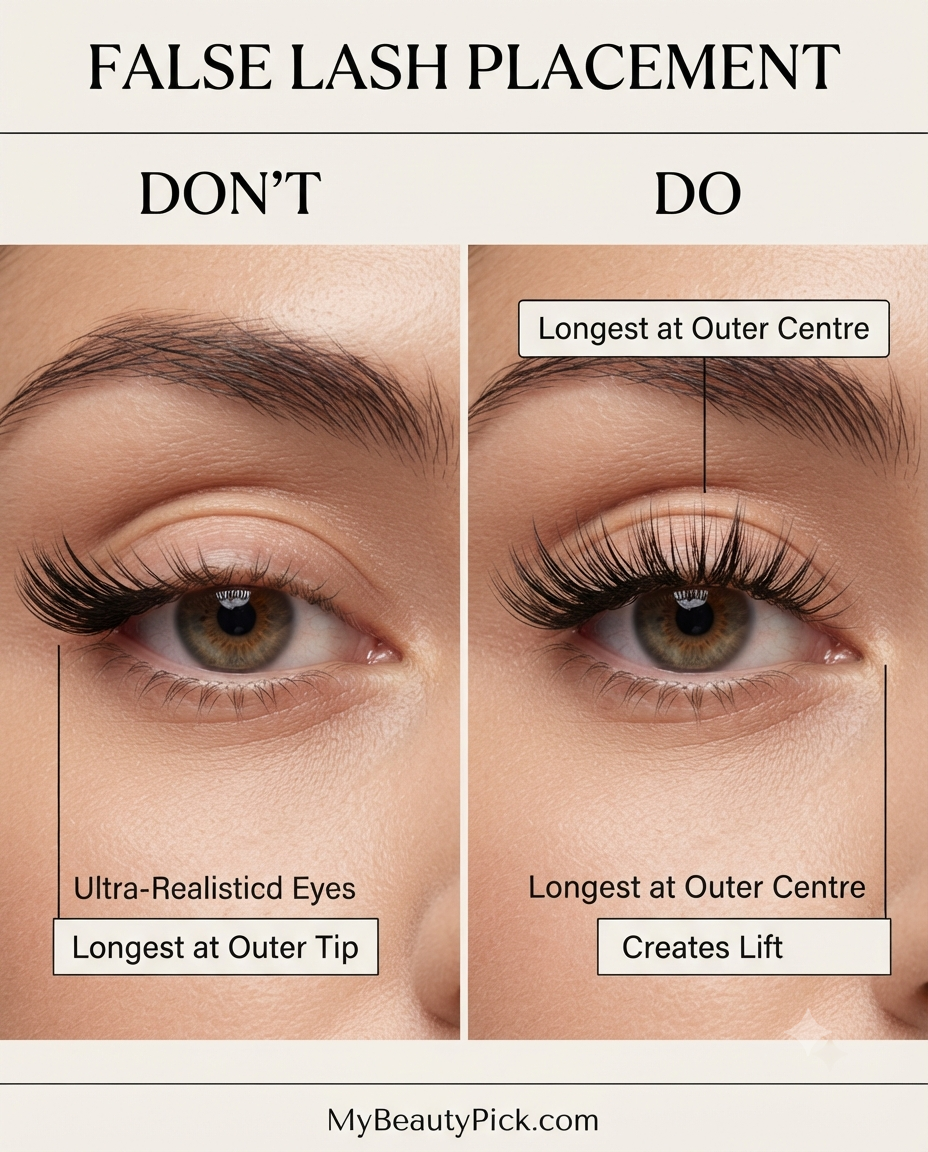
Choose lashes that are longer in the centre and outer-centre rather than longest at the outer tip. Very long outer-tip lashes on a downturned eye place the heaviest emphasis at the lowest point of the eye, reinforcing the droop. Cat-eye lashes that concentrate length in the outer-centre of the lash line (about two-thirds across, rather than the very outer corner) create lift without the outer-tip weight issue. Alternatively, apply individual false lashes only to the upper centre and outer-centre, leaving the very outer corner with natural or minimal lashes.
Three Complete Downturned Eye Looks
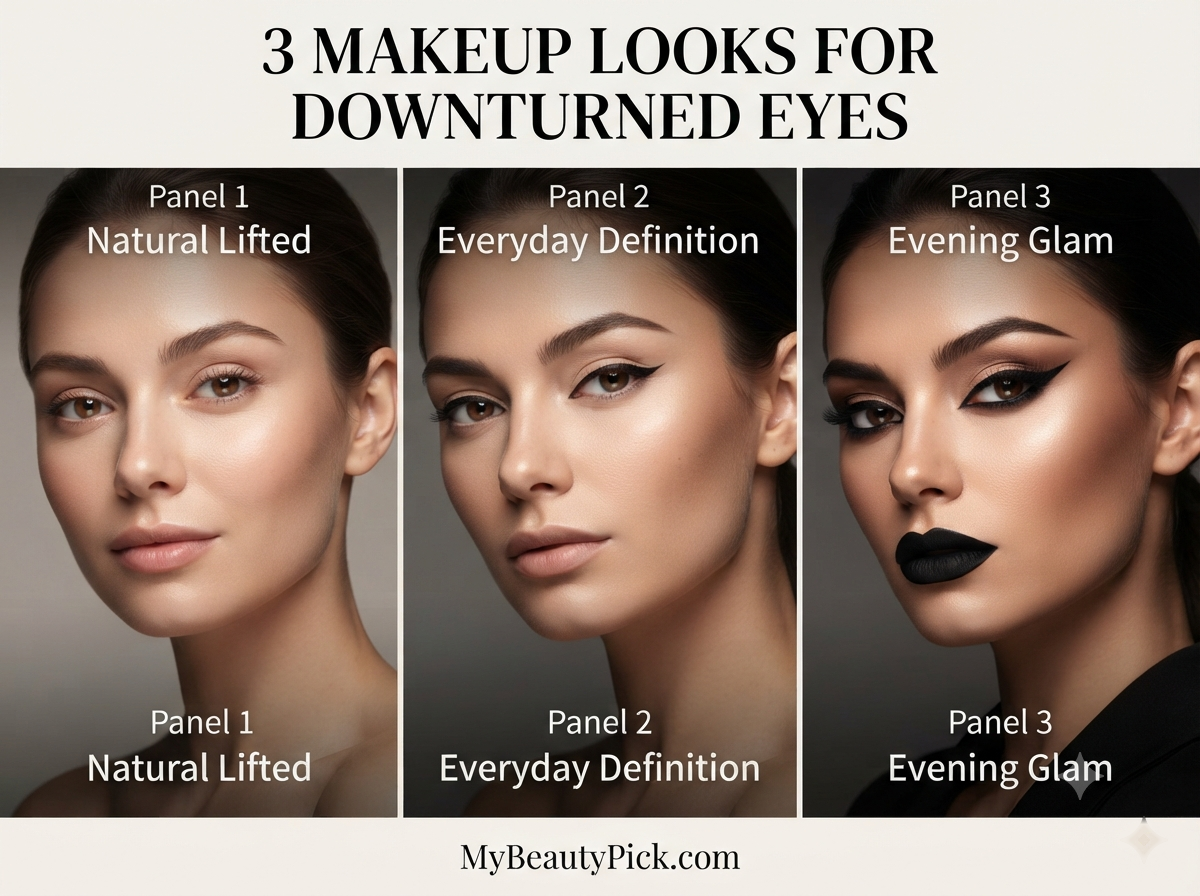
Natural Lifted Look
Warm transition shade in the crease, blended with an upward emphasis at the outer corner. Light shimmer or matte highlight on the lid. Tiny wing liner angled upward. Nude waterline. Centre-emphasis mascara with curled lashes. No lower liner.
Everyday Definition
Medium brown in the crease blended upward and outward toward the brow tail. Slightly darker shadow at the outer corner, also blended upward. Thin black liner on the upper lash line, thickening at the outer corner and lifting into a small upward wing. Nude liner on the waterline. Light shimmer on the outer lower lid (lifting rather than darkening). Two coats of mascara, centre emphasis.
Evening Glam
Deep shadow in an upward-angled outer corner placement reaching toward the brow tail. Shimmer on the centre and inner lid. Bold wing extending steeply upward from the lifted outer corner liner. No lower liner — nude waterline. False lashes with outer-centre length emphasis. Inner corner bright highlight.
What Doesn’t Work for Downturned Eyes
- Shadow blended following the natural downward outer corner direction. This traces and amplifies the drooping angle rather than redirecting it upward.
- A wing that follows the lower lash line direction. A wing parallel to the downturned lower lash line droops — it needs to angle above the natural lash line direction.
- Dark liner on the full lower lash line. Creates a visible downward-tracking dark line from inner to outer corner, directly emphasising the shape being counteracted.
- Very long false lashes at the outer tip only. Places maximum weight and length at the lowest point of the eye.
- Dark shadow at the outer lower lid. Visual weight at the downturned point pulls the eye further downward.
Frequently Asked Questions
How do you do eye makeup for downturned eyes?
Blend outer corner shadow upward toward the brow tail rather than following the natural downward angle. Extend liner in an upward-angled wing above the natural lash line direction. Keep the outer lower lid lighter — lighter shades at the downturned outer corner lift visually; dark shades there drop the eye further. Concentrate mascara on upper centre lashes. Nude liner on the waterline. No dark lower lash line liner.
What eyeliner technique lifts downturned eyes?
A wing angled upward above the natural lower lash line direction. Don’t follow the lash line’s natural downward angle at the outer corner — lift the liner direction before the outer corner and extend the wing upward toward the outer brow tail. The correct wing angle for downturned eyes is steeper than feels intuitive — a pencil held from the outer corner toward the brow tail shows the angle to aim for.
Should downturned eyes avoid lower lash line liner?
Dark liner along the full lower lash line should generally be avoided — it traces the downward angle from inner to outer corner. Options: no lower liner, nude liner on the waterline, or shadow on the inner two-thirds of the lower lash line only, stopping before the outer corner where the downward angle is most pronounced.
What false lashes work best for downturned eyes?
Lashes with the longest fibres at the outer-centre of the strip rather than at the very outer tip. Very long outer-tip lashes place maximum weight at the lowest point of a downturned eye. Cat-eye styles with the length peak two-thirds across the strip, or individual lashes applied to the upper centre and outer-centre, create lift without outer-tip weight.