

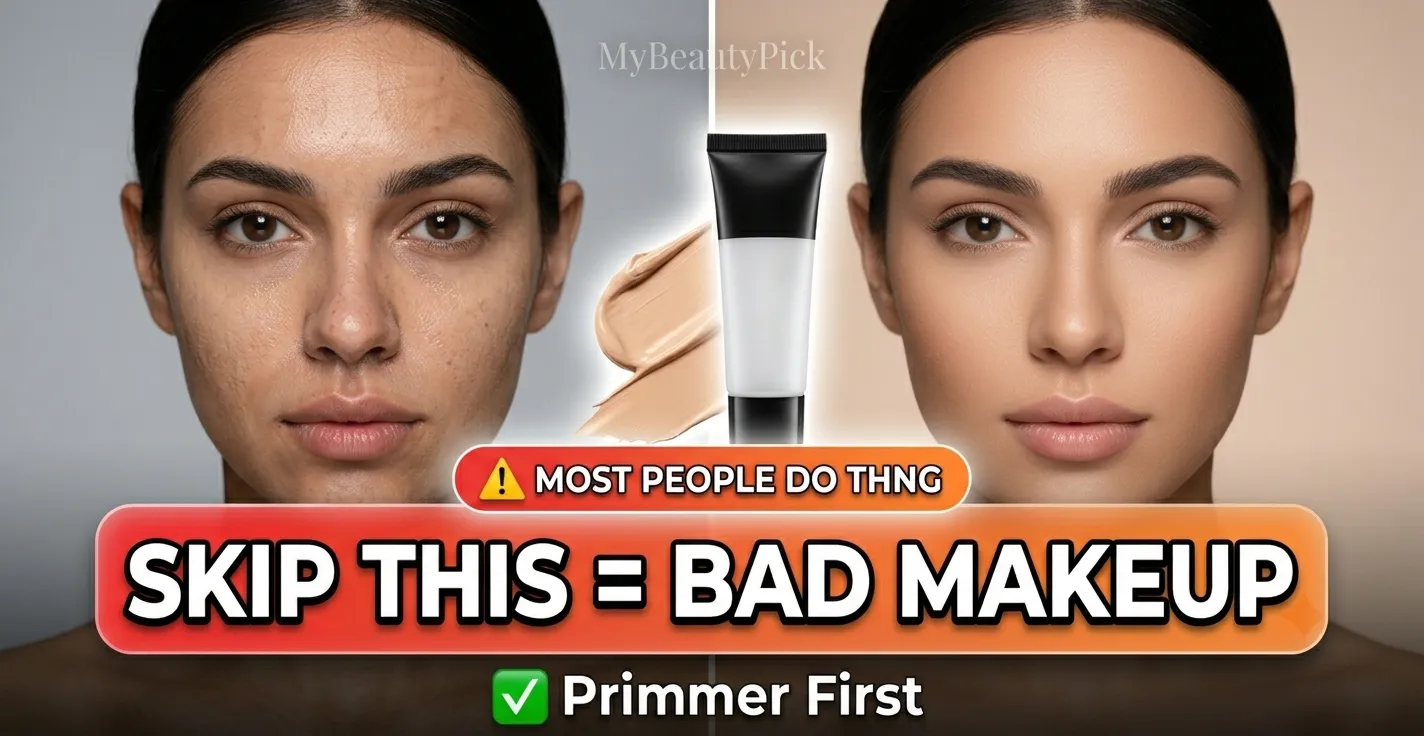
Do you put primer on before foundation? Yes, primer always goes on after skincare and before foundation, but whether you actually need it is a more honest question than most beauty articles want to answer. I have prepped thousands of faces for everything from weddings to red carpet events, and primer earns its place far more often than not, but it is not magic, and it is not always necessary if your skin prep is already doing the work.
This guide covers where primer actually fits in your routine, the real difference between primer and foundation, and how to choose between a water-based and silicone-based formula so your makeup does not separate or pill halfway through the day.
Quick Answer
Yes, primer goes on after skincare and before foundation. Apply it 30 to 60 seconds after your moisturizer and sunscreen have absorbed, then wait another 30 to 60 seconds before applying foundation. Match your primer’s base, water-based or silicone-based, to your foundation’s base to avoid pilling or separation.
Do You Actually Need Primer Before Foundation?
Primer is not a requirement the way moisturizer is. It is a tool, and like any tool, it helps most when it is solving an actual problem. If your skin already feels smooth, hydrated, and even after your skincare routine, you may not need an extra layer at all.
Where primer genuinely earns its place: blurring visible pores, controlling oil through the day, color-correcting redness before foundation, and extending wear time on long days. Where it falls short: it will not fix foundation that is the wrong shade, and it will not replace good skincare if your skin is dehydrated or flaky underneath it. A primer applied over poorly prepped skin just adds another layer for foundation to grip onto unevenly.
Primer vs. Foundation: What’s the Actual Difference
These two get confused constantly because they are applied back to back and both affect texture. They are not interchangeable, and skipping one does not replace the other.
| Primer | Foundation | |
|---|---|---|
| Main job | Preps skin, blurs texture, extends wear | Provides color and coverage |
| Coverage | None to very sheer | Sheer to full, depending on formula |
| Applied | After skincare, before foundation | After primer |
| Skipping it means | Foundation may wear shorter or show texture | No actual color correction or coverage |
The Correct Layering Order
- Cleanse and moisturize. Let your moisturizer fully absorb, which usually takes a minute or two.
- Apply sunscreen. Wait another minute before moving on.
- Apply primer. Use a pea-sized amount and let it set for 30 to 60 seconds, until it is no longer tacky to the touch.
- Apply foundation. Use a damp sponge, brush, or fingers, building coverage gradually.
Rushing the wait time between steps is the most common reason foundation pills. If your foundation is gumming up into little balls as you blend, your primer or moisturizer probably had not finished absorbing yet.
Water-Based vs. Silicone-Based Primer
This is the distinction that actually determines how well your primer and foundation will work together, and most people have never checked which one they own.
Best For Dry or Dehydrated Skin
Lightweight and hydrating, with water or glycerin near the top of the ingredient list. Lets natural skin texture show through and works best paired with a water-based foundation.
Best For Oily or Textured Skin
Look for ingredients ending in -cone, -methicone, or -siloxane near the top of the list. Creates a velvety, pore-blurring layer and controls oil, but pairs best with a silicone-based foundation.
To check which base your own products use, flip to the ingredient list and look at the first three to five ingredients, not just the very first one. Nearly every liquid product lists water first simply because it is a liquid, so the real answer is in what follows it.
Why Matching Primer to Foundation Base Actually Matters
Mixing a silicone-based primer with a water-based foundation, or the reverse, is one of the most common reasons makeup separates or slides off by midday. The two bases do not blend into each other the way same-base products do, so foundation can pill, streak, or break down faster than it should.
Common Mistake
Pairing a silicone-based primer with a water-based foundation almost always causes pilling. If your foundation keeps gathering into little balls no matter how carefully you blend, check whether your primer and foundation actually share the same base.
Choosing Primer by Skin Type
- Oily skin: a mattifying, silicone-based primer controls shine and extends wear through the T-zone.
- Dry skin: a hydrating, water-based primer with glycerin or hyaluronic acid prevents foundation from clinging to flaky patches.
- Combination skin: consider using a silicone-based primer only on the T-zone and a water-based one on the cheeks, rather than one formula across the whole face.
- Sensitive skin: a short ingredient list with minimal fragrance reduces the chance of irritation underneath foundation.
Common Mistakes When Layering Primer and Foundation
- Applying primer before skincare has fully absorbed, which causes pilling almost immediately.
- Mixing a silicone-based primer with a water-based foundation, or the reverse.
- Using a heavy, full-coverage primer on already-dry skin instead of addressing hydration first.
- Applying too much primer, which builds up product instead of improving wear time.
- Assuming primer will fix a foundation that is the wrong shade or finish for your skin.
FAQs
Do you put primer on before foundation?
Yes. Primer always goes on after your skincare routine, including moisturizer and sunscreen, and before foundation. Let it set for 30 to 60 seconds before applying foundation on top.
What is the difference between makeup primer and foundation?
Primer preps the skin, blurring texture and extending makeup wear, with little to no color or coverage. Foundation provides the actual color and coverage for your complexion. They work together but are not interchangeable, and skipping one will not replace the function of the other.
How do I know if I need a water-based primer for foundation?
If your foundation is water-based, check the first few ingredients for water or glycerin rather than ingredients ending in -cone or -siloxane. Pairing a water-based primer with a water-based foundation gives the most seamless application, especially on dry or dehydrated skin.
Can I skip primer entirely?
Yes, if your skin is already smooth and well hydrated after skincare, primer is optional rather than required. It becomes more useful when you are dealing with visible pores, oiliness, redness, or a long wear-time need, like an event or a full workday.
Why does my foundation pill after applying primer?
Pilling usually means your primer and foundation have mismatched bases, or that you applied foundation before the primer had fully set. Wait 30 to 60 seconds after primer, and check that both products share the same water-based or silicone-based formula.