

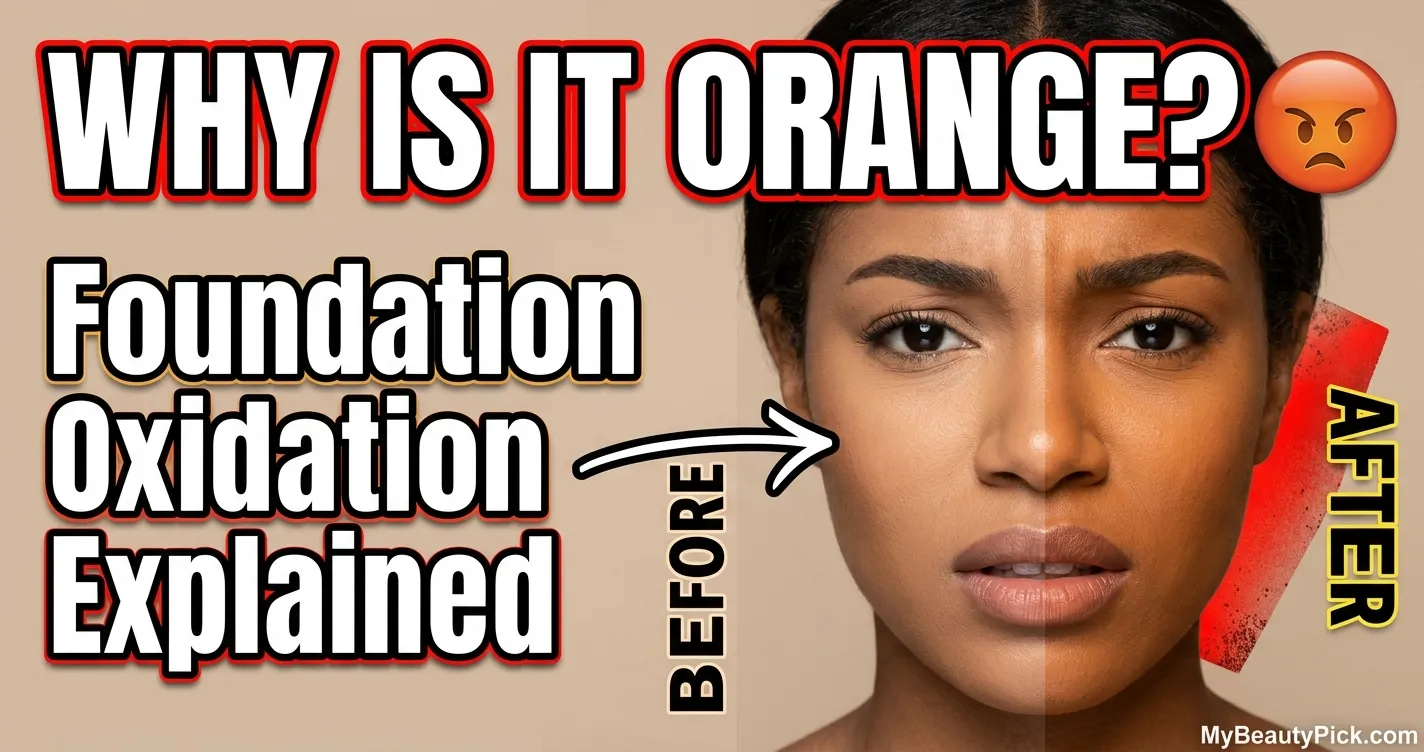
You walk out the door looking even and matched. By lunch your jawline has gone orange and your cheeks look two shades darker than your neck. That’s foundation oxidation, and after years of fielding this exact complaint in the chair, I can tell you it’s rarely the foundation alone.
Foundation oxidizes when iron oxide pigments in the formula react with your skin’s natural oils, sweat, and pH, gradually shifting the color darker or more orange as the day goes on. Oily skin, certain skincare ingredients, heat, and humidity all speed up that reaction. The fix is rarely one product. It’s usually skin prep, formula choice, and application working together.
Key Takeaway
- Oxidation is a chemical reaction, not a defect, and it happens to almost every liquid foundation to some degree
- Oily skin and high skin acidity speed up the reaction; dry skin can fake the same look without true oxidation
- Primer and powder slow oxidation, they don’t stop it. The real fix combines skin prep with the right formula
- Patchy, uneven color is sometimes mistaken for oxidation when the actual cause is dehydration or poor blending
What’s Actually Happening When Foundation Oxidizes
Foundation pigments, mainly iron oxides used for pigmentation, can undergo a subtle chemical change when exposed to oxygen and skin oils that shifts the hue. Think of it the same way a sliced apple browns on the counter. The pigment isn’t going bad in the bottle overnight, it’s reacting to your specific skin environment in real time.
Your skin’s pH plays a bigger role in this than most people realize. Skin pH typically sits between 4.5 and 6.5, and skin that runs more acidic or alkaline than that range can react with iron oxide pigments and darken them. That’s part of why the same foundation can oxidize on one person and stay completely true on another wearing the identical shade.
The Real Causes of Foundation Oxidation
Oily or Combination Skin
Excess sebum gives oxidation more fuel to react with. The T-zone almost always shifts first and fastest, since it produces the most oil throughout the day.
Skin pH Imbalance
Harsh cleansers and over-exfoliation can push skin’s natural pH off balance, making it a more reactive surface for the pigments sitting on top.
Layered Active Ingredients
Vitamin C, AHAs, and retinol applied right before foundation can create an unstable pH environment when combined, which speeds the color shift along.
Heavy or Incompatible Moisturizer
A rich, oil-based cream adds extra slip and oil at the surface, giving pigments more to react against once foundation goes on top.
Heat, Humidity, and Pollution
Warm, humid conditions raise oil and sweat production, which is why the same foundation can wear differently in summer than it does in a cooler, drier season.
Expired or Old Product
Formulas lose stabilizers over time. Old foundations lose emulsifier stability, which makes the pigments more reactive even before they touch your skin.
Test on the jaw, not the back of your hand
Hand skin and face skin behave differently. If a client wants to know whether a shade will actually oxidize on them, I apply a small amount along the jawline, photograph it immediately, then check again at the thirty and sixty minute mark without touching it. If it visibly shifts orange or darker in that window, the formula is reacting to that specific skin. If it barely moves, the issue is more likely application or skincare, not the foundation itself.
Why Your Foundation Might Look Patchy Instead of Oxidized
Patchiness and oxidation get confused constantly, and the fix for each is different. Dehydrated skin creates dry, flaky patches that catch foundation unevenly, which can look like discoloration even though no real chemical reaction is happening. Press a damp finger gently into a patchy area. If the unevenness is texture-related, it will usually soften slightly. If the color itself has shifted, that’s oxidation, not texture.
Uneven blending is the other major cause of patchiness. Foundation applied with a dry brush or left unblended at the edges sits thicker in some spots than others, and that thickness affects how quickly each section oxidizes. The forehead and around the nose tend to look patchy first because they hold the most oil and the thinnest skin barrier at the same time.
How to Slow or Stop Foundation Oxidation
Start with a clean, balanced base
Cleanse with a gentle, pH-appropriate cleanser rather than a harsh foaming one, and give skincare actives at least fifteen to twenty minutes to fully absorb before foundation goes on. Applying makeup over half-absorbed serum is one of the fastest ways to trigger an early color shift.
Switch to a lighter, oil-free moisturizer
Heavy creams add oil that pigments react against. A lightweight, oil-free formula still hydrates without handing oxidation extra fuel to work with.
Choose your foundation formula deliberately
Water-based and mineral formulas tend to oxidize less than oil-based or cream formulas, since there’s less oil content for the pigments to react with. If you’ve had oxidation problems with multiple foundations, a long-wear matte or mineral formula is worth testing before assuming the issue is your skin alone. My guide to drugstore matte foundation picks breaks down formulas built specifically for oil control.
Apply thin layers, not one heavy coat
More product means more pigment available to react. A thin, buildable layer applied with a damp sponge or brush oxidizes more slowly and looks more natural than one thick layer applied at once. If you’re newer to brush application, my foundation brush versus sponge breakdown covers which tool suits which finish.
Set strategically, not everywhere
A light dusting of translucent powder on the T-zone slows oil-driven oxidation in the areas that need it most, without flattening the rest of the face. Powdering the entire face the same amount regardless of oil level is what leads to a cakey, over-set look.
Know that primer and setting spray only delay it
Primer creates a thin barrier between skin and pigment, and setting spray reduces surface oil exposure, but neither one stops the chemical reaction outright. Both buy you time. Neither is a permanent fix on its own.
| Cause | What Helps | What It Doesn’t Fix |
|---|---|---|
| Oily/combination skin | Oil-free moisturizer, T-zone powder | Won’t stop oxidation entirely on very oily skin |
| Active skincare ingredients | Wait 15-20 min before foundation | Won’t undo a reaction once it’s already started |
| Heat and humidity | Mattifying setting spray, blotting papers | Doesn’t change the foundation’s formula itself |
| Expired product | Replace foundation every 6-12 months | No skincare step compensates for unstable formula |
| Heavy application | Thin layers, buildable coverage | Won’t fix a formula that’s simply unstable on your skin |
When to Stop Troubleshooting and Switch Foundations
If you’ve adjusted skincare, switched to an oil-free moisturizer, applied thin layers, and set strategically, and the same foundation still shifts noticeably within an hour, the formula itself is likely incompatible with your skin chemistry. No amount of prep work fixes a pigment-to-skin mismatch. At that point, testing a water-based or mineral formula will save more time than continuing to troubleshoot the one you have.
Fixing Oxidation Mid-Day, Without Redoing Your Makeup
Blot the area with a clean blotting paper to lift excess oil first. Don’t add more foundation on top of oxidized color, since that compounds the discoloration instead of correcting it. Lightly mist the area, press a damp sponge over it to soften the shifted pigment, then go over it with a sheer layer of a lighter shade or a peach-toned color corrector to neutralize the orange tone. Finish with a light dust of powder to hold the correction in place for the rest of the day.
Mistakes That Make Oxidation Worse
- Matching your shade indoors under artificial light. Indoor lighting hides early oxidation, so the match looks closer than it actually is once you step outside.
- Mixing foundation with facial oil or highlighter to thin it out. Unless the brand specifically allows it, this destabilizes the formula and speeds up the color shift.
- Skipping the wait time after skincare. Foundation applied over half-absorbed serum mixes directly with the product instead of sitting on top of settled skin.
- Adding more foundation when color starts shifting. This adds more pigment to react rather than solving the underlying issue.
- Holding onto foundation well past its shelf life. A bottle that’s over a year old has often already lost the stabilizers that kept it from oxidizing as quickly.
FAQ
Why does my foundation turn orange after a few hours?
The orange shift happens when iron oxide pigments react with your skin’s oils and pH over time, gradually changing the foundation’s hue. Oily skin and warm climates speed this reaction up, which is why the shift often becomes noticeable by midday rather than right after application.
Does setting powder stop foundation from oxidizing?
Setting powder slows oxidation by absorbing surface oil, but it doesn’t stop the underlying chemical reaction. It works best as one part of a routine that also includes the right moisturizer and foundation formula, not as a standalone fix.
Should I buy foundation a shade lighter to account for oxidation?
This can work as a short-term workaround, but it isn’t a real fix and can leave you mismatched if the formula doesn’t oxidize as much as expected on a given day. Addressing the actual cause through skincare and formula choice gives more consistent results than guessing a shade down.
How do I know if my foundation is oxidizing or my skin is just dehydrated?
Press a damp finger gently into the area. If it’s texture-related dehydration, the look will soften slightly. If the actual color has darkened or shifted orange, that’s true oxidation rather than a hydration issue.
Do mineral foundations oxidize less than liquid foundations?
Generally yes, since mineral and water-based formulas contain less oil for pigments to react with compared to oil-based or cream foundations. They aren’t immune to oxidation entirely, but they tend to shift less and more slowly on most skin types.