

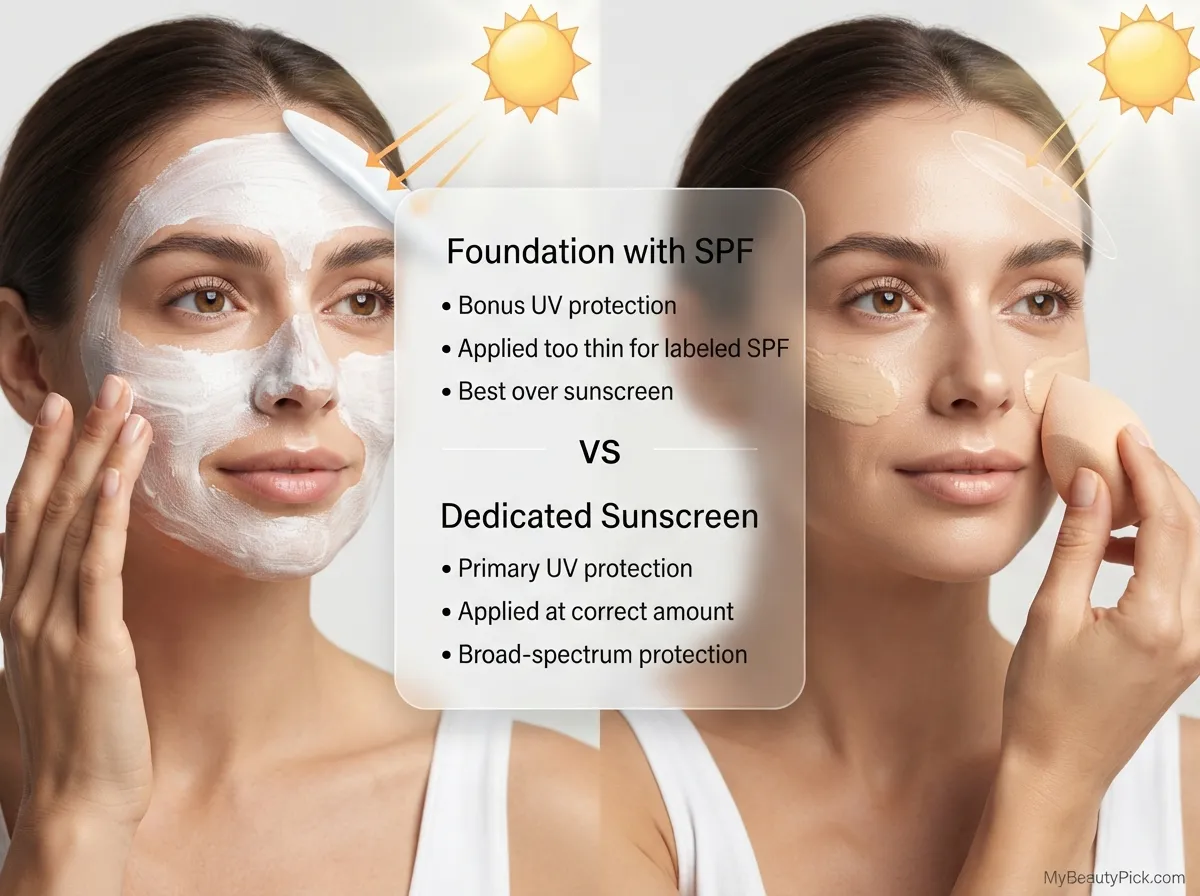
Foundation with SPF is useful. It is not sunscreen. That distinction matters more than most makeup brands want to admit, and understanding it determines whether you’re getting real protection or just a feeling of it. This guide covers what foundation SPF actually delivers, when it’s enough, when it isn’t, how to layer it correctly over a separate sunscreen, and which powder and liquid foundations with SPF are genuinely worth choosing.
Foundation SPF vs Separate Sunscreen: What the Science Actually Says
The SPF number on a foundation is real. The testing behind it is legitimate. A foundation labelled SPF 30 has been tested under the same regulatory standards as a standalone SPF 30 sunscreen. The issue is not the number; it’s the amount of product required to achieve it.
SPF ratings are tested at a density of 2mg per square centimetre of skin. For the face and neck, that works out to approximately one teaspoon of product. Nobody applies a teaspoon of foundation to their face. The average foundation application is roughly a quarter of that amount, which means the effective SPF received in real-world conditions is significantly lower than what’s on the label.
At one quarter of the tested application amount, an SPF 30 foundation delivers protection closer to SPF 8 or 9 in practice. An SPF 50 foundation, applied at normal makeup density, performs closer to SPF 15. These are not reasons to avoid foundation with SPF. They are reasons not to rely on it as your only UV protection.
- Foundation with SPF is a bonus layer of protection, not a replacement for sunscreen. Use it in addition to a separate SPF 30+ applied first, not instead of it.
- The exception: on very low UV days, for mostly indoor wear, or combined with other UV-blocking factors (hat, shade, limited outdoor time), foundation SPF alone may be adequate.
- Powder foundation with SPF is better for reapplication over makeup than liquid SPF, since it doesn’t disturb the base beneath and can be pressed on quickly throughout the day.
Sunscreen Before or After Foundation: The Correct Order
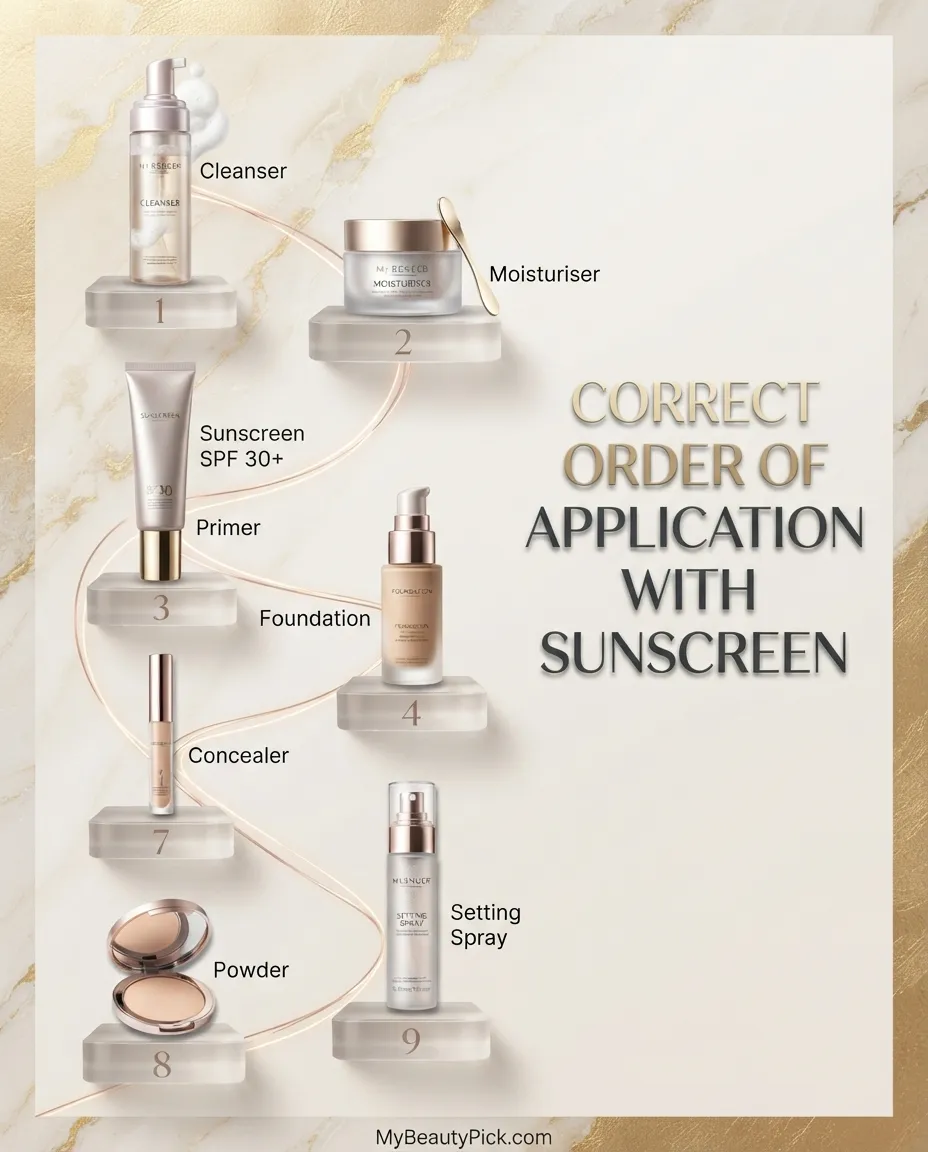
Sunscreen goes on before foundation, always. This is not debatable, and understanding why makes the reasoning clear enough that you won’t need to remember it as a rule.
Sunscreen, whether mineral or chemical, works by forming a continuous film across the skin surface. That film is what intercepts UV radiation. For it to function correctly, it needs direct contact with skin. When foundation goes on first, the sunscreen is applied on top of makeup rather than onto skin, and the film it forms is disrupted and inconsistent. UV protection is compromised from the first application.
Applying sunscreen over foundation also disturbs the base, moves coverage around, and creates a mixed layer that neither looks good nor functions well. The correct sequence is:
- Skincare (cleanser, serum, moisturiser) — fully absorbed
- Sunscreen — applied as the last skincare step, allowed 1-2 minutes to form its film before makeup goes on top
- Primer (optional) — on top of sunscreen if used
- Foundation — applied over the sunscreen base
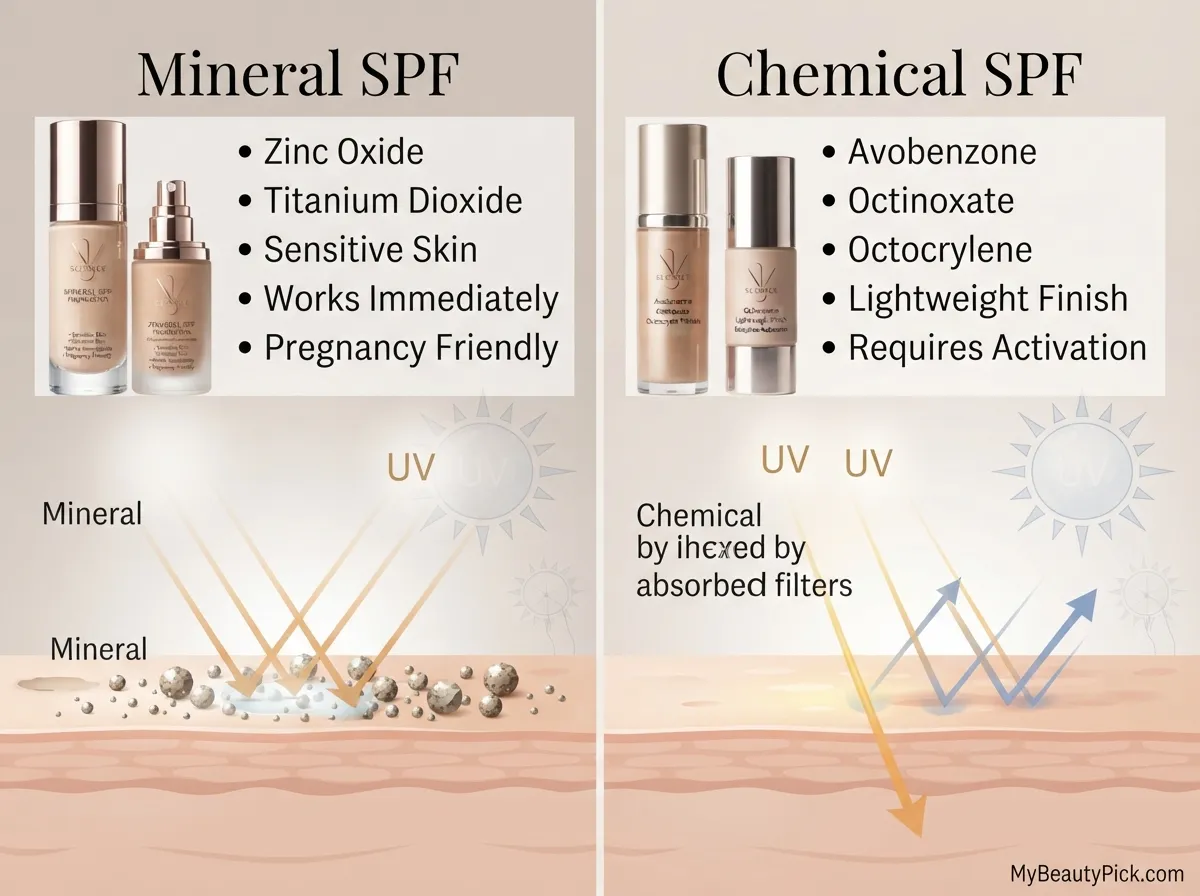
Chemical sunscreens (avobenzone, octinoxate, octocrylene) absorb UV radiation and require 15-20 minutes after application to activate. Apply these before foundation and allow that window before makeup. Mineral sunscreens (zinc oxide, titanium dioxide) start working on contact and can be followed immediately with foundation. If you’re running short on time in the morning, a mineral sunscreen eliminates the waiting step entirely.
Does Sunscreen Under Foundation Change How It Wears?
It can, depending on the formula. Some sunscreens — particularly higher-SPF chemical formulas — create a slightly slippery or emollient surface that causes certain foundations to slide faster throughout the day. A few adjustments that help:
- Allow sunscreen to fully absorb before applying foundation (60-90 seconds minimum)
- Use a mattifying sunscreen under foundation on oily skin rather than a rich, moisturising one
- Mineral sunscreens with a drier finish (often identified by a slight white cast) create a more powder-compatible surface under foundation than silky, invisible chemical formulas
- A light setting powder between sunscreen and foundation on oily skin creates a drier, more grippable surface without compromising SPF
Best Foundations with SPF: Our Picks
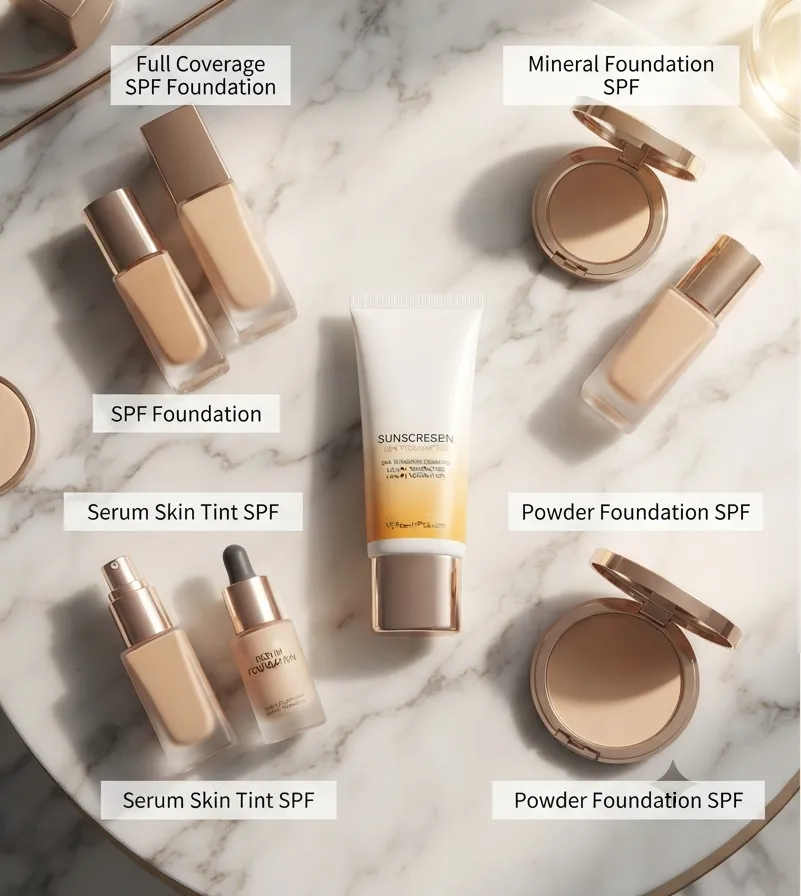
The foundations below are selected for the quality and type of their SPF protection, their formula performance on the skin, and their value as everyday base products. Where a formula uses mineral filters only, that’s noted specifically — mineral SPF is more compatible with sensitive skin and does not require the 15-minute activation window that chemical filters do.
“SPF 50+ with physical and chemical filters, full-coverage colour correction, and genuine skincare actives — one of the most comprehensive foundation-SPF hybrids on the market.”
- SPF type: Broad-spectrum SPF 50+ (physical and chemical filters combined)
- Key actives: Niacinamide, hydrolysed collagen, hyaluronic acid, vitamins C, E, and B
- Coverage: Light-to-medium buildable; natural finish
- Shade range: 40+ shades
- Best for: Redness-prone, sensitive, or combination skin wanting coverage plus daily SPF in one step
Why it earns its place: The SPF 50+ level is among the highest found in a genuine foundation formula rather than a tinted sunscreen. Niacinamide actively reduces redness throughout wear, and the coverage is colour-correcting rather than just concealing — it neutralises tone before adding pigment. The inclusion of both physical and chemical filters provides more complete broad-spectrum protection than mineral-only formulas.
“Dermatologist-dispensed, mineral-only SPF 30, and frequently used in clinical rosacea management. The most clinically credible foundation with built-in sun protection.”
- SPF type: Broad-spectrum SPF 30 (titanium dioxide and zinc oxide only — mineral)
- Key actives: Ceramides, peptides; no chemical filters; fragrance-free
- Coverage: Medium; natural matte finish
- Best for: Rosacea-prone, sensitive, post-procedure skin; those who react to chemical sunscreen filters
Why it’s different from other SPF foundations: Most brands achieve their SPF number using a combination of mineral and chemical filters. Colorescience uses titanium dioxide and zinc oxide exclusively, making this genuinely suitable for the most reactive skin types. It is regularly recommended in dermatology practices for patients whose skin cannot tolerate chemical UV filters, and the zinc oxide provides meaningful anti-inflammatory benefit alongside the sun protection.
“SPF 45 in a hydrating foundation formula — one of the higher SPF levels available in a genuine medium-to-full coverage base that doesn’t compromise on finish quality.”
- SPF type: Broad-spectrum SPF 45
- Key actives: Red algae extract, hyaluronic acid; hydrating, non-comedogenic
- Coverage: Medium-to-full; radiant, skin-like finish
- Shade range: 40 shades
- Best for: Normal to dry skin wanting high SPF and hydration in a single base product
Why the SPF level matters here: At SPF 45, even with typical under-application at 50% of the tested amount, the effective protection lands closer to SPF 22 — meaningfully above the SPF 8-10 range typical of lower-rated SPF foundations applied at normal density. This doesn’t replace a separate sunscreen for extended outdoor exposure, but for an indoor workday with incidental sun exposure, the protection level is practical and relevant.
“Mineral SPF 40, niacinamide, hyaluronic acid, and aloe — a tinted sunscreen that functions as a sheer foundation and genuinely feels like skincare.”
- SPF type: Broad-spectrum SPF 40 (zinc oxide — mineral only)
- Key actives: Niacinamide, hyaluronic acid, aloe vera
- Coverage: Sheer-to-light; dewy, natural finish
- Shade range: 30 shades
- Best for: Clear-to-mild skin concerns; those wanting a skincare-forward routine with built-in mineral SPF; eczema-prone skin
Why it works for daily SPF wear: Zinc oxide at SPF 40 is a high mineral filter rating. Because this is a serum-weight formula applied more like skincare than foundation, the application amount tends to be higher than typical foundation, which means the effective SPF is closer to the labelled figure than with thicker, higher-coverage formulas. The result is better real-world protection at the same rated SPF than most medium-to-full coverage alternatives.
Best Powder Foundation with SPF
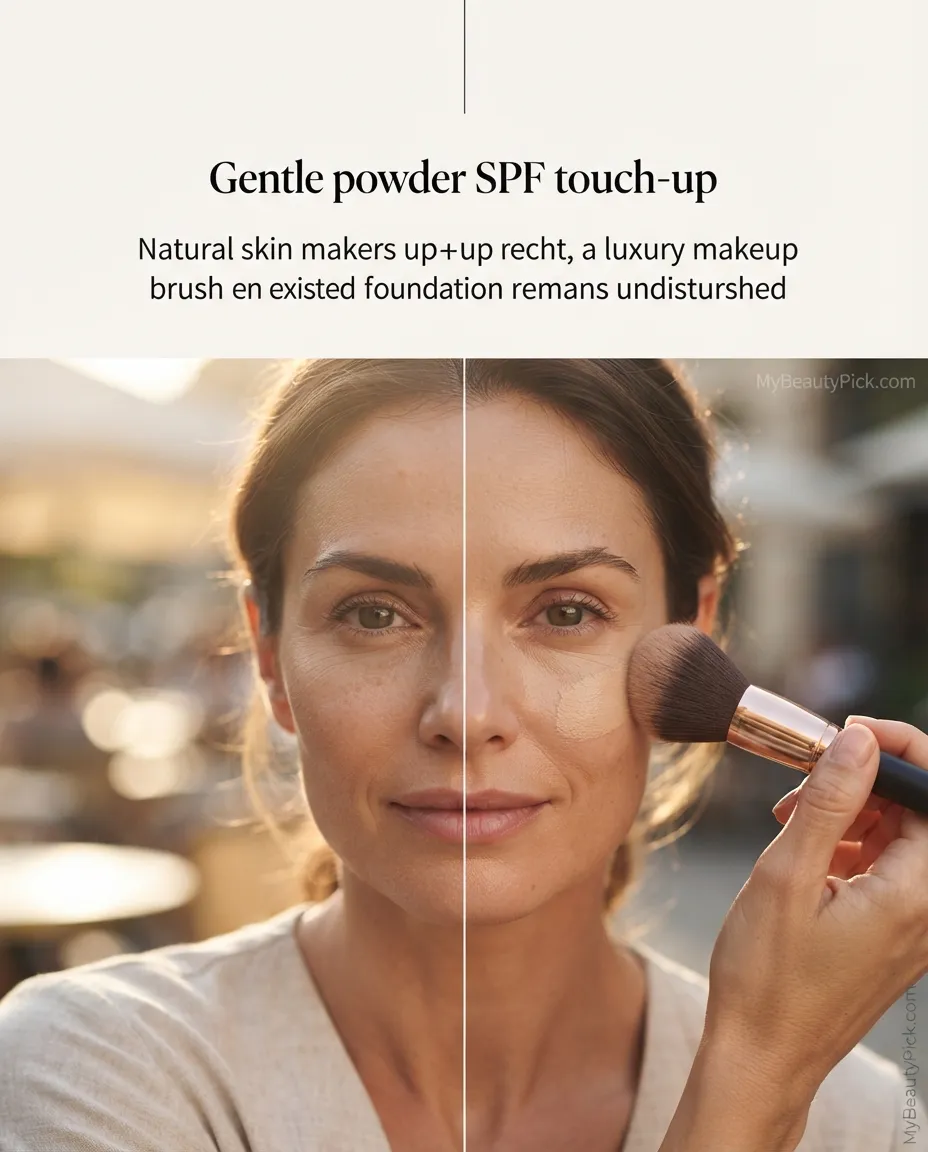
Powder foundation with SPF has one advantage that liquid SPF foundations cannot match: it can be applied over existing makeup for midday touch-ups without disturbing the base beneath. This makes it one of the most practical ways to maintain some SPF across a full day, even if the level of protection is modest.
The caveat is worth understanding clearly. Most powder SPF products have been tested using the same 2mg/cm2 standard as liquid formulas, which means achieving the labelled SPF from a powder requires an unrealistically heavy application. The real-world benefit of powder foundation SPF is meaningful UV attenuation from a topcoat during midday hours, not full-spectrum protection equivalent to a separate sunscreen reapplication.
“Five minerals including titanium dioxide and zinc oxide — the most transparent SPF powder foundation available, with no fillers between the skin and the active UV filters.”
- SPF type: Broad-spectrum SPF 15 (zinc oxide and titanium dioxide — mineral only)
- Formula: Mica, bismuth oxychloride, titanium dioxide, zinc oxide, iron oxides — five ingredients total
- Coverage: Buildable sheer to full; natural skin finish
- Best for: Daily wear with incidental sun exposure; eczema-prone, sensitive, and acne-prone skin; touch-ups throughout the day
Why the mineral formula matters for SPF powder: Most powder foundations with SPF include the active filters diluted within a complex base of fillers, talc, and non-SPF minerals. bareMinerals Original is almost entirely composed of the active ingredients — zinc oxide and titanium dioxide are among the first five listed. The concentration of UV-active ingredients per gram of product is higher than most alternatives, making it the most effective SPF powder foundation available.
“SPF 50 in a brush-on powder format — the highest-rated powder SPF widely available, designed specifically for midday reapplication over makeup.”
- SPF type: Broad-spectrum SPF 50 (zinc oxide — mineral only)
- Key actives: AntioxidantComplex (vitamins C and E, green tea extract); water-resistant
- Coverage: Light-to-medium; matte-natural finish
- Best for: Midday SPF reapplication over makeup; outdoor activities; those who want the highest SPF rating available in a powder format
Why this differs from standard powder foundation with SPF: This is positioned and formulated as a sunscreen product that happens to be in powder form, not a foundation with a bonus SPF claim. The mineral filter concentration is higher, the antioxidant complex neutralises UV-induced free radical damage beyond what SPF alone addresses, and the water-resistant formulation is tested against sweating — something most SPF foundations are not.
It is not a replacement for daily liquid sunscreen. It is the most practical tool for maintaining any SPF coverage during a full day of mixed indoor-outdoor activity without disturbing the rest of your makeup.
SPF in Foundation vs. Separate Sunscreen: The Comparison
| Factor | Foundation with SPF | Separate Sunscreen |
|---|---|---|
| Effective SPF in real-world use | Significantly lower than labelled — approx. 25-50% of rating at typical application density | Close to labelled rating when applied at recommended amount (one teaspoon for face and neck) |
| Broad-spectrum coverage | Varies by formula; most provide UVA + UVB but at reduced real-world doses | Reliable broad-spectrum when applied correctly |
| Reapplication during the day | Not practical — reapplying a teaspoon of foundation every 2 hours is not realistic | Recommended every 2 hours outdoors; powder SPF can help supplement between full applications |
| Suitable for sensitive skin | Mineral SPF foundations (zinc oxide, titanium dioxide) are well-tolerated; chemical filter foundations vary | Mineral sunscreens are the safest for sensitive skin; many chemical formulas irritate reactive skin |
| Best use case | Daily incidental protection, mostly indoor days, layered over separate sunscreen | Primary UV protection for all outdoor activity and extended sun exposure |
Frequently Asked Questions
Does foundation with SPF actually protect skin from the sun?
Yes, but less effectively than the label suggests. The SPF in foundation is real and tested to the same standard as standalone sunscreen. The problem is application density: dermatologist-tested protection requires 2mg of product per square centimetre of skin, which works out to about a teaspoon for the face and neck. Most people apply a fraction of that amount of foundation, reducing the effective SPF substantially.
For incidental daily sun exposure (walking to your car, sitting near a window), foundation SPF provides meaningful attenuation. For extended outdoor exposure, it needs to be backed up by a separate broad-spectrum sunscreen applied first.
Should sunscreen go on before or after foundation?
Sunscreen goes on before foundation, every time. Sunscreen needs direct contact with skin to form the continuous film that intercepts UV radiation. Applying it on top of foundation disrupts that film and compromises protection. Apply sunscreen as the last step of your skincare routine, allow it to settle for 60-90 seconds, then apply foundation on top.
Chemical sunscreens need an additional 15-20 minutes after application to activate fully before sun exposure (not before foundation — you can apply foundation during this window). Mineral sunscreens with zinc oxide or titanium dioxide are active immediately on contact.
Is foundation with SPF 30 enough for everyday protection?
For a mostly indoor day with brief outdoor exposure (commuting, errands), foundation with SPF 30 layered over a separate SPF 30 sunscreen is adequate for most skin types. The foundation provides a top-up layer over the correctly applied sunscreen underneath.
For extended outdoor activity, neither a dedicated high-SPF sunscreen applied at the correct density nor foundation SPF alone is sufficient without reapplication every two hours. No foundation can be reapplied at the required density during a day out without completely rebuilding the base.
Can powder foundation with SPF replace sunscreen reapplication?
Not precisely, but it is the most practical way to add some UV attenuation over makeup during the day. Powder SPF foundation, particularly mineral formulas with zinc oxide and titanium dioxide, can be pressed over existing makeup every few hours to supplement the underlying sunscreen. It won’t deliver the same protection as a properly applied liquid sunscreen, but it meaningfully extends some protection without disturbing the base underneath.
For outdoor activities where full SPF reapplication matters, setting spray over a mineral SPF powder is more practical than a liquid sunscreen reapplication mid-makeup. Alternatively, SPF misting sprays offer another option, though their coverage is less consistent than pressed powder.
What is the best foundation with high SPF?
IT Cosmetics CC+ Cream at SPF 50+ and Estée Lauder Futurist Hydra Rescue at SPF 45 are the highest-rated liquid foundation formulas that function as genuine bases rather than tinted sunscreens. For a mineral-only formula, Colorescience Tint du Soleil at SPF 30 is the most clinically trusted high-SPF foundation, frequently recommended in dermatology for post-procedure and rosacea-prone skin. ILIA Super Serum Skin Tint at SPF 40 mineral is the best lightweight, skin-tint option for those wanting a sheer base with effective mineral protection.
Is mineral or chemical SPF better in foundation?
For sensitive, rosacea-prone, or reactive skin: mineral SPF (zinc oxide, titanium dioxide) is the better choice. It is less likely to cause stinging, flushing, or irritation, and it does not require an activation window before sun exposure. Zinc oxide also provides anti-inflammatory benefit alongside UV protection.
For general skin types: the choice is less critical. Chemical filters are more cosmetically elegant and easier to formulate into lightweight textures, which is why many foundations use them. Hybrid formulas (both mineral and chemical) often offer the best of both. The key is that the formula is broad-spectrum, which covers UVA and UVB regardless of filter type.
- Best foundation for sensitive skin: dermatologist-approved picks
- Best foundation for rosacea: formulas that calm as they cover
- Best foundation for oily skin: formulas that stay matte all day
- Best drugstore foundation: tested picks across every skin type
- Foundation brush vs sponge: which gives a better finish?