

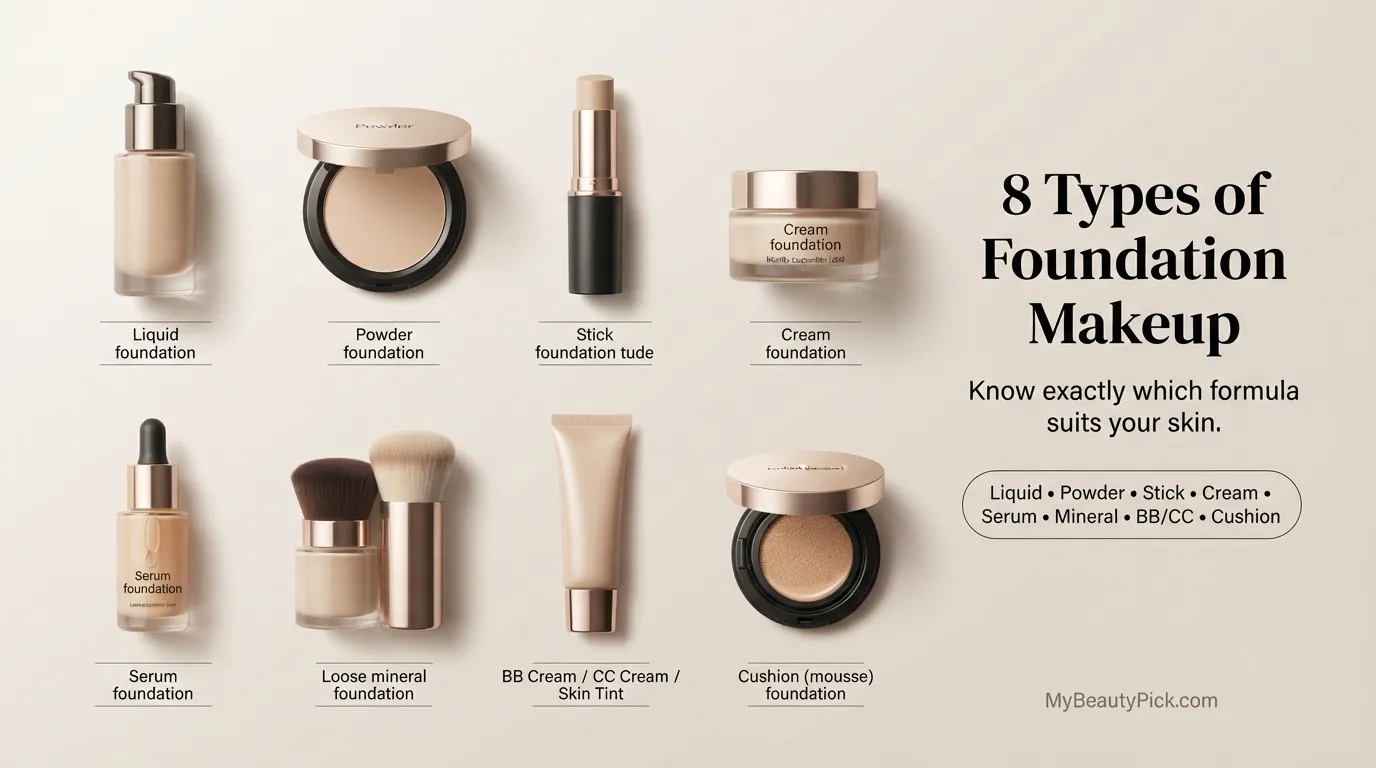
There are more types of foundation makeup on the market now than at any other point in beauty history. Liquid, powder, stick, cream, serum, mousse, mineral, BB, CC, skin tint — and within each category, a range of bases, finishes, and coverage levels that change how every formula behaves. Knowing the difference between them is how you stop buying the wrong thing. This guide explains every major foundation type, what each one actually does, who it suits, and how each format reads on tan and medium-deep skin tones.
What Separates One Foundation Type from Another
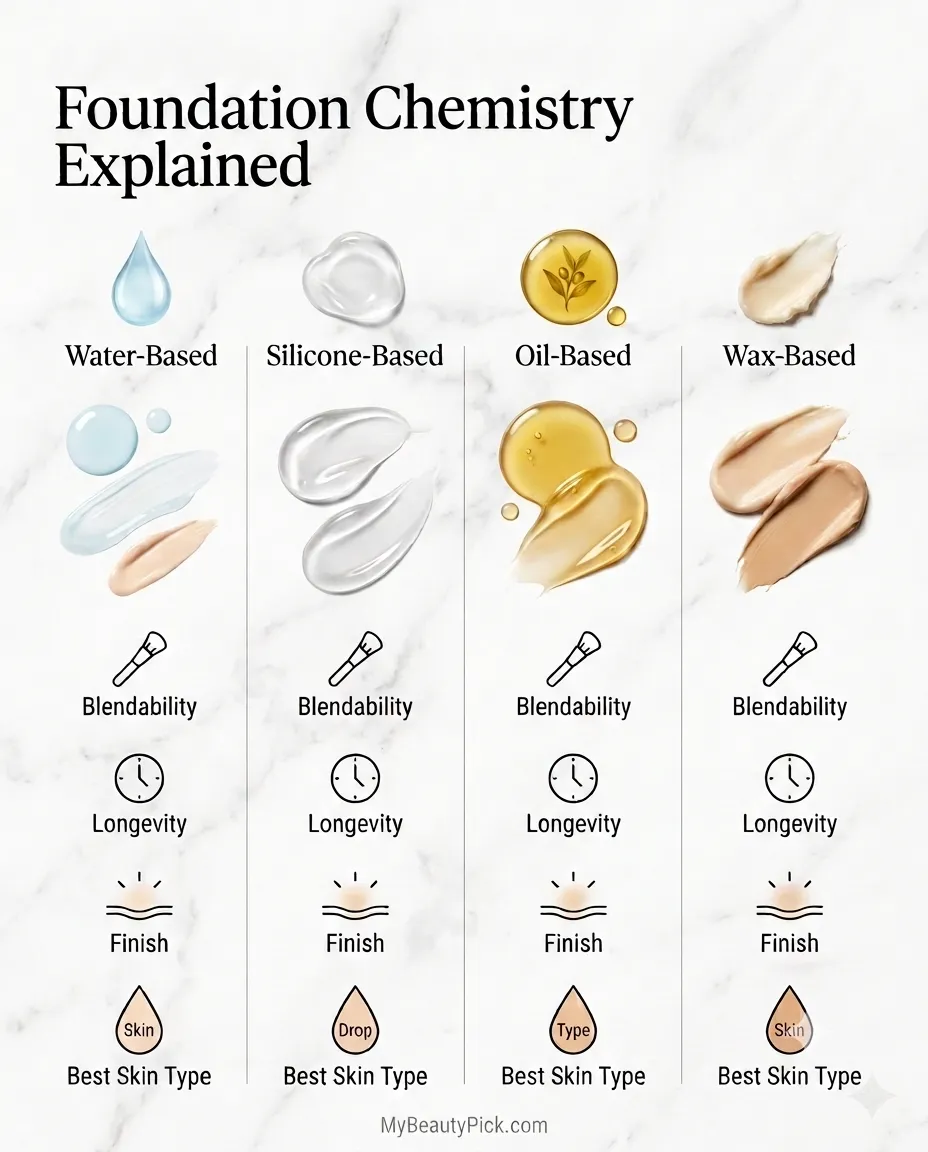
- Foundation format determines texture, blendability, and dry-down time. The base chemistry (water, silicone, oil, or wax) determines which skin types it suits and how it interacts with other products.
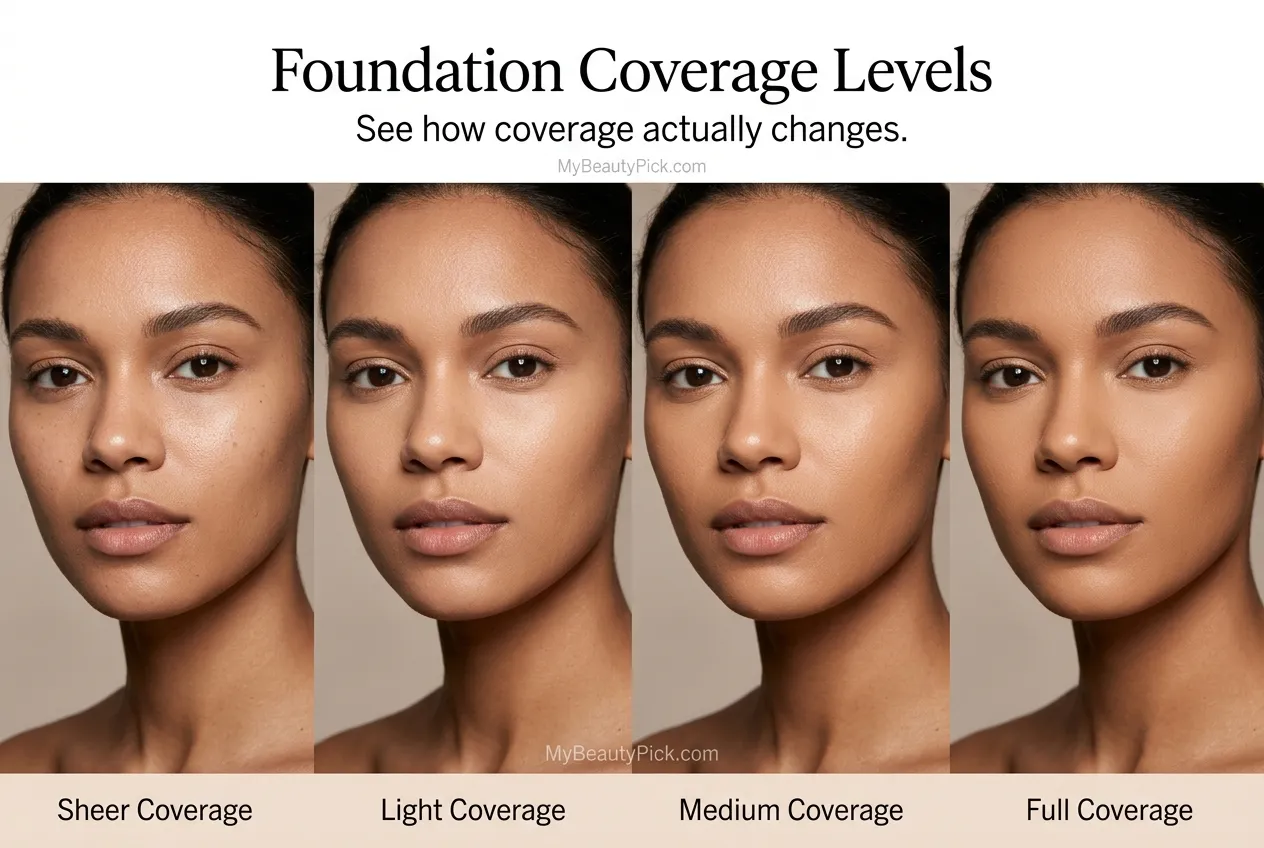
- Coverage level is separate from format. Any format can be full coverage or sheer depending on pigment concentration. Stick and cream formulas tend to carry the most pigment per gram.
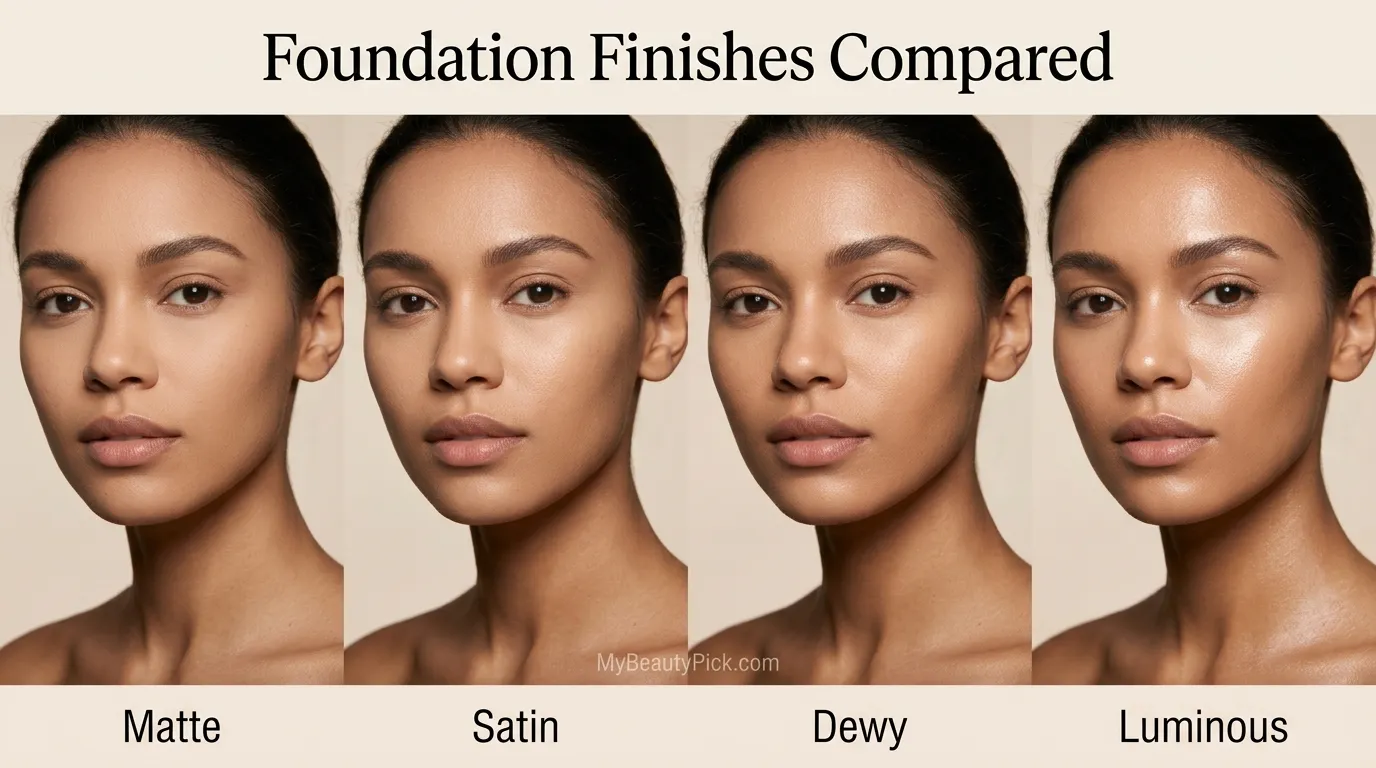
- Finish (matte, satin, dewy, luminous) is built into the formula and cannot be fully changed with application tools — only modified.
- On tan and medium-deep skin, the base colour of the formula matters as much as the format. Peach-based formulas in any format will shift warm on tan skin. Yellow-neutral bases are more stable.
- No single foundation type is the best. The right type is the one that matches your skin type, coverage need, finish preference, and application habit.
The 4 Variables That Actually Determine Which Foundation Type You Need
Most people pick a foundation by coverage level first. That is the third or fourth variable that matters. Before coverage, you need to know your skin type (because this determines which base chemistry works on your skin without breaking down), your finish preference (because matte and dewy foundations need different prep and set differently through the day), your application habit (because some formats require specific tools and blending windows), and your skin concerns (because texture, hyperpigmentation, oiliness, and dryness each call for different formulas).
Once those four are clear, you can narrow from a hundred options to three or four. Coverage becomes the final filter, not the first.
Types of Foundation Makeup: Every Format Explained
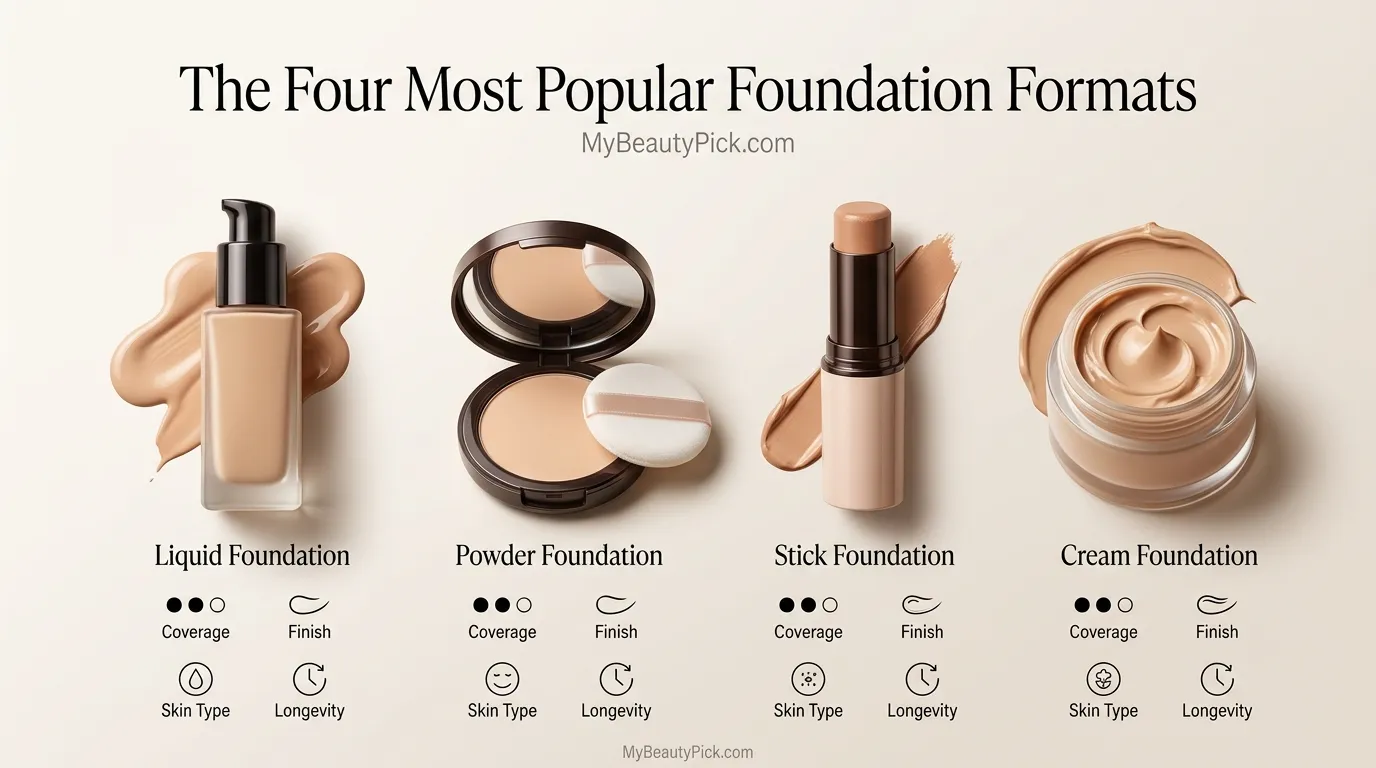
Liquid Foundation
The most versatile format — available in every finish, coverage, and base type
Liquid foundation is the dominant format in most makeup bags because it is genuinely adaptable. The base chemistry varies by formula: water-based formulas are lighter, breathable, and compatible with most skincare; silicone-based formulas blur pores and extend wear; oil-based formulas add radiance and suit dry or mature skin. The finish, coverage, and longevity are determined by the formula design, not the liquid format itself — which is why two liquid foundations can look and perform completely differently despite being the same format.
The blending window is generous compared to stick or cream, which makes liquid the most beginner-friendly option. A damp sponge or dense buffing brush both work. The format photographs well across all skin tones because the water or silicone carrier diffuses the formula evenly, reducing the risk of visible product sitting on the surface.
- All skin types when formula is matched correctly
- Buildable coverage over PIH and acne scarring
- Long wear on oily skin (silicone-based)
- Dewy, skin-like finish on dry skin (oil-based)
- Widest shade range of any foundation format
- Silicone formulas incompatible with water-based primers
- High-pigment matte liquids can oxidise on oily tan skin
- Requires correct tool for each formula type
- Inconsistent pigment distribution if bottle not shaken
On tan skin: Liquid foundation gives the most control over shade and undertone matching. The wide shade range in most liquid formulas gives tan and medium-deep skin the best chance of finding a yellow-neutral or olive-warm match. Check that the warm shades lean golden rather than peachy — peach-warm liquid foundations oxidise orange on tan skin faster than any other format because the water base increases iron oxide exposure to oxygen.
Powder Foundation
Pressed or loose — fastest application, most forgiving for oily skin
Powder foundation exists as pressed compacts, loose powders, and mineral powders. All three are built from pigment particles suspended in a powder base rather than a liquid carrier. The result is a formula with no dry time, almost no oxidation risk, and a natural oil-absorption quality that makes it particularly useful for oily skin and warm climates. Coverage is limited compared to liquid or cream — most powder foundations reach medium coverage at maximum, even with layering, because the pigment particles cannot pack as densely as a liquid suspension.
The pressed compact is the most portable and easy to apply. Loose powder gives a lighter, more diffused finish but requires more careful application to avoid over-depositing. Mineral powder (discussed separately below) is built specifically from mineral-only ingredients without synthetic pigments or binders, which makes it a different product functionally despite looking similar in format.
- Oily and combination skin — absorbs sebum naturally
- Quick application and touch-ups on the go
- Layering over liquid foundation to extend wear
- No-dry-time application in a rush
- Low oxidation risk — shade stays true
- Cannot achieve full coverage in any format
- Emphasises dry patches and fine lines
- Not for dry or dehydrated skin alone
- Smaller shade ranges than liquid in most brands
- Loose powder is messy without practice
On tan skin: Powder foundation shade ranges are historically limited for tan and medium-deep skin — many compact lines stop at three or four tan shades with narrow undertone variation. The format photographs less warmly than liquid, which can read as flat or slightly grey on tan skin under camera flash (flashback from titanium dioxide in some formulas). If you rely on powder foundation as a standalone, check that the formula specifically tests for flashback-free finish on deeper skin tones.
Stick Foundation
Cream formula in a twist-up tube — high coverage, precise placement, fast blending window
Stick foundation is essentially a cream formula set into a wax base to make it solid at room temperature. The higher pigment density compared to most liquids means a little goes a long way — one or two swipes of a stick covers significantly more surface area than a pump of liquid at the same coverage rating. The solid format gives precise, controllable placement, which makes it particularly useful for targeted concealing as well as full-face application.
The major application consideration is the blending window. The wax base begins to set as soon as it contacts skin, which gives you 15 to 30 seconds to blend before the formula locks in place. Cold ambient temperature, cold skin, or applying too large an area at once are all common causes of the streaking and drag marks that give stick foundations a difficult reputation. Warming the product on the back of the hand before applying removes most of this risk.
- High coverage with minimal product volume
- Doubles as spot concealer for targeted coverage
- Travel — no pumps, no spills, no glass bottle
- Precise placement over specific blemishes or PIH
- Buildable coverage in controlled layers
- Short blending window requires fast, confident application
- Wax-heavy formulas crease on dry or mature skin
- Not ideal for very oily skin without a strong primer
- Can emphasise pores and texture when applied too thickly
On tan skin: The high pigment density of stick foundations makes shade accuracy critical. A slightly wrong shade in a liquid formula is subtle; the same mismatch in a stick reads more obviously because there is more pigment per application. Swatch on the jawline in natural daylight and wait two minutes before judging. Warm-coded stick foundations can be particularly prone to the peach-orange problem on tan skin — look for golden or neutral warm designations rather than peachy warm.
Cream Foundation
Rich, full-coverage formula — highest pigment concentration, most luminous finish
Cream foundation is richer and more emollient than liquid, with the highest oil content of any format. The texture is thick and balmy, and it carries more pigment per gram than a standard liquid. This makes it the best format for achieving a genuinely skin-like full-coverage finish that does not look flat or mask-like, because the oil component keeps the formula luminous rather than dry. Most cream foundations are housed in a pot or palette, making precise application the norm — it is picked up with a brush, sponge, or fingertip and worked into the skin.
For oily skin, cream foundation is generally a poor match. The oil base adds to the skin’s natural sebum, accelerates breakdown, and can cause caking within two to three hours even with setting powder. The format is built for dry to normal skin. On dry and mature skin it performs better than any other format because the oil emollients fill fine lines rather than settling into them.
- Dry, mature, and normal skin
- Full coverage with a luminous, non-flat finish
- Photography and event makeup
- Mixing with other cream products (blush, contour)
- Custom coverage — pot format allows precise loading
- Not for oily or very combination skin — breaks down fast
- Pot packaging is less hygienic than pump dispensing
- Requires significant prep on textured or pore-prominent skin
- Heavier feel than liquid on warm days
On tan skin: Cream foundation on dry tan skin is one of the most flattering combinations available. The luminous finish interacts with the natural warmth in tan skin to produce a genuinely glowing result that liquid formulas rarely match. Shade ranges in cream foundations from artisan and prestige brands (Armani, Charlotte Tilbury, Danessa Myricks) tend to include strong yellow-warm and olive options for medium-deep skin. The oxidation risk is lower than liquid because the oil base limits iron oxide contact with oxygen.
Serum Foundation
Skincare-makeup hybrid — the lightest coverage format, skin-treatment benefits built in
Serum foundation sits at the intersection of skincare and makeup. The formula is highly fluid — closer to a serum texture than a traditional foundation — and is loaded with active skincare ingredients like hyaluronic acid, niacinamide, or vitamin C alongside a light pigment load. The result is a product that covers unevenness, adds radiance, and treats the skin simultaneously, with a finish that looks genuinely like healthy skin rather than foundation.
Coverage is the limitation. Serum foundations cannot cover significant hyperpigmentation, active blemishes, or heavy scarring in one application. They work best over skin that is already well-maintained, even-toned, or just needs slight evening-out. On tan skin with PIH or noticeable unevenness, a serum foundation alone is rarely enough — it works better as an everyday light option on clearer days or layered with a targeted concealer for problem areas.
- Everyday minimal coverage look
- Skin that needs treatment benefits simultaneously
- Dehydrated and mature skin needing hydration
- Warm weather — lightest wear of any format
- Layering under a fuller-coverage formula for finish
- Cannot cover significant PIH, blemishes, or scarring
- Not for oily skin — dewy finish intensifies with sebum
- Concentration of actives too low for real treatment benefit
- Shade ranges often narrower than liquid formulas
On tan skin: Serum foundations on tan skin produce a beautiful lit-from-within result on days when coverage is not the priority. The dewy radiant finish reads particularly well against tan skin’s natural warmth. The challenge is the narrower shade range — serum foundation lines are often weighted toward lighter shades, with limited options for medium-deep skin. L’Oréal True Match Tinted Serum, NARS Light Reflecting Foundation, and Charlotte Tilbury Flawless Filter are among the serum-format options with reasonable tan shade representation.
Mineral Foundation
Loose powder built from mineral-only pigments — no binders, no synthetic dyes
Mineral foundation is a loose powder built entirely from mineral-derived ingredients: zinc oxide (which provides natural SPF and anti-inflammatory properties), titanium dioxide (for coverage and opacity), mica (for light diffusion), and silica (for oil absorption and pore blurring). No synthetic dyes, no parabens, no fragrance — which makes it the lowest-irritation foundation format available and particularly useful for sensitive, reactive, or acne-prone skin.
It is not a better formula than other types — it is a specifically suited formula for a specific skin need. Coverage is genuinely limited because loose mineral particles cannot pack as densely as liquid pigments. Application requires a specific technique (swirl, tap, buff with a dense kabuki brush) to avoid uneven deposit. And the zinc oxide and titanium dioxide can cause flashback in photography — the same problem that affects all SPF-containing formulas under flash lighting.
- Sensitive and reactive skin
- Acne-prone skin — zinc oxide is anti-inflammatory
- Post-procedure skin (healing, laser recovery)
- Natural SPF without chemical UV filters
- Buildable light-to-medium coverage
- Coverage ceiling is medium — cannot achieve full coverage
- Flashback risk in photos from titanium dioxide
- Requires precise application technique
- Shade ranges often weighted toward fair-to-medium shades
- Not ideal as standalone for significant hyperpigmentation
On tan skin: Flashback is the main risk — titanium dioxide and zinc oxide at higher concentrations can create a white cast on tan and medium-deep skin in flash photography. Check the zinc oxide percentage; formulas above 15 to 20% zinc oxide are the most likely to cause visible cast. Brands like bareMinerals and Ilia have improved their mineral formulations for deeper skin tones, but the shade ranges are still narrower than liquid foundations in most mineral lines.
BB Cream, CC Cream, and Skin Tint
Light coverage hybrids — skincare and makeup in a single product
BB cream (beauty balm), CC cream (colour correcting), and skin tint are all variations of the same concept: a lightly pigmented product with skincare benefits and minimal coverage. BB creams tend to be more moisturising with SPF. CC creams add colour-correcting pigments to neutralise redness or uneven tone. Skin tints are the lightest — essentially a sheer wash of colour that evens out the complexion without visible coverage. All three are designed for the “your skin but better” result rather than full coverage.
The key limitation for tan skin is shade range. Most BB and CC creams are produced in five to ten shades, and the deeper options are often poorly formulated for medium-deep skin — either too cool or pulling too orange. Skin tints have improved significantly in this area; brands like Fenty, Rare Beauty, and NARS offer skin tints with genuine tan and deep shade options in neutral and warm undertones.
- Daily SPF with a tint of coverage
- Minimal-makeup days and natural skin looks
- Skin that needs no concealment beyond tone-evening
- Summer or warm-weather wear
- Layering under a powder for more coverage
- Narrow shade ranges, often poor for deeper tan and medium-deep skin
- Cannot cover hyperpigmentation, PIH, or blemishes
- Not sufficient for significant skin concerns
- BB/CC creams can feel greasy on oily skin
On tan skin: Skin tints are more reliable than BB or CC creams for tan and medium-deep skin because the sheer coverage makes exact shade matching less critical — a slight undertone difference in a skin tint blends imperceptibly in a way it would not in a full-coverage formula. Apply with a damp sponge in a thin, even layer and let the natural skin show through. The result reads as healthy, glowing skin rather than coverage.
Mousse Foundation
Whipped, airy texture — medium coverage, quick-dry finish
Mousse foundation has a whipped, airy texture that collapses on skin contact into a thinner film than its volume suggests. The result is medium coverage with a lightweight skin feel — the format feels like you are applying very little, which makes it less intimidating for people who find standard liquid or cream formulas heavy. It dries down to a soft matte or natural finish and suits normal to combination skin best.
Mousse foundations are less common than other types and their shade ranges are typically narrower. Many cushion compact foundations (a format particularly popular in Korean beauty) use a mousse-like formula — saturated into a sponge cushion inside a compact and picked up with a puff applicator. Cushion compacts offer convenience and portability with a fresh, skin-like finish, though coverage is usually light to medium.
On tan skin: Cushion compacts from Korean beauty brands have historically had limited shade ranges for tan and medium-deep skin tones. Global brands that have entered the cushion space (Lancôme, NARS, Charlotte Tilbury) offer better shade diversity. The mousse finish can look particularly natural on tan skin because the airy texture does not oversaturate the surface with product — the skin’s natural warmth shows through the light coverage layer.
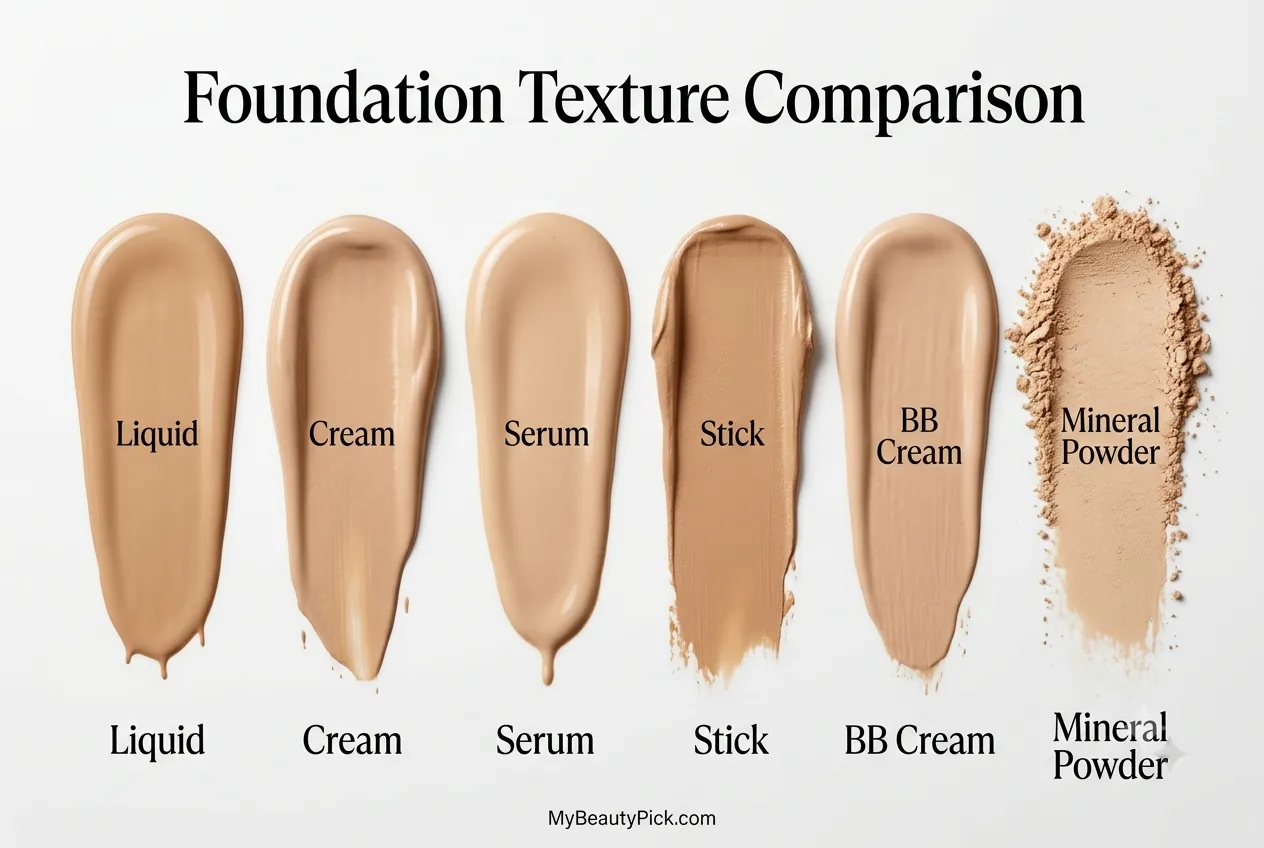
Foundation Types at a Glance: Full Comparison
| Type | Coverage | Finish | Best Skin Type | Tan Skin Notes | Oxidation Risk |
|---|---|---|---|---|---|
| Liquid | Sheer to full | Matte, satin, dewy | All types (formula dependent) | Widest shade range; check for yellow-neutral base | Moderate (high pigment) |
| Powder | Light to medium | Matte to semi-matte | Oily, combo, normal | Narrow shade range; flashback risk in photos | Very low |
| Stick | Medium-full to full | Satin to matte | Combo, normal, oily-to-combo | High pigment density — shade accuracy critical | Low to moderate |
| Cream | Medium-full to full | Dewy, luminous, satin | Dry, normal, combo-dry | Luminous finish reads beautifully on tan skin warmth | Low |
| Serum | Light to light-medium | Dewy, radiant | Dry, dehydrated, mature | Narrower shade range; beautiful finish on tan skin | Very low |
| Mineral | Light to medium | Semi-matte, soft-focus | Sensitive, acne-prone, reactive | Flashback risk in photography; limited deeper shades | None |
| BB/CC/Skin Tint | Sheer to light | Natural, dewy | Normal, dry, combo | Skin tints more reliable shade match than BB/CC | Very low |
| Mousse/Cushion | Light to medium | Natural, soft matte | Normal, combination | Airy finish lets skin warmth show through naturally | Low |
Which Foundation Type Should You Choose?
Oily Skin
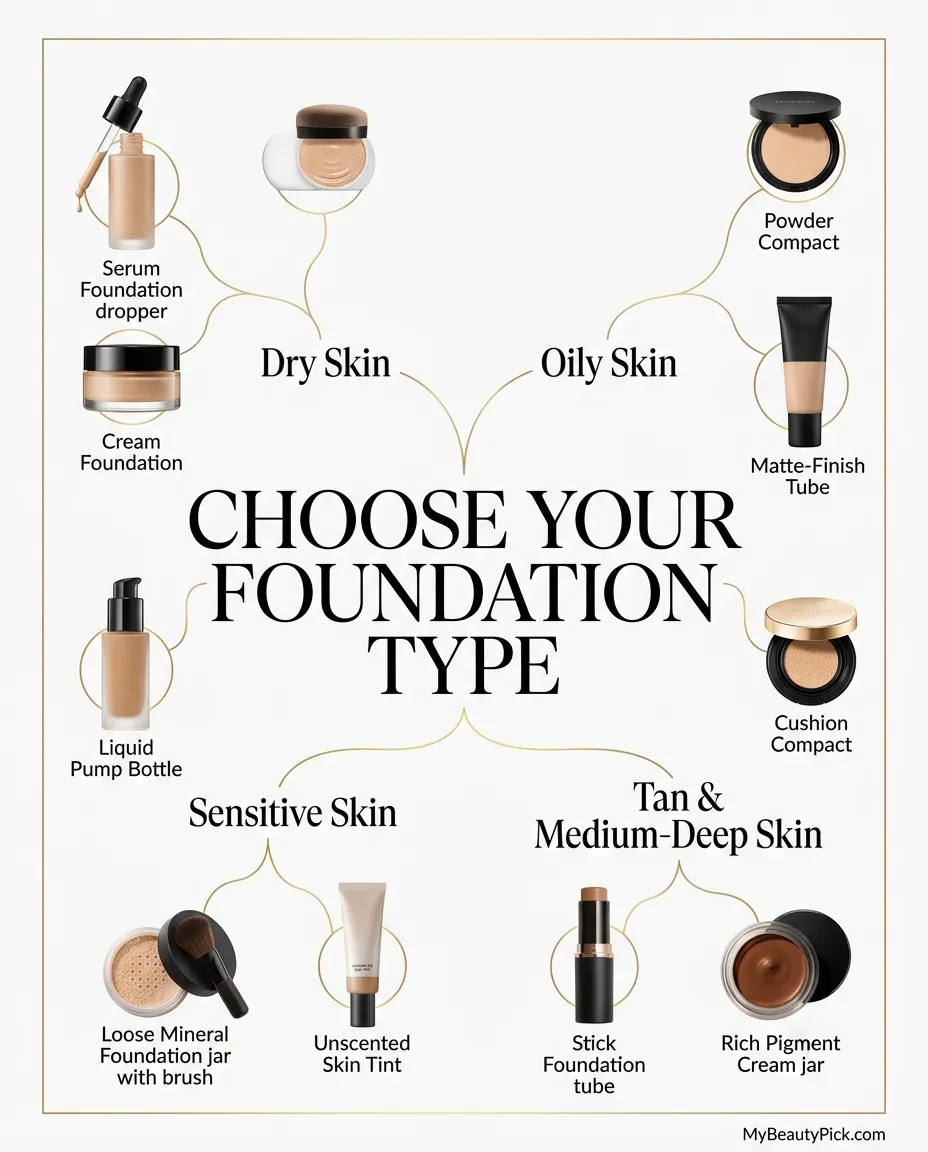
Liquid (silicone-based, matte finish) or powder foundation. Stick with a silicone-based primer. Avoid cream and serum formulas. Powder foundation works well for touch-ups or light days. Setting spray after application is more important than the formula choice for extending wear.
Dry Skin
Cream, serum, or hydrating liquid foundation. Avoid powder, mineral, and matte stick formulas. Oil-rich cream foundations give the most comfortable wear and the most skin-like finish. Serum foundations suit dry skin that only needs light coverage.
Combination Skin
Liquid (satin or light-matte finish) or stick foundation. Use different primers in different zones if needed. Avoid very cream-rich or very matte formulas that over-serve one zone at the expense of the other. A balanced satin-finish liquid suits most combination skin types.
Sensitive Skin
Mineral or fragrance-free liquid foundation. Mineral gives the lowest irritation potential. If you need more coverage than mineral provides, a fragrance-free water-based liquid without alcohol is the next safest option. Patch test any new formula on the inner forearm first.
Tan and Medium-Deep Skin
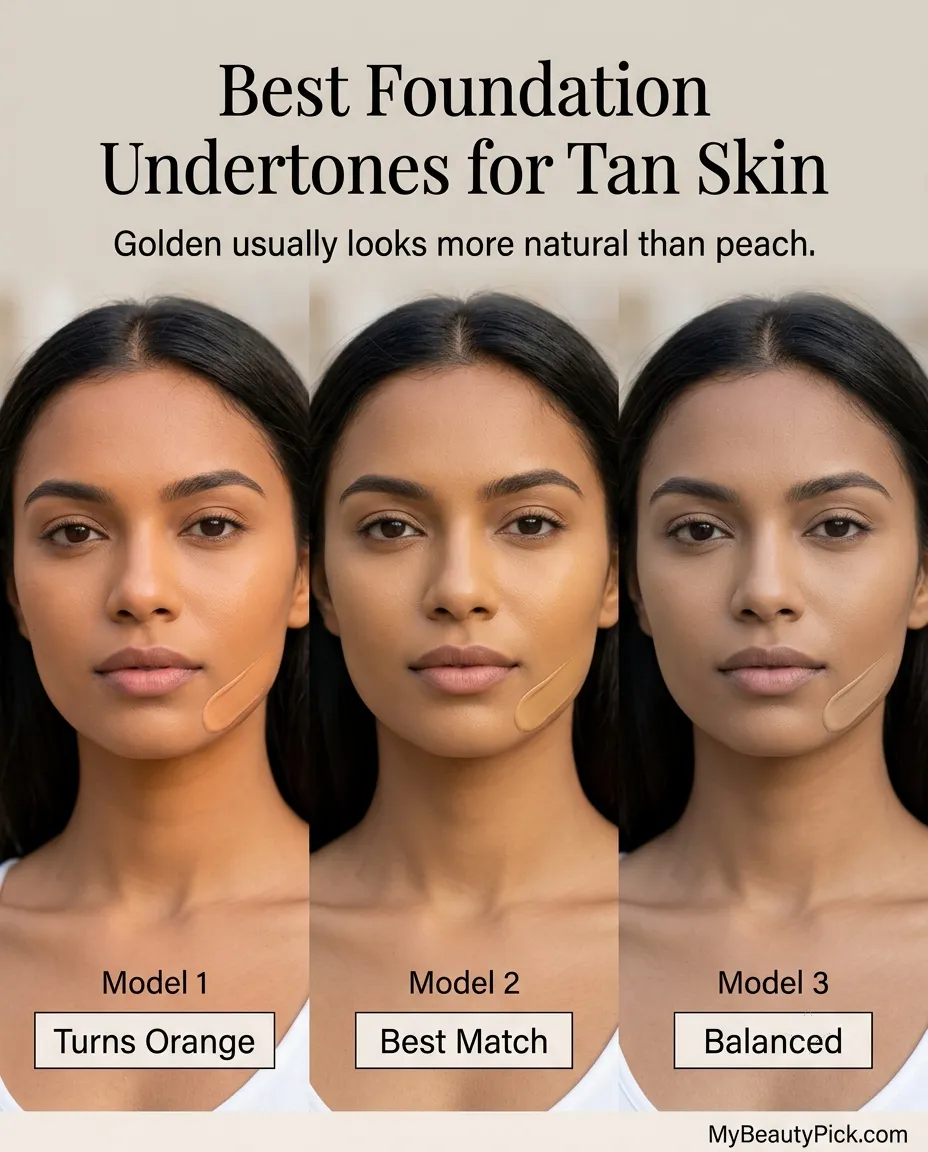
Liquid foundation for the widest shade range and best undertone matching. Cream foundation for events or occasions where luminosity matters. Serum or skin tint for natural everyday coverage. Avoid powder foundation as a standalone — shade ranges are too narrow and flashback is a risk. Always verify yellow-neutral or golden-warm base tones before buying.
High Coverage Needed
Stick foundation for targeted full coverage over PIH and blemishes. Liquid (full-coverage formula) for all-over high coverage. Cream foundation for the most luminous full-coverage finish. Colour-correct with peach tones beneath any formula when covering very dark PIH on tan skin to prevent the foundation from looking grey over the marks.
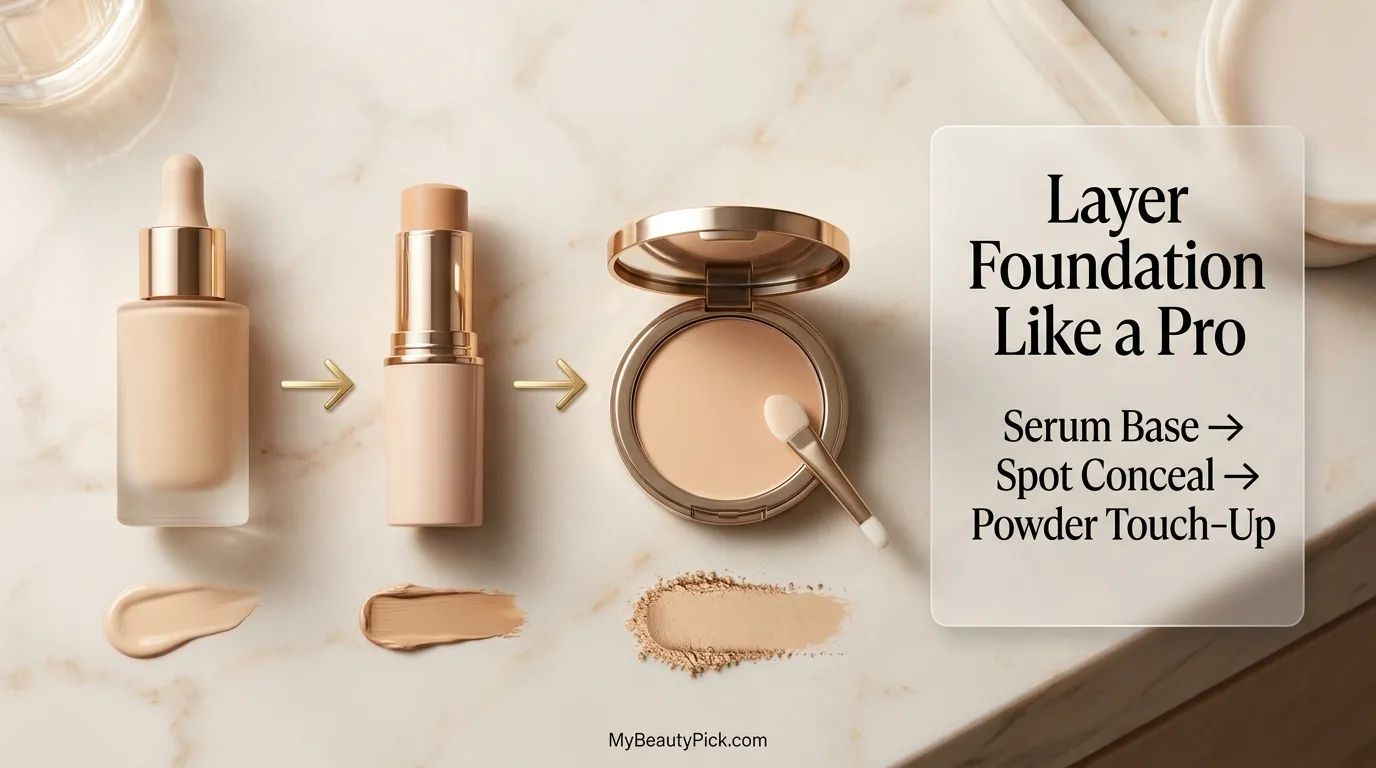
You are not limited to one foundation type. Many experienced makeup users combine formats: a serum foundation all over for an even base, a stick for targeted coverage over specific blemishes or PIH, and a powder compact for touch-ups through the day. The formats serve different functions and can complement each other when matched to the same base chemistry.
Frequently Asked Questions
What are the different types of foundation makeup?
The main types of foundation makeup are liquid, powder, stick, cream, serum, mineral, BB cream, CC cream, skin tint, and mousse or cushion. Liquid is the most versatile and comes in water-based, silicone-based, and oil-based formulas. Stick and cream foundations carry the most pigment. Serum and skin tints are the lightest. Mineral is the lowest-irritation option. Each format suits different skin types, coverage needs, and finish preferences.
Which type of foundation is best for oily skin?
Silicone-based liquid foundation with a matte finish is the most reliable option for oily skin. The silicone base creates a barrier between skin oils and the formula, slowing breakdown and oxidation. Powder foundation works well as a standalone for light days or as a setting layer. Stick foundation with a silicone-wax base can also work with a strong mattifying primer. Cream, serum, and oil-based liquid formulas are not well suited to oily skin as they accelerate breakdown.
What is the difference between liquid and cream foundation?
Liquid foundation has a fluid texture based on water or silicone and offers a wide range of finishes and coverage levels. It is the most versatile format and suits all skin types depending on the specific formula. Cream foundation has a thicker, balmy texture based on oils and emollients, offers full-coverage and a luminous finish, and suits dry to normal skin best. Cream carries more pigment per gram, stays pliable longer during blending, but breaks down faster on oily skin.
What foundation type is best for tan skin?
Liquid foundation offers the widest shade range and the best undertone selection for tan and medium-deep skin. Cream foundation produces a luminous finish that complements tan skin’s natural warmth well. Skin tints work for everyday light coverage. The format matters less than the base tone within each format: avoid peach-warm bases regardless of formula type, and look for yellow-neutral, golden-warm, or olive-specific shade designations. Powder foundation as a standalone is less reliable for tan skin due to narrower shade ranges and flashback risk in photography.
Is stick foundation better than liquid?
Neither is categorically better. Stick foundation delivers higher pigment density with more controlled placement and suits people who want targeted, high-coverage application or travel-friendly packaging. Liquid foundation is more versatile across skin types, has a more forgiving blending window, and offers a wider shade range. Stick is harder to apply without streaking if technique is unfamiliar. For beginners, liquid is more forgiving. For coverage over specific dark spots or blemishes, a stick used as a concealer over a liquid base gives the best of both.
What is mineral foundation and who should use it?
Mineral foundation is a loose powder formula built exclusively from mineral-derived ingredients: zinc oxide, titanium dioxide, mica, and silica, without synthetic dyes, fragrances, or preservatives. The zinc oxide provides natural anti-inflammatory and SPF benefits, making mineral the best foundation format for sensitive, reactive, or acne-prone skin. Coverage is limited to light-to-medium. It is not the best choice for dry skin (the powder finish can look flat) or for high-coverage needs. Flashback in photography is a consideration for deeper skin tones.
More From MyBeautyPick