

Clean, natural, organic, non-toxic. These four words appear constantly on foundation packaging and mean four different things — sometimes overlapping, sometimes contradicting. A foundation labelled “100% natural” can contain potent botanical allergens. One marketed as “clean” may include synthetic preservatives. An “organic” certification can apply to as little as 10% of the total formula. This guide cuts through the terminology, explains what each label actually requires, and reviews the formulas that genuinely deliver on both ingredient integrity and performance.
Clean vs Natural vs Organic vs Non-Toxic: What Each Label Actually Means
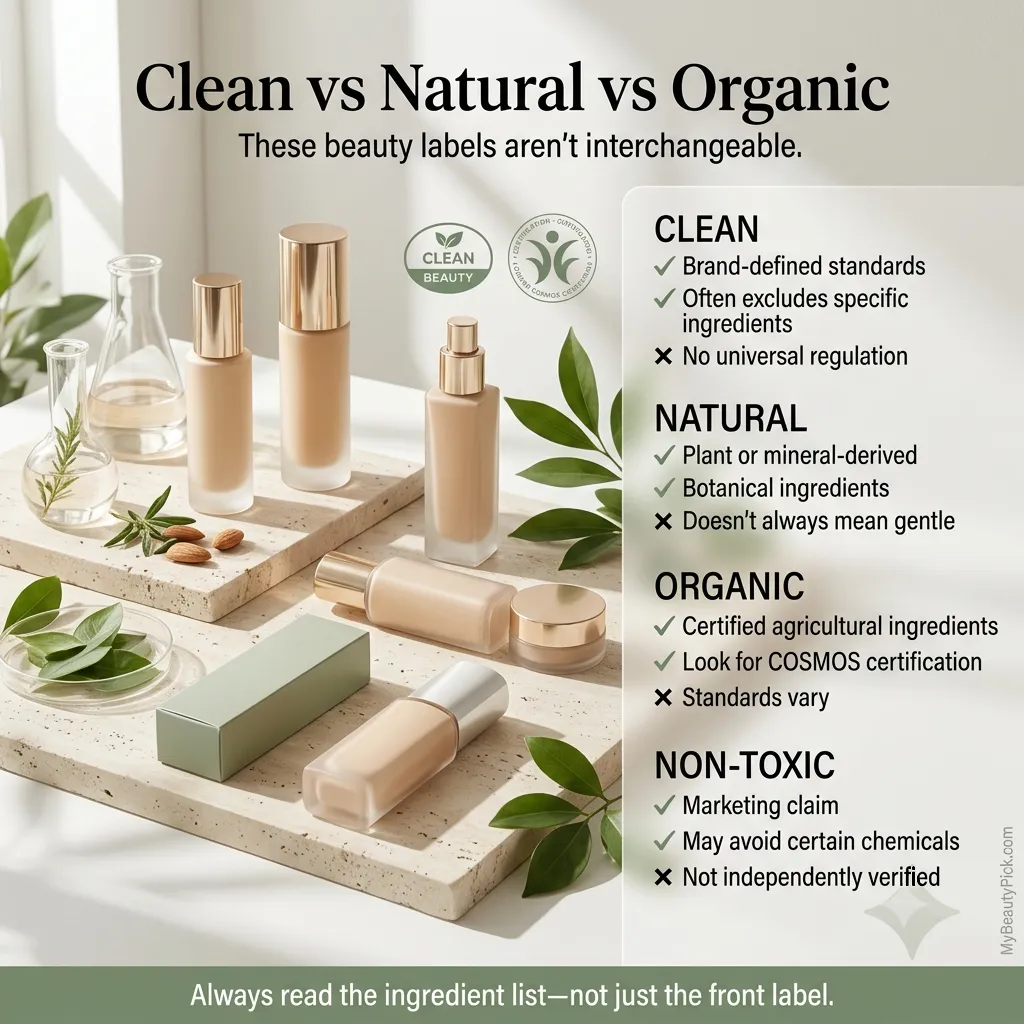
The absence of any regulated standard for “clean” or “natural” cosmetics in most markets makes these labels marketing territory rather than verified claims. Understanding what each term requires — and what it doesn’t — protects you from choosing a formula based on language rather than ingredients.
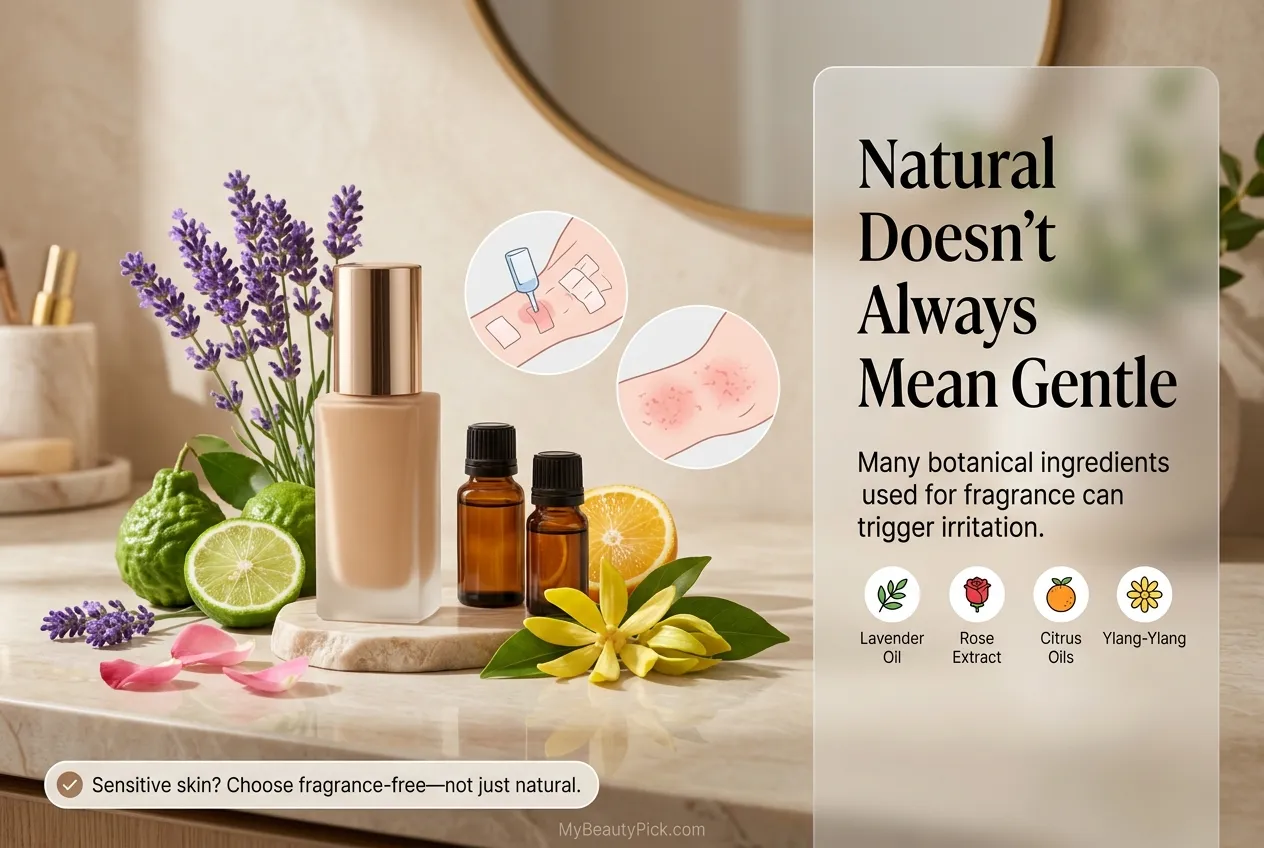
“Natural fragrance” is one of the most misleading terms in clean beauty. Essential oils, botanical extracts used for scent, and plant-based aromatic compounds are among the most common causes of contact dermatitis in cosmetic users — significantly more so than most synthetic fragrance compounds. Lavender oil, rose extract, citrus oils, ylang ylang, and bergamot are all natural, all common in “clean” foundations, and all documented allergens.
If you have sensitive skin and are choosing a clean or natural foundation to reduce reactivity, “fragrance-free” must still be a requirement — whether the fragrance source is synthetic or botanical. A completely unscented formula that uses some synthetic but well-tested preservatives is typically safer for sensitive skin than a fragrance-heavy “100% natural” formula full of essential oils.
The Clean Foundation Performance Trade-Off (And When It Actually Exists)
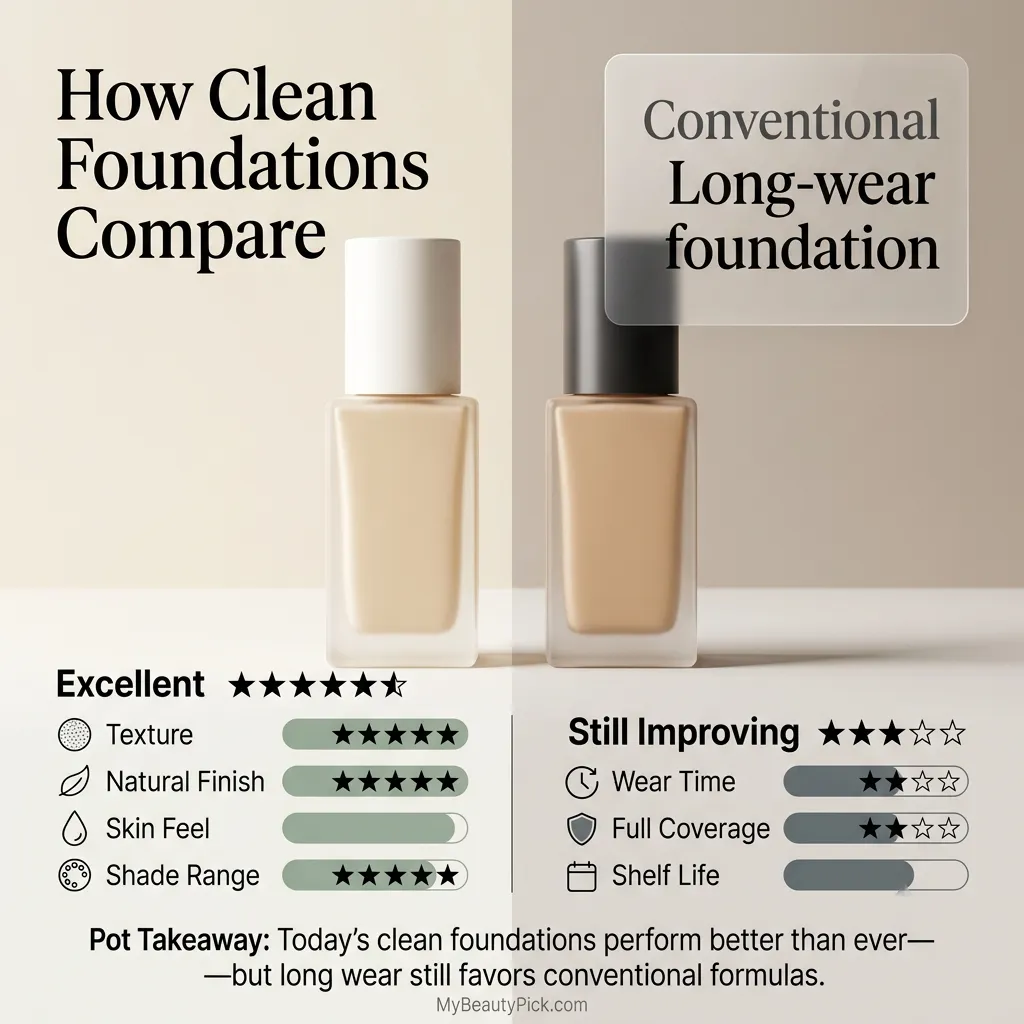
The criticism that clean and natural foundations don’t perform as well as conventional ones is partly true and partly outdated. It’s worth understanding which performance limitations are real, which have been solved, and which were never real to begin with.
Wear time and longevity. This is the most consistent real limitation. Long-wear foundations rely heavily on synthetic film-forming polymers (trimethylsiloxysilicate, various acrylate copolymers) that physically lock pigment to the skin surface for 12-24 hours. Natural alternatives to these don’t exist at equivalent performance. Clean foundations built without these ingredients typically need midday touch-ups where a conventional long-wear formula wouldn’t. For most wearers, this is a practical inconvenience rather than a dealbreaker — but it’s accurate.
Shelf life. Synthetic preservatives (parabens, phenoxyethanol, benzyl alcohol) are effective precisely because they kill microbial contamination. Natural preservatives (rosemary extract, vitamin E, fermented ingredients) have shorter effective windows and some are sensitive to temperature. A natural foundation stored in warm conditions can develop microbial growth or oxidise faster than conventional alternatives. Check the PAO (period after opening) symbol on packaging — many natural foundations have a 6-month window where conventional equivalents last 12-24 months.
Coverage depth. High-pigment full-coverage foundations require concentrated iron oxides and synthetic film formers to deliver opacity in thin layers. Natural foundations with lower pigment loads and plant oil bases tend to max out at medium coverage. Full coverage from a genuinely natural formula usually requires more product and more layers, which can cling to dry patches or look heavier than a conventional equivalent at the same coverage level.
What has improved substantially: texture, finish quality, and shade range in clean foundations are genuinely competitive with conventional alternatives now. The gap that existed five years ago in these areas has mostly closed, particularly at brands like ILIA, Kosas, and RMS Beauty. The remaining performance gaps are in long-wear staying power and full-coverage capacity.
Best Clean and Natural Foundation: Reviewed Picks
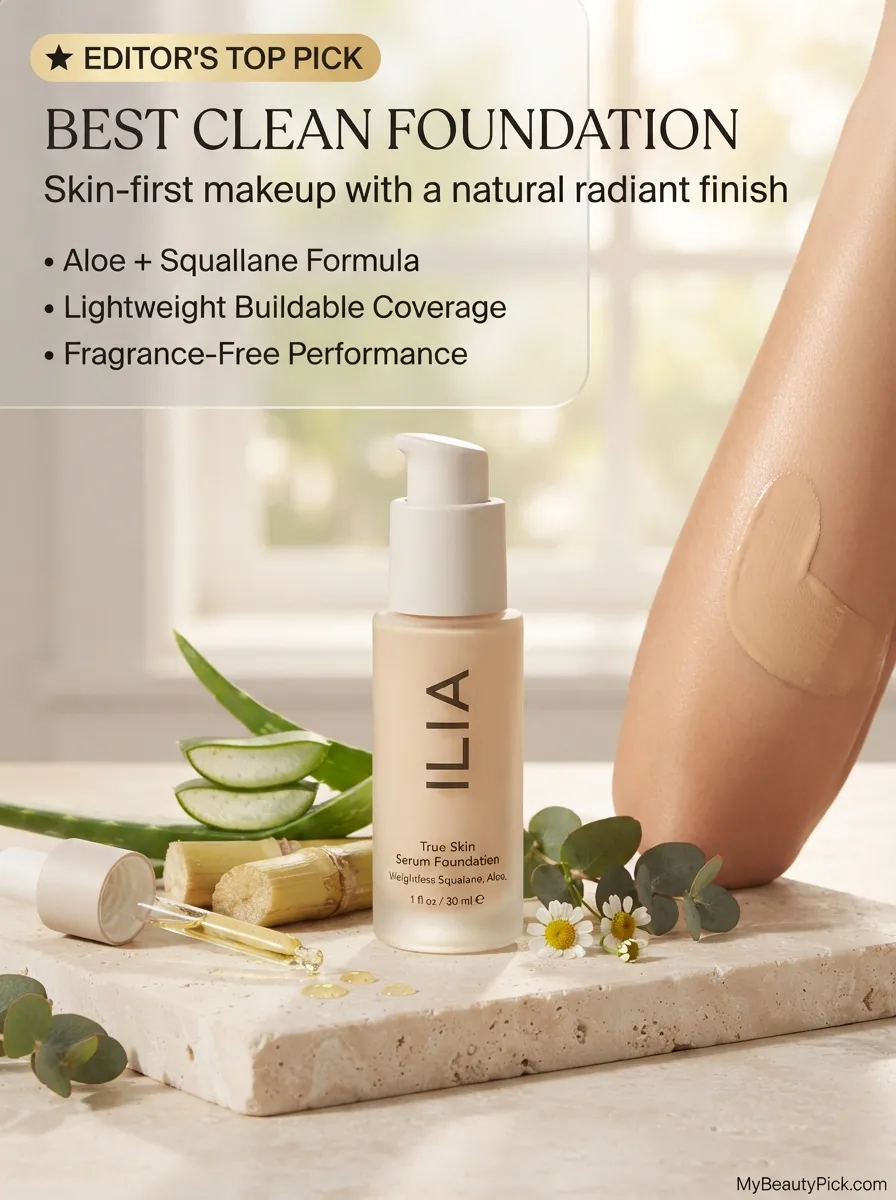
“The clean foundation that finally closed the performance gap — skin-like finish, aloe and squalane base, no synthetic fragrance, and the kind of natural-looking result that conventional foundations rarely achieve.”
- Coverage: Sheer-to-light buildable; natural dewy finish
- Key ingredients: Aloe vera, squalane (plant-derived), hyaluronic acid, vitamin B5; no parabens, no synthetic fragrance
- Certifications: EWG Verified formulas; cruelty-free; vegan
- Shade range: 30 shades with genuine undertone variety
- Best for: Clear to mild skin concerns; those wanting a skincare-makeup hybrid; dry to combination skin
What it does better than most clean foundations: The squalane base (derived from sugarcane rather than shark liver in ILIA’s formulation) gives the foundation a skin-melting quality that oil-free conventional formulas don’t replicate. The result is genuinely skin-like — it doesn’t sit on the surface. The aloe leaf juice provides real anti-inflammatory benefit for reactive skin rather than being an incidental ingredient at trace concentration.
What it doesn’t do: Coverage is light and stay is moderate. By hour six on oily skin, touch-ups are generally needed. It’s not the right choice if you need significant coverage for scarring or redness, or if long wear is a hard requirement.
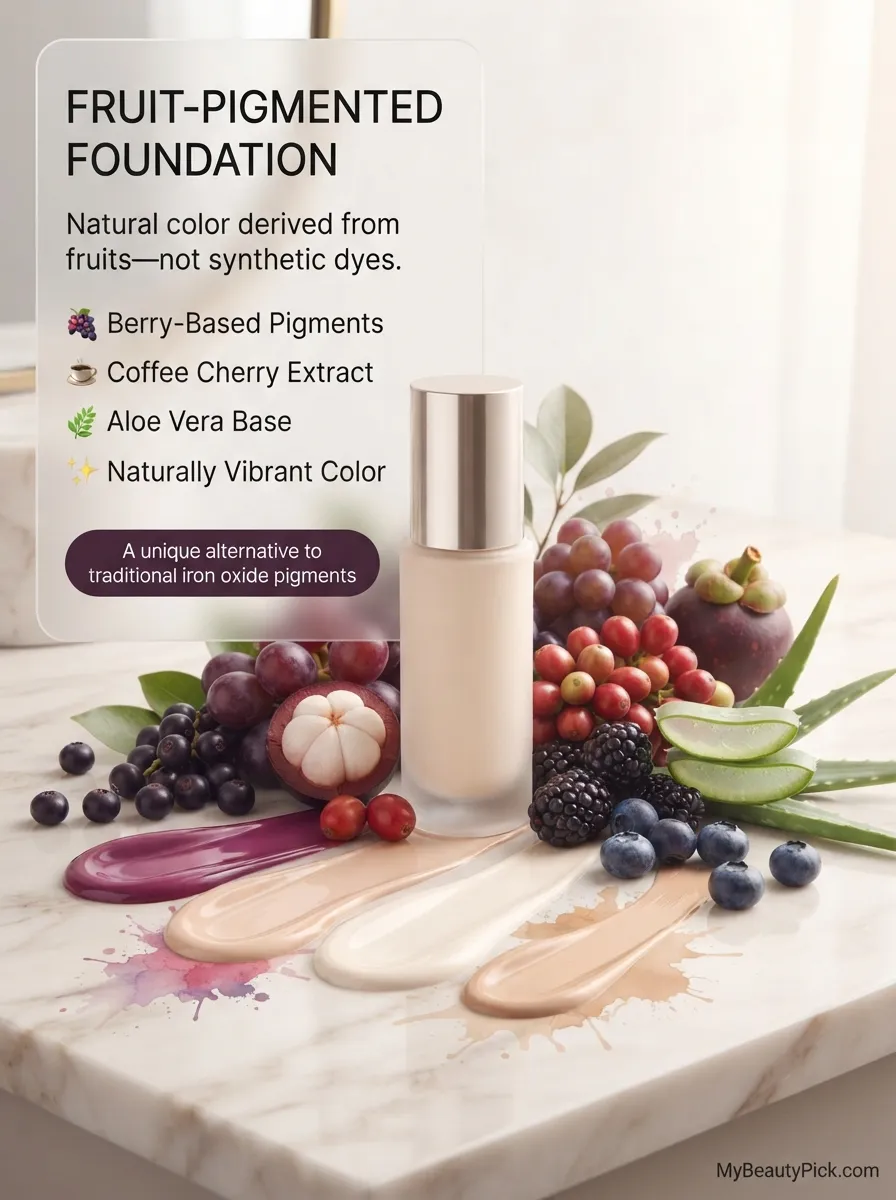
“One of very few foundations where the colour comes entirely from fruit and vegetable pigments rather than iron oxides — maqui berry, coffee cherry, and muscadine grape instead of synthetic dyes.”
- Coverage: Medium-to-full buildable; natural finish
- Key ingredients: Aloe vera leaf juice base, rice starch, maqui berry, coffee cherry, muscadine grape, mangosteen (pigments); free of synthetic dyes, parabens, synthetic fragrance
- Certifications: Cruelty-free; vegan; EWG score low
- Shade range: 20+ shades
- Best for: Those who want the most comprehensively natural formula available; dry to combination skin; medium-to-full coverage needs
Why fruit pigments are significant: Almost every foundation — including “natural” ones — uses iron oxides for colour. Iron oxides are mineral-derived and generally considered safe, but they’re still a processed, synthetically refined pigment. 100% Pure achieves colour using fruit and vegetable extracts instead: the deep pigments in berries and coffee create genuine skin-toning colour without iron oxides. For those who specifically want to avoid all synthetic processing in their pigment sources, this is the most thoroughgoing natural option available.
“100% certified organic — not 70%, not 80%, not ‘made with organic ingredients’ — with hyaluronic acid, aloe, and evening primrose oil in a medium-coverage formula consistently recommended for both sensitive and mature skin.”
- Coverage: Light-to-medium; natural matte finish
- Key ingredients: Certified organic aloe vera, argan oil, hyaluronic acid, evening primrose oil, green tea extract
- Certifications: COSMOS Organic certified; Leaping Bunny cruelty-free; 100% vegan; certified organic
- Shade range: 6 shades (limited — significant constraint)
- Best for: Sensitive or reactive skin wanting the highest organic certification standard; mature skin needing a hydrating formula with anti-ageing actives
Why COSMOS Organic matters more than USDA Organic for cosmetics: The COSMOS standard (used widely in Europe and increasingly globally) requires that the entire formula meets organic certification thresholds, not just individual ingredients. INIKA meets this standard with 100% certified organic ingredients, which is a higher bar than most brands achieve even in the “organic beauty” category. Evening primrose oil provides genuine anti-inflammatory and barrier-supportive benefit for reactive and mature skin.
“Medium-to-full coverage, SPF 25, niacinamide and peptides in a clean formulation — the most performance-forward clean foundation that still earns the category label.”
- Coverage: Medium-to-full buildable; natural-satin finish
- Key ingredients: Niacinamide, peptides (skin-firming), hyaluronic acid, AHA complex, SPF 25; no parabens, no synthetic fragrance, no silicones
- Certifications: Credo Beauty clean-certified; cruelty-free; vegan
- Shade range: 36 shades with diverse undertone representation
- Best for: Normal to combination skin wanting significant clean coverage; those transitioning from conventional full-coverage foundations to clean beauty
Why it bridges clean and performance: Kosas uses “clean” in the sense of avoiding specific known-concern ingredients (parabens, synthetic fragrance, phthalates) while using well-tested synthetic actives like niacinamide and peptides for performance. This is the “safe synthetics” approach — neither fully natural nor conventional, but occupying a meaningful middle position where performance is not sacrificed for purity. The AHA complex actively improves skin texture over consistent daily wear, making it more skincare-functional than most foundations in any category.
“EWG Verified, widely available at Target, buildable medium coverage from a clean stick — one of the most accessible clean foundations for oily skin that doesn’t require ordering from a specialist retailer.”
- Coverage: Medium buildable; natural matte finish
- Key ingredients: Castor seed oil, safflower seed oil, vitamin E; EWG Verified; vegan; cruelty-free
- Shade range: 42 shades — broadest shade range in the clean foundation category
- Best for: Dry-to-normal skin (despite the oily skin designation above, castor oil base makes this more comfortable on less oily types); those wanting wide shade availability in accessible clean beauty
Why the shade range is significant for clean beauty: The clean beauty category has historically been even worse than mainstream beauty for shade depth, with most brands maxing out at medium-tan options. Well People’s 42-shade range is the broadest in the genuinely clean-certified category, making it relevant for deeper skin tones that most clean brands don’t serve.
Best Organic Foundation for Mature Skin
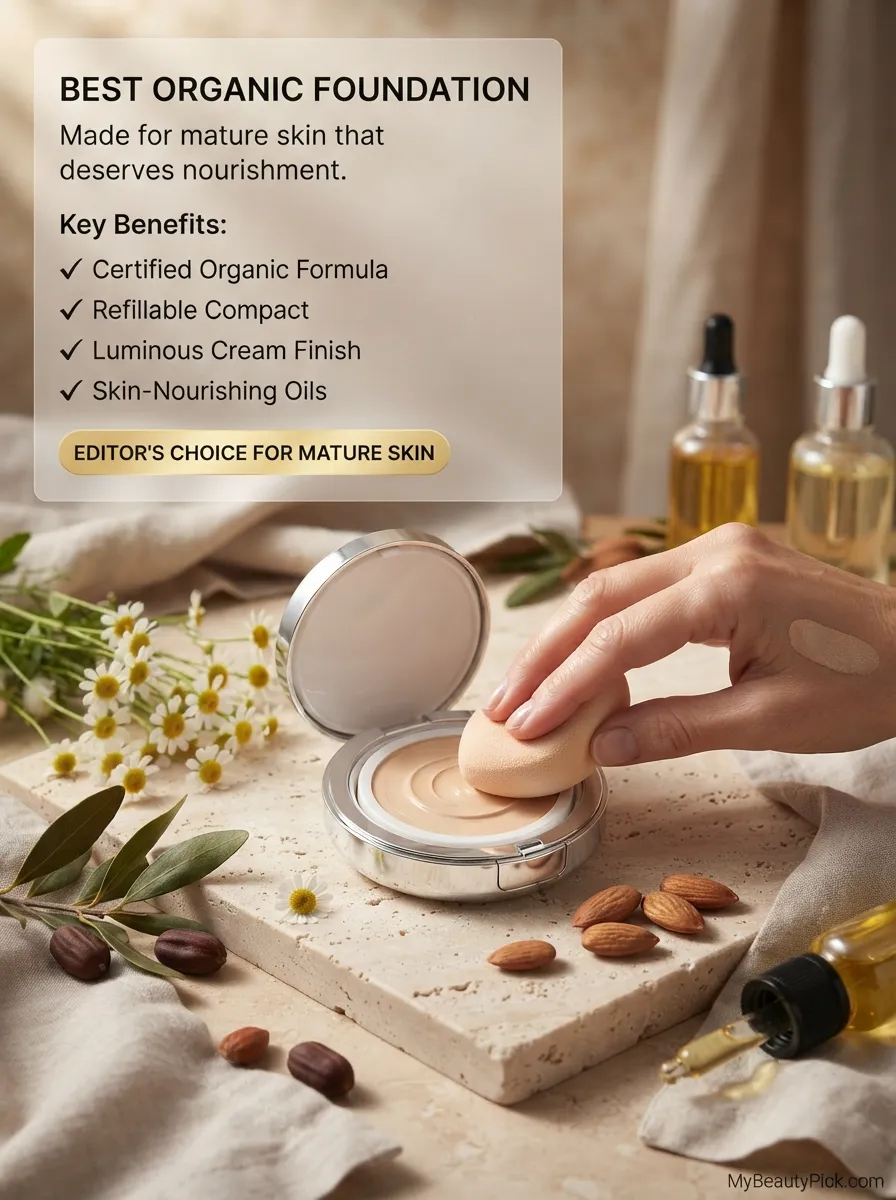
Mature skin and clean beauty are a natural pairing — heavy synthetic silicone bases, mattifying clays, and alcohol-heavy long-wear formulas all perform poorly on skin with fine lines, lower oil production, and reduced elasticity. Organic and natural foundations tend to use plant oils, squalane, and hyaluronic acid as their base ingredients, which happen to be exactly what mature skin responds best to.
The specific criteria for the best organic foundation for mature skin differ from the general clean beauty criteria in three ways: finish must be dewy or satin (matte foundations emphasise texture and lines), formula must be hydrating rather than oil-absorbing (mature skin usually doesn’t need shine control), and application technique matters more than with younger skin (a damp sponge with pressing motions is essential to avoid dragging on thinning skin).
“Certified organic, refillable, and formulated with sweet almond oil and organic plant actives specifically for skin that needs nourishment as much as coverage.”
- Coverage: Medium buildable; natural luminous finish
- Key ingredients: Sweet almond seed oil, organic jojoba, chamomile water (soothing), organic plant extracts; certified organic by NATRUE and Ecocert
- Certifications: NATRUE and Ecocert organic certified; refillable packaging; cruelty-free
- Shade range: 16 shades — adequate but not comprehensive at deeper tones
- Best for: Mature, dry, or dry-combination skin wanting organic certification with a genuinely luminous, skin-nourishing result; those who want the most refined finish in clean beauty
Why it works particularly well for mature skin: The cream formula with sweet almond oil and jojoba creates a dewy, healthy-looking finish that sits above fine lines rather than settling into them. Chamomile water provides soothing benefit for the redness that often accompanies mature, reactive, or post-menopausal skin. The refillable compact makes it one of the most sustainable premium clean foundations available. Application with a damp sponge using pressing motions produces the most natural result on lined skin — the cream formula responds well to warmth from the sponge and fingers.
“Raw, food-grade ingredients, a silky cream consistency that moves with mature skin rather than sitting on top of it, and a finish that consistently improves the look of fine lines rather than emphasising them.”
- Coverage: Medium; natural, skin-like finish
- Key ingredients: Raw, unrefined coconut oil, vitamin E, jojoba, rosehip oil; food-grade ingredient standard; no synthetic preservatives
- Best for: Mature skin; dry skin; those who want the most minimally processed natural ingredients in their foundation
What makes RMS genuinely different: Rose-Marie Swift (RMS’s founder) developed the brand specifically in response to the observation that conventional makeup uses highly processed, refined ingredients that lose their beneficial properties. RMS uses raw, unrefined versions of coconut oil and other plant actives rather than the refined versions found even in most “natural” foundations. The unrefined ingredients retain more of their original nutrient profile — vitamin E, fatty acids, and antioxidants — and reportedly improve skin condition over consistent daily use rather than simply sitting on it.
Clean Foundation by Skin Type: A Quick Reference
| Skin Type | Best Clean Formula Approach | Finish to Choose | Avoid |
|---|---|---|---|
| Dry skin | Plant oil or squalane base; serum-weight formulas with hyaluronic acid and glycerin | Dewy or natural; never matte | Clay-heavy or kaolin-containing natural foundations; alcohol as a solvent |
| Oily skin | Aloe or water-base rather than heavy plant oils; niacinamide for oil regulation; mineral powder as an alternative | Natural matte or true matte | Rich oil-heavy cream foundations; coconut oil bases; dewy finishes |
| Combination skin | Balanced water-oil formula; buildable medium coverage that can be applied lightly on dry zones and built on oily zones | Natural or satin | Extreme matte or extreme dewy — neither serves combination skin well |
| Sensitive skin | Fragrance-free (natural and synthetic); mineral base; short ingredient list; certified organic where possible | Any — sensitivity is formula-driven, not finish-driven | Essential oils used for fragrance; botanical allergens; natural fragrance complex |
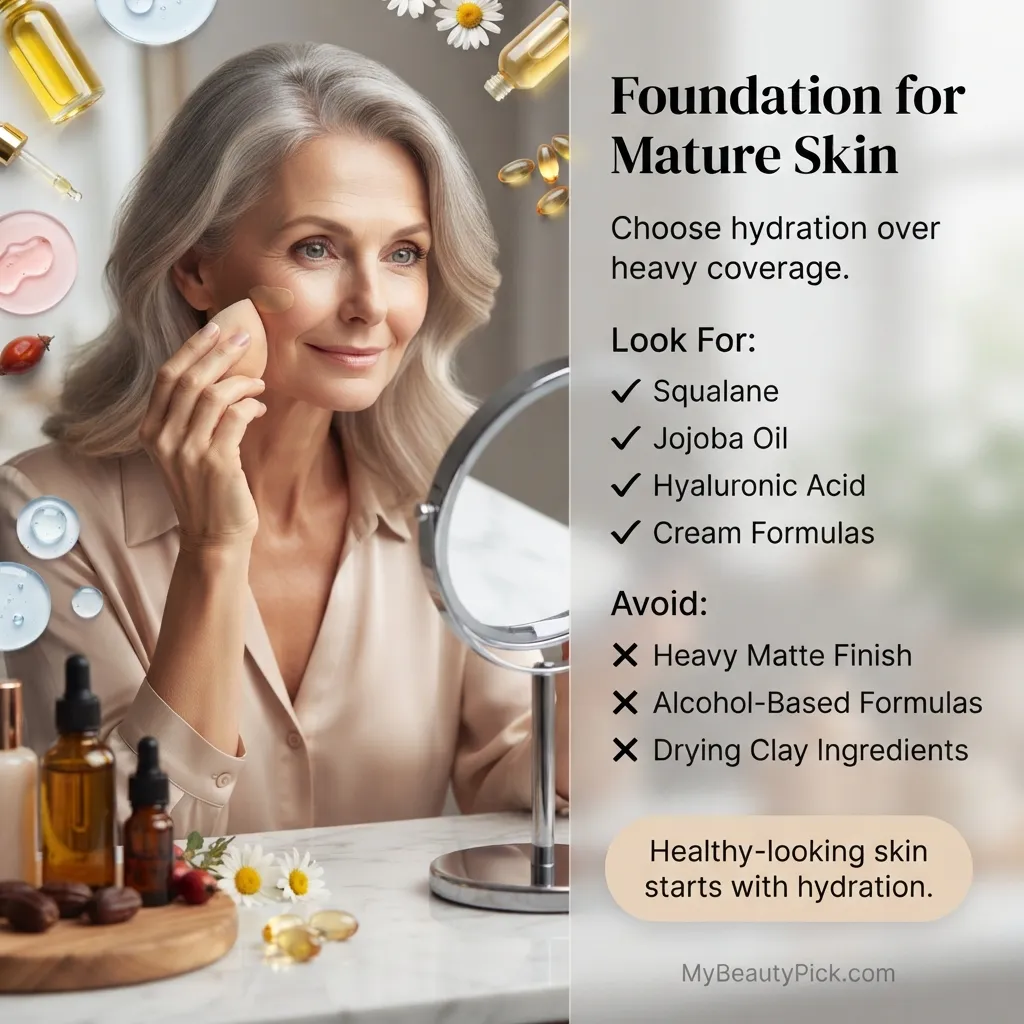
| Mature skin | Plant oil or squalane base; nourishing actives (vitamin E, jojoba, rosehip); minimal mattifying agents | Dewy or natural luminous | Heavy matte finishes; alcohol-based formulas; kaolin-heavy powders |
Frequently Asked Questions
What is the best clean foundation?
ILIA True Skin Serum Foundation is the most consistently recommended clean foundation across independent reviews, dermatologist guidance, and community feedback. Its aloe and squalane base, natural dewy finish, and EWG-verified formulation address the most common reasons people move to clean beauty without sacrificing the skin-like finish that often disappoints in natural alternatives. For more coverage, Kosas Revealer is the strongest performer in the clean-certified medium-to-full range.
For the most comprehensively organic formula, INIKA Organic Liquid Foundation is COSMOS Organic certified at 100% organic ingredients, which is the highest organic certification standard available for cosmetics globally.
Are natural foundations as good as conventional ones?
In most areas, yes. Texture, finish quality, and shade range in clean foundations have improved substantially and are now genuinely comparable to conventional alternatives. The remaining gaps are in long-wear performance (natural formulas generally don’t last as long on oily skin without synthetic film formers) and full-coverage capacity (high opacity in thin layers typically requires concentrated synthetic pigment systems).
Natural foundations also tend to have shorter shelf lives after opening (6-12 months vs 12-24 for conventional alternatives) due to less robust preservation systems. If you use foundation daily, this is rarely a practical concern. If you use it occasionally, pay attention to the PAO date.
What is the best organic foundation for mature skin?
Kjaer Weis Cream Foundation is the most acclaimed organic foundation for mature skin — NATRUE and Ecocert certified, with a sweet almond oil and organic jojoba base that provides a luminous, nourishing finish that sits above fine lines rather than settling into them. The refillable packaging is also a sustainability benefit. It’s a premium price point.
At a more accessible price, RMS Beauty “Un” Cover-Up uses raw, unrefined plant ingredients in a cream formula that works particularly well for dry and mature skin. INIKA Organic Liquid Foundation is also worth considering for mature skin that needs certified organic with a lighter, more hydrating serum feel.
Is natural fragrance in foundation safe?
Not necessarily — and this is one of the most important distinctions in clean beauty. Natural fragrance, derived from essential oils and botanical extracts, contains many of the same sensitising compounds as synthetic fragrance. Lavender oil, citrus extracts, rose absolute, bergamot, ylang ylang, and dozens of other natural aromatic ingredients are documented causes of contact dermatitis in a significant portion of the population.
If you have sensitive or reactive skin, “fragrance-free” must remain a requirement regardless of whether the fragrance source is natural or synthetic. A formula with “natural fragrance” or a long list of botanical extracts added for scent is not safer than a conventional fragrance-free formula for reactive skin.
How do I know if a foundation is truly clean?
The most reliable approach is third-party certification rather than brand claims. EWG Verified, Made Safe, and COSMOS Organic certifications all require independent ingredient screening beyond what any brand self-certification provides. Look for these logos rather than relying on “clean,” “natural,” or “non-toxic” language on packaging.
For products without third-party certification, the EWG Skin Deep database (ewg.org/skindeep) allows you to search any product or ingredient and see a hazard score based on known and suspected health concerns. A score of 1-3 indicates low overall concern. Cross-referencing the specific ingredient list against known allergens (fragrance components, preservatives, parabens) gives a more complete picture than any single label claim.
Do clean foundations break out skin?
Some do, and the reason is often counterintuitive. Several common natural ingredients are highly comedogenic: coconut oil, cocoa butter, and certain plant waxes used as natural alternatives to synthetic emollients regularly cause breakouts in acne-prone skin. A “100% natural” foundation containing these as base ingredients can cause more breakouts than a non-comedogenic conventional formula.
For acne-prone skin wanting a clean foundation: look for formulas with a mineral or aloe base rather than heavy plant oils, verify the non-comedogenic claim against the ingredient list (not just the label), and choose brands that specifically address acne-prone or sensitive skin rather than generic “natural” positioning. ILIA and Kosas are the most consistently recommended clean options for acne-prone skin.