

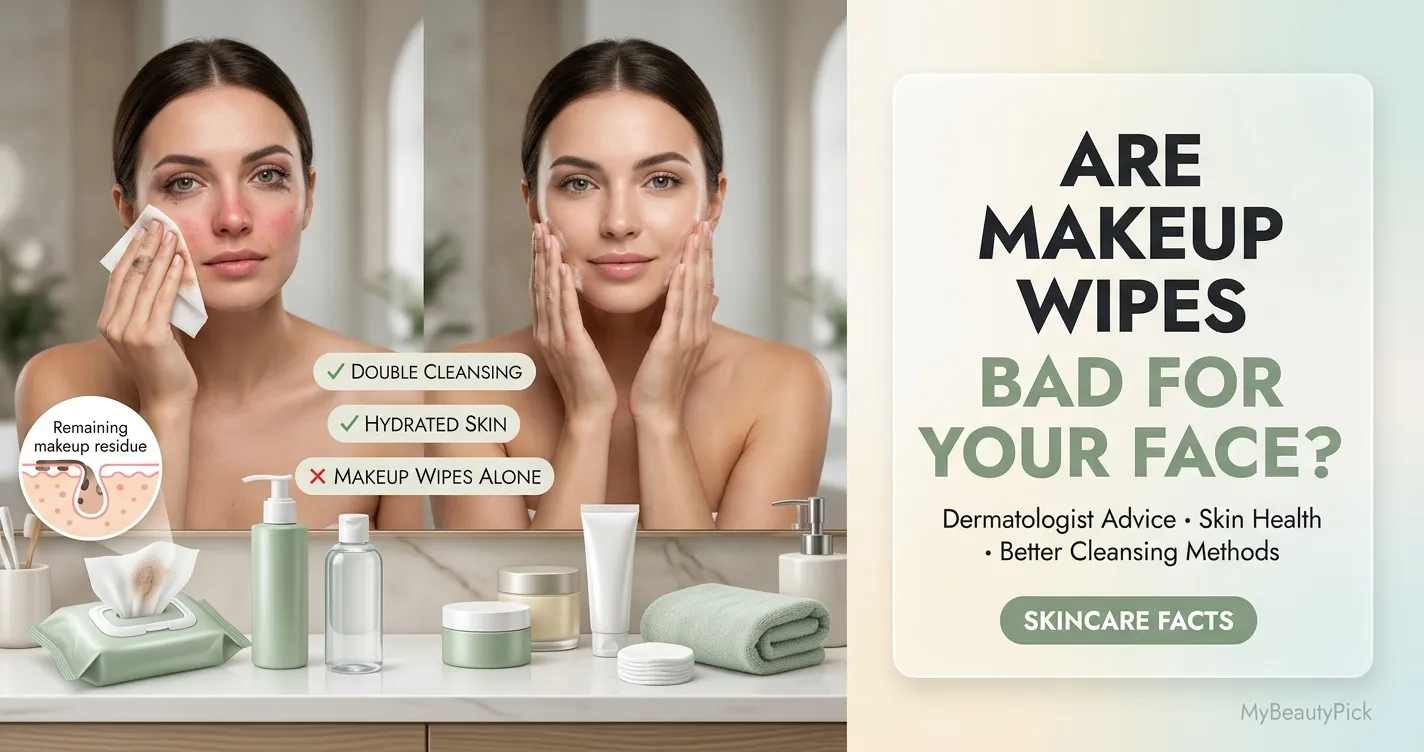
Yes, makeup wipes are bad for your face when used as a standalone cleansing step. They move makeup around the skin rather than removing it, leave behind residue of alcohol, fragrance, and surfactants, and the rubbing motion can disrupt the skin barrier over time. Dermatologists recommend using them only in a pinch, always followed by a gentle cleanser.
Makeup wipes are everywhere. They are cheap, they travel well, and after a long day they feel like the easiest possible option. The problem is that convenience and effectiveness are not the same thing. I have worked with hundreds of clients whose skin was reacting badly to a cleanser they were not even thinking about because they did not consider a wipe to be part of their skincare routine. That is precisely the trap.
Here is the full breakdown on what wipes actually do to your skin, when they are acceptable to reach for, and what to use instead.
How Makeup Wipes Affect Your Skin
Most people assume a wipe is cleaning their face because the cotton comes away brown or black. What is actually happening is that the formula is dissolving the surface layer of makeup and then the wiping motion is dragging most of it sideways across the skin. Some of it lifts off on the fabric. A significant amount stays behind, sitting in pores, brow lines, and hairline creases.
That residue is not benign. Standard wipe formulas contain surfactants to break down makeup, preservatives to keep the wipe shelf-stable, and often alcohol and fragrance. When a regular cleanser is used with water, all of that gets rinsed away. When a wipe is used as the final step, every one of those ingredients stays on the skin overnight, in direct contact with the acid mantle, for hours.
What Happens to the Skin Barrier
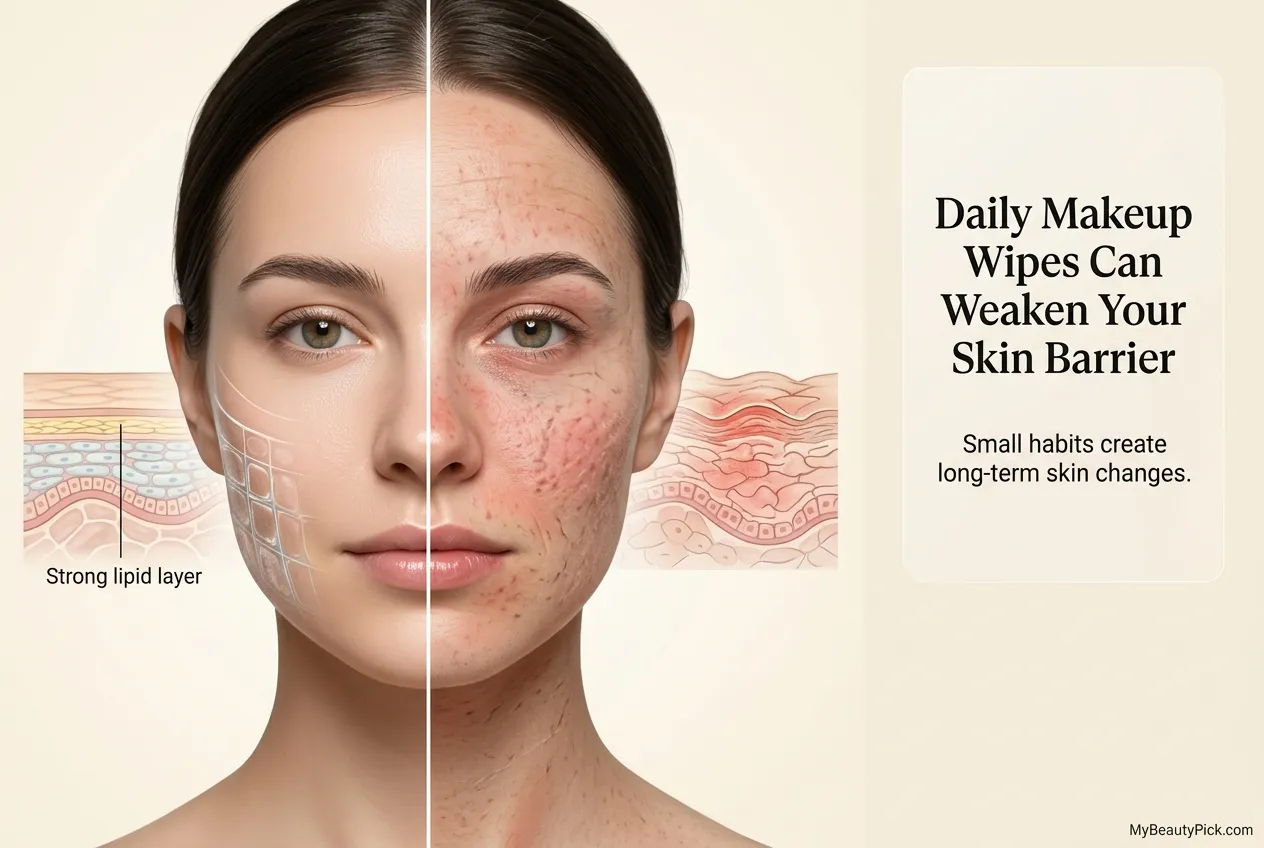
The skin barrier is the outermost layer of skin, a lipid matrix of ceramides, cholesterol, and fatty acids that keeps moisture in and irritants out. Alcohol strips this layer directly. Fragrance triggers inflammation in sensitised skin. Repeated rubbing with a textured cloth causes low-level mechanical friction that accumulates over weeks into visible redness, tightness, or increased reactivity.
The result is a barrier that is increasingly compromised: it retains less moisture, reacts more to products, and in some people becomes visibly red or flaky. This is often mistaken for a sensitivity the person always had, when it is actually something their wipe habit built over time.
If you have eczema or rosacea, makeup wipes should be avoided entirely. The friction alone is enough to trigger a flare on skin that is already prone to inflammation. The fragrance and preservatives commonly found in wipe formulas compound that risk significantly. A gentle cream or oil cleanser applied with fingertips is far safer.
Do Makeup Wipes Clog Pores?
Not directly, but the residue they leave behind does. Hexylene glycol, found in some of the most popular wipe brands, can block pores on some skin types. More consistently, the makeup they fail to remove fully — foundation, SPF, sebum, and environmental debris — sits inside follicles overnight and contributes to congestion. The rubbing action can also spread bacteria from one part of the face to another, which matters more for anyone managing active breakouts.
Do Makeup Wipes Cause Acne?
The evidence is indirect but consistent. Wipes do not introduce acne-causing bacteria in the way a contaminated brush might, but they reliably leave pore-clogging residue and inflammatory ingredients on the skin. Dermatologist Dr Mona Gohara is clear: wipes are not an effective regular cleansing method. The irritant reaction some wipes trigger can also produce pustules that look like acne but are chemically induced rather than bacterial.
Makeup Wipe Ingredients: What You Are Leaving on Your Skin
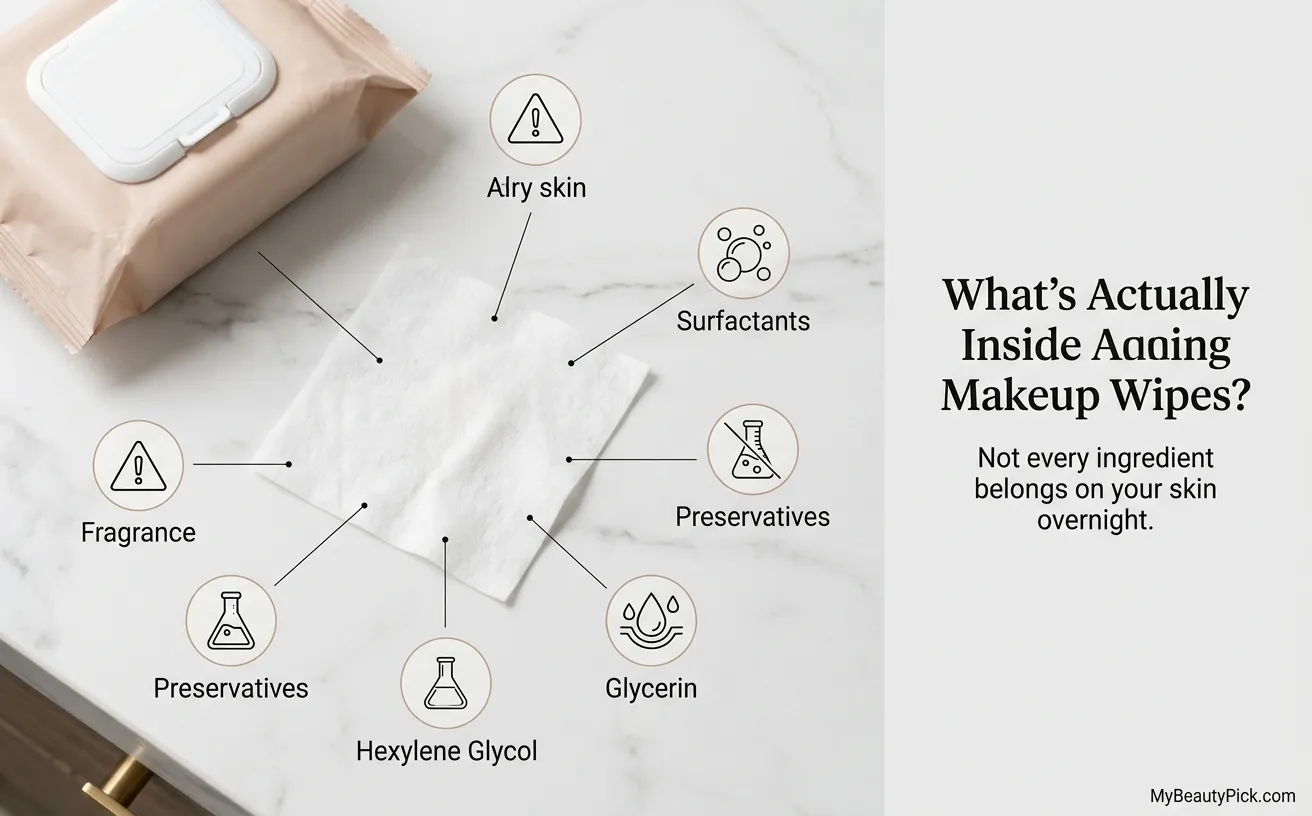
Knowing what is in a wipe matters because those ingredients do not rinse off. They stay in contact with the skin until your next wash. Two categories are consistently flagged by dermatologists across skin types.
| Ingredient Type | Why It Is in the Wipe | Effect on Skin | Skin Types Most Affected |
|---|---|---|---|
| Alcohol | Dissolves oil-based makeup quickly | Strips natural oils, disrupts skin barrier, causes dryness and tightness | Dry, sensitive, mature skin |
| Fragrance | Masks chemical smell, adds sensory appeal | Common allergen and irritant, triggers inflammation and contact dermatitis | Sensitive, eczema-prone, rosacea-prone |
| Cocamidopropyl betaine | Surfactant that lifts makeup from skin | Can cause irritation, especially if left on without rinsing | Sensitive skin |
| Preservatives (parabens, MCI/MI) | Keeps wipe formula stable and microbe-free | Potential allergens, particularly methylisothiazolinone | Sensitive, reactive skin |
| Hexylene glycol | Solvent that helps break down makeup | Can be comedogenic; primary cleansing agent in some formulas | Acne-prone, oily skin |
| Glycerin | Humectant added to reduce drying effect | Beneficial; one of the few genuinely skin-friendly ingredients in wipes | All skin types |
Choose fragrance-free and alcohol-free formulas. The fewer preservatives, the better. Micellar-based wipes, such as Garnier SkinActive Micellar Cleansing Wipes, perform better than standard wipes because the micelle technology lifts makeup without requiring as much friction. Still follow up with a cleanser.
Do Makeup Wipes Actually Remove All Your Makeup?
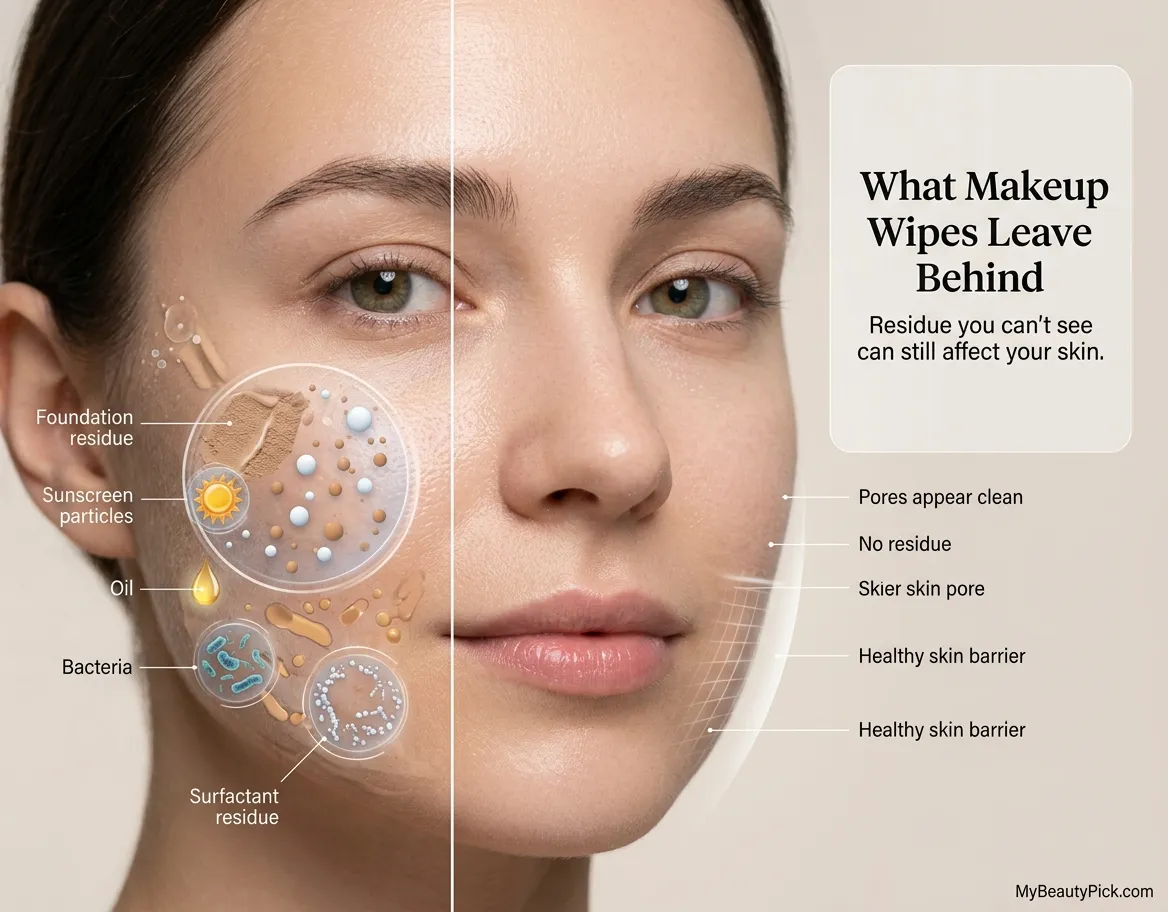
No. This is the core problem with daily wipe use and it is worth being specific about what they miss.
Standard wipes handle light surface makeup reasonably well. They are much less effective on long-wear foundation, waterproof mascara, and anything formulated with film-forming agents designed to adhere to skin through humidity and sweat. Waterproof mascara requires an oil-based formula to dissolve the waxes that give it its longevity. Most wipes do not contain enough oil to do that job without aggressive rubbing at the eye area, which is exactly where you least want mechanical friction.
SPF is the category most people do not think about. Sunscreen residue is invisible. You cannot tell whether it has been removed. Mineral sunscreens containing zinc oxide and titanium dioxide are particularly resistant to standard wipe formulas. A study approach using UV cameras consistently shows that SPF remains on the skin after wipe application in ways that are simply not visible to the naked eye. Film-forming agents in modern SPF sit below the surface layer of dead skin cells, which means a surface-wiping motion does not reach them.
Pro Tip: If your skin is breaking out along the forehead or hairline specifically, unremoved SPF residue is a likely cause. An oil-based first cleanser dissolves film-forming sunscreen agents in a way that no wipe and no water-based cleanser alone can match.
Makeup Wipes: An Honest Look at the Pros and Cons
Where Wipes Work
- Genuinely convenient for travel, gym bags, camping, and emergencies
- Useful as a first step before a proper cleanser when wearing heavy makeup
- Better than sleeping in a full face of makeup, if no other option exists
- Effective for light, non-waterproof makeup on low-coverage days
- Quick removal of a makeup mistake mid-application without redoing everything
Where Wipes Fall Short
- Do not fully remove long-wear foundation, waterproof mascara, or SPF
- Leave surfactants, alcohol, and fragrance on skin overnight
- Wiping motion spreads bacteria across the face
- Repeated friction disrupts the skin barrier over time
- Inadequate for acne-prone skin because residue contributes to congestion
- Should be avoided entirely by anyone with eczema or rosacea
- Disposable wipes are not biodegradable — significant environmental cost
When Makeup Wipes Are Acceptable to Use
The professional consensus is not that wipes should never touch your face. It is that they should never be the only thing that touches your face at the end of the day.
Using a wipe as a first pass before a cleanser is a reasonable approach for heavy makeup days. You reduce the load on your cleanser, which means less friction and less time spent working it into the skin. That is a legitimate use case. The wipe handles the bulk removal, the cleanser handles the residue the wipe left behind.
For genuinely exceptional circumstances — camping, a long-haul flight, a late night with no access to a sink — a wipe is better than leaving a full face of makeup on overnight. The American Academy of Dermatology is consistent on one point: friction and scrubbing are damaging, so if you do reach for a wipe, use a light pressing and gentle sliding motion rather than hard rubbing. Start at the outer edge of the face and work inward, and never use a single wipe for the entire face.
A wipe in a pinch, followed by a cleanser the next morning, is acceptable. A wipe every evening as your complete skincare routine is not. The distinction matters because the cumulative effect of nightly residue and nightly friction compounds over weeks into skin that looks and feels older and more reactive than it should.
Makeup Wipes vs Micellar Water vs Cleansing Balm
These three options are often positioned as interchangeable. They are not. Each has a different mechanism, a different residue profile, and a different skin type fit.
| Method | How It Works | Removes SPF/Waterproof? | Rinsing Required? | Best For | Weaknesses |
|---|---|---|---|---|---|
| Makeup wipes | Surfactants and solvents loosen makeup; friction removes it | Partially at best | No, but should be followed by cleanser | Travel, gym, emergency use | Leaves residue; friction causes barrier disruption |
| Micellar water | Micelles (tiny oil droplets in water) attract and lift makeup from skin | Light SPF only | Recommended, though often skipped | Light, non-waterproof makeup; sensitive skin | Cannot dissolve waterproof formulas or mineral SPF without hard rubbing |
| Cleansing balm | Oil-based formula dissolves oil-based makeup on contact; emulsifies with water and rinses clean | Yes, including waterproof and mineral SPF | Yes — rinses away cleanly | Full-face makeup, SPF, waterproof formulas; all skin types | Requires a sink; more steps than a wipe |
| Cleansing oil | Same oil-dissolves-oil principle as balm; thinner texture | Yes | Yes | All skin types including oily; waterproof mascara and long-wear base | Some people find oils feel heavy; requires thorough emulsification |
Micellar water from Bioderma, La Roche-Posay, or Garnier is a genuinely good option for light makeup days and sensitive skin, but it was not designed to remove waterproof mascara or mineral sunscreen on its own. Bioderma Sensibio H2O remains one of the best-formulated options for sensitive and reactive skin types precisely because the micelle technology requires minimal rubbing. Even so, following with a water-based cleanser is the right move.
A cleansing balm is the most thorough single-step first cleanser available. It dissolves oil-based makeup by the principle that like dissolves like: the balm’s oils attract and lift the oils in your foundation, SPF, and mascara, then the whole thing emulsifies with water and rinses away without leaving a greasy film. Cetaphil, CeraVe, and Clinique all make approachable cleansing options for the second step, depending on skin type.
Best Makeup Removal Method for Different Skin Types
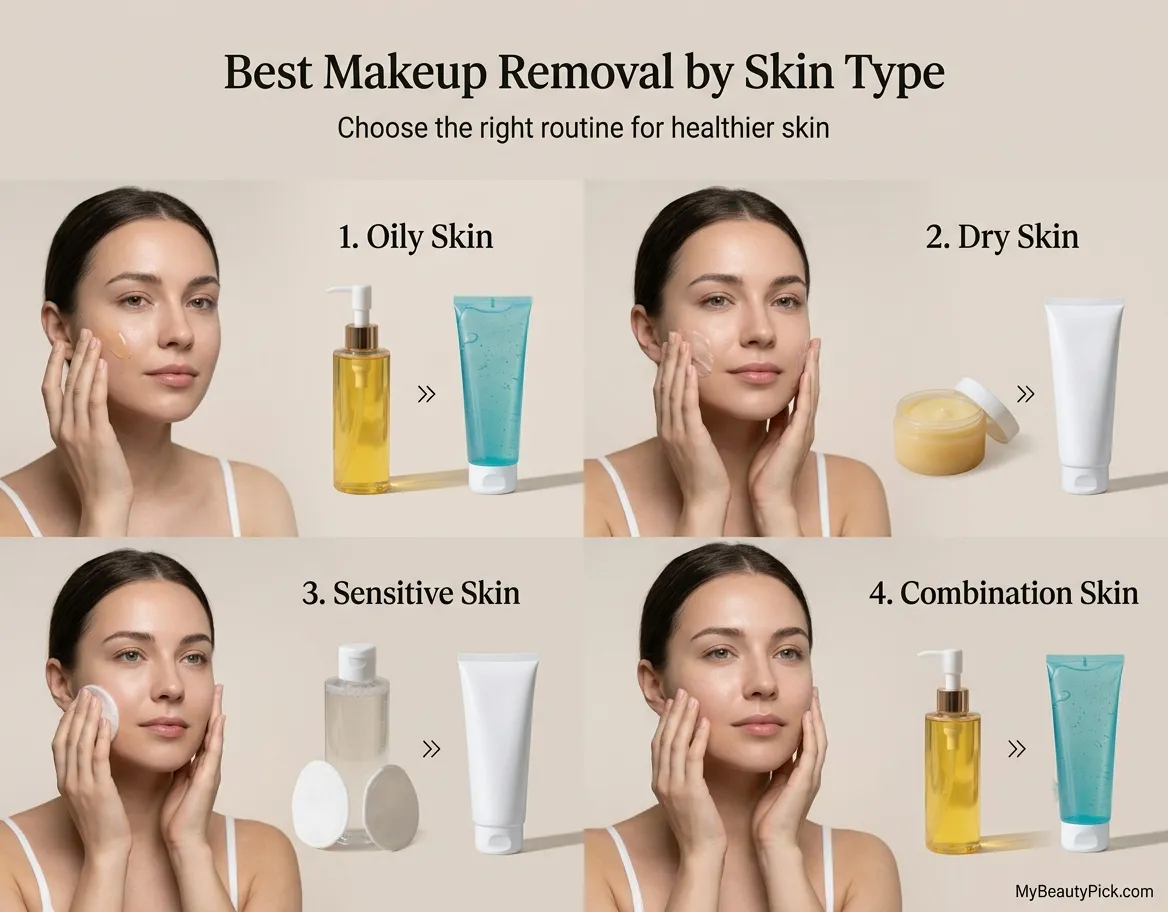
Oily and Acne-Prone Skin
Counterintuitively, an oil cleanser or balm as a first step works well here. Oil does not make oily skin oilier — it dissolves sebum alongside makeup and rinses clean. Follow with a non-comedogenic gel or foaming cleanser. Avoid wipes: the residue they leave behind contributes directly to the congestion this skin type is already managing.
Dry and Mature Skin
A cleansing balm followed by a cream cleanser like CeraVe Hydrating Facial Cleanser is the most skin-friendly approach. The oil base in the balm does not strip the acid mantle, and the cream cleanser replenishes rather than depletes moisture. Wipes are particularly harmful on dry skin because alcohol leaves the skin tighter than it found it.
Sensitive Skin
Fragrance-free micellar water on a soft reusable cotton pad followed by a gentle hydrating cleanser is the safest approach. Bioderma Sensibio H2O or La Roche-Posay Micellar Water are the benchmark options. Skip wipes entirely: even fragrance-free versions contain preservatives that sensitised skin can react to over time.
Combination Skin
A lightweight cleansing oil or balm for first-step removal works well, followed by a gentle gel cleanser that does not over-strip the drier areas of the face. Vary between approaches depending on how much makeup you have worn: lighter coverage days may only need micellar water and a cleanser, not a full double cleanse.
Why Dermatologists Recommend Cleansing After Makeup Wipes
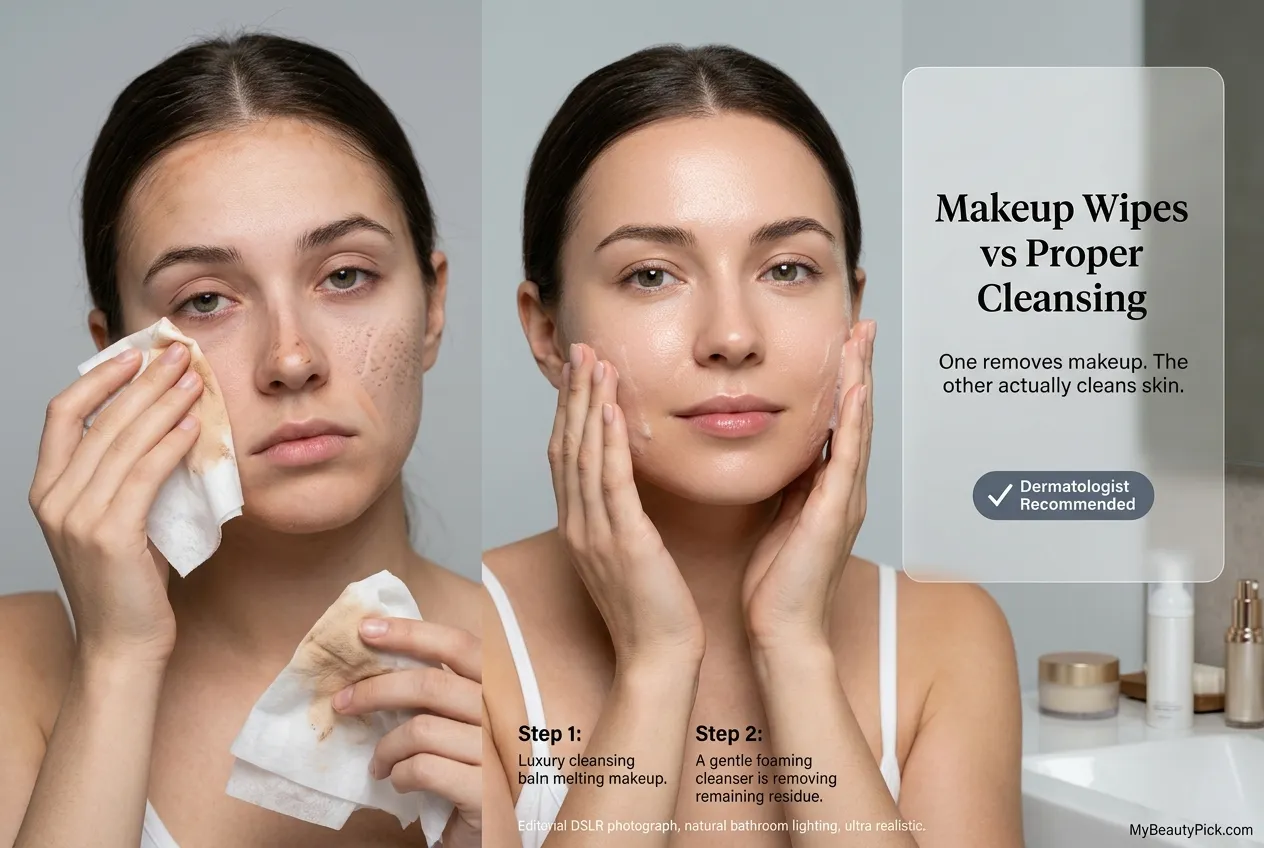
Double cleansing is the most consistently recommended approach from dermatologists for anyone who wears foundation, SPF, or waterproof eye makeup. The two-step logic is straightforward: the first cleanser (oil-based or micellar) dissolves the oil-soluble layer of makeup, sunscreen, and sebum. The second cleanser (water-based) removes the first cleanser’s residue along with any remaining water-soluble impurities.
The reason this works where a single cleanse often does not is that oil-based makeup and film-forming SPF are chemically resistant to water-based cleansers alone. Surfactants in gel and foam cleansers are designed to work on skin that has already had its oil layer removed. Running a foam cleanser over skin still covered in waterproof foundation is like trying to wash a greasy pan with soap and no hot water: the tool is right but the conditions are not.
Double cleansing is not necessary every day. If you wore minimal makeup or no SPF, a single gentle cleanser is enough. If you wore a full face of long-wear foundation and mineral sunscreen in summer, skipping the first oil step is how residue accumulates over weeks into congestion, dullness, and increased breakouts.
How to Remove Makeup Without Damaging Your Skin
-
1
Start with dry hands on dry skin
Apply a cleansing balm or oil directly to dry skin. Water dilutes oil-based cleansers before they have had time to dissolve makeup. Work in gentle circular motions for 30 to 60 seconds, paying extra attention to the hairline, nose crease, and jaw where makeup and SPF sit heaviest.
-
2
Emulsify with water and rinse
Add a small amount of lukewarm water to your hands and massage over the balm or oil until it turns milky. This emulsification step is what allows oil-soluble makeup to rinse cleanly away. Use lukewarm water, not hot — hot water increases transepidermal water loss and can redden sensitive skin.
-
3
Follow with a gentle water-based cleanser
Choose a formula matched to your skin type. CeraVe Hydrating Facial Cleanser suits dry and sensitive skin. A gentle gel cleanser such as Cetaphil Daily Facial Cleanser works well for oily and combination. Lather, massage for 30 seconds, rinse thoroughly. Pat dry with a clean cloth.
-
4
Address stubborn eye makeup separately if needed
Waterproof mascara and long-wear liner need an oil-based eye makeup remover on a reusable cotton pad. Press the pad gently against the eye for ten seconds before wiping. The dwell time allows the oil to penetrate and dissolve the waxes in waterproof formulas before any friction begins. This is far gentler on the orbital area than rubbing immediately.
Common Makeup Removal Mistakes to Avoid
Mistakes That Damage Your Skin Over Time
-
✕
Using a wipe as your only evening cleansing step
This is the most common and most consequential mistake. Even if the wipe removes visible makeup, it leaves behind invisible residue and its own formula on the skin barrier.
-
✕
Rubbing aggressively around the eye area
The skin around the eye is the thinnest on the face. Repeated tugging at the outer corners over months contributes to loss of elasticity in a way that no eye cream fully reverses. Press, hold, then slide gently.
-
✕
Assuming light makeup means SPF is also removed
Sunscreen is invisible and largely resistant to standard wipes. Anyone wearing SPF daily needs a first-step oil cleanser or genuine micellar water, not a surface wipe.
-
✕
Using one wipe for the entire face
A wipe saturated with dissolved foundation and mascara is redistributing that debris as you move it across the skin. Use a fresh wipe or a fresh area of the wipe for different zones.
-
✕
Choosing wipes with fragrance on sensitive or reactive skin
Fragrance is among the most common causes of allergic contact dermatitis in facial skincare. It has no functional purpose in a makeup remover beyond scent. Always check the INCI list before buying.
Alternatives to Makeup Wipes Worth Switching To
The most practical swap for daily wipe users is a cleansing balm, specifically one that emulsifies cleanly with water. You use it the same way as a wipe in terms of speed, but the chemistry is entirely different. The oil base dissolves makeup on contact without requiring friction, and it rinses away taking the dissolved makeup with it rather than leaving residue behind.
For travel specifically, where wipes feel irreplaceable, a small tub of cleansing balm and a muslin cloth takes up the same space as a packet of wipes. Reusable bamboo or organic cotton makeup remover pads used with micellar water are another genuinely portable alternative that removes the friction and the chemical residue problem simultaneously.
If you wear minimal makeup and no waterproof formulas, Bioderma Sensibio H2O on a reusable pad followed by the Cetaphil Gentle Skin Cleanser is a two-minute routine that outperforms any wipe in terms of actual cleanliness and skin comfort. For heavier coverage days, a cleansing oil or balm as first step is not optional — it is the only thing that reliably removes long-wear film-forming formulas without the repeated friction passes that break down barrier function.
The Bottom Line: Are Makeup Wipes Bad for Your Face?
Yes, as a daily standalone cleansing step, makeup wipes are bad for your face. They do not fully remove makeup or SPF, they leave irritating ingredients on the skin overnight, and the rubbing motion damages the barrier progressively over time. Skin that feels tight, looks dull, or reacts more to products than it used to is often showing the cumulative effect of nightly wipe use.
As an emergency option, followed by a proper cleanse, they are acceptable for most skin types — with the exception of eczema and rosacea, where even occasional use risks triggering a flare.
The practical switch is a cleansing balm or oil cleanser for first-step removal, followed by a gentle water-based cleanser suited to your skin type. It takes two more minutes than a wipe and makes a measurable difference to skin condition within weeks.
Frequently Asked Questions
Are makeup wipes actually bad for your face?
Yes, when used as your only cleansing step. Makeup wipes move surface-level makeup around more than they remove it, and they leave a residue of alcohol, fragrance, surfactants, and preservatives on the skin. Those ingredients stay in contact with the skin barrier overnight. Dermatologists consistently recommend wipes as an occasional pinch-use tool, not a daily cleansing method.
Should you wash your face after using makeup wipes?
Always. Makeup wipes do not substitute for a cleanser. They reduce the makeup load on the skin as a first step, but they leave behind both makeup residue and their own formula. Following with a gentle water-based cleanser removes both. Skipping this step is the most common reason wipe users experience dryness, clogged pores, or increased reactivity.
Do makeup wipes clog pores?
Indirectly, yes. Wipes do not fully remove foundation, SPF, and sebum, so that residue accumulates in pores over time. Some wipe ingredients such as hexylene glycol can be comedogenic on certain skin types. The wiping motion also spreads existing bacteria across the face, which contributes to breakouts in acne-prone skin.
Can makeup wipes cause acne?
Not directly, but they are a contributing factor. The pore-clogging residue they leave behind, the inflammatory ingredients in their formula, and the spread of bacteria across the face all create conditions where breakouts are more likely. Some wipe ingredients also trigger an irritant reaction that produces pustules resembling acne but with a chemical rather than bacterial origin.
Why do dermatologists dislike makeup wipes?
Three consistent reasons: wipes do not achieve a thorough cleanse, they leave irritating ingredients on the skin, and the friction involved in using them damages the barrier over time. The American Academy of Dermatology advises against scrubbing the skin when washing the face, and the mechanical motion of a wipe is essentially the scrubbing they mean.
Are makeup wipes safe for sensitive skin?
Generally not ideal. Most wipes contain fragrance and preservatives that are among the most common triggers for contact dermatitis in sensitive skin. If you do use them on sensitive skin, choose fragrance-free and alcohol-free formulas, use minimal pressure, and always follow with a gentle rinse-off cleanser. Anyone with eczema or rosacea should avoid wipes entirely.
Is micellar water better than makeup wipes?
For most skin types and most makeup situations, yes. Micellar water from brands like Bioderma, Garnier, or La Roche-Posay uses micelle technology that lifts makeup with less friction than a wipe and typically contains fewer harsh ingredients. It still needs to be followed by a cleanser, and it struggles with waterproof formulas and mineral SPF. For those, an oil-based first cleanser is more effective than either.
What is the healthiest way to remove makeup?
Double cleansing: an oil-based first cleanser (balm or oil) followed by a gentle water-based cleanser suited to your skin type. The oil step dissolves SPF, long-wear foundation, and waterproof mascara without friction. The water-based cleanser removes any remaining residue. This is the approach most consistently recommended by dermatologists and used by professional makeup artists on clients every day.
Can makeup wipes damage your skin barrier?
Yes, through two mechanisms. First, alcohol-containing formulas strip the lipid layer that holds the barrier together. Second, the mechanical friction of wiping removes the outer layer of skin cells and their protective oils, reducing the barrier’s ability to retain moisture. Daily use over weeks compounds this effect, producing skin that is noticeably drier, tighter, and more reactive than it was before.
Do makeup wipes remove sunscreen?
Not fully. Standard wipes remove some sunscreen from the surface but do not dissolve film-forming SPF agents or mineral sunscreen filters like zinc oxide and titanium dioxide. An oil-based first cleanser is the most reliable method for SPF removal. This matters more than most people realise: unremoved sunscreen left in pores overnight is a significant contributor to congestion, particularly along the forehead and jawline.