

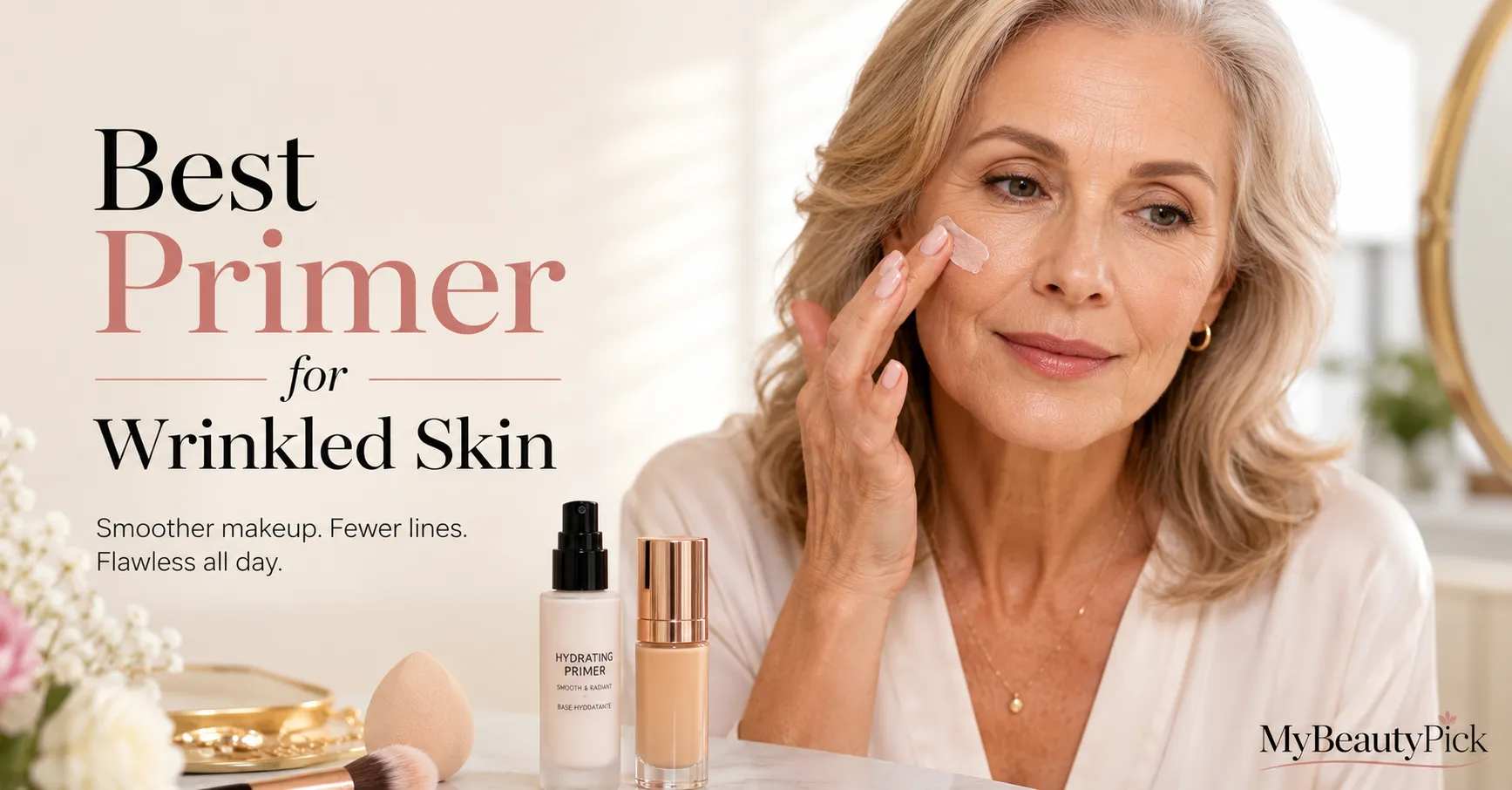
The best primer for wrinkled skin is a lightweight, hydrating formula with hyaluronic acid or glycerin and minimal heavy silicone, since silicone-dense primers can temporarily fill lines but often look obvious or cakey once foundation goes on top. Armani Beauty Luminous Silk Hydrating Primer and Tatcha The Liquid Silk Canvas lead for dry, mature skin, while a lighter blurring formula works better if your wrinkled skin runs oily.
Heavy silicone primers aren’t automatically wrong for wrinkled skin, but they’re often the wrong default. Silicones like dimethicone genuinely fill fine lines on contact, that part of the marketing is true. The problem shows up later, once foundation layers on top and the silicone film starts gripping powder and pigment unevenly instead of blending into it. A primer that’s mostly hydrating with a small amount of silicone, rather than silicone-forward with a little hydration added in, holds up better through a full day of wear.
Why Heavy Silicone Primers Can Backfire on Wrinkles
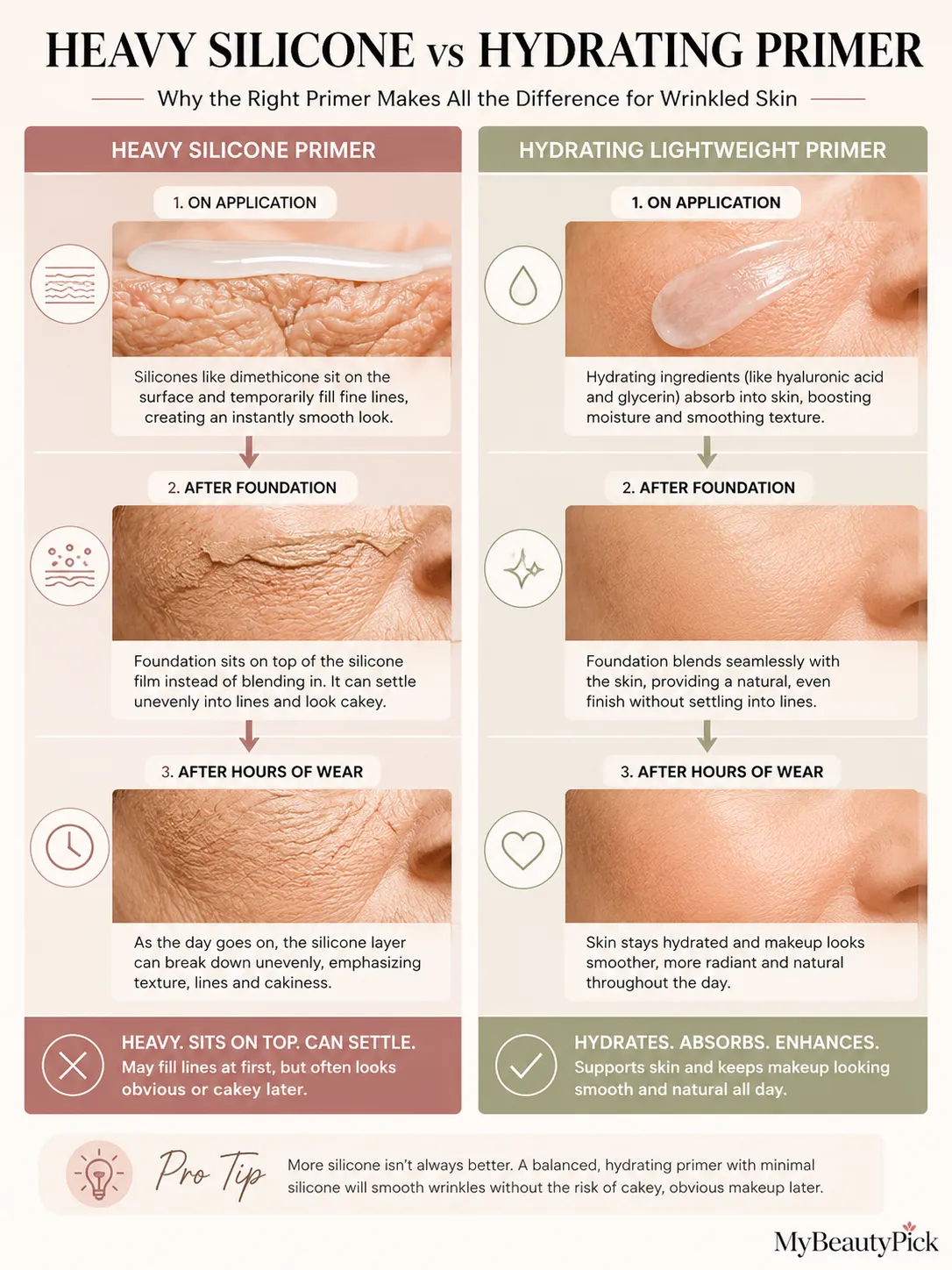
Dimethicone and similar silicones do exactly what the bottle promises in the first few minutes: they sit on top of skin, physically fill the groove of a fine line, and create a smooth, soft-focus surface. That’s not a myth, it’s basic occlusive chemistry, and it’s part of why silicone-based primers became the industry default for decades.
The backfire happens at the application stage that follows. Foundation, especially anything water-based or powder-finish, needs to grip onto the primer layer underneath it. A heavy silicone film is slick rather than absorbent, so instead of blending smoothly, foundation can sit on the surface, settle unevenly into the same lines the silicone just filled, and look slightly cakey or obvious under certain lighting once it’s had a few hours to move around on skin. The fix the line provided at minute one can become the exact texture issue working against you by hour four.
This is also where pilling enters the picture, and it’s a far more common complaint than most roundups acknowledge.
Avoiding Pilling: Primer-Foundation Compatibility
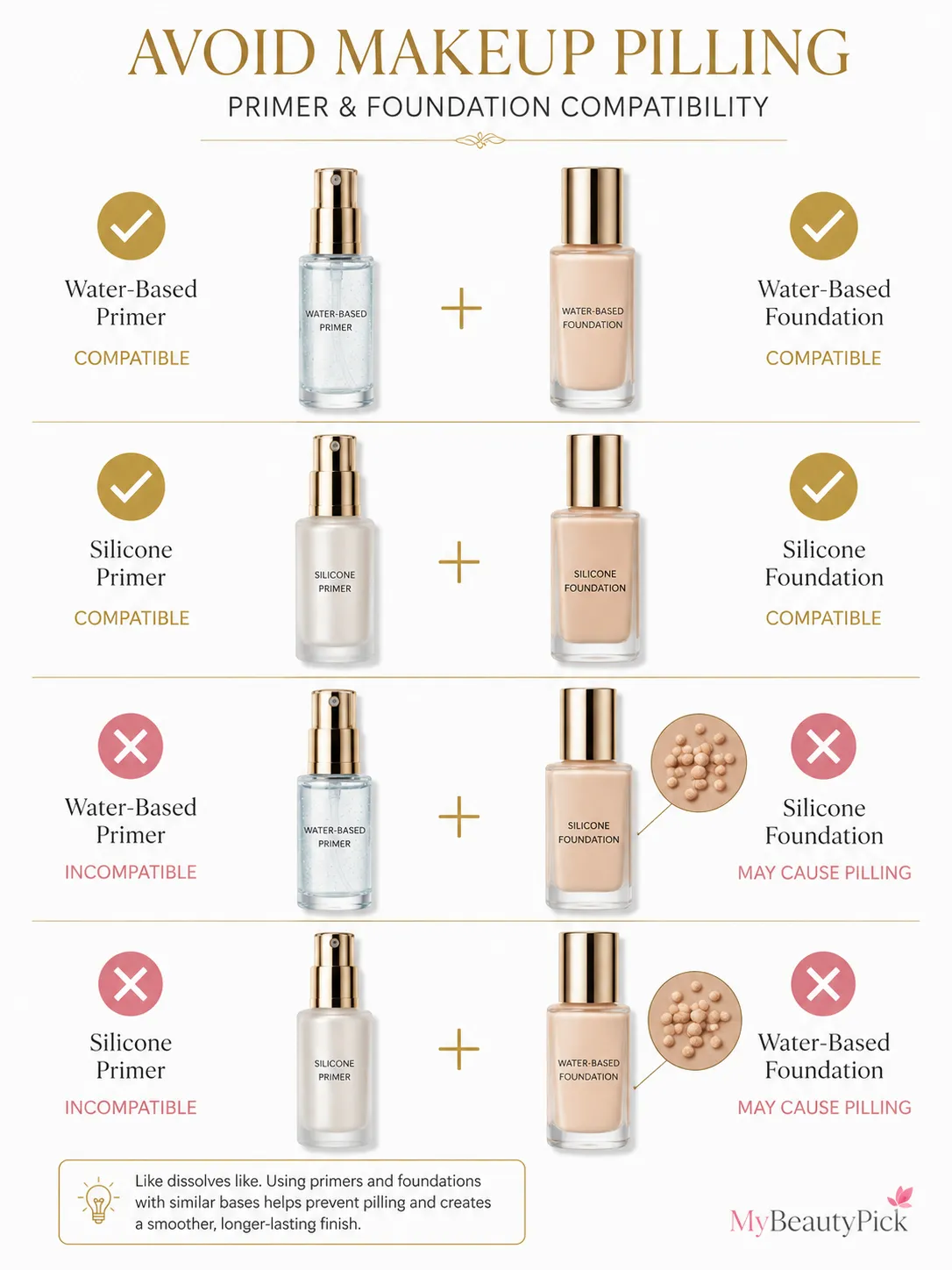
Pilling happens when two product layers don’t share a compatible base, most often a silicone-heavy primer paired with a water-based or gel-based foundation. The two formulas physically reject each other rather than blending, and the result is small rolled-up beads of product that gather instead of sitting flat. It’s one of the most common real-world frustrations with primer, and it’s almost never connected back to formula compatibility in standard buying guides.
The simplest fix is matching primer and foundation base type. A silicone-based primer pairs more reliably with a silicone-based or oil-based foundation. A water-based, hydrating primer pairs more reliably with a water-based foundation. Mixing the two opposite types is the most common cause of pilling, and it’s worth checking the first few ingredients on both products before assuming a new primer is simply defective.
If your foundation has consistently pilled with multiple different primers, the issue may be your foundation’s base rather than the primer itself. Switching foundation formulas before replacing primer again can save you from buying through several primers that were never actually the problem.
Best Primer Picks by Skin Concern
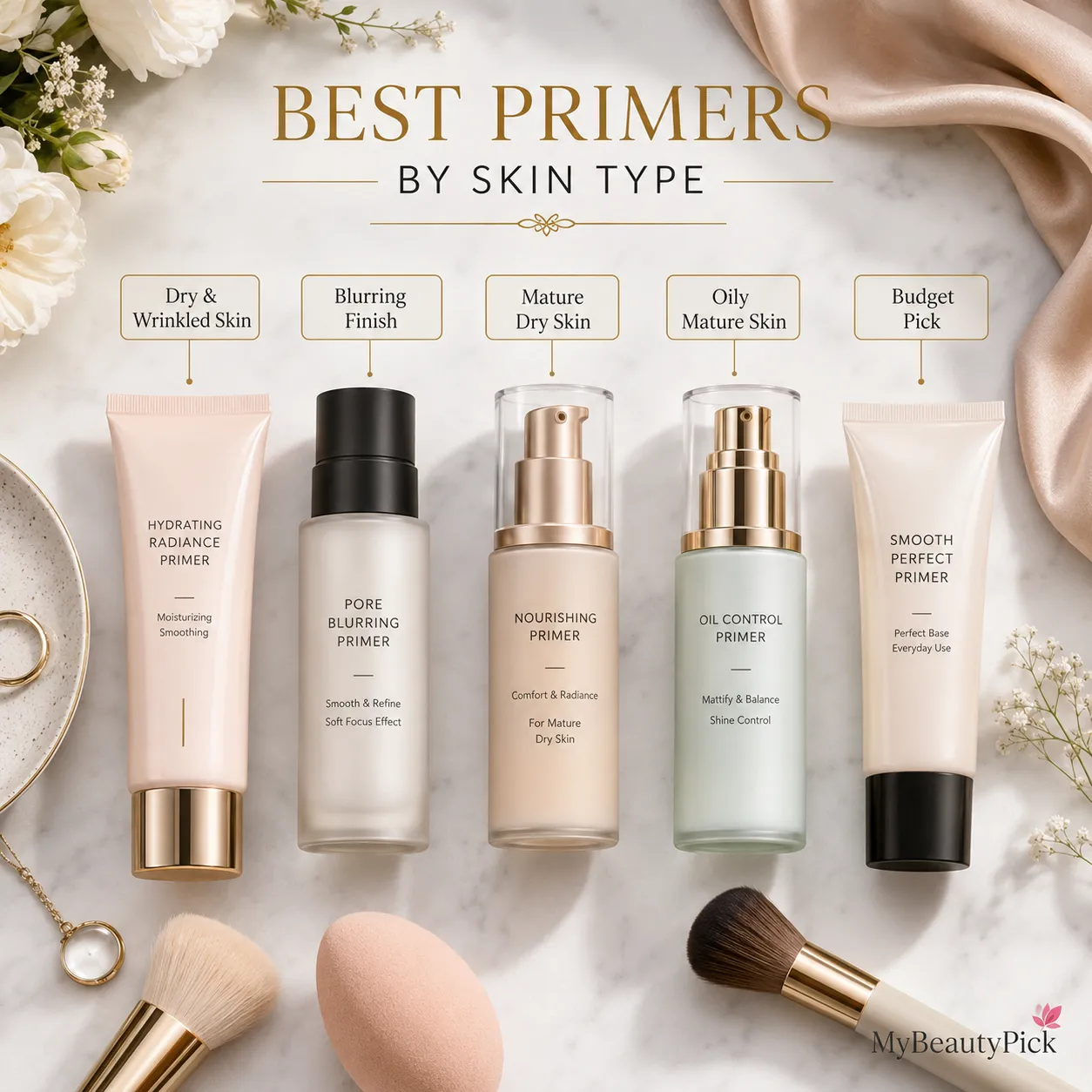
Best Hydrating Primer for Dry, Wrinkled Skin: Armani Beauty Luminous Silk Hydrating Primer
This formula leans into hydration first, with a lightweight texture that absorbs rather than sits on top of skin. It delivers a soft, lit-from-within finish that makes fine lines look softer without the heavier fill-and-cover approach of a silicone-forward primer. Dry, mature skin tends to respond well to this kind of glow, since matte and heavily silicone-based formulas can emphasize the very dryness and texture they’re meant to smooth.
Best Silicone-Light Blurring Primer: NARS Light Reflecting Hydrating Primer
This primer blurs texture and softly diffuses light without relying on a thick silicone base, which keeps it from sitting heavily in deeper lines the way some pore-blurring formulas can. It’s a good middle ground for anyone who wants visible smoothing without the all-day pilling risk that comes with more silicone-dominant primers.
Best for Dry-Wrinkled Skin: Tatcha The Liquid Silk Canvas
Built specifically with mature, dry skin in mind, this primer pairs hydrating ingredients with a soft-focus finish that doesn’t read as heavy or cakey once foundation goes on top. It’s a higher price point, but the formula is genuinely engineered around the dry-and-wrinkled combination rather than treating wrinkled skin as one uniform category.
Best for Oily-Wrinkled Skin: Dr. Brandt Pores No More Refiner Primer
Wrinkled skin isn’t always dry, and oily, mature skin needs a different approach than a heavy hydrating cream-primer. This lightweight, fast-absorbing formula controls shine and blurs the look of enlarged pores without the dewy finish that can look greasy rather than glowing on oilier skin types. It’s a better match for combination or oily mature skin than most primers marketed toward “anti-aging” in general.
Best Budget Option: Maybelline Grippy Serum Primer
A genuinely strong drugstore pick, this gel-textured primer uses hyaluronic acid and niacinamide for hydration with a tacky grip texture designed to hold makeup in place for up to 12 hours. The grip can feel intense if applied like a lotion, but used correctly, a thin layer patted in and given a moment to set, it performs close to prestige hydrating primers at a fraction of the price.
| Primer | Best for | Silicone level | Finish |
|---|---|---|---|
| Armani Luminous Silk Hydrating Primer | Dry, wrinkled skin wanting radiance | Light | Dewy, lit-from-within |
| NARS Light Reflecting Hydrating Primer | Blurring without heavy silicone | Light to moderate | Soft-focus, luminous |
| Tatcha The Liquid Silk Canvas | Dry-wrinkled skin specifically | Light | Soft, smoothed |
| Dr. Brandt Pores No More Refiner | Oily-wrinkled skin | Light, fast-absorbing | Matte, refined |
| Maybelline Grippy Serum Primer | Budget hydrating option, long wear | Light | Dewy, gripping |
How to Apply Primer for the Smoothest Result on Wrinkled Skin
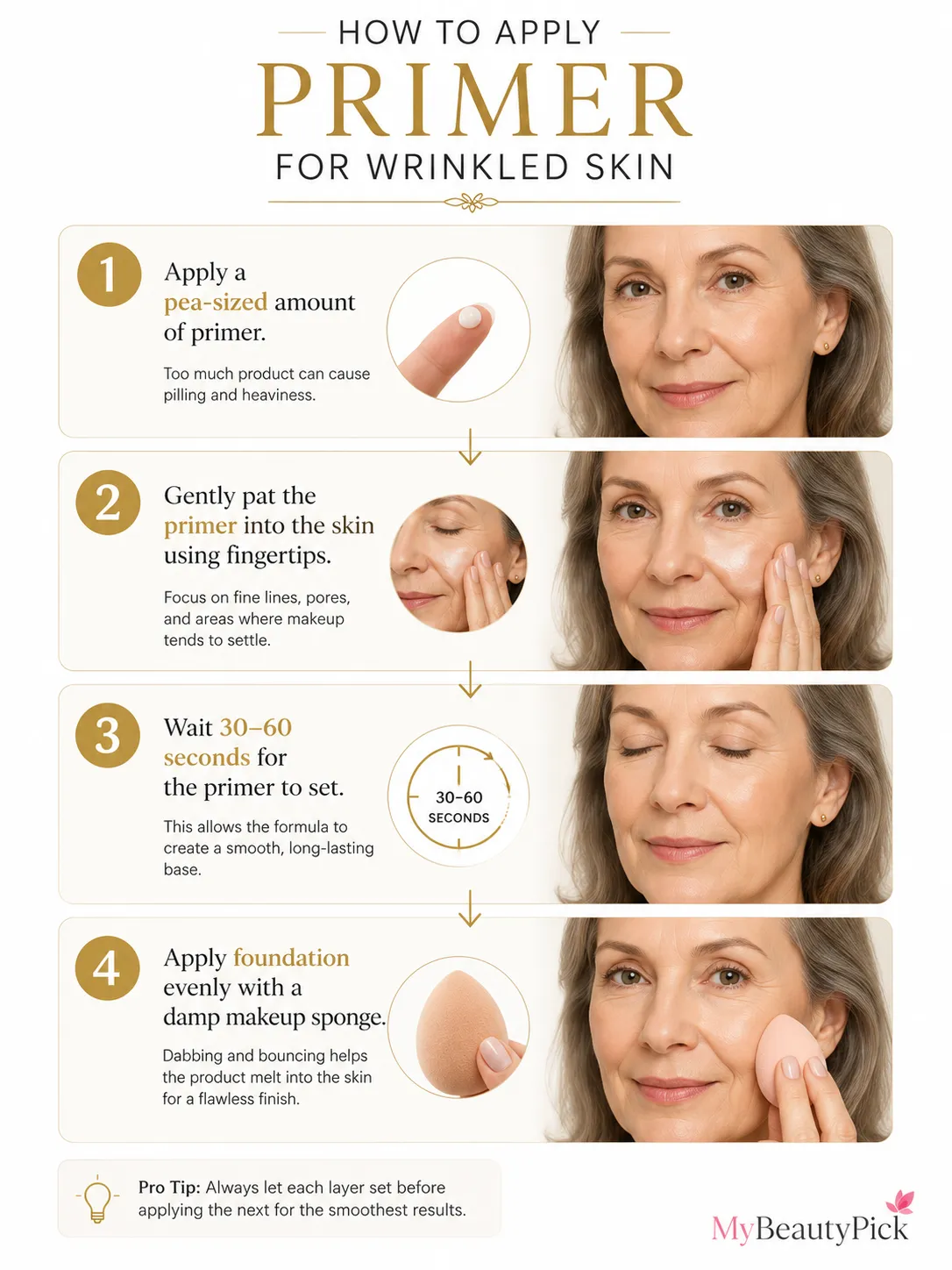
Apply a pea-sized amount, more is almost never better with primer, and excess product is the single biggest cause of a heavy, settled look by midday. Pat the primer into skin with fingertips rather than rubbing it in with a brush or sponge. Patting helps the formula mesh into the skin’s surface texture instead of dragging across it, which matters more on textured or lined skin than on smooth, even skin.
Let primer set for a full thirty seconds to a minute before starting foundation. Applying foundation too quickly, while primer is still wet or tacky, is one of the most common causes of a product visibly moving or pilling on contact. That brief pause makes a real difference in how cleanly the next layer goes on.
Apply primer five minutes after finishing skincare, once moisturizer has had time to absorb, and at least five minutes before starting foundation. Layering primer directly onto a still-wet moisturizer is a common, underrated cause of both pilling and a primer that never quite sets properly.
Does Primer Make Wrinkles Look Worse?
It can, but only in specific situations rather than as a rule. A thick layer of heavily silicone-based primer applied over deep, dry texture can sit unevenly and draw more attention to lines once foundation is layered on top, especially in flash photography or harsh overhead lighting. The same primer applied thinly, on well-moisturized skin, with proper set time, often performs completely differently.
The honest answer is that primer doesn’t create wrinkles or make them objectively deeper, it changes how light catches the surface of the skin. Choosing a lighter-handed, more hydrating formula and applying a thin layer correctly solves this for the vast majority of people who’ve had a bad experience with primer settling into lines.
Frequently Asked Questions
Does primer make wrinkles look worse?
It can if applied too heavily with a silicone-dense formula, since the silicone film can sit unevenly once foundation layers on top and draw attention to lines in certain lighting. A thin layer of a lighter, more hydrating primer, applied correctly with set time before foundation, generally avoids this.
What is the best primer for older skin?
A lightweight, hydrating primer with hyaluronic acid, glycerin, or niacinamide and minimal heavy silicone tends to work best for most mature skin. Armani Beauty Luminous Silk Hydrating Primer and Tatcha The Liquid Silk Canvas are both built specifically around this combination of hydration and a soft, non-cakey finish.
Should you use silicone primer on wrinkled skin?
A small amount of silicone isn’t a problem, and some silicone-light formulas blur effectively without causing issues. The risk comes from heavily silicone-forward primers layered thickly, which can pill against water-based foundation and look obvious once makeup has had a few hours to settle.
How do you apply primer on mature skin?
Use a pea-sized amount, pat it into skin with fingertips rather than rubbing, and let it set for thirty seconds to a minute before starting foundation. Applying primer roughly five minutes after skincare and at least five minutes before foundation gives the best results.
Final verdict
The best primer for wrinkled skin isn’t necessarily the one with the most dramatic blurring claim, it’s the one with enough hydration to keep from settling into lines and little enough heavy silicone to avoid pilling once foundation goes on top. Match the formula to whether your wrinkled skin runs dry or oily rather than treating mature skin as one category, and apply thin with proper set time. That combination solves more “primer made my wrinkles worse” complaints than switching products ever does.