

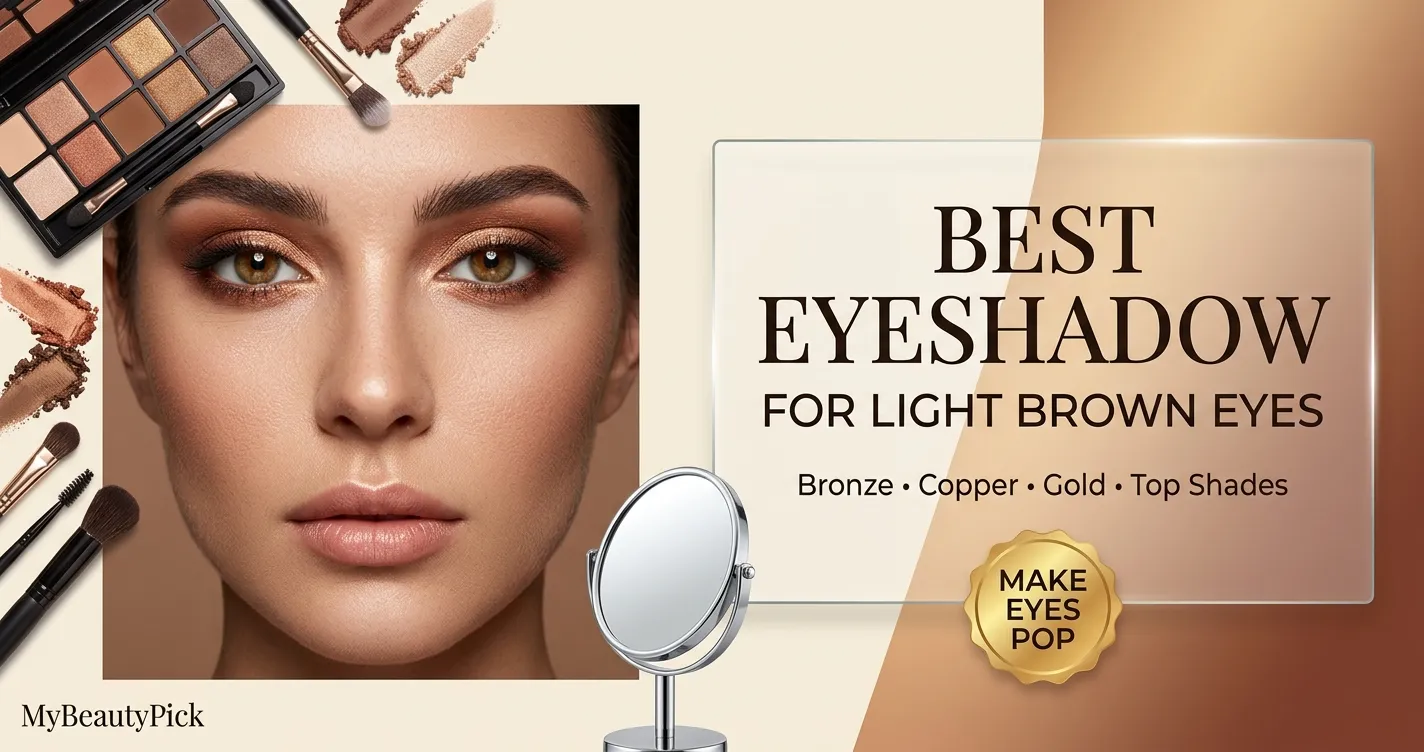
Most eyeshadow color guides treat brown eyes as one giant category, then maybe toss in a single line acknowledging that lighter eyes can wear brighter shades. That’s backwards. Light brown, honey, and amber eyes behave differently from deep chocolate-brown eyes in real, visible ways, and the shade strategy that flatters one can fall flat on the other.
I’ve worked with brown eyes across every depth for two decades, and the light end of that range is consistently underserved by generic “brown eyes” advice. Here’s what actually changes when your irises run lighter, plus twelve shades built around that difference.
Quick Answer
Light brown eyes read brighter pastels, cool tones, and frosted finishes more clearly than deep chocolate-brown eyes, since there’s less natural pigment competing with the shadow color. Champagne, lavender, sage green, and soft periwinkle are some of the most flattering shades. Pure jet black and icy frost worn all over tend to look harsher on lighter irises than they do on darker ones.
Why Light Brown Eyes Need a Different Eyeshadow Strategy Than Dark Brown Eyes
Deep chocolate-brown eyes have enough natural pigment density that bold, saturated shadow colors get partially absorbed into the iris rather than standing apart from it. Light brown eyes don’t have that same density. There’s more visible amber, gold, or honey base showing through, so a cool or contrasting shadow reads as a clearer, more distinct effect against the iris instead of blending into it.
This is why a lavender shadow can look subtle on dark brown eyes and genuinely striking on light brown ones. It’s not that lavender is “better,” it’s that lighter eyes have less competing pigment, so the contrast actually shows.
How to Tell If Your Brown Eyes Are “Light” (And Why It Matters)
Step outside or stand near a window and look in a mirror. Light brown eyes typically show a honey, amber, or golden base rather than a deep, near-black brown. You may also notice faint flecks of gold or hazel mixed in, especially near the pupil. If your eyes look almost black indoors and only reveal warmth in direct sunlight, you’re likely on the darker end of the brown spectrum, and a different shade strategy (built around contrast against deeper pigment) will serve you better than the picks below.
The 12 Best Eyeshadow Shades for Light Brown Eyes
Champagne / Soft Gold
Brightens the lid without adding contrast, making it the easiest daytime shade on this list. Works beautifully as an all-over wash or inner-corner highlight.
Lavender / Soft Lilac
Cool tones contrast against the warmth in light brown eyes more clearly than they would on deeper irises. Apply to the crease for definition without heaviness.
Sage / Olive Green
Pulls out any green or hazel flecks that light brown eyes often carry. A soft matte sage in the crease reads as polished rather than costume-y.
Warm Taupe
The most foolproof neutral on this list. Deepens the crease without fighting the eye’s natural warmth, and works for nearly any occasion.
Rose Gold
Adds warmth and shimmer without veering into orange. Particularly flattering swept across the lid for an evening look.
Soft Periwinkle Blue
A cooler, more daring choice that creates real contrast against light brown’s amber base. Best as an accent on the lower lash line rather than all over.
Terracotta
Deepens the eye with warmth rather than gray-toned smokiness. A strong choice for anyone who wants drama without going cool-toned.
Pearl / Frosted White-Gold
Best reserved for the inner corner only. Used sparingly, it opens the eye; worn across the entire lid, it can look flat under bright light.
Mauve-Pink
Softens the eye area while still adding visible color. Pairs well with both a natural daytime look and a slightly smoky evening one.
Soft Bronze
A safe, warm metallic that adds dimension without committing to a bold color. Works well blended into the crease as a transition shade.
Pale Aqua / Teal
A true statement color. Best used as a thin liner or lower lash line pop rather than an all-over lid color, since a little goes a long way here.
Charcoal (Not Black)
Gives smoky depth without the harshness of true black. Charcoal’s slight gray undertone is gentler on lighter irises than jet black tends to be.