

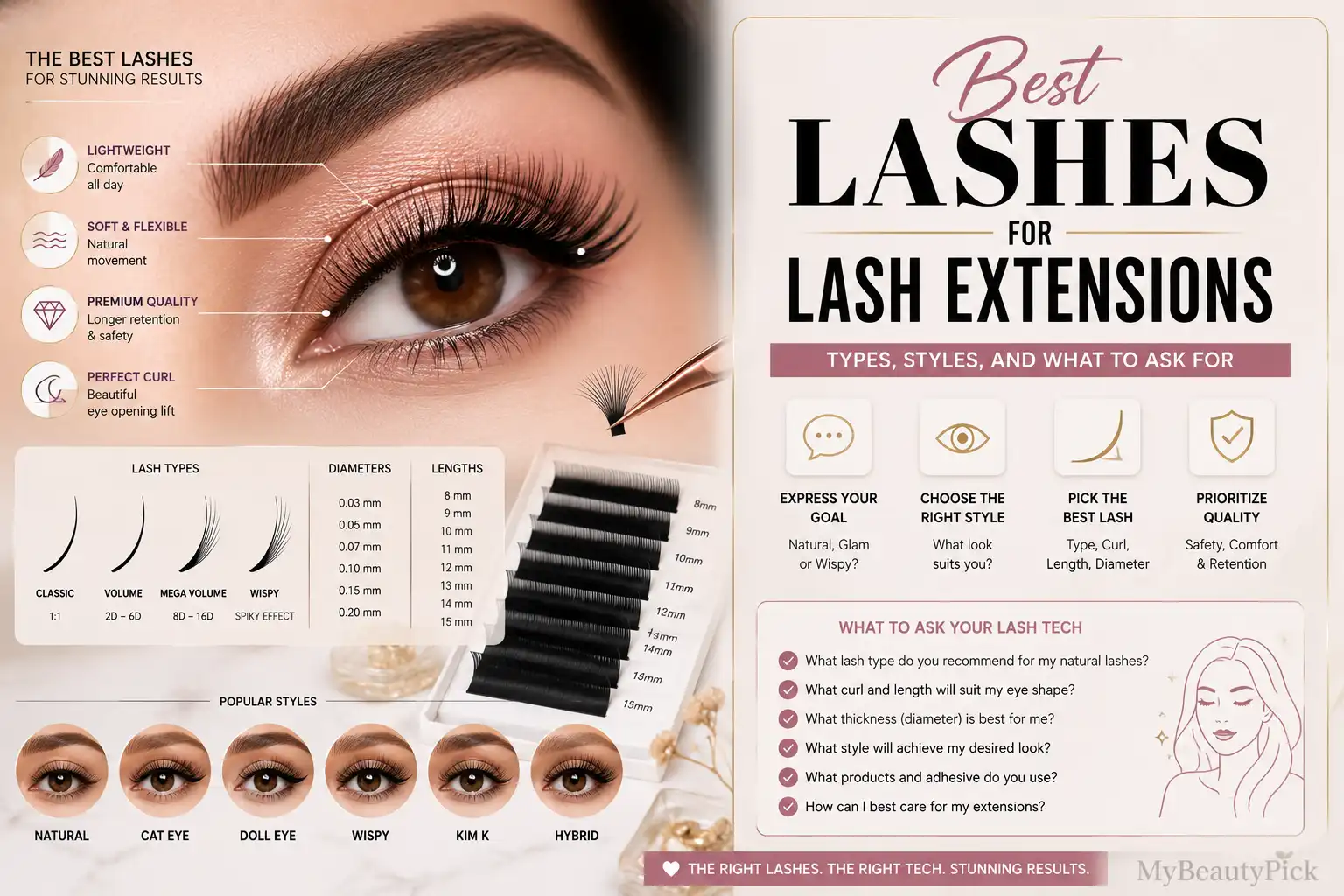
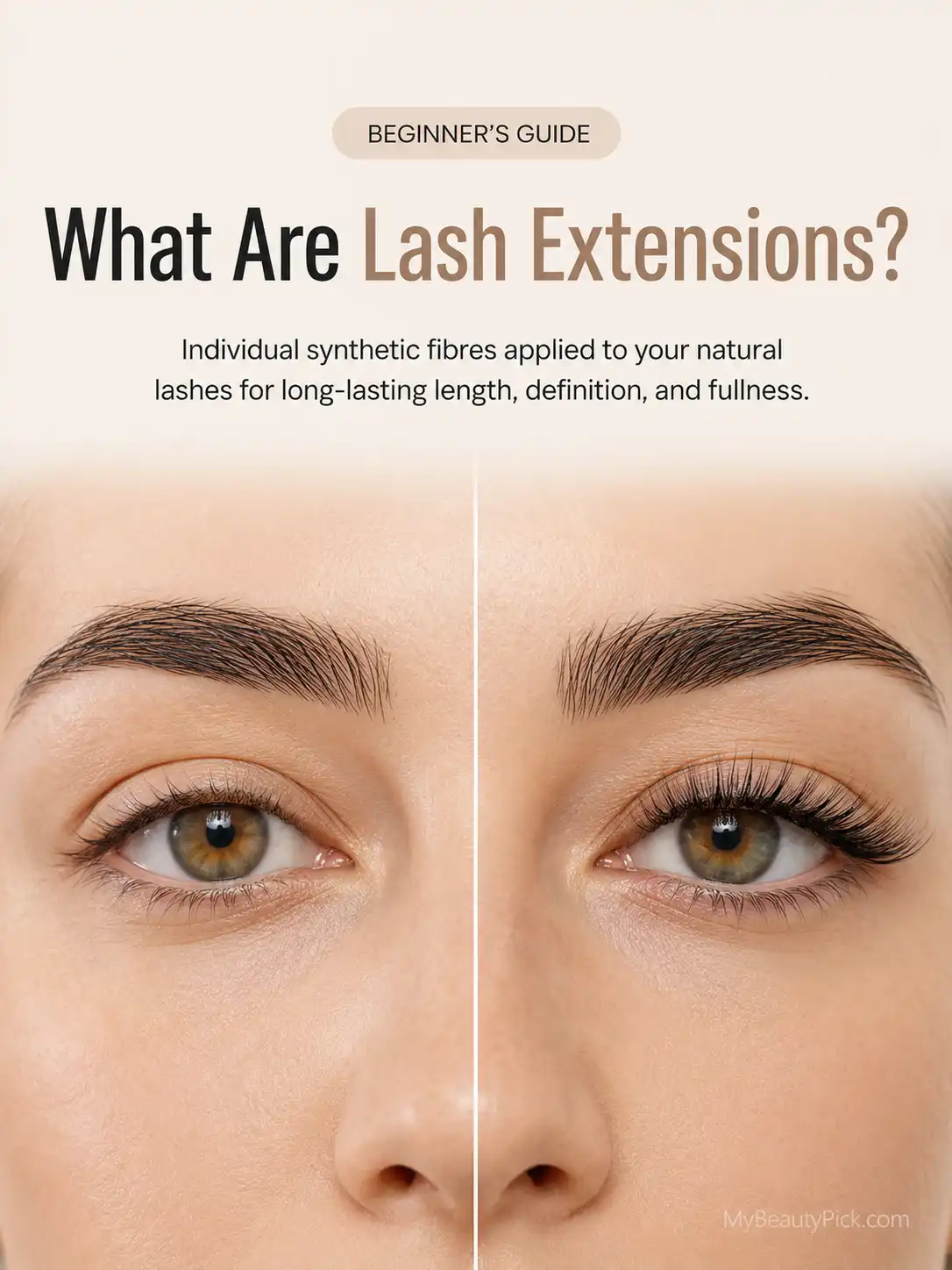
Lash extensions are individual synthetic fibres applied one by one (or as small fans) to your natural lashes by a trained technician using semi-permanent adhesive. They’re not strip lashes or cluster lashes — they move with your natural lashes, last weeks, and when done well look like your own lashes at their fullest. The outcome depends on the technician’s skill, the extension specifications chosen, and how well the natural lash health supports the service. This guide covers everything you need to understand before your appointment and what to ask for.
- Extensions are applied fibre by fibre to individual natural lashes using semi-permanent adhesive — they’re not strip lashes or cluster lashes.
- Synthetic silk and PBT fibre are the best extension materials — they hold curl, maintain shape, and are available in the full range of specifications.
- Classic extensions (1:1 ratio) give length and definition; volume fans give fullness; hybrid gives both.
- Extensions applied too heavy for the natural lash cause damage to the follicle. Weight matching to the natural lash is the most important skill for a technician to get right.
- Fill appointments every 2–3 weeks maintain fullness as natural lashes shed with their growth cycle.
Lash Extension Materials: What’s Actually Being Applied
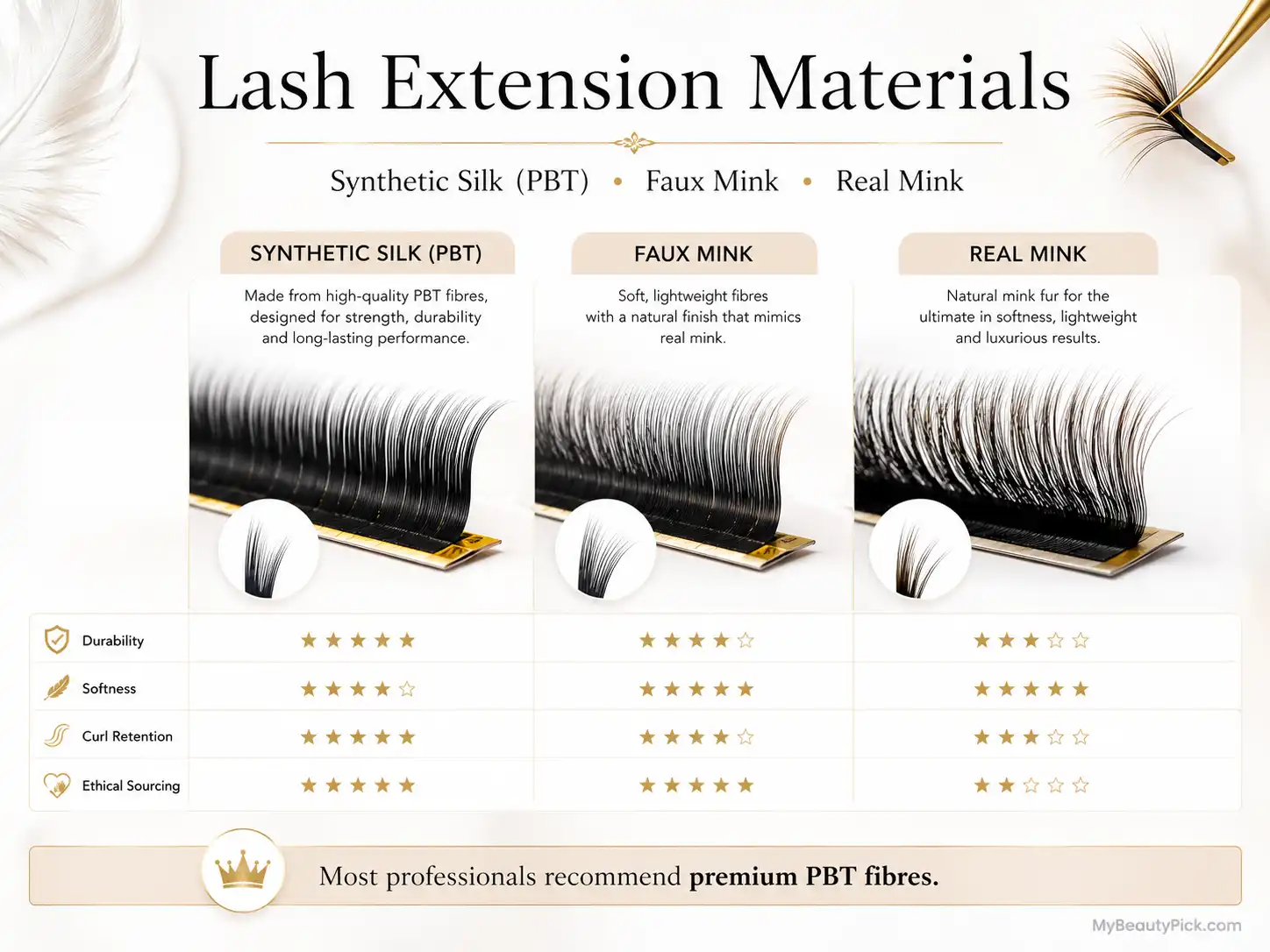
Synthetic Silk (PBT Fibre)
The most widely used extension material and the most recommended for most clients. PBT (polybutylene terephthalate) is a synthetic fibre that mimics the look of natural lashes while holding its curl through the full growth cycle and through heat, humidity, and daily exposure to water. It’s available in the full range of specifications (lengths from 6–20mm, diameters from 0.03–0.25mm, multiple curl types) and is the standard material in professional extension training.
Faux Mink
Synthetic extensions made to mimic the tapered, natural-looking tip of genuine mink fur. The “mink” refers to the aesthetic quality — a finer, softer tip that looks more like a natural lash — rather than the material. Faux mink uses the same PBT fibre base as silk extensions with a thinner taper. Good for clients wanting the most natural-looking extension result.
Real Mink
Genuine mink fur extensions were historically popular for their lightweight, natural appearance. They’re now much less common due to welfare concerns about sourcing and practical hygiene issues — real fur doesn’t hold curl as reliably as synthetic and requires careful drying when wet. Most professional technicians now use faux mink PBT as a better-performing, more ethically straightforward alternative.
Extension Styles: Classic, Volume, and Hybrid
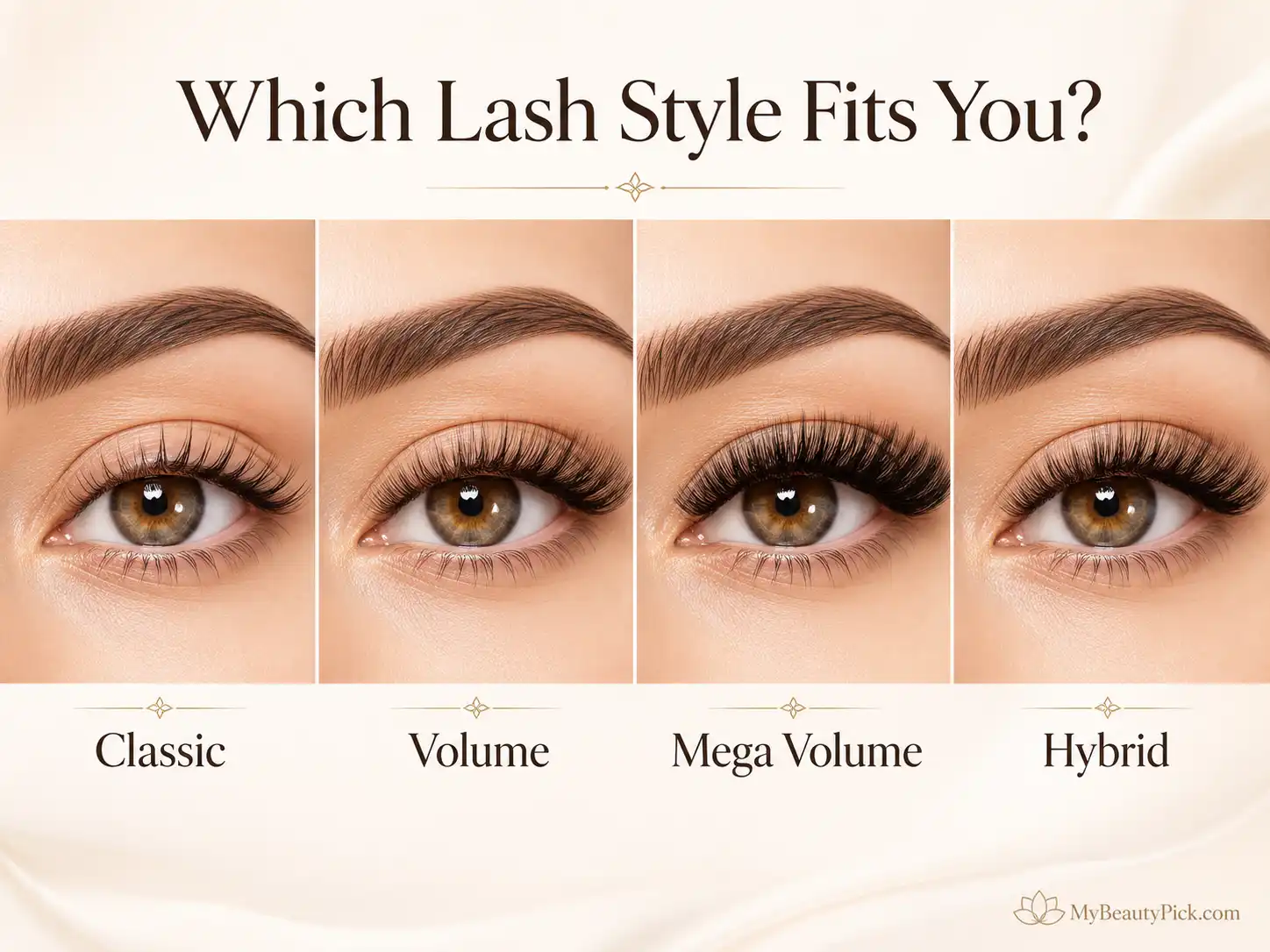
| Style | Technique | Result | Best Natural Lash | Appointment Time |
|---|---|---|---|---|
| Classic | 1 extension per natural lash | Natural definition, length | Full, healthy natural lashes | 1.5–2 hours |
| Volume | 2–6 ultra-fine fibres per lash | Fluffy, full, dramatic | Sparse or fine natural lashes | 2–3 hours |
| Mega Volume | 6–16 ultra-fine fibres per lash | Maximum fullness and drama | Healthy lashes with good density | 3+ hours |
| Hybrid | Mix of classic and volume fans | Textured, natural-full | Most natural lash types | 2–2.5 hours |
| Wispy | Alternating lengths and fans | Feathery, editorial | Most types | 2–3 hours |
Curl Types: What to Ask For
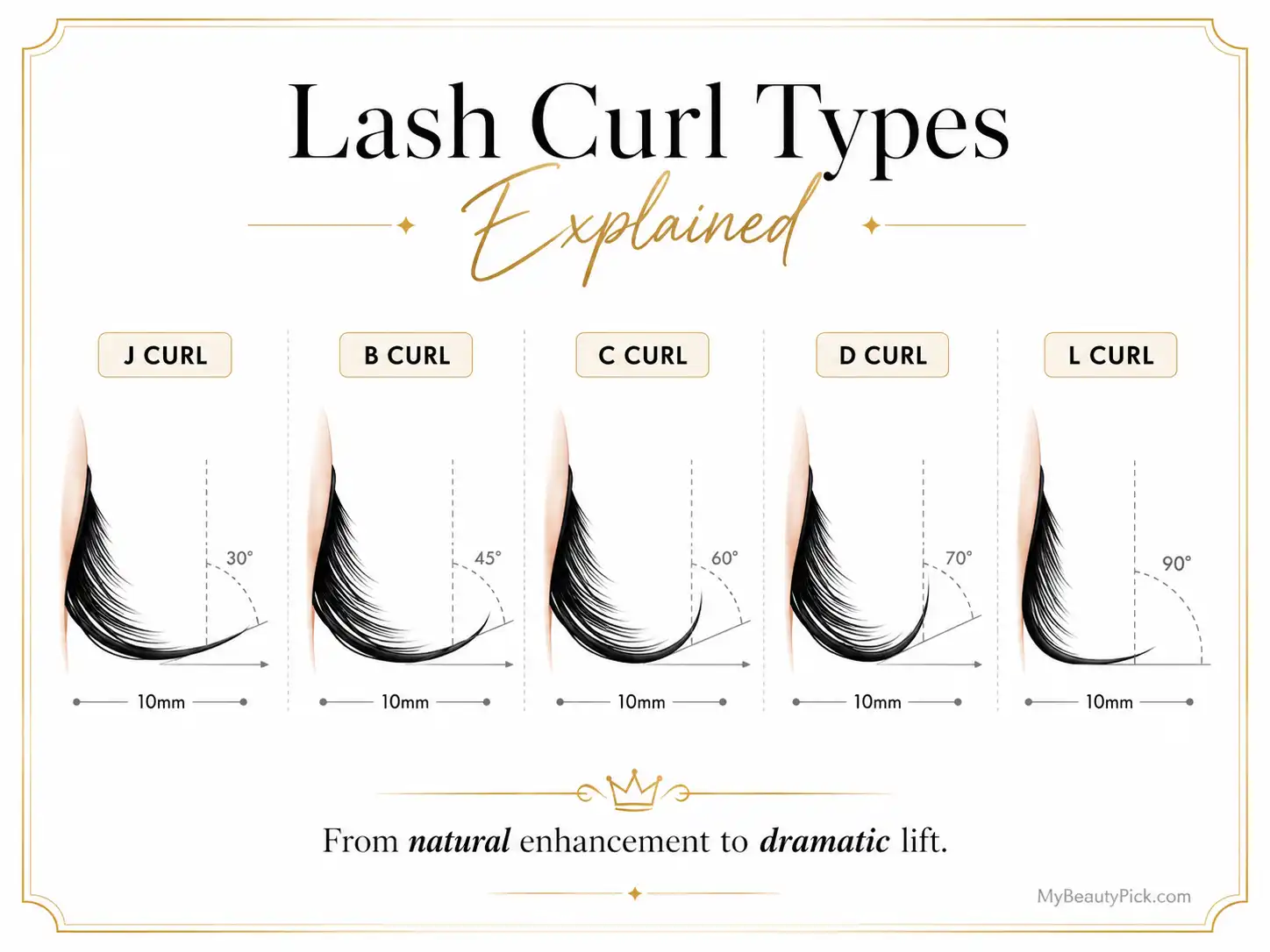
The curl of the extension determines how open the eye looks and how dramatic the result is. Curl types are standardised across most professional suppliers:
- J curl — minimal curl, closest to a natural lash. For a barely-there enhancement or for straight natural lashes where the extension just needs to match.
- B curl — slight lift, natural look. Good for those wanting a small improvement without an obvious curl.
- C curl — the most popular. A defined, open curve that brightens and opens the eye. Suits most eye shapes and most natural lash types.
- D curl — more dramatic, significantly curled. Suits those wanting maximum impact or who have deep-set eyes where the curl needs to clear the brow bone.
- L curl / L+ curl — a flat base with a sharp upward curve. Designed specifically for flat, straight, or downward-pointing natural lashes that other curls don’t lift adequately.
Length and Thickness: How to Choose
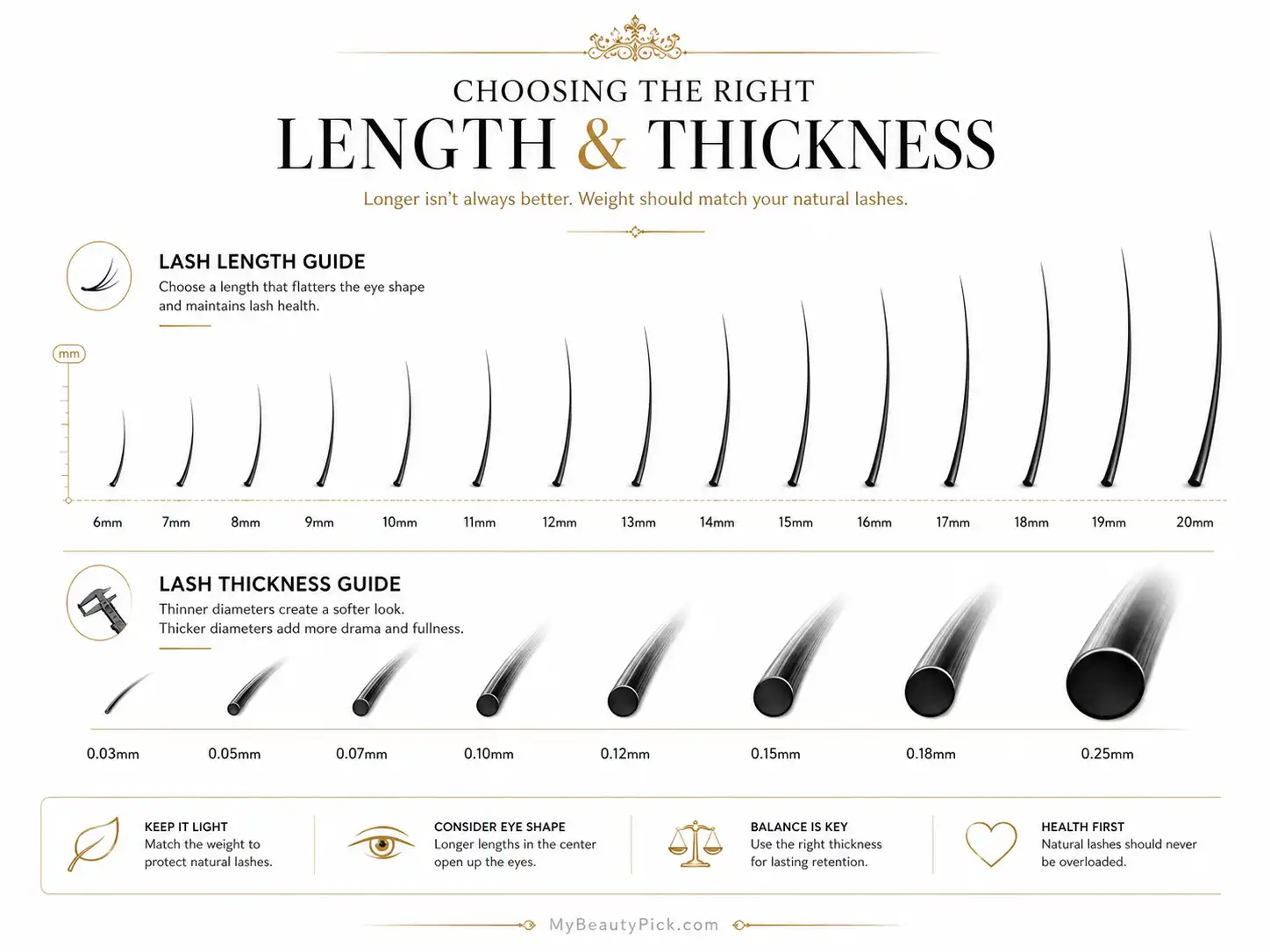
Extension length is measured in mm, typically ranging from 6mm to 20mm. The right length depends on the natural lash length and the client’s preference. Extensions significantly longer than the natural lash create more leverage stress at the follicle — generally, going no more than 3–4mm longer than the natural lash is the safest guideline for health. Technicians should map different lengths across the lash line (shorter in inner and outer corners, longer in the middle or outer-middle) to create a shape rather than uniform length.
Thickness (diameter) ranges from 0.03mm (the finest volume fan fibres) to 0.25mm (the thickest classic fibres). For classic extensions, 0.15–0.20mm is the standard range for most natural lashes. Thicker fibres are heavier — they shouldn’t be used on fine or delicate natural lashes.
Mapping Styles: The Look Shapes
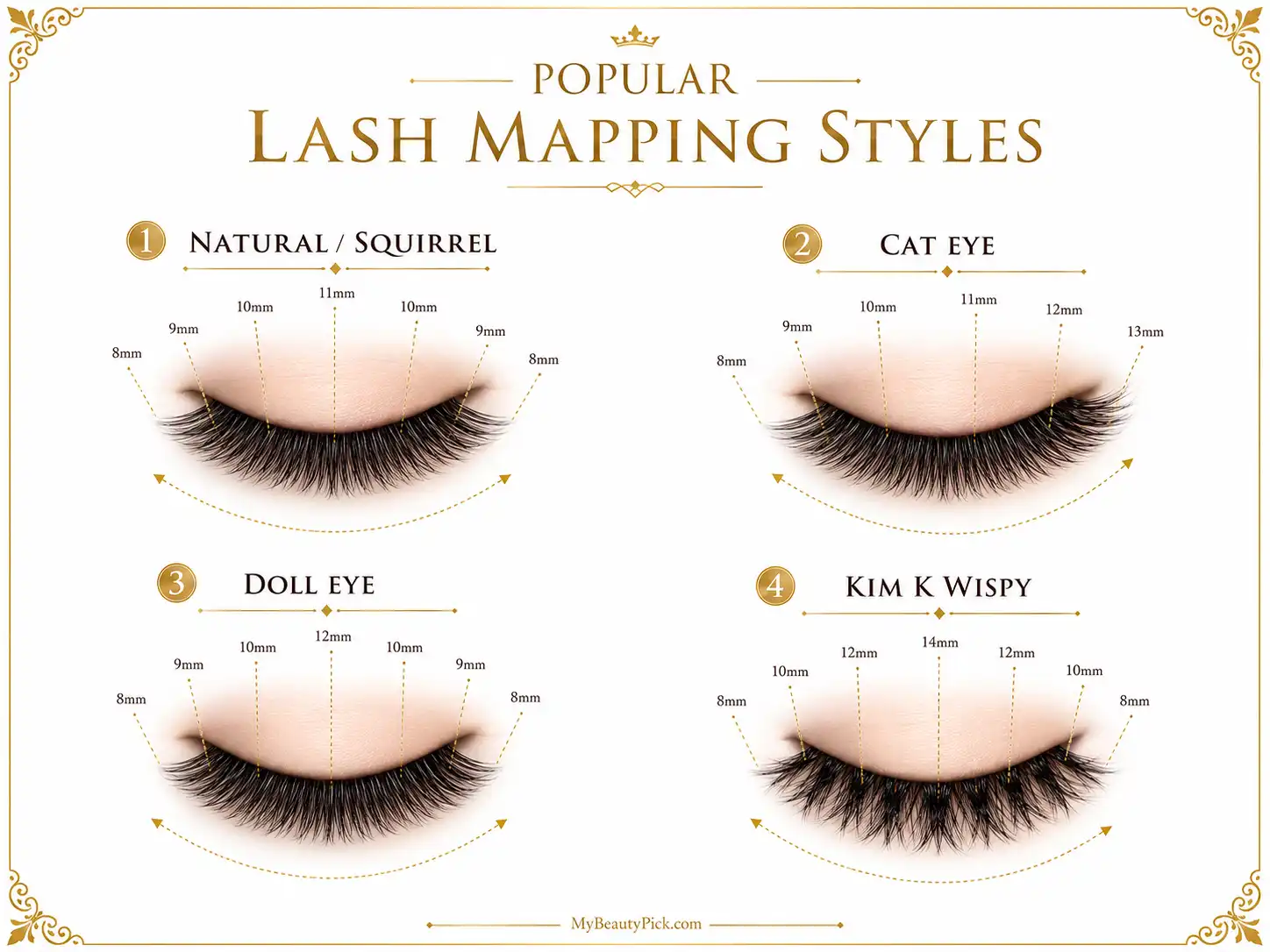
Extension mapping refers to how the lengths are distributed across the lash line to create a specific eye shape effect:
- Natural/squirrel: progressive length increase from inner to outer-middle, then tapering slightly at the outer corner. The most natural-looking map.
- Cat eye: longest extensions concentrated at the outer corner, creating an elongating upward flick.
- Doll/open eye: longest extensions at the centre of the lash line, creating a wide-open, round effect.
- Kim K: spiky wispy fans with varying lengths for a textured, editorial look.
Aftercare: How to Keep Extensions Lasting
- No water, steam, or heat for 24–48 hours after application — the adhesive needs this time to cure fully. Exposure to moisture before curing affects the bond.
- Clean daily with a lash extension cleanser. Oil-free foaming cleansers specifically formulated for extensions. Dirty lashes shed faster — oils, makeup, and sebum loosen the adhesive over time.
- No oil-based products near the eyes. Oil loosens extension adhesive. This includes most standard eye makeup removers, many moisturisers, and any oil-based mascara.
- Brush daily with a clean spoolie. Morning brushing realigns extensions after sleep. Sleep on a silk pillowcase to reduce friction.
- Don’t pick or pull. Pulling an extension off with force pulls the natural lash with it. Have extensions professionally removed with dissolver if removal is needed.
- Fill every 2–3 weeks to replace extensions that have shed with the natural lash growth cycle.
The most important thing to communicate to your technician is any history of eye sensitivity or allergies, particularly to adhesive or latex. A patch test 24 hours before a full set is advisable for first-time clients. Also tell your technician honestly about your lifestyle — swimming, gym use, hot yoga, working outdoors — so the adhesive strength and extension weight can be chosen appropriately for the conditions they’ll be worn in.
Frequently Asked Questions
What lash material is best for extensions?
Synthetic silk and PBT fibre are the most widely recommended — they hold curl, maintain shape, and are available in the full range of specifications. Faux mink (synthetic with a tapered, natural-looking tip) is an excellent choice for the most natural-looking result. Real mink is less common now due to welfare and consistency concerns.
What is the difference between classic and volume lash extensions?
Classic applies one extension to each natural lash — natural definition and length. Volume applies a fan of 2–6 ultra-fine fibres to each natural lash — fuller, more dramatic result. Hybrid combines both. Classic suits full natural lashes; volume is particularly effective for sparse or fine natural lashes where individual extensions don’t create enough fullness.
How long do lash extensions last?
Extensions last the growth cycle of the natural lash they’re attached to — typically 6–8 weeks before the natural lash sheds. Most people book fills every 2–3 weeks to replace shed extensions and maintain fullness. A full set looks significantly thinner after 6–8 weeks without fills due to natural lash turnover.
Do lash extensions damage natural lashes?
Applied correctly with appropriate weight for each natural lash, extensions don’t cause damage. The most common damage cause is using extensions too heavy or too long for the natural lash — this stresses the follicle. Damage also occurs from improper removal — pulling extensions rather than dissolving them professionally.
What lash curl is best for extensions?
C curl is the most popular — a defined, open curve that suits most eye shapes. J curl for a barely-there natural look. D curl for maximum drama. L curl specifically for flat or downward-pointing natural lashes. Your technician should recommend based on your natural lash growth direction and the look you want.