

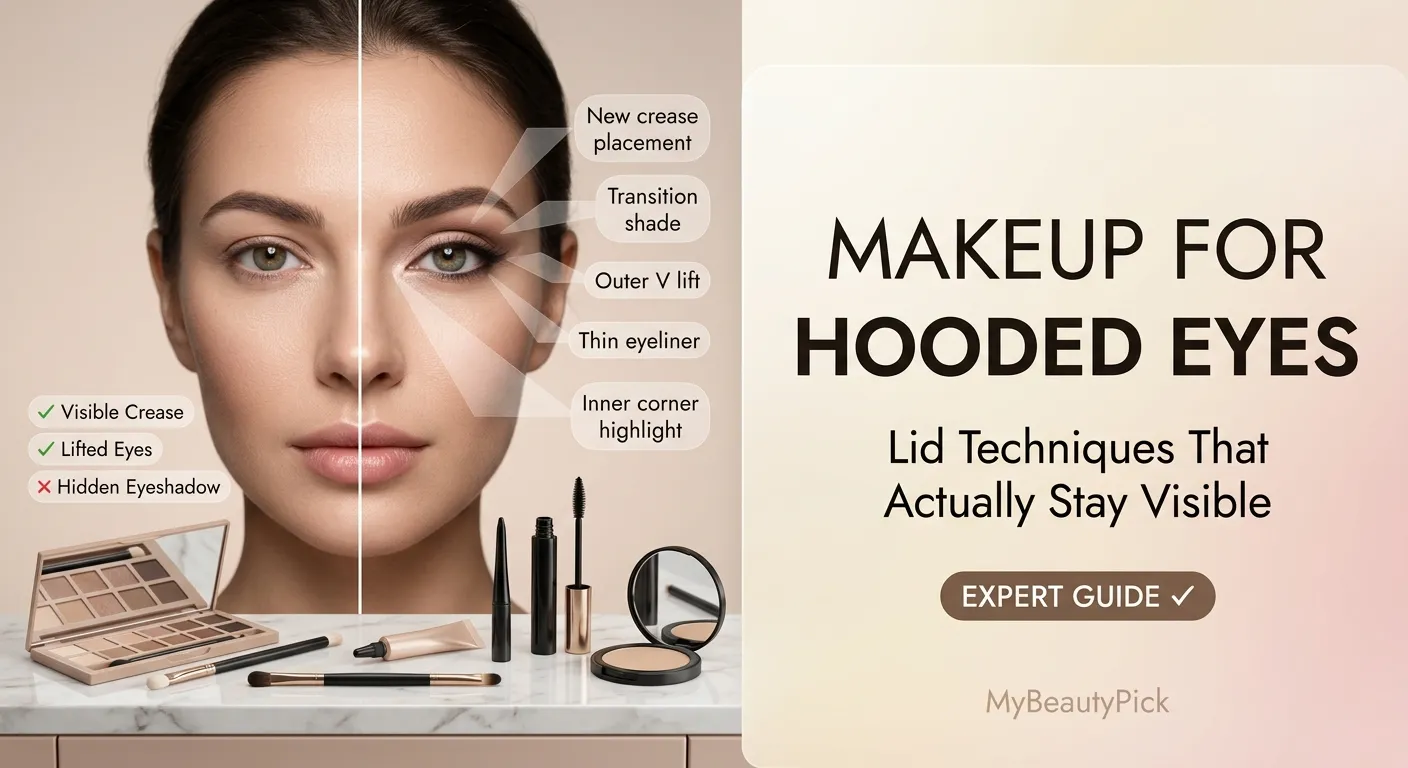
Hooded eyes have a fold of skin that overlaps part or all of the mobile lid when the eyes are open. The makeup you apply on a closed eye and the makeup visible when your eyes are open are not the same thing — and not understanding this is the source of almost every frustration hooded-eye wearers have with eye makeup. The crease you blend shadow into on a closed eye is partially or fully hidden by the hood when eyes open. The liner you trace carefully along the lash line can disappear under the fold or transfer to the skin above it. The techniques that solve these problems are not complicated once you understand why standard placement doesn’t work.
- Apply, then open your eyes and look straight into the mirror to assess. Never judge placement on a closed eye.
- Place everything higher than feels correct on a closed eye — the hood covers the area where standard placement sits.
- Apply liner with eyes open, looking slightly downward, not with eyes fully closed.
- All long-wear, waterproof formulas — liner will transfer to the upper skin if it can.
- Nude liner on the waterline opens hooded eyes more effectively than any other single product change.
Understanding the Hooded Eye Structure
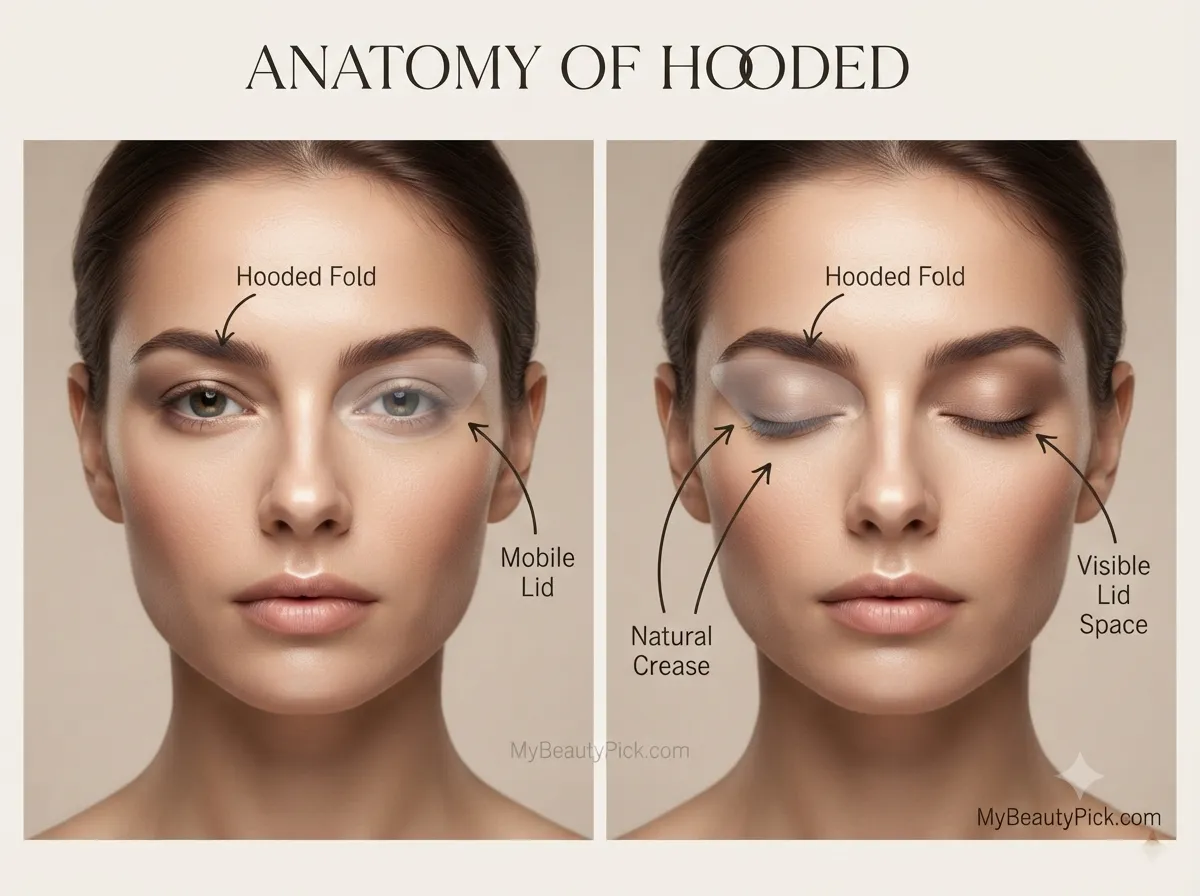
The hood is the skin that folds from the brow bone down over the mobile lid, covering some or all of it when the eyes are in a neutral open position. The degree of hooding varies from subtle (a slight fold that covers the outer corner of the lid) to significant (the fold covers most of the lid, leaving only the lower portion visible). Hooding is a natural eye shape, extremely common, and more pronounced in some ethnicities, with age, and in deep-set eyes.
Understanding what’s happening structurally explains every placement adjustment. The hood doesn’t go away when you apply makeup — you have to plan for where it sits and place makeup around it rather than on it, because anything under the fold will be hidden or will transfer.
Eyeshadow Placement for Hooded Eyes
The Open-Eye Assessment Method
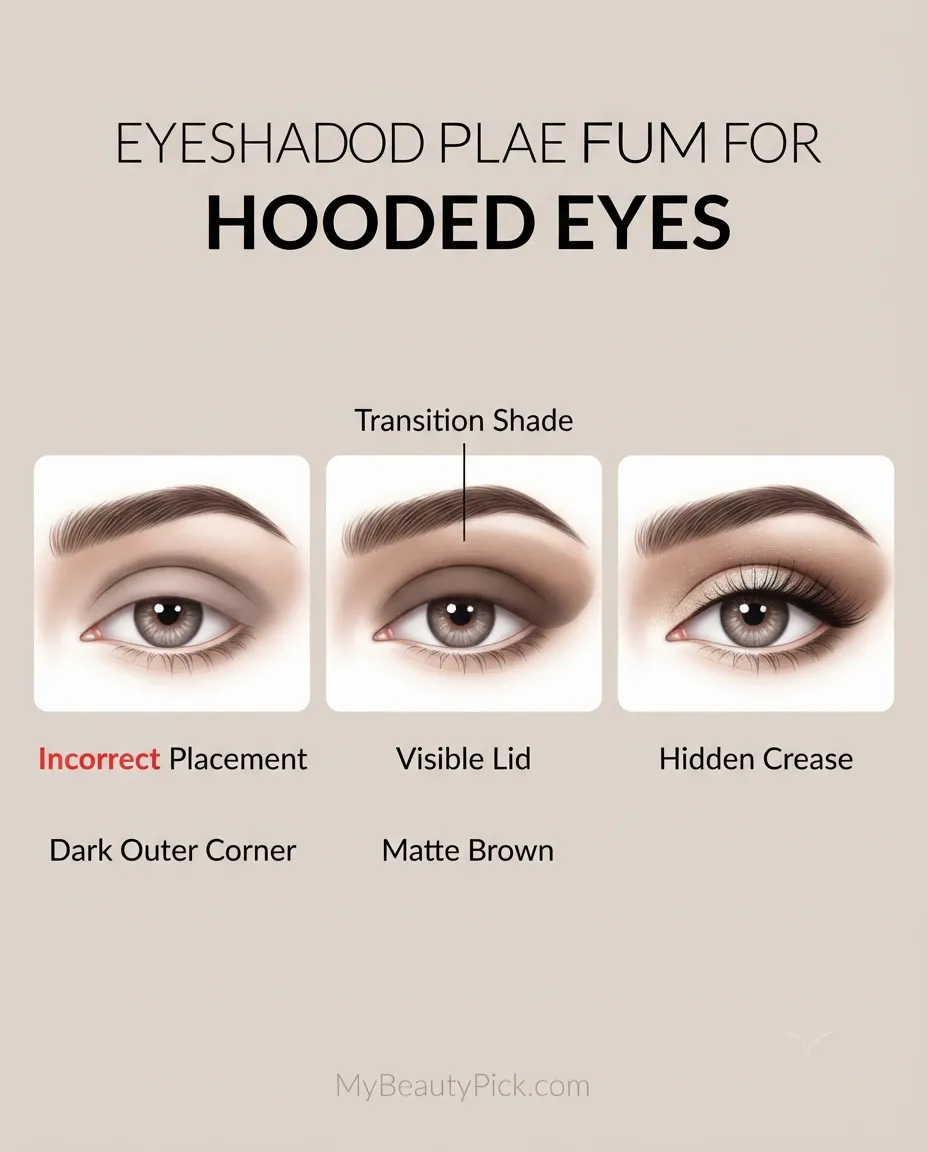
Before applying any shadow, look into the mirror with your eyes open and locate two things: where the hood ends (the lower boundary of the fold when open), and how much visible lid space you have below it. Everything placed below the hood boundary will disappear. Anything you want visible needs to be placed at or above it.
Where to Place the Transition Shade
On a standard eye, the transition shade sits in the crease. On hooded eyes, the crease is often not visible when eyes are open — the hood sits over it. Place the transition shade above where the crease feels on a closed eye. Open your eyes and check: you should be able to see the transition shade colour from the front without pulling the brow up or opening your eyes unusually wide. If it disappears under the fold, move it higher.
Where to Place the Dark Shadow
The dark outer corner shade — the part that creates depth and definition — needs to be placed at the outer corner above the hood boundary. Rather than a standard crease placement, think of the outer V as existing at and above the fold rather than within the crease. Extend it upward and outward toward the tail of the brow. Open your eyes and assess: the dark corner should be visible as a defined outer wedge that elongates and defines the eye shape.
The Cut Crease Technique
A cut crease is particularly effective on hooded eyes because it creates the appearance of a defined crease even where the hood covers the natural one. Apply concealer or a light matte shadow in a clean curved line across the lid above the hood, then place darker shadow above that line and lighter shadow below it on the visible lid. The contrast between the light lid and the dark above creates a visible crease on the open eye where the natural crease isn’t visible.
The most common mistake with hooded eye shadow is placing it where it looks perfect on a closed eye — and then opening your eyes to find it’s hidden. Develop the habit of taking one step, then opening your eyes and checking. Do this after the transition shade, after the dark shadow, after the liner. Each step, check with eyes open before moving to the next. The first few times this feels slow; within a few sessions it becomes automatic.
Eyeliner for Hooded Eyes
Why Standard Upper Liner Disappears or Transfers
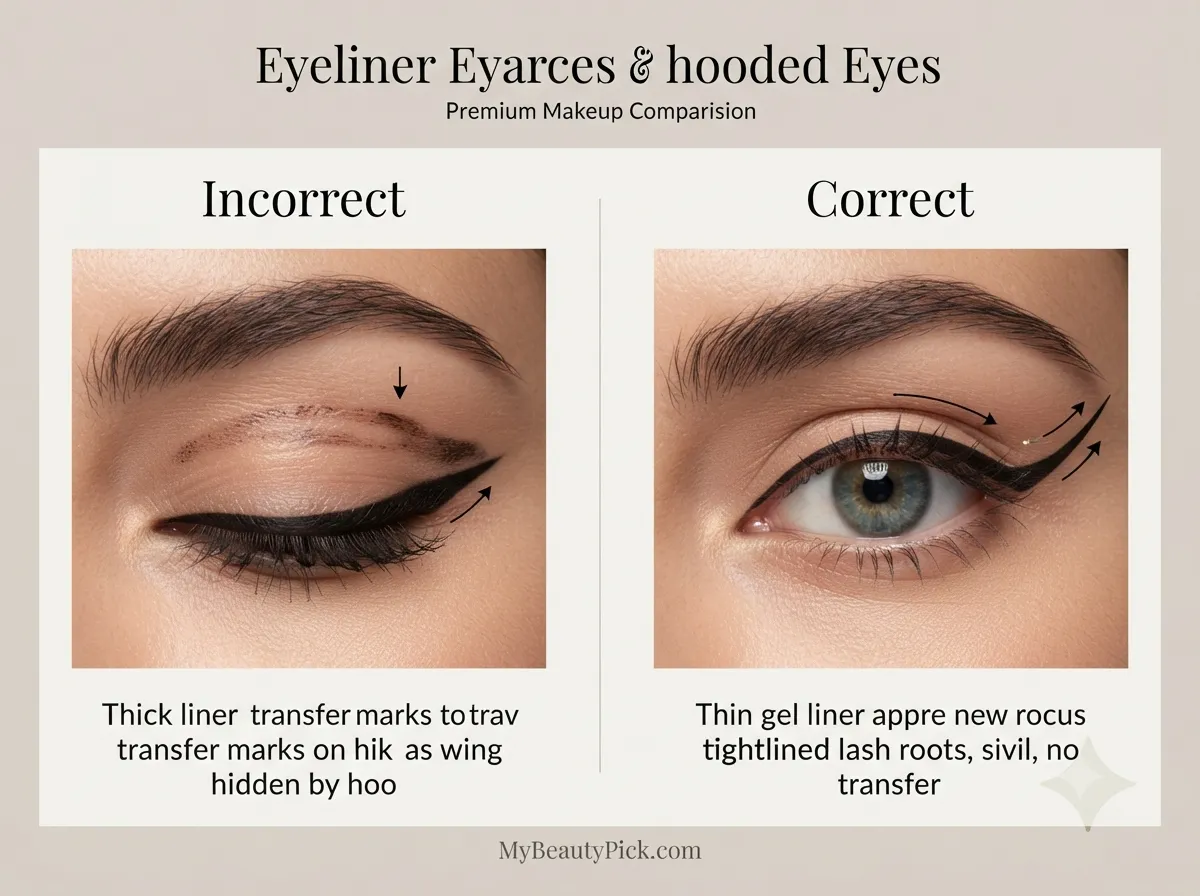
A standard upper lash line liner on hooded eyes has two problems. If the liner is thick, it gets pressed into the skin of the hood during blinking, creating a smudged mark above the liner on the hood skin — what appears as a dark smear above the eye. If the liner is thin but placed exactly at the lash roots, the hood covers it when the eyes are open, making it invisible.
How to Apply Upper Liner on Hooded Eyes
Apply liner with eyes open, looking slightly downward rather than fully closed. This shows you exactly where the liner will be visible on the open eye rather than where it sits on the closed eyelid. Apply as close to the lash roots as possible — any gap between the liner and lashes becomes more visible on hooded eyes because the lid space is limited.
Keep the liner thin at the inner corner and allow it to get slightly thicker toward the outer corner. Then extend the liner past the outer corner in an upward flick — not following the direction of the lower lash line, but angling upward toward the outer end of the brow. This upward extension is key: it ensures the liner tail is visible above the fold on the open eye.
The Tightline Technique
Tightlining — applying liner between the upper lashes at the root, on the water margin of the upper lid — is particularly effective on hooded eyes because it sits below the fold rather than on top of it. It makes lashes look fuller and darker without a visible liner line that can disappear or transfer. Use a dark gel liner or a dark kajal for the most pigmented result.
Liner That Stays on Hooded Eyes
Waterproof gel liner is the only formula reliably transfer-resistant enough for the upper lid on hooded eyes. Pencil and standard kohl transfer to the hood skin quickly. After applying gel liner, press matching eyeshadow over it immediately to set it. Apply a thin layer of translucent or skin-toned powder above the liner line (on the lower area of the hood that makes contact with the lid) to reduce the hood’s ability to pick up the liner.
Lower Lash Line on Hooded Eyes
The lower lash line on hooded eyes does important work because it’s fully visible without obstruction. Dark shadow or liner along the full lower lash line on hooded eyes can make the eye appear smaller and rounder by creating a complete border around limited visible lid space. More effective approaches:
- Concentrate dark liner and shadow on the outer third of the lower lash line, leaving the inner two-thirds lighter — this elongates rather than borders
- Use nude liner on the waterline to open the eye vertically
- A shimmer highlight at the inner corner of the lower lash line makes the eye appear larger and more awake
Lashes for Hooded Eyes
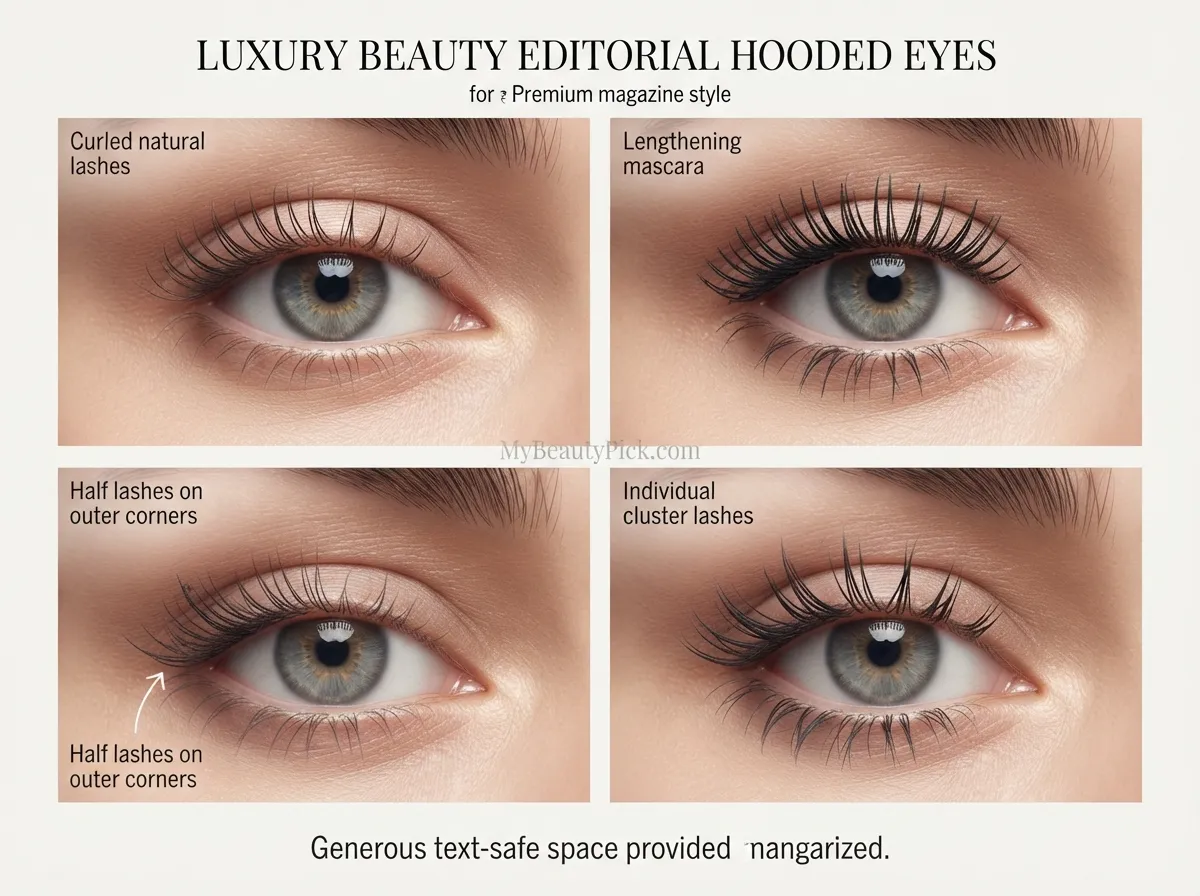
Lashes are one of the most effective tools for hooded eyes because they add visible mass at the lash line without requiring visible lid space. The lashes that work best on hooded eyes:
- Lengthening rather than volumising mascara — length extends lashes outward and upward, past the hood; volume can clump and make lashes press back into the hood
- Curling lashes before mascara — a lash curler used before mascara application lifts lashes away from the hood and keeps them visible on the open eye; this is probably the highest-impact single step for hooded eye makeup
- Individual or half-lashes at the outer corner — individual false lashes at the outer corner add drama and length without weighing down the inner lid where hooding is often most significant
- Full strip lashes with a flat, thin band — if wearing a full strip, a thin flexible band sits closer to the lash root and is more visible on hooded eyes than a thick band that adds height at the lash line but presses back under the hood
Hooded Eye Makeup Looks
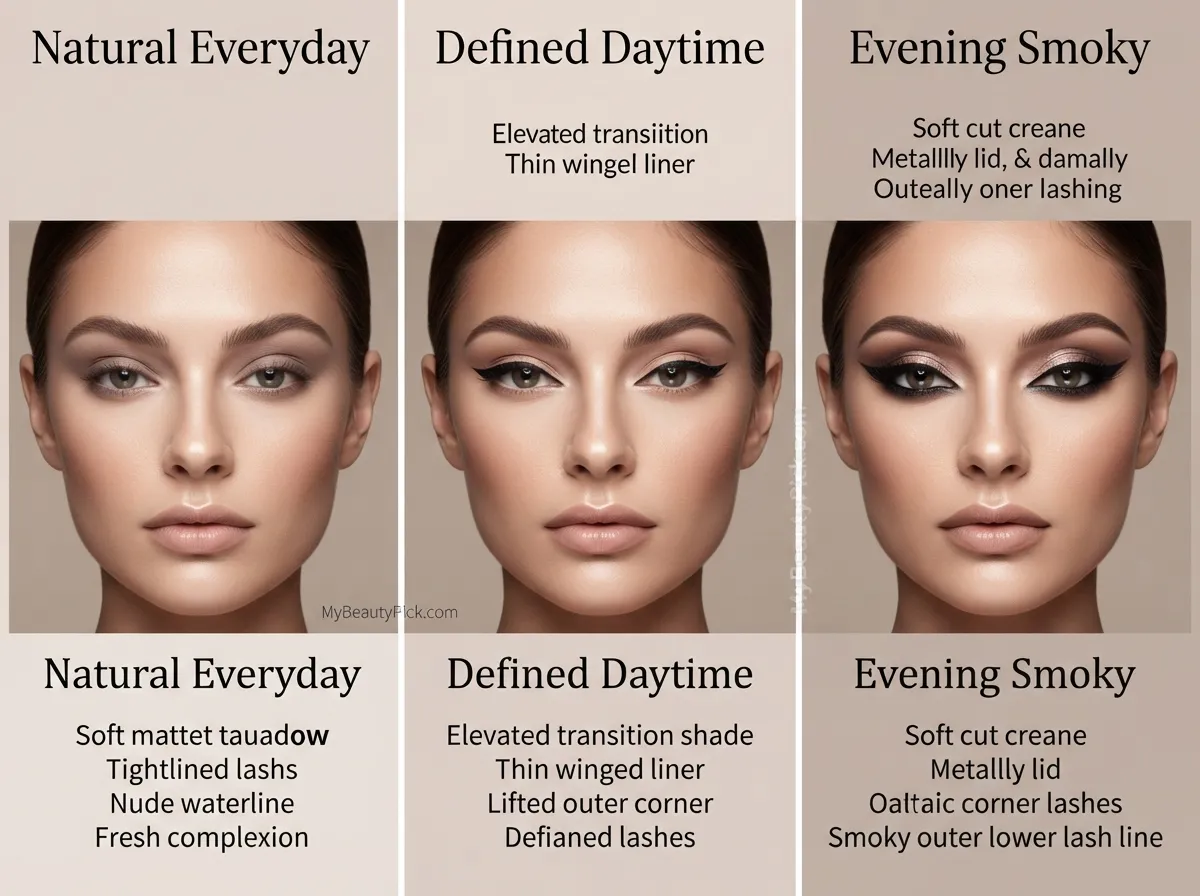
Natural Everyday Look
Tightline the upper lash root with dark gel liner. Apply a matte taupe or warm brown shadow in a half-moon shape at the outer corner, placed above the natural crease, and blend upward. Curled lashes with lengthening mascara. Nude liner on the waterline. Inner corner shimmer highlight. Check with eyes open at every stage.
Defined Daytime Look
Transition shade applied higher than the crease, visible on the open eye. Medium shadow on the visible lid below the fold. Dark shadow at the outer corner and above the fold at the outer third. Thin gel liner on the upper lash line with an upward flick past the outer corner. Curled lashes with two coats of mascara.
Evening Smoky Eye
Place the darkest shadow above the natural crease, blended toward the brow bone in the outer third. A lighter shimmer or metallic on the visible centre lid. The cut crease technique separates the lighter lid from the darker above. Individual false lashes or half lashes at the outer corner. Gel liner with an extended upward flick. Dark shadow on the outer lower lash line. Nude waterline.
What Doesn’t Work for Hooded Eyes
- Placing shadow where it looks correct on a closed eye without checking on the open eye. The most fundamental hooded-eye error. What looks perfect closed disappears open.
- Drawing a thick liner line across the upper lid. Thick liner on hooded eyes transfers to the hood and creates a smeared look rather than definition.
- Applying dark liner to the full waterline. Creates a border effect that makes hooded eyes look smaller. Nude waterline instead.
- Skipping lash curling. On hooded eyes, uncurled lashes press into or beneath the hood. Curling keeps them visible and open.
- Standard crease placement for shadow. The crease on a hooded eye is hidden when open. Shadow placed there is invisible.
Frequently Asked Questions
How do you do eye makeup for hooded eyes?
Assess with eyes open, not closed. Apply shadow higher than the natural crease — high enough that it’s visible on the open eye above the fold. Apply liner with eyes open looking slightly downward. Extend liner in an upward flick at the outer corner. Curl lashes before mascara. Use nude liner on the waterline to open the eye. Every step, check forward in the mirror with eyes open before moving to the next.
What eyeliner is best for hooded eyes?
Waterproof gel liner or fine liquid liner applied thin at the lash root with an upward-angled flick past the outer corner. Thick liner disappears under the hood or transfers to the hood skin. After applying gel liner, press matching eyeshadow over it immediately to set. A thin powder layer above the liner on the area that contacts the hood reduces transfer.
Can hooded eyes wear dramatic eyeshadow?
Yes — with adjusted placement. Place the most intense shadow higher than the visible crease on a closed eye, above the fold on an open eye. A halo eye placement (darker outer corner and inner corner, lighter centre) works particularly well because the lighter centre creates the impression of a more open, larger lid despite limited visible space.
Why does my eyeliner transfer to my upper lid with hooded eyes?
The skin fold presses against the upper lash line during blinking. Solutions: use only waterproof gel or liquid liner, set it immediately with matching eyeshadow, and apply a thin translucent powder above the liner in the area that contacts the hood. Pencil and standard kohl will transfer regardless of other steps.
Should hooded eyes avoid waterline liner?
Avoid dark liner on the full waterline. It creates a border effect that makes hooded eyes look smaller by reducing visible white of the eye. A nude or flesh-toned liner on the waterline opens the eye and creates the impression of more visible lid space. If dark liner is preferred, limit it to the outer half of the lower rim.