

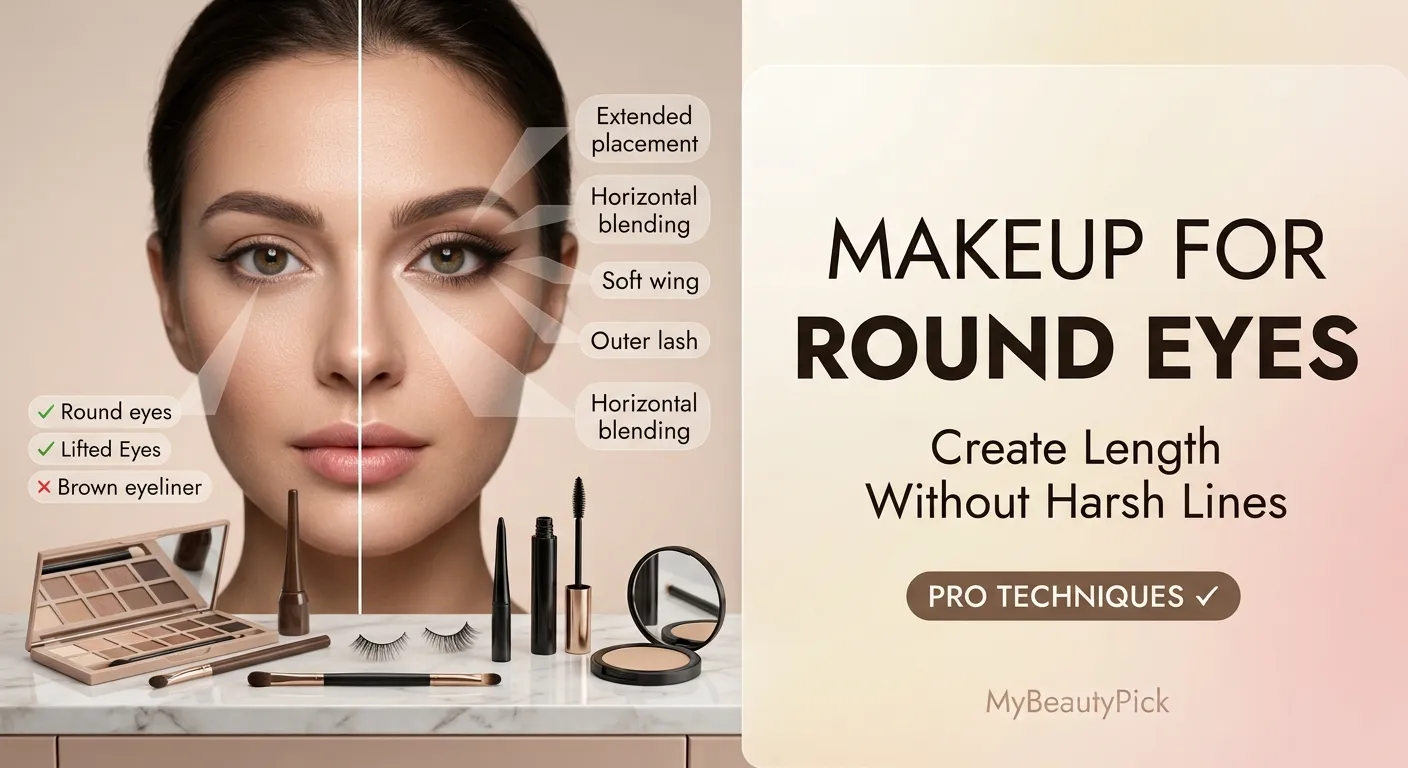
- Concentrate darker shadow and liner on the outer third of the eye to create horizontal length rather than circular emphasis.
- Cat-eye liner angled upward and outward is the most effective single technique for elongating round eyes.
- Dark liner on the full lower lash line borders the eye and emphasises roundness — use it only on the outer half.
- Lighter inner corner and deeper outer corner creates width and length simultaneously.
- Choose false lashes that are longer at the outer corner than in the centre rather than uniform-length strips.
Understanding the Round Eye Shape
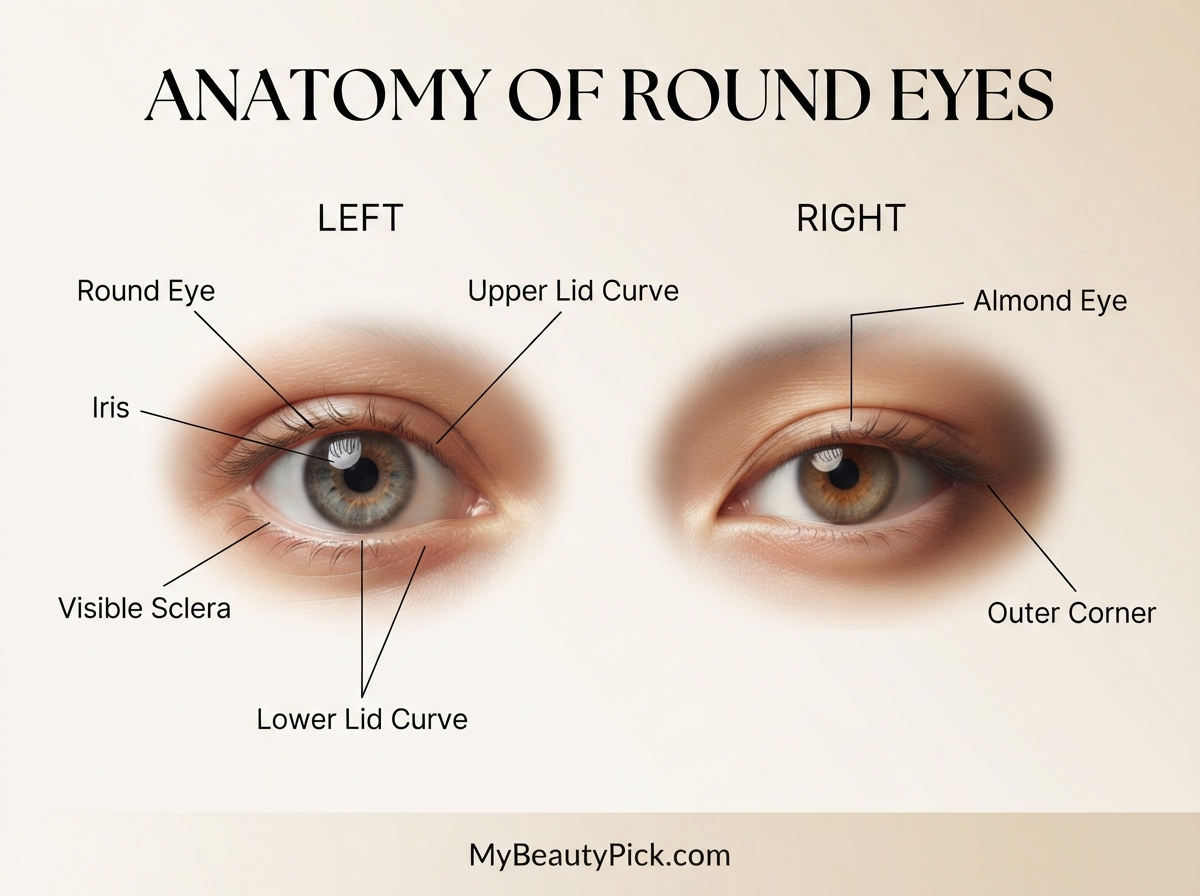
Round eyes are characterised by a wide, circular iris exposure with a high centre point on both the upper and lower lid. The upper lid curves upward significantly at the centre, and the lower lid curves downward, creating a full, open, almost circular eye opening. The sclera (white) is often visible above or below the iris in a neutral gaze, which is part of what gives round eyes their bright, wide-awake appearance.
The makeup challenge with round eyes is one of balance: the shape is wide vertically but not always proportionally wide horizontally. Techniques that add horizontal emphasis create the balanced, almond-approaching shape that most round-eye makeup aims for. Techniques that add vertical emphasis (heavy liner on the full waterline, even shadow across the entire lid) increase the circular impression.
Eyeshadow Placement for Round Eyes
The Outer-Heavy Approach
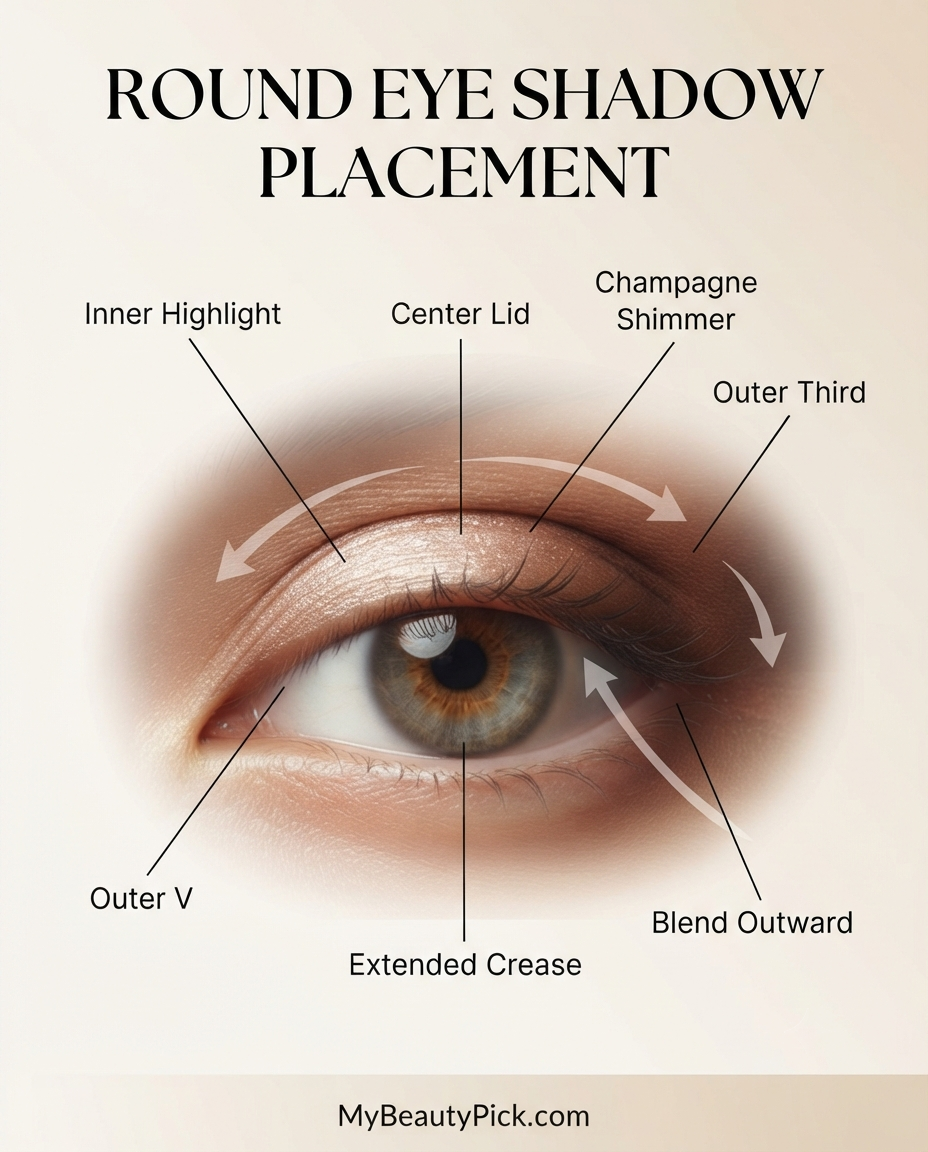
The foundation of round-eye makeup is concentrating the darker shadow on the outer third of the eye rather than applying it evenly across the lid. A medium or dark shadow applied only to the outer corner and blended upward and outward creates a visual anchor that draws the eye horizontally outward, adding the impression of length.
The placement to avoid: equal shadow distribution across the full lid. Symmetrically applied dark shadow on all sides of a round eye (inner corner, lid, outer corner) emphasises its circular shape because the dark frames the circular opening evenly.
The Outer V and Extended Crease
Place the darkest shadow in a V-shape at the outer corner — one arm of the V along the outer third of the upper lash line, the other arm along the outer crease and slightly above it, angled outward toward the tail of the brow. Blend the outer crease arm further outward than feels natural; the extended placement creates length. A lighter or shimmer shade in the centre and a bright highlight at the inner corner completes the look that opens the eye while creating horizontal emphasis.
Where Not to Put Dark Shadow
Avoid dark shadow in the inner corner on round eyes — it closes the eye in and emphasises width without adding length. The inner third of the lid should be light or shimmer, creating contrast with the darker outer two-thirds. This contrast is the primary mechanism for the elongating effect.
Eyeliner for Round Eyes
The Cat-Eye — The Primary Elongating Tool
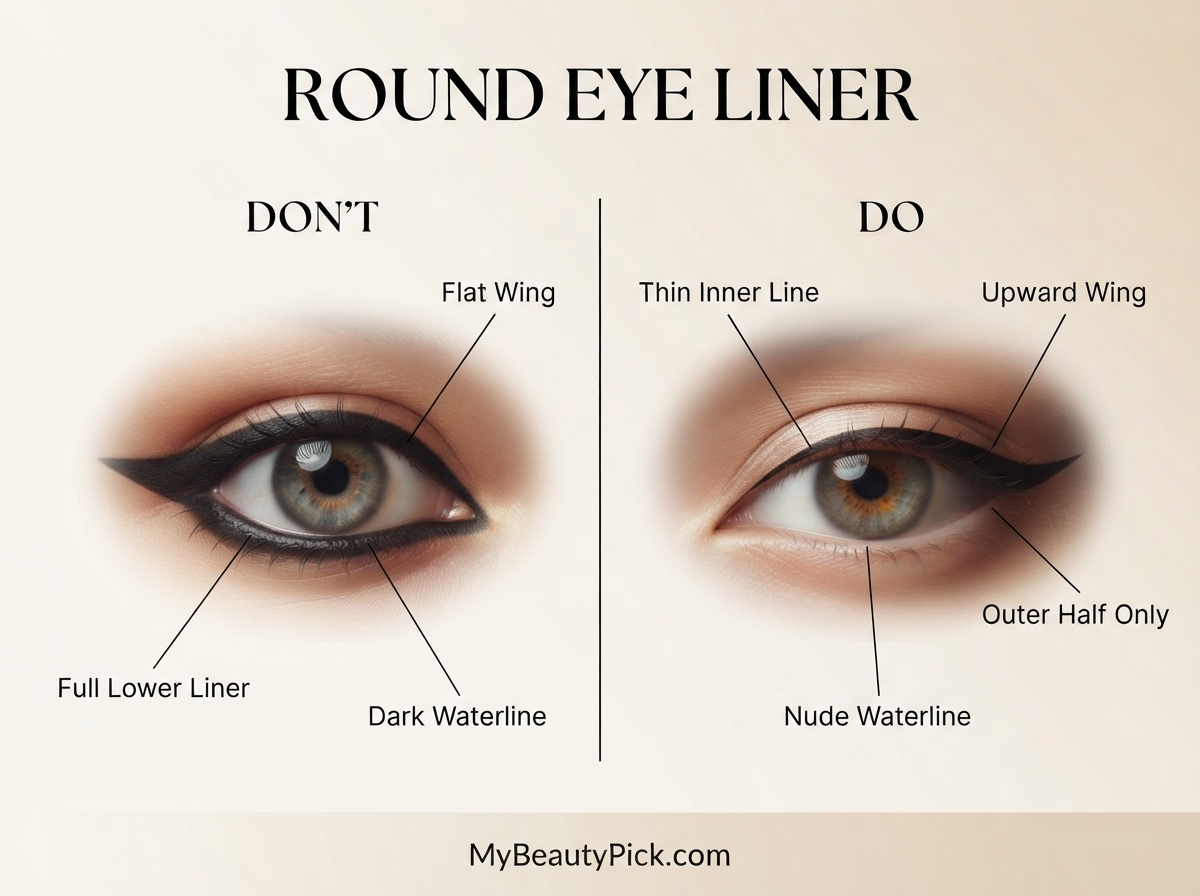
A cat-eye or wing liner is the single most effective technique for elongating round eyes. The mechanics of why it works: the upward-angled line at the outer corner creates a directional emphasis that reads as horizontal length rather than vertical openness. The eye’s attention follows the liner outward and upward rather than tracking the circular iris opening.
How to apply: start the liner thin at the inner corner (thinner than standard for a straight line). Allow the liner to thicken as it approaches the outer corner. At the outer corner, extend the liner in a wing that angles upward — following the line of the lower lash line extended would create a downward-drooping wing, which doesn’t elongate. Instead, angle the wing upward at roughly 30–45 degrees toward the outer end of the brow. The length of the wing depends on the intensity you want.
Upper Liner Only on Round Eyes
For most round-eye looks, liner on the upper lash line only — not the lower — elongates more effectively than liner on both. Upper liner with a wing creates horizontal emphasis. Adding lower liner creates a complete border that frames the circular opening rather than redirecting attention outward.
Lower Lash Line Liner Technique
When using lower lash line liner on round eyes, the outer-half-only rule is important. Apply dark shadow or liner from the outer corner inward to about the midpoint of the lower lash line, then fade it out. Leave the inner half of the lower lash line clear or use a shimmer there. This adds depth at the outer corner while avoiding the full border effect that emphasises roundness.
Avoid These Liner Techniques on Round Eyes
- Full liner on the upper and lower lash line in equal weight — creates a complete circular frame that emphasises the round shape
- Dark liner across the full waterline — reduces visible white of the eye, making it appear smaller and rounder
- A wing that extends horizontally rather than upward — a flat horizontal wing doesn’t create the upward directional emphasis that elongates
Lower Lash Line Strategy for Round Eyes
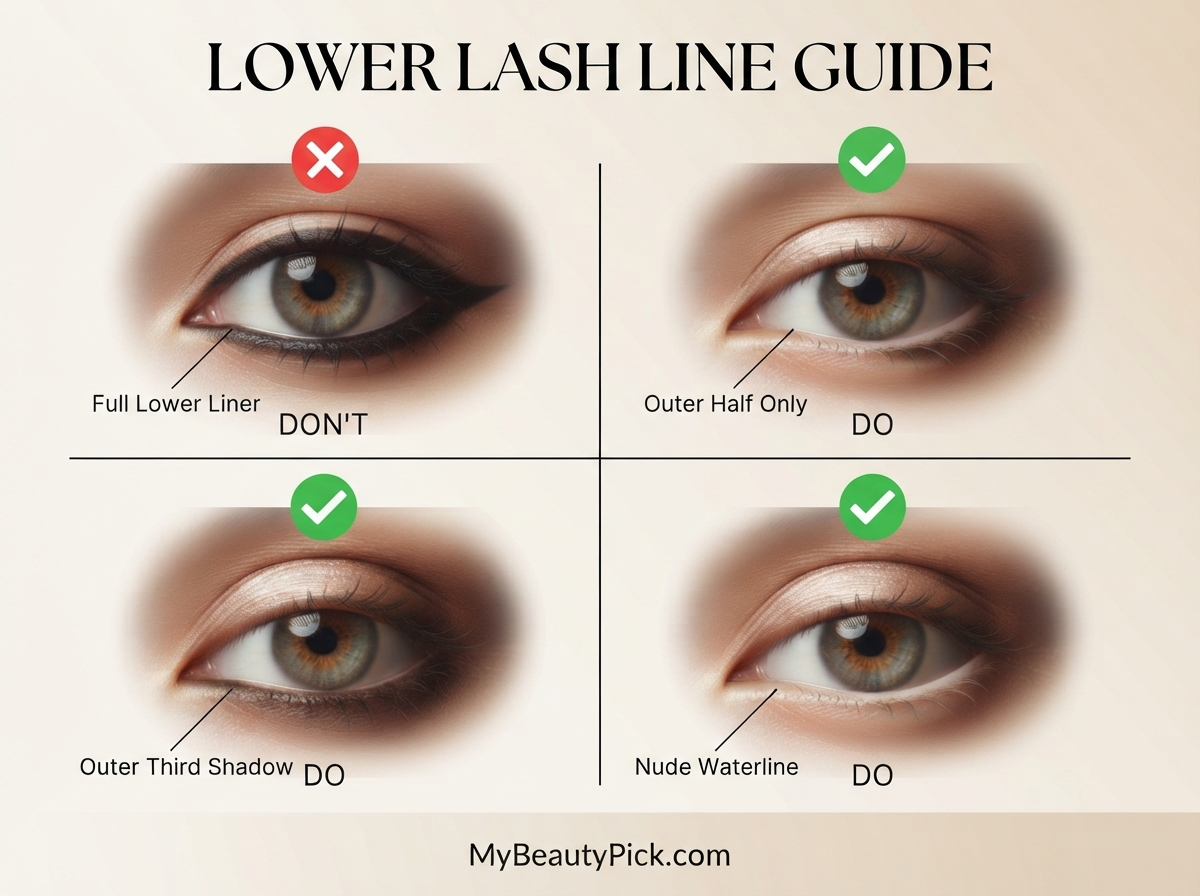
The lower lash line technique is one of the most significant differentiators for round eye makeup. The options:
| Technique | Effect on Round Eyes | Recommended |
|---|---|---|
| Full dark liner on lower lash line | Creates circular border — emphasises roundness | No |
| Dark liner outer half only | Adds depth at outer corner without full border | Yes |
| Smudged shadow outer third only | Soft outer depth — most naturally elongating | Yes |
| Nude liner on waterline | Opens the eye, creates more visible white | Yes — brightening |
| Shimmer inner corner lower lash | Brightens inner corner, adds contrast with outer depth | Yes — paired with outer dark |
Mascara and Lashes for Round Eyes
Mascara Application
Concentrate mascara application on the outer lashes rather than applying evenly across all lashes. Wiggling the wand at the roots of the outer third lashes and pulling outward (rather than upward) before the standard upward stroke emphasises the outer lashes disproportionately — which is the same outward emphasis the liner and shadow create.
False Lashes for Round Eyes
Choose false lashes that taper longer toward the outer corner: cat-eye lashes, crisscross styles with longer outer fibres, or outer-corner individual lashes. Avoid uniform-length strip lashes that add even volume across the entire lash line — they add to the circular impression by framing the eye symmetrically.
Three Complete Round Eye Looks
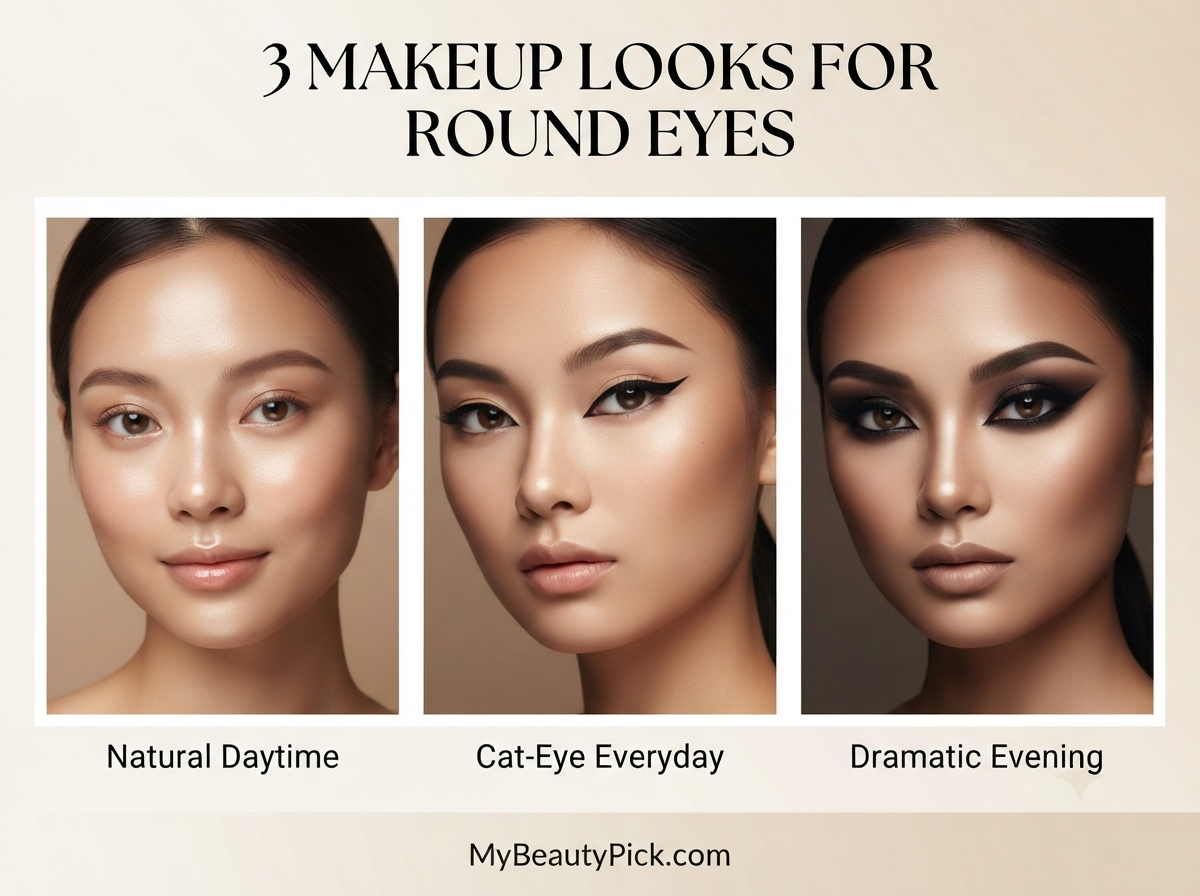
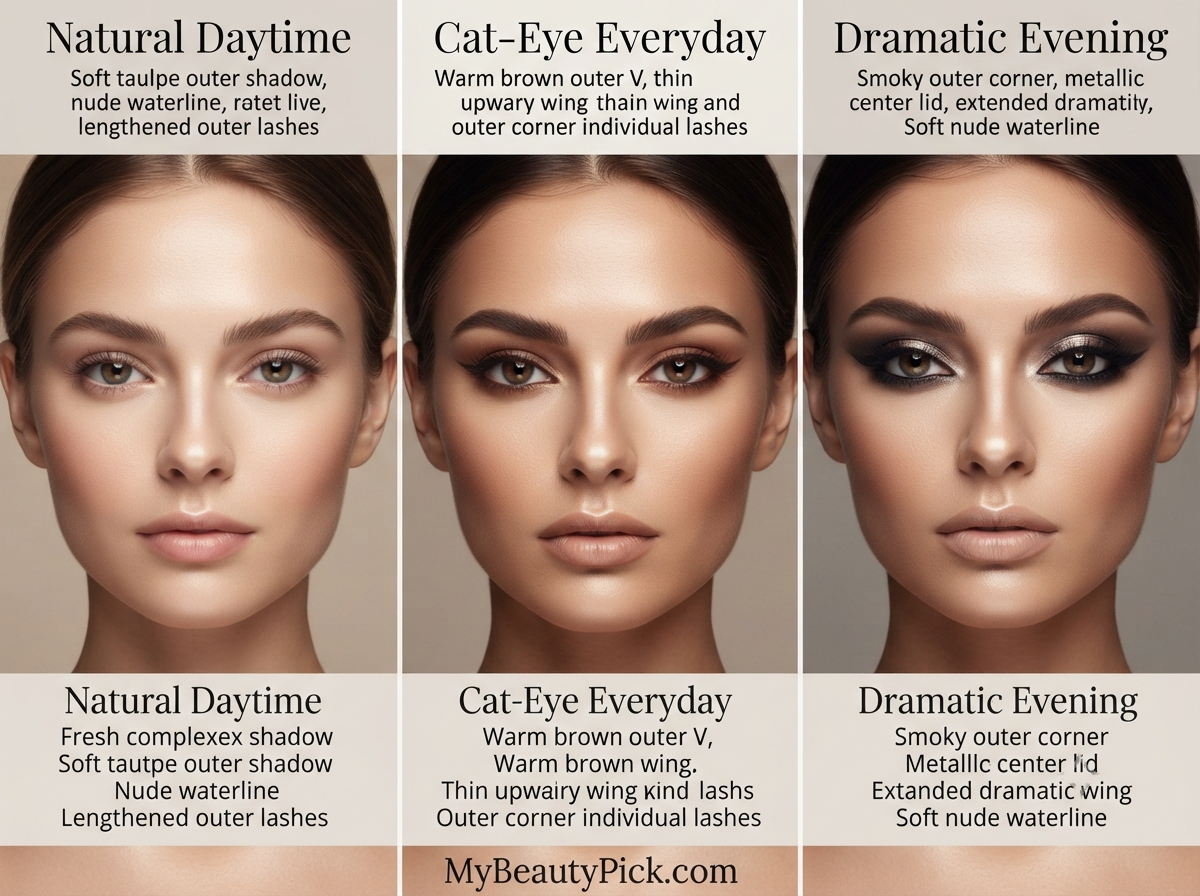
Natural Daytime Look
Light matte shade across the full lid. Medium brown shadow applied only to the outer third in a diagonal blend upward. Nude liner on the waterline. Black mascara with outer lash emphasis. No lower liner. Inner corner highlight.
Cat-Eye Everyday Look
Warm brown transition shade blended across the crease. Darker brown or black packed on the outer third of the lid and outer crease. Thin black gel liner along the upper lash line, thickening and extending into a wing angled upward at the outer corner. Nude waterline. Dark shadow on the outer quarter of the lower lash line. Individual lashes at the outer corner. Two coats of mascara.
Dramatic Evening Look
Dark shadow across the upper lid, concentrated heavily in the outer V extending above the crease. Shimmer in the centre lid. Inner corner bright highlight. Black liner with a dramatic extended wing. Dark smudged shadow at the outer third of the lower lash line. Cat-eye or outer-emphasis false lashes. Nude or pale pink waterline.
What Doesn’t Work for Round Eyes
- Even shadow across the full lid with no outer emphasis. Symmetrically applied shadow on all sides of the eye creates a framed circular opening — the opposite of elongation.
- Full liner on both upper and lower lash lines in equal intensity. A complete liner border emphasises the circular shape more than any other technique.
- Dark liner on the full waterline. Makes the eye appear smaller without any elongating benefit.
- Uniform-length false lashes. Even length all the way across frames the circular opening evenly — outer-emphasis lashes elongate instead.
- Heavy shadow or liner at the inner corner. Adds to the circular frame rather than pulling the eye outward.
Frequently Asked Questions
How do you make round eyes look more elongated?
Concentrate darker shadow and liner on the outer third of the eye and extend outward and upward past the outer corner. A cat-eye liner flick angled upward reinforces the elongating effect. Keep the inner corner lighter — the contrast between a light inner corner and darker outer corner creates the impression of width and horizontal length simultaneously.
What eyeliner technique works best for round eyes?
A cat-eye or wing angled upward and outward is the most elongating technique. Start thin at the inner corner, thicken toward the outer corner, extend as an upward-angled wing. For the lower lash line, apply liner only from the middle to the outer corner rather than the full lower line — a full lower liner borders the eye and emphasises roundness.
Should round eyes use dark shadow on the lower lash line?
Only on the outer half or outer third. Dark liner across the full lower lash line creates a complete circular border that emphasises roundness. Concentrate dark shadow or liner at the outer corner of the lower lash line and fade out by the midpoint. Leave the inner third clear or use a shimmer highlight there to brighten.
Do false lashes work on round eyes?
Yes — with style adjustment. Choose lashes that are longer at the outer corner (cat-eye, crisscross, or outer-emphasis styles) rather than uniform-length strips. The extra outer length creates horizontal elongation that reinforces the same directional emphasis as outer-heavy shadow and liner techniques.