

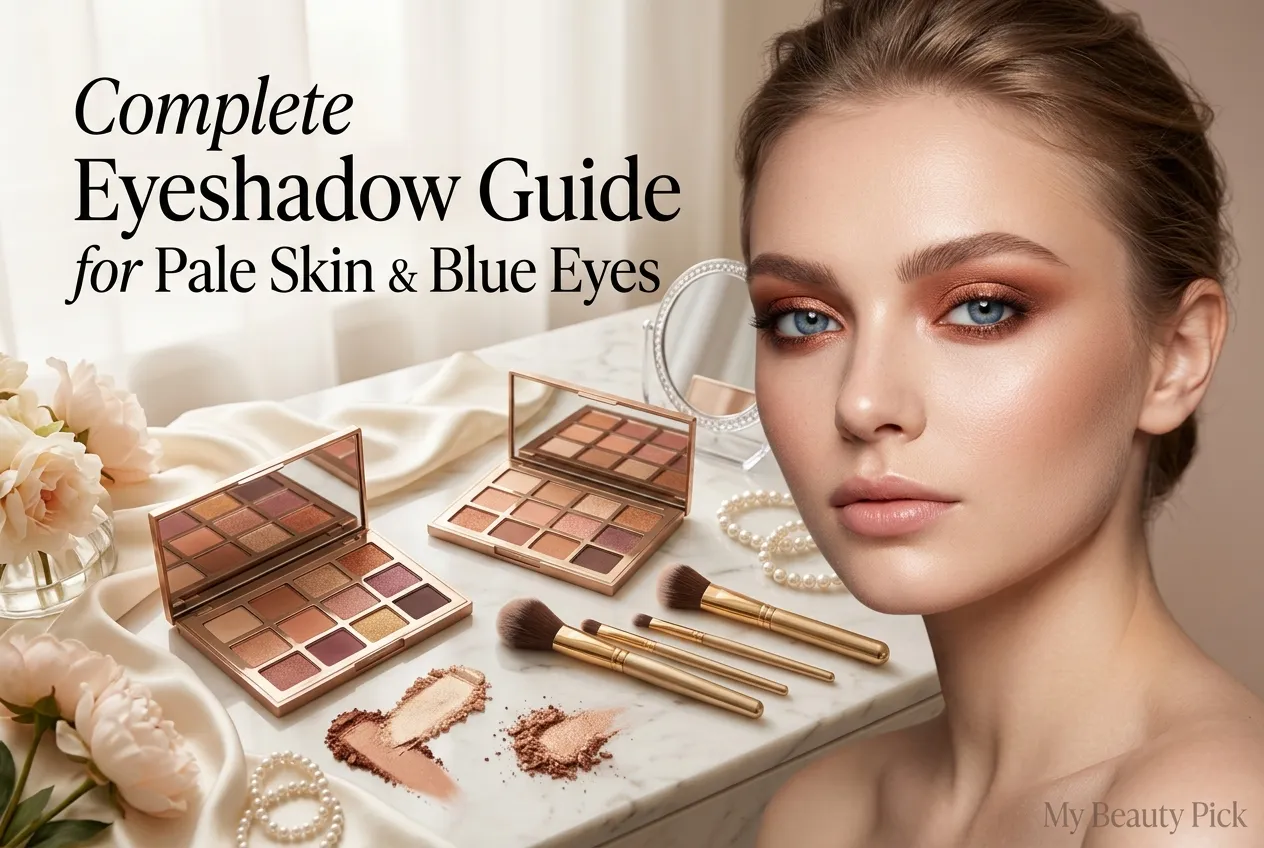
Pale skin and blue eyes share one quality that makes eyeshadow both easier and trickier than for almost any other combination: high contrast. Light skin creates a backdrop against which every shadow reads more intensely than it would on a deeper complexion. That contrast is an asset — colours show up clearly and vividly — but it also means harsh choices hit harder, and the wrong shade can look chalky, muddy, or severe rather than striking. This guide covers exactly which shades work, how your specific undertone refines those choices, what to avoid, and how to apply for maximum impact on blue eyes.
The Short Answer on Eyeshadow for Pale Skin and Blue Eyes
- Blue sits opposite orange on the colour wheel. Shades in the orange family — copper, bronze, peach, rust, warm gold — create the highest contrast against blue irises and make them read as more vivid and intense. These are the foundation colours this combination is built around.
- Pale skin amplifies contrast. A shade that looks rich and wearable on medium skin can look dramatic or even harsh on fair skin. Build intensity gradually and choose matte finishes for structure rather than shimmer, which can amplify chalky-shimmer fallout on pale lids.
- Your undertone modifies the warm shade family: cool-pale skin reads best with slightly cooler copper and rose-gold rather than full warm orange; neutral-pale skin handles the full range; warm-pale skin with peachy or ivory tones can wear rich bronze and warm gold most effortlessly.
- The shades to avoid are not necessarily the boldest ones — they are the cool, ashy, or ultra-frosty ones: silver-heavy shadows, cool grey, and very pale chalky shimmers all flatten or wash out blue eyes rather than making them pop.
- A copper or warm bronze liner on the upper lash line in place of black creates stronger eye definition on pale skin without the harsh contrast that jet black produces against very fair, pinkish skin.
Why Certain Eyeshadow Shades Make Blue Eyes Pop — The Colour Theory
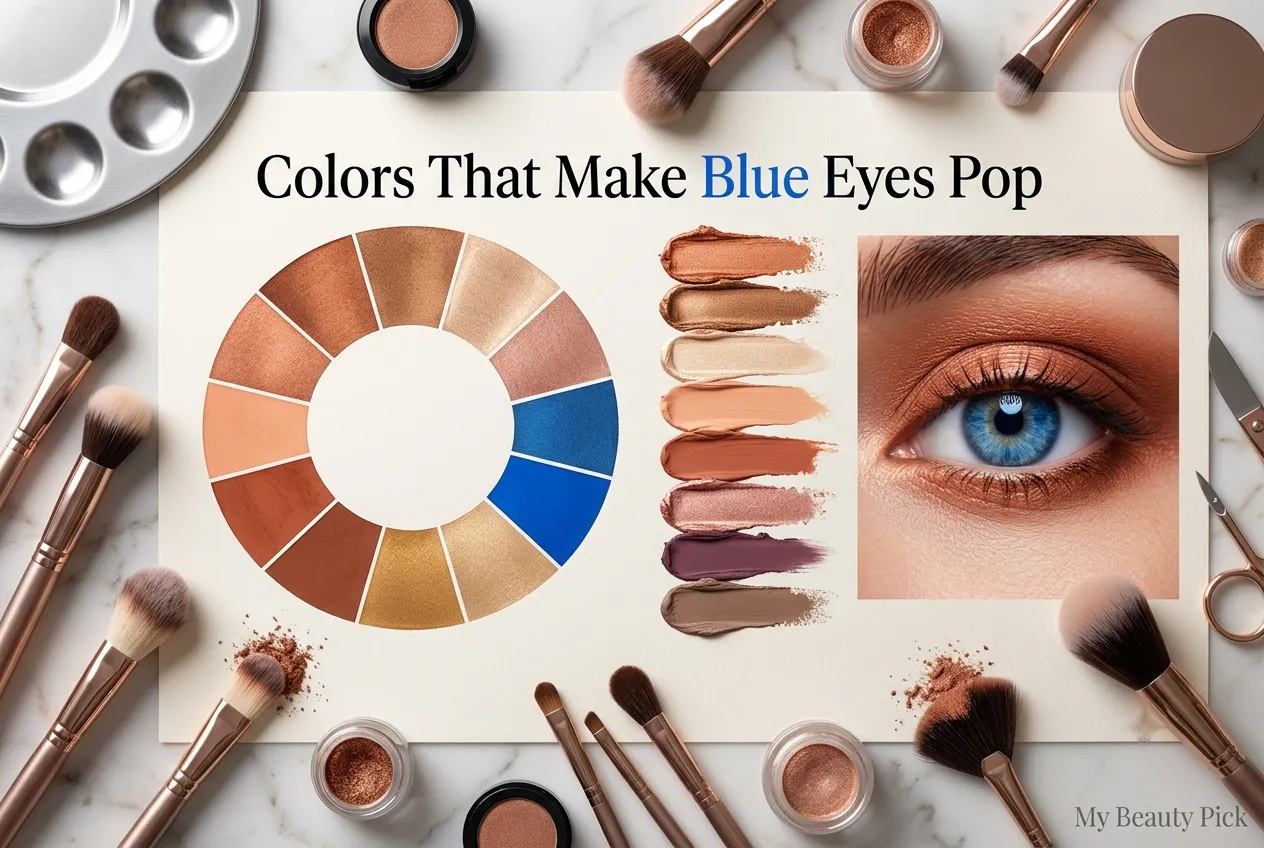
The colour wheel does most of the explanatory work here. Blue sits opposite orange on a standard artist’s colour wheel — this makes orange the complementary colour to blue, meaning the two create maximum visual contrast when placed next to each other. Orange is not just one shade: the orange family in eyeshadow spans copper, rust, bronze, peach, terra cotta, and warm gold. Any of these, applied near blue eyes, forces the eye to register the blue more intensely because the brain perceives complementary colours as more vivid when seen together.
This is not a subjective effect — it is the same principle that makes red and green Christmas decorations look so vivid, or orange traffic cones stand out against a blue sky. When you apply a warm copper lid to blue eyes, you are using the same mechanism. The blue does not get brighter; it reads as brighter because of what is next to it.
Secondary choices — warm plums, mauves, and dusty roses — also work for blue eyes, though through a slightly different mechanism. These shades have enough red-warm in them to contrast with blue without producing as strong a complementary effect as pure copper. The result is a softer, more romantic definition rather than a bold pop — excellent for everyday wear when full copper contrast feels like too much.
How Pale Skin Changes the Equation
Pale skin is a high-contrast canvas. Every shadow applied to a light lid reads more clearly and more intensely than the same shade on a deeper complexion, because the contrast between the shadow and the bare skin beneath is greater. This creates two practical effects. First, you need less product to achieve the same apparent intensity as you would on darker skin — build slowly. Second, harsh or mismatch choices are more visible, not less.
Undertone matters significantly on pale skin, and it modifies which shades in the warm copper-bronze family work best.
Cool-Toned Pale Skin
Pink, rosy, or blue-based undertones. This is the most common pale skin undertone. The warmth of copper and bronze still works beautifully — the blue eyes ensure the warm shadow reads as contrast rather than clash. However, very orange-leaning or peachy shades can look muddy against the skin’s cool pink base. Stay with copper-rose, rose gold, cool-leaning bronze, and plum-mauve rather than full terracotta or warm peach.
Best shades: Rose gold, champagne, copper-rose, cooler bronze, dusty plum, mauve. Approach with care: Full warm peach, terracotta, very orange-based rust on the skin (fine on the lid against the eye colour itself).
Neutral-Toned Pale Skin
No strongly warm or cool pull — balanced fair complexion. The widest flexibility of the three. Neutral-pale skin handles the full warm spectrum comfortably: copper, bronze, warm peach, rose gold, warm taupe. Neither fully warm nor cool shades look out of place, which makes neutral-pale skin the easiest base to work with for blue eye enhancement.
Best shades: Full copper, warm gold, champagne, peach-bronze, rose gold, warm taupe, soft plum. Approach with care: Very cool greys and ultra-frosty silvers, which can look ashy rather than striking against the neutral-pale backdrop.
Warm-Toned Pale Skin
Peach, ivory, or golden undertones. Sometimes called “warm fair” — the skin has a golden or peachy quality rather than pink. This undertone handles the richest warm shades most naturally: full bronze, warm gold, terracotta, peach, and warm copper all resonate with the skin’s existing warmth. Very cool shadows (grey, lavender, cool taupe) can look ashy against the warm base.
Best shades: Warm gold, full bronze, terracotta, warm copper, peach, champagne-gold, warm taupe. Approach with care: Cool grey, lavender, and very pink-based mauves, which can conflict with the peachy base tone.
The Best Eyeshadow Colours for Pale Skin and Blue Eyes
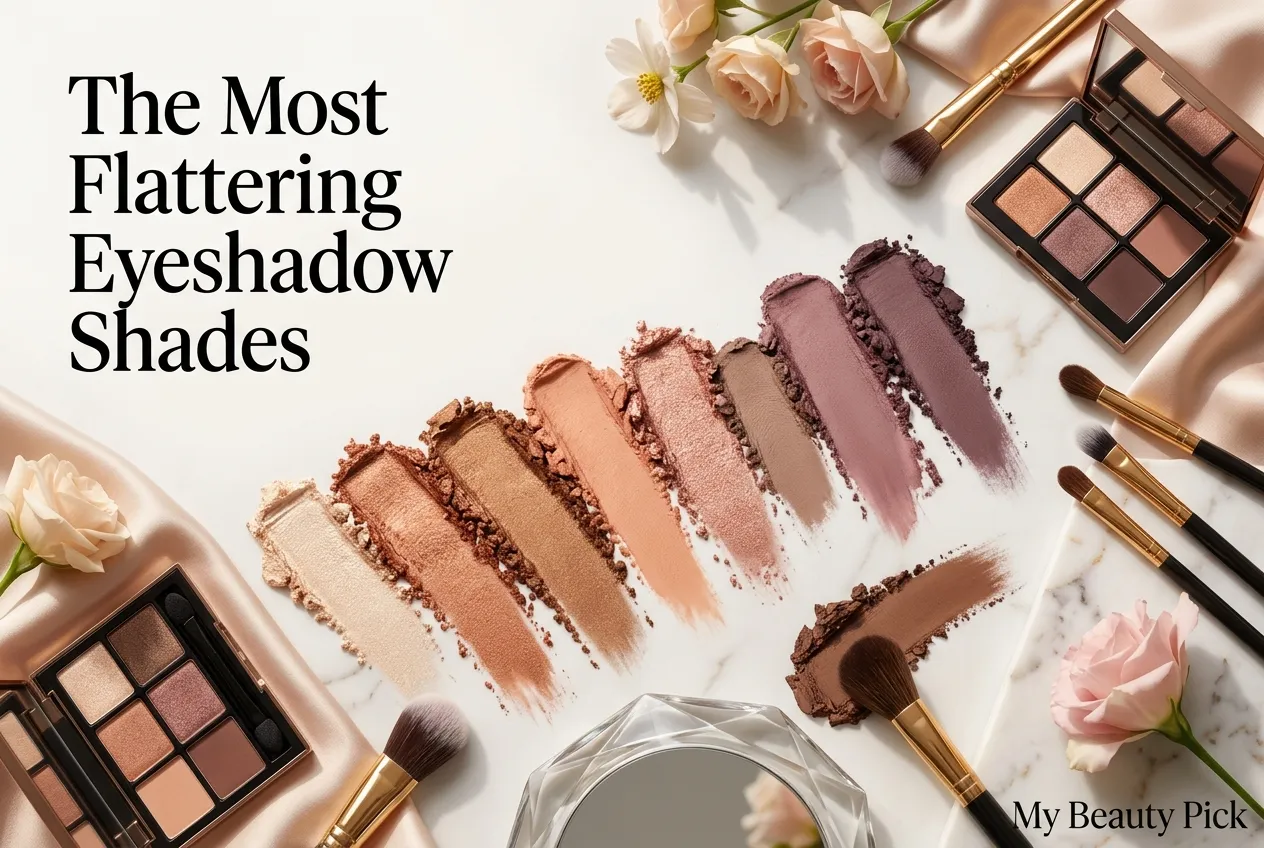
Copper and Warm Bronze
Shimmer or matte
The single most effective colour family for blue eyes on any skin tone. Copper creates the strongest complementary contrast with blue irises, making them read as more vivid and brighter. On pale skin, copper shimmer on the lid is especially striking — the high-contrast backdrop amplifies the warmth. For a more everyday version, a matte warm bronze in the crease gives definition without the full shimmer impact. Works on all pale skin undertones.
Champagne and Warm Gold
Shimmer (lid highlight)
The most wearable everyday shade for pale skin — light enough to look natural, warm enough to avoid the flat look of white or stark beige. Applied to the center of the lid or inner corner, champagne adds a brightening shimmer effect that makes blue eyes look lit-from-within rather than highlighted with a product. Gold deepens this effect with a richer metallic quality for evening wear. Both work across all pale skin undertones.
Soft Peach
Matte or satin
Particularly flattering for grey-blue eyes and cool-pale skin. Peach sits at the softer end of the orange-complement family — less intense than copper, more wearable for everyday contexts, and especially effective for brightening the whole eye area. Matte peach in the crease with champagne shimmer on the lid is one of the most effortlessly flattering combinations for pale skin and blue eyes specifically. Best for cool-pale and neutral-pale skin.
Warm Taupe
Matte
The transition shade that makes everything else blend better. A warm taupe applied just above the crease creates the soft gradient that prevents harsh edges and makes the main lid colour look seamlessly blended. On pale skin where the junction between shadow and bare skin is more visible, a well-placed warm taupe transition layer is not optional — it is the step that makes the look look intentional rather than applied. Works across all undertones.
Plum and Warm Mauve
Matte or shimmer
The best cool-toned option for blue eyes. Plum and mauve have enough red-warm in them to provide contrast against blue without the full orange-complement effect of copper. They can make blue eyes look almost electric in bold applications, and at a softer intensity they add a romantic, dimensional quality that cool greys and neutral taupes lack. On pale skin, smudged or blended plum in the outer V or lower lash line is a particularly flattering evening option. Best for cool-pale skin.
Rose Gold
Shimmer
Rose gold eyeshadow on pale skin creates a flushed, luminous quality — the warm pink-gold tones relate to the rosy flush in many fair complexions and read as enhanced natural colouring rather than a product. Particularly flattering on cool-pale skin where the pink notes in rose gold align with the skin’s own undertone while the gold warmth contrasts beautifully with blue eyes. An excellent all-over lid shade for fair-skinned blue-eyed wearers who want a one-shade approach.
Shades to Use With Caution — or Avoid
Ashy Cool Grey
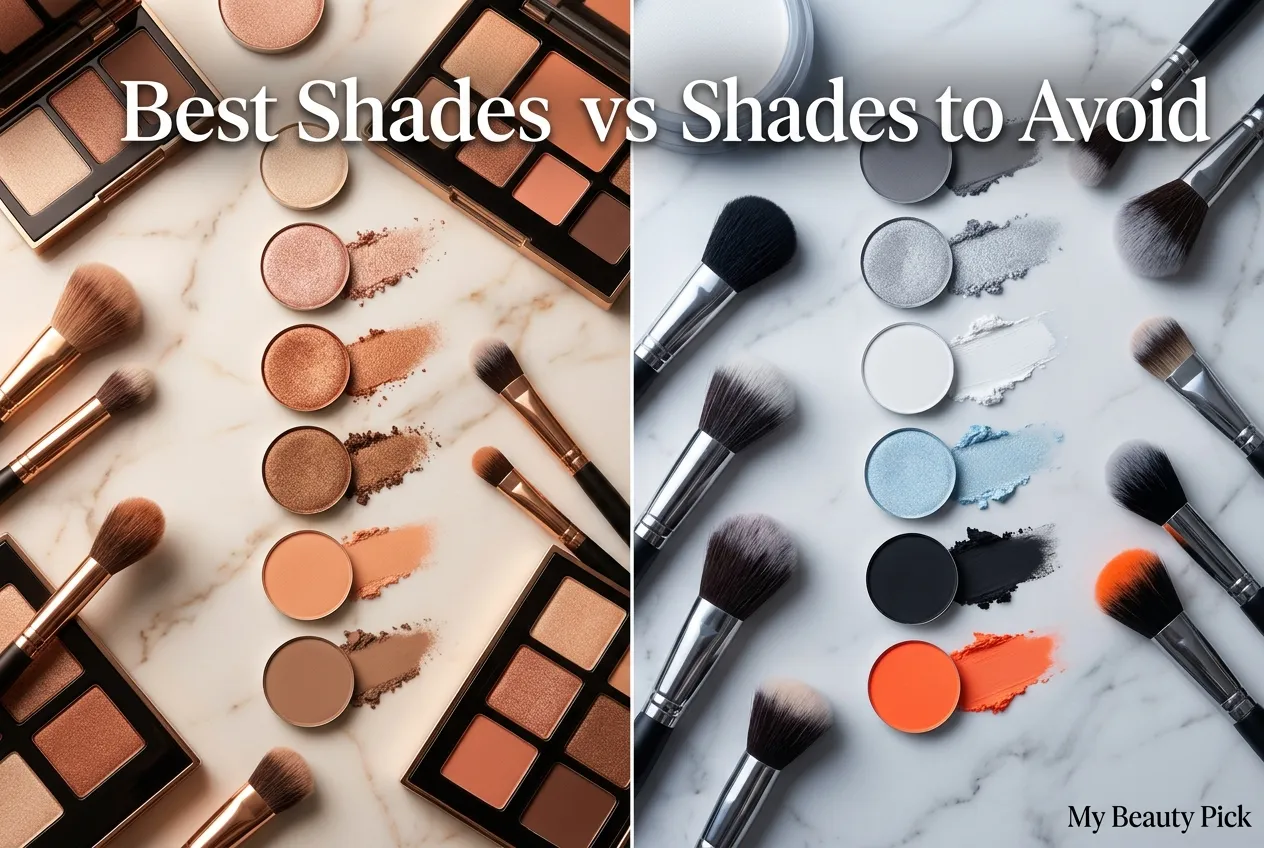
Cool grey eyeshadow can wash out blue eyes on pale skin rather than defining them. Both the grey and the pale skin have cool undertones — there is no warm contrast to make either read more vividly. The result is a flat, slightly tired look. Grey can work if it has enough depth to create genuine contrast (a deep charcoal rather than a light ash) or if a warm tone is also present somewhere in the look.
Ultra-Frosty Glitter and Silver Shimmer
Very frosty or silver-heavy shimmer eyeshadows reflect light in a way that highlights the fairness of pale skin without adding any warmth or contrast. On pale lids, ultra-frosty formulas can look chalky rather than shimmery — the shimmer particles are visible but lack the warmth to look luminous. Warm champagne or rose gold achieves the brightening effect without the chalky-white fallout risk.
Very Pale or Stark White
White eyeshadow on pale skin has almost no contrast to the bare skin and simply disappears rather than highlighting. As a highlight or inner corner shade it reads as flat rather than brightening. The exception is stark white used as a graphic liner or very precise inner corner dot, where intentional contrast is the point. For a brightening highlight, warm champagne or a very light gold does everything white does with added luminosity.
Cool Frosty Blues on Blue Eyes
Applying a very bright, cool blue eyeshadow directly to blue eyes produces a monochromatic effect that causes the eye colour to compete with the shadow rather than being enhanced by it. Both the eye and the shadow are in the same colour family, so there is no contrast. A navy or deep blue-black used as a liner or smudged in the lash line is different — the depth creates contrast. Bright cool blue applied to the lid itself flattens the natural eye colour rather than intensifying it.
Jet Black Matte (as a liner on pale skin)
Jet black matte eyeshadow as a liner or smoked outer corner creates very harsh contrast on pale skin that draws attention to the severity of the line rather than to the eye colour. Deep bronze, espresso brown, or even a deep charcoal are all more flattering alternatives for pale skin that deliver strong definition without the stark severity of pure black against very fair skin. Black mascara remains fine — it is black shadow and liner against pale skin that can tip into harshness.
Neon or Very Bright Oranges
While orange is the complementary colour to blue, very bright, saturated, or neon-orange eyeshadows can look unfinished or costume-like on pale skin rather than striking. The intensity that works on deeper skin tones can overwhelm a pale lid. Stay with the deeper, more muted versions of the orange family — copper, rust, terracotta, bronze — where the warmth provides the complementary contrast without the raw brightness of a true neon orange.
Daytime vs Evening Looks for Pale Skin and Blue Eyes
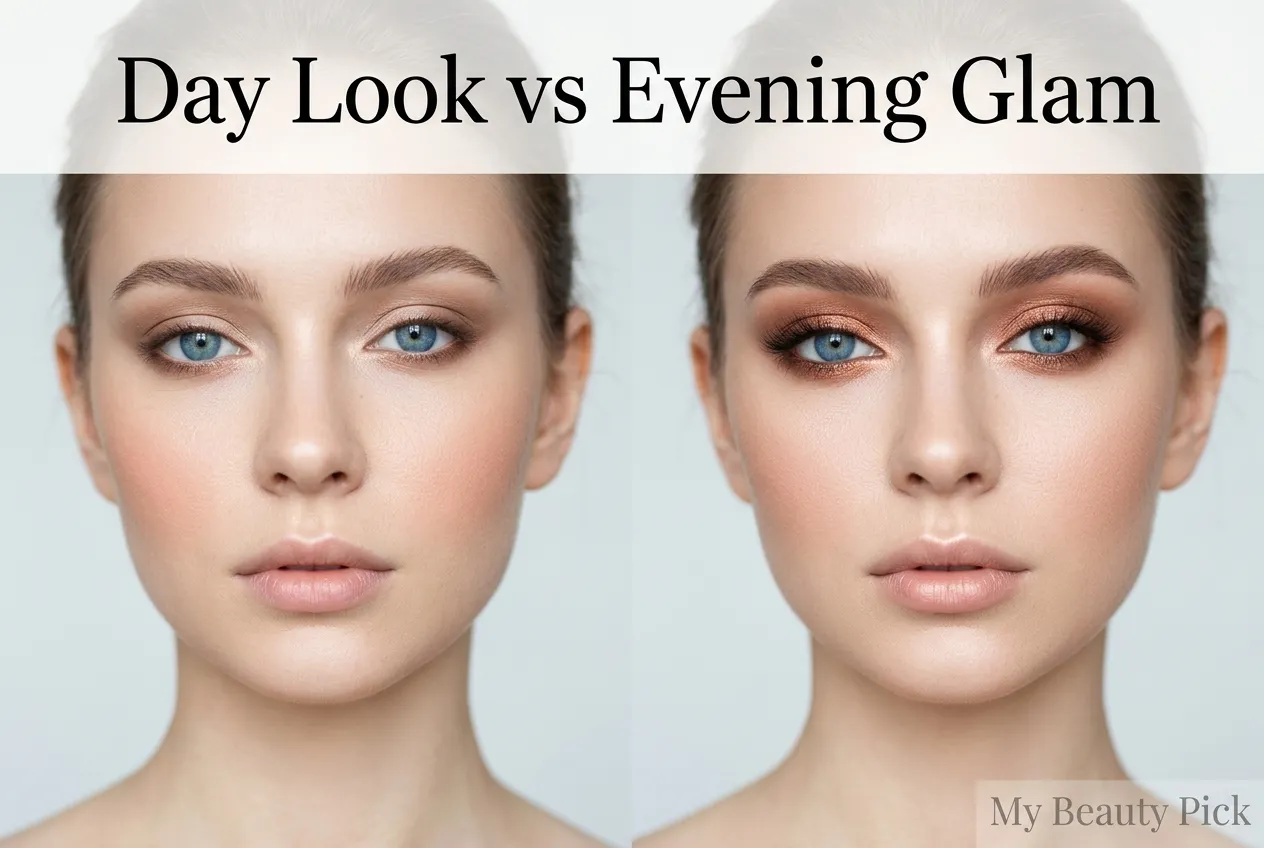
Soft Everyday Look
- Prime lids with a flesh-toned or neutral eyeshadow primer to prevent fallout on pale skin
- Apply warm taupe or light matte peach across the entire lid as a transition base
- Concentrate champagne or rose gold shimmer on the center of the lid only — not all over
- Blend a slightly deeper warm brown into the outer crease
- Use copper or warm bronze liner smudged along the upper lash line in place of black
- Apply brown mascara for a softer daytime definition, or black for a bolder eye
- Touch of champagne or pearl in the inner corner to open the eye
Bold Evening Look
- Prime lids — fallout from richer shimmer shows more on pale skin; primer is essential
- Pack copper or warm gold shimmer across the full lid from lash line to crease
- Deepen the outer V with a warm matte plum or espresso brown — blend thoroughly
- Add a slightly deeper bronze or rust shimmer to the outer half of the lid for dimension
- Smudge warm plum or deep bronze under the lower lash line, avoiding stark black
- Line the waterline with a nude or peachy liner to open and brighten the eye
- Apply two coats of black mascara on both upper and lower lashes
Top Product Picks: Eyeshadow for Pale Skin and Blue Eyes
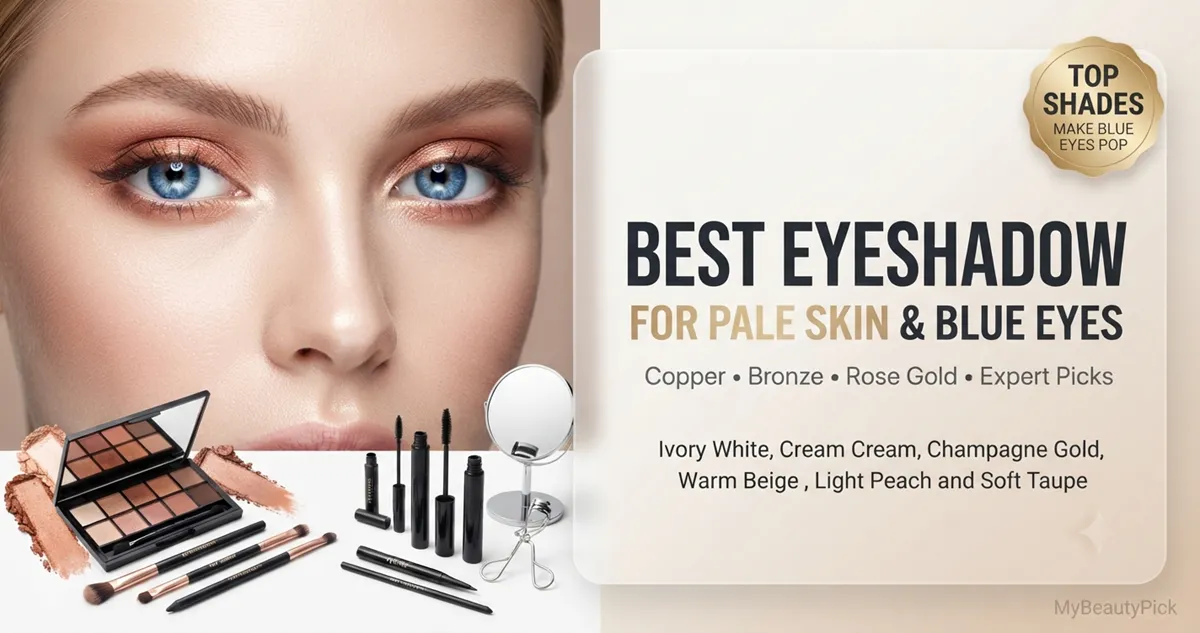
| Product | Brand | Key Shade | Finish | Best Undertone | Price Tier | Why It Works |
|---|---|---|---|---|---|---|
| Eyeshadow Singles — Bronze Bombshell / Golden Ticket | Red Apple Lipstick | Warm bronze, bright gold | Shimmer | All pale undertones | Mid | Formulated for sensitive eyes; warm shimmer base designed specifically for blue-eye enhancement |
| Pillow Talk Luxury Palette | Charlotte Tilbury | Dusky rose, rose gold, warm brown | Matte + shimmer | Cool-pale, neutral-pale | Prestige | Nude-pink tones with rose gold shimmer — the definitive “romantic” look for blue eyes |
| Sensual Sunset Palette | Charlotte Tilbury | Copper, amber, warm rust | Matte + shimmer | Neutral-pale, warm-pale | Prestige | Orange-toned browns and coppers — the strongest complementary contrast palette available |
| Peach Pie Eyeshadow Palette | Sigma Beauty | Peach, warm champagne, bronze | Matte + shimmer | Cool-pale, neutral-pale | Mid | Right balance of soft wearable warmth without a harsh red base; brightens the whole eye |
| All About Shadow Duo: Morning Java / Day into Date | Clinique | Deep copper, warm bronze | Shimmer + matte | All pale undertones | Mid-prestige | Clinique-formulated for sensitive eyes; copper hue delivers classic blue-eye contrast |
| L’Oréal Paris La Palette Nude | L’Oréal Paris | Warm champagne, nude, caramel | Matte + shimmer | All pale undertones | Drugstore | Most accessible warm-neutral palette for everyday blue-eye looks; wide availability |
| e.l.f. Rose Gold Eyeshadow Palette | e.l.f. Cosmetics | Rose gold, champagne, mauve | Shimmer-dominant | Cool-pale, neutral-pale | Budget | Rose gold performs exceptionally well on fair cool-toned skin; cruelty-free and budget-accessible |
How to Apply Eyeshadow for Maximum Contrast on Pale Skin
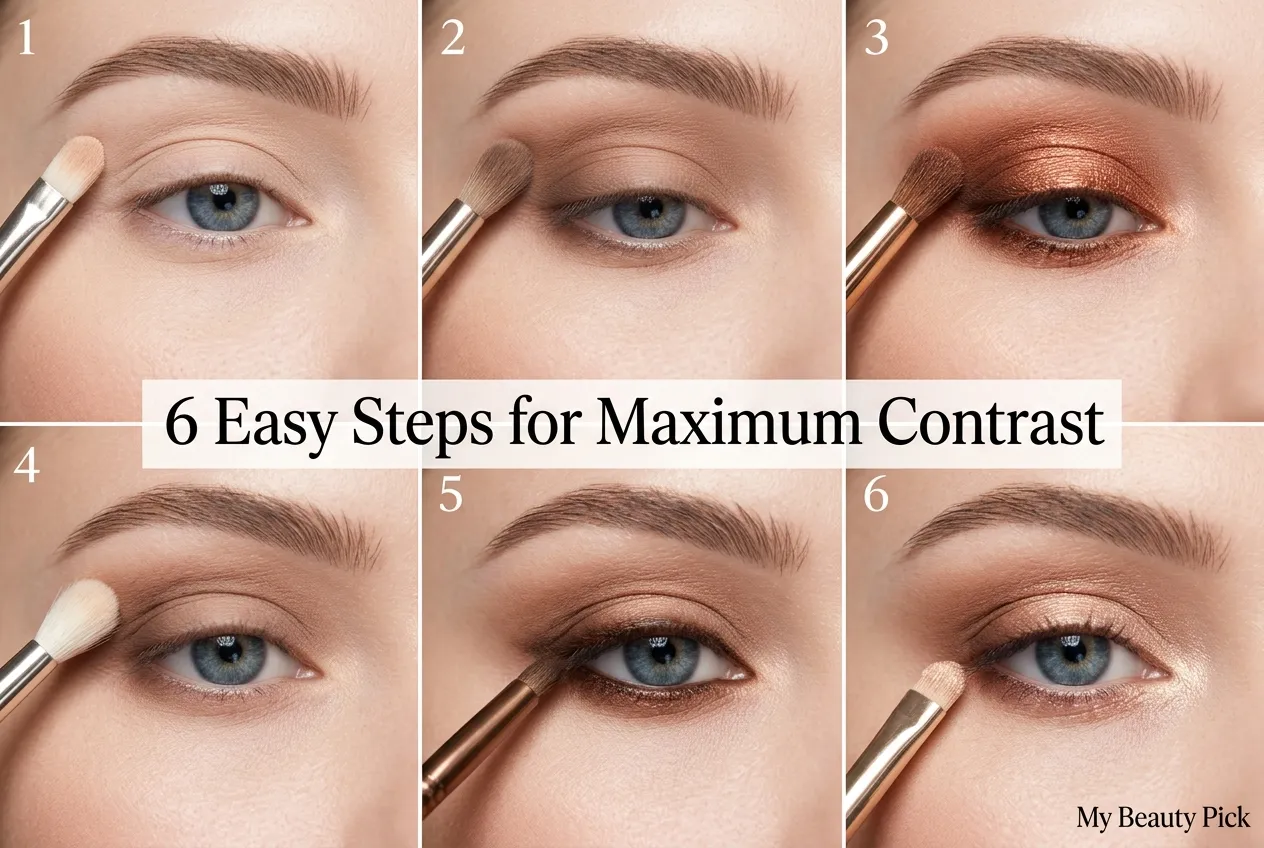
-
1
Prime the lids before anything else. On pale skin, shimmer fallout shows clearly against the light background. An eyeshadow primer creates a sticky base that holds pigment in place, prevents fallout settling on the under-eye skin, and stops cream or oil from breaking down the shadow through the day. A flesh-toned or neutral primer also neutralises any visible veins on pale lids that can make shimmer look patchy. -
2
Apply a warm taupe or matte peach transition shade first. This step creates the gradient that prevents the harsh edge between bare skin and eyeshadow that is more visible on pale lids than on darker ones. Sweep it with a fluffy blending brush just above the crease before any shimmer or deeper shade is added. It takes less than one minute and makes every subsequent shade blend better. -
3
Apply shimmer to the center of the lid with a flat packing brush, not a fluffy brush. A flat brush presses shimmer particles into the lid rather than dispersing them, which gives a more intense, foil-like result and reduces fallout. For copper or rose gold shimmer on pale skin, packing a concentrated amount to the center and blending the edges creates a dimensional lid without the shimmer looking scattered or chalky. -
4
Use warm copper or bronze liner instead of black on the upper lash line. Deep copper or espresso brown liner creates strong definition on pale skin without the stark contrast of jet black, which can look severe against very fair, rosy skin. Smudge the liner slightly with a small brush to soften the edge — it reads as defined without looking like a hard line. Black mascara on the lashes provides enough darkness at the lash line without requiring the harshness of black pencil on pale skin. -
5
Place a nude or peachy liner on the lower waterline. For blue eyes on pale skin, a nude or peach liner on the waterline makes the white of the eye look larger and the eye look more open — which in turn makes the blue iris more visible. A light pink or nude liner on the inner waterline is one of the fastest ways to make blue eyes look brighter and wider without adding any additional eyeshadow. -
6
Apply champagne or pearl shimmer to the inner corner last. This is the final brightening step that ties the look together. A small, precise application of champagne or light rose gold in the inner corner catches the light when the eyes move and creates a lit-from-within effect that highlights the blue iris without adding any more shadow colour. Use a fine liner brush or a fingertip for precision.
If shimmer fallout under the eyes is a consistent problem on pale skin, apply your eyeshadow before your under-eye concealer rather than after. Any fallout can then be swept away cleanly before you apply concealer, giving you a flawless under-eye finish without having to scrub at already-applied product. This is standard MUA practice for shimmer-heavy looks and is even more useful on fair skin where fallout is more visible.
Frequently Asked Questions
What eyeshadow color makes blue eyes pop the most?
Copper is the single shade that creates the strongest visual contrast with blue eyes, because it sits directly opposite blue on the colour wheel (in the orange family). Blue sits opposite orange on the classic colour wheel, which is why coppers, bronzes, rusts, peaches, golds, and warm browns can make blue eyes look extra vivid. For pale skin specifically, copper shimmer on the lid amplifies this contrast further because the light skin creates a high-contrast backdrop that makes the warm metallic look even richer. A warm bronze delivers a slightly softer version of the same effect, and rose gold adds a romantic quality while still maintaining the warm-contrast principle.
Should pale skin avoid dark eyeshadow?
No — but the type of dark shadow matters. The fundamental quality of pale skin when it comes to eye makeup is contrast: light skin creates a high-contrast backdrop against which eyeshadow reads clearly and strongly. A dark warm shadow reads richly and dramatically on pale skin, which can be beautiful. The shadows to use more carefully on pale skin are not dark ones generally — they are cool, ashy, or very frosty dark shadows that flatten the eye area. A deep espresso brown, a dark plum, or a rich dark bronze can all be used on pale skin for dramatic evening looks without looking harsh. The same intensity in a cool grey or silver-heavy shimmer is what tips into unflattering territory on fair skin.
Is shimmer or matte better for blue eyes and pale skin?
Both work — but they do different things and work best when combined rather than chosen over each other. Matte shades provide structure, crease definition, and controlled contrast that looks polished and professional. Shimmer adds brightness, dimension, and the reflective quality that makes blue irises look more vivid. The most flattering approach for pale skin and blue eyes uses matte shades for crease definition and outer corner depth (where too much shimmer can look chaotic), and shimmer on the center of the lid where it catches light most effectively. Warm champagne is the most wearable everyday shade for pale skin: light enough to look natural, warm enough to avoid the flat look of white or stark beige.
Can blue eyes wear blue eyeshadow?
Yes, but the shade and placement matter. A bright, saturated cool blue applied directly to the lid creates a monochromatic effect where the eye colour and shadow compete rather than one enhancing the other. A deep navy or blue-black used as a liner or smudged at the lash line is different — the depth of the shade creates contrast rather than colour repetition. For a more subtle look, opt for a soft pastel blue shade with grey undertones — so long as the colour you choose is lighter than your eye colour. For pale skin with blue eyes, a navy or shimmering deep blue used sparingly at the outer corner or lower lash line adds drama without the monotone effect of a full blue lid.
What eyeshadow colors should fair-skinned people with blue eyes avoid?
The main shades to approach with caution for pale skin and blue eyes are: cool ashy grey (matches the cool undertones of pale skin without adding contrast), ultra-frosty or silver-heavy shimmer (can appear chalky or flat against fair lids rather than luminous), stark white (no contrast to pale skin, reads as bare rather than highlighted), and very bright, neon-orange shades (too intense for pale skin where every shade reads more strongly than on darker complexions). Avoid overly cool grays or silver-heavy shadows, which can wash out blue eyes instead of making them pop. Similarly, very pale or ashy browns can lack contrast and make blue eyes appear flat. Jet black matte liner can also look harsh against very fair, rosy pale skin — a deep bronze or espresso brown delivers the same definition with less severity.