

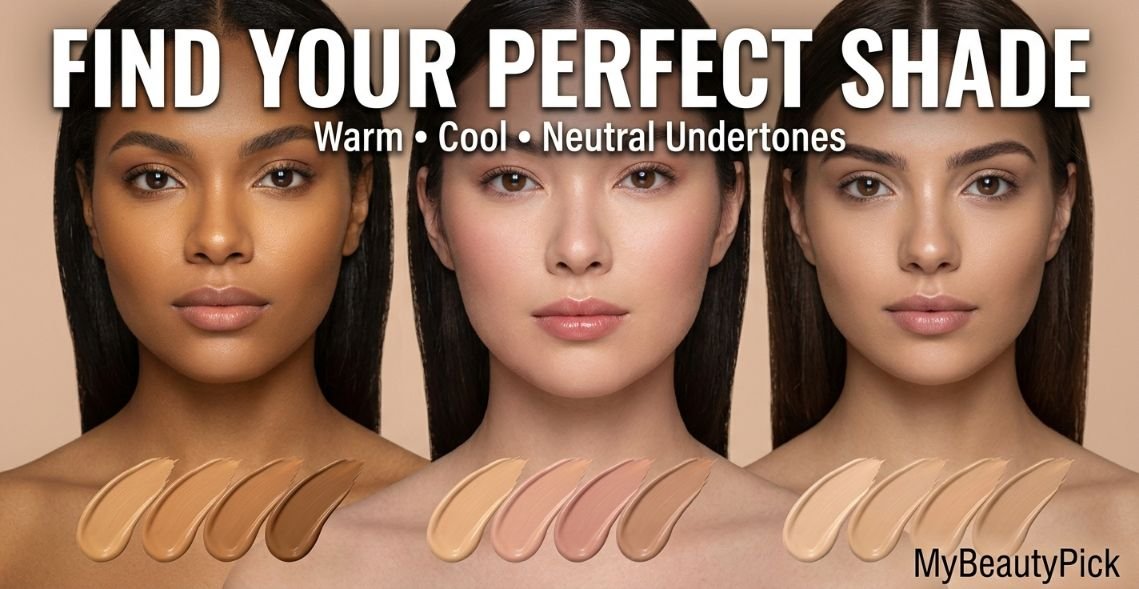
Once you know your undertone, the real work starts. Knowing you’re “warm” doesn’t tell you whether you need a golden-yellow formula or a deeper peach one, and that gap is where most people still end up with a foundation that’s technically the right family but somehow still looks wrong.
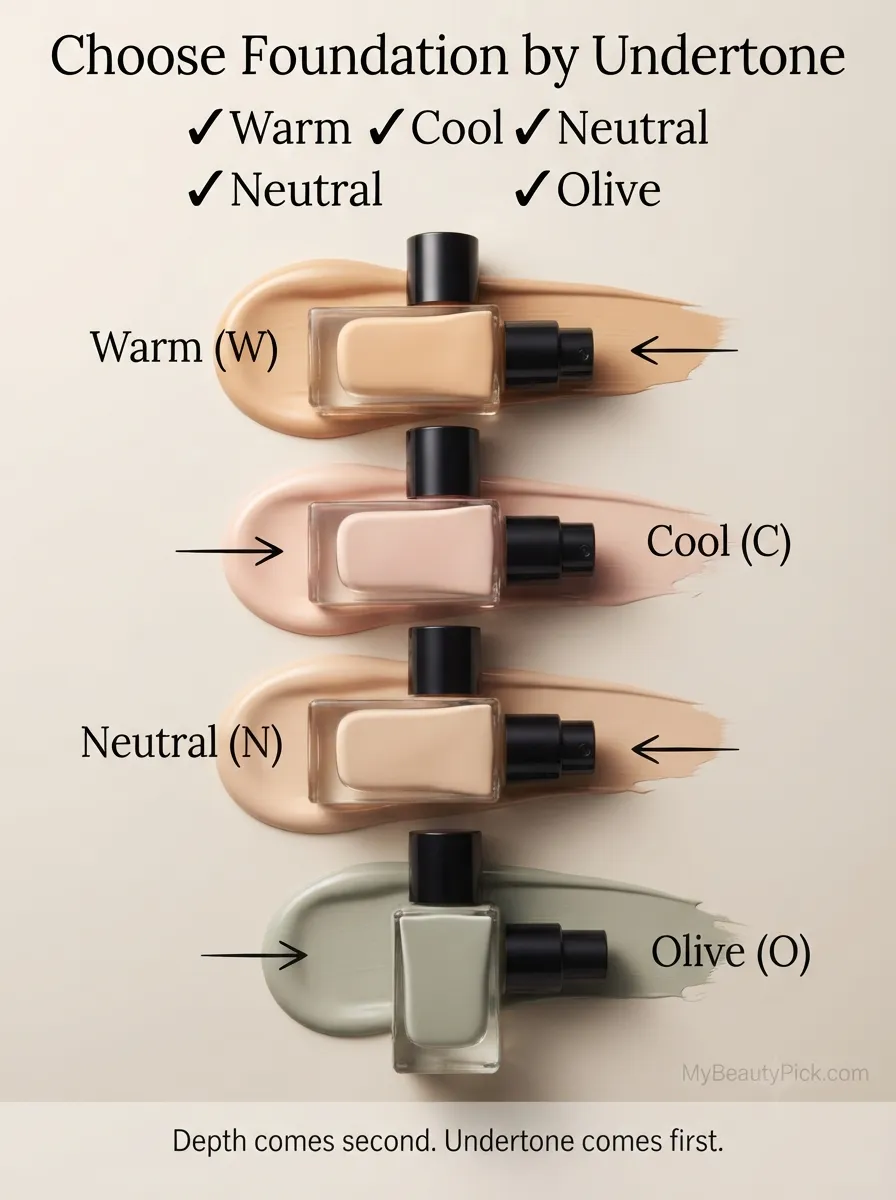
Warm undertones lean golden, peachy, or yellow and pair best with formulas labeled W or golden/honey. Cool undertones lean pink or red and pair best with formulas labeled C or rosy/porcelain. Neutral undertones can wear either family with adjustment, and olive undertones need formulas specifically balanced for a green or gray cast that standard warm or cool shades often fight against.
Key Takeaway
- Yellow and golden undertones need warm-family foundations, not neutral ones, or they read slightly gray
- Red or pink undertones need true cool-family foundations, since warm shades will look orange against them
- Olive skin often needs a dedicated olive or yellow-green balanced shade, not just a deeper neutral
- Shade depth and undertone are separate decisions; get the family right first, then fine-tune depth
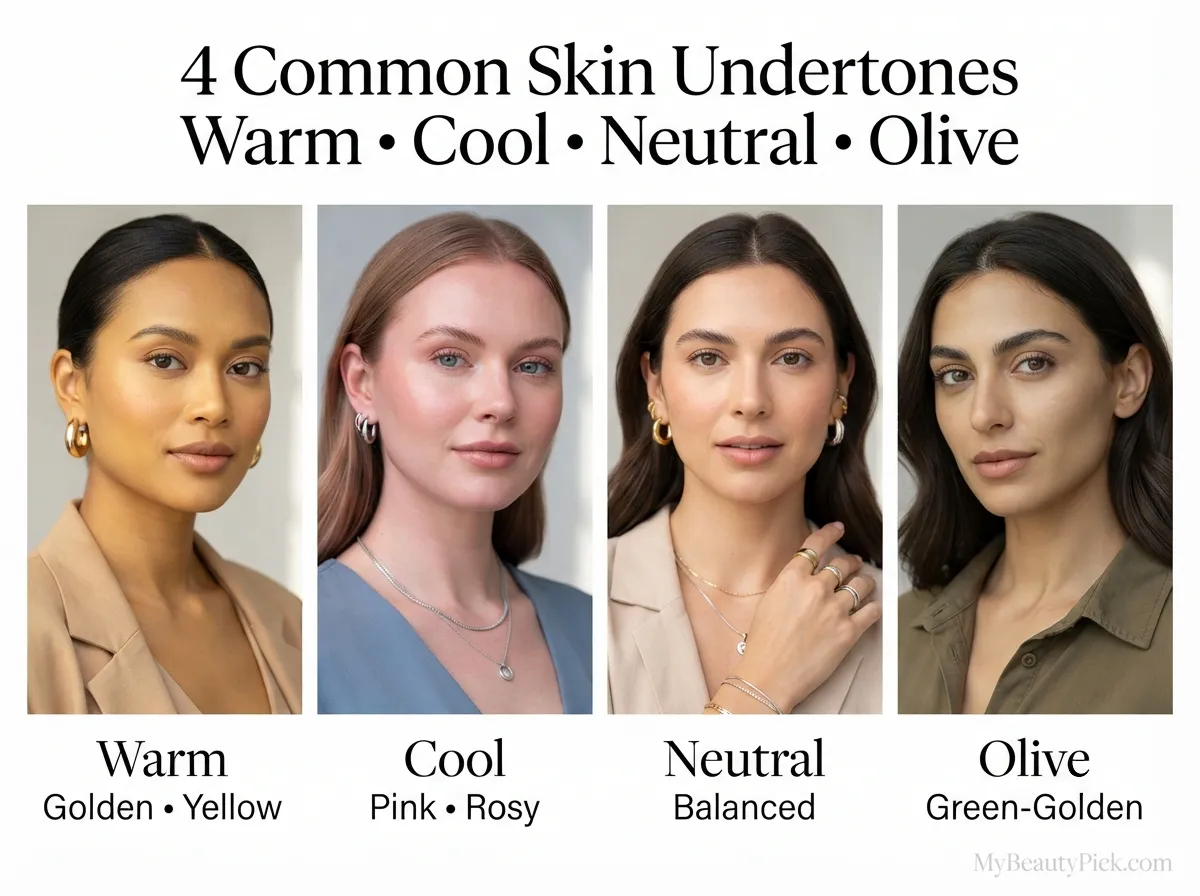
Warm Undertones: Yellow and Golden Skin
What Warm Undertone Actually Looks Like
Warm undertones show up as a golden, peachy, or yellow cast beneath the surface skin tone. Skin in this category tends to tan easily rather than burn, and looks brighter against gold jewelry than silver. The mistake I see constantly is warm-toned clients reaching for a neutral shade because they assume “neutral” is the safe choice. On true warm skin, neutral foundation often reads slightly gray or flat because it’s missing the gold that the skin actually needs.
Look for shades explicitly labeled warm, golden, or honey, usually marked with a W on the bottle. If a foundation leaves your skin looking dull or ashy rather than lit from within, it’s very likely too cool for your undertone, not too dark or too light.
Who should be cautious: Warm-toned skin with a lot of redness from rosacea or acne can sometimes need a slightly more neutral-warm blend rather than a fully golden shade, since pure warm formulas can sit oddly next to active redness instead of canceling it out.
Cool Undertones: Pink and Red Skin
What Cool or Red Undertone Actually Looks Like
Cool undertones carry a pink, rosy, or red cast beneath the skin’s surface. This skin type tends to burn before it tans and looks brighter against silver jewelry and stark white fabric. The most common mismatch here happens in reverse of the warm category. Cool-toned skin wearing a warm or golden foundation often ends up looking orange or muddy by midday, even if the depth itself was correct.
Look for shades labeled cool, rosy, or porcelain, usually marked with a C. If a foundation looks fine in the bottle but turns visibly orange within a few hours, the undertone family is the likely culprit, not the formula’s wear time.
Who should be cautious: Very fair, cool-toned skin can sometimes need a foundation one step lighter than expected, since cool formulas at standard depth can occasionally read slightly too pink rather than too dark.
Neutral Undertones
What Neutral Undertone Actually Looks Like
Neutral undertone sits evenly between warm and cool, without a strong pull in either direction. This is the one category where both warm-leaning and cool-leaning shades can work, depending on the specific formula and how much yellow or pink it carries. Neutral skin has the widest shade flexibility of any undertone, but that flexibility can also make it harder to land on one perfect match since several different shades might look “close enough.”
Swatch both a warm-neutral and cool-neutral option side by side on the jawline. Whichever one disappears more completely into the skin, rather than just looking acceptable, is the better long-term match.
Olive Undertones
What Olive Undertone Actually Looks Like
Olive skin carries a green or grayish-gold cast that doesn’t fit cleanly into warm, cool, or even standard neutral. This is the undertone most likely to be mismatched by someone who’s never specifically tested for it, because most shade-matching tools still default to warm, cool, or neutral as the only three options.
If warm shades look slightly orange on your skin and neutral shades look slightly ashy, olive is very likely the missing piece. Some brands now carry dedicated olive shades, and where they don’t, a warm-neutral blend with a touch more yellow than pink usually performs better than a straight warm or cool pick.
| Undertone | Surface Cast | Shade Family to Look For | Common Mismatch Sign |
|---|---|---|---|
| Warm (yellow/golden) | Golden, peachy, yellow | W, golden, honey | Looks gray or flat in neutral shades |
| Cool (pink/red) | Pink, rosy, red | C, rosy, porcelain | Turns orange in warm shades by midday |
| Neutral | Balanced warm and cool | N, or either family with testing | Several shades look “fine” but none disappear fully |
| Olive | Green or grayish-gold | Olive-specific, or warm-neutral with less pink | Warm reads orange, neutral reads ashy |
Undertone mismatch looks like a formula problem, but usually isn’t
Clients regularly blame a foundation’s longevity or quality when the real issue is undertone. A cool foundation on warm skin doesn’t fail because the formula is bad, it fails because the pigment was always fighting the skin underneath it. Before switching formulas entirely, try the same depth in the opposite undertone family first. It solves more shade complaints than changing brands ever does.
When Skin Tone Changes but Undertone Doesn’t
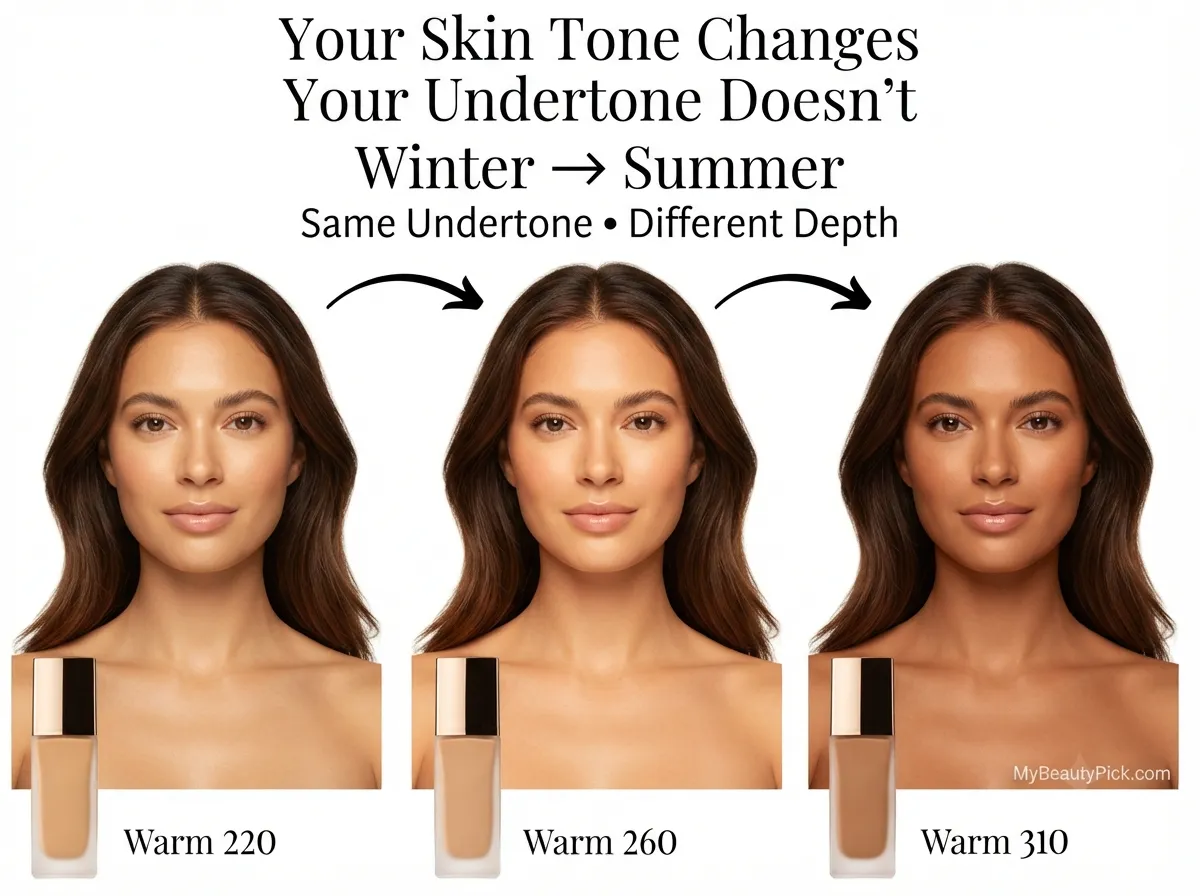
Tanning, seasonal sun exposure, and gradual self-tanner use all shift surface depth without touching the undertone underneath. A warm-toned person stays warm-toned through every shade of tan they develop, they simply need a deeper shade within that same warm family, not a switch to a different undertone category. The same logic applies to fading a tan in winter. My breakdown on foundation shade for tan skin covers how to track that shift through the seasons without second-guessing your actual undertone.
Common Misconception
“Olive” is sometimes used as a stand-in for any warm or tan complexion, but true olive undertone is a distinct green-gray cast, not simply a deeper warm tone. Treating olive skin as just a darker warm shade is one of the most common reasons olive-toned clients end up with foundation that looks slightly off no matter how carefully they match depth.
Mistakes That Lead to the Wrong Undertone Family
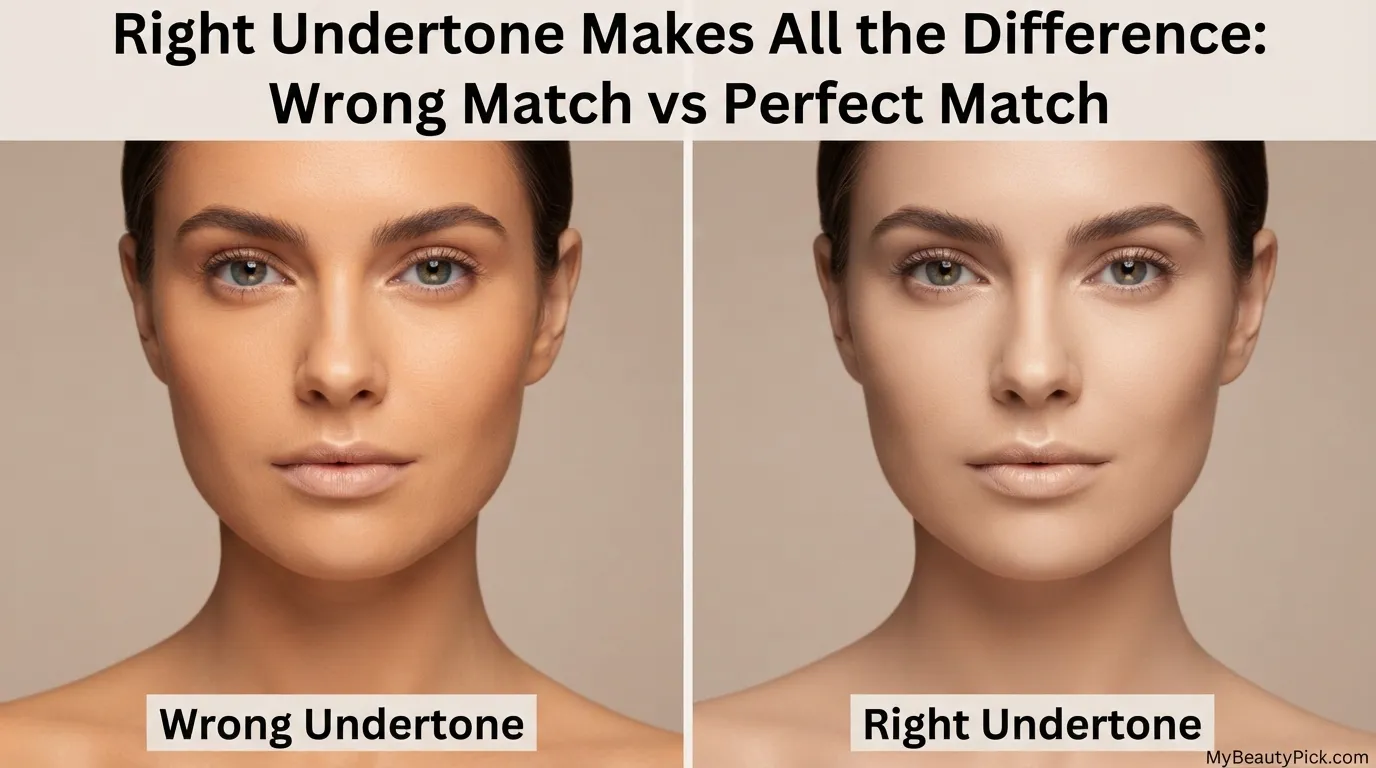
- Defaulting to neutral because it feels like the safe choice. True warm or cool skin often looks worse in neutral than in its correct family.
- Blaming formula quality for an undertone mismatch. Orange or gray cast issues are almost always undertone, not formula performance.
- Treating olive as simply a deeper warm shade. Olive’s green-gray cast needs its own consideration, not just a darker warm pick.
- Re-matching undertone every time a tan develops. Depth changes with sun exposure, undertone does not.
- Skipping a side-by-side swatch between two close shade families. The difference between warm-neutral and cool-neutral is often only visible when compared directly on skin.
FAQ
What foundation works best for yellow undertone skin?
Yellow undertone skin generally needs a warm or golden-labeled foundation rather than a neutral one. Neutral shades often read slightly gray on true yellow-warm skin because they’re missing the gold the skin actually carries.
What foundation works best for red undertones?
Red or pink undertones need a cool-labeled foundation, often marked rosy or porcelain. Warm or golden shades on red-undertone skin tend to oxidize toward orange faster than they would on warm-toned skin.
Is olive skin the same as warm undertone?
No. Olive carries a distinct green or grayish-gold cast that’s different from a standard warm undertone. Treating olive skin as simply a deeper warm shade is a common reason for a slightly mismatched finish.
What is the best foundation shade family for warm skin tone?
Warm skin tone generally does best with shades explicitly labeled warm, golden, or honey, usually marked with a W. These carry the yellow and peach pigment that balances naturally against a warm undertone.
Why does my foundation look orange even though the depth matches?
An orange cast usually points to an undertone mismatch rather than a depth problem, most often a warm or golden foundation applied to cool or pink-undertone skin. Switching to the same depth in a cooler shade family typically resolves it.