

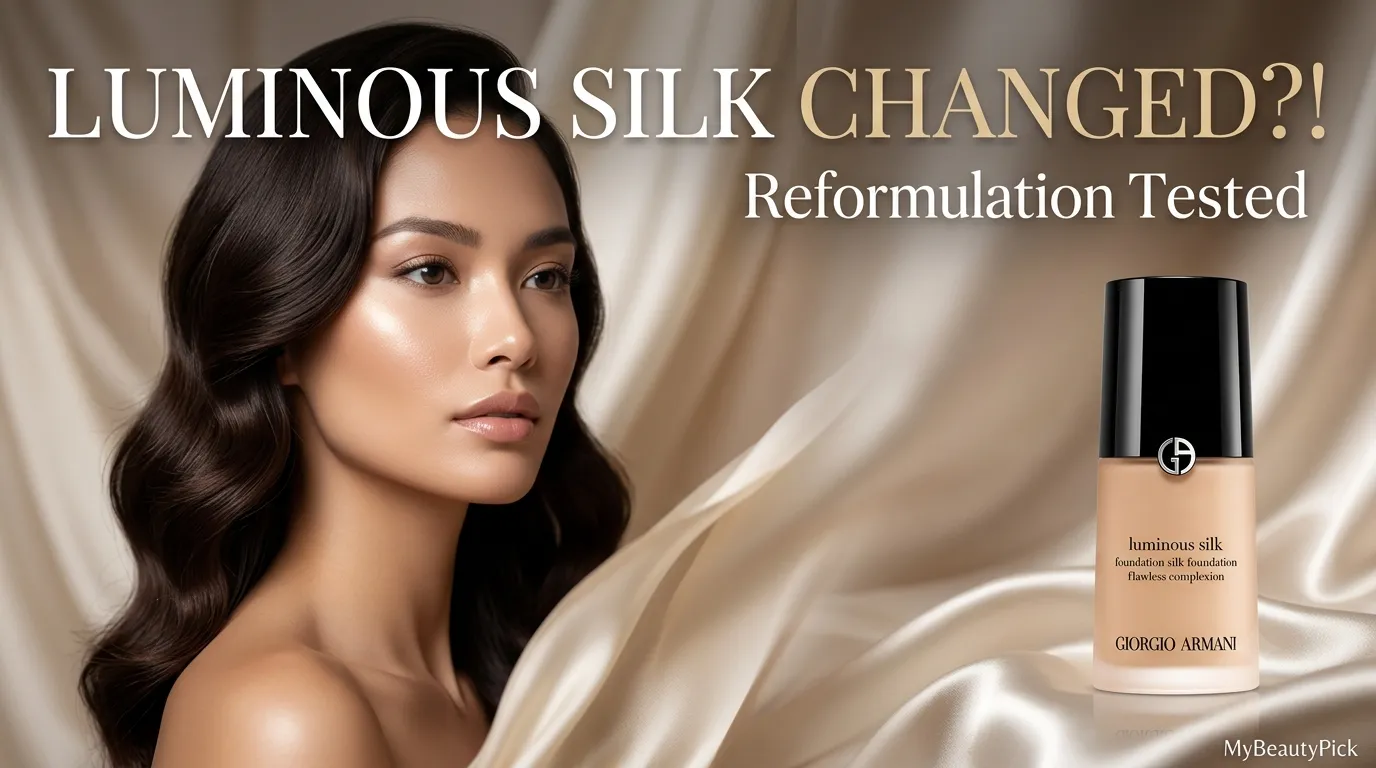
Giorgio Armani Luminous Silk Foundation went unchanged for 26 years, which in beauty industry terms is closer to a miracle than a marketing claim. So when Armani quietly reformulated it at the end of 2025, the reaction across editor panels, Reddit threads, and makeup artist kits was somewhere between panic and cautious curiosity. I tested the new version against my own years of using the original on clients, and this review covers what genuinely changed, what didn’t, and whether loyal users actually need to switch.
If you’ve searched any version of an Armani foundation review recently, you’ve likely landed in the middle of this exact debate. Here’s where it actually settles.
Quick Answer
The reformulated Giorgio Armani Luminous Silk Foundation (now called Luminous Silk Natural Glow Blurring Liquid Foundation with 24 Hour Wear, $69) adds niacinamide and glycerin for hydration, expands the shade range from 26 to 44 with new pigments for olive and deep skin tones, and shifts the finish from satin to a dewier, more radiant glow. It performs better on dry and mature skin than the original, but oily skin may need more powder to manage the increased glow.
What Actually Changed in the Reformulation
Armani’s R&D team rebuilt this formula around three changes, and each one shows up clearly in how it wears. First, skincare ingredients went in: niacinamide, glycerin, Mediterranean lily extract, and white lupine extract, aimed at improving hydration and texture over a full day of wear. Several testers noted the new version settles into fine lines less than the original by late afternoon, which tracks with that addition.
Second, Armani introduced what they’re calling pigment precision technology. The brand audited every existing shade for undertone gaps and added a new green pigment specifically for olive skin, plus an ultramarine blue pigment worked into the deeper shades to boost luminosity without flattening depth. The shade range grew from 26 to 44 as a direct result.
Third, the finish itself moved. The original Luminous Silk was satin, glowy but controlled. The new version leans noticeably wetter and more radiant, closer to a blurring skin tint than the original’s medium-coverage base. That shift is the most divisive part of the relaunch.
Old Formula vs. New Formula
| Original Luminous Silk | Reformulated (2026) | |
|---|---|---|
| Finish | Satin, controlled glow | Dewy, more radiant and wet-looking |
| Shade count | 26 | 44, with new olive and deep-tone pigments |
| Hydrating ingredients | Minimal | Niacinamide, glycerin, Mediterranean lily, white lupine extract |
| Price | Around $64 | $69 |
| Best for | Normal to oily skin wanting a controlled glow | Dry and mature skin, olive and deep undertones |
How It Performs by Skin Type
Dry skin is the clearest winner here. The added glycerin and niacinamide genuinely soften how the formula sits over flaky patches compared to the original, though it isn’t a complete fix; one tester with very dry skin still noticed clinging around the nose in cold winter air, just less than before. Mature skin tends to benefit from the increased radiance, since the dewier finish sits more naturally in texture and fine lines than a flatter matte ever would.
Oily skin is the tradeoff. Several beauty editors testing the new formula reported needing more powder through the T-zone than they did with the original satin version, since the added glow comes with more slip. If you loved the old Luminous Silk specifically because it controlled shine without feeling heavy, expect to budget for a light powder set this time around.
Combination skin lands in between, generally manageable with targeted powder on the oilier zones only, which is the same approach worth using on most foundations regardless of brand.
Shade Range and Numbering
Armani uses a decimal numbering system: the whole number signals depth, the decimal after it signals undertone. A 5.1 and a 5.75 sit at the same depth with different warmth. The new pigments specifically target two areas that were thin before: a green-based pigment improves the olive undertone matches, and an ultramarine blue pigment in the deeper shades adds luminosity that the original deep range lacked.
One real frustration for longtime users: some existing shade numbers shifted slightly during the reformulation. If you wore a specific number for years, don’t assume it’s identical now. Get rematched rather than reordering blind.
How to Apply It for the Best Result
- Start with a dense foundation brush. Apply across the cheeks, nose, forehead, chin, and down the neck for an even base.
- Blend with a damp sponge. This softens the brush lines and helps the dewier finish settle without looking patchy.
- Let it set for a minute before judging the finish. The radiance levels out slightly as it dries.
- Powder only where shine actually shows up. Given the wetter finish, resist the urge to set the whole face unless your skin is genuinely oily throughout.
Should You Switch or Stick With Searching for the Original?
If you have dry or mature skin, switch without hesitation. The hydration boost and increased radiance work in your favor, and the wider shade range gives olive and deep undertones a real shot at an accurate match for the first time in this line.
If you have oily skin and loved the original specifically for its shine control, this reformulation asks more of you. You’ll likely need a powder step you didn’t need before. That’s not a dealbreaker, but it’s a real shift in routine, not just packaging.
Loyalists hunting for stockpiled bottles of the old formula aren’t being dramatic. The two versions genuinely behave differently enough that calling this the “same foundation, slightly improved” undersells how much the finish has changed.
Common Mistakes With the New Formula
- Reordering your old shade number without rematching, since some numbers shifted during reformulation.
- Setting the entire face with powder out of habit, which mutes the radiance this version is actually built around.
- Expecting identical shine control to the original satin formula on oily skin without adjusting your routine.
- Judging the finish immediately after application instead of letting it settle for a minute first.
If you’re torn between the radiance of the new formula and the oil control of the old one, apply a thin layer of the new Luminous Silk and set only the T-zone with a translucent powder. You get most of the glow with a fraction of the slip.
FAQs
What changed in the Armani Luminous Silk Foundation reformulation?
Armani added hydrating ingredients including niacinamide and glycerin, expanded the shade range from 26 to 44 with new pigments for olive and deep skin tones, and shifted the finish from a controlled satin glow to a dewier, more radiant look. The product was renamed Luminous Silk Natural Glow Blurring Liquid Foundation with 24 Hour Wear and now retails for $69.
Is the new Armani Luminous Silk Foundation better than the original?
It depends on skin type. Dry and mature skin generally see a real improvement thanks to the added hydration and radiance. Oily skin may need more powder to manage the wetter finish, which some long-time wearers consider a downgrade from the original’s better-controlled shine.
Does Armani Luminous Silk Foundation oxidize?
The reformulated version reports less oxidation than the original in early reviews, with several testers noting their shade stayed consistent through a full day of wear. Always test a new shade and let it settle for a few minutes before judging the final match.
What shade should I buy if my old Luminous Silk number isn’t available?
Some shade numbers shifted during the reformulation, so don’t assume your old number translates directly. Get rematched through a counter consultation or virtual shade finder rather than reordering your previous shade blind.
Is Armani Luminous Silk good for oily skin?
It can work, but the reformulated version runs dewier than the original, so oily skin will likely need a light powder set through the T-zone to manage shine. If shine control matters more to you than glow, this may need an adjusted routine compared to before.