

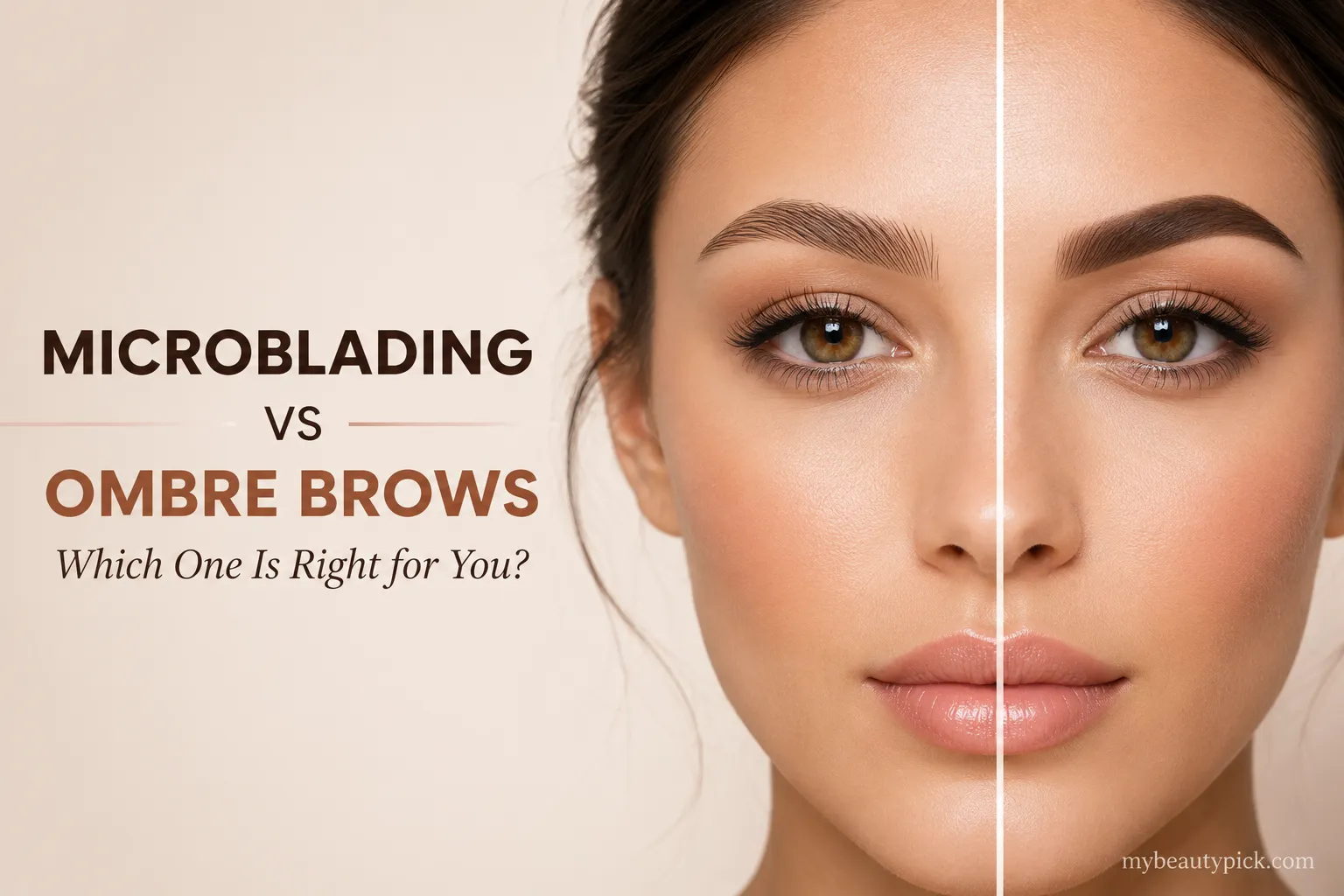
If you have sparse brows, over-tweezed brows from a decade-old trend, or you simply want to stop filling them in every morning, you have probably landed on two names: microblading and ombre brows. Both are semi-permanent cosmetic tattooing. Both promise low-maintenance, fuller-looking brows. They are not the same procedure, they do not suit the same skin types, and they do not last the same length of time — and the studio booking your appointment is rarely the neutral party you want explaining the difference, because their answer always ends with a recommendation to book with them.
This guide compares both techniques directly: how each one works, which skin types each suits, pain level, healing time, longevity, real cost ranges in the US, and the questions almost nobody covers properly — what combination and nano brows actually are, and who should avoid these treatments altogether.
What Is Microblading?
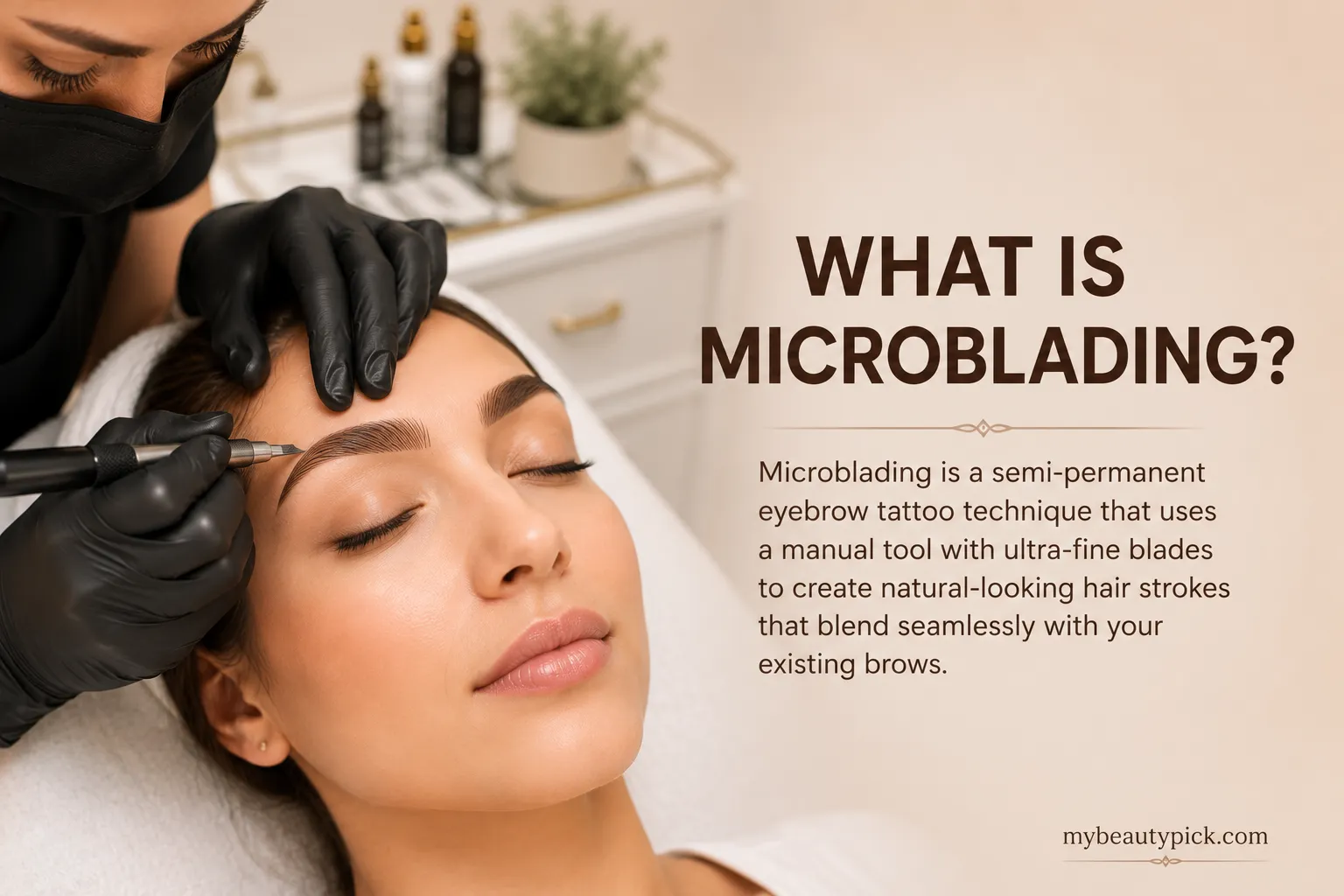
Microblading is a manual semi-permanent makeup technique that uses a handheld tool with tiny needles to create fine, hair-like strokes in the brow, depositing pigment just under the skin’s surface. The result mimics individual brow hairs and looks most natural on normal to dry skin. It typically lasts 12 to 18 months before significant fading.
The technician uses a manual blade-style tool — not a machine — to make individual incisions in the shape of hair strokes, then deposits pigment into each one. Because every stroke is drawn by hand, microblading produces the most hair-like, textured result of any semi-permanent brow technique, which is why it became the dominant brow trend through the late 2010s.
The technique works best on people who have some existing brow hair to work with, since the strokes are designed to blend with natural hairs rather than create a fully filled-in block of color. It also depends heavily on skin type: normal to dry skin holds the fine line work cleanly, while oily skin causes the pigment to blur and spread under the surface as oil moves through the upper skin layers, softening those crisp hair-stroke lines into something closer to a smudge within months.
What Is Ombre (Powder) Brows?
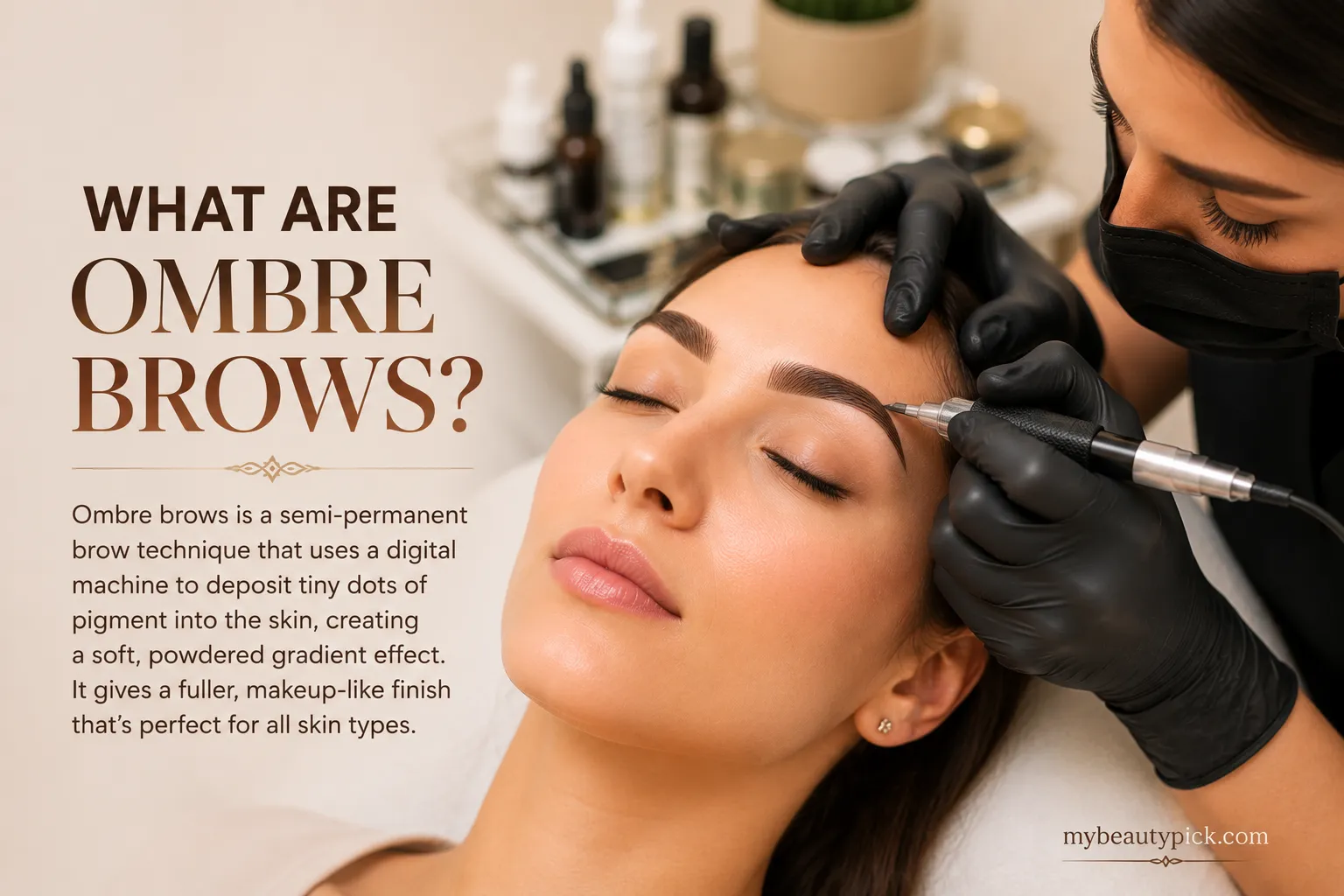
Ombre brows, also called powder brows, use a machine to stipple tiny dots of pigment into the skin, building a soft, gradient fill that is lighter at the front of the brow and deeper toward the tail — similar to the look of brow powder makeup. The technique works well on all skin types, including oily skin, and typically lasts 2 to 3 years.
Rather than individual blade strokes, ombre brows use a tattoo machine to deposit thousands of tiny pigment dots in a stippling motion, similar to how an airbrush builds soft, even coverage. The result is a filled-in, makeup-like finish rather than the hair-stroke illusion of microblading — closer to the effect of brow pencil and powder applied by a precise, steady hand.
Because the pigment is deposited via tiny dots rather than continuous incisions, the machine technique sits slightly differently in the skin and is more resistant to the blurring that affects microblading on oily skin. This is the single biggest practical advantage ombre has over microblading, and it is the deciding factor for a meaningful share of clients.
Microblading vs Ombre Brows: Key Differences at a Glance
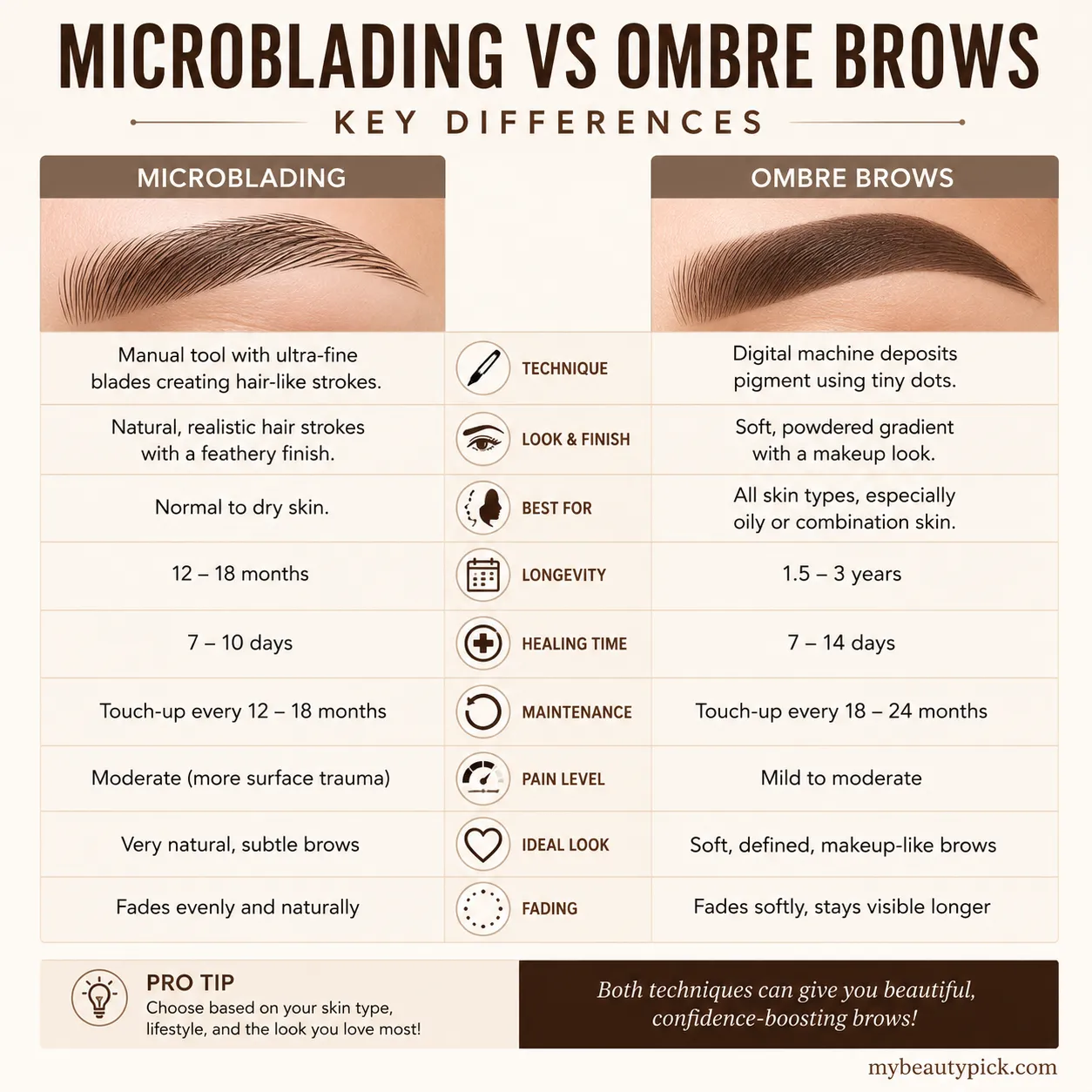
| Factor | Microblading | Ombre / Powder Brows |
|---|---|---|
| Technique | Manual hand-tool, blade incisions | Machine, stippled dots |
| Look / Finish | Hair-stroke, natural texture | Soft, filled-in, makeup-like gradient |
| Best Skin Type | Normal to dry | All types, including oily |
| Pain Level | Mild to moderate — sharp, scratching sensation | Mild to moderate — buzzing, vibrating sensation |
| Longevity | 12 to 18 months | 2 to 3 years |
| Healing Time | 4 to 6 weeks to full settle | 4 to 6 weeks to full settle |
| Average Cost (US) | $400 to $800 | $400 to $900 |
| Touch-Up Frequency | Every 12 to 18 months | Every 18 to 24 months |
Which Lasts Longer?
Ombre brows last longer than microblading — typically 2 to 3 years compared to 12 to 18 months. The difference comes down to how the pigment sits in the skin: the stippled dot technique used in ombre deposits pigment slightly more evenly and at a marginally more consistent depth than the fine incisions of microblading, which fade and blur faster, particularly on oily or combination skin.
Microblading’s hand-drawn incisions are shallower and finer than the stippled dots of ombre work, which makes them look more natural at first but also makes them more vulnerable to fading. The skin heals over these fine cuts and gradually pushes pigment toward the surface where it sheds with normal skin cell turnover, faster than the dot-based deposit pattern of ombre work.
Skin type affects both, but it affects microblading more severely. On dry to normal skin, microblading can hold reasonably close to its expected 18-month range. On oily skin, microblading frequently needs a touch-up within 9 to 12 months because the pigment blurs and visually fades faster even before the actual pigment has broken down — a problem ombre brows are far more resistant to.
Which Is More Painful?
Both techniques use topical numbing cream and most clients describe the discomfort as mild to moderate rather than severe. Microblading tends to feel like a sharp, scratching sensation because of the blade strokes. Ombre tends to feel like a buzzing or vibrating pressure because of the machine. Neither is consistently reported as more painful — individual pain tolerance and the specific area of the brow being worked on (the inner corner and bone-close areas tend to be more sensitive in both techniques) matter more than the technique itself.
Reputable studios apply a topical numbing cream before starting and often reapply partway through the session if sensitivity increases. With proper numbing, most clients rate both procedures as tolerable rather than significantly painful, closer to a deep eyebrow tweezing sensation than a typical tattoo. The honest answer from the research available: pain level reporting is genuinely mixed and depends more on individual sensitivity, the artist’s technique, and numbing protocol than on which procedure you choose.
Which Is Better for Oily Skin?
Ombre brows are clearly better for oily and combination skin. Microblading’s fine hair-stroke lines blur and soften significantly faster on oily skin because excess sebum moves through the upper skin layers and disrupts the crisp edges of each incision. Ombre’s stippled dot technique is far more resistant to this blurring effect and holds its defined shape longer on oily skin.
This is the single clearest skin-type recommendation in the entire comparison, and it is one of the most consistent points across PMU studio sources. If you have oily or combination skin and want the hair-stroke look of microblading specifically, ask your technician about combination brows (covered below), which apply microblading strokes in the front of the brow where oil is typically less concentrated and ombre shading in the tail, where blurring is most likely to occur with microblading alone.
Healing Process and Aftercare for Each
Both procedures follow a similar healing timeline, though the visual experience during healing differs slightly because of how each technique deposits pigment.
Days 1 to 4
Brows appear noticeably darker and more saturated than the final result — this is normal and expected for both techniques. Some redness and mild swelling in the first 24 hours is typical. Light scabbing or flaking begins to form by day 3 or 4.
Days 5 to 10
Scabbing and flaking peak and begin to shed. This stage is the most important to manage carefully — picking at flakes can pull pigment out unevenly and create patchy spots. Brows often look patchy or lighter in places during this stage as flaking occurs unevenly.
Week 2 to 3
The “ghosting” phase — brows can appear faded, patchy, or much lighter than expected as the skin finishes healing beneath the surface. This is normal and not a sign the procedure has failed. Pigment is still settling and will gradually become more visible again.
Week 4 to 6 (Full Reveal)
Pigment resurfaces and stabilizes to close to its true final tone and shape. This is the point at which most studios schedule a touch-up appointment to fill in any unevenly healed areas and refine the shape.
Aftercare Do’s and Don’ts
- Do apply the aftercare ointment provided by your technician exactly as instructed, usually for the first 7 to 10 days
- Do keep brows completely dry for the first 24 to 48 hours — no sweating, no steam, no direct water contact
- Do sleep on your back or use a travel pillow to avoid rubbing brows against bedding during the first week
- Don’t pick, scratch, or peel any scabbing or flaking — let it shed naturally, or you risk pulling pigment out unevenly
- Don’t apply makeup directly to the brow area until fully healed, typically 7 to 10 days
- Don’t expose brows to direct sun, tanning beds, swimming pools, or saunas for at least 2 weeks
- Don’t exercise heavily or do anything that causes significant sweating for the first 5 to 7 days
Cost Comparison in the US
Pricing varies significantly by region and by the experience level of the artist, more than it varies by technique. A new technician building a portfolio and a master artist with years of specialization can charge dramatically different prices for the exact same procedure.
Often newer technicians building a portfolio, sometimes at reduced rates or as part of a training program. Research the technician’s certification and ask to see a substantial portfolio of healed (not just fresh) results before booking at this tier.
The most common price range for both microblading and ombre brows at an established studio with experienced technicians. This tier typically includes the initial session plus one touch-up within the first 6 to 8 weeks.
Highly specialized or in-demand artists, often with significant social media followings or training credentials, frequently charge in this range. In major metro areas (New York, Los Angeles, Miami), master-level pricing can exceed $1,200 for either technique.
Touch-up appointments after the initial healing period typically cost 30 to 50% of the original session price, and annual or biannual color refresh appointments (separate from the included healing touch-up) usually run $150 to $350 depending on the studio.
What About Combination Brows and Nano Brows?
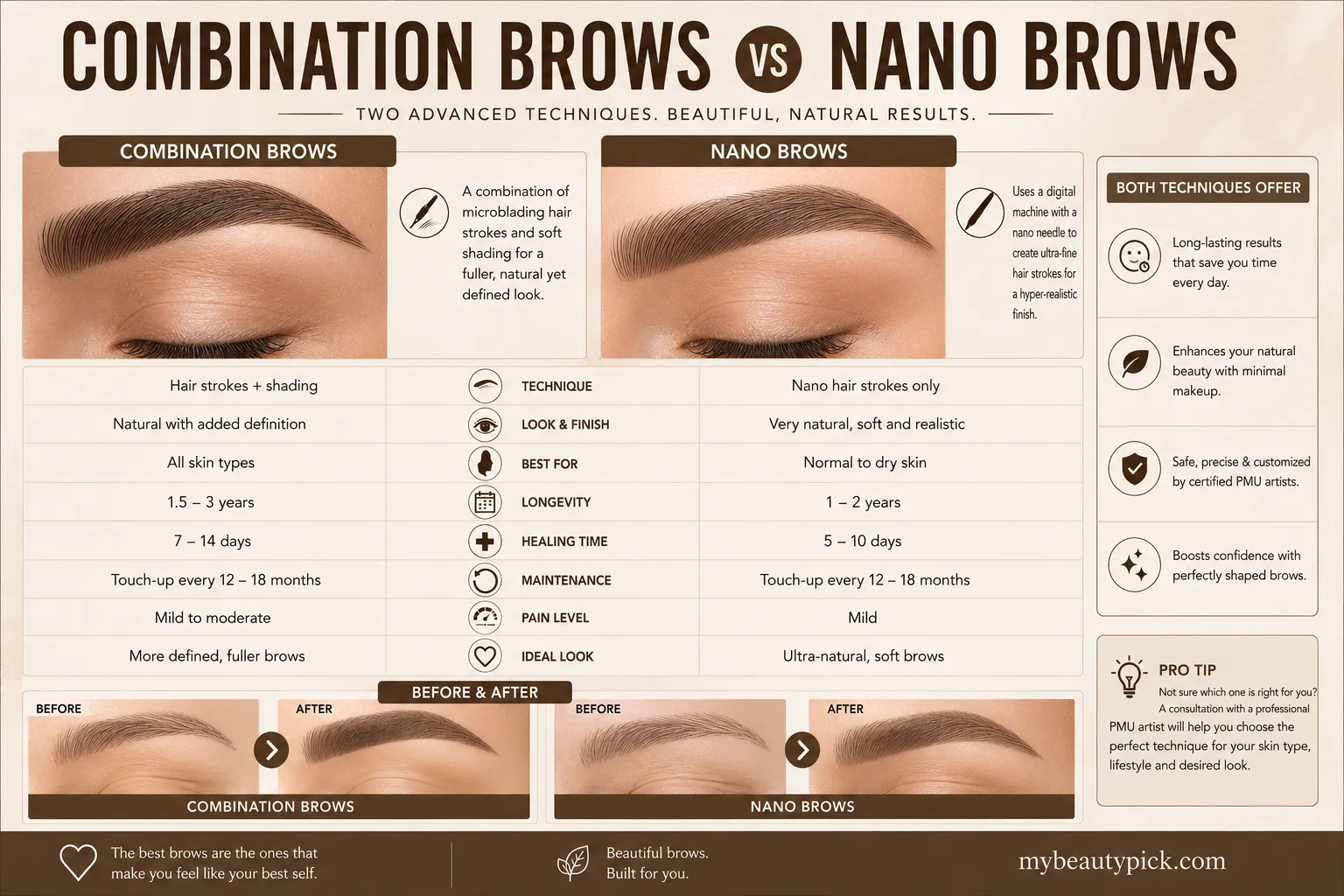
Microblading and ombre are not the only two options, and most comparison content treats them as the full picture. Two additional techniques are worth knowing about, particularly if neither standard option feels like a perfect fit.
Combination Brows
Combination brows blend both techniques in a single set — typically microblading hair strokes at the front of the brow where the look reads most naturally, transitioning into ombre shading toward the tail where definition and longevity matter more and where microblading is most prone to blurring on oily skin. This is often the best option for people with combination skin (oily T-zone, normal elsewhere) or for anyone who wants the natural texture of microblading without sacrificing the longevity of ombre entirely.
Nano Brows
Nano brows use a machine like ombre brows but with a significantly finer needle, allowing for thinner, more precise hair-stroke lines than traditional microblading can achieve by hand. Because it is machine-based rather than manual, nano brows tend to hold up better on oily skin than traditional microblading while still delivering a hair-stroke aesthetic rather than ombre’s filled-in look. It is a newer technique and not every studio offers it, but it is worth asking about specifically if you want the natural texture of microblading with better durability.
How to Decide Which Is Right for You
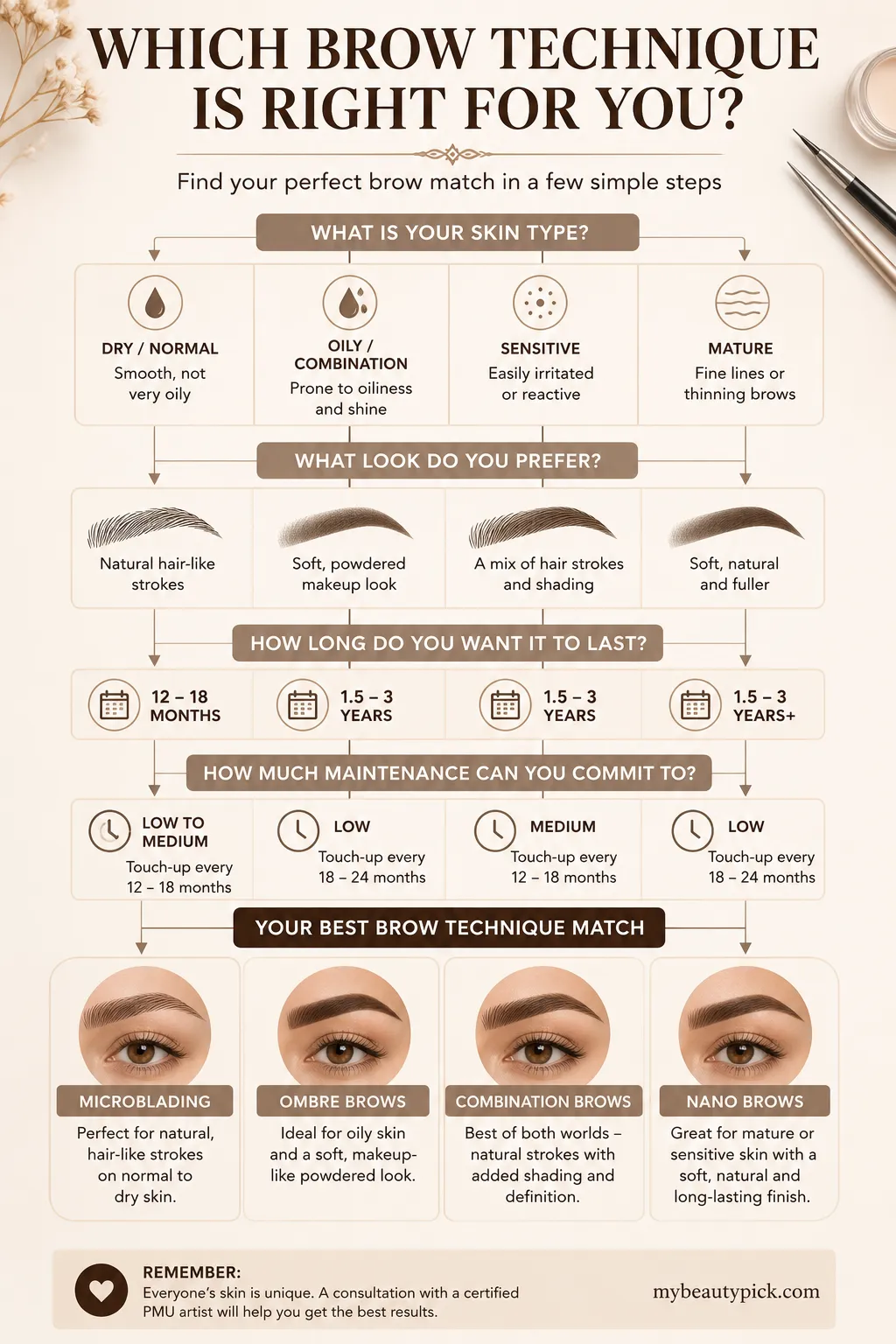
If your skin is oily or combination
Choose ombre brows, or ask about combination/nano brows if you want a hair-stroke texture. Standard microblading is the least durable option on oily skin and will likely require touch-ups sooner than expected.
If your skin is normal to dry
Either technique works well. Choose based on the look you want rather than skin-type concerns — microblading for a natural hair-stroke effect, ombre for a fuller, more makeup-like finish.
If you want the most natural-looking result
Microblading or nano brows, since both create individual hair-stroke texture rather than a filled-in block of color. Ombre is more makeup-like and noticeable as a tattooed result, especially in the first several months of full saturation.
If longevity and low maintenance matter most
Ombre brows last significantly longer (2 to 3 years vs. 12 to 18 months) and require less frequent touch-up appointments, making them the lower-maintenance choice over time even though the upfront procedure is similar in cost.
If you have sparse or very thin existing brow hair
Ombre tends to give better full-coverage results when there is little natural brow hair to blend with, since the soft gradient fill does not rely on existing hairs to look complete the way hair-stroke techniques do.
Who Should Avoid These Treatments?
Pregnancy and breastfeeding
Most reputable PMU studios will not perform either procedure on pregnant or breastfeeding clients due to limited safety research on pigment and numbing agent exposure during these periods. Plan to wait until after pregnancy and breastfeeding have ended.
Accutane use
Current or recent use of isotretinoin (Accutane) significantly affects skin healing and is a standard contraindication for any tattooing procedure, including brow PMU. Most studios require a waiting period of 6 months to a year after stopping the medication before performing either technique.
Blood thinners and certain medications
Blood-thinning medications (including some over-the-counter options like aspirin) increase bleeding and bruising risk during the procedure and can affect how well pigment retains. Discuss any medications with your technician during the consultation, and consult your doctor before stopping any prescribed medication for this purpose.
Keloid-prone skin and active skin conditions
A history of keloid scarring is a contraindication for most PMU procedures due to the risk of raised, thickened scarring at the treatment site. Active eczema, psoriasis, or dermatitis in the brow area, as well as active acne breakouts directly in the treatment zone, are also reasons a reputable technician will postpone or decline treatment until the skin has cleared.
This list is not exhaustive. A proper consultation with a licensed PMU technician, including a review of your full medical history, is the appropriate way to determine candidacy for either procedure — this article is educational and does not replace that consultation.
Frequently Asked Questions
Which lasts longer, microblading or ombre brows?
Ombre brows last longer, typically 2 to 3 years compared to microblading’s 12 to 18 months. The stippled dot technique used in ombre deposits pigment more evenly and at a more consistent depth than the fine incisions of microblading, which fade and blur faster, particularly on oily or combination skin.
Is microblading or ombre more painful?
Neither is consistently more painful than the other. Both use topical numbing cream and most clients describe the discomfort as mild to moderate. Microblading tends to feel like a sharp, scratching sensation; ombre tends to feel like a buzzing or vibrating pressure. Individual pain tolerance and the artist’s technique matter more than which procedure is chosen.
Can I combine microblading and ombre brows?
Yes. This is called combination brows, and it blends microblading hair strokes at the front of the brow with ombre shading toward the tail. It is often a good option for combination skin or for anyone who wants the natural texture of microblading without sacrificing the longevity of ombre. Not all studios offer this technique, so ask specifically during your consultation.
How much do microblading and ombre brows cost?
In the US, both techniques typically range from $400 to $900 at an established studio, with budget options starting around $250 to $400 and master-level artists in major metro areas charging $700 to $1,200 or more. Pricing depends more on the technician’s experience and location than on which technique is chosen. Touch-up appointments after the initial healing period usually cost 30 to 50% of the original session price.
Which is better for oily skin, microblading or ombre?
Ombre brows are clearly better for oily and combination skin. Microblading’s fine hair-stroke lines blur and soften significantly faster on oily skin because excess sebum disrupts the crisp edges of each incision. Ombre’s stippled dot technique is far more resistant to this blurring and holds its defined shape longer. For oily skin clients who specifically want a hair-stroke look, combination or nano brows are worth discussing with a technician.
Final Verdict: Which Should You Choose?
If your skin is oily or combination, ombre brows are the more reliable long-term choice — they resist blurring, last significantly longer, and require fewer touch-ups over time. If your skin is normal to dry and you want the most natural-looking, hair-like result, microblading remains an excellent option, particularly if you have some existing brow hair to blend with.
For anyone caught between the two, combination brows or nano brows are worth a dedicated consultation — both offer a middle ground that standard comparisons rarely mention. Whichever technique you choose, the technician’s skill and experience level matters more to your final result than the technique itself, so prioritize a thorough portfolio review and consultation over price alone.