

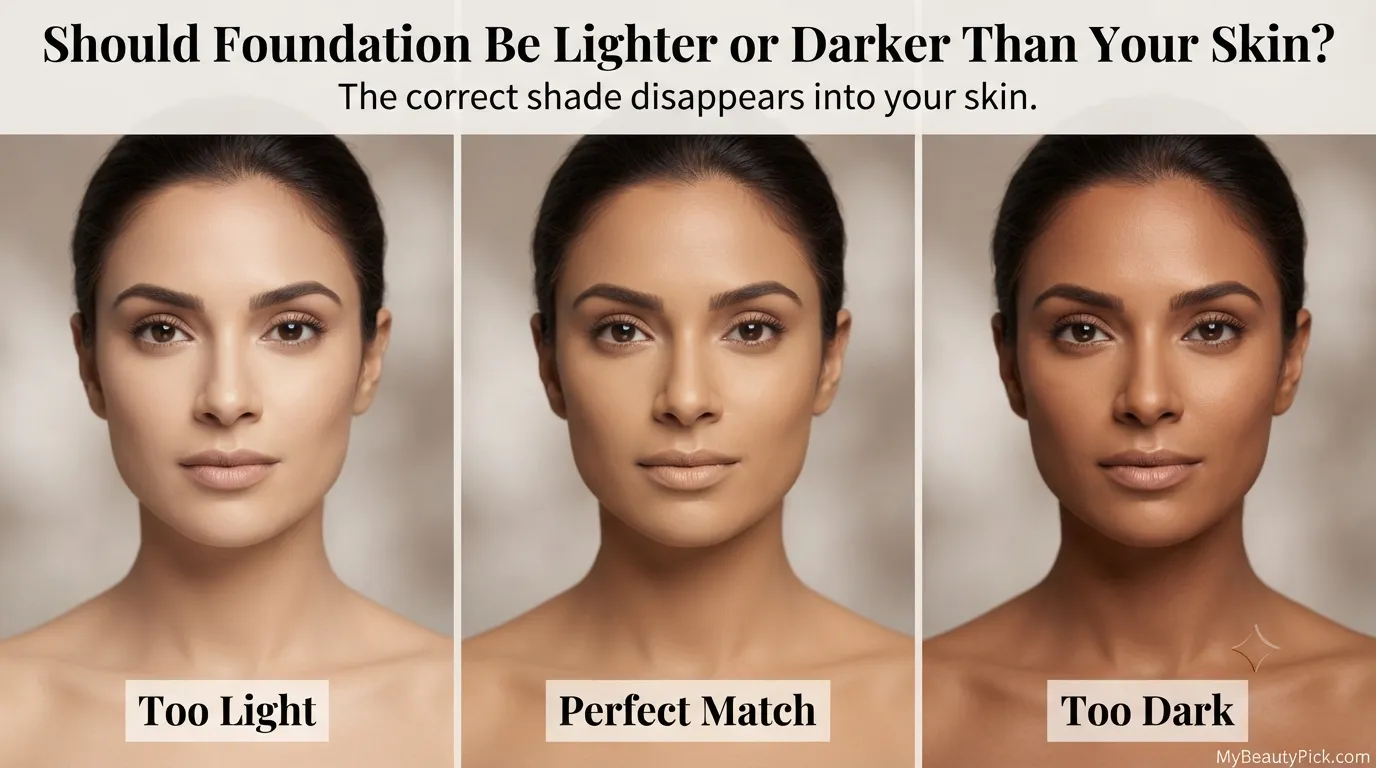
Foundation should match your skin tone — not go lighter or darker. This is the consistent answer from professional makeup artists because a mismatched foundation creates a visible line at the jaw, looks unnatural against your neck, and photographs obviously wrong. That said, the question comes up for real reasons: some formulas oxidise and shift darker during wear, some people want a slightly sun-kissed effect, and in summer your skin may be a different tone than in winter. There are legitimate nuances, but the starting principle is matching.
- Foundation should match your skin tone as closely as possible — not lighter, not darker.
- A lighter foundation looks pale and mask-like, and photographs obviously wrong.
- A darker foundation looks unnatural against the neck and can read as muddy on tan skin.
- If you must choose between one shade too light or one shade too dark, slightly darker is usually less visible than lighter.
- For tan skin specifically in summer or heat: go one shade cooler or more neutral than your exact match to account for oxidation during the day.
Why Foundation Should Match Your Skin Tone
Foundation is not designed to change your skin tone — it’s designed to even it. When the formula matches your skin, it creates an even surface where colour variation, redness, and discolouration disappear, but your natural skin tone remains. The result looks like excellent skin.
When foundation is lighter than your skin: the face reads as a different shade from the neck. The discrepancy is particularly visible in photographs and in natural daylight. On tan or deeper skin, a lighter foundation can read as an obvious pale mask. Many people have chosen lighter foundation without realising it, because indoor bathroom lighting doesn’t show the jaw-to-neck mismatch the way natural light does.
When foundation is darker than your skin: the face reads as artificially bronzed, which can look muddy or overly uniform depending on the shade difference. On tan skin, a slightly darker foundation can pull orange through oxidation more aggressively because the added warmth of the darker shade compounds the natural oxidation shift.
How to Tell If Your Foundation Is the Wrong Shade
Signs Your Foundation Is Too Light
- You can see a visible pale line at the jawline where the foundation meets your unmade-up neck
- Your face looks notably lighter than your neck in photographs
- The foundation looks grey or washed out in natural daylight
- Friends say you look pale when you’re wearing makeup
- The finish looks flat and lifeless rather than skin-like
Signs Your Foundation Is Too Dark
- Your face looks more bronzed than your neck when viewed in natural light
- The foundation looks muddy or overly uniform rather than skin-like
- It reads as very orange or warm-toned on your skin compared to your natural colour
- You have to blend heavily downward onto the neck to make it match
The Correct Shade: What to Look For
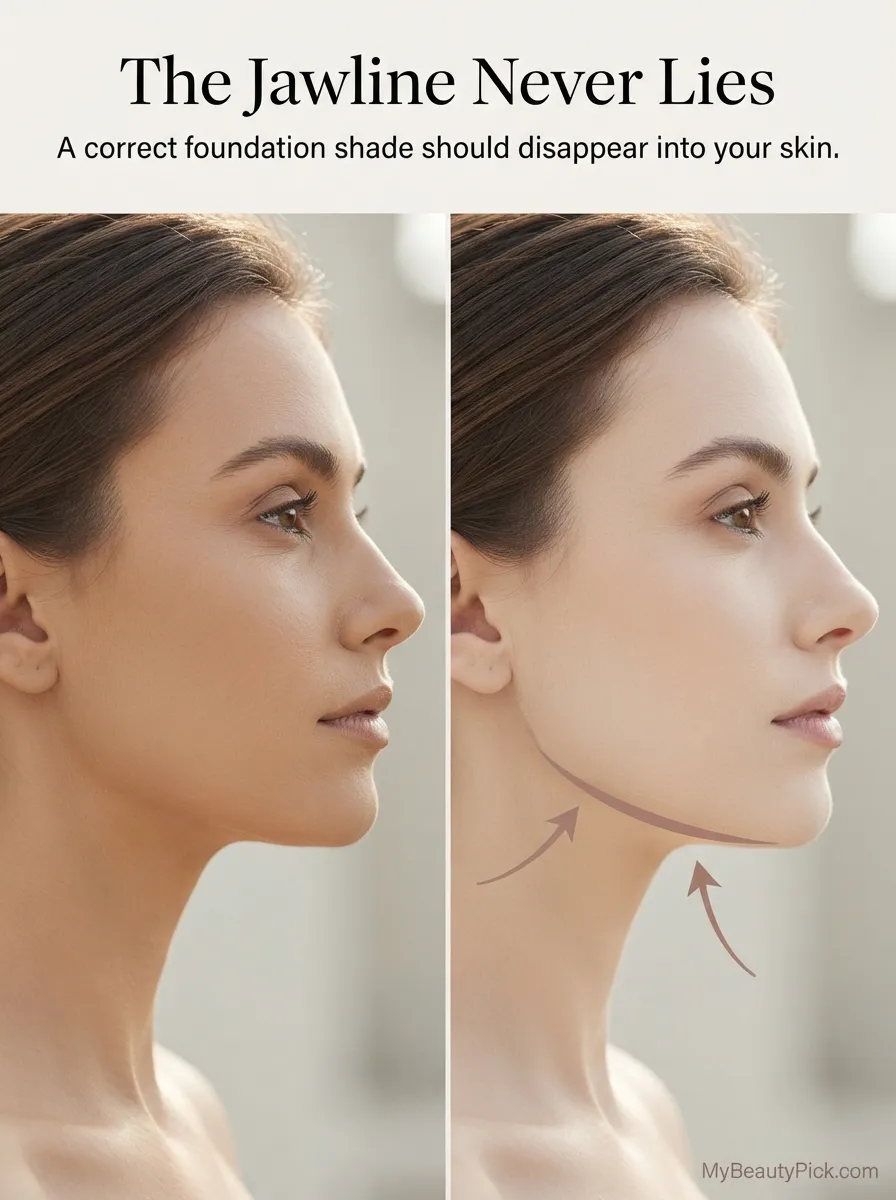
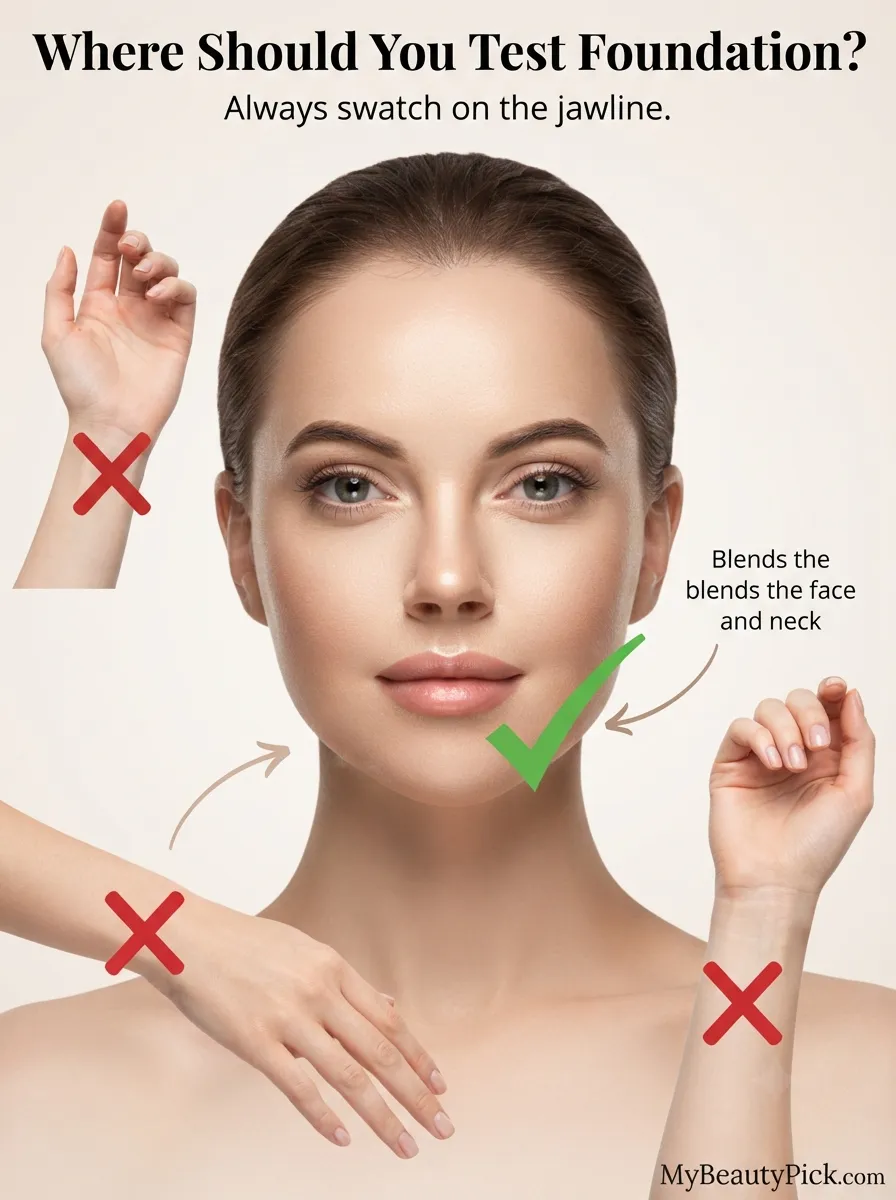
The right foundation shade disappears into your skin at the jaw when blended. Looking at your face in natural daylight — not bathroom light — the jaw-to-neck transition should show no visible colour difference. The foundation should look like your skin, but more even.
Always test foundation at the jawline, not on the wrist or hand. The skin on your wrist and inner arm is often significantly lighter than the face, which is why wrist swatches lead to the wrong shade almost every time. The jawline is where the foundation needs to blend invisibly between face and neck — testing there gives you the only accurate read of whether a shade works.
The One Exception: Oxidation on Tan Skin
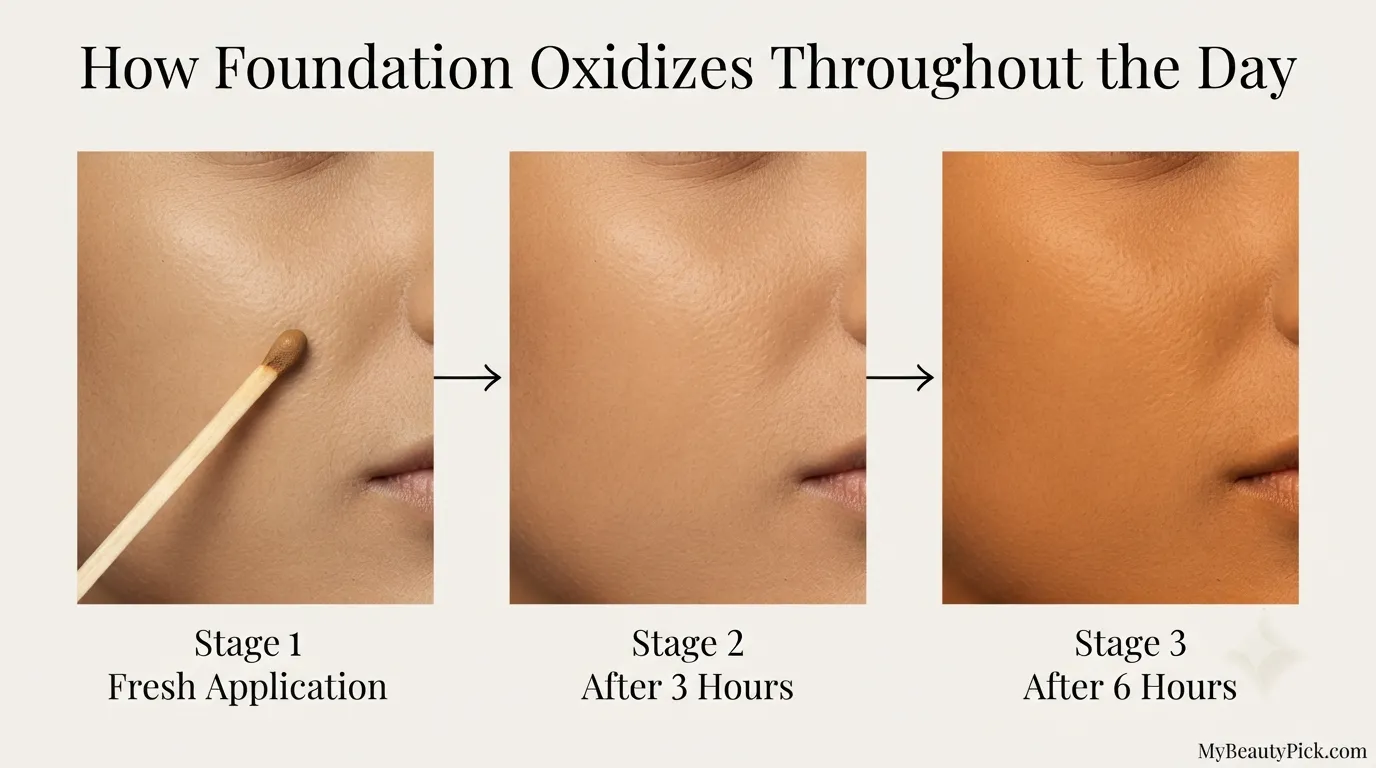
For tan and warm skin tones, there is one practical situation where you should deliberately go slightly off from your exact match: when wearing a matte or full-coverage foundation in heat, humidity, or at a long event.
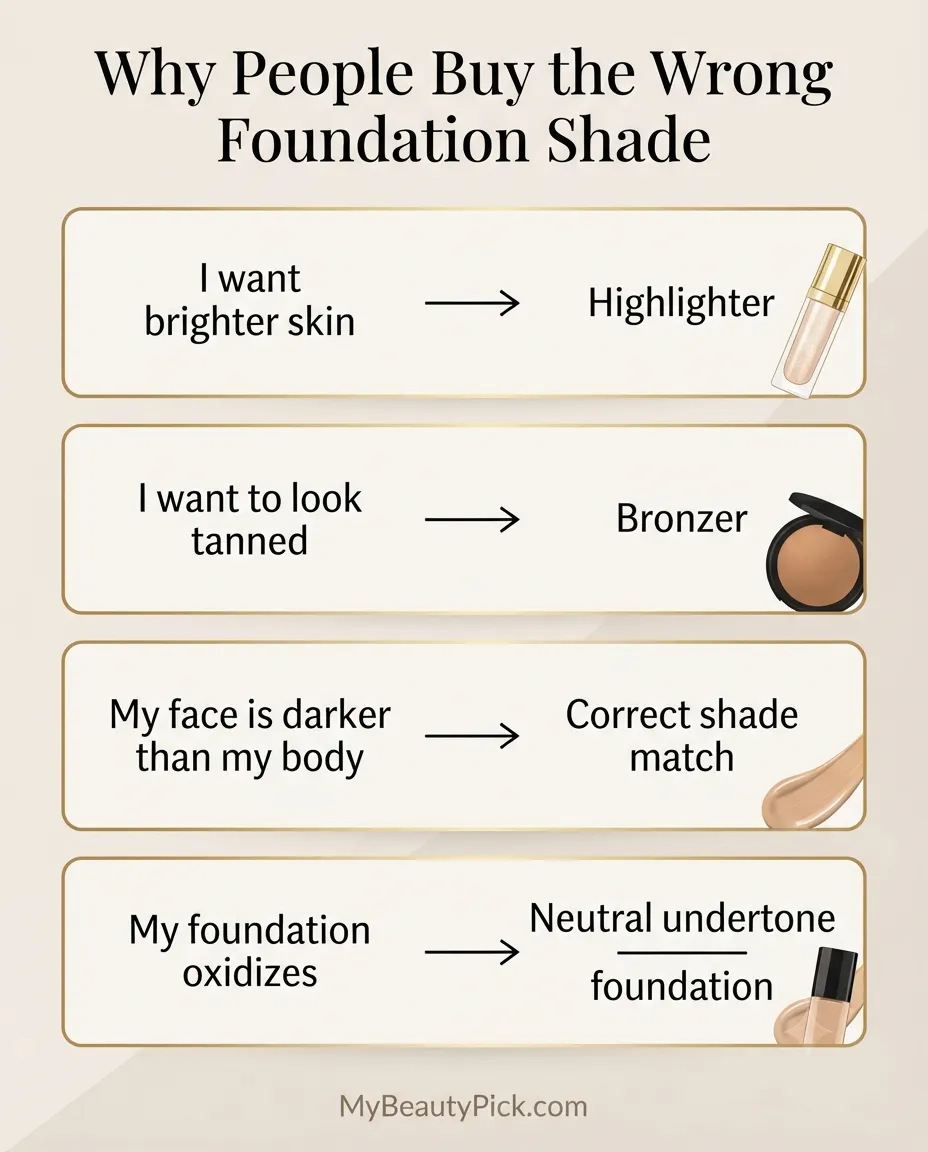
Iron oxide pigments in warm foundation shades shift when they interact with sebum and your skin’s pH — a process called oxidation. On warm-tan complexions, the foundation typically shifts warmer and sometimes more orange as the day progresses. By hour four or six, a foundation that matched at application can read noticeably darker and warmer than your skin.
The professional fix: choose a shade one step cooler or more neutral than your exact match at application. The slight coolness at application shifts back toward your true tone through the day as oxidation occurs, and you land at a match by midday rather than starting matched and drifting orange by afternoon.
Lighter Foundation: When It’s Asked About and Why
Several reasons people ask about going lighter with foundation — and what to use instead:
“I want to look more glowing or bright.” A lighter foundation doesn’t achieve this — it just looks pale. An illuminating or dewy foundation in your correct shade, or a targeted highlighter on the high points, achieves a glowing effect without the mask appearance.
“I want to look more even-toned.” A correctly matched foundation achieves this. A lighter foundation adds a layer of pale coverage on top of whatever colour your skin is, which looks even but also looks wrong against the neck.
“My shade range doesn’t go dark enough.” This is a legitimate brand problem — many foundation ranges don’t include sufficient depth for deeper complexions. The solution is finding a better range rather than using a too-light shade. Fenty Beauty (50 shades), NARS (40+ shades), and Makeup Forever (40 shades) are the most frequently cited for deeper shade depth.
Darker Foundation: When It’s Asked About and Why
“I want to look more tanned.” A darker foundation looks muddy and artificial rather than tanned. For a sunkissed effect, a warm bronzer on top of a correctly matched foundation is both more natural-looking and easier to control.
“My skin is between two shades.” Mix them. Many liquid foundations can be mixed on the back of the hand in a 2:1 or 1:1 ratio to create a custom shade. Some brands (Laura Mercier, Bobbi Brown) sell foundation in mixable palettes specifically for this.
“My face is a different tone from my body.” The foundation should match your face, not your body. The face and body are routinely different tones due to sun exposure patterns, and blending at the jaw and neck with what’s remaining on the brush creates a natural-looking transition.
Foundation Shade for Medium Skin Tone
Medium skin tone is one of the widest and most varied categories — it covers warm, cool, and neutral undertones across a range from light-medium through medium-deep. “Medium” means very different things across different brands.
The practical approach for medium skin tone shade matching:
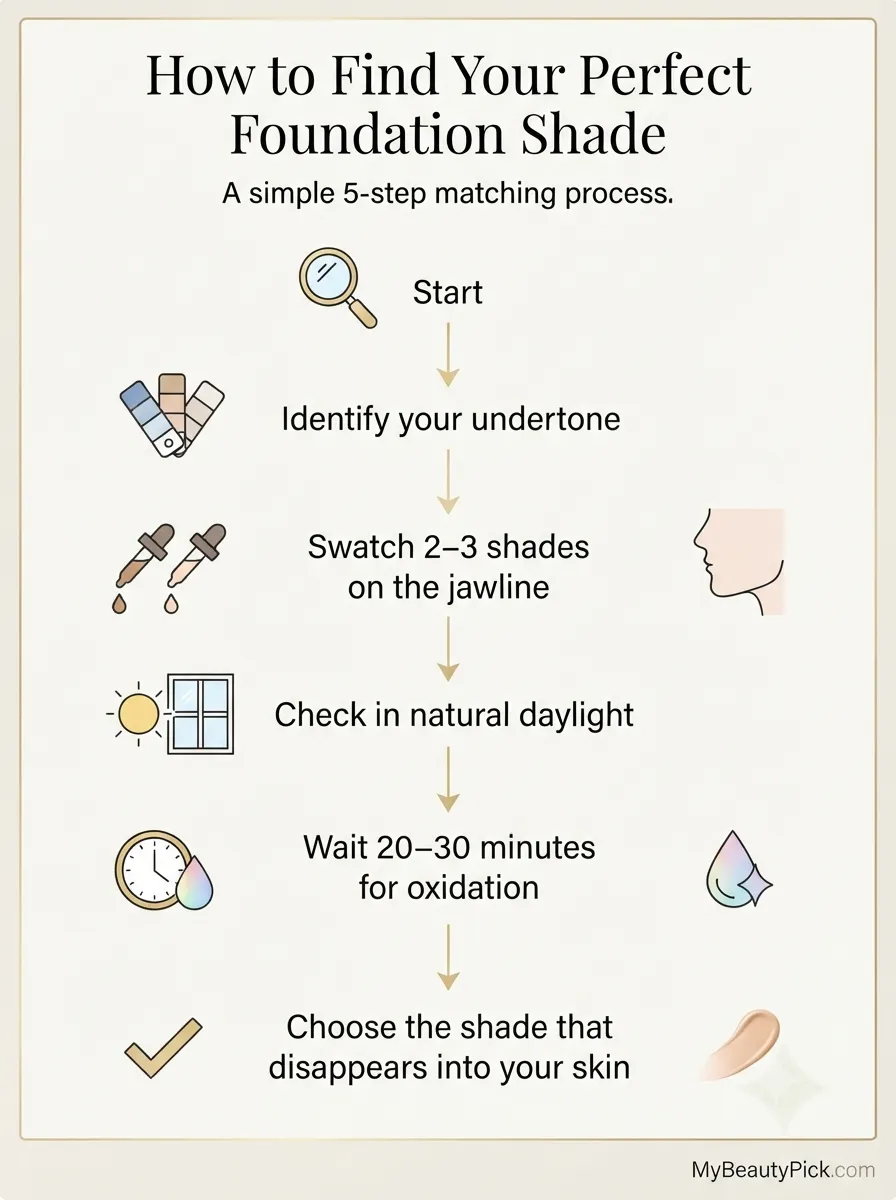
- Identify your undertone first. Warm (yellow-golden base), cool (pink-red base), or neutral (a balance of both). This is more important than depth when it comes to shade matching, because two foundations at the same depth but different undertones will look completely different on the same skin.
- Swatch 2–3 shades at the jawline in natural light. Pick the warmest and coolest options in the medium range for the brand you’re testing, plus a middle option.
- Wait 20–30 minutes before judging. Foundation changes after application as it oxidises and adjusts to your skin’s pH. The initial application colour is not the final colour.
- Check jaw-to-neck blend. The shade that creates no visible colour difference at the jawline in natural light is your match.
Seasonal Shade Changes
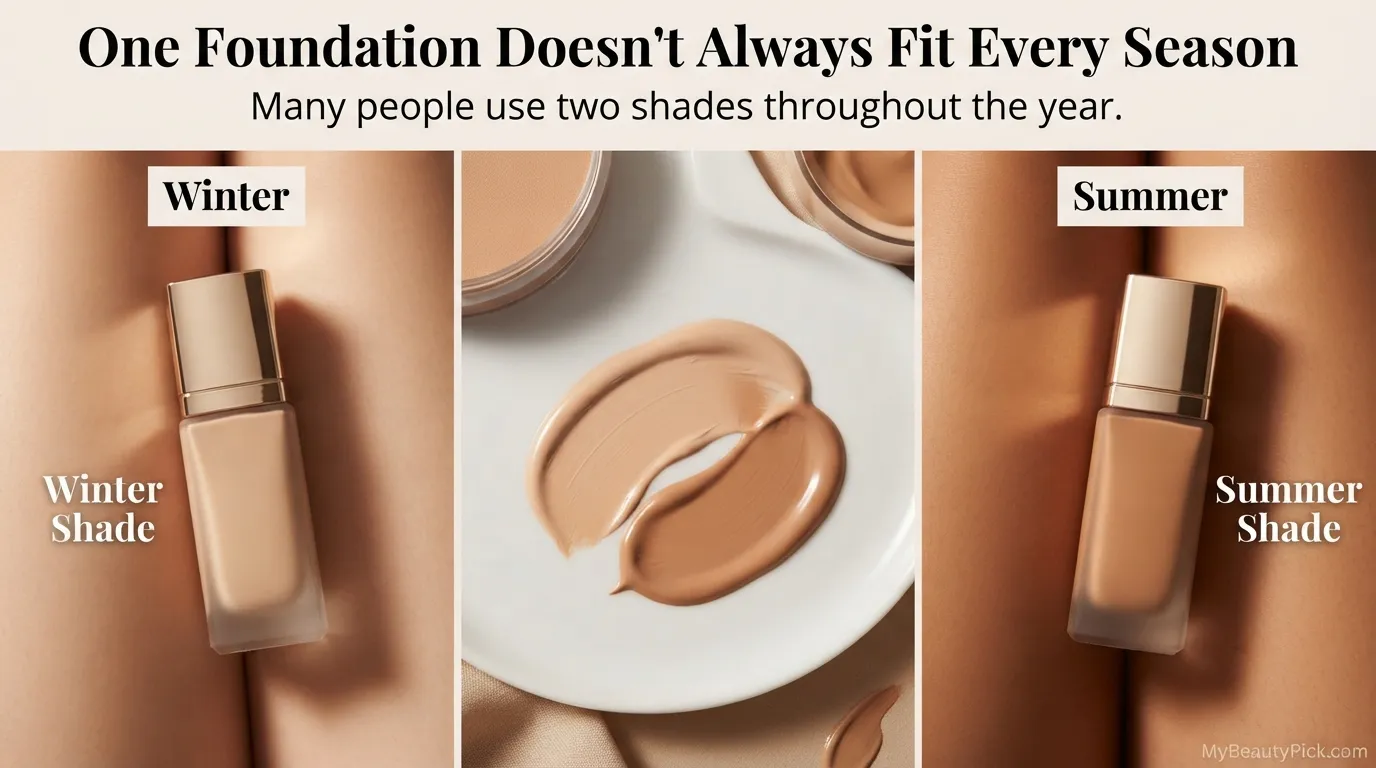
Many people need a different foundation shade in summer than in winter — or between seasons when skin tone transitions. This is normal and straightforward to manage:
- If your skin gets noticeably darker in summer: buy a shade one step deeper for summer wear and transition back to your winter shade as the tan fades. Some people keep both and mix in a 1:1 or 2:1 ratio during transition periods.
- If your skin barely changes seasonally: one shade likely works year-round with minor adjustment through your bronzer placement.
- For tan skin that deepens significantly in summer: the additional depth change combined with increased oxidation in heat means the summer shade selection requires both the deeper match and the cooler-undertone adjustment described above.
Frequently Asked Questions
Should foundation be lighter or darker than your skin?
Foundation should match your skin tone as closely as possible — not lighter, not darker. A lighter foundation creates a visible pale mask at the jaw and photographs wrong. A darker foundation reads as unnatural against the neck and can look muddy. The goal is a shade that disappears into your skin when blended, leaving even coverage without a visible colour difference at the jaw-to-neck transition.
Is it better to go lighter or darker with foundation?
Neither — the right answer is matching your actual skin tone. However, if you have to choose between one shade too light or one shade too dark, going very slightly darker is usually less visible than going lighter. A slightly darker foundation blends into the skin’s natural colour more naturally than a lighter one, which creates a distinct pale line at the jaw. On tan skin in heat, going one shade cooler or more neutral than your exact match is preferable — not darker — to account for oxidation.
Why does foundation look lighter after application?
Foundation can look lighter after application because some formulas lighten as they dry (particularly those with white or light pigments that concentrate at the surface during evaporation), or because the formula contains physical SPF ingredients (titanium dioxide, zinc oxide) that sit on the skin surface and reflect light, creating a lighter or ashy appearance. Check a foundation 30 minutes after application in natural light for an accurate read of the true shade result.
How do I know if my foundation is too light?
The clearest signs: a visible pale line at the jawline where the foundation meets your unmade-up neck; your face looking notably lighter than your neck in photographs; the foundation appearing grey or washed out in natural daylight. The most reliable test is checking at the jawline in natural outdoor light after wearing the foundation for 30 minutes, rather than in bathroom lighting immediately after application.
Should I go lighter or darker with foundation in summer?
If your skin darkens in summer, your foundation should match your deeper summer tone — go darker to match, not stay with your winter shade. For tan skin in summer heat, the oxidation concern means going one shade cooler or more neutral than your exact summer match, rather than darker. The oxidation shift during wear brings the foundation from slightly cool to your true warm tone by midday, whereas matching exactly at application often results in a foundation that reads too warm or orange by afternoon.
What is the right foundation shade for medium skin tone?
Medium skin tone spans a wide range with warm, cool, and neutral undertones. The right foundation shade for medium skin is the one that matches your specific undertone and depth — identify your undertone first (warm, cool, or neutral), then swatch 2–3 shades at the jawline in natural light and wait 20–30 minutes before judging. The shade that creates no visible colour difference at the jaw-to-neck transition is your match.