

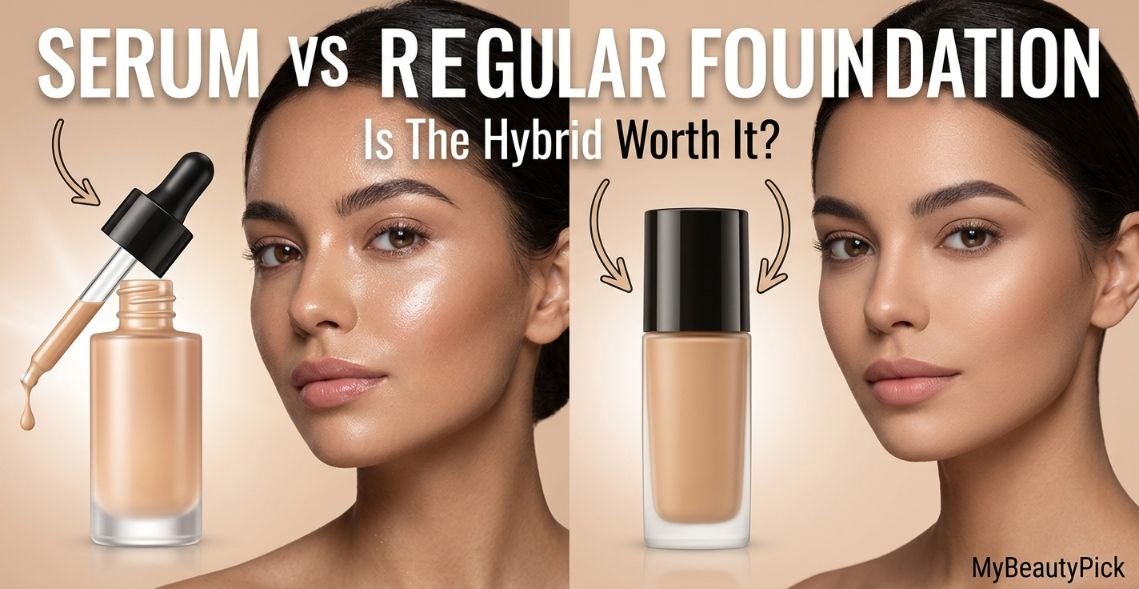
Serum foundation is one of the more genuinely useful category innovations of the past few years — and also one of the more overstated ones. The formulas are real and some of the skincare actives in them deliver measurable benefit. But they don’t replace a skincare routine, they don’t suit every skin type, and the coverage they provide is limited in a way that matters for some wearers. Here is an honest breakdown of what these hybrid formulas actually do and when they’re the right choice versus when a standard foundation serves you better.
- Serum foundation is a genuine product category, not just marketing — the actives (hyaluronic acid, niacinamide, peptides) provide real in-wear benefit for comfort and skin quality over time.
- Coverage is typically light to medium. Not the right choice for significant correction needs.
- Best suited to dry, normal, and dehydrated combination skin. Oily skin types typically find them too light in hold and too hydrating for good longevity.
- Does not replace a skincare routine — concentration of actives is lower than in dedicated serums, and wearing time is shorter than therapeutic skin contact time.
- On tan skin, the lighter texture and formula finish tend to work beautifully — the coverage is sufficient for a natural look and the hydrating actives support the skin’s natural warmth.
What Is Serum Foundation?
Serum foundation is a hybrid formula that combines skincare actives with pigment in a serum-textured base. The texture is thinner and more fluid than a standard liquid foundation, often applied with fingers or a damp sponge in the way you’d apply a tinted serum. The coverage is typically light to medium, and the finish ranges from natural to skin-like luminous.
The defining characteristic is what’s in the formula alongside the pigment. Unlike standard foundation where the base is primarily silicone or water with binders and pigment, serum foundations contain meaningful concentrations of skincare actives. Hyaluronic acid for hydration. Niacinamide for pore appearance and tone. Peptides for skin structure support. Antioxidants for environmental protection. These aren’t just label claims — at sufficient concentration, these actives provide benefit during the hours the product is worn.
Serum Foundation vs Regular Foundation: The Real Differences
Serum Foundation
- Serum-thin, fluid texture
- Light to medium coverage typically
- Contains active skincare ingredients
- Natural or luminous skin finish
- Best for dry, normal, dehydrated skin
- Applies like skincare — fingers or damp sponge
- Shorter wear on oily or combination skin
- Usually lighter on the skin
- Higher price point for the coverage level
Regular Foundation
- Standard liquid, cream, or powder texture
- Light through full coverage available
- May or may not contain actives
- Matte, satin, dewy, or full coverage finish options
- Suitable for all skin types in appropriate formulas
- Brush, sponge, or fingers
- Wide range of longevity options
- Full range from light to heavy feel
- Price ranges from budget to premium
The Skincare Actives in Serum Foundations: What They Actually Do
Hyaluronic Acid
Draws and holds moisture at the skin surface. In foundation, this translates to a more comfortable, less tight-feeling wear — particularly on dry or dehydrated skin. Also contributes to the formula’s dewy, skin-like finish quality. Concentration in foundation is lower than in a dedicated serum, but the benefit is real in terms of in-wear comfort.
Niacinamide
One of the most versatile actives in skincare — addresses pore appearance, uneven skin tone, and redness with consistent use. In foundation, the concentration is lower than the 5–10% that produces significant clinical results, but some benefit accumulates with daily wear over time. Also helps the foundation sit more evenly by temporarily minimising pore appearance.
Peptides
Signal proteins that support skin structure and firmness over time. In a serum foundation, the concentrations are typically lower than in dedicated peptide serums, and the wearing time is shorter than the ideal skin contact time for peptide activity. More of a supportive role than a primary active in most serum foundations.
Antioxidants (Vitamin C, E, resveratrol)
Protect the skin surface from environmental oxidative stress during wear. In a foundation worn for 8–10 hours, antioxidants that neutralise free radicals from UV exposure, pollution, and environmental stressors provide genuine benefit. More relevant for people in urban or high-pollution environments.
Is the Skincare Benefit Real or Just Marketing?
Honestly: both. The actives are real, and at sufficient concentration they provide genuine benefit during wear. But the claims are often overstated relative to what the concentrations in a foundation formula can deliver.
Hyaluronic acid at even low concentrations provides meaningful surface hydration — this one translates well to foundation use and makes a perceptible difference in how dry skin feels throughout the day. Niacinamide at 2%+ in a foundation worn daily for months contributes to gradual improvement in skin tone — this is real but slow and less dramatic than a dedicated 5% niacinamide serum. Peptides in foundation concentrations are unlikely to provide significant skin-restructuring benefit at the concentrations used in most formulas.
The most honest framing: serum foundation is a foundation with better skincare credentials than standard foundation, not a skincare product that also provides coverage. The coverage is real. The actives provide real in-wear benefit. Neither substitutes for dedicated skincare products doing their jobs more intensively.
Who Serum Foundation Works Best For
Dry and Dehydrated Skin
Serum foundation is particularly well-suited here. The hydrating actives address the same concern that the skin type has — moisture retention and comfort — while the lightweight formula doesn’t cling to dry patches the way thicker foundations do. The natural or luminous finish that most serum foundations produce also suits dry skin aesthetically. This is the primary use case where serum foundation delivers significantly better in-wear experience than a standard foundation.
Normal Skin
Works well. Normal skin has the flexibility to use almost any foundation type, and serum foundation gives the most natural, skin-like finish of any category. For everyday wear where significant coverage isn’t needed, it’s a strong choice.
Combination Skin
Mixed results. On combination skin where the T-zone is notably oily, a serum foundation may not hold long enough in the oily zones. The hydrating actives that benefit dry cheeks can be counterproductive on an oily T-zone that needs less moisture and more control. Some people with combination skin apply serum foundation all over and use a mattifying primer on the T-zone only — this can work, but it requires more prep steps.
Oily Skin
Generally not the right formula. Oily skin needs oil control and long-wear hold — both of which serum foundation typically lacks. The lightweight, moisture-forward formula slides on actively oily skin and breaks down faster than a matte or satin standard foundation. On oily skin, the actives don’t provide enough benefit to compensate for the performance gap.
Acne-Prone Skin
Depends on the specific formula. Some serum foundations contain niacinamide at concentrations that actively benefit acne-prone skin. But many serum foundations also contain hydrating oils or occlusive ingredients that can be comedogenic for acne-prone skin. Check the ingredient list specifically — non-comedogenic, fragrance-free serum foundations suit acne-prone skin better than others in the category.
Serum Foundation vs Regular Foundation: Which Should You Choose?
| Choose Serum Foundation if… | Choose Regular Foundation if… |
|---|---|
| You have dry, dehydrated, or normal skin | You have oily or acne-prone skin |
| You want light to medium coverage with a natural finish | You need medium to full coverage |
| You prefer a minimal, quick routine | You need long, reliable wear through a full day |
| Skincare-conscious — you want actives during wear | Photography or events requiring specific finish performance |
| The no-makeup-makeup look is your daily aesthetic | Formal occasions, events, weddings |
| Your skin is in good condition and doesn’t need heavy correction | You’re covering significant hyperpigmentation, redness, or skin concerns |
| You’re simplifying your routine (one less step) | You have specific skin type concerns requiring targeted formula |
Notable Serum Foundation Formulas Worth Knowing
Estée Lauder Futurist Hydra Rescue Foundation SPF 45 — one of the most genuinely hydrating serum-style foundations available. Contains hyaluronic acid and delivers real moisture during wear. 55-shade range. Best for very dry skin.
Ilia True Skin Serum Foundation — a serum foundation with hyaluronic acid and aloe vera in a clean, vegan formula. One of the more popular serum foundations for those who prioritise clean or vegan beauty. Light coverage only.
Charlotte Tilbury Beautiful Skin Foundation — sits between a serum foundation and a standard satin foundation. Contains hyaluronic acid and niacinamide in a formula that gives slightly more coverage than a pure serum foundation while maintaining the skin-like quality.
Armani Luminous Silk Foundation — while not marketed as a serum foundation, it uses a serum-like base technology that creates its luminous finish. The formula behaves more like a serum than a traditional foundation, particularly in texture and application feel.
On tan and warm skin, serum foundation tends to produce a particularly flattering natural result — the lightweight formula and luminous or natural finish don’t strip the warmth and depth of melanin-rich complexions the way heavier matte foundations can. The coverage level (light to medium) suits everyday wear well for skin that doesn’t need significant correction. For event or photography use where coverage and longevity are priorities, a standard long-wear satin formula with proper preparation is more reliable.
This point deserves emphasis because the marketing around serum foundations sometimes implies it. The concentration of actives in a foundation formula is lower than in a dedicated serum, and the skin contact conditions during foundation wear are different from skincare absorption conditions. A serum foundation provides real benefit in wear, but a dedicated vitamin C serum, hyaluronic acid serum, and niacinamide treatment applied to clean skin and given time to absorb will always outperform the same actives in a foundation formula. Serum foundation is an upgrade within the makeup category — not a replacement for skincare.
Frequently Asked Questions
What is a serum foundation?
A serum foundation is a hybrid formula that combines skincare actives (typically hyaluronic acid, niacinamide, peptides, or antioxidants) with pigment in a serum-textured base. The concept is to deliver skincare benefit during the hours the product is worn alongside light to medium coverage. The texture is more fluid than standard liquid foundation, applying more like a skincare product. Coverage is typically light to medium and the finish is natural or luminous.
Does hyaluronic acid in foundation actually work?
Hyaluronic acid in foundation provides real surface hydration during wear — it holds water to the skin surface, contributing to a more comfortable, less tight feeling throughout the day, particularly on dry and dehydrated skin. The concentration is lower than in a dedicated serum, and it doesn’t replace a standalone hyaluronic acid serum in a skincare routine. But the benefit to in-wear comfort and finish quality on dry skin is genuine and perceptible.
Who is serum foundation best for?
Serum foundation works best for dry and normal skin types who want a natural, skin-like coverage without a heavy formula. The lightweight texture and hydrating actives suit skin that needs moisture support rather than oil control. For oily or acne-prone skin, serum foundation often lacks the oil control and long-wear hold needed, and may not hold through a day of significant sebum production.
Can serum foundation replace your skincare routine?
No. The skincare actives in serum foundation are present at lower concentrations than in dedicated skincare products, and the wearing conditions differ from therapeutic skincare application. A serum foundation is a complement to skincare — the actives provide genuine benefit during wear — but they don’t replace a cleanser, dedicated serum, moisturiser, or SPF in a proper routine.
What is the difference between a serum foundation and a tinted moisturiser?
Serum foundations typically contain higher concentrations of specific actives (niacinamide, peptides) in a serum base with buildable light-to-medium coverage potential. Tinted moisturisers are moisturiser-textured with a sheer tint and focus on hydration rather than targeted actives. Serum foundation gives more coverage and more targeted active benefit; tinted moisturiser gives the most natural skin-like finish with minimal coverage. Both are significantly lighter than standard liquid foundation.