

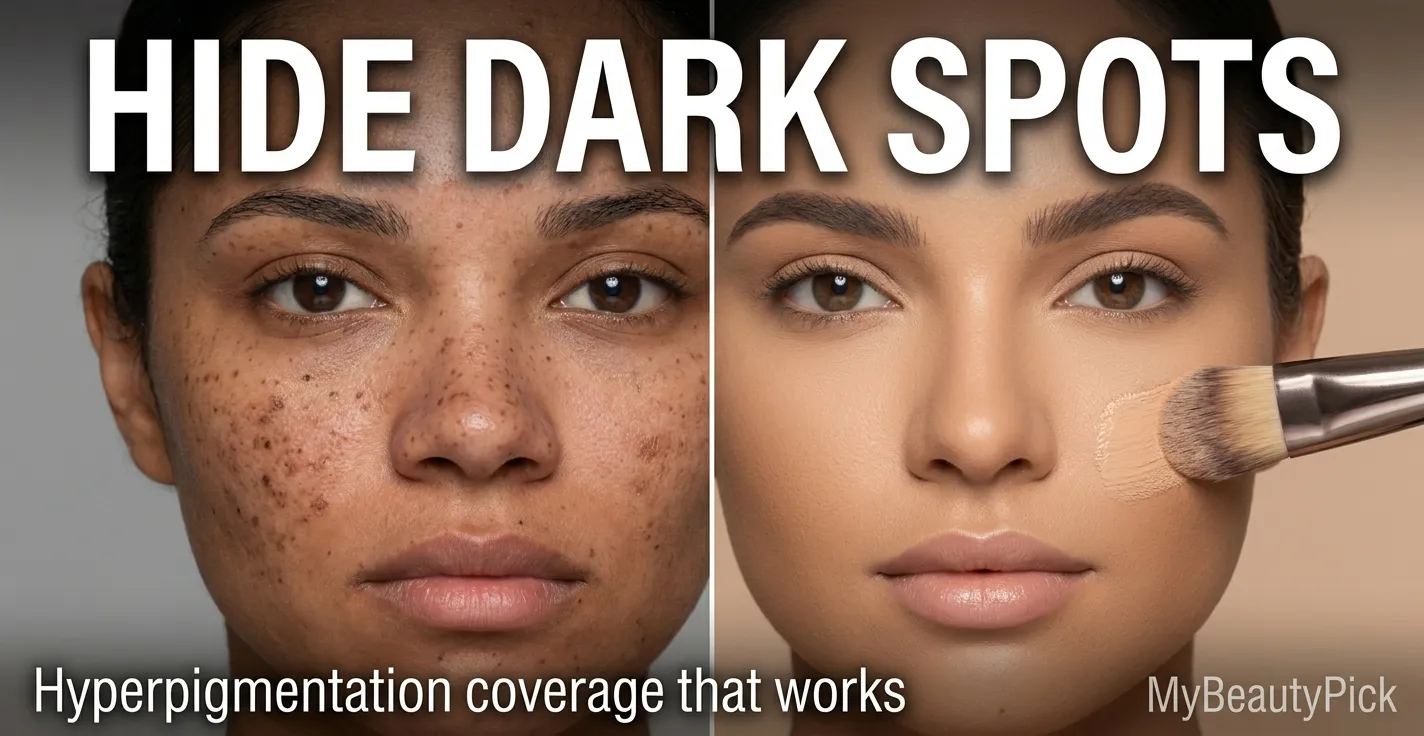
Dark spots, hyperpigmentation, and melasma are three of the most common reasons people reach for heavier foundation. But here’s what most coverage guides get wrong: the foundation itself is only part of the solution. The right formula, applied over the right prep, makes coverage look natural. The wrong approach — and it happens constantly — leaves skin looking heavy, patchy, and still not covered.
After working with hundreds of clients dealing with uneven skin tone, I can tell you that choosing the best foundation for hyperpigmentation is less about finding a magic product and more about understanding what’s actually happening on your skin — and building your coverage from the right foundation up.
Key Takeaways
- Hyperpigmentation, dark spots, and melasma each require a slightly different coverage approach.
- Color correction before foundation reduces the product load needed and keeps skin looking natural.
- Buildable, medium-to-full coverage formulas outperform thick full-coverage formulas applied in one heavy layer.
- Skin type determines which foundation formula actually stays put over discoloration.
- SPF in your skincare — not your foundation — gives better sun protection without flashback in photos.
Hyperpigmentation, Dark Spots, and Melasma: Why They’re Not All the Same
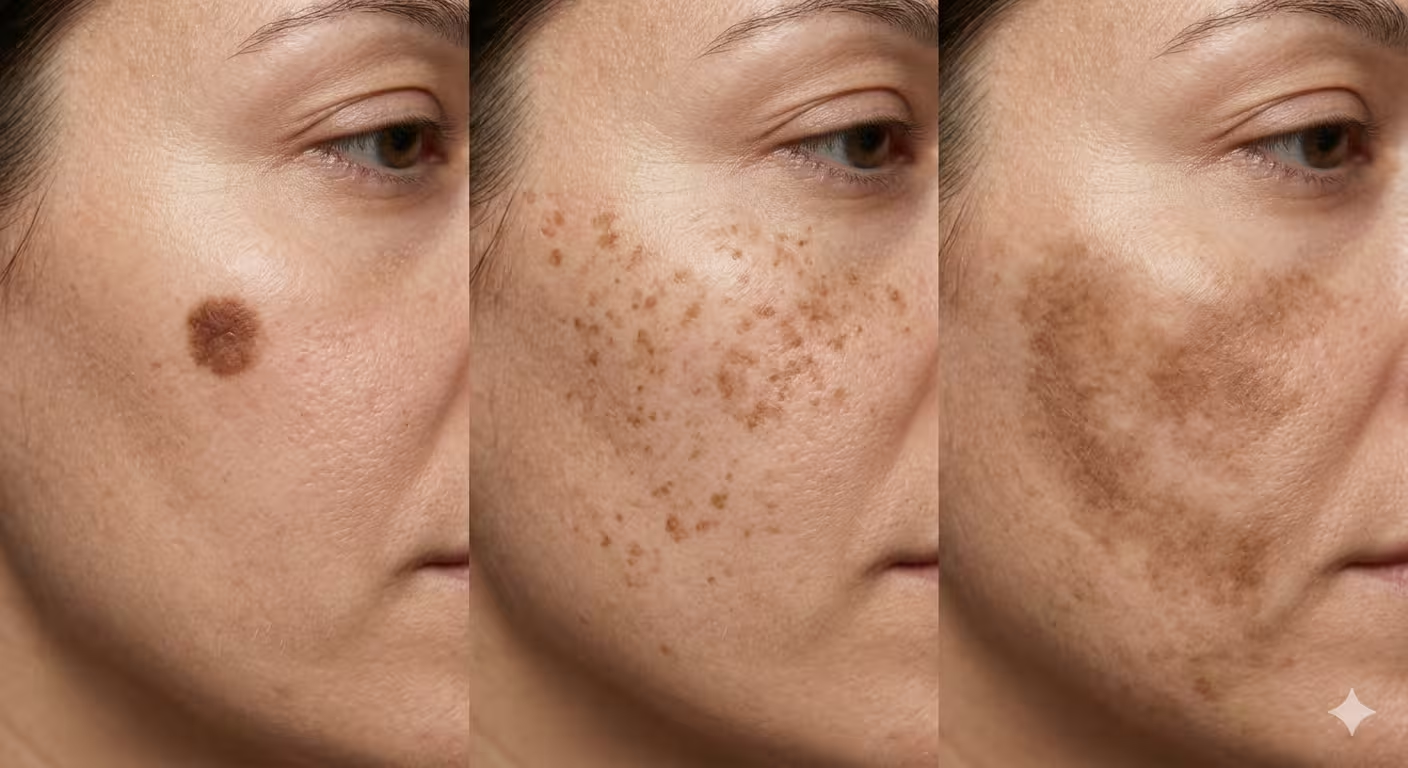
Before we get into foundation, it’s worth understanding what you’re actually dealing with. These three terms get used interchangeably, but they behave differently on the skin and respond differently to coverage.
Post-inflammatory hyperpigmentation (PIH) is the dark mark left after a breakout, scratch, or inflammation has healed. The skin overproduces melanin as part of the healing response. These spots are typically flat, have defined edges, and sit within the upper layers of skin. On medium and deeper skin tones, PIH is particularly common and can be very dark relative to the surrounding skin tone.
Sun damage and dark spots (also called age spots or liver spots) develop from cumulative UV exposure over time. They tend to appear on the cheeks, forehead, and temples. They’re usually flat and can range from light tan to deep brown, depending on skin tone and how long they’ve been present.
Melasma is different in a meaningful way. It’s a hormonal condition that typically develops during pregnancy, while taking hormonal contraceptives, or due to thyroid dysfunction. Melasma appears as larger, diffused patches — usually across the upper cheeks, forehead, or upper lip — with uneven, feathered edges. Because it’s driven internally, it’s more resistant to topical treatments and can fluctuate. From a makeup standpoint, the larger surface area and blurred edges make melasma harder to cover cleanly than a single dark spot.
If you’re unsure whether you have melasma or sun damage, look at the pattern. Sun damage tends to cluster in isolated spots. Melasma spreads in a more symmetrical, patchy pattern across the face, often on both sides. The distinction matters because melasma requires extra restraint with coverage layers — too much product over a large area always looks heavier than the same coverage applied to a small spot.
Why Foundation Alone Rarely Covers Hyperpigmentation Completely
This is the part most guides skip. Foundation sits on top of skin — it doesn’t neutralize what’s underneath. If a dark spot has a strong brown, grey-brown, or reddish undertone (which most do), layering foundation over it simply dilutes the darkness without eliminating the colour cast. You end up with a spot that’s still visible through the coverage, or you’ve used so much product that the area looks thick and obvious.
The solution is colour correction: applying a complementary pigment directly to the dark area before foundation. The corrector neutralizes the undertone of the discolouration so that foundation can sit over smooth, even-toned skin. Less product, better result, more natural finish.
Not every dark spot needs colour correction. Mild discolouration on a lighter skin tone may be covered adequately by a buildable medium-to-full coverage foundation alone. But for moderate to deep hyperpigmentation — or any melasma — colour correction is the step that makes the real difference.
Colour Correction for Hyperpigmentation: Shade by Skin Tone
The corrector shade you need depends on the depth of your skin tone, not the size of the spot. This is where people get it wrong most often: they pick a peach corrector because they’ve heard peach corrects dark circles, and then wonder why their skin looks ashy or orange. The undertone of the corrector needs to match the contrast between your skin and the dark area.
Fair to Light Skin
Use a soft pink-peach or lavender corrector on brown or grey-brown spots. A lilac tone specifically counters yellow-brown discolouration on very fair skin. Keep the corrector light — a tiny amount pressed into the spot is all you need.
Light to Medium Skin
Use a true peach corrector for brown and PIH spots. On redness or post-acne marks, a green corrector first, then peach on top of any residual brown tone. Press — never swipe — the corrector into the skin with your fingertip.
Medium to Tan Skin
Use a warm apricot or salmon corrector for hyperpigmentation. The orange component counteracts the deeper brown pigment. A corrector that’s too peachy without enough orange warmth will look light on medium-tan skin without actually neutralising the spot.
Deep to Very Deep Skin
Use a deep orange or red-orange corrector specifically formulated for deeper skin tones. Correctors made for fair skin will look ashy or grey against deep melanin-rich skin. The corrector needs sufficient pigment depth to neutralise the high contrast of deep discolouration.
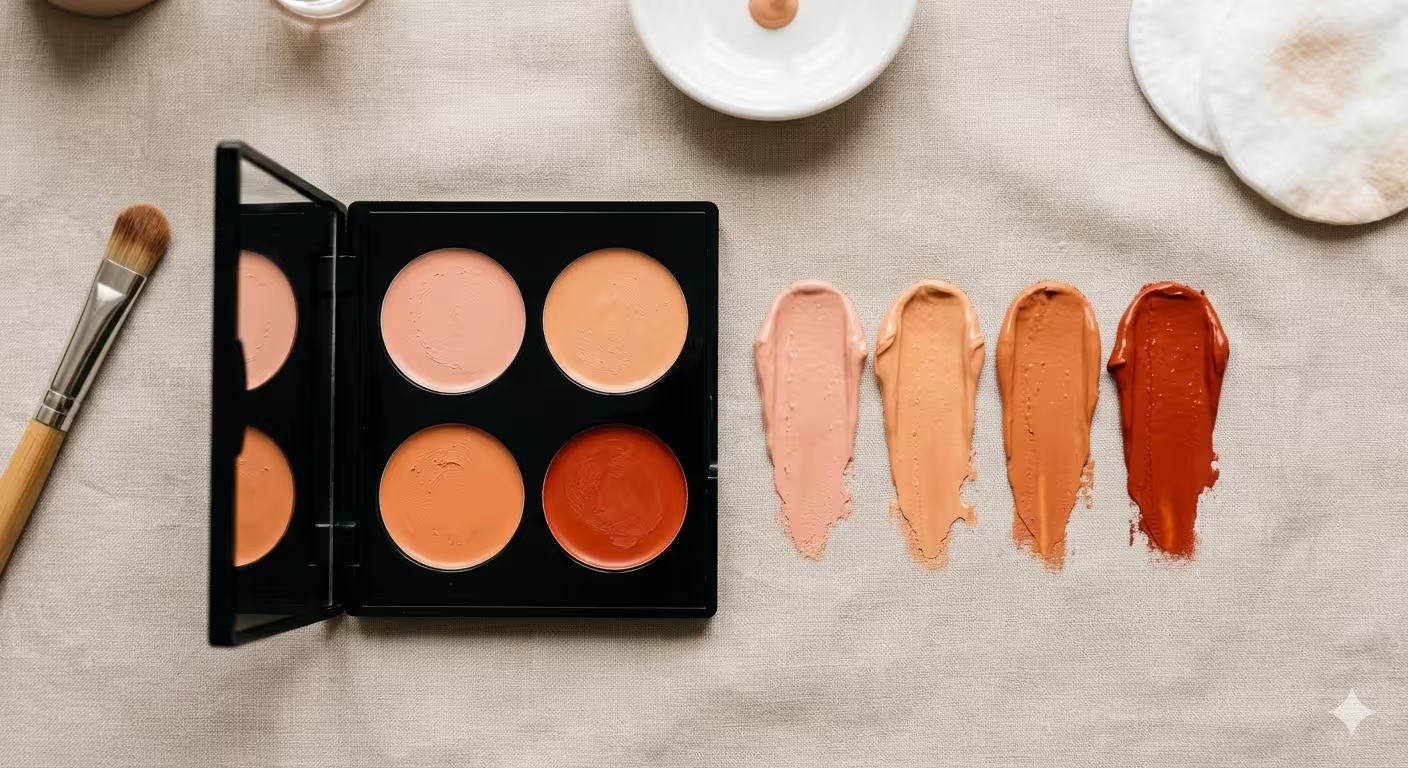
Applying colour corrector with a brush in a sweeping motion. This spreads the corrector over a wider area than needed and dilutes its effectiveness. Always press corrector directly onto the spot with your fingertip or a small flat brush. It should be faintly visible before foundation goes on — that’s how you know the correction is working.
What to Look for in the Best Foundation for Hyperpigmentation
Not all high-coverage foundations are right for dark spots. The formula, finish, and ingredient list all affect how coverage performs on discoloured skin — and how long it actually lasts.
| Feature | What to Look For | Why It Matters |
|---|---|---|
| Coverage Level | Buildable medium-to-full | Allows you to use less where skin is even, more where it isn’t. One-size full coverage looks heavy overall. |
| Finish | Satin or natural matte | Flat matte emphasises texture around hyperpigmented areas. High dewy finish reflects light inconsistently over dark spots. |
| Formula Base | Long-wear liquid or cream | Thin water-based formulas break down faster over dark spots, requiring constant touch-ups throughout the day. |
| Pigment Load | High iron oxide pigment concentration | More pigment means better coverage with less product. Thin formulas need more layers, which increases heaviness. |
| Undertone Matching | Yellow or warm-based for tan skin; neutral for balanced skin tones | Wrong undertone shows clearly over hyperpigmented areas. Warm-based formulas read more naturally on tan skin. |
| Skincare Actives | Niacinamide, vitamin C, tranexamic acid | These ingredients address pigmentation over time while the foundation provides immediate coverage. |
| SPF | Optional — use with caution | SPF in foundation is rarely applied in the quantities needed for real protection. Heavy SPF formulas also increase flashback risk in photos on darker skin tones. |
Best Foundations for Hyperpigmentation, Dark Spots, and Melasma
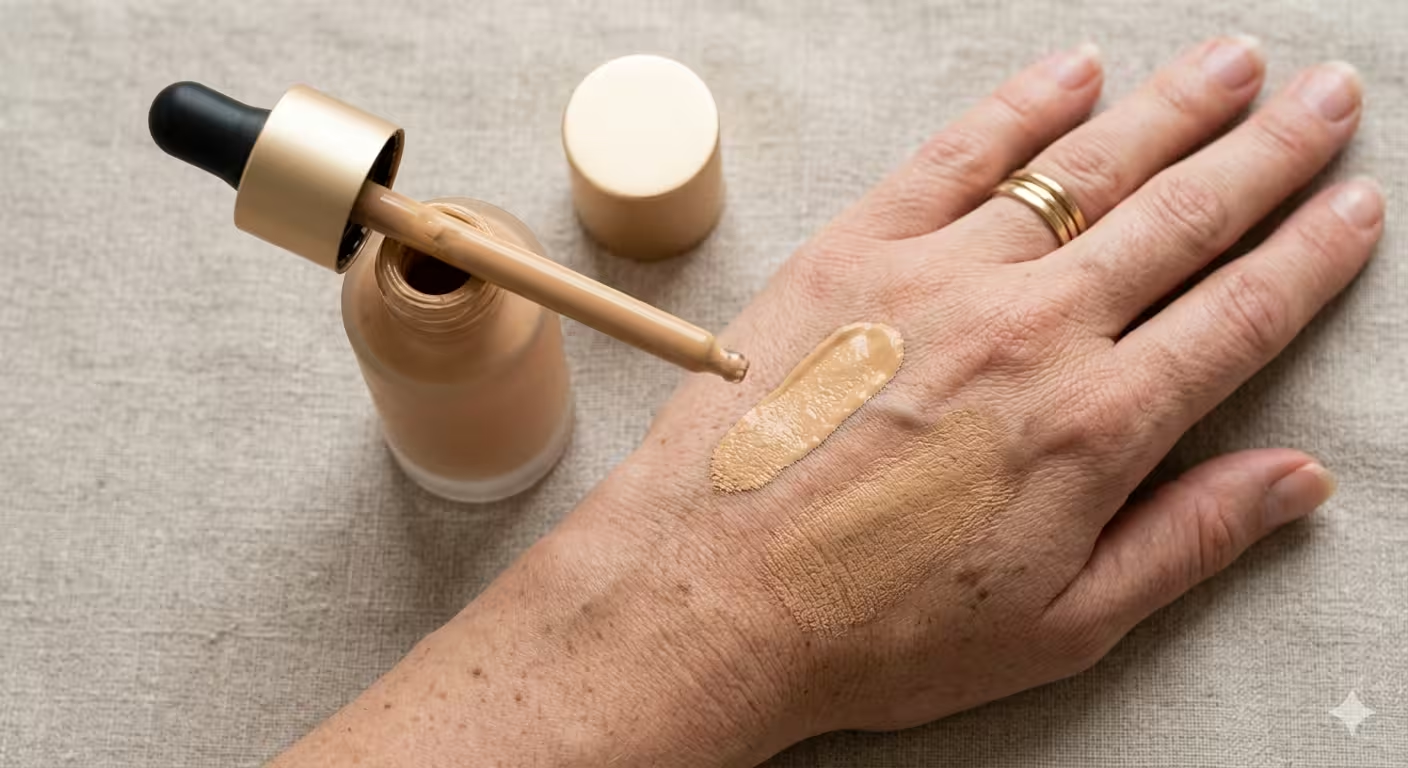
These are selected based on formula performance, pigment quality, and real-world wear on skin dealing with discolouration. No single foundation suits every skin type, so I’ve included what each one is actually best for.
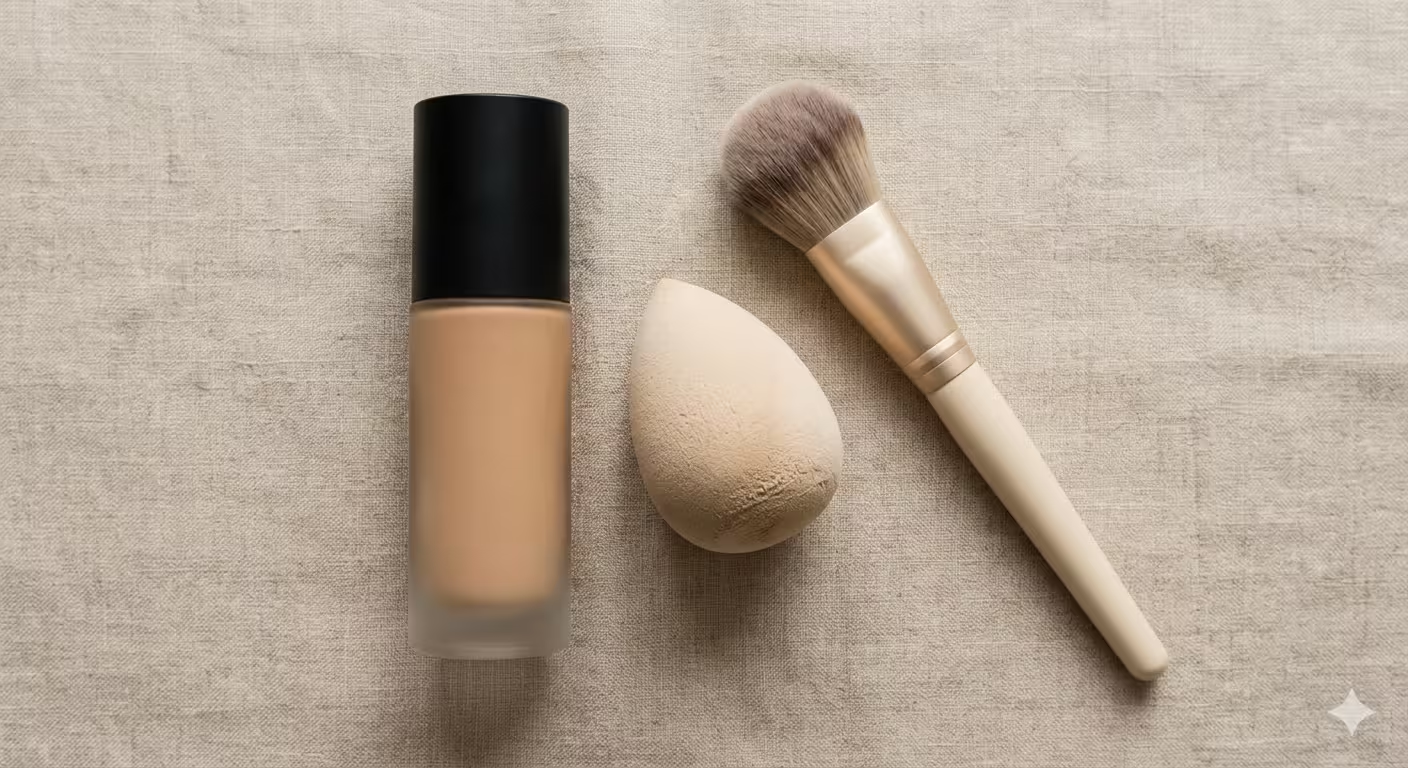
Dermablend Pro Camo Full-Coverage Foundation
Dermablend has been the professional standard for covering hyperpigmentation for a reason. The pigment concentration in this formula is exceptionally high, which means you can cover significant discolouration without building up heavy layers. It stays put all day without the coverage breaking down over dark spots — something lighter foundations consistently fail to do.
The formula is dermatologist-tested, fragrance-free, non-comedogenic, and available in a shade range with genuine undertone variation. On tan and deep skin tones specifically, the yellow and warm-based shades stay true throughout the day without excessive oxidation.
- Very high pigment concentration
- Holds for 16 hours without significant fading
- Fragrance-free, non-comedogenic
- Works on all skin types
- Requires good skincare prep or can cling to dry patches
- Full coverage finish is not adjustable to sheer
- Smaller shade range than some competitors
Estée Lauder Double Wear Stay-in-Place Foundation
For melasma — particularly the larger patchy kind that spreads across the cheeks and forehead — Double Wear is one of the most reliable options because its coverage is consistent throughout the day. The formula doesn’t shift or oxidise significantly, which matters when you need the coverage over larger skin areas to remain even from morning to evening.
On combination and oily skin types, which are prone to melasma due to hormonal activity, this formula genuinely holds. The shade range is extensive with warm, cool, and neutral undertone options, which is important because melasma coverage depends heavily on undertone matching.
- Consistent coverage throughout the day
- Extensive shade range with undertone options
- Doesn’t shift or oxidise significantly
- Can feel heavy on dry skin
- Difficult to remove completely at end of day
- Not ideal for very dry skin types
Clinique Even Better Makeup SPF 15
What makes this foundation stand out for hyperpigmentation is that it’s one of the few formulas that actively works on dark spots over time, not just covers them immediately. The formula contains ingredients clinically shown to visibly reduce the appearance of discolouration over 12 weeks. This makes it particularly useful for people with mild to moderate dark spots who want coverage plus a long-term approach built into their base.
The hydrating formula sits beautifully on dry skin, which is a genuine strength — dry skin combined with dark spots creates a texture problem that most heavy coverage foundations make worse. The natural finish here doesn’t cling to dry patches the way full matte formulas tend to.
- Skincare actives that address pigmentation over time
- Hydrating — comfortable on dry skin
- Natural finish doesn’t emphasise texture
- Medium coverage only — not enough for deep hyperpigmentation alone
- Needs a concealer for significant dark spots
- SPF 15 is not sufficient sun protection on its own
L’Oréal Paris Infallible 24H Fresh Wear Foundation
For the price, this formula delivers remarkable coverage and wear. The lightweight texture makes it buildable in a way that doesn’t feel thick, and the matte finish genuinely lasts most of the day on oily and combination skin without the coverage sliding off dark spots. It’s not in the same category as Dermablend for severe hyperpigmentation, but for mild-to-moderate discolouration it covers very effectively.
The shade range is wider than most drugstore options and includes warm undertone variants for tan and medium skin tones — a genuine advantage for a budget foundation.
- Accessible price point
- Buildable without looking heavy
- Wide shade range including warm undertones
- Not enough coverage for deep or severe hyperpigmentation alone
- Can oxidise on tan skin — go half a shade cooler
- Formula can feel drying on very dry skin types
Giorgio Armani Luminous Silk Foundation
This might seem like an unexpected choice for hyperpigmentation coverage, given its lighter coverage level. But for tan skin dealing with mild-to-moderate dark spots — particularly post-inflammatory hyperpigmentation from past breakouts — the natural radiant finish on Luminous Silk does something heavier formulas can’t: it makes the skin look genuinely alive and healthy rather than covered. Used over a targeted colour corrector on the dark spots, the coverage is sufficient without the heavy finish that can make tan skin look flat.
For deeper or more severe hyperpigmentation, pair this with a full-coverage concealer applied directly over the corrected spots after foundation.
- Natural radiant finish looks like skin, not makeup
- Excellent undertone range for tan skin
- Oil-free despite luminous finish
- Not sufficient alone for moderate to severe discolouration
- High price point
- Requires concealer for full dark spot coverage
How to Apply Foundation Over Hyperpigmentation: Step by Step
The application sequence matters as much as the product. Getting this order right is the difference between coverage that looks natural and coverage that looks applied.
-
1
Skincare and SPF First
Apply your moisturiser and allow it to absorb fully — at least 5 minutes. Then apply a broad-spectrum SPF 30 or higher. Sun exposure is the primary driver that deepens hyperpigmentation and melasma. If you skip this step, your foundation work is temporary in more ways than one. Use a chemical filter SPF rather than a physical filter (titanium dioxide or zinc oxide) if you’ll be photographed — physical filters cause flashback on tan and deeper skin tones.
-
2
Primer
A blurring or smoothing primer creates an even surface for foundation to grip. On skin with melasma or hyperpigmentation, a silicone-based primer is particularly useful because it fills in any subtle texture around the edges of dark spots and helps the foundation sit flat rather than emphasising those areas. Apply a thin layer, let it set for 60 seconds before moving on.
-
3
Colour Corrector (Targeted, Not All-Over)
Using the shade guide above, press your colour corrector directly onto dark spots or melasma patches with your fingertip. Do not sweep or brush it on. The corrector should be just visible — a faint warm layer over the discolouration. For melasma, apply corrector in sections of the patch rather than dragging it across a large area all at once, which dilutes the correction effect.
-
4
Foundation
Apply foundation over the corrected areas first with a damp beauty sponge, pressing rather than rubbing. The pressing motion preserves the colour correction underneath. Then blend foundation outward across the rest of the face. On the corrected spots, apply a slightly thinner layer and build from there rather than starting heavy. Over-applying foundation in one pass is the most common reason coverage looks cakey.
-
5
Targeted Concealer (Only if Needed)
After foundation has settled for 60 seconds, assess the coverage. For most mild-to-moderate spots, colour corrector plus foundation will be enough. If any spots remain visible, apply a small amount of full-coverage concealer (matched to your foundation shade, not lighter) directly over the remaining darkness using a flat concealer brush. Blend only the edges — working the concealer too much picks up what’s underneath.
-
6
Setting Powder (Lightly and Selectively)
Press a small amount of translucent or undertone-matched setting powder only over the areas where you’ve built coverage. Dusting powder all over the face when you’ve only added coverage in specific areas can make those spots look dull by contrast. On tan and deeper skin, use a yellow-toned banana powder or a pigmented pressed powder over the T-zone to avoid the ashy finish that white translucent powders create. Finish with a setting spray to unify the whole look.
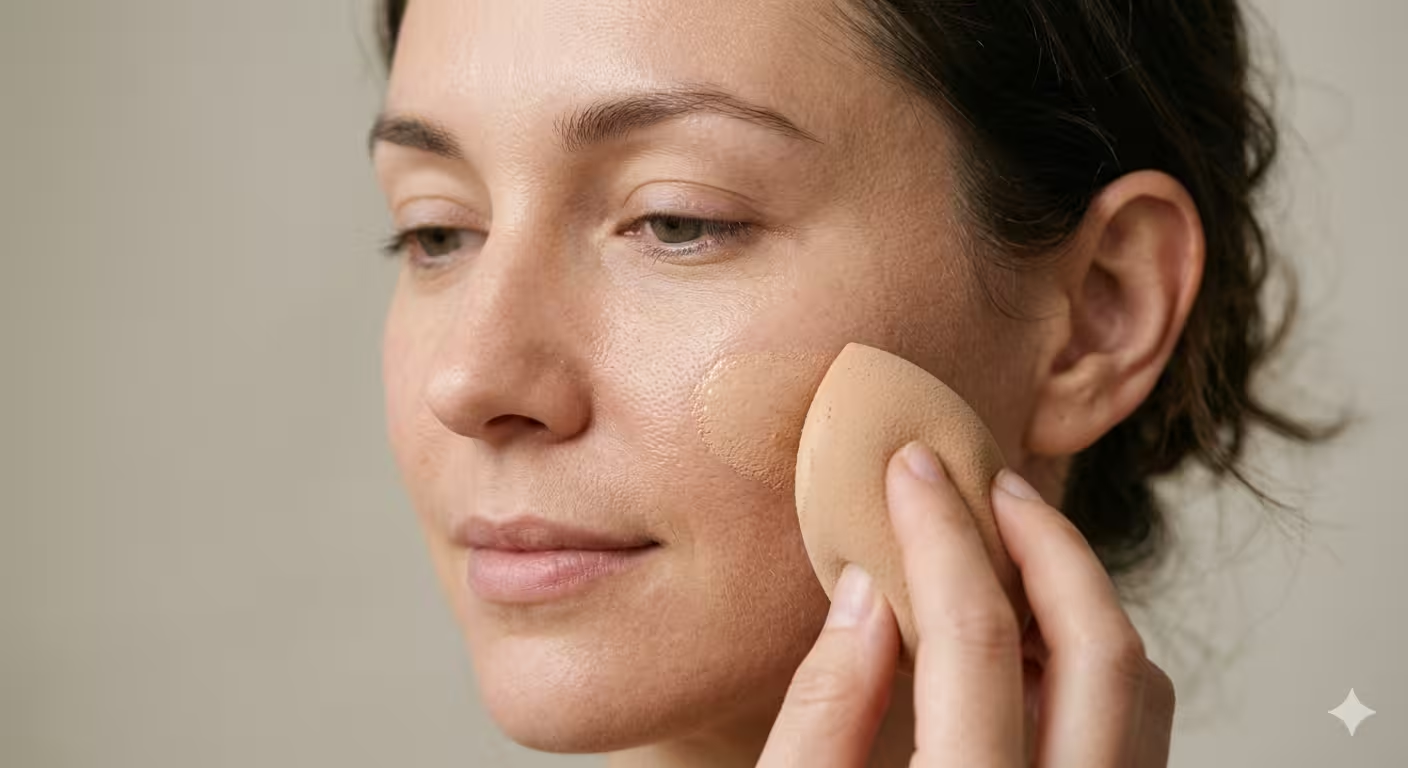
Foundation Formula by Skin Type: Which Works Best
Dark spots and hyperpigmentation appear on every skin type, but the foundation formula that keeps coverage intact differs significantly depending on your skin.
Oily Skin
- Choose: silicone-based, long-wear, oil-free formulas
- Finish: natural matte or satin
- Set the T-zone with powder immediately after application
- Avoid dewy or hydrating formulas — they break down faster on oily skin and cause coverage to slide off dark spots by midday
Dry Skin
- Choose: hydrating liquid or cream formulas
- Finish: satin or natural (never flat matte)
- Apply over a rich moisturiser fully absorbed into skin
- Avoid powder-heavy formulas — they cling to dry texture and make coverage look patchy around dark spots
Combination Skin
- Choose: water-based or hybrid formula with satin finish
- Apply mattifying primer to T-zone only before foundation
- Set the T-zone with powder, leave cheeks free or use setting spray only
- Avoid applying the same formula weight uniformly — oily zones will break down faster
Sensitive or Acne-Prone Skin
- Choose: fragrance-free, non-comedogenic, non-acnegenic formulas
- Look for: niacinamide, hyaluronic acid, azelaic acid in formula
- Avoid heavy cream formulas with wax-based binders — these can block pores and trigger the PIH cycle
- Dermablend’s fragrance-free formulas are particularly well-suited to this skin type
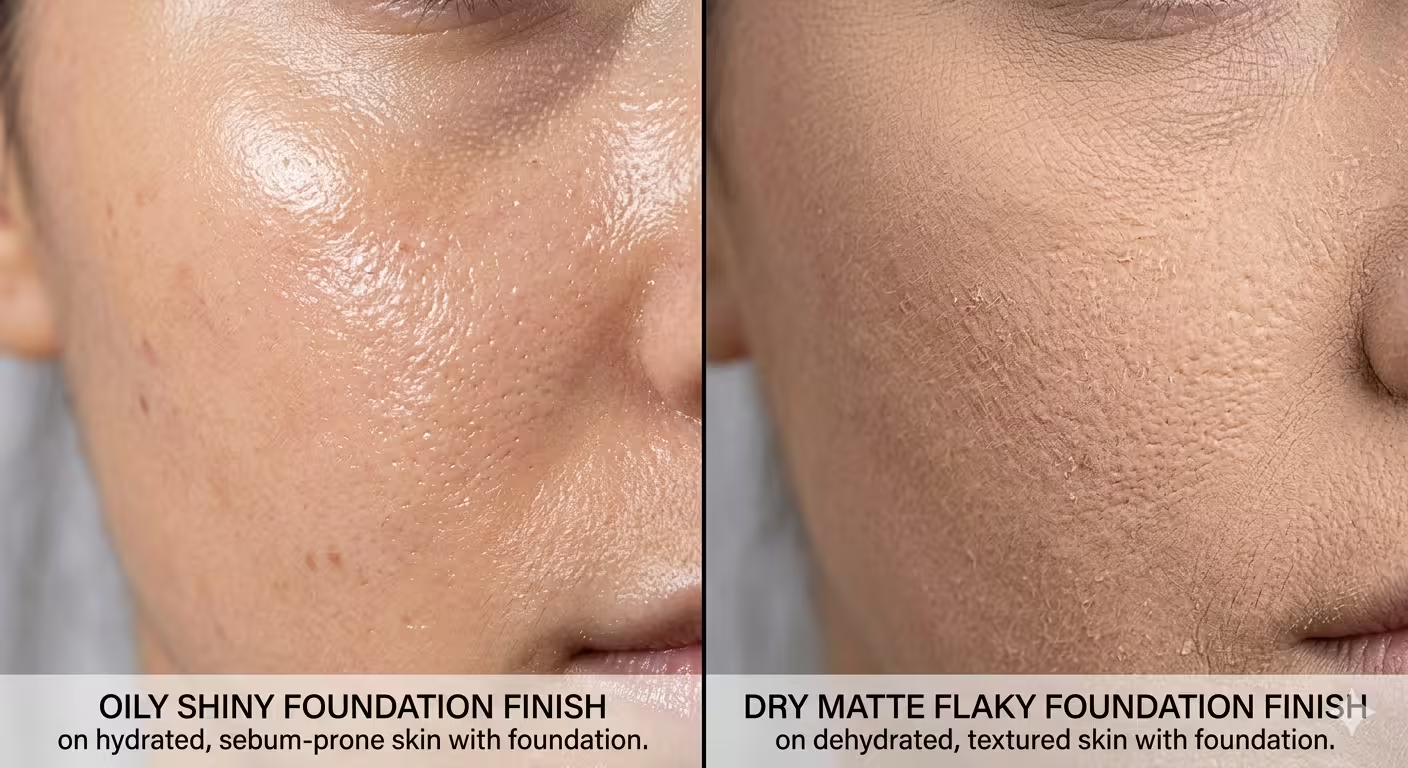
Foundation for Hyperpigmentation on Tan and Deeper Skin Tones
Tan and deeper skin tones face a specific problem that lighter skin tones don’t: the contrast between hyperpigmented areas and the surrounding skin is often much higher. A dark spot on a fair complexion might be two or three shades deeper than the surrounding skin. On a medium-tan complexion, that same spot might be four or five shades deeper. More contrast requires more coverage — or more precise colour correction — to neutralise it.
There’s also the oxidation problem. Foundations formulated for medium to tan shade ranges rely on warmer iron oxide pigments, which are more reactive to skin oils and pH. If you’re dealing with combination or oily skin on top of hyperpigmentation, your T-zone can shift foundation one or two shades warmer by midday, creating colour inconsistency across the face even where you applied coverage correctly.
If you consistently deal with foundation oxidation on tan skin, go half a shade cooler or more neutral than your exact match when you know you’ll be covering significant hyperpigmentation. The slight warm shift from oxidation will bring the formula closer to your true tone over the course of the day, and the coverage over dark spots will remain more consistent in colour throughout.
Choosing the right colour corrector for dark spots on tan skin is also more nuanced. A peach corrector formulated for fair-to-light skin will look pale and ineffective on medium-tan skin. You need a corrector with enough orange depth to actually cancel the contrast of deep brown discolouration. If the corrector disappears completely with no visible change to the dark spot, it’s not the right depth for your skin tone — go warmer and deeper.

Common Mistakes When Covering Dark Spots and Melasma
-
Applying one thick layer of full-coverage foundation all over the face
This is the fastest route to a heavy, cakey finish that still doesn’t fully cover deep spots. Thin buildable layers, applied precisely where needed, always outperform one heavy pass. -
Skipping colour correction for melasma
Melasma has a grey-brown colour cast that foundation pigment alone can’t fully neutralise. Without a corrector underneath, you’ll keep adding more foundation trying to achieve coverage that the right corrector would have delivered in one thin layer. -
Using a lighter concealer over hyperpigmented spots
Lighter concealer creates a pale halo around the dark spot that draws attention to it rather than concealing it. The concealer used over dark spots should match your foundation shade exactly — the colour correction underneath is what neutralises the darkness, not a lighter concealer on top. -
Relying on SPF in foundation for sun protection
You’d need to apply foundation at about three times the typical amount to achieve the stated SPF protection on the packaging. That’s not realistic. Apply your SPF separately in skincare, before primer. It will also prevent the white cast or flashback in photos that heavy-SPF foundations create on tan and deeper skin tones. -
Matching foundation shade in artificial lighting
Store lighting distorts both warm and cool undertones and makes almost any shade look acceptable. Always check your foundation match in natural daylight. When covering hyperpigmentation specifically, shade accuracy is more critical — a slightly wrong undertone becomes much more visible over the high-contrast areas around dark spots. -
Buffing foundation aggressively over colour corrector
Aggressive buffing picks up and moves the corrector you just applied underneath. Once you’ve applied corrector and allowed it to set for 30 seconds, press foundation over it — don’t buff, don’t swipe, don’t blend in circular motions. Pressing preserves the layered correction.
Ingredients in Foundation That Help with Hyperpigmentation Over Time
Some foundations do more than just cover. If you’re wearing foundation daily over hyperpigmented skin, a formula that actively addresses discolouration between applications can make a genuine difference over weeks and months.
Niacinamide limits the transfer of melanin from melanocyte cells to skin surface cells. Foundations with 2–5% niacinamide can produce visible brightening effects with consistent daily use. It’s also anti-inflammatory, which matters for PIH specifically — less inflammation means less melanin triggered by that inflammation.
Vitamin C (ascorbic acid, ascorbyl glucoside, or stabilised forms) inhibits the enzyme tyrosinase, which is responsible for melanin production. Vitamin C in a foundation formula is limited in effectiveness because of stability challenges, but some newer formulations use stable derivatives that do provide some daily benefit.
Tranexamic acid is one of the most effective ingredients for stubborn melasma and post-acne marks. It interrupts multiple steps in the melanin production pathway and is increasingly appearing in foundation formulas. If your primary concern is melasma, a foundation containing tranexamic acid gives you coverage plus active treatment in one product.
Azelaic acid is particularly useful for PIH on acne-prone skin because it addresses pigmentation and reduces the inflammation that causes it in the first place. Foundations with azelaic acid are less common but worth seeking out if PIH from breakouts is your main concern.

The most effective way to address hyperpigmentation is a combination approach: targeted skincare actives at night (retinol, tranexamic acid, vitamin C), strict SPF daily, and foundation that covers during the day while optionally containing brightening actives. Foundation alone will never fade dark spots — it conceals them. But the right foundation, worn consistently, can be part of a routine that gradually improves what’s underneath.
Frequently Asked Questions
What is the best foundation to hide dark spots?
The best foundation for hiding dark spots is a buildable, medium-to-full coverage formula with a satin or natural matte finish. Dermablend Pro Camo and Estée Lauder Double Wear are consistently the most reliable for keeping coverage over dark spots throughout the day. For the best result, apply a targeted colour corrector on the dark spots first, then layer foundation over the top. This approach uses less product overall and produces more natural-looking coverage.
What is the best foundation for hyperpigmentation?
The best foundation for hyperpigmentation is one with high pigment concentration, a long-wear formula, and good undertone matching for your skin tone. Dermablend Pro Camo is the professional benchmark. For mild hyperpigmentation, Clinique Even Better is a strong choice because it contains skincare actives that address discolouration over time. Skin type matters: oily skin needs a long-wear silicone-based formula; dry skin does better with a hydrating liquid foundation.
What is the best foundation for melasma?
Melasma requires a buildable, full-coverage formula that holds without oxidising significantly throughout the day. Estée Lauder Double Wear is particularly well suited because its coverage stays consistent across the larger patchy areas that melasma typically covers. Always colour correct before applying foundation for melasma — the grey-brown cast of melasma patches needs orange or peach neutralisation before any foundation will fully cover it. Finish with a setting spray to extend wear and prevent the foundation from drying out over melasma areas.
What is the best foundation to cover dark spots on tan skin?
Tan skin with dark spots needs a warm-undertoned, long-wear foundation with enough pigment to cover the higher contrast that dark spots have against melanin-rich skin. Giorgio Armani Luminous Silk paired with a targeted full-coverage concealer works well for mild PIH on tan skin. For more severe hyperpigmentation, Dermablend is the most effective option. Always use an orange or warm apricot colour corrector before foundation on tan skin — peach correctors formulated for lighter skin tones don’t provide enough neutralisation for the deeper contrast of dark spots on tan complexions.
Should I use concealer or foundation on dark spots?
Use both — in the right order. Foundation creates the even base across the whole face. Concealer goes on targeted spots after foundation, only where coverage is still needed. A colour corrector underneath both products is what makes the real difference for significant hyperpigmentation. Do not apply a lighter-than-foundation concealer over dark spots — this creates a pale halo that draws more attention to the spot rather than hiding it. The concealer used over dark spots should match your foundation shade exactly.
Does SPF in foundation protect against hyperpigmentation getting worse?
Not in realistic application amounts. Foundation is typically applied in much smaller quantities than the amount required to achieve the SPF protection stated on the packaging. For genuine sun protection that prevents hyperpigmentation from deepening, apply a dedicated SPF 30 or higher as part of your skincare routine before primer and foundation. This also avoids the flashback problem that high-SPF foundations (particularly those using titanium dioxide or zinc oxide) create in photos on tan and deeper skin tones.
Can foundation make hyperpigmentation worse?
Foundation itself doesn’t cause hyperpigmentation to worsen. However, certain foundation habits can contribute to it indirectly. Using comedogenic formulas on acne-prone skin triggers breakouts, which create new PIH. Relying on foundation SPF rather than a proper sunscreen means UV exposure continues to deepen existing spots. Heavy formulas that clog pores can also trigger inflammation on sensitive skin. The risk is in the habits, not the foundation formula itself — use non-comedogenic formulas, apply proper sunscreen, and remove foundation thoroughly at the end of the day.
More from MyBeautyPick
- Concealer Guide for Tan Skin
- Undertones for Tan Skin Explained
- Foundation Shade Guide for Tan Skin
- Why Foundation Oxidizes on Tan Skin
- How to Prep Tan Skin for Foundation
- Best Foundation Shades for Warm Undertones
- Concealer vs Foundation: What’s the Difference?
- Should Concealer Be Lighter Than Foundation?