

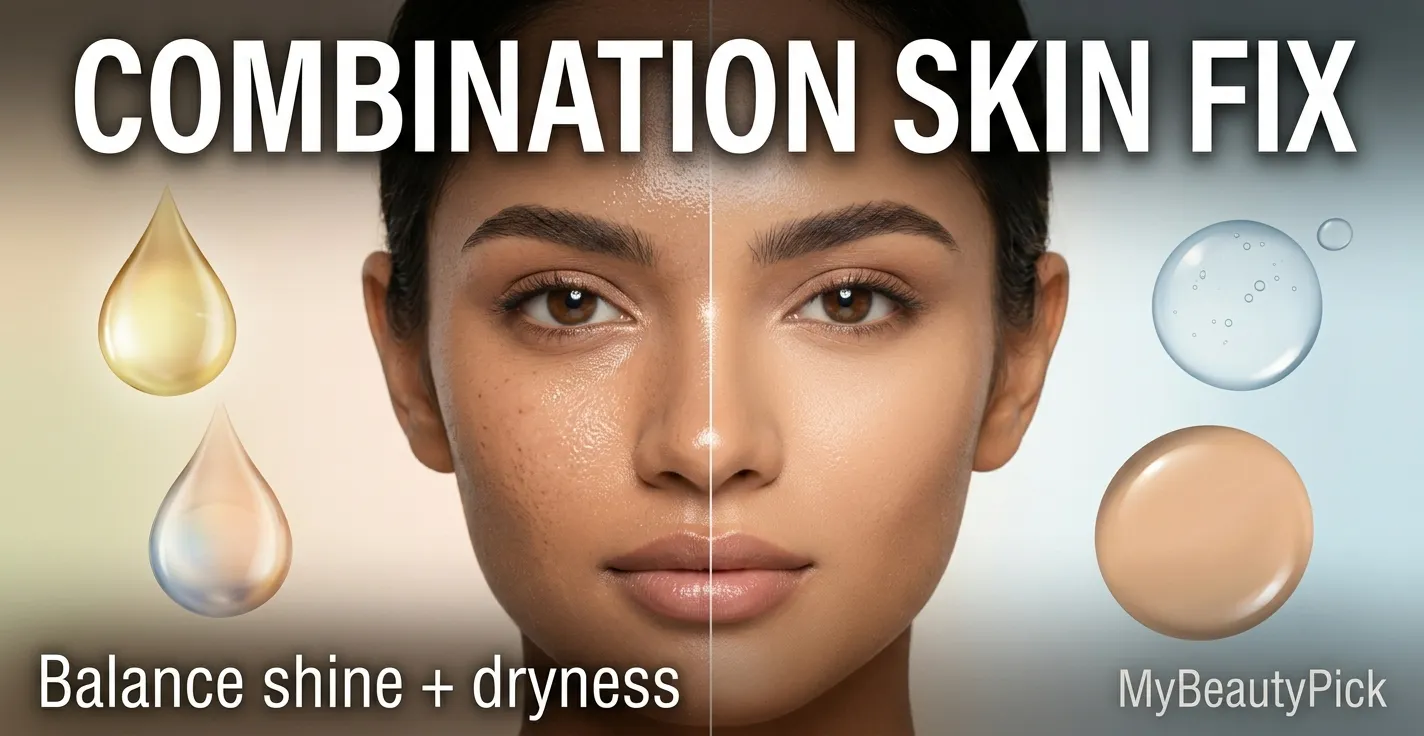
One foundation dries out your cheeks. Another turns your T-zone into a mirror by noon. The best foundation for combination skin does neither — here’s exactly what that looks like in a formula.
Combination skin doesn’t need a compromise — it needs a foundation that understands what’s actually happening on different parts of your face. Your forehead, nose, and chin are producing more sebum than your cheeks and jaw, which may feel normal or slightly dry. A single formula has to handle both environments without overcorrecting either one.
That rules out most foundations immediately. Full matte formulas control oil but emphasise dry patches and cling to texture. Full dewy formulas give beautiful glow but add unwanted shine to areas already producing it. The best foundation for combination skin sits in the middle: lightweight enough to stay comfortable on drier areas, structured enough to hold through an oily T-zone, and finished in a way that reads as natural skin rather than either extreme.
Here’s how to find it — and what to actually look for in the formula, ingredients, finish, and application.
What Combination Skin Actually Needs From a Foundation
Approximately 60% of people fall into the combination skin category, making it one of the most common — and most misunderstood — skin types when it comes to foundation selection. The challenge is that you’re essentially shopping for two different skin types at once.
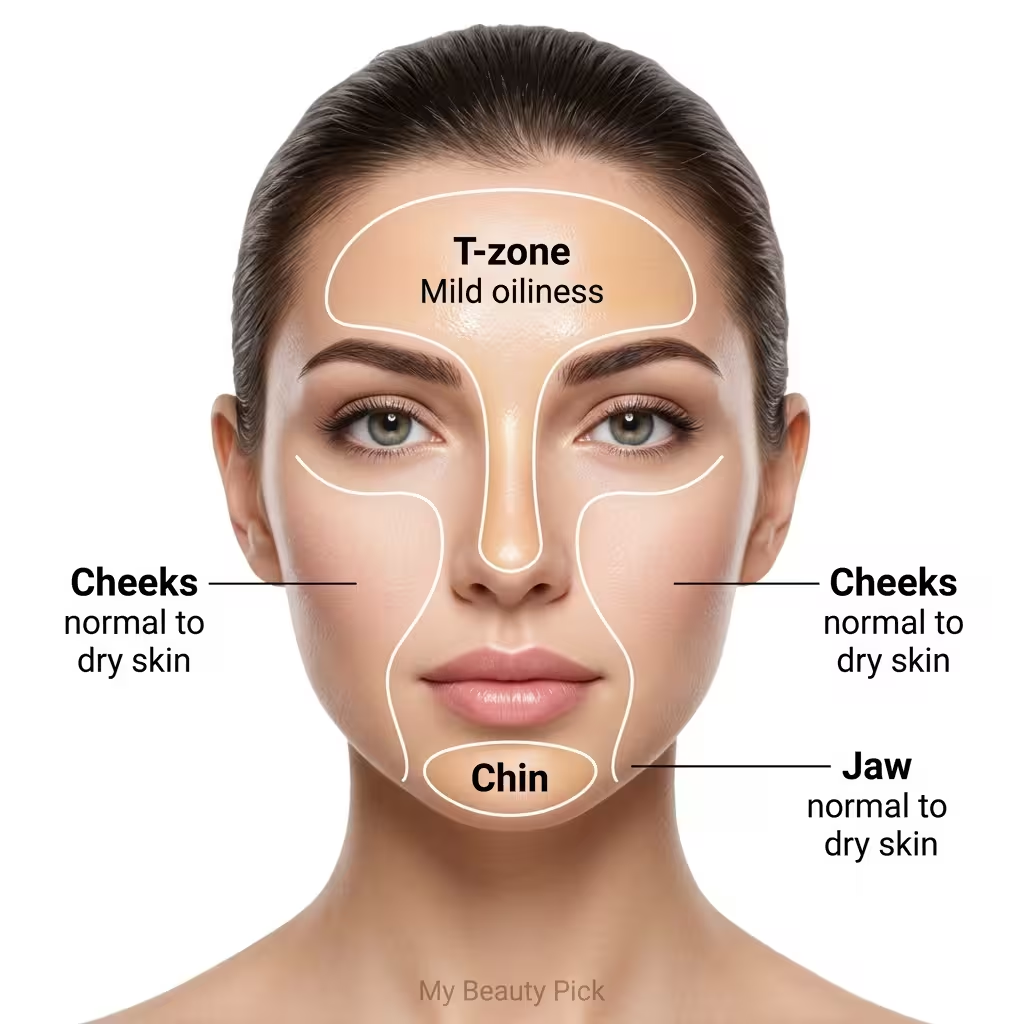
- Forehead, nose, chin
- Higher sebum output
- Foundation breaks down faster here
- Prone to shine and enlarged pores
- Needs: oil control, longevity
- Cheeks, jawline, temples
- Lower or balanced sebum output
- Foundation can cling to dry patches
- Prone to flakiness and dullness
- Needs: hydration, flexibility
These two zones don’t just feel different — they interact with foundation formulas differently. Sebum in the T-zone breaks down foundation binders and accelerates oxidation. Drier cheek areas have less natural moisture to keep the formula supple, so heavy or overly matte foundations cling to any texture and emphasise flakiness by midday.
The practical implication: you’re not looking for a foundation that controls oil across your whole face or hydrates your whole face. You’re looking for one that doesn’t push either zone further in the wrong direction — and then using technique to handle the rest.
The Right Formula Type for Combination Skin
Formula base determines more about how a foundation performs on combination skin than coverage level or finish does. The base is what sets how the formula interacts with your skin’s oil production and moisture levels from the moment you apply it.
Water-Based Formulas
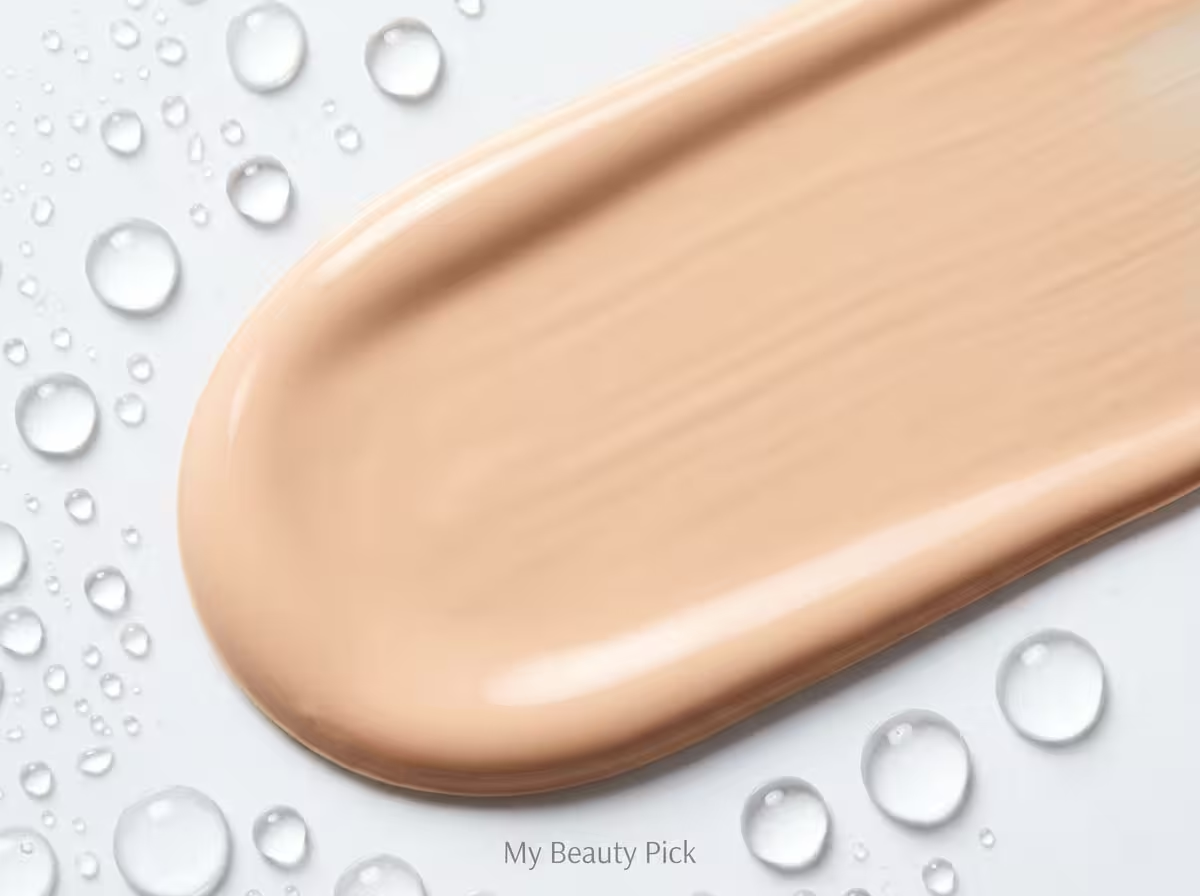
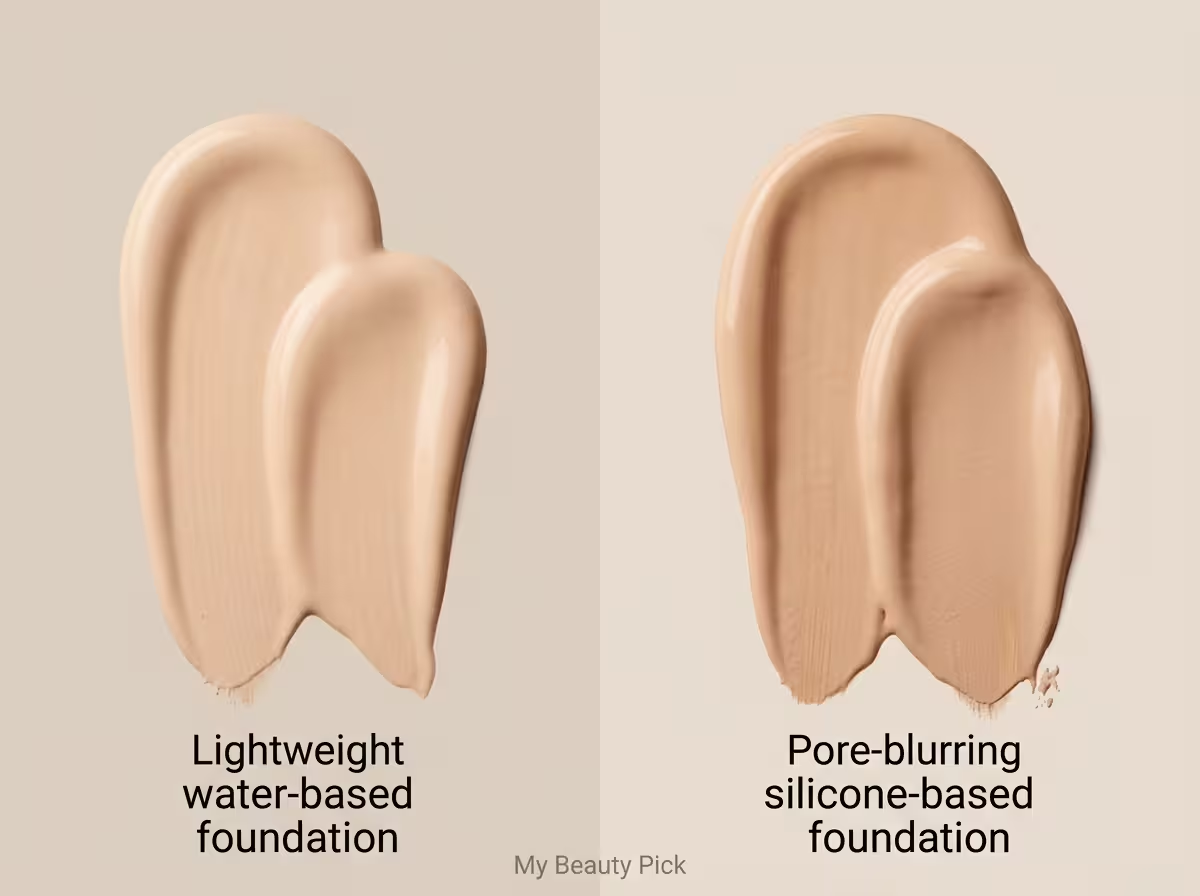
Water-based foundations list water (aqua) first in their ingredients. They’re lightweight, feel fresh on application, and blend easily without dragging on drier skin. On combination skin, water-based formulas are often the most comfortable choice — they don’t add extra heaviness to the T-zone and don’t emphasise dry texture on the cheeks. The limitation: on very oily T-zones, water-based formulas can thin and migrate faster because the aqueous base mixes with sebum relatively quickly. A strong primer underneath compensates for this.
Silicone-Based Formulas
Silicone-based foundations (look for dimethicone or cyclopentasiloxane near the top of the ingredient list) create a polymer film on the skin surface that’s more resistant to sebum breakdown than water-based formulas. They hold longer on oily areas and blur pores effectively. The trade-off: silicone can feel slightly occlusive on drier areas over time and can cling to flaky texture if skin prep isn’t thorough. On well-prepped, moisturised combination skin, silicone-based formulas work well — especially when longevity is the priority.
Hybrid and Serum Foundations
The fastest-growing category for combination skin is the hybrid formula — water-based or serum-textured foundations that incorporate silicone-like polymers for hold without the full occlusive feel of a traditional silicone base. These often include skincare actives (niacinamide, hyaluronic acid, glycerin) that help maintain moisture balance on drier areas while the polymer component resists sebum breakdown in the T-zone. For most combination skin types, a lightweight hybrid or water-based foundation with good polymer binders, set selectively with powder on the T-zone, is the most reliable approach.
| Formula Type | Best For | Watch Out For | Finish Range |
|---|---|---|---|
| Water-based | Mild-to-moderate combination skin; comfortable all-day wear | May not hold as long on very oily T-zones without primer | Natural to dewy |
| Silicone-based | Oily-heavy combination skin; longevity priority | Can cling to dry patches if skin prep is skipped | Matte to satin |
| Hybrid / serum | Most combination skin types; skincare-first routines | Lighter coverage; may need concealer for blemishes | Natural to satin |
| Full matte liquid | Very oily T-zone with minimal dry areas | Clings to dry texture; emphasises flakiness on cheeks | Matte |
| Full dewy / glow | Dry-dominant combination skin (cheeks very dry) | Amplifies T-zone shine; breaks down fast on oily areas | Dewy to luminous |
The Best Foundation Finish for Combination Skin
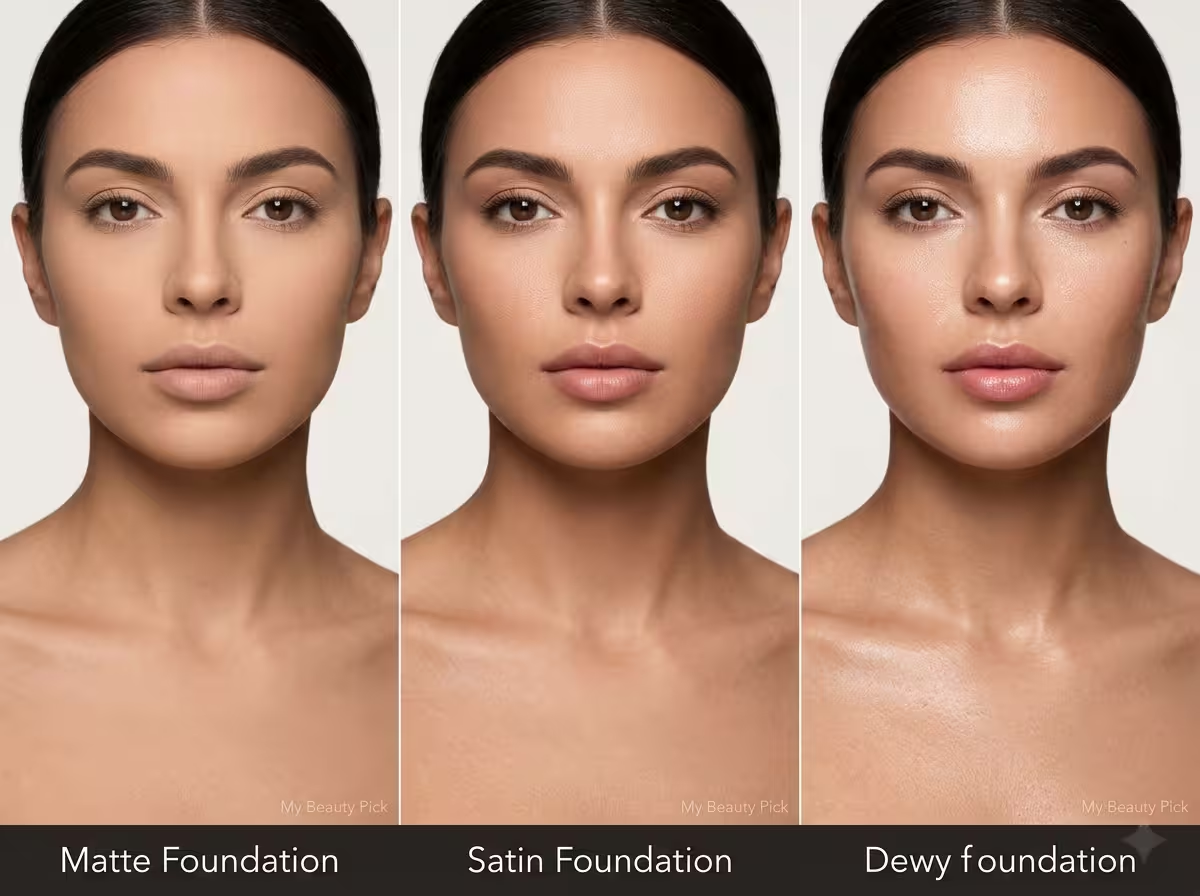
Finish is the most visible characteristic of a foundation — and for combination skin, the wrong finish in either direction causes problems that show within hours.
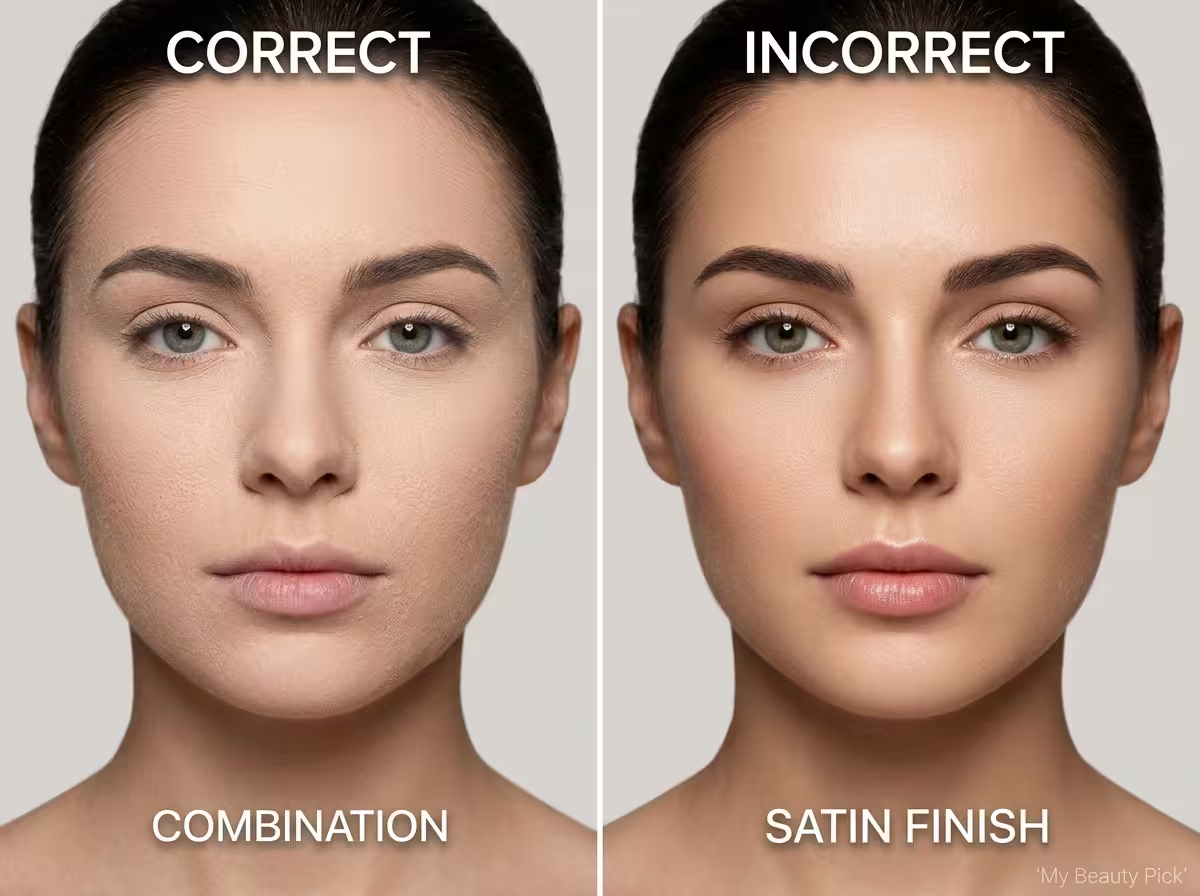
Full matte finish absorbs all light. On the T-zone, this controls shine. On dry cheek areas, it amplifies any texture or flakiness — the foundation clings and flattens, making dry patches more visible, not less. Full matte also tends to look flat and artificial on drier skin by midday.
Full dewy or glow finish adds light-reflecting particles that give skin a luminous, hydrated look. On dry cheek areas, this is beautiful. On an already-oily T-zone, adding reflective finish amplifies the shine — by midday the forehead can look wet rather than glowing.
Satin finish is the reliable middle ground for combination skin. It reflects some light — enough to look like skin rather than a mask — but not so much that it adds to T-zone shine. Satin tends to be more flexible in formula too, which means it moves with skin throughout the day without cracking or emphasising dry texture. Makeup artists consistently recommend satin for combination skin precisely because it reads naturally across different skin surface conditions on the same face.
Natural or skin-like finish sits in the same range as satin — slightly more matte than satin but not flat. These work well for combination skin that leans slightly more oily overall.
Key Ingredients to Look for in Foundation for Combination Skin
The ingredient list tells you far more about how a foundation will perform on combination skin than the marketing description does. Here’s what to look for — and what to avoid.
Regulates sebum production and minimises pore appearance. Also anti-inflammatory — reduces redness around blemishes. One of the most effective actives for combination skin in a foundation formula.
Draws moisture to the skin surface and holds it there. Keeps drier cheek areas comfortable without adding oil. Won’t contribute to T-zone shine because it’s water-based, not oil-based.
An oil-absorbing mineral that reduces surface shine in the T-zone. In the right concentration, it controls oil without overly drying drier areas. Found in most long-wear formulas.
A humectant that maintains skin’s moisture balance. Keeps formula from feeling tight or dry on cheeks. Works alongside hyaluronic acid for comfortable all-day wear across both zones.
Absorbs excess oil effectively. Good in small amounts, but can be too drying for drier cheek areas if the formula relies heavily on it. Check that hydrating ingredients are also present.
A silicone that creates a smooth, pore-blurring film. Adds longevity and reduces shine. Works well for combination skin — lightweight silicone formulas are preferable over very heavy concentrations.
Creates a thick, occlusive layer that adds unwanted shine to oily areas and can clog pores. Avoid foundations listing mineral oil high in the ingredients — it amplifies the T-zone problem.
Controls oil and thins formulas, but strips the skin’s acid mantle. Makes dry cheeks worse and can trigger rebound oil production in the T-zone. Not a sustainable solution for combination skin.
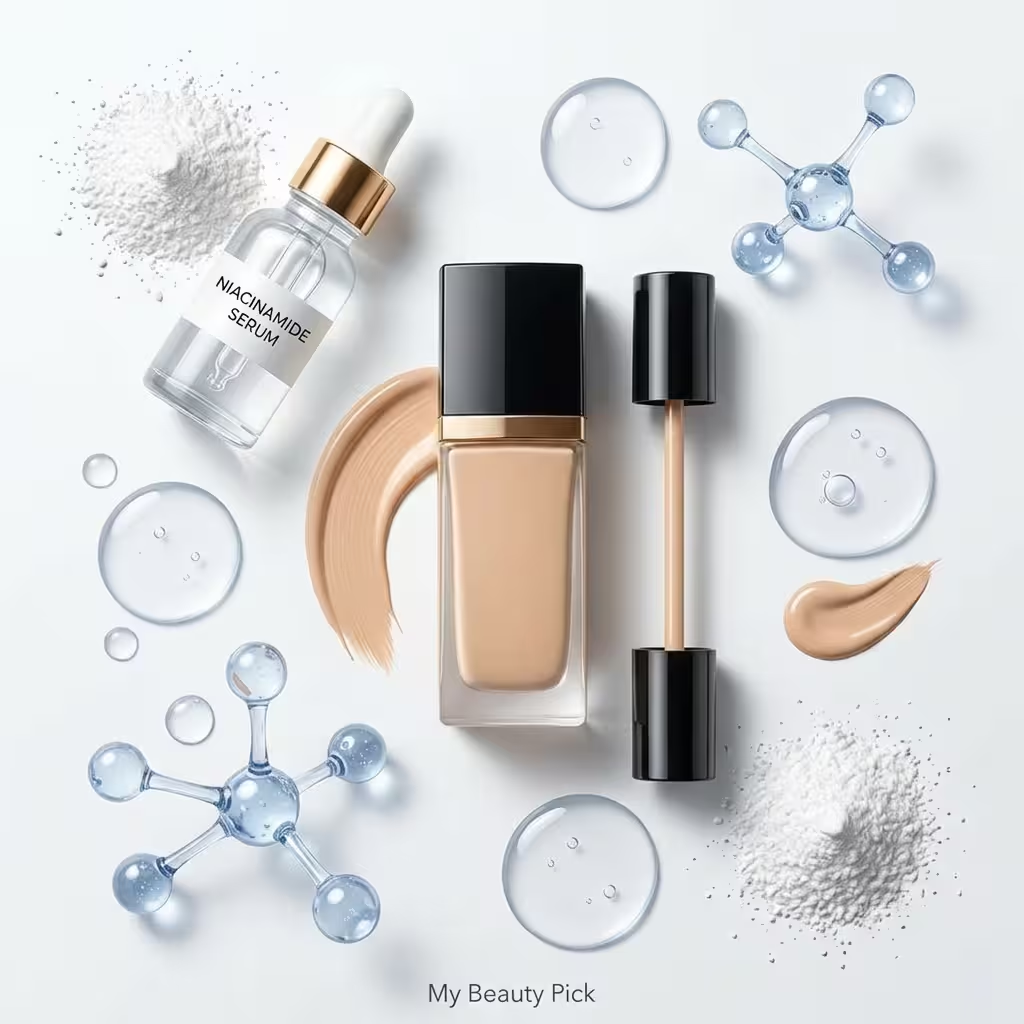
Niacinamide (vitamin B3) works on combination skin through two mechanisms: it reduces sebum excretion rate by signalling to sebaceous glands, and it strengthens the skin barrier — which is often compromised in combination skin, contributing to both excess oil production and surface dehydration. Foundations containing 2–5% niacinamide can produce visible sebum-regulation benefits over consistent use, not just surface-level coverage.
What to Look for in Foundation for Combination Skin — Quick Reference
| Feature | What to Choose | Why |
|---|---|---|
| Finish | Satin or natural-satin | Controls T-zone shine without drying cheeks; reads natural across both zones |
| Formula base | Water-based or lightweight hybrid | Comfortable across both oily and drier areas; less likely to cling to dry texture |
| Coverage level | Light-to-medium, buildable | Build only where needed; heavy all-over coverage sits unnaturally on combination skin |
| Key actives | Niacinamide, hyaluronic acid, glycerin, silica | Oil regulation, moisture retention, and oil absorption in one formula |
| Pore compatibility | Non-comedogenic, oil-free | T-zone pores are more active — avoid ingredients that clog or add occlusive weight |
| Longevity | 8+ hour wear minimum | Combination skin breaks down foundation faster in oily zones — longevity is essential |
| Avoid | Heavy mineral oil, denatured alcohol, very high silica content alone | Add shine or strip moisture — both counterproductive for combination skin balance |
Recommended Foundations for Combination Skin
These foundations are selected on formula characteristics that serve combination skin specifically — finish, base type, key ingredients, and real-world wear performance across both oily and drier zones.
The benchmark foundation for combination skin. Oil-free despite the luminous finish, glycerin-infused for cheek comfort, and the formula holds remarkably well in the T-zone without ever looking heavy or matte. The finish sits exactly in the natural-satin range — light reflects off it, but it doesn’t add measurable shine. Coverage builds from sheer to medium without becoming cakey. The shade range is extensive with strong undertone options across tan and medium depths.
The go-to for combination skin that leans heavily oily in the T-zone and requires genuine all-day longevity. The polymer binder system resists sebum breakdown longer than most foundations at any price point. The natural matte finish controls T-zone shine effectively. On very dry cheeks it can feel slightly tight by end of day — the fix is thorough moisturisation before application and avoiding powder on the cheek area. Best suited for combination skin where oiliness is the primary concern.
The reformulated All Hours now includes hyaluronic acid alongside its long-wear polymer system — which directly addresses the combination skin challenge. The luminous matte finish occupies the sweet spot between matte (oil control) and luminous (skin-like radiance), reading as polished natural skin rather than flat or shiny. Holds through humidity and heat. Particularly effective on combination skin in warmer months when T-zone oil production increases.
A reliable water-based formula that performs across a wide range of combination skin types. The natural finish neither adds shine nor dries the skin, and the lightweight texture sits comfortably across both oily and drier zones. The extensive shade range — with W (warm), C (cool), and N (neutral) undertone options — makes it one of the most accessible foundations for tan and medium skin tones at the drugstore price point. Build with concealer for blemish coverage rather than layering the foundation heavily.
One of the most intelligently formulated foundations for combination skin. Niacinamide at an active concentration regulates sebum over time while hyaluronic acid maintains moisture balance across drier areas. The natural-satin finish reads like healthy skin rather than makeup, and the formula holds well in the T-zone for a skincare-forward foundation. SPF 25 included via chemical filters — no SPF flashback in photos. Particularly well-suited for combination skin that also has blemish concerns, given niacinamide’s anti-inflammatory action.
Best suited for combination skin where the T-zone is significantly more oily than the cheek areas. The silica-heavy formula absorbs oil effectively and blurs pores. The matte finish can feel slightly tight on drier cheek areas by late afternoon — counteract this by applying hydrating cream to the cheeks before foundation and avoiding powder in those areas. Strong budget option for oily-heavy combination skin in humid climates.
Foundation for Combination Skin on Tan and Warm Skin Tones
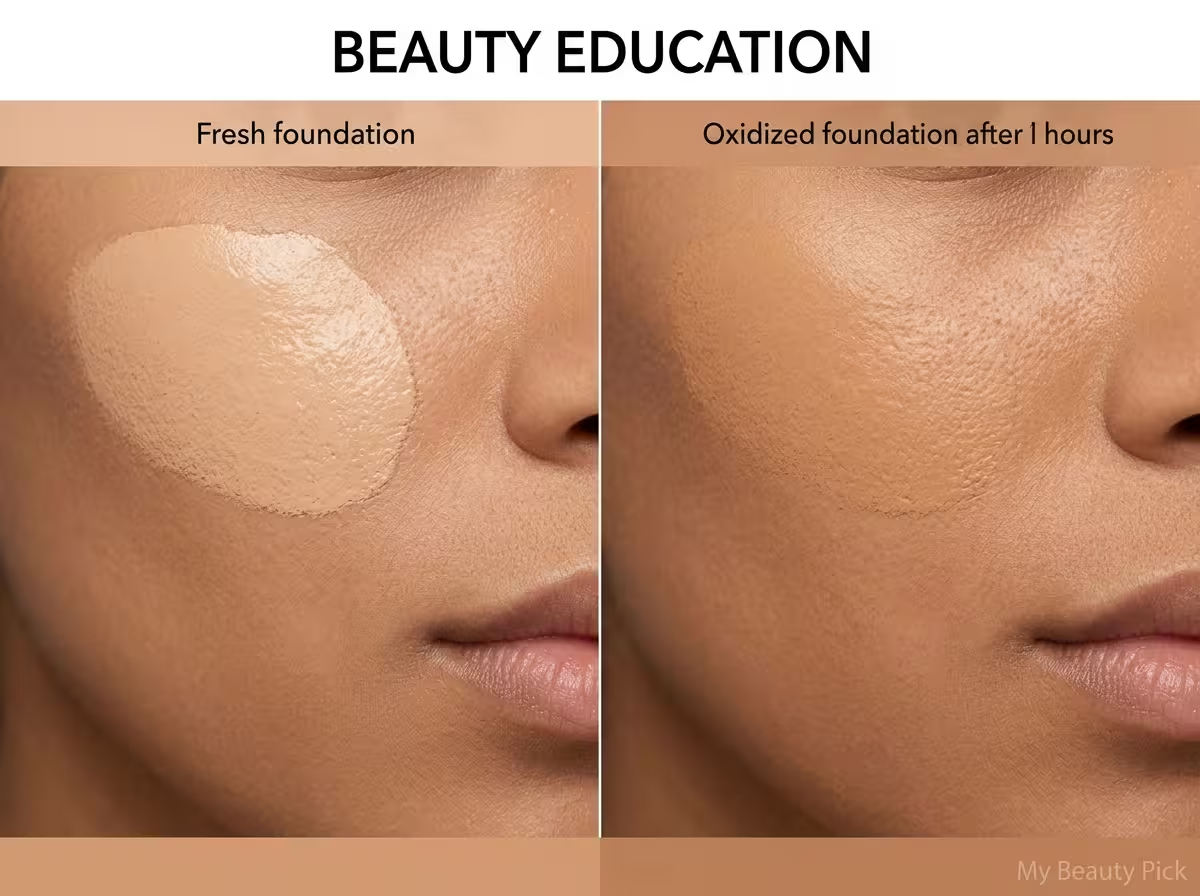
Combination skin on tan and medium skin tones has one additional layer of complexity: oxidation. Higher sebum output in the T-zone — already elevated in combination skin — accelerates iron oxide oxidation in foundation formulas. On tan skin, where warm iron oxides are more concentrated in the shade formulas, the T-zone can shift orange or noticeably warmer than the cheeks within a couple of hours.
The result: even when you’ve found a foundation that balances coverage across both zones, the colour becomes inconsistent throughout the day as the T-zone oxidises faster than the less-oily cheek areas.
How to Address Oxidation in Combination Skin on Tan Skin
- Use a silicone-based or mattifying primer on the T-zone specifically. This creates a barrier between skin oils and the foundation formula, slowing the rate of iron oxide reaction in the oily zone.
- Choose a foundation shade with a slightly cooler or more neutral undertone than your exact match. The warm shift from oxidation will bring it closer to your true tone over time. A warm shade oxidising on warm-undertoned skin amplifies the orange shift.
- Set the T-zone immediately with a pigmented, undertone-matched powder — not a white translucent powder, which reads ashy against tan skin and causes flashback in photos.
- Apply setting spray over the finished look. Setting spray locks the formula and reduces the rate of continued oxidation by limiting oxygen and oil exposure to the foundation pigments.
Skin Prep for Combination Skin Before Foundation
No foundation — however well formulated — performs its best on unprepared combination skin. The prep routine is what creates the surface conditions the formula needs to do its job.
Moisturise Both Zones — Don’t Skip Cheeks
The most common prep mistake: skipping or minimising moisturiser because the T-zone is oily. Drier cheek areas need hydration before foundation regardless of what the T-zone is doing. Use a lightweight, oil-free moisturiser across the whole face, then apply a slightly richer cream only to the cheeks if they’re significantly drier. Let both fully absorb — at minimum 5 minutes — before foundation goes on. Applying foundation over freshly applied, unabsorbed moisturiser creates a slick surface the formula slides on rather than adhering to.
Prime by Zone, Not Uniformly
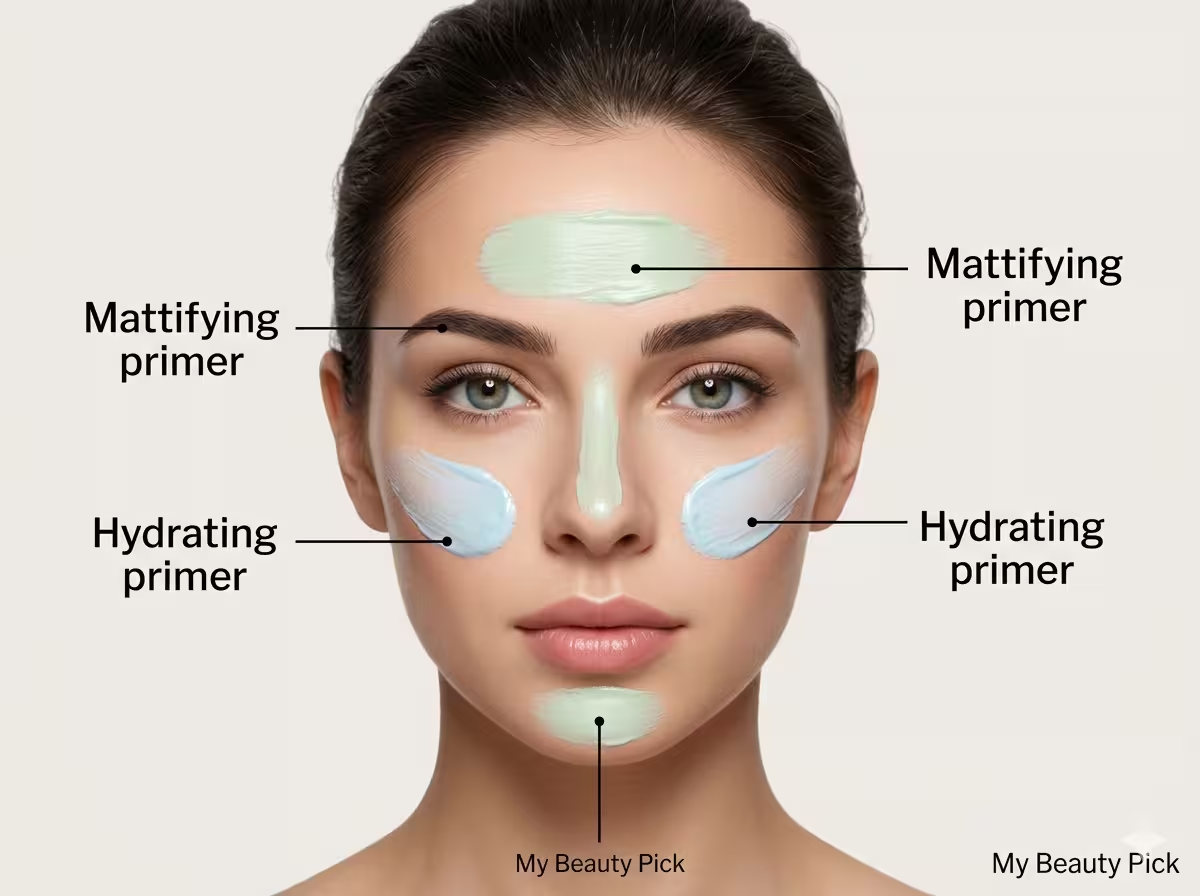
The most effective priming approach for combination skin is zone-based. Apply a mattifying or oil-control primer specifically to the T-zone — forehead, nose, chin. Apply a hydrating or pore-blurring primer to the cheeks and drier areas. Using a full-face mattifying primer over-dries the cheeks. Using a full-face hydrating primer adds moisture to an already oil-prone T-zone. Zone priming targets each area precisely.
Set Selectively, Not Uniformly
Setting powder should follow the same zone logic as primer. Apply powder only to the T-zone. Leave the cheeks with minimal or no powder, or use a setting spray instead. Heavy powder across the whole face on combination skin over-dries the cheeks and looks cakey by midday as the drier areas lose flexibility. Setting spray applied over the finished look unifies both zones — it slightly softens the powdered T-zone so it reads the same finish as the un-powdered cheeks.
How to Apply Foundation for Combination Skin
Technique is where combination skin foundation either comes together or falls apart. The application method determines how evenly the formula sits across both zones — and how long it holds.
Build Coverage Where Needed, Not Everywhere
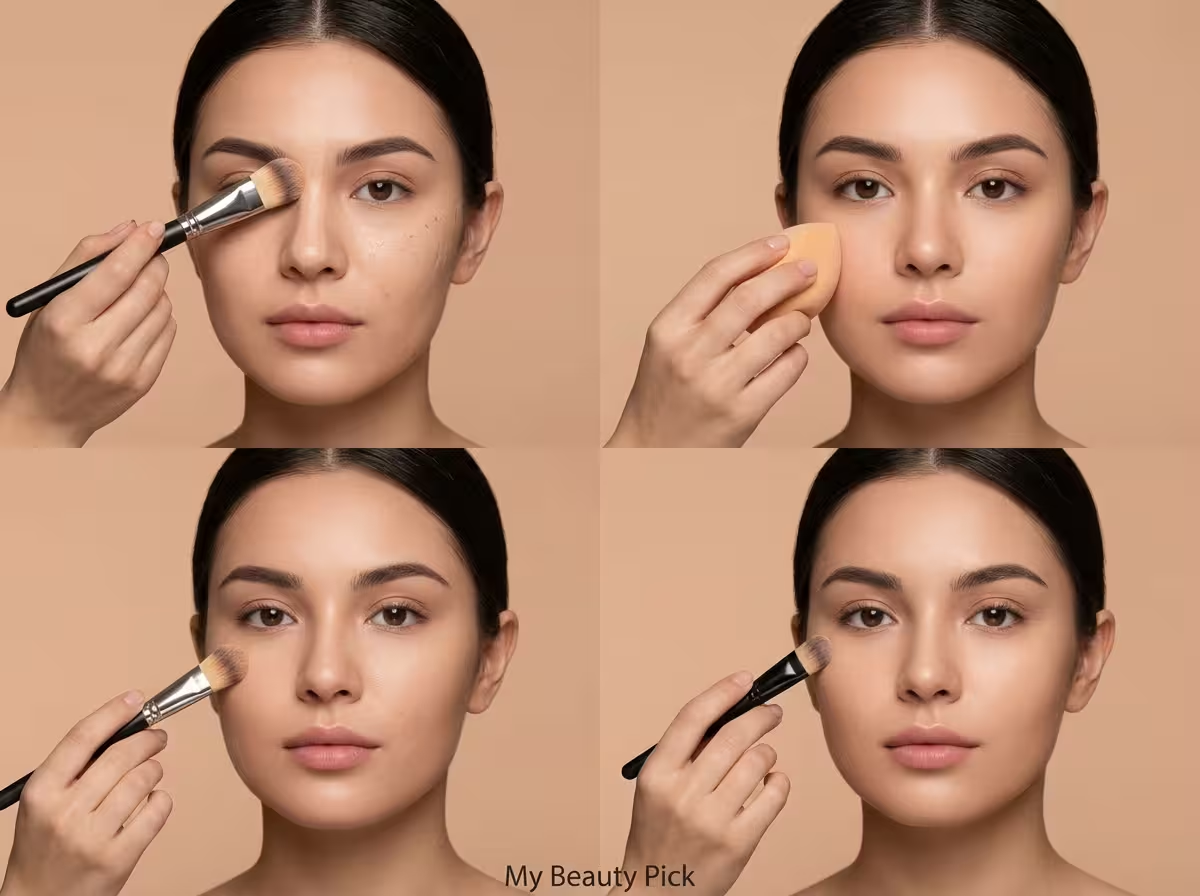
Start with a thin, even layer across the whole face using a damp beauty sponge or flat foundation brush. Then build coverage specifically where you need it — over blemishes, redness, or hyperpigmentation — with a small brush or fingertip, pressing rather than swiping. Building only where needed keeps the overall formula weight light and prevents the heavy, mask-like look that comes from applying full-coverage foundation uniformly everywhere.
Use a Damp Sponge for Cheeks, a Brush for the T-Zone
A damp beauty sponge blends foundation into drier cheek areas seamlessly — the moisture in the sponge prevents the formula from dragging on dry texture. A foundation brush on the T-zone gives more precise application and helps press the formula into pores rather than spreading over them. Switching tools between zones produces significantly more consistent results than using one tool everywhere.
Work Quickly in the T-Zone
Sebum starts interacting with the foundation formula immediately after application. Apply the T-zone, blend within 30–60 seconds, and set with a light press of powder before moving to the cheeks. If you apply foundation uniformly and set everything at the end, the T-zone has already had several minutes of oil interaction before powder goes on — accelerating breakdown and oxidation from the start.
Common Foundation Mistakes for Combination Skin
- Choosing a fully matte foundation to control T-zone oil. Matte formulas control oil in the T-zone but cling to dry texture on the cheeks, emphasise flakiness, and look flat and artificial on drier areas. A satin or natural finish with selective T-zone powder gives oil control without the drawbacks.
- Skipping moisturiser because the T-zone is oily. The T-zone’s oil production is not a substitute for hydration on the cheeks. Skipping moisturiser makes dry cheek areas worse and can trigger additional oil production in the T-zone as the skin tries to compensate for overall dehydration. Moisturise the whole face with a lightweight formula.
- Applying primer uniformly across the whole face. A mattifying primer on the cheeks over-dries them. A hydrating primer on the T-zone adds moisture where oil is already the problem. Zone-based priming — mattifying on T-zone, hydrating on cheeks — gives each area what it needs without compromising the other.
- Setting the whole face with powder. Powder across the whole face leads to a cakey, flat appearance on combination skin. Set the T-zone with a light press of powder. Leave the cheeks set with setting spray only. Oil control where you need it, natural skin appearance where you don’t.
- Using the same foundation shade year-round. Combination skin on tan skin tones often changes shade depth seasonally — and the T-zone’s faster oxidation rate can make the same shade read differently in summer vs. winter. Reassess shade in natural daylight at the start of each season.
- Applying too much product trying to get coverage. Layering too much foundation creates a thick film that sits on top of skin, breaks down faster in oily zones, and looks increasingly cakey as the day progresses. Thin layers built only where needed always outperform one heavy application.
Frequently Asked Questions
What is the best foundation for combination skin?
Should foundation for combination skin be matte or dewy?
How do I stop my foundation from looking patchy on combination skin?
How do I stop my T-zone from getting shiny through foundation?
What ingredients should I look for in foundation for combination skin?
How do I choose foundation shade for combination skin on tan skin?
The Bottom Line
The best foundation for combination skin isn’t the one that works hardest against your skin — it’s the one that works with both zones rather than fighting either of them. That means a satin or natural-satin finish, a lightweight water-based or hybrid formula with niacinamide and hyaluronic acid, buildable medium coverage, and application technique that treats the T-zone and cheeks as two different surfaces requiring slightly different approaches.
For tan and warm skin tones, add undertone matching and oxidation management to that list — a silicone primer on the T-zone, a slightly cooler shade than your exact match, and pigmented (not white) setting powder make the difference between coverage that stays consistent and a T-zone that reads two shades warmer than the rest of your face by midday.
The right recommended foundation for combination skin isn’t a single product — it’s a set of formula characteristics matched to your skin. Get the finish, formula base, and key ingredients right, and the application technique handles the rest.
More from MyBeautyPick
- How to Find Your Foundation Shade for Tan Skin
- Undertones Explained: Warm vs. Neutral vs. Cool for Tan Complexions
- Why Foundation Oxidizes on Tan Skin — and How to Fix It
- How to Prep Tan Skin for a Flawless Foundation Finish
- Best Foundation Shades for Warm Undertones
- Foundation Shade Guide for Caramel & Golden Skin Tones
- Concealer vs Foundation: Differences, Uses & Do You Need Both?
- How to Adjust Foundation Shade for Tan Skin in Summer