

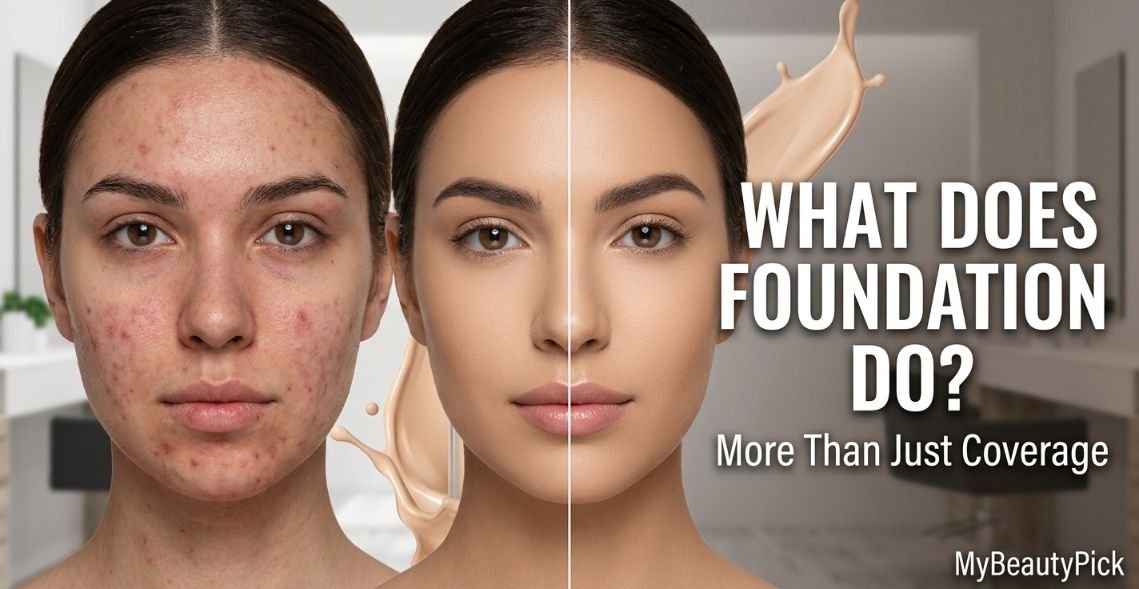
Foundation is the most used and least understood product in makeup. Most people know what it does visually — it evens skin tone. Far fewer know what it actually is, what its chemistry involves, or why the same product that looks perfect on one person looks flat, orange, or cakey on another. Understanding what foundation does at a functional level changes how you choose it, apply it, and troubleshoot it when something goes wrong.
What Foundation Is and What It Does
- Foundation is a pigmented emulsion or powder that deposits a uniform colour layer over the skin to reduce visible tonal variation and create a consistent base for other makeup.
- What it does depends on the formula: coverage level, finish, base chemistry, and active ingredients all determine the functional result.
- Foundation does not treat skin, improve skin condition, or provide meaningful skincare benefits in standard formulas. Serum foundations are an exception — but at low active concentrations.
- Matte foundation absorbs light, reducing the appearance of shine and pores. Dewy foundation reflects light, creating a luminous, hydrated-looking finish.
- On tan skin, what foundation does depends as much on the formula’s base colour (warm-peach vs yellow-neutral) as on its coverage level or finish. The wrong base tone works against the skin rather than with it.
What Is Foundation Makeup?
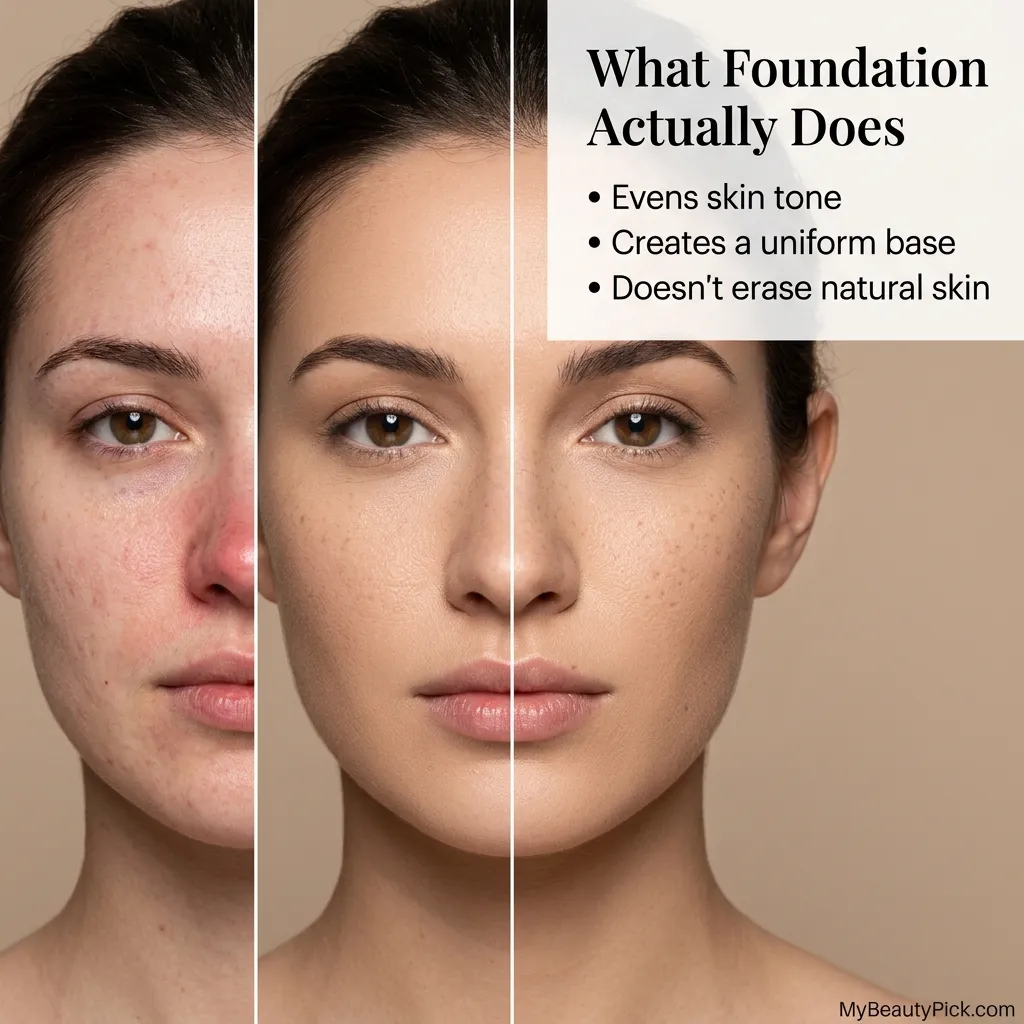
Foundation is a cosmetic product formulated to create an even skin tone across the face by depositing a uniform pigment layer over the skin surface. It is the base product in a makeup routine — the layer applied directly over skincare that creates the even canvas for everything that follows: concealer, blush, bronzer, powder, highlighter.
The word “foundation” describes its function accurately. It is the foundational layer. A blush applied over bare skin reads differently than blush applied over a foundation base. Concealer over a foundation-matched base blends invisibly; the same concealer over bare uneven skin reads as a visible patch. Foundation does not just cover — it standardises the surface so that every subsequent product performs as intended.
Foundation exists in multiple formats (liquid, powder, stick, cream, serum, mineral) and within each format it varies by coverage level, finish, base chemistry, and ingredient composition. These variables determine what any specific foundation actually does on any specific skin type.
What Foundation Is Actually Made Of
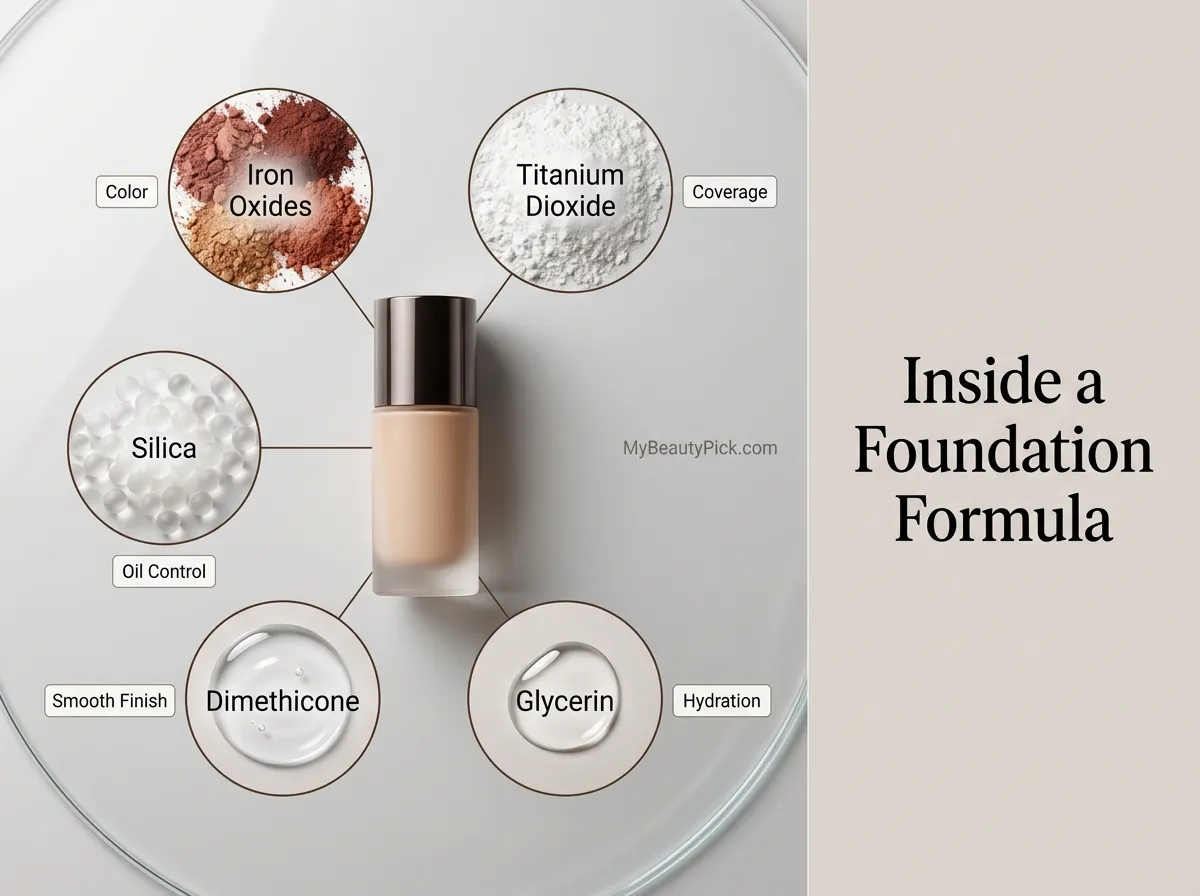
Every liquid or cream foundation is built around the same core architecture: a base (water, silicone, or oil), pigments for colour and coverage, film-forming polymers for adhesion and wear, and functional additives for finish, feel, and skin benefit. Understanding these ingredients is what separates good foundation choices from guesswork.
Iron Oxides (CI 77491, 77492, 77499)
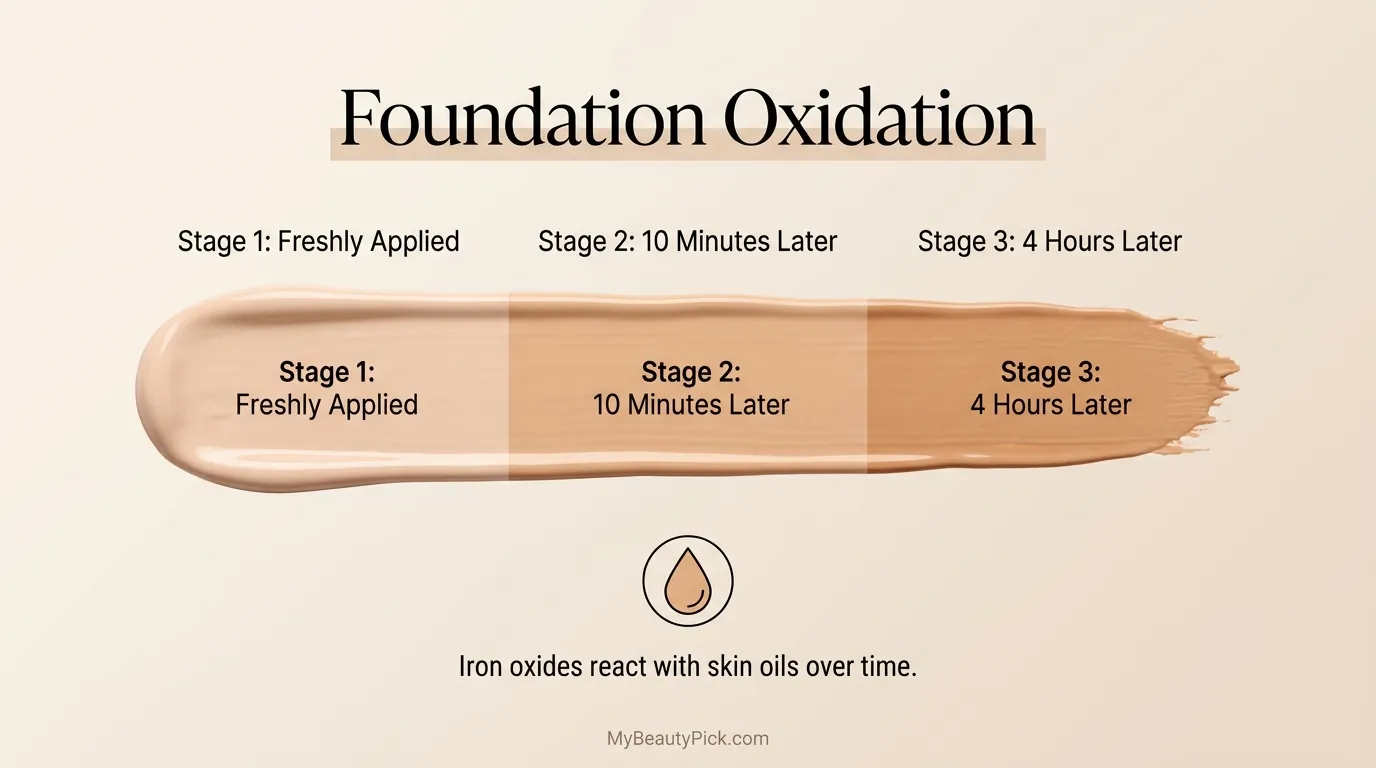
Primary colourantThe pigments that create all warm-to-dark skin tone shades in foundation. Red, yellow, and black iron oxides are combined to produce the full spectrum of foundation colours. Higher concentrations equal higher coverage. Iron oxides react with oxygen and skin oils over time — this is the oxidation process that causes foundations to deepen and shift warmer on oily and tan skin.
Titanium Dioxide (CI 77891)
White pigment, opacity, SPFTitanium dioxide is the white pigment in foundation that creates opacity and coverage. Higher concentrations produce more opaque, fuller coverage. It also provides natural UV protection. At higher percentages it can create a white cast on deeper skin tones and cause flashback (the grey-white reflection visible in flash photography).
Dimethicone and Cyclomethicone
Silicone base, pore blurring, wear extensionSilicones sit on the skin surface without absorbing, creating a smooth film that blurs pores and surface texture. They extend foundation wear by reducing the contact between skin oils and iron oxide pigments, slowing oxidation. They are incompatible with water-based products applied beneath them.
Acrylates Copolymer / Carbomers
Film formers and adhesion agentsThese polymers form a thin flexible film on the skin as the formula dries, which is what makes foundation stay in place and resist smudging. They are also the ingredients responsible for pilling when incompatible product layers are applied — two polymer films resist each other rather than bonding.
Silica and Kaolin
Oil absorption, pore blurring, soft focusSilica is the ingredient in matte and oil-control foundations that absorbs sebum and reduces visible shine. Kaolin clay does the same in a heavier, more absorbent form. Higher silica content produces a more matte finish. These ingredients also create a soft-focus blurring effect because their fine particles scatter light rather than reflecting it directly.
Glycerin and Hyaluronic Acid
Humectants for hydration and skin feelGlycerin and hyaluronic acid are humectants — they draw water to the skin and improve the feel and wear of the foundation formula. Their presence prevents dry-down crackling on dry or dehydrated skin. In serum foundations, hyaluronic acid is present at higher concentrations than in standard liquids, though still lower than in standalone skincare.
What Does Foundation Do? The 5 Functional Roles
1. Creates an Even Skin Tone
This is the primary function. Foundation deposits a pigment layer that reduces visible variation between different areas of the face: redness around the nose, discolouration from PIH, uneven colour from sun exposure, or surface-level blotchiness from rosacea or blemishes. The pigment fills in the gaps of uneven tone and replaces them with a uniform colour that matches the skin’s natural depth and undertone.
How effectively it does this depends on coverage level and formula pigment density. A sheer skin tint reduces visible variation but does not eliminate it. A full-coverage foundation with high iron oxide concentration can cover significant hyperpigmentation, dark spots, and PIH in one or two layers.
2. Creates a Base for Other Makeup
Foundation standardises the skin surface so that other products — blush, bronzer, contour, highlight — perform consistently. A blush applied to bare skin reads differently in different zones because the bare skin has variable texture, undertone, and oil production across the face. Over a foundation layer, the blush reads the same colour everywhere it is applied because the variable surface has been standardised. This is why a full makeup look applied over foundation looks more intentional and lasts longer than the same products on bare skin.
3. Controls Surface Appearance (Matte vs Dewy)
Foundation actively changes how the skin surface interacts with light. This is the function most tied to finish type. Matte foundation uses oil-absorbing silica and kaolin to reduce shine and create a flat, velvety surface that scatters light evenly in all directions — the result is no visible reflection, no sheen, and a smooth surface that minimises the appearance of pores and sebum. Dewy foundation uses light-reflecting mica particles and emollients to increase the skin’s luminosity — the result is a radiant, healthy-looking surface that reads as hydrated and alive.
4. Extends the Wear of Other Makeup
Foundation acts as an adhesive layer for other products. Eyeshadow, blush, and bronzer applied over foundation adhere to the polymer film on the skin surface rather than to bare skin directly, which gives them a more stable surface to bind to and extends their wear significantly. This is the reason makeup artists apply foundation before any other face product, including concealer — the foundation creates the uniform surface that everything else needs to adhere correctly.
5. Provides Incidental Skin Benefits (Formula Dependent)
Standard liquid and cream foundations provide minimal genuine skincare benefit. The active ingredients are present at concentrations too low to produce meaningful therapeutic effects — hyaluronic acid at 0.1% in a foundation will not hydrate the skin the way a serum at 2% does. What foundation does provide is a surface-level barrier effect: the film layer slightly reduces transepidermal water loss during the hours it is worn, which can help dehydrated skin feel more comfortable through the day. Serum foundations carry higher active concentrations and provide more meaningful skincare benefit — but still less than a dedicated skincare product in the same formula space.
What Is Matte Foundation?
Matte foundation is a formula specifically designed to reduce visible shine and create a flat, shine-free finish that does not reflect light. The term “matte” describes the finish, not the coverage level or formula type — a matte foundation can be sheer or full coverage, liquid or powder, depending on the specific product.
The chemistry behind matte finish involves two mechanisms. First, silica and kaolin particles in the formula absorb excess sebum as it reaches the skin surface. Second, these particles scatter incoming light in multiple directions rather than reflecting it back toward the viewer — this is the optical principle that makes a surface look non-shiny. Higher silica content produces a more intensely matte result. Some matte foundations include polymers that actively bind to sebum molecules and prevent them from breaking down the foundation layer, extending wear significantly on oily skin.
Matte does not mean better coverage, longer wear, or more professional finish. It describes only the absence of shine. A matte foundation can be sheer, can break down quickly without proper prep, and can look flat and unflattering on the wrong skin type. The question is not “should I wear matte?” but “does a shine-free finish suit my skin type and the occasion I am dressing for?”
Foundation Finish Types Explained
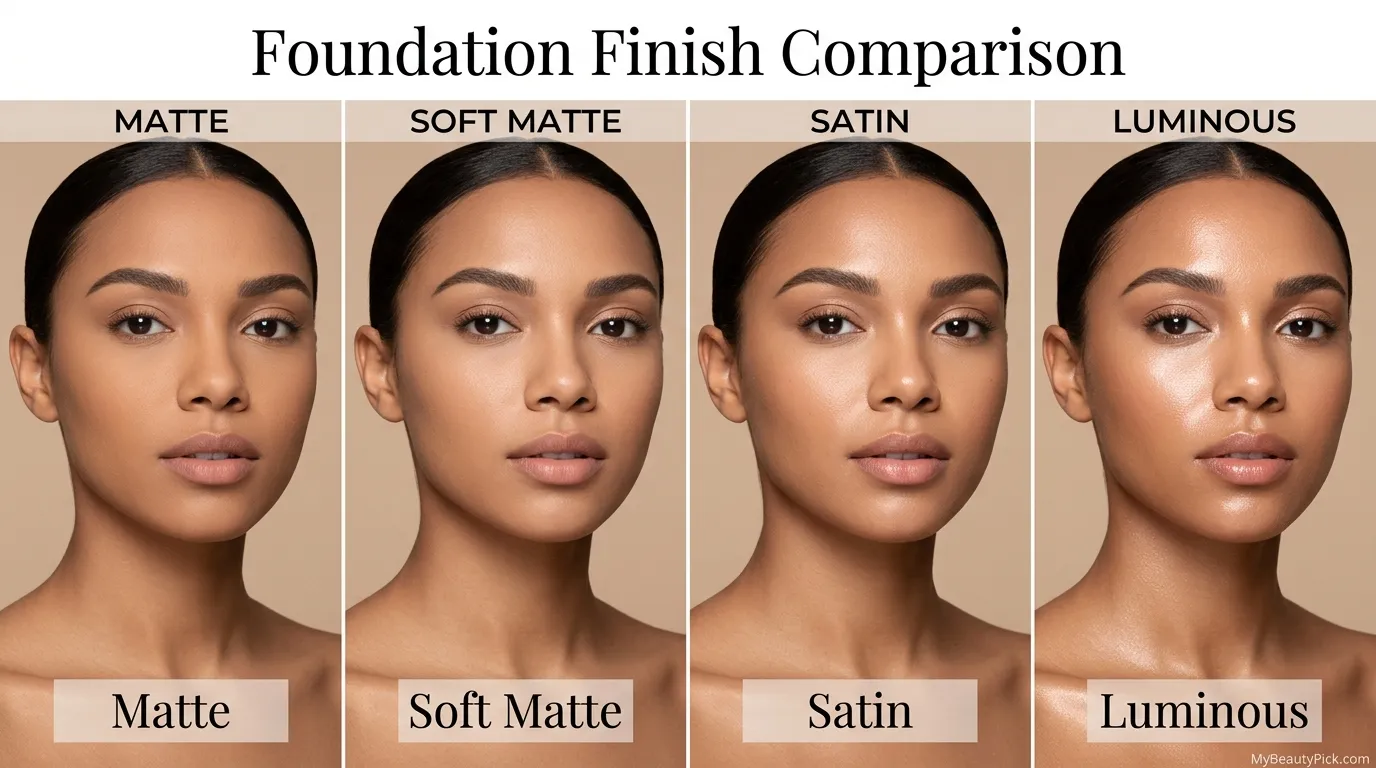
Matte
No shine. Flat, velvety, shine-absorbing surface.Absorbs light rather than reflecting it. Minimises the appearance of pores and sebum. Best suited to oily and combination skin. Dries to a set finish that resists shine for longest of all finish types. Can look flat or grey on dry skin.
Best for: Oily skin, hot climates, long-wear events, pore-conscious skin
Satin
Low-level luminosity. Neither flat nor shiny.The most versatile and universally wearable finish. Reflects a small amount of light, giving the skin a healthy but not glowing appearance. Works across all skin types. The “natural skin” finish that most people describe when they want makeup that looks like skin.
Best for: Combination and normal skin, everyday wear, most occasions
Dewy
Luminous, hydrated, glass-skin appearance.Reflects significant light from the skin surface, creating the appearance of well-hydrated, plump skin. Built with mica particles and emollient ingredients. Beautiful on dry, dull, and mature skin. Not ideal for oily skin as it amplifies any shine already present.
Best for: Dry and dehydrated skin, cold weather, photography, mature skin
Luminous / Radiant
High-glow finish. More reflective than dewy.Typically contains higher concentrations of mica or light-reflective pigments than a standard dewy formula. Produces a lit-from-within glow. Can tip into looking greasy on oily skin. Used frequently in editorial and event makeup to create a glowing, camera-ready finish.
Best for: Dry skin, events, photography, tan and deep skin wanting glow
Natural / Soft-Matte
Skin-like. Between matte and satin.A hybrid finish that provides oil control without the flat, dull quality of a full matte. The 2025 trend in matte foundations has moved toward this finish — oil-absorbing without being visually flat. The most flattering everyday option for oily and combination skin that wants a natural-looking result.
Best for: Oily and combination skin wanting a natural, non-shiny appearance
Foundation Coverage Levels: What Each One Actually Covers
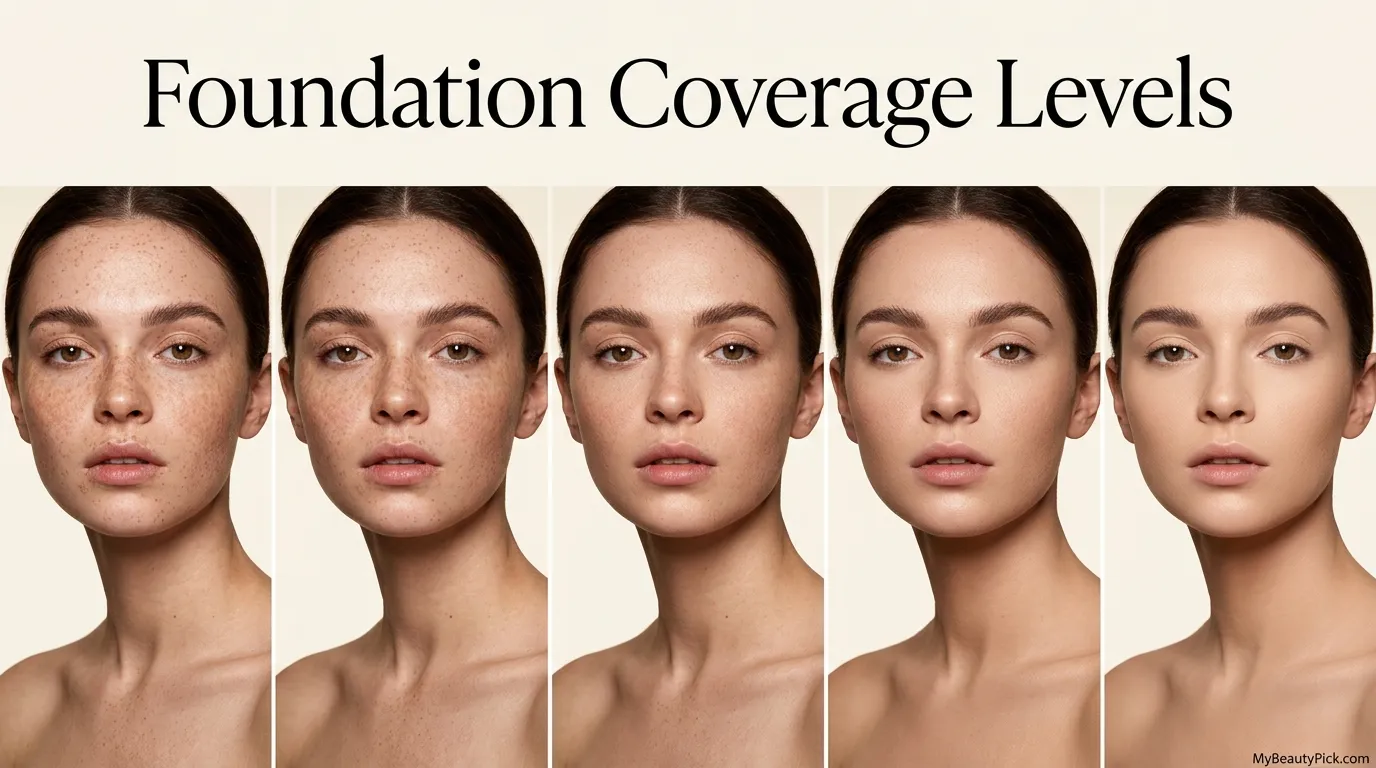
Sheer Coverage
Evens tone without masking skin. Freckles, light redness, and minor unevenness show through. Does not cover dark spots, PIH, or active blemishes. Best for skin that just needs light evening-out.
Light Coverage
Reduces visible variation noticeably. Covers mild redness and slight discolouration. Does not cover active blemishes or PIH reliably without a second layer. Skin texture shows through.
Medium Coverage
Covers most redness, minor hyperpigmentation, and light blemishes in one layer. Two layers approach full coverage. The most common coverage preference for everyday wear.
Medium-Full
Covers significant redness, mild-to-moderate hyperpigmentation, and most blemishes. One thick layer or two thinner layers. Noticeable as foundation. Needs careful application to avoid caking.
Full Coverage
Covers significant PIH, deep hyperpigmentation, and visible scarring in one to two layers. Foundation is visible as a product on the skin. Requires proper prep to avoid caking. Best for events or when coverage is the priority.
How Foundation Reads Differently on Tan Skin
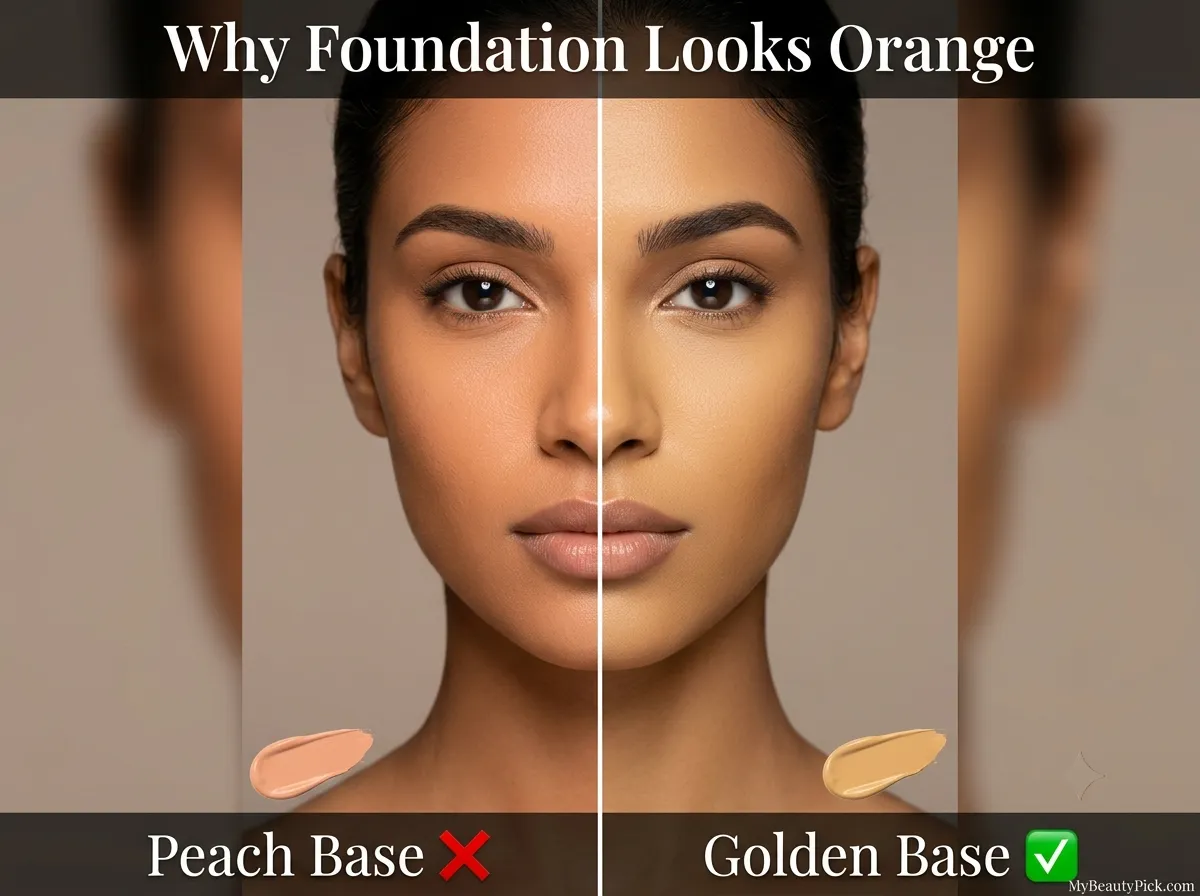
Foundation on tan and medium-deep skin involves variables that most generic foundation guidance does not address. The two most important are base colour interaction and oxidation visibility.
Tan skin has natural warmth from melanin concentration. A foundation with a peach-warm base amplifies that warmth rather than matching it, because the peach pigments in the formula combine with the skin’s own warm undertone to produce an orange result. This is why the same peach-warm foundation that reads as a natural match on fair skin reads as orange on tan skin. The fix is a yellow-neutral or golden-warm base, not a different coverage level or finish.
Oxidation — the process where iron oxide pigments deepen and shift warmer as they react with skin oils — is more visible on tan skin because the shift in colour is more noticeable against a deeper, warmer surface. A foundation that oxidises half a shade on fair skin often reads as a full shade warmer on tan skin by mid-morning. Managing this requires silicone primers, immediate setting with translucent powder, and occasionally selecting one shade lighter than the exact match to account for the shift.
Finish also reads differently. A dewy luminous finish on tan skin produces a genuinely radiant glow that can look exceptional because the light reflection interacts with the skin’s natural warmth. A heavily matte finish on tan skin can look flat or grey in certain lighting conditions because the light absorption is operating against the skin’s natural warmth. A soft-matte or satin finish tends to be the most universally flattering on tan skin across different light conditions.
The most reliable way to test a foundation on tan skin is to apply a swatch to the jawline, step outside into natural daylight, and wait three minutes before judging. In-store lighting — warm display lights or cool fluorescents — produces a different colour reading than daylight. Three minutes gives the iron oxides time to begin their initial reaction with skin oils, revealing any early oxidation tendency before you commit to buying.
What Foundation Cannot Do
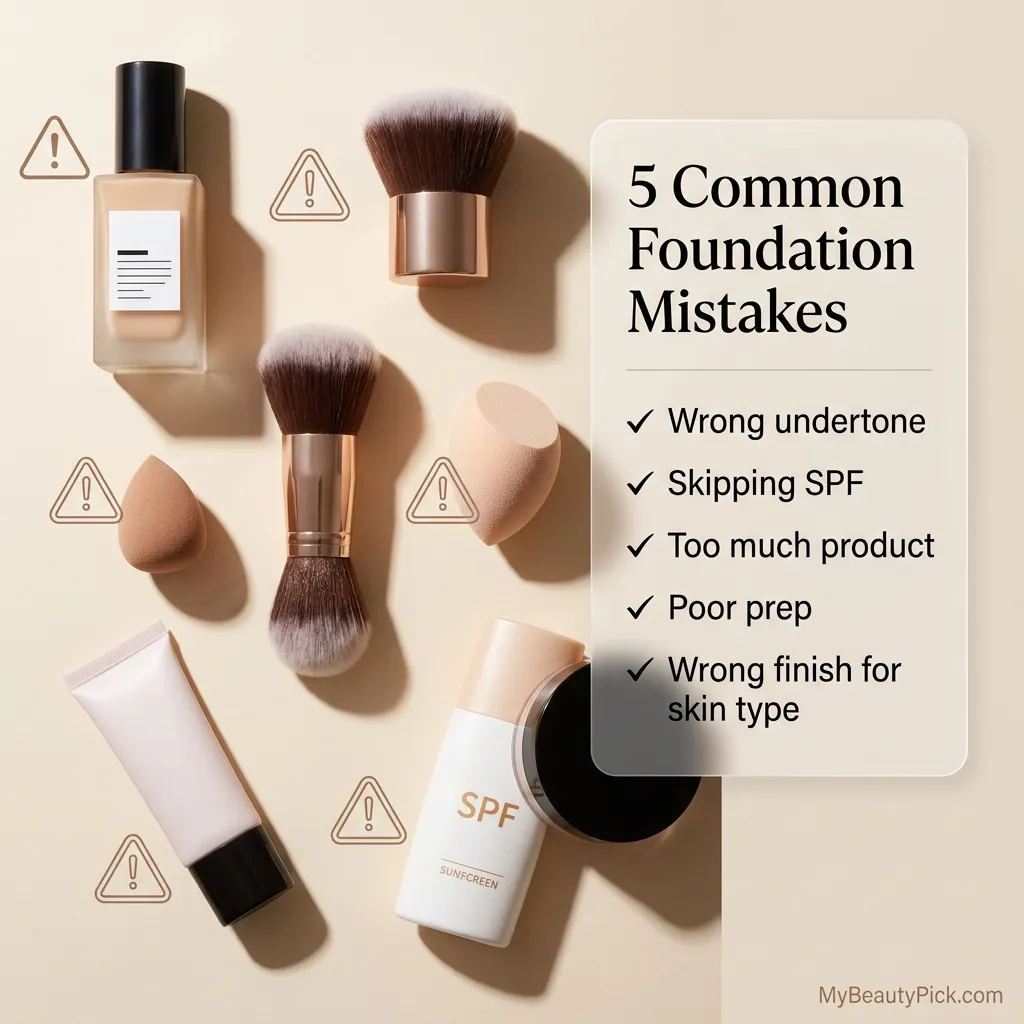
What Foundation Does Not Do — Regardless of the Label
- Foundation does not treat hyperpigmentation or fade dark spots. It covers them while it is worn. Remove the foundation and the hyperpigmentation is unchanged. For active fading, niacinamide, tranexamic acid, vitamin C, and AHAs in skincare are the functional treatments. Foundation is coverage, not correction.
- Foundation does not treat or prevent acne. Most non-comedogenic foundations will not cause breakouts, but they will not treat existing ones. The exception is e.l.f.’s Acne Fighting Foundation with salicylic acid — one of the only formulas that delivers a genuine active alongside coverage.
- Foundation does not replace moisturiser. Even the most hydrating serum foundation cannot provide the sustained moisture barrier that a dedicated moisturiser creates. It provides surface-level comfort but does not lock in hydration the way a ceramide or squalane moisturiser does.
- Foundation does not provide reliable SPF protection. The SPF listed on a foundation is tested under laboratory conditions with a full 2mg/cm² application — approximately twice as much product as most people actually apply. In practice, foundation-only SPF provides partial protection at best. A dedicated SPF beneath the foundation is the only way to ensure reliable UV protection.
- Foundation does not permanently improve skin texture. A silica-rich matte foundation blurs the appearance of pores while it is worn. Remove it and the pores are unchanged. Retinol, chemical exfoliants, and barrier-repair skincare change actual skin texture over time. Foundation changes the visual appearance of texture temporarily.
Matte vs Dewy Foundation: Which Is Right for Tan Skin
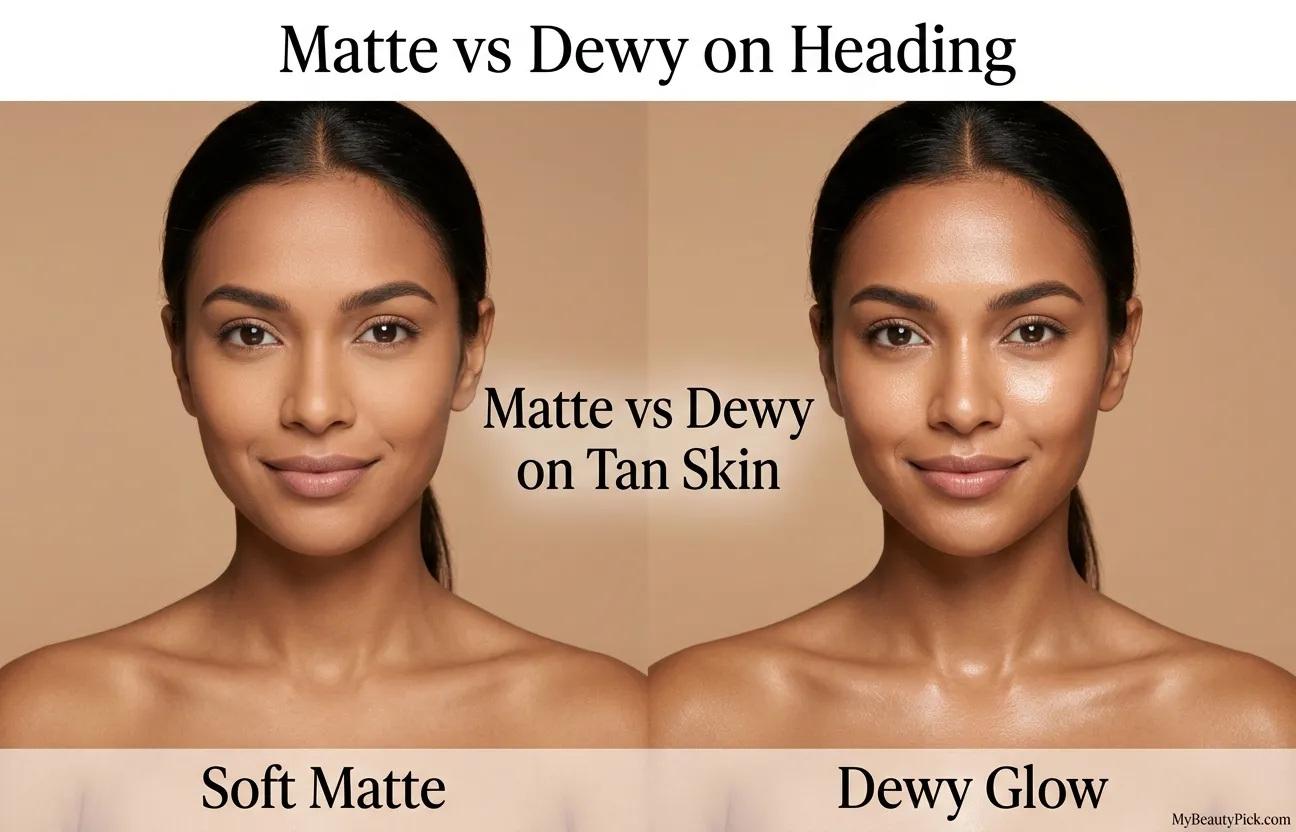
Neither finish is categorically better for tan skin. The choice depends on skin type, climate, occasion, and what you want the final result to look like.
| Finish | How It Reads on Tan Skin | Best Conditions | Watch Out For |
|---|---|---|---|
| Matte | Uniform, flat — shine completely removed. Can look grey in low light if formula pulls cool | Oily tan skin, humid climates, long-wear events | Flat or ashy appearance in evening or dim lighting; emphasises dry patches |
| Soft-Matte / Natural | Skin-like, controlled — no shine but natural warmth shows through | Everyday wear on all tan skin types | Less oil control than full matte on very oily skin |
| Satin | Warm, alive — complements tan skin’s natural warmth without adding overt glow | Office, everyday, most occasions | Can look slightly shiny by end of day on combination-oily skin |
| Dewy | Luminous, radiant — interacts beautifully with tan skin’s natural warmth in good lighting | Dry tan skin, cold weather, photography, events | Amplifies existing shine on oily tan skin; requires setting spray for longevity |
| Luminous | High glow — can look stunning on tan skin in natural and warm lighting | Special occasions, photography, evening events | Can look greasy in harsh overhead lighting; not for oily skin |
Frequently Asked Questions
What is foundation makeup used for?
Foundation is used to create an even skin tone across the face by covering visible tonal variation — redness, discolouration, hyperpigmentation, blemishes, and uneven colour. It standardises the skin surface so that other makeup products (blush, bronzer, concealer, powder) apply consistently and perform as intended. It also controls the surface appearance of the skin — matte formulas reduce shine, dewy formulas add radiance — and acts as an adhesive layer that extends the wear of everything applied over it.
What is matte foundation?
Matte foundation is a formula designed to produce a shine-free, flat finish by absorbing excess oil and scattering light rather than reflecting it. The chemistry involves silica and kaolin particles that absorb sebum and scatter incoming light in multiple directions, creating the visual absence of shine. Matte describes only the finish — not the coverage level or format. A matte foundation can be sheer or full coverage, liquid or powder. It suits oily and combination skin best. On dry skin, matte formulas can look flat and emphasise texture.
What does foundation do for your skin?
Foundation deposits a pigment layer over the skin that creates an even tone, reduces visible imperfections, and standardises the surface for other makeup. While it is worn, it also controls surface appearance: matte formulas reduce shine by absorbing sebum; dewy formulas add luminosity through light-reflective ingredients. Standard foundation does not treat, heal, or meaningfully improve skin condition — it creates a temporary visual improvement that is removed with the makeup. Serum foundations carry skincare actives but at lower concentrations than dedicated skincare.
Is matte or dewy foundation better for tan skin?
Neither is universally better. Matte foundation works well on oily tan skin and in hot or humid climates where oil control is a priority. A soft-matte or natural-finish foundation is the most versatile everyday option for tan skin as it controls shine without producing a flat or grey appearance. Dewy and luminous foundations read beautifully on dry tan skin in good lighting, but amplify any oiliness on oily tan skin. The most reliable finish for tan skin across conditions is satin or soft-matte, with luminous reserved for special occasions or specifically dry-skin days.
Does foundation cover hyperpigmentation and dark spots?
Foundation covers hyperpigmentation and dark spots while it is worn. It does not fade, treat, or reduce them. For tan skin with PIH from breakouts or sun-related hyperpigmentation, a full-coverage or medium-full coverage foundation combined with a peach colour-corrector beneath (to neutralise the dark pigment before covering it) gives the most effective concealment. The hyperpigmentation is unchanged when the foundation is removed. Skincare actives — niacinamide, vitamin C, tranexamic acid, AHAs — are the treatments that actually reduce discolouration over time.
Why does foundation look different on tan skin than on the model?
Several reasons. Shade mismatch is the most common — the shades shown in advertising are usually fair to medium with warm-peach bases that do not translate well to tan or medium-deep skin. Oxidation shifts the formula warmer on tan skin’s oilier surface. Undertone mismatch in the formula’s base colour amplifies the skin’s natural warmth to orange rather than complementing it. And the finish behaves differently: a dewy formula that looks luminous on fair skin can look greasy on tan skin with active oil production. Testing on your own skin in natural daylight is the only reliable guide — advertising photography and swatch comparisons in warm-lit store displays are not useful reference points for tan skin.
Should foundation match your face or your neck?
Foundation should disappear at the jawline — which means it should match the point where face and neck meet, not the centre of the face alone. Most people’s faces are slightly deeper than their necks, and slightly deeper than their inner wrist (where many people test shades). Swatch on the jawline in natural daylight, blend the edge, and look for the shade that becomes invisible where the face meets the neck. On tan skin this blend point is particularly important because the contrast between a mis-matched foundation shade and the bare neck is more defined than on lighter skin tones.
More From MyBeautyPick
- Skin Tone vs Undertone: Why Both Matter for Makeup
- How to Find Your Undertone at Home
- Foundation Shade Guide for Tan Skin
- Why Your Foundation Oxidises on Tan Skin
- How Melanin Affects Foundation Wear and Photography
- Best Drugstore Full Coverage Foundation Under $20
- How to Prep Tan Skin for a Flawless Foundation Finish