

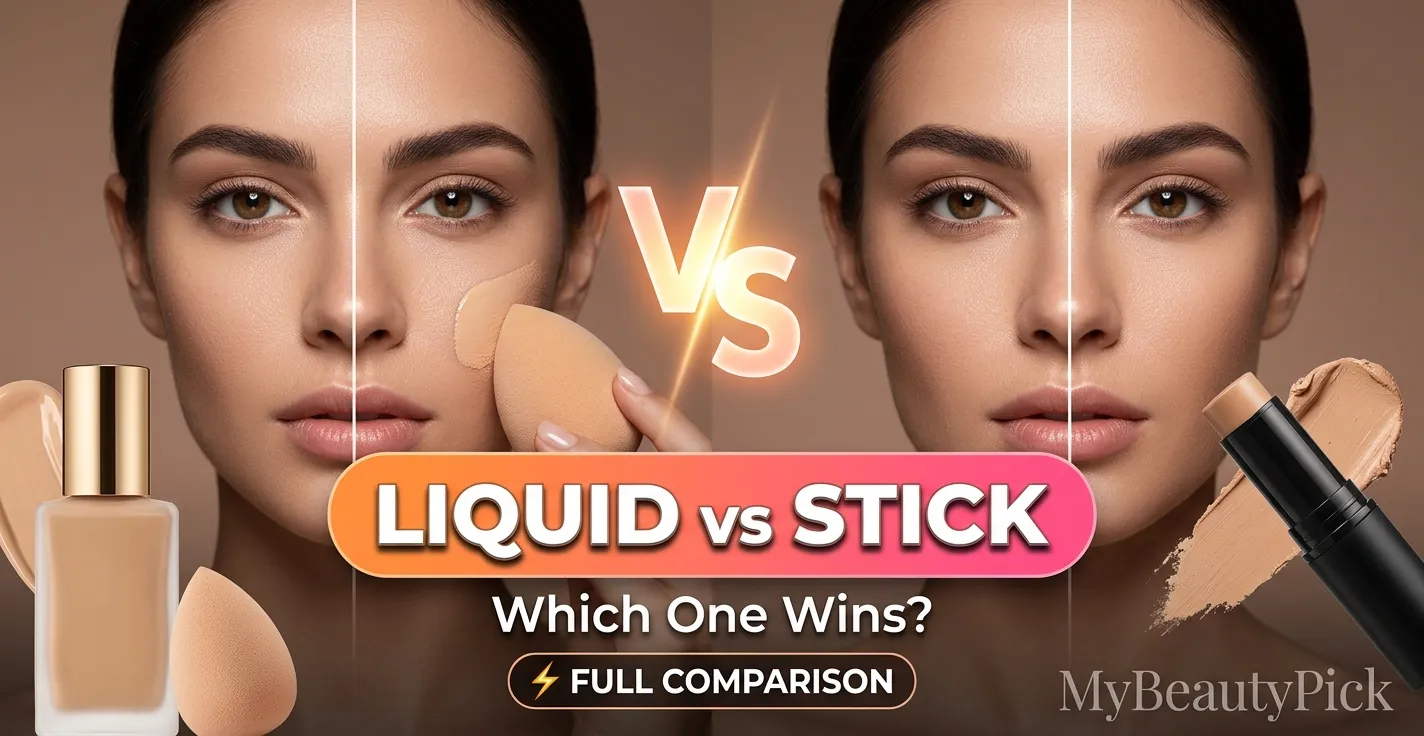
Liquid foundation is the default for most people because it’s what’s most visible in beauty content and the most widely available. Stick foundation gets less attention but has real advantages for specific routines and skin types. The stick format is faster to apply, doesn’t require a separate pump or brush if you’re using fingers, travels better, and provides a coverage level that most people find immediately usable without the layering work some liquid formulas require. Whether it’s right depends on your skin type, your available application time, and what finish you’re looking for.
- Stick foundation applies faster than liquid — no pump, no sponge required for basic application.
- Most stick foundations provide medium-to-full coverage with a natural-matte or satin finish.
- Liquid foundation offers more variety in coverage level and finish type and suits all skin types across available formulas.
- Oily skin does better with liquid long-wear formulas for maximum hold. Dry and normal skin often find stick more convenient and equally flattering.
- Foundation drops are a liquid add-on that shifts finish quality — not a standalone format.
Liquid Foundation: What It Offers
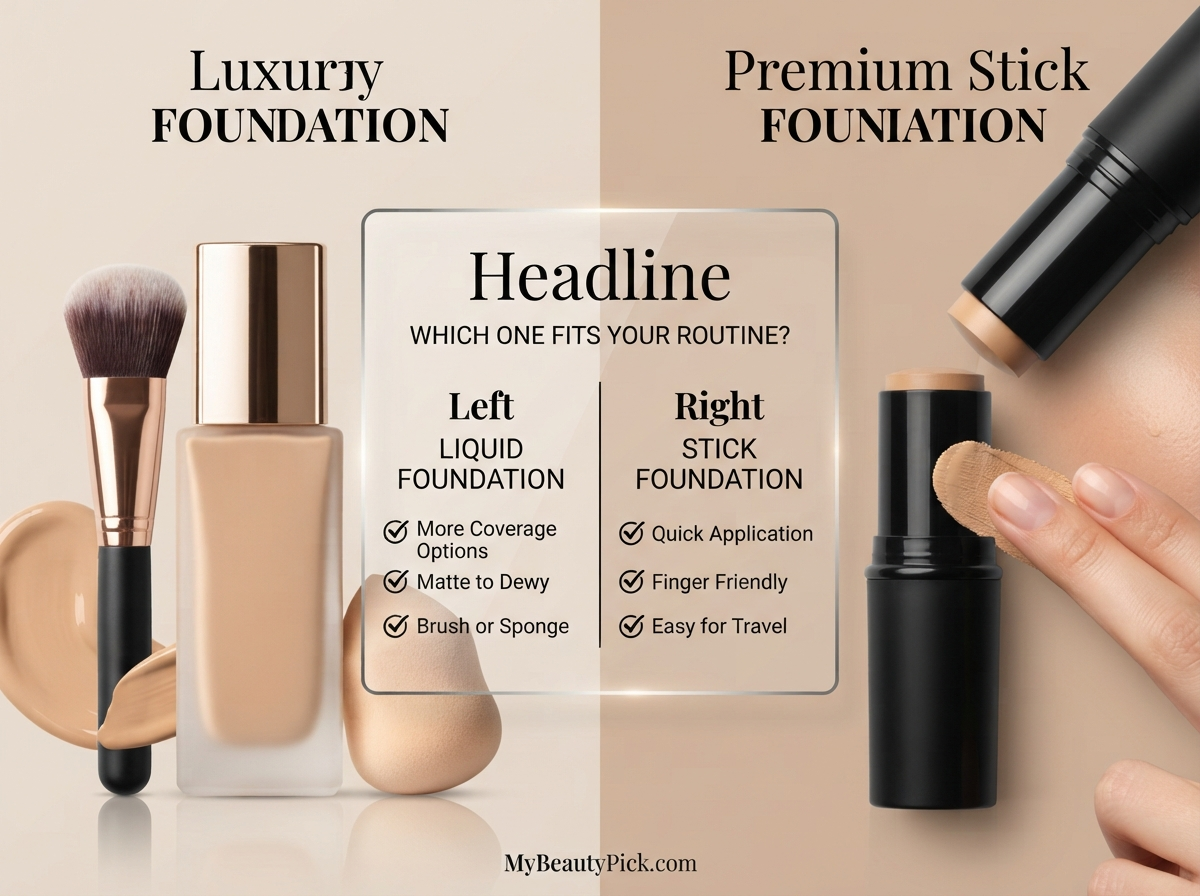
Liquid foundation is the most versatile format available. The formula range spans sheer skin tints to maximum-coverage formulas, matte to dewy finishes, lightweight serum textures to full cream-weight bases. It can be applied with a brush, sponge, or fingers, and can be sheered out or built up depending on how it’s applied. For anyone whose skin type or coverage needs change often, liquid is the most flexible option.
The downside for some routines: it requires more steps. A pump foundation, a brush or sponge, and careful application to avoid streaks takes longer than a stick. It also travels less easily — most pump foundations aren’t airline carry-on friendly without additional packaging.
Stick Foundation: What It Offers
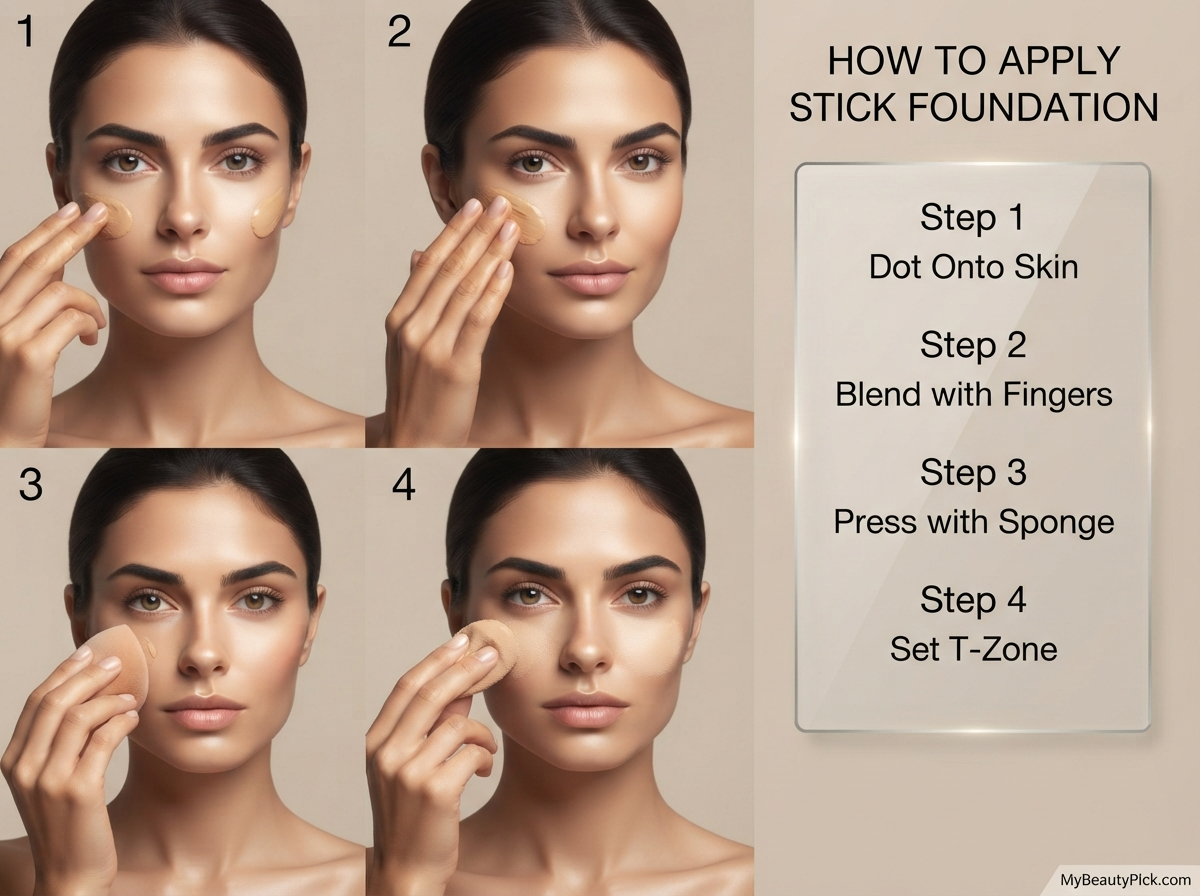
Stick foundation is a cream or cream-wax formula packaged in a twist-up stick, applied by dotting directly onto the face and blending with fingers or a brush. The format advantages are real: no pump that gets clogged, no separate tool required for quick application, portable without spillage risk, and the warmth of finger application blends the cream formula effectively without any additional tool.
Coverage is typically medium-to-full and the finish is natural-matte or satin — the formula texture doesn’t produce very dewy or very flat finishes easily, which means it’s predictable. You know what you’re getting.
The main limitation: stick foundation isn’t well-suited to very oily skin without a primer and powder system, and it doesn’t offer the variety of finish types that liquid does. For dry skin wanting dewy coverage, a liquid formula gives a better result than a stick.
Liquid Foundation
- Full variety: sheer to maximum coverage
- Full range of finishes: matte, satin, dewy, luminous
- Suits all skin types in appropriate formulas
- More application steps and tools required
- Can be sheered down or built up
- Less convenient to travel
- Wider shade ranges in most brands
Stick Foundation
- Medium-to-full coverage typically
- Natural-matte or satin finish
- Best for dry, normal, combination skin
- Faster application — no separate tool required
- Finger warmth activates blending
- Excellent portability and travel
- Less finish variety
Make Up For Ever Stick Foundation
MUFE produces the most consistently recommended stick foundation for a professional-quality result. The Ultra HD Invisible Cover Foundation Stick uses fine HD pigment in a cream-wax formula that provides medium-to-full coverage and sets to a clean natural finish that photographs well. The formula is one of the few stick foundations with a genuinely photogenic quality rather than the slight shininess some cream-wax sticks produce.
The Matte Velvet Skin Blurring Foundation Stick is MUFE’s specifically oily-skin focused option in the stick format — the formula has stronger oil-control properties and a softer blurring quality than the Ultra HD Stick. For oily skin that prefers the stick format, the Matte Velvet is the more reliable choice.
Foundation Drops: What They Are and Where They Fit
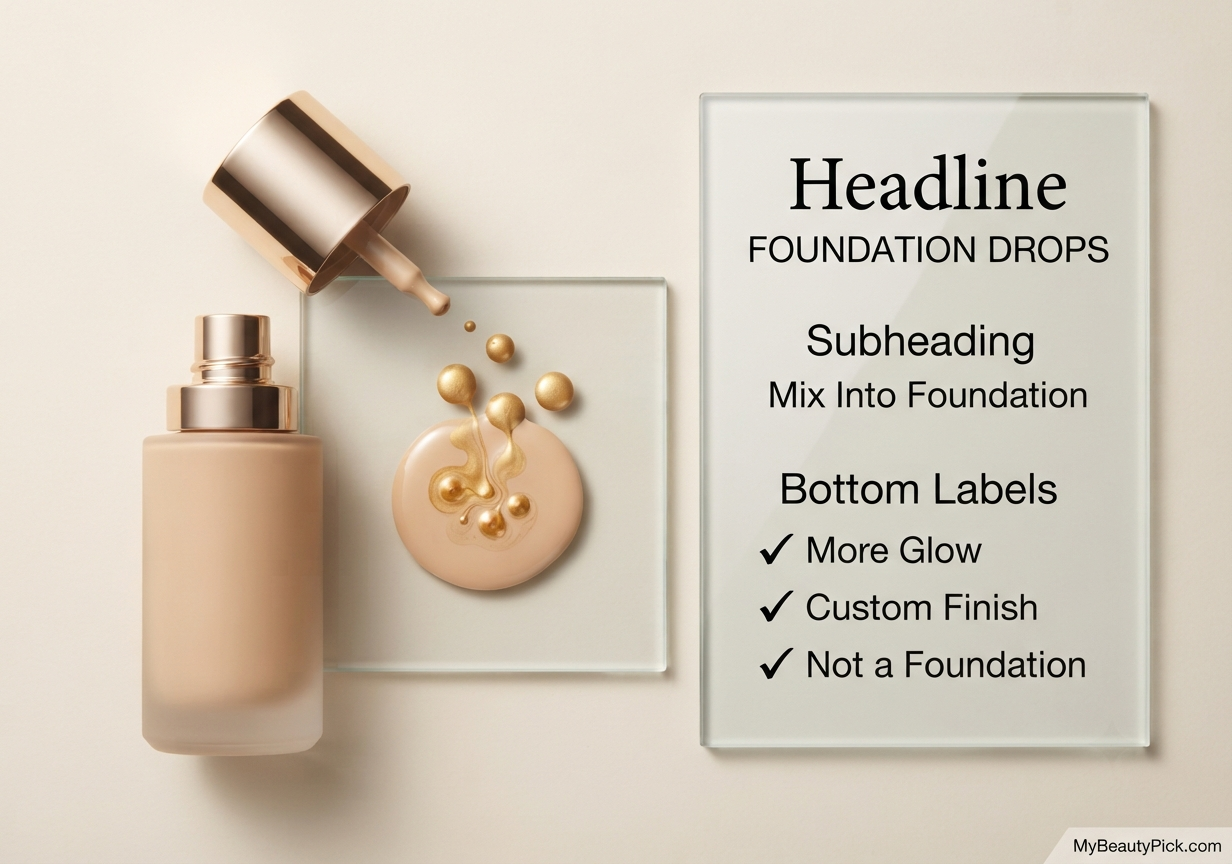
Foundation drops (also called glow drops, illuminating drops, or liquid highlighter) are a concentrated liquid formula that can be mixed into existing liquid foundation to shift its finish quality. They’re not a standalone foundation format but an additive. One to two drops mixed into a pump of foundation on the back of the hand adds luminosity, warmth, or both depending on the specific drop formula.
The Charlotte Tilbury Hollywood Flawless Filter is the most widely used — it adds warm luminosity when mixed with a foundation. NARS Light Reflecting Drops and Dior Miss Satin Drops are alternatives in the same category.
For tan skin, illuminating drops with warm golden rather than cool silver particles work more harmoniously with warm melanin-rich complexions.
Liquid vs Stick Foundation: Who Each Works For
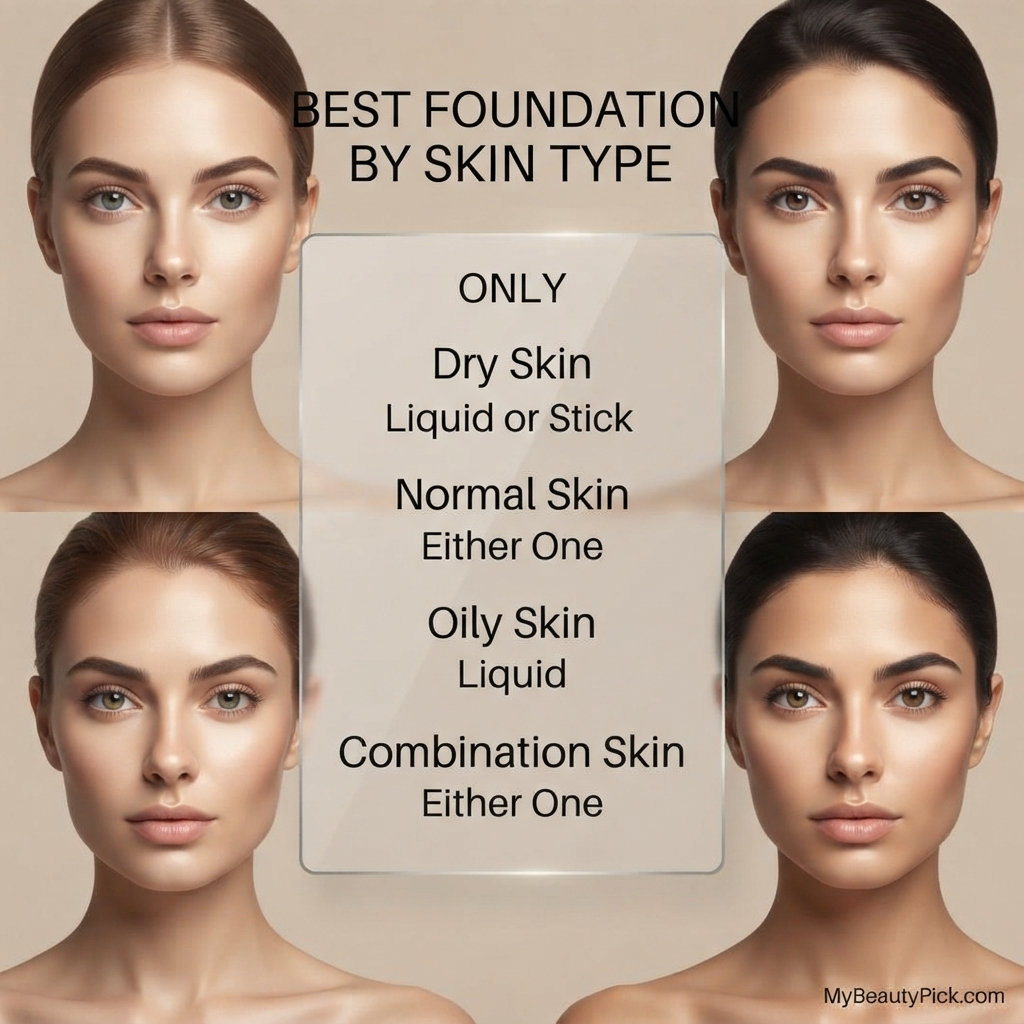
| Situation | Liquid or Stick | Why |
|---|---|---|
| Oily skin, long wear | Liquid | Long-wear polymer formulas in liquid outperform stick on very oily skin |
| Dry skin | Either — dewy finish needs liquid | Stick suits dry skin; dewy formula requires liquid format |
| Normal skin | Either based on preference | Both formats work — choice is speed vs variety |
| Travel or on-the-go | Stick | No pump, no spillage, no separate tool needed |
| Full coverage needs | Either | Both formats reach full coverage; specific formulas matter more than format |
| Very dewy or luminous finish | Liquid | Stick format doesn’t produce genuinely dewy results |
| Quick daily routine | Stick | Apply, blend, done — fewer steps and tools |
| Precise coverage placement | Liquid | More control over where product goes |
Stick foundation on warm tan skin works well when the formula sets quickly without oxidising orange. The natural-matte or satin finish typical of stick formulas maintains the warmth of tan complexions better than very flat matte liquid formulas. Apply by dotting onto the face, then press and blend with warm fingertips in circular motions. Follow with a damp sponge press for a unified finish. Set with banana powder on the T-zone only.
Frequently Asked Questions
Is liquid or stick foundation better?
Neither is categorically better — they suit different routines and skin types. Liquid foundation offers more variety in coverage levels and finish types and suits a wider range of skin types. Stick foundation is faster to apply, more portable, and better suited to people who want medium-to-full coverage with a natural-satin finish without multiple tools. For oily skin wanting long-wear: liquid. For dry or normal skin wanting a quick, polished finish: stick is often more practical.
What is the Make Up For Ever stick foundation?
Make Up For Ever produces the Ultra HD Invisible Cover Foundation Stick — a cream-wax formula with fine HD pigment that provides medium-to-full coverage and sets to a clean natural finish. It photographs well and holds through a full day with a primer underneath. The Matte Velvet Skin Blurring Foundation Stick is their oily-skin focused stick option, with stronger oil control and a blurring soft-matte finish.
Can you apply stick foundation with fingers?
Yes — and for most stick foundations, fingers are one of the most effective application tools. The warmth from fingertips melts the cream-solid formula into the skin, creating a more seamless finish than applying with a brush alone. Dot the stick directly onto the face, blend with fingertips in pressing and circular motions, then press a damp sponge over the face for a polished finish.
Do foundation drops make liquid foundation dewy?
Yes — foundation drops (glow drops or illuminating drops) mixed into liquid foundation add light-reflecting particles to the formula, creating a more dewy or luminous finish than the foundation alone. One to two drops mixed into a pump of foundation on the back of your hand shifts the finish toward radiant without significantly changing the coverage level. Too many drops can thin the formula and affect how it sets.