

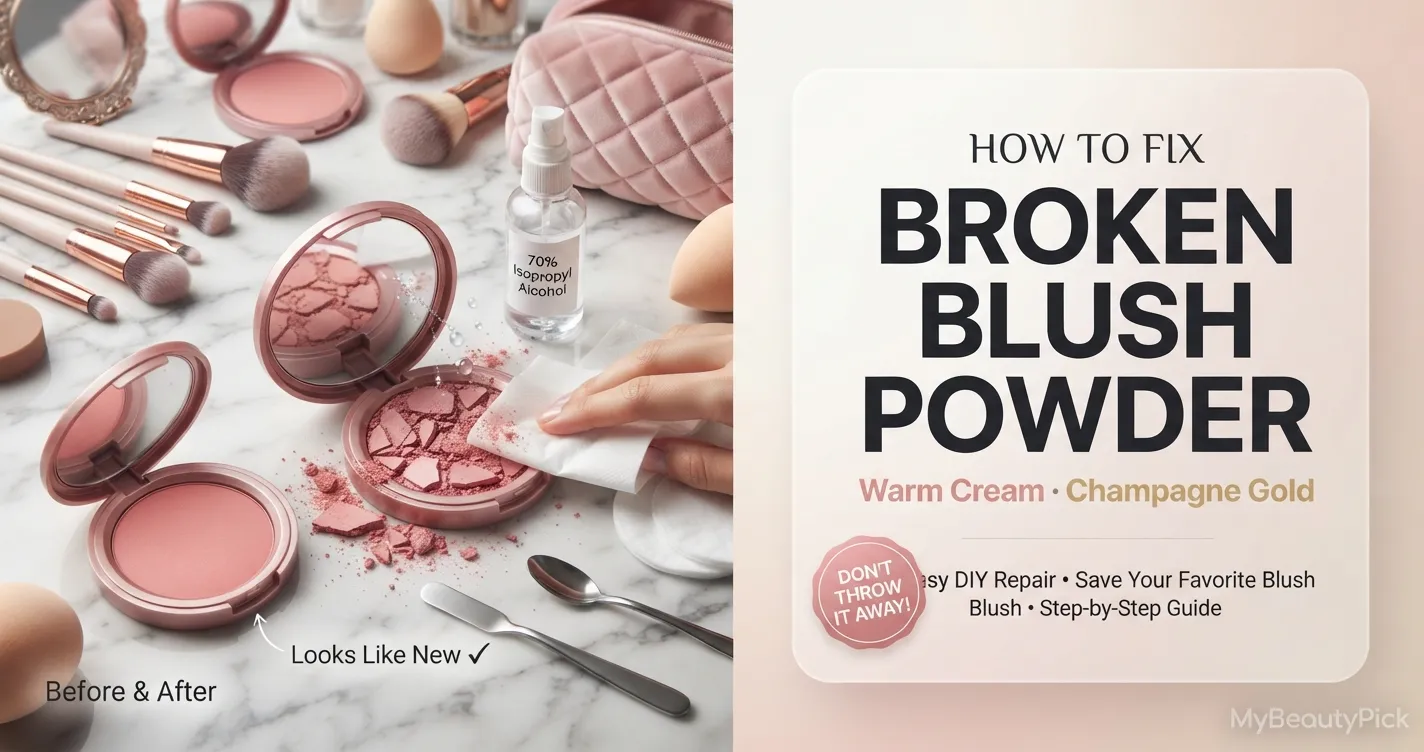
Dropped your blush compact and watched it shatter? Before you toss it — stop. A broken pressed powder blush is almost always fixable in under five minutes, and the fix holds well enough to use daily for months. The method you’ve probably seen is rubbing alcohol, and it works. But it’s not the only option, and it’s not always the right one. Here’s every method that actually works, what the differences are, and what to do when the compact is genuinely beyond saving.
- Fastest fix (no dry time): The makeup wipe press method — takes 2 minutes and is ready to use immediately
- Best lasting fix: Isopropyl alcohol at 70% or higher — crumble, add alcohol, press, dry overnight
- No alcohol options: Micellar water, witch hazel, and setting spray all work — micellar water gives the cleanest result
- Beyond repair: Repurpose as loose powder or mix with moisturiser for a tinted balm
Why Blush Powder Breaks (And Why the Fix Works)
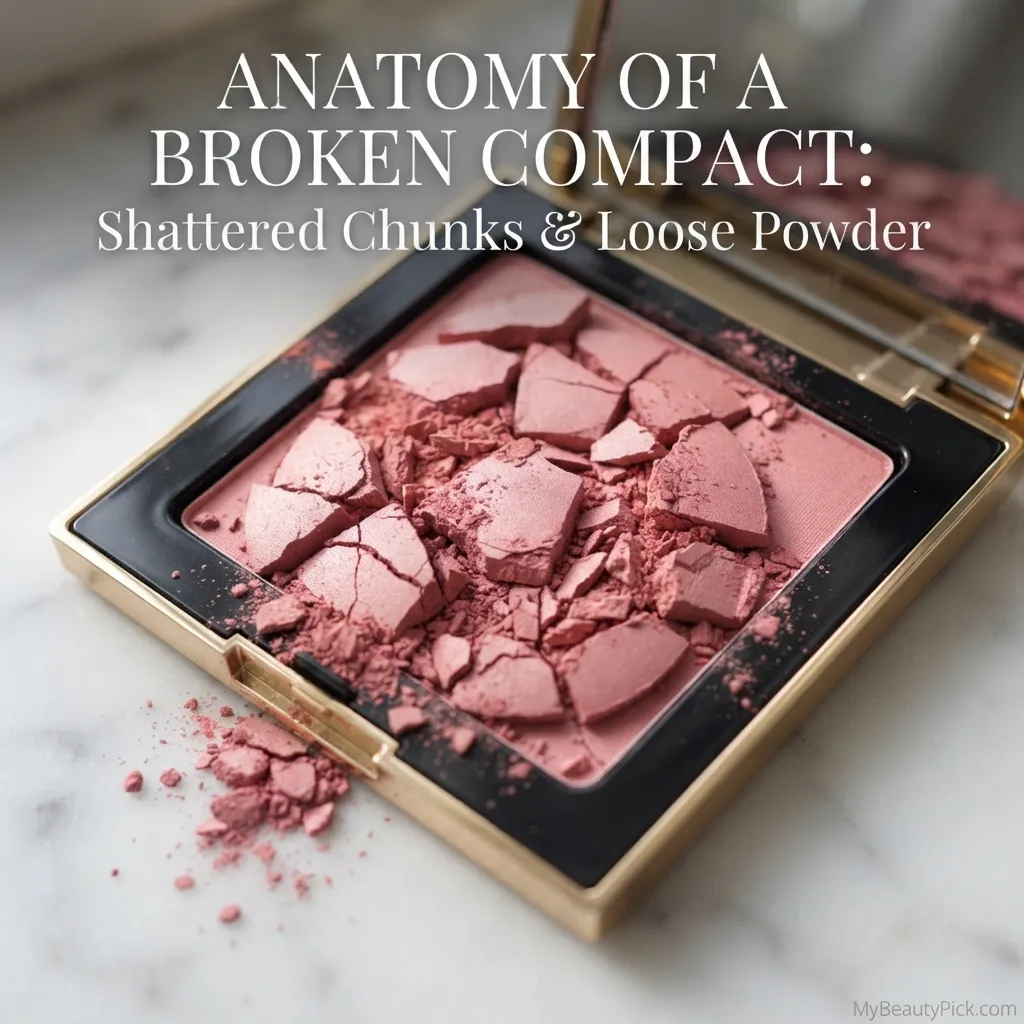
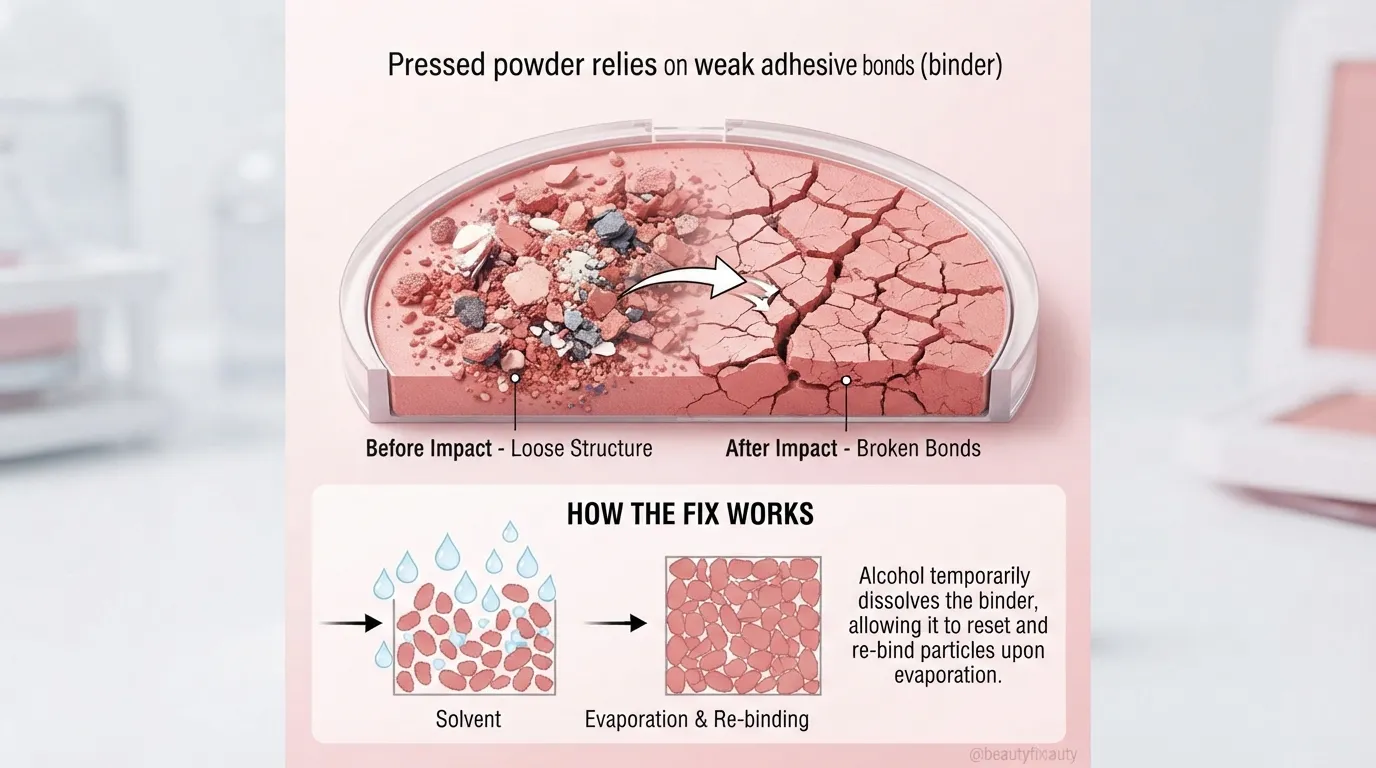
Pressed powder is not actually powder — it’s powder particles held together by a binder, usually a wax, oil, or silicone compound, that gets pressed under high pressure into a pan. When you drop the compact, the physical force breaks the bonds between particles and you’re left with crumbles and cracks.
Fixing it works by reintroducing a liquid that temporarily dissolves the binder and allows the particles to flow back together. When the liquid evaporates, the binder re-sets and the particles bond again. Isopropyl alcohol is the most popular liquid for this because it evaporates cleanly and quickly without leaving residue or changing the powder’s texture. Other liquids — water, micellar water, setting spray — work on the same principle but evaporate more slowly and may leave a very slight residue depending on formula.
The technique is the same regardless of which liquid you use: crumble, saturate evenly, press firmly, let it cure. The variable is the liquid choice, and that comes down to how quickly you need the compact back and what you have available.
What You’ll Need
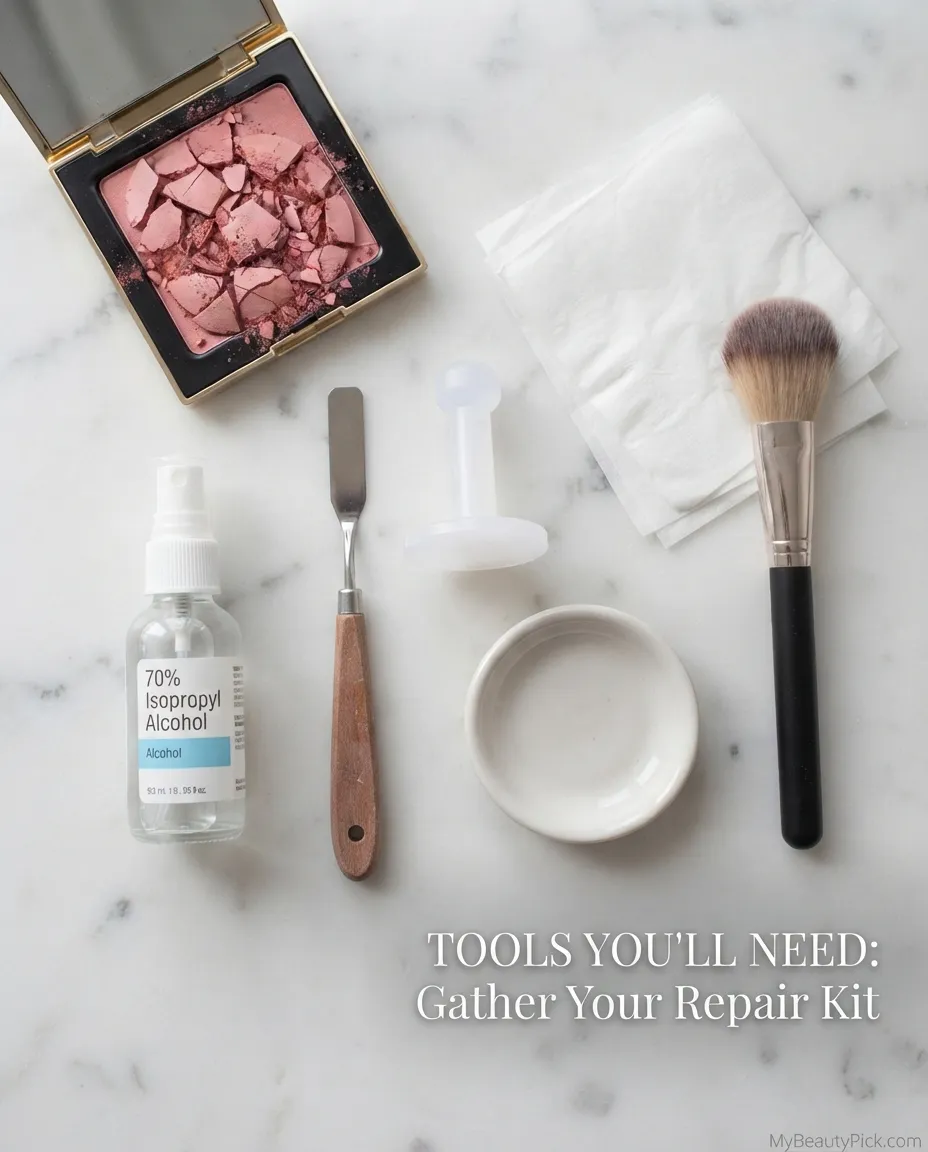
- Isopropyl alcohol (70% or higher) — or chosen alternative
- Small dropper, pipette, or spoon
- Coin, spoon back, or flat-edged tool for pressing
- Plastic wrap, parchment paper, or paper towel
- Toothpick, skewer, or thin knife for crumbling
- Small bowl or sheet of paper (optional, for crumbling outside the pan)
- Tissue or cotton pad for edge cleanup
- Time: 10 minutes active + overnight drying (alcohol method)
Method 1: Rubbing Alcohol (Best Lasting Fix)
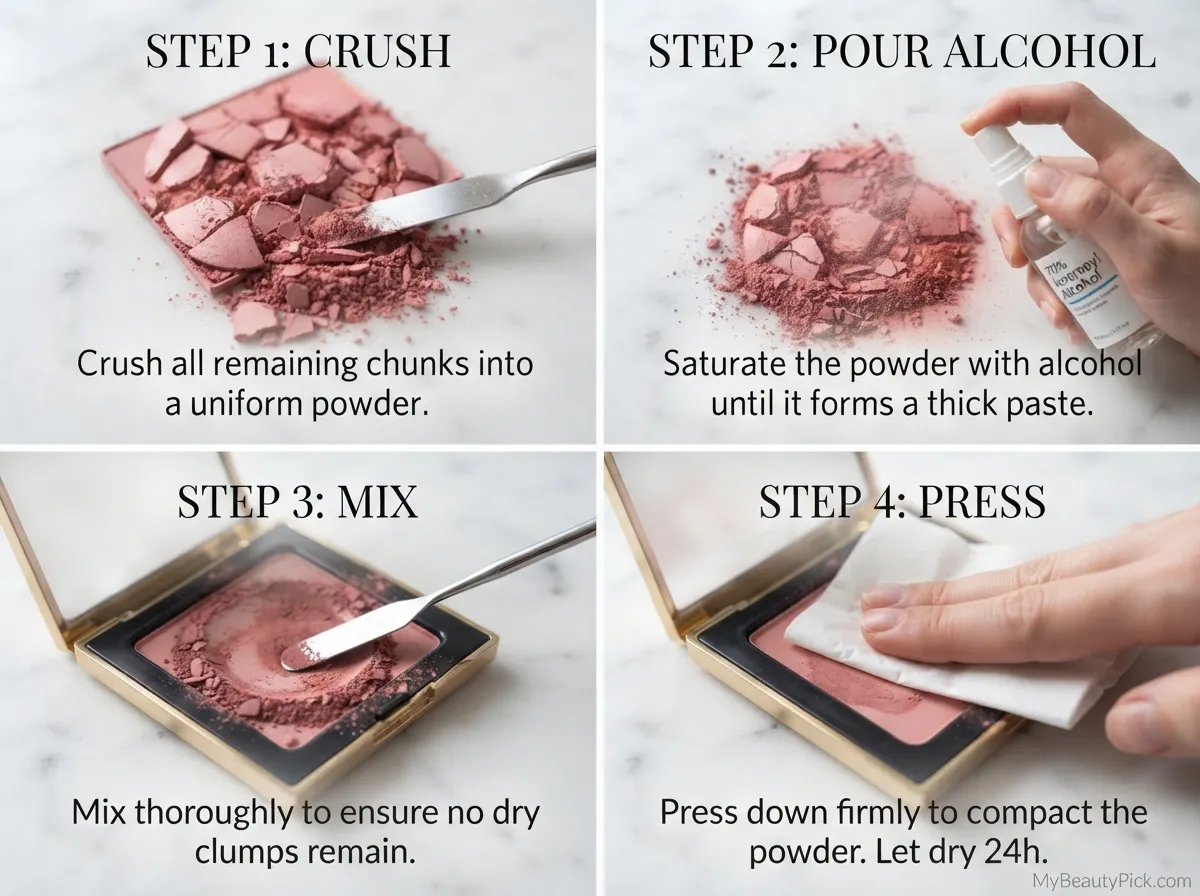
Dry time required: 90 minutes minimum, overnight recommended. Do not rush this step.
-
1Crumble all pieces completely
Use a toothpick, the back of a spoon, or a thin knife to break every remaining solid piece into fine powder. Do not leave any large chunks — they won’t re-press smoothly and will create lumps in the finished surface. The goal is a uniform fine powder across the entire pan. If large pieces of compacted powder remain, the repaired surface will have hard spots that crumble again on first use.
-
2Add alcohol drop by drop — don’t pour
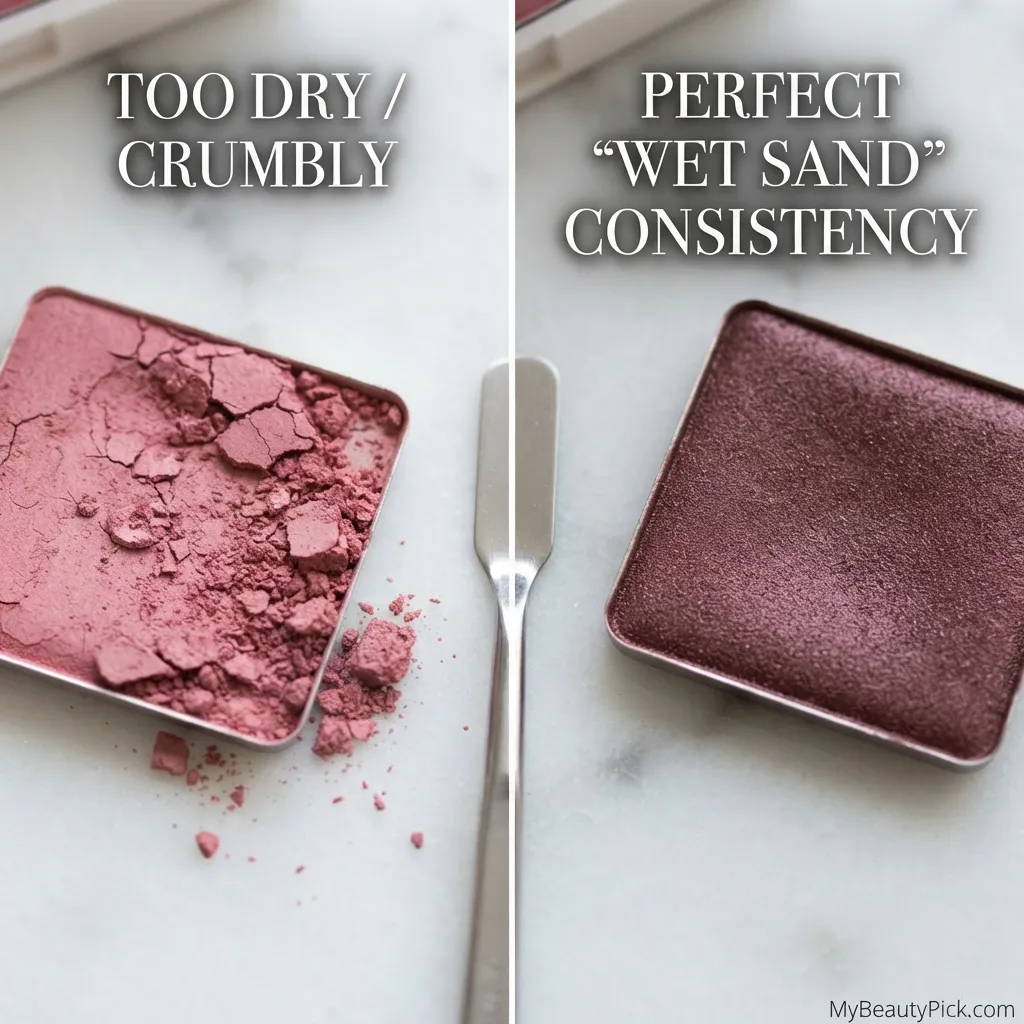
Use a dropper, pipette, or the back of a small spoon to add isopropyl alcohol gradually. Add drops across the surface in a grid pattern to saturate evenly, rather than pouring into the centre. You’re aiming for a wet-sand consistency — the powder holds together when pressed but is not soupy or pooling liquid. Start with fewer drops than you think you need; you can always add more, but you cannot undo over-saturation.
-
3Press firmly and evenly through plastic wrap
Lay a small square of plastic wrap or parchment paper over the wet powder. Press down firmly with a flat-bottomed coin, the flat back of a spoon, or your fingertip. Use consistent, even pressure across the whole surface — work from the centre outward. The plastic wrap prevents the pressing tool from sticking and leaves a smooth finish. Press until the surface is flat and compact. Remove the plastic wrap carefully, pulling straight up rather than dragging sideways.
-
4Clean the edges and allow to dry completely
Use a cotton swab or tissue to wipe any overflow from the edges of the pan and inside of the compact. Leave the compact open in a well-ventilated area for at least 90 minutes, then check — if the surface is still damp or soft, leave it overnight. Do not close the compact while still damp; the lid pressing down on a semi-cured surface will leave lid impressions and can recrack the powder. The compact is ready when the surface is completely dry to the touch and firm under gentle pressure.
At step 2, press a fingertip lightly into the saturated powder. It should hold the impression of your fingerprint briefly — like wet sand just firm enough to hold a shape. If the alcohol runs freely around your fingertip, you’ve added too much. Spread the excess outward with the dropper tip and wait 2-3 minutes for some to evaporate before pressing. If the powder is still crumbling and dry, add 2-3 more drops and redistribute.
Method 2: The Makeup Wipe Press (No Dry Time Needed)
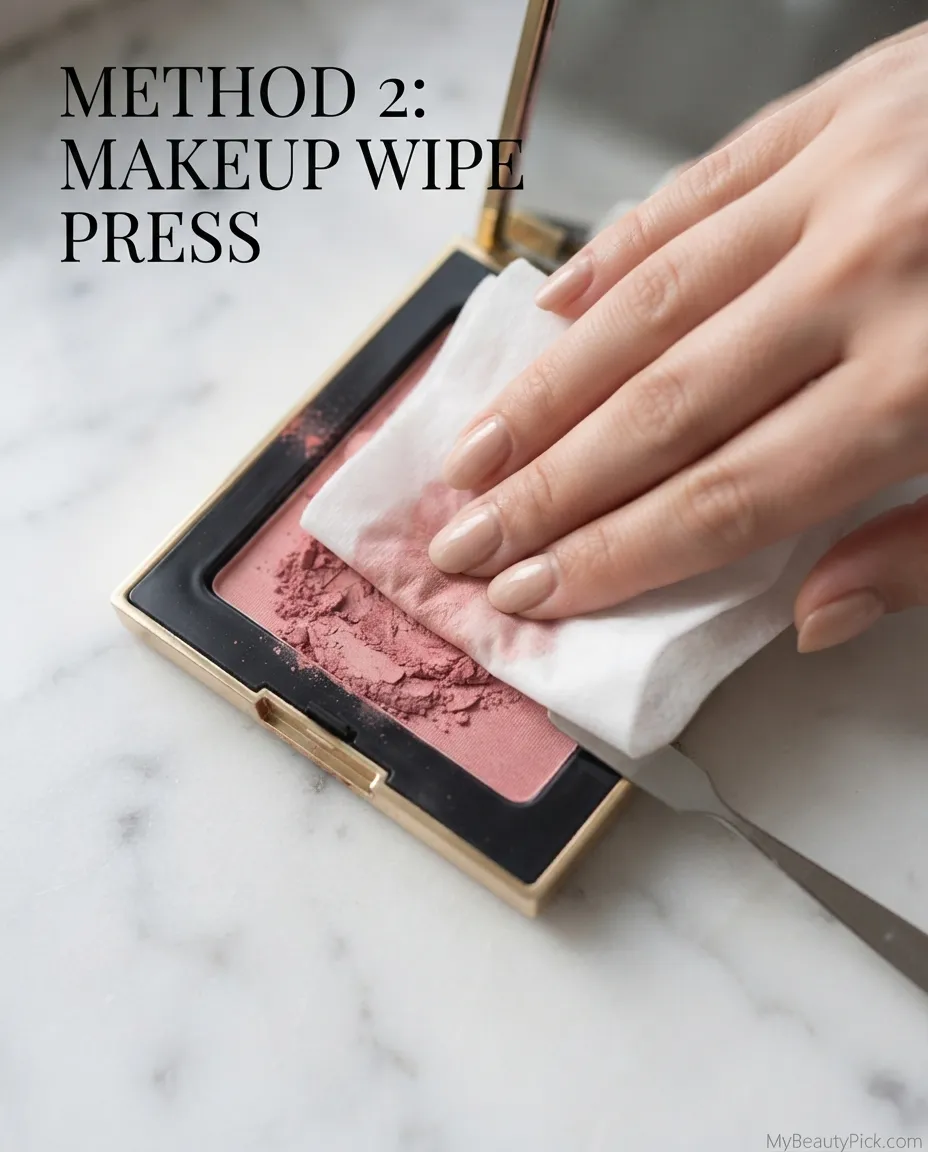
This method doesn’t re-bond the blush at a chemical level — it physically compacts the loose pieces back together using pressure alone. It is less durable than the alcohol method, but the repaired compact is usable within minutes and produces no alcohol smell or wait time. Best used when you need the compact today and don’t have alcohol available, or when only a small section has broken rather than the whole pan.
-
1Lay a paper towel or clean dry makeup wipe over the broken powder
Do not use a wet wipe — any moisture will change the powder’s texture and require the longer drying process. A single sheet of dry paper towel folded once gives enough firmness to apply pressure without tearing.
-
2Press firmly with a coin or flat tool through the paper
Apply firm, sustained downward pressure with a coin or the back of a spoon. Work across the entire surface systematically. The paper absorbs any excess powder from the surface and stops the pressing tool from catching on loose particles. Press harder than feels comfortable — pressed powder requires significant force to re-compact.
-
3Remove the paper, check the surface, and close the compact
Peel the paper away carefully. The top surface should look smooth and compacted. The repair is ready to use immediately. Note that this method is a physical compaction rather than a chemical re-bond — the surface may feel slightly more fragile than the alcohol repair and is more likely to crack again if the compact is dropped a second time.
Alcohol-Free Binder Options: Every Alternative Compared
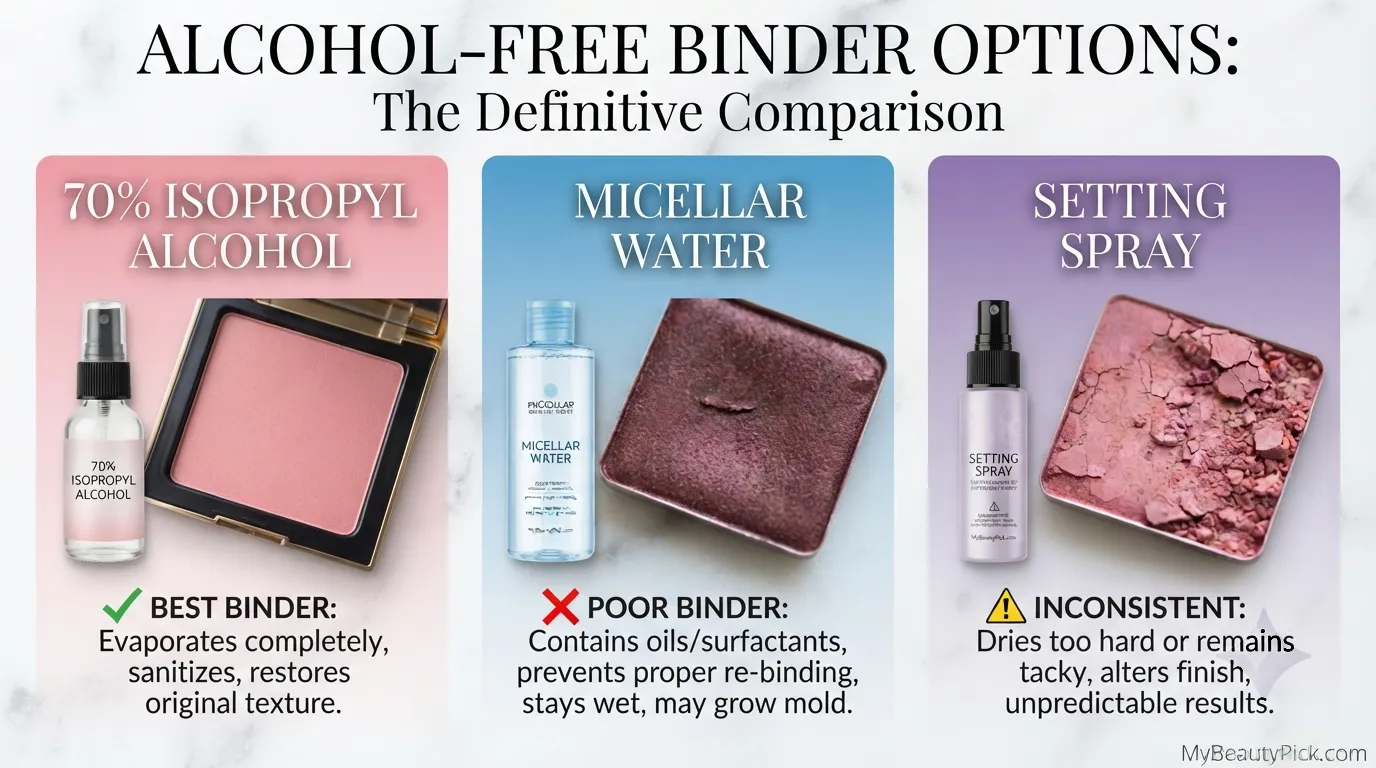
If you want to avoid alcohol — whether for sensitivity reasons, because you don’t have it, or because you’re fixing a baked or cream-based formula that reacts badly to alcohol — the following alternatives all work on the same binder-rehydration principle. Here’s an honest comparison of each.
| Binder Liquid | Does It Work? | Dry Time | Best For | Drawbacks |
|---|---|---|---|---|
| Isopropyl alcohol (70%+) | Best | Overnight | Most compact types; cleanest result | Alcohol smell during drying; needs ventilation |
| Micellar water | Works well | Overnight or longer | Sensitive skin; clean beauty formulas; gentle fix | Slower dry time than alcohol; slight surfactant residue possible |
| Witch hazel | Works well | Overnight | Oily-skin types; mild antiseptic benefit | Slight herbal scent during drying; must be alcohol-free witch hazel for true alcohol-free fix |
| Setting spray | Works | Overnight | When it’s the only liquid you have at a makeup station | Can leave a very slight film on the surface; some formulas change powder texture marginally; spray delivery makes even saturation harder |
| Water (distilled or cooled boiled) | Works | 24-48 hours | Emergency fix with no other supplies | Longest dry time of all options; tap water minerals can affect texture or cause white residue; repair is less durable than alcohol |
| Saltwater (pinch dissolved in water) | Works | 24+ hours | Slightly better binding than plain water | White salt residue possible if not fully dissolved; long dry time; not recommended for dark blush shades |
| Vodka (clear, unflavoured) | Works | Overnight | When isopropyl is unavailable; similar mechanism | Lower alcohol concentration than isopropyl (typically 40% vs 70%+); may require more liquid for the same saturation; slight sugary residue possible in flavoured varieties — use only clear unflavoured |
| Rose water | Limited | 24+ hours | Sensitive or natural-beauty preference | Similar to plain water; floral scent pleasant but fades; no binding advantage over plain water; check formula purity as some contain alcohol |
Does Setting Spray Actually Fix Broken Blush?
Yes — setting spray works as a binder for broken blush powder. It is not the best option, but it is a valid one. The film-forming polymers in setting spray (the same ingredients that lock makeup in place on skin) do the same job as a binder liquid in a pressed powder compact. The repair holds, but two things to know:
First, spray delivery makes it harder to control the amount and distribution of liquid. Spray in very short bursts at close range or decant a small amount onto a spoon and drop it into the pan the same way you would alcohol. Saturating too heavily with a spray is easier to do accidentally and harder to reverse. Second, some setting sprays — particularly those with a dewy or grip finish — can leave a very subtle film on the surface of the pressed powder that changes how the formula picks up on a brush. The product still applies, but the texture may feel fractionally different on the first few uses. This fades as the surface layer is used up.
Does the Fix Work Differently on Different Brands?
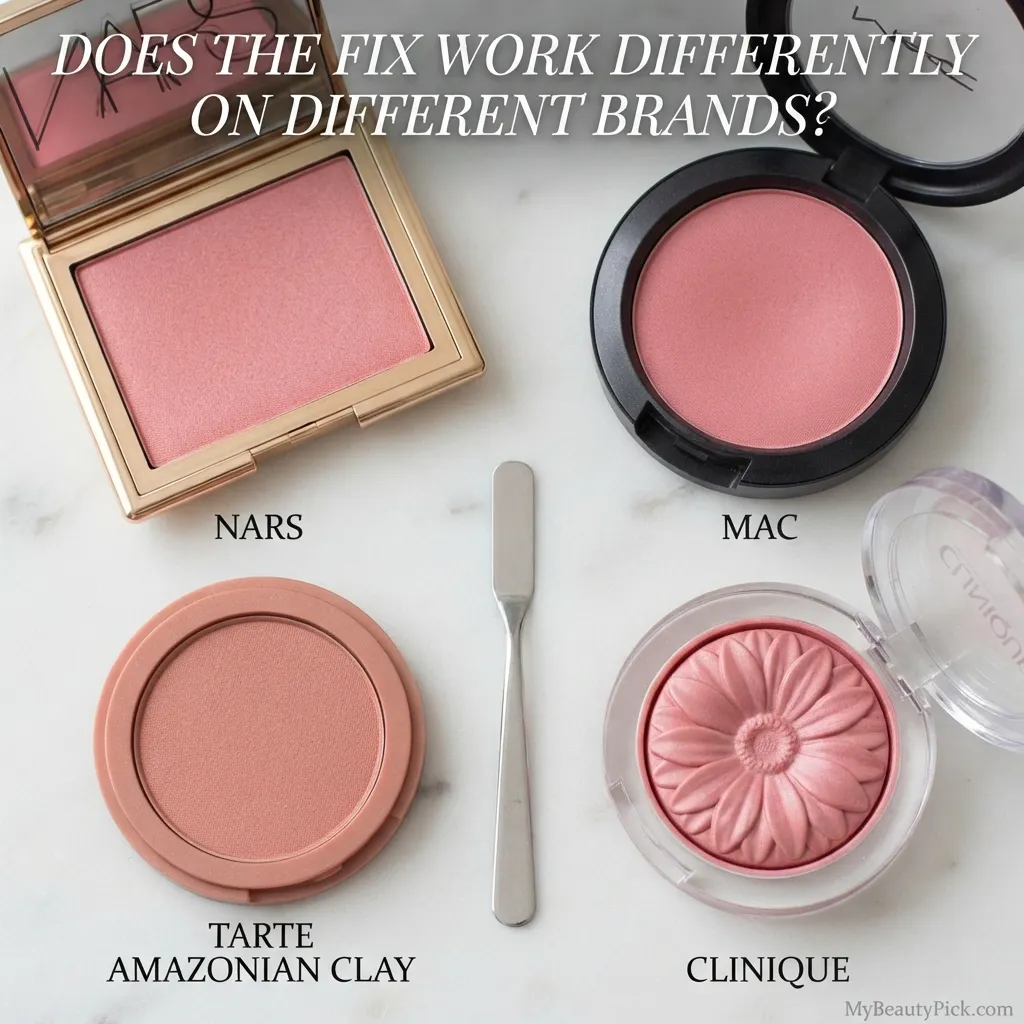
Benefit pressed powders use a relatively firm pressing with a smooth, finely-milled texture. The alcohol method works well — use a standard isopropyl at 70%, aim for wet-sand consistency, and press firmly. The main thing to watch with Benefit blushes is that they can appear patchy if the alcohol is applied unevenly because the pigment density is high and saturation spots show until fully dried. Apply drops in a grid pattern, not from the centre outward. These compact to a high-gloss pressed finish after repair that can look slightly different to the original matte-satin surface — normal, and it evens out with a few uses.
Rare Beauty’s Soft Pinch Blush is lightly pressed and highly pigmented with a soft, almost mousse-like texture. It is more fragile than most drugstore compacts and requires a lighter hand during the repair. Use less liquid than you think you need — this formula reaches wet-sand consistency with fewer drops than a denser compact. Press very gently; the texture is not dense enough to withstand forceful pressing and will compact unevenly. The alcohol method works, but micellar water is a more controlled alternative given the softness of the original formula. Dry time is the same, but the result will be slightly softer in texture than the original.
Most drugstore blushes use a harder pressing and more affordable binder compounds that respond very well to the isopropyl alcohol method. They are more forgiving if you slightly over-saturate, and they press back to a firm, smooth finish more easily than prestige formulas. If you’re trying this repair for the first time, a drugstore blush is the most forgiving practice run.
Baked formulas — including baked highlighters and baked blushes from brands like NARS, L.A. Girl, and Milani — have a fundamentally different composition. They are pressed and then oven-baked during manufacturing, which creates a porous, almost terracotta-like surface rather than a smooth pressed finish. Alcohol repair works, but the surface texture after repair will not match the original baked appearance — it will look smoother and slightly denser. This does not affect performance. Avoid water-based binders on baked formulas; they are absorbed unevenly into the porous surface.
When It’s Beyond Repair: What to Do Instead
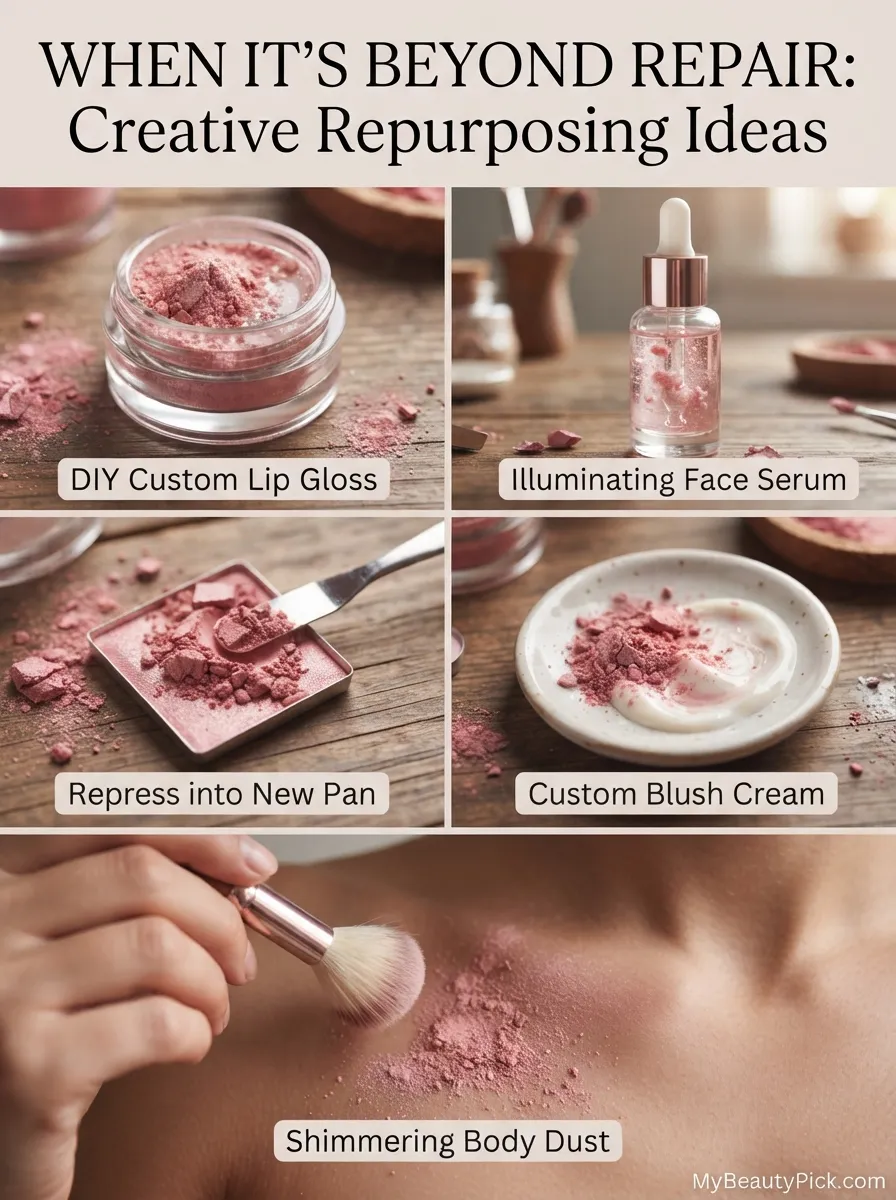
Not every broken compact is worth fixing. If the pan itself is cracked, the compact hinge is broken and won’t close, the blush is contaminated with product from another broken pan, or the powder has mixed with a liquid cosmetic and is wet and cakey rather than dry and crumbly, the fix will not produce a usable result.
The tell you’re looking for is whether the powder is still dry and fine, just displaced, or whether the formula itself has changed. Dry crumbles = fixable. Wet, clumped, or hardened into a concrete-like mass = not fixable.
Repurpose as Loose Powder
Transfer the crumbled powder to a clean, small jar or pot with a lid. Apply with a fluffy powder brush as a loose blush or bronzer. Loose powder applies slightly more sheerly than pressed, which can actually be more flattering for everyday wear. Label the jar if you have multiple loose powders, since the colour is harder to see in a small jar than in a wide pan.
The Blush-and-Moisturiser Tinted Balm Hack
For a broken blush with a shade you love: mix the crumbled powder approximately 1:1 with a fragrance-free lip balm or neutral moisturiser in a small pot. Stir until the pigment is evenly distributed. The result is a tinted balm that can be used on cheeks, lips, or eyelids for a wash of colour. The finish is sheerer than the original blush and not long-wearing, but it gives the pigment a second life and is especially good for very sheer or finely milled powder blushes.
Troubleshooting: When the Fix Doesn’t Go Right
Safety Notes
Before you start
Ventilation: Work in a well-ventilated room or near an open window when using isopropyl alcohol. The fumes from a small amount evaporating are not dangerous, but they are irritating in an enclosed space, particularly for those with respiratory sensitivity.
Eye and skin sensitivity: Do not use the compact until it is fully dry. Residual alcohol in an incompletely cured compact can cause stinging if it contacts the eyes or is applied near sensitive skin. The 90-minute minimum and overnight recommendation exist for this reason, not just for the structural repair.
Patch test after repair: If you have sensitive skin or have ever reacted to alcohol-based products, press a small amount of the repaired powder onto your inner arm and leave it for 10 minutes before using on your face. This is particularly relevant for baked or loose-powder formulas where the alcohol penetration is deeper and the cure time may be longer.
Keep alcohol away from eyes during application: When adding isopropyl to the pan, work with the compact flat on a surface rather than holding it up near your face. Drops that bounce from the pan or spill can cause serious eye irritation.
Mistakes to Avoid
-
✕
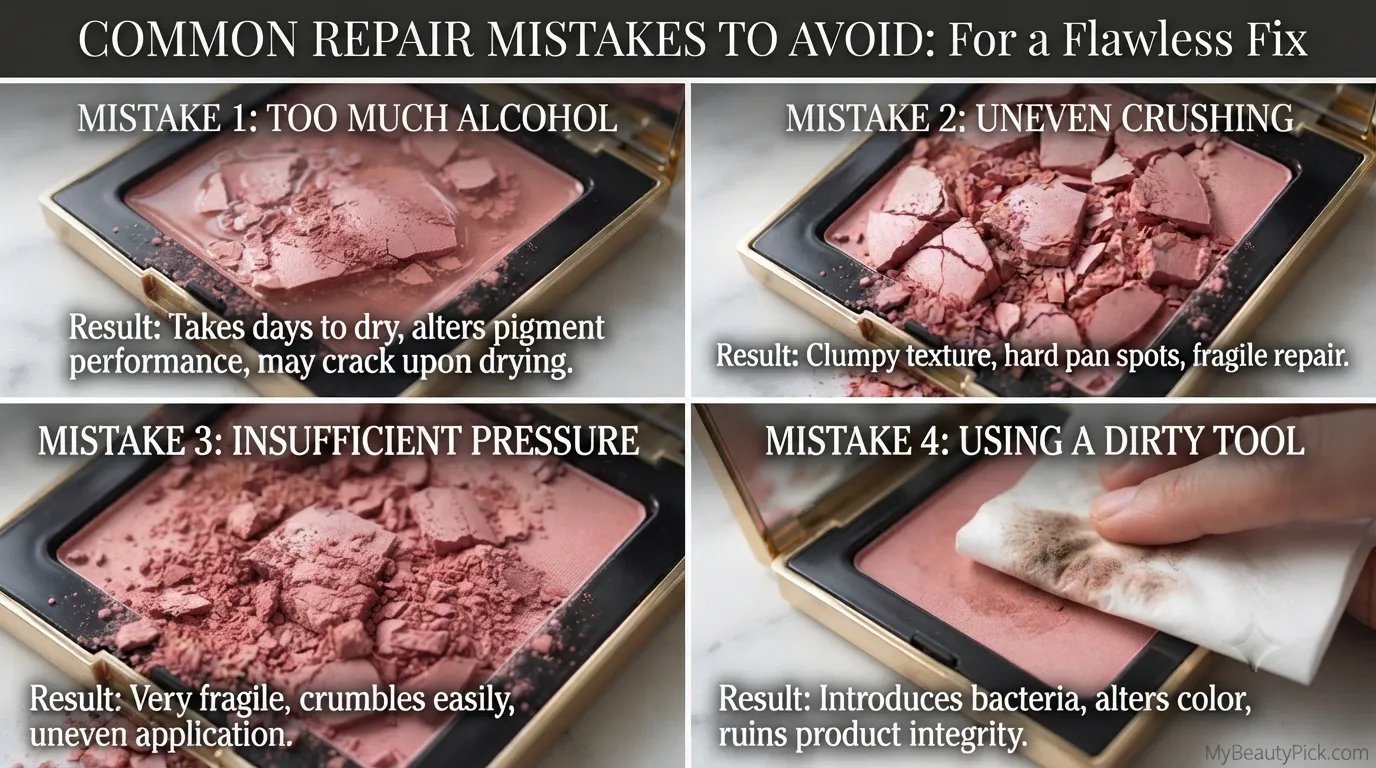
Leaving large pieces un-crumbled. Any solid chunk that’s not broken down to fine powder will not bond back smoothly. The finished surface will have hard lumps that feel gritty on the brush and are likely to crack off again on first use. Break everything down completely before adding any liquid.
-
✕
Pouring the liquid rather than dropping. Over-saturation turns pressed powder into a paste that doesn’t repair cleanly — it separates from the pan edges as it dries and cracks in new places. Always add drops from a dropper or spoon, incrementally, and check the consistency before adding more.
-
✕
Pressing without plastic wrap or paper. A bare coin or spoon pressed directly into wet pigment will pick up colour, stain the pressing tool, and leave a rough, uneven surface. The wrap creates a smooth interface that releases cleanly and leaves a flat, even finish.
-
✕
Closing the compact before it’s fully dry. The most common reason a repair looks fine initially then cracks immediately — the lid pressed the still-soft surface and broke the partially cured bond. Leave it open, check it is completely firm before closing, and resist using it until morning.
-
✕
Using hair dye or face skin toner as a substitute. Some online suggestions include using facial toner, face mist, or even diluted hair dye. Facial toner often contains alpha-hydroxy acids that can alter pigment chemistry. Hair dye is not formulated to be pressed onto skin in daily-use quantities. Stick to the tested binder options in the comparison table above.
-
✕
Using rubbing alcohol lower than 70%. Lower concentrations contain more water relative to alcohol, which means slower evaporation, longer cure time, and a less clean bond. Standard 70% isopropyl is the minimum; 91% or 99% isopropyl works faster and leaves less residue but requires even more careful dosing because it evaporates so quickly that you have less time to press before it dries.
Frequently Asked Questions
How do you fix a broken blusher?
Crumble the broken pieces to a fine powder using a toothpick. Add isopropyl alcohol at 70% or above, drop by drop, until the powder reaches a wet-sand consistency. Press firmly through a layer of plastic wrap using a coin or spoon. Leave the compact open to dry for a minimum of 90 minutes, ideally overnight. The compact is repaired and ready to use once completely dry and firm to the touch.
How do you fix a broken blush without rubbing alcohol?
Micellar water is the best alcohol-free alternative — it works on the same binder-rehydration principle and leaves no residue. Add drops in a grid pattern to saturate evenly, press firmly through plastic wrap, and allow to dry overnight (alcohol-free binders take longer to cure than isopropyl). Setting spray, witch hazel, and water also work but have a longer dry time and slightly less durable result. The quickest no-liquid option is the dry makeup-wipe press method — no dry time required, though the repair is less durable.
Can I fix a broken blush with micellar water?
Yes. Micellar water works as a binder for broken pressed powder blush. Apply it the same way as isopropyl alcohol — drops distributed evenly across the crumbled powder, saturated to wet-sand consistency, pressed firmly through plastic wrap. The dry time is longer than with alcohol — typically overnight to 24 hours — and the result is slightly softer in final texture, but the compact is usable and holds well for regular daily use.
How do you fix a broken Benefit powder blush?
Benefit blushes respond well to the standard isopropyl alcohol method. Apply alcohol drops in a grid pattern across the pan — this brand’s high pigment density means uneven saturation spots are visible until fully dried, so even distribution matters more than with lower-pigment formulas. Press firmly through plastic wrap, dry overnight. The repaired surface may appear slightly smoother or higher-gloss than the original; this is normal and evens out after a few uses.
Does setting spray fix broken blush?
Yes, setting spray works as a binder. The film-forming polymers in setting spray do the same bonding work as alcohol or micellar water. Spray in very short bursts or decant onto a spoon and add drops to the pan for more control — spray delivery makes it easy to over-saturate accidentally. Some setting spray formulas can leave a very slight surface film that changes texture marginally, but the compact is functional and usable once fully dry.
How long does a repaired blush compact last?
A well-executed alcohol repair with full overnight drying lasts as long as the original compact under normal use — months of daily wear. The repair does not degrade faster than the original pressing in normal conditions. The most common reason a repair fails early is insufficient dry time before first use, or a second drop that the compact doesn’t survive. Treat the repaired compact normally but transport it in a protective case if possible.
Can you use hair dye on eyebrows to darken the powder?
No — hair dye is a separate product category for a different purpose and has no role in repairing pressed powder makeup. It contains oxidative chemicals not formulated for repeated skin contact in makeup quantities. Use only the tested binder options: isopropyl alcohol, micellar water, witch hazel, water, setting spray, or vodka.