
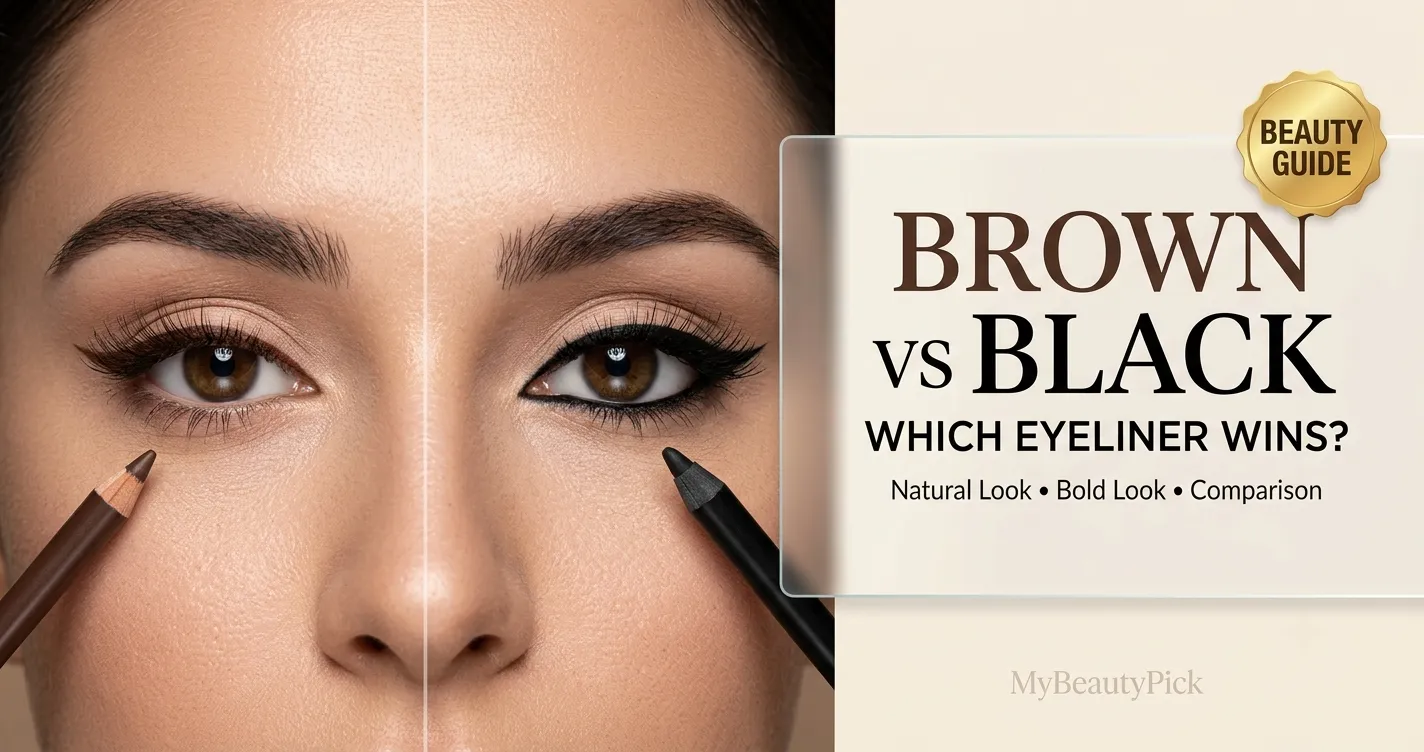
Eyeliner brown vs black: Which One Looks Better on Your Eyes?

Brown or black eyeliner isn’t a question of which one is objectively better. It’s a question of what each one is actually doing to your face, and almost nobody breaks that down clearly. Black creates maximum contrast and a hard, defined line. Brown softens that same line into something that reads as natural rather than drawn-on. Once you understand that distinction, the rest of the decision gets a lot easier.

I’ve lined eyes in both colors for every combination of eye color, skin tone, and age for over twenty years, and the honest answer is that this decision has less to do with your eye color than most articles claim, and more to do with skin tone, occasion, and the effect you actually want.

Quick Answer

Black eyeliner creates the most contrast and definition, working best for evening looks and deeper skin tones. Brown eyeliner softens the line for a more natural, daytime-friendly effect and tends to suit fair to medium skin tones especially well. Eye color has minimal real impact on this choice; skin tone, occasion, and desired intensity matter far more.

The Quick Answer: Brown vs. Black Eyeliner at a Glance

Brown Eyeliner Black Eyeliner
Look achieved Soft, natural, lived-in definition Sharp, dramatic, high contrast
Best skin tone Fair to medium Medium to deep
Best occasion Daytime, office, everyday wear Evening, events, photography
Best for mature eyes Usually more flattering, softer on thinner lid skin Can look harsher against textured or hooded lids
Intensity level Low to medium Medium to high

What’s the Real Difference Between Brown and Black Eyeliner?

Black is the maximum-contrast option. It creates a hard, visible line against nearly any skin tone, which is exactly why it reads as dramatic and why it’s the default choice for bold evening looks. Brown works differently. Instead of a stark line, it diffuses slightly against the lash line, creating definition that looks like it’s coming from your natural lashes rather than from a product. That diffusion effect is the entire reason brown reads as more “natural,” it’s not a weaker version of black, it’s a genuinely different visual effect.

Brown Eyeliner: Pros, Cons, and Who It’s Best For

Why Makeup Artists Reach for Brown First

Brown is forgiving. It softens minor application mistakes that would show clearly in black, and it pairs easily with almost any eyeshadow look without competing for attention. For everyday wear, it’s often the more versatile of the two.

Best Skin Tones and Eye Colors for Brown Liner

Brown tends to look most seamless on fair to medium skin tones, where its softer contrast matches the overall lower-contrast palette of the face. It pairs well with any eye color, since the effect comes from softening the line rather than matching or contrasting eye pigment.

When Brown Eyeliner Falls Short

On very deep skin tones, brown can sometimes lack enough contrast to read clearly, especially in photographs or under bright stage lighting. It’s also simply the wrong choice if the goal is a sharp, graphic, high-drama look, since softness is brown’s defining trait.

Black Eyeliner: Pros, Cons, and Who It’s Best For

When Black Liner Is the Better Choice

Black is the right call whenever you want visible, unmistakable definition, evening events, photography, stage makeup, or any look built around contrast. It also reads clearly across the widest range of skin tones, since black’s contrast doesn’t rely on matching anything else in the look.

Best Skin Tones and Eye Colors for Black Liner

Black is genuinely flattering across nearly every skin tone, though it tends to feel most natural on medium to deep skin, where the overall contrast level of the face already runs higher. It pairs with any eye color equally well, since (more on this below) eye color has surprisingly little bearing on this decision.

When Black Eyeliner Can Work Against You

On very fair, low-contrast skin, a heavy black line can look stark rather than polished, especially for daytime. It can also be less forgiving of textured or hooded mature lids, where its hard edge draws more attention to lid texture than a softer brown line would.

Does Your Eye Color Actually Change the Answer? (Myth-Busting)

This question comes up constantly, and the honest answer is that eye color plays a much smaller role here than most beauty content implies. The idea that brown-eyed people should avoid black liner, or that certain eye colors “need” brown, isn’t grounded in anything beyond general advice that’s been repeated so often it sounds like a rule. Both colors work across every eye color. What actually shifts the equation is skin tone and the level of contrast you want in the final look, not the color of your iris.

If you have brown eyes and want a sharp, dramatic line, black will absolutely work for you. If you have blue or green eyes and want something soft and natural, brown will too. Eye color is a much smaller variable in this decision than skin tone and occasion.

Brown vs. Black by Skin Tone

Fair Skin

Brown generally blends more seamlessly with fair skin’s overall lower-contrast features, making it the easier daytime default. Black still works beautifully for evening, just expect a more noticeable, deliberate effect.

Medium Skin

Both colors read clearly on medium skin tones, which makes this largely a matter of personal preference and occasion rather than a tone-driven decision.

Deep Skin

Black tends to deliver the clearest, most visible definition on deeper skin tones. Brown still works well, particularly warmer chocolate-brown shades, but may need to be applied slightly more heavily to achieve the same visible contrast that black provides naturally.

Does Age Change Which Color You Should Wear?

It can, though the reason is about lid texture more than age itself. Thinner, more textured, or hooded lid skin tends to show a hard black line more prominently, since there’s less smooth surface for the line to sit cleanly against. Brown’s softer diffusion is generally more forgiving here, blending into the lash line rather than highlighting any texture beneath it. This isn’t a rule that applies to everyone over a certain age, it’s specifically about how your individual lid texture interacts with a high-contrast line.

Brown or Black: Which for Day vs. Night?

For office and daytime wear, brown is generally the more versatile, lower-maintenance choice, since its softness reads as polished rather than overdone under bright, unforgiving daylight. For evening events or anything photographed under flash or stage lighting, black’s higher contrast holds up better and reads more clearly from a distance.

Formula Matters Too: Pencil, Gel, or Liquid in Each Color

Pencil is the most forgiving format in either color and the easiest for a soft, smudged look, particularly suited to brown’s natural diffusion effect. Gel liner offers more precision than pencil while staying easier to blend than liquid, working well in both colors depending on whether you want softness or sharpness. Liquid liner delivers the sharpest, most defined line and is generally where black does its most dramatic work, though a liquid brown liner can create a crisp, graphic line in a softer color for those who want definition without full black intensity.

How to Try Both Without Buying Two Full Products

Dual-ended eyeliner pencils with brown on one end and black on the other are a low-commitment way to test which color you reach for more often before investing in two separate full-size products. Several drugstore and prestige brands offer mini or travel-size versions of their core liner formulas as well, which is a reasonable way to trial both without overcommitting to a shade you might not love.

If you’re unsure which to start with, try brown first for daytime use over the course of a week, then switch to black for one evening look. The contrast between how each reads in person versus in photos will usually make your preference obvious quickly.

Frequently Asked Questions

Is brown or black eyeliner better for brown eyes?

Both work well on brown eyes. Eye color has a much smaller effect on this decision than skin tone and occasion. Brown eyeliner softens the look for everyday wear, while black adds more dramatic contrast for evening looks, regardless of your eye color.

Does brown eyeliner look more natural than black?

Generally yes. Brown diffuses slightly against the lash line rather than creating a hard, visible line, which is why it reads as more natural. Black creates sharper, more defined contrast, which is what makes it better suited for dramatic or evening looks.

Is brown eyeliner better for mature or aging eyes?

Often, though this is about lid texture rather than age itself. Thinner or more textured lid skin tends to show a hard black line more prominently, while brown’s softer diffusion blends more forgivingly into the lash line.

Can I mix brown and black eyeliner in one look?

Yes, and many makeup artists do this intentionally. A common technique is using brown along the lower lash line for a softer effect while using black on the top lid for definition, blending the intensity across the eye rather than committing to one color throughout.

What’s the best eyeliner color for everyday wear?

Brown is generally the more versatile everyday choice, since its softer effect holds up well in daylight and pairs easily with most makeup looks without looking overdone. Black remains a strong option for anyone who prefers more visible definition even during the day.

More From MyBeautyPick

If you found this article helpful, feel free to share it with others who might benefit from it.
Copy to Clipboard Share on WhatsApp Share on Facebook Share on Pinterest