

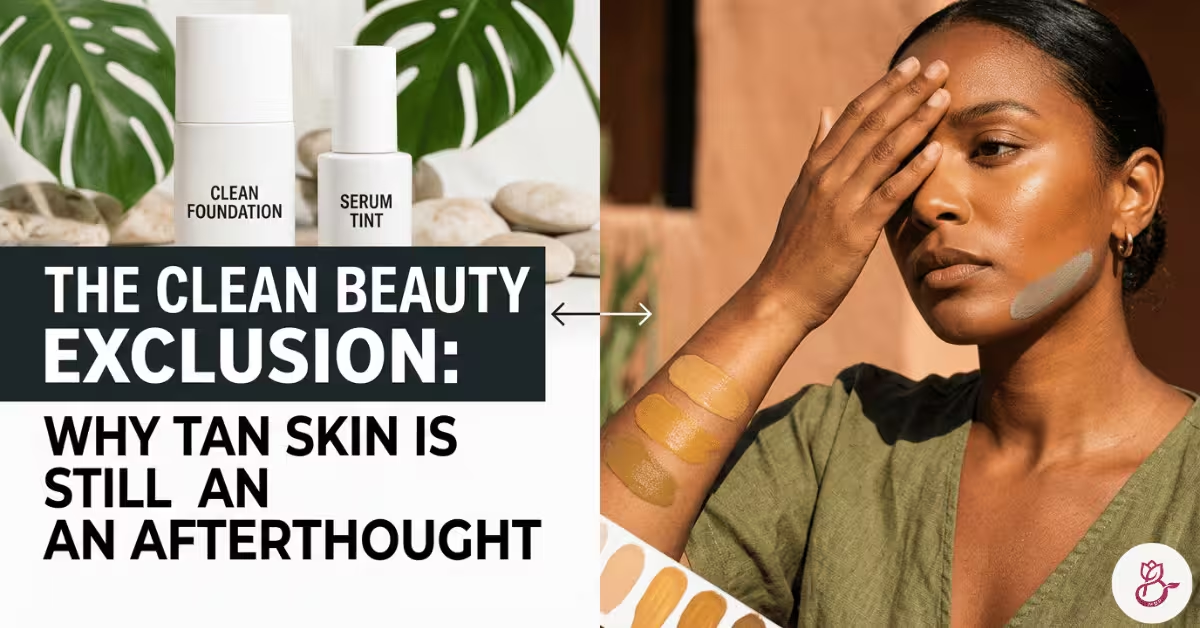
Clean beauty has a well-documented shade problem. The movement that positioned itself as wellness-forward, values-driven, and inclusive of everyone’s right to non-toxic products has, in practice, produced some of the most limited shade ranges in the modern beauty market. The overlap between “clean” and “works for tan skin” is significantly smaller than either category’s marketing suggests.
This is not a coincidence. It is a consequence of formulation decisions that the clean beauty movement has not publicly reckoned with, and it deserves a direct conversation rather than the gentle framing most beauty content applies to it.
The Clean Beauty Promise vs the Tan Skin Reality
The clean beauty movement grew out of legitimate concerns about synthetic ingredients, endocrine disruptors, and the lack of regulatory transparency in cosmetics. Those concerns are real and the push for safer formulations serves everyone. But “safer ingredients” and “works for tan skin” are separate criteria, and the clean beauty industry has treated the first as sufficient without addressing the second.
Safer ingredients and inclusive shade ranges are separate criteria. Clean beauty has focused heavily on the first and significantly neglected the second.
The result is a category of products marketed with inclusive, body-positive, skin-positive language that in practice offers ten shades — eight of which serve fair to light skin and two of which nominally cover “medium to tan” in a range so compressed that most tan-skinned buyers cannot find a genuine match.
Why Clean Beauty Foundations Specifically Struggle with Tan Skin
The Physical SPF Problem
Clean beauty’s defining ingredient commitment has been the replacement of chemical SPF filters (avobenzone, octinoxate, homosalate) with physical filters (zinc oxide, titanium dioxide), which are considered safer and are approved in the clean beauty standard frameworks. The problem is that physical SPF filters cause white flashback in photography and leave a visible white cast on tan and deeper skin that chemical filters do not.
Why This Matters
A tinted moisturizer or foundation with zinc oxide as the SPF will leave a white cast on tan skin that is not present on fair skin. This is a physics problem, not a formulation quality problem. Zinc oxide reflects light. On tan skin, that reflection is visible. On fair skin, it is not. A “clean” SPF product that photographs beautifully on a fair-skinned founder will photograph with a grey cast on a tan-skinned buyer.
Brands have responded to this with iron-oxide-tinted zinc oxide formulas, which do reduce the white cast by adding warm pigment to the filter. This works to varying degrees depending on the concentration and the skin depth, and the better clean beauty brands have invested heavily in this technology. But many smaller clean brands have not, and the result is tinted SPF and foundation products that work for fair skin and leave tan and deeper skin with an ashy base layer.
The Small Shade Range Problem
Clean beauty brands tend to be smaller, independently owned operations with less capital for shade range development. Developing a genuine 40-shade range with proper undertone coverage at every depth level is expensive — it requires significant R&D investment, more formulation testing, more production SKUs, and more inventory. Small brands launching with investor constraints commonly release 12 to 15 shades weighted toward fair to light skin because that is where their early customer base and early investor backing is concentrated.
Industry Pattern
Many clean beauty brands launched with 10 to 16 shades and promised to expand. A significant number have not expanded meaningfully, or have expanded by adding two deeper shades without addressing the medium and tan gap. “Coming soon” shade extensions for tan skin have been announced and delayed by clean brands repeatedly since 2018.
The Oxidation Formula Problem
Clean beauty formulas often replace synthetic binders and film-formers with natural alternatives — plant-based waxes, mineral ingredients, and bio-derived polymers. These can perform differently from their synthetic counterparts on high-sebum tan skin. Specifically, some natural binders break down faster when exposed to skin oils, which means clean beauty foundations may oxidize faster on tan skin than conventional foundations with synthetic longwear binders.
This is not a universal rule — some clean beauty formulas perform excellently on tan skin. But it is a pattern worth knowing about, particularly because tan skin already oxidizes foundation faster than lighter skin due to higher sebum output and pH differences. A formula that was already prone to faster breakdown will perform worse on tan skin than the testing on fair skin may have indicated.
Which Clean Beauty Brands Are Actually Doing This Well
Brands Making Genuine Progress
A small number of clean beauty brands have invested seriously in shade range development for tan and deeper skin and in iron-oxide-blended physical SPF formulation that reduces white cast. These are not the norm — they are the exceptions worth highlighting.
ILIA Beauty has expanded its True Skin Serum Foundation and Super Serum Skin Tint to ranges that include medium and tan coverage with warm and neutral undertone options. The iron-oxide-blended SPF 40 in the Skin Tint reduces white cast significantly compared to unblended zinc oxide products. The shade range is not as comprehensive as Fenty’s at the tan depth, but it is one of the more serious efforts in the clean category.
Kosas has similarly developed its Tinted Face Oil and Revealer Skin-Improving Foundation with tinted mineral SPF and a shade range that extends more meaningfully into medium and tan territory than many clean competitors. Warm and neutral undertone options exist at tan depth, and the formulas perform well on tan skin in terms of oxidation and wear.
RMS Beauty remains a significant gap — a foundational clean beauty brand whose shade range is heavily concentrated in fair and light depth, with minimal genuine options for medium and tan buyers despite years of brand growth and repeated community requests for expansion.
The Marketing Language Problem in Clean Beauty
Clean beauty brands use inclusion language extensively in their marketing. “For every skin type,” “celebrating every complexion,” “beauty for all” — these phrases appear in brand mission statements and campaign copy for brands that offer 12 shades, ten of which serve fair to medium skin. The disconnect between inclusion language and actual shade access is more pronounced in clean beauty than in the mainstream market, in part because the brand values narrative of clean beauty creates an expectation of ethical rigor across all dimensions of the product.
If a brand’s values statement includes “inclusive” but its shade range has two options for tan skin, that is not inclusion. It is the language of inclusion without the product commitment.
This matters specifically because tan-skinned buyers in the clean beauty market are often motivated by the same ingredient safety concerns that drive fair-skinned buyers. They want non-toxic formulations. But the clean beauty market has largely treated them as secondary consumers — worth adding two shades for, but not worth the full formulation and shade development investment that genuine inclusion requires.
Clean Beauty Ingredients That Specifically Affect Tan Skin
| Ingredient | Why It Appears in Clean Beauty | Impact on Tan Skin Specifically |
|---|---|---|
| Zinc oxide (unblended) | Physical SPF, considered safer than chemical filters | White cast and grey flashback on tan and deep skin in photography |
| Zinc oxide (iron-oxide tinted) | Physical SPF with reduced white cast | Significantly better on tan skin — the standard to look for in clean tinted SPF products |
| Titanium dioxide | Physical SPF and opacity ingredient | Same white cast issue as zinc oxide — worse in flash photography on tan and deeper skin |
| Natural plant wax binders | Replaces synthetic polymers in clean formulations | Can break down faster with skin oils — tan skin’s higher sebum output may accelerate this |
| Mineral-only pigments | Avoids synthetic dyes | Limited warm iron oxide range can restrict how accurately golden and olive tan undertones are matched |
What Genuinely Inclusive Clean Beauty Would Look Like
A clean beauty brand that is genuinely inclusive for tan skin would have iron-oxide-tinted physical SPF across all its SPF-containing products, not just selected ones. It would have a shade range that allocates at least 10 distinct medium-to-tan options with warm, neutral, and olive undertone variants at each depth. It would test its formulas for oxidation on tan and high-sebum skin specifically, not just fair skin. And it would not describe itself as inclusive in brand copy until its shade range actually supports that claim.
Some brands are getting closer to this. Most are not there yet. The clean beauty movement has done genuinely important work on ingredient safety. The next accountability conversation it needs to have is whether the products it has made safe are actually accessible to the full skin tone spectrum it claims to serve.
Practical Guidance for Tan-Skinned Buyers in the Clean Beauty Market
- Check SPF type before buying any tinted clean product. Look specifically for “iron-oxide tinted zinc oxide” or “chemical SPF” rather than unblended mineral SPF if white cast is a concern.
- Count the shade range before engaging with a brand’s inclusivity claims. If fewer than 8 shades cover your depth range, the range is not built for you regardless of what the brand copy says.
- Test clean foundations for oxidation specifically. Because natural binders may behave differently from synthetic ones on high-sebum tan skin, wear-testing over at least six hours matters more with clean formulas than with conventional ones.
- ILIA and Kosas are the current leaders for tan skin in the clean category. Both have invested more seriously in shade range and SPF formulation than most clean beauty competitors.
- Do not pay a premium for clean values that do not include your skin. A higher price point does not mean a brand has done the work to serve tan skin buyers.
Related Reading