

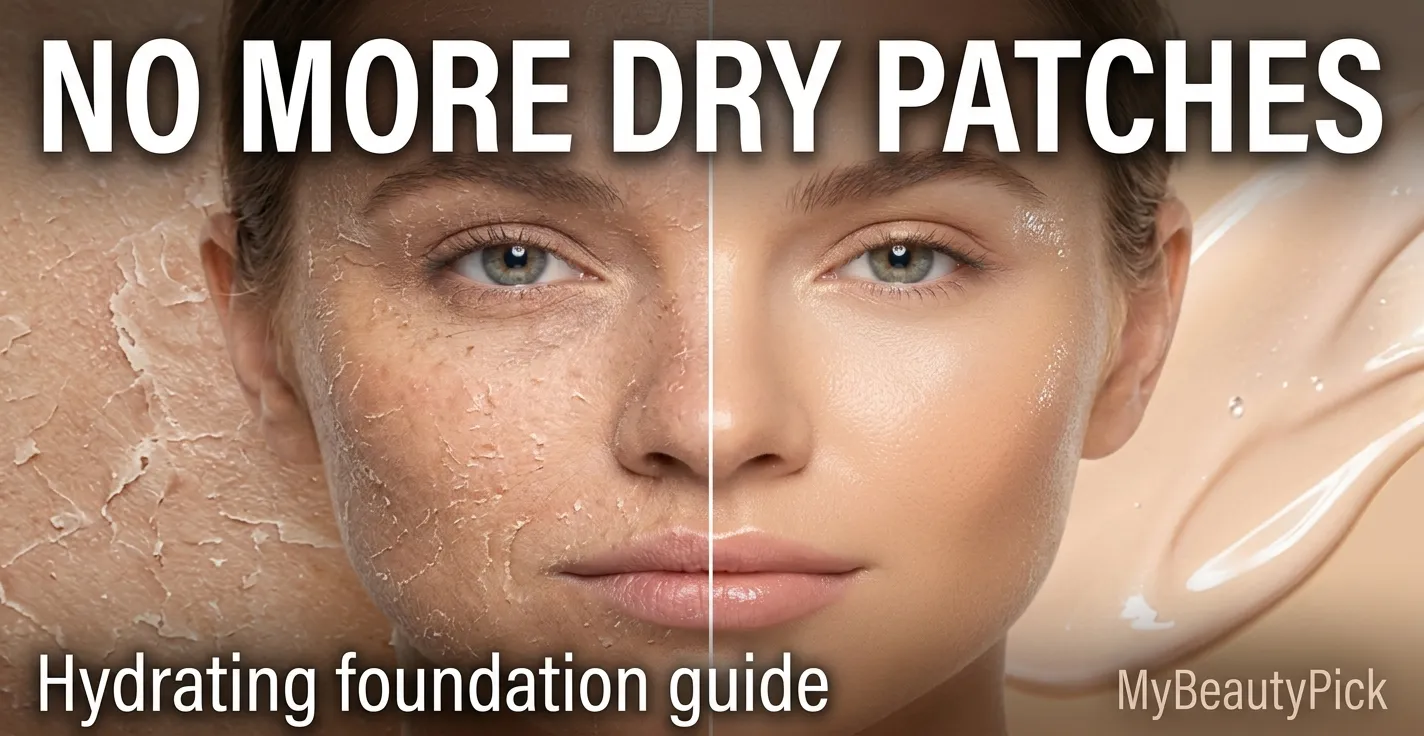
Dry skin and foundation have a difficult relationship. The same formula that photographs beautifully on someone with normal or oily skin can sit in patches, emphasize every dry flake, and crack at the corners of the mouth and nose by midday on skin that lacks natural moisture. The problem is almost never the coverage level. It is the formula base, the prep routine underneath it, and the finish type — and once you understand those three variables, finding a foundation that works on dry skin becomes significantly more straightforward.
This guide covers what makes a foundation genuinely good for dry skin (not just labeled as such), which ingredients to look for and which to avoid, and the best options across drugstore, mid-range, and luxury price points — including what works specifically for tan and medium dry skin where undertone and shade range add another layer of complexity to the search.
Why Foundation Looks Dry, Cakey, or Flaky on Dry Skin
Foundation cracks and flakes on dry skin when the formula base is water-light or matte-focused, when skin has not been properly hydrated and prepped underneath, or when setting powder is applied too heavily over a formula that needed moisture to move correctly. The fix is a combination of the right formula, the right prep, and the right application technique.
Dry skin lacks the natural sebum layer that keeps foundation sitting smoothly throughout the day. On oily skin, sebum can be a problem — it breaks down formula binders and causes oxidation. On dry skin, the absence of that same oil layer means foundation has nothing to grip to and nothing to stay flexible within. It sets rigidly, and wherever there is existing texture, dryness, or flaking, the foundation finds it and clings to it.
Matte formulas make this worse. They are designed to absorb oil and minimize shine, which on dry skin removes whatever natural moisture the skin surface has and leaves a flat, tight finish that emphasizes every patch of dryness rather than disguising it. A foundation for dry skin needs to add moisture, not take it away.
What to Look for in a Good Foundation for Dry Skin
| Ingredient / Feature | What It Does | Why It Matters for Dry Skin |
|---|---|---|
| Hyaluronic acid | Draws moisture into the skin and holds it | Plumps and hydrates beneath the foundation layer — reduces the look of fine lines and dry patches |
| Glycerin | Humectant that attracts water to the skin surface | Keeps the foundation formula flexible and prevents it setting rigidly into dry areas |
| Squalane | Lightweight oil that mimics the skin’s natural sebum | Replaces the missing oil layer on dry skin — foundation blends more smoothly and stays softer |
| Ceramides | Reinforce the skin barrier and lock in moisture | Prevent moisture loss throughout wear — foundation holds better when skin barrier is supported |
| Vitamin E (tocopherol) | Antioxidant that conditions and softens skin | Adds slip to the formula — foundation moves more smoothly over dry patches rather than gripping them |
| Plant oils (rosehip, jojoba, marula) | Nourishing lipids that soften and condition | Provide the oil component dry skin needs — especially useful in cream and serum foundations |
| Dewy or satin finish | Reflects light — adds dimension and glow | Counteracts the flat, dull look that dry skin produces — makes skin look alive rather than tired |
| Liquid or cream formula | High water or oil content base | Glides over dry patches rather than gripping them — powder formulas do the opposite |
Ingredients and Formula Types to Avoid on Dry Skin
- Liquid, cream, or serum foundation formulas
- Dewy, satin, or luminous finish
- Hyaluronic acid, glycerin, squalane, ceramides
- Plant oils — rosehip, jojoba, marula, aloe
- Buildable medium to full coverage
- Flexible film-forming ingredients
- Fragrance-free or minimal fragrance (dry skin is more sensitive)
- Powder or pressed foundation formulas
- Full matte finish — absorbs the little oil dry skin has
- High alcohol content (drying, strips moisture)
- Heavy silicone-only base without added humectants
- Kaolin or bentonite clay (oil-absorbing, drying)
- Long-wear formulas marketed for oily skin
- SPF with high titanium dioxide (can sit heavily on dry patches)
Dry Skin vs Dehydrated Skin: Which Foundation You Actually Need
Dry skin lacks oil. Dehydrated skin lacks water. Both can look and feel similar but need different solutions. Dry skin benefits most from oil-enriched foundation formulas with squalane or plant oils. Dehydrated skin benefits most from water-binding ingredients like hyaluronic acid and glycerin. Many people have both simultaneously.
This distinction matters for foundation choice because the two conditions respond differently to formula types. Genuinely dry skin — which produces less sebum by nature — needs a foundation with oil-based ingredients to replace what the skin does not produce on its own. Dehydrated skin, which can occur on any skin type including oily skin, needs water-attracting humectants. A serum foundation high in hyaluronic acid will help dehydrated skin enormously but may not be enough for genuinely dry skin without an oil-rich primer or moisturizer underneath.
Wash your face with a gentle cleanser and wait 30 minutes without applying anything. If your skin feels tight, looks dull, and has visible dry or flaky patches, it is dry. If it feels tight and looks tight but has no visible flaking or texture, it is likely dehydrated. If both are present, use a formula with both humectants and oils — a serum foundation with hyaluronic acid plus an oil-enriched primer.
Best Foundations for Dry Skin: By Price Point
The following recommendations are organized by price point and cover a range of coverage levels, finishes, and skin concerns within the dry skin category. Each includes what makes it work specifically on dry skin and what to be aware of before purchasing.
Best Drugstore Foundations for Dry Skin
A serum-weight tinted formula with 1.5% hyaluronic acid — one of the highest concentrations found in a drugstore tinted product. It blends into dry skin rather than sitting on top of it, giving a natural skin-like finish that does not emphasize texture.
The serum base means it has a fluidity that glides over dry patches rather than gripping them. It provides light to medium buildable coverage — enough to even out tone without the heavy product weight that sets into dry lines. The hyaluronic acid continues to draw moisture through the day.
A long-standing drugstore favorite specifically formulated for dry skin — different from the oily/combination version. The formula contains SoftFlex technology that keeps the film flexible rather than setting rigidly, which prevents cracking at expression lines.
The SPF 20 version uses a combination of chemical and physical filters rather than high-concentration titanium dioxide, which reduces the risk of that heavy, powdery layer that emphasizes dry patches. The formula blends into skin with a satin finish and holds medium to full coverage without settling into fine lines.
The Dewy + Smooth version of Fit Me is specifically built for dry and normal skin. It contains SPF 18 and a moisturizing formula base that gives a luminous finish rather than the matte result of the Matte + Poreless version.
The dewy finish adds the glow that dry skin loses — dry skin naturally looks flat and dull, and a luminous foundation counteracts that. The formula is lightweight enough to build in layers without becoming heavy on skin that lacks oil to keep it flexible.
A collaboration formula combining CoverGirl coverage with Olay moisturizer. The inclusion of Olay’s hyaluronic complex and vitamin C means it functions as both base coverage and skincare — particularly useful for dry skin that also shows early signs of fine lines.
The cream-liquid consistency is more hydrating than standard drugstore liquids. It does not set powder-dry, which means it stays flexible through facial movement and does not crack at smile lines or around the nose where dry skin tends to show foundation breakdown first.
Best Mid-Range Foundations for Dry Skin
A clean beauty serum foundation with aloe vera, hyaluronic acid, and rose hip oil. The serum consistency is one of the thinnest in this category, which makes it exceptional at blending over dry skin without any gripping or patchiness.
The rose hip oil component specifically addresses the oil deficit that dry skin has. It gives the formula a natural slip that mimics what sebum would do on normal skin, allowing the product to move smoothly even over texture and flakiness. The finish is skin-like with a natural dewy quality — not wet or glassy, but genuinely healthy-looking.
A peptide and hyaluronic-acid-rich foundation with SPF 25 from chemical filters, which means no white cast risk on tan skin. The formula contains caffeine and arnica for under-eye darkness and puffiness — a useful dual function for dry skin that also shows tired-looking eyes.
The peptide complex actively supports skin hydration through the day rather than just sitting on top as a cosmetic layer. The chemical SPF means the formula does not contain the heavy mineral particles that can sit on and emphasize dry skin texture. Medium coverage that photographs dewy and healthy.
A gel-cream hybrid that sits between a tinted moisturizer and a foundation in coverage level. The mineral SPF 30 is iron-oxide-tinted, which significantly reduces white cast on tan skin compared to standard mineral SPF products.
The gel-cream texture is uniquely suited to dry skin that also reacts to heavy cream formulas — it delivers the moisture of a cream without the heaviness. Marine botanicals in the formula support skin hydration through the day. Particularly good for dry skin that is also sensitive or prone to redness.
Best Luxury Foundations for Dry Skin
One of the most consistently recommended foundations for dry skin across makeup artist communities. The Micro-fil technology creates a luminous, skin-like finish that reads as natural glow rather than product on every skin tone depth, including tan and golden complexions.
The silky fluid texture has enough slip to glide over dry skin without gripping texture or emphasizing dryness. The finish is luminous without being wet or glossy — it gives dry skin the dimensional quality it naturally lacks. Works exceptionally well on tan skin for its undertone accuracy at medium and tan depths.
Despite the “longwear” label, this formula stays comfortable on dry skin because the longwear mechanism is a flexible polymer system rather than an oil-absorbing one. It gives radiant finish coverage that holds on dry skin without cracking at fine lines.
The formula contains sodium hyaluronate alongside its coverage pigments, which keeps the skin surface hydrated from beneath the foundation layer. The radiant finish gives dry skin the luminosity it lacks naturally. Particularly strong on tan skin for its warm and olive undertone coverage in the medium-tan range.
A medium to full coverage foundation with a soft-focus satin finish. The hyaluronic acid and vitamin E combination keeps dry skin hydrated through long wear without the formula setting into a rigid dry layer.
The soft-focus technology blurs the appearance of dry texture rather than sitting in it. Particularly useful for dry skin that also has visible pores or fine lines — the blurring effect makes the skin surface appear smoother even where dryness has created visible texture. The satin finish photographs well and does not cause flashback on tan skin.
Foundation for Dry Tan Skin: Extra Considerations
Dry skin and tan skin together create a specific set of needs that most general dry skin foundation guides do not address. Tan skin already faces shade range gaps, undertone mismatch risks, and oxidation challenges. Dry tan skin adds to this the need for a formula that is hydrating without being so oil-heavy that it accelerates the oxidation process that tan skin is already prone to.
Oxidation and dry skin: Dry skin oxidizes foundation less than oily skin does, which is one advantage. However, if your dry skin has dry patches alongside slightly oilier zones (combination-dry), those oilier areas will still oxidize. Choose a formula with humectants (for dry zones) rather than heavy silicone (which can still oxidize on mixed skin).
SPF and dry tan skin: Physical SPF (titanium dioxide, zinc oxide) sits heavily on dry skin texture AND causes white flashback on tan skin in photos — a double problem. Choose foundations with chemical SPF or SPF-free formulas for tan dry skin, particularly for photography and events.
Undertone and hydrating formulas: Hydrating and serum foundations for dry skin tend to have fewer shade options than standard foundations, which compounds the shade gap problem for tan skin. ILIA True Skin Serum Foundation and Kosas Revealer are the most reliable for warm and neutral tan undertones in the hydrating category.
Setting powder on dry tan skin: Avoid setting powder on dry areas entirely. Use it only on the T-zone if needed, and choose a finely milled banana-toned powder rather than white translucent powder, which creates both cakiness and flashback on tan skin.
How to Apply Foundation on Dry Skin Without Cracking or Flaking
The right formula is only half the solution. The application routine underneath and on top of the foundation determines whether it holds without cracking, regardless of which product you choose.
- Exfoliate gently 2 to 3 days before — not the day before or day of. Exfoliating too close to foundation application leaves skin temporarily more sensitive and can cause patchy application
- Apply a humectant serum (hyaluronic acid) to damp skin as the first skincare step — this draws moisture into the skin before anything else goes on top
- Follow with a rich moisturizer — not a gel. Dry skin needs cream or balm-weight moisturizer to seal in the serum and provide the oil layer the skin lacks
- Allow moisturizer to fully absorb — minimum 10 minutes. Foundation applied over wet moisturizer will slide and pill
- Use a hydrating primer rather than a mattifying or pore-blurring one — blurring primers grip dry skin and emphasize texture
- Apply foundation with a damp sponge — a damp sponge presses product into skin and adds a water layer that helps hydrating formulas blend more evenly. A dry brush can drag over dry patches
- Build in thin layers — one light pass, check coverage, add where needed. Over-application of any foundation on dry skin reads heavy
- Set only the T-zone if needed — powder on dry cheeks and forehead causes flaking and flashback. If you must set more broadly, use the lightest possible dusting
- Finish with a hydrating setting spray — this melts the layers together and adds a final water layer that keeps the foundation flexible through the day
Mix one or two drops of facial oil or squalane into your foundation before application. This customizes any foundation toward a more hydrating formula, adds glow, and gives the formula more slip over dry patches. Works especially well on tan dry skin where the added oil also helps slow the oxidation rate.
Frequently Asked Questions
Serum and liquid foundations with hyaluronic acid, glycerin, or squalane are the least likely to look cakey on dry skin. At drugstore level, L’Oreal True Match Hyaluronic Tinted Serum is the strongest option. At mid-range, ILIA True Skin Serum Foundation and Kosas Revealer both avoid caking consistently. The finish type also matters — dewy and satin finishes look more natural on dry skin than matte formulas, which grip texture and look powdery.
L’Oreal True Match Hyaluronic Tinted Serum, Revlon ColorStay for Normal/Dry Skin, and Maybelline Fit Me Dewy + Smooth are the most consistently reliable drugstore options for dry skin. All three avoid the matte finish and oil-absorbing ingredients that cause cracking and flaking. True Match Hyaluronic Serum is the lightest of the three. ColorStay gives the most coverage. Fit Me Dewy sits between the two.
Dehydrated skin specifically needs water-binding humectants rather than oils. Look for foundations with high hyaluronic acid, glycerin, or sodium hyaluronate content. The L’Oreal True Match Hyaluronic Tinted Serum (1.5% hyaluronic acid) and Kosas Revealer Foundation (peptides and hyaluronic acid) are the strongest options for dehydrated skin specifically. Also ensure your skincare routine under the foundation is hydrating — foundation alone cannot fix dehydration at the skin level.
Both work better than powder for dry skin. Liquid foundations are more common and easier to find in wider shade ranges, making them the more practical choice for most buyers. Cream foundations tend to be richer and more hydrating but can feel heavy on dry skin that also has some oiliness in the T-zone. For genuinely dry skin with no oily zones, a cream formula provides more hydration. For combination-dry skin, a liquid formula is more versatile.
Powder foundations are not recommended for dry skin. They absorb the limited natural moisture dry skin has, emphasize flaking and texture, and provide no hydrating benefit. If you prefer a powder finish, apply a liquid or serum foundation first and use a very light dusting of setting powder only on the T-zone on top of it — never use pressed or loose powder foundation as the base product on dry skin.
Patchiness and flaking from foundation on dry skin are almost always a prep problem as much as a formula problem. The foundation is gripping existing dry patches rather than blending over them. Exfoliating gently 2 to 3 days before, applying a humectant serum on damp skin, using a rich moisturizer, and letting it fully absorb before applying foundation resolves most patchiness. If the problem persists after proper prep, the formula itself is too drying — switch to a serum or cream formula.
Dewy, satin, or luminous finishes work best for dry skin. They add the glow and dimensional quality that dry skin naturally lacks. Matte finishes actively remove moisture from the skin surface and emphasize dryness, texture, and flat appearance. Avoid any foundation described as “matte,” “oil-control,” or “shine-free” if you have dry skin.
For more on how foundation interacts with your specific skin type and tone, our guide on how to prep tan skin for a flawless foundation finish covers the full prep routine in detail. If you have dry tan skin and struggle with foundation shade matching specifically, our foundation shade guide for tan skin and undertone guide help narrow down which shades and formulas to look for in the hydrating category.