

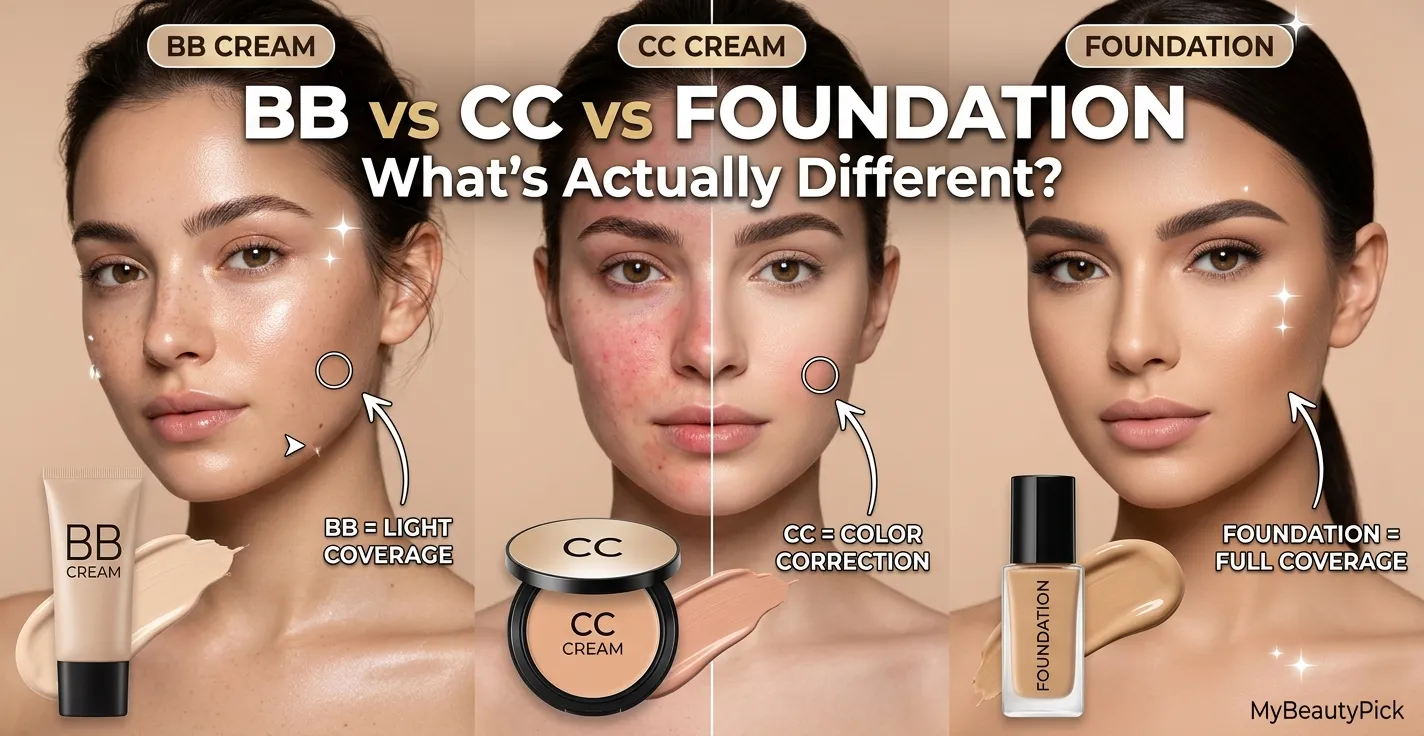
You are standing in front of a makeup display — or scrolling through an online store — looking at BB cream, CC cream, and foundation sitting next to each other in near-identical packaging. They all promise a more even complexion. The descriptions overlap enough that picking one feels like a guess. You buy one, it does not do what you expected, and you are no closer to understanding the difference than when you started.
The confusion is understandable because all three products look similar and occupy the same shelf space. But they are genuinely different products with different formulas, different priorities, and different ideal use cases. This guide explains exactly what each one is, what separates them, when to use each one, and what the specific rules are for tan and brown skin where the usual advice often falls short.
The Short Answer: What Actually Separates BB Cream, CC Cream, and Foundation
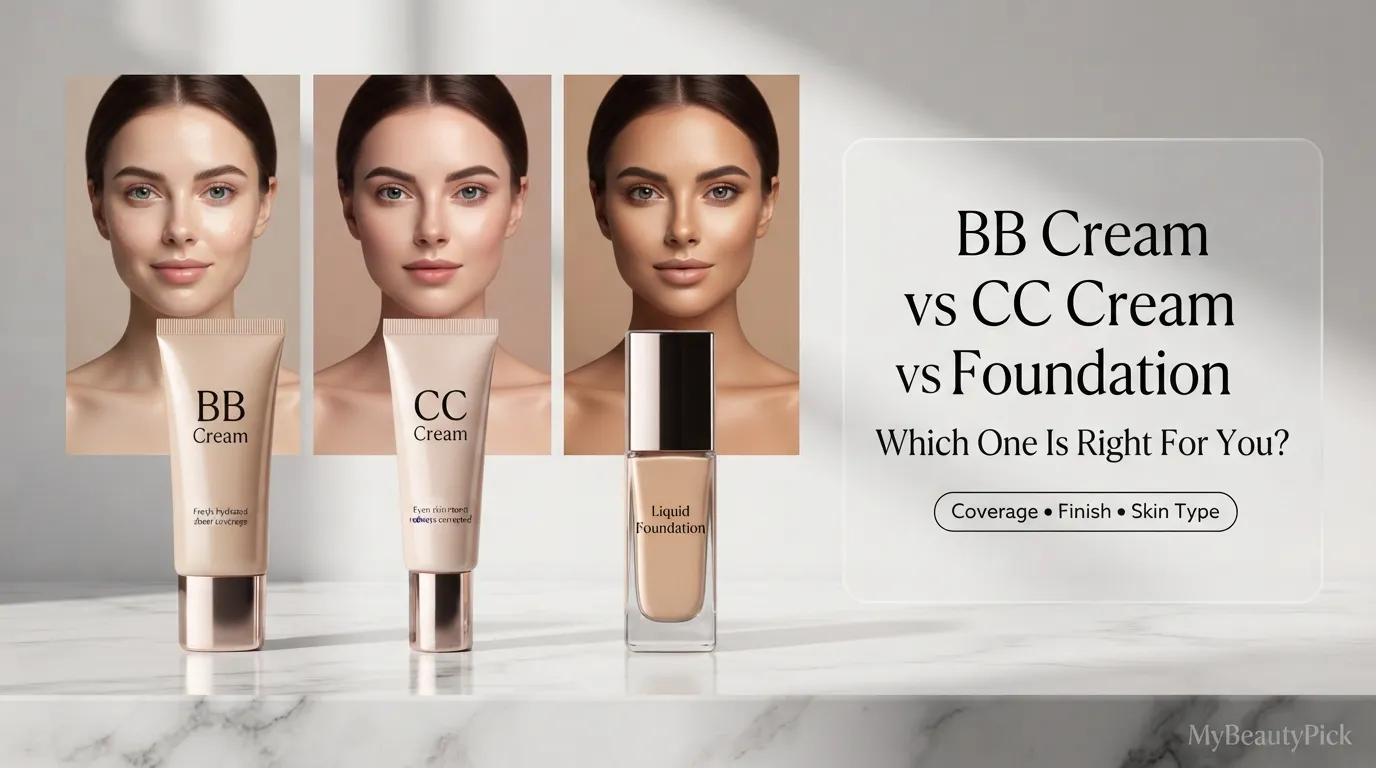
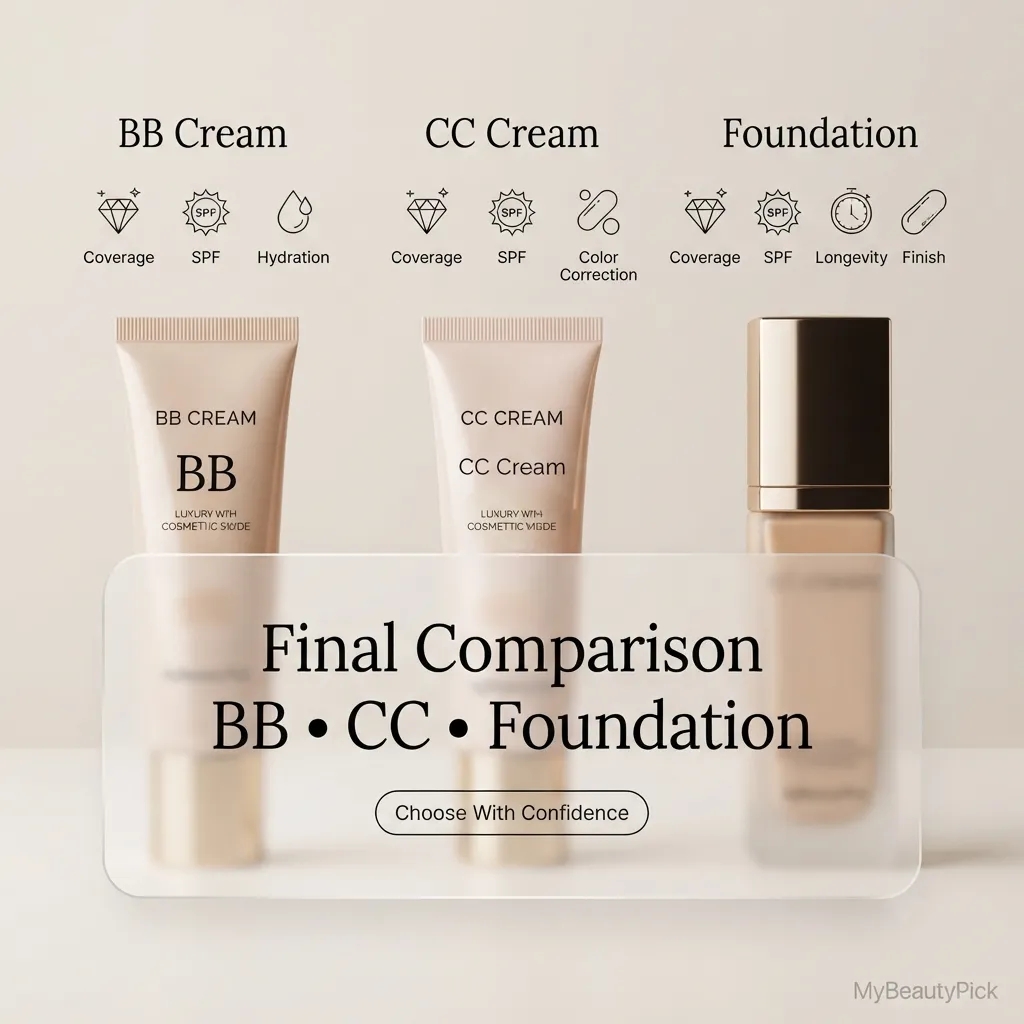
Foundation is coverage-first — it prioritizes pigment density, shade range, finish variety, and wear longevity. BB cream is skincare-first — it combines a light tint with moisturizer, SPF, and skin-conditioning ingredients in one product. CC cream is color-correction-first — it sits between the two, with more pigment than BB but specific tone-correcting tints to neutralize redness, sallowness, or dark spots.
The alphabet gives the categories away once you know what they stand for. BB stands for Beauty Balm or Blemish Balm — a skincare and makeup hybrid that lightly tints while conditioning the skin. CC stands for Color Correcting — a step up in pigment and correction that targets specific discoloration. Foundation stands alone as a dedicated makeup product with coverage as its only primary job.
| Feature | BB Cream | CC Cream | Foundation |
|---|---|---|---|
| Primary purpose | Skincare with light tint | Color correction with moderate coverage | Coverage and even skin tone |
| Coverage level | Sheer to light | Light to medium | Light to full — widest range |
| Skincare ingredients | High — moisturizers, antioxidants, SPF | Moderate — some moisturizing plus color-correcting pigments | Low to moderate — coverage is the focus |
| Shade range | Very limited — 4 to 8 shades typically | Limited — 6 to 12 shades typically | Wide — 20 to 50+ shades in most ranges |
| Finish | Dewy, natural, skin-like | Natural to soft matte | Matte, satin, dewy, or luminous |
| Wear longevity | 4 to 6 hours | 6 to 8 hours | 8 to 16 hours with primer and setting |
| Application method | Fingers or damp sponge | Fingers, sponge, or brush | Brush, sponge — technique matters |
| Best for | Everyday light coverage, dry or normal skin | Redness, dullness, uneven tone correction | Events, photography, full-day coverage |
| Shade matching | Flexible — sheerness forgives slight mismatches | More forgiving than foundation, less than BB | Precise — undertone and depth must match |
What Is BB Cream? Everything You Need to Know
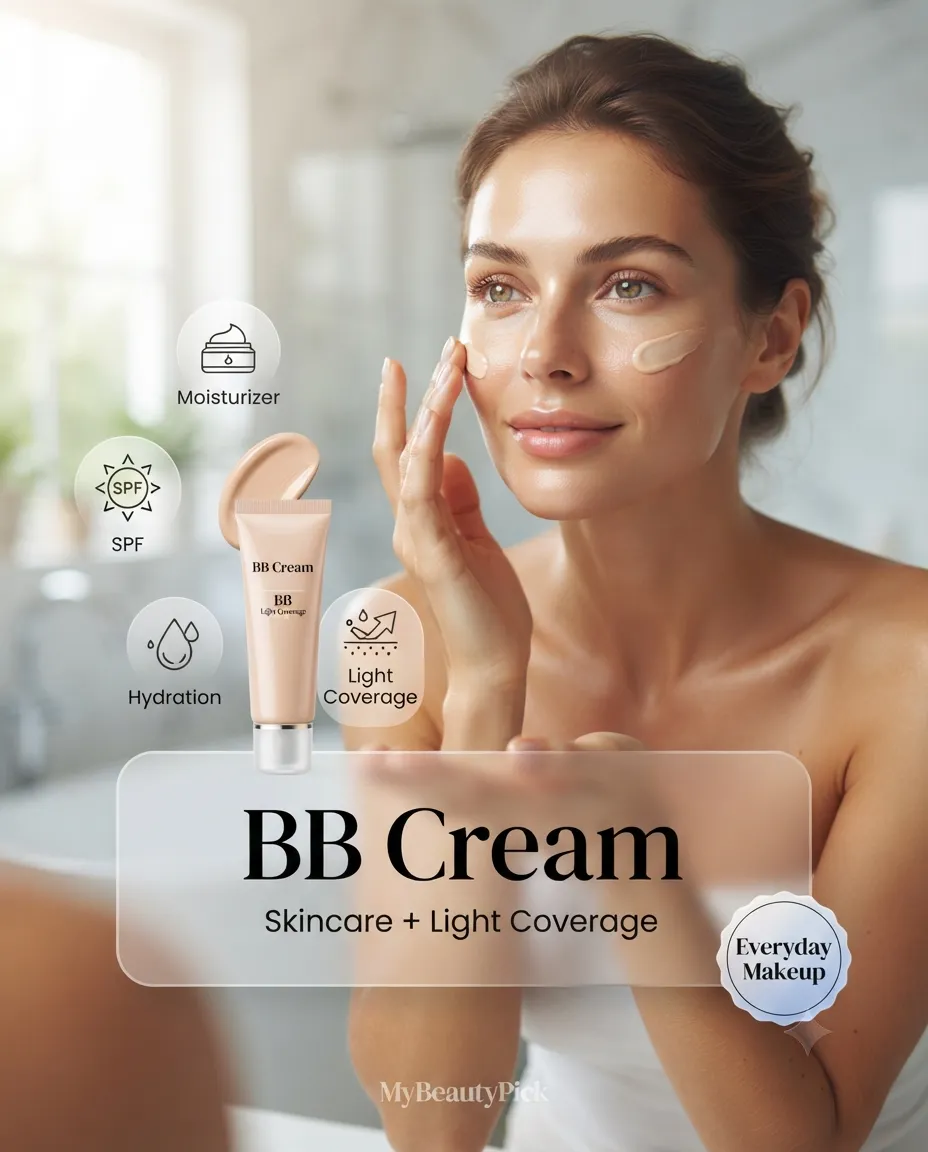
BB cream originated in Germany in the 1980s as a post-procedure skincare product used to protect and soothe skin after laser treatments. Korean beauty brands adopted and reformulated it in the 1990s and 2000s, turning it into the skincare-makeup hybrid that became a global phenomenon. What the Western beauty market received is a somewhat watered-down version of the original Korean BB concept — many Western BB creams are closer to tinted moisturizers than to the richer, more functional Korean originals.
The core appeal of BB cream is simplicity. In one product you get moisturizer, light coverage, often SPF, and sometimes antioxidants or additional skincare actives. For someone who wants a polished skin appearance without a multi-step base routine, BB cream delivers that efficiently.
- You want light, natural coverage that looks like your skin but slightly more even
- You want to combine moisturizer and base coverage into one step
- Your skin is relatively clear and your main concern is uneven tone, not blemishes
- You are doing a quick routine — under 5 minutes for the full base
- You have dry or normal skin that benefits from the hydrating formula
- You want a no-makeup makeup look for casual or everyday wear
- SPF in your coverage step is a priority
BB creams are almost universally limited to 4 to 8 shades, concentrated in light to medium depth. Most mainstream BB cream ranges do not genuinely serve tan, brown, or deep skin tones — the shades that nominally cover this range are often too light or too orange. For medium to dark skin, BB cream’s shade range is the primary limitation before anything else.
Best BB Creams Worth Trying
8 shades with SPF 30, skin-perfecting complex, and a lightweight formula that genuinely feels like skincare. One of the most consistently recommended drugstore BB creams for natural coverage and comfortable wear.
One of the original Korean BB creams with a high SPF 42 and PA+++ rating, collagen, and a formula that delivers noticeably better coverage and skin-conditioning than Western competitors. A benchmark product for the category.
A luxury BB cream equivalent with vitamins B, C, and E alongside SPF 15. The dewy finish and skin-conditioning formula are particularly suited to dry and mature skin. Limited shade range — more options at lighter depth.
What Is CC Cream? Everything You Need to Know
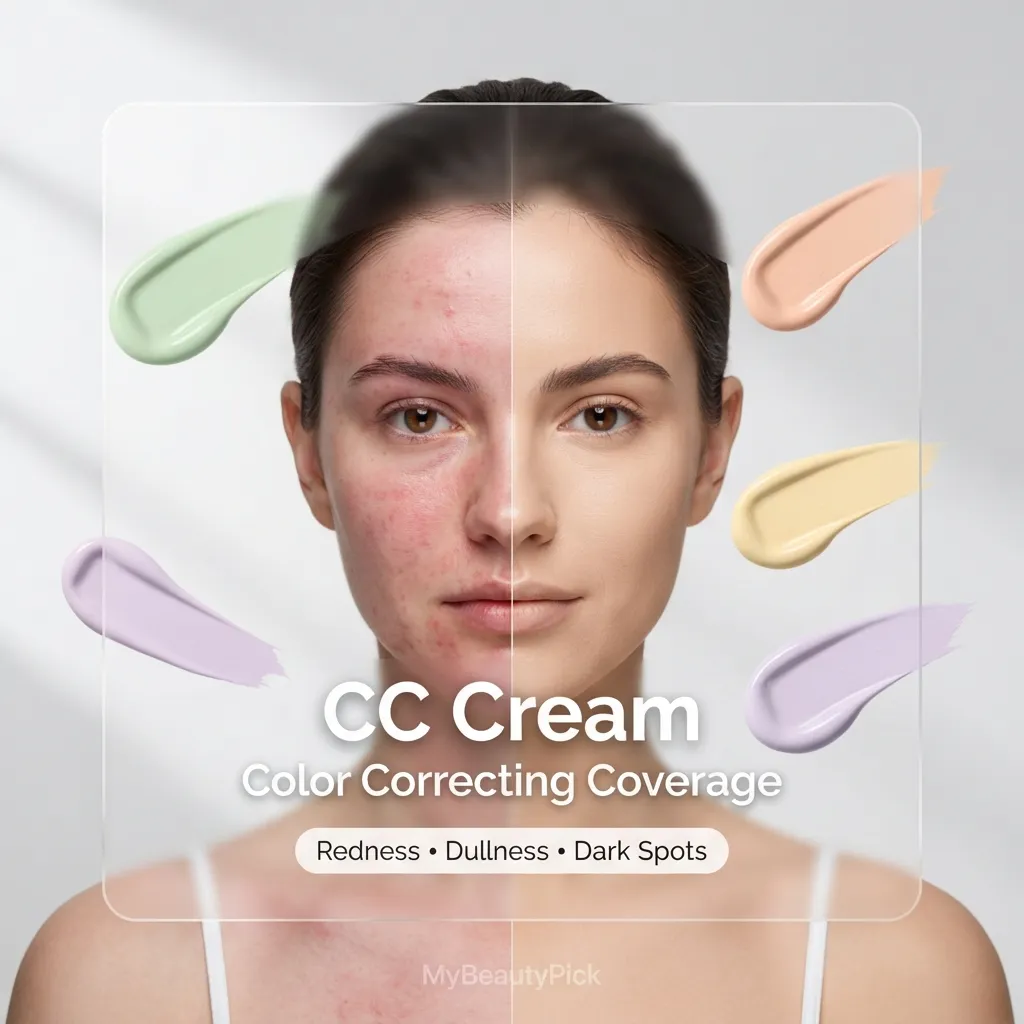
CC cream arrived as the next evolution after BB cream, addressing one specific gap: BB cream blurs and tints but does not correct. CC cream adds tone-correcting pigments to the formula — typically green tints to neutralize redness, peach or yellow tints to counteract sallowness, and lavender to address dullness. The result is a product that does more targeted color work than BB cream while still being lighter and more skin-friendly than foundation.
The best CC creams provide something neither BB cream nor traditional foundation does particularly well — active tone correction built into the base layer, so the skin reads more even in tone before any additional makeup is applied. The It Cosmetics Your Skin But Better CC+ Cream is probably the most well-known example of what a CC cream can do at its best: full-coverage, SPF 50+, anti-aging ingredients, and specific color-correcting technology.
- Redness, rosacea, or visible flushing is your primary concern
- You have uneven tone from sun damage, sallowness, or dark spots that need more than light tinting
- You want more coverage than BB cream but prefer not to commit to a full foundation routine
- SPF is a priority and you want it built in at a meaningful level
- You have combination to normal skin — most CC creams perform better here than on very dry or very oily skin
- You want a faster routine than foundation requires but more result than BB cream delivers
Best CC Creams Worth Trying
A lightweight CC cream with SPF 30, hyaluronic acid, and a natural finish. One of the better drugstore options for everyday color correction at a minimal price point. Limited shade range.
Full coverage with SPF 50+ and anti-aging ingredients including collagen and peptides. One of the few CC creams that genuinely delivers foundation-level coverage with skincare benefits. The most consistently recommended CC cream across beauty editorial and consumer testing.
A hydrating CC cream with SPF 30 and a natural finish. Sits closer to BB cream in hydration level but with more targeted tone-correcting than most BB formulas. Suitable for normal to dry skin.
What Is Foundation? Why It Is Still Different
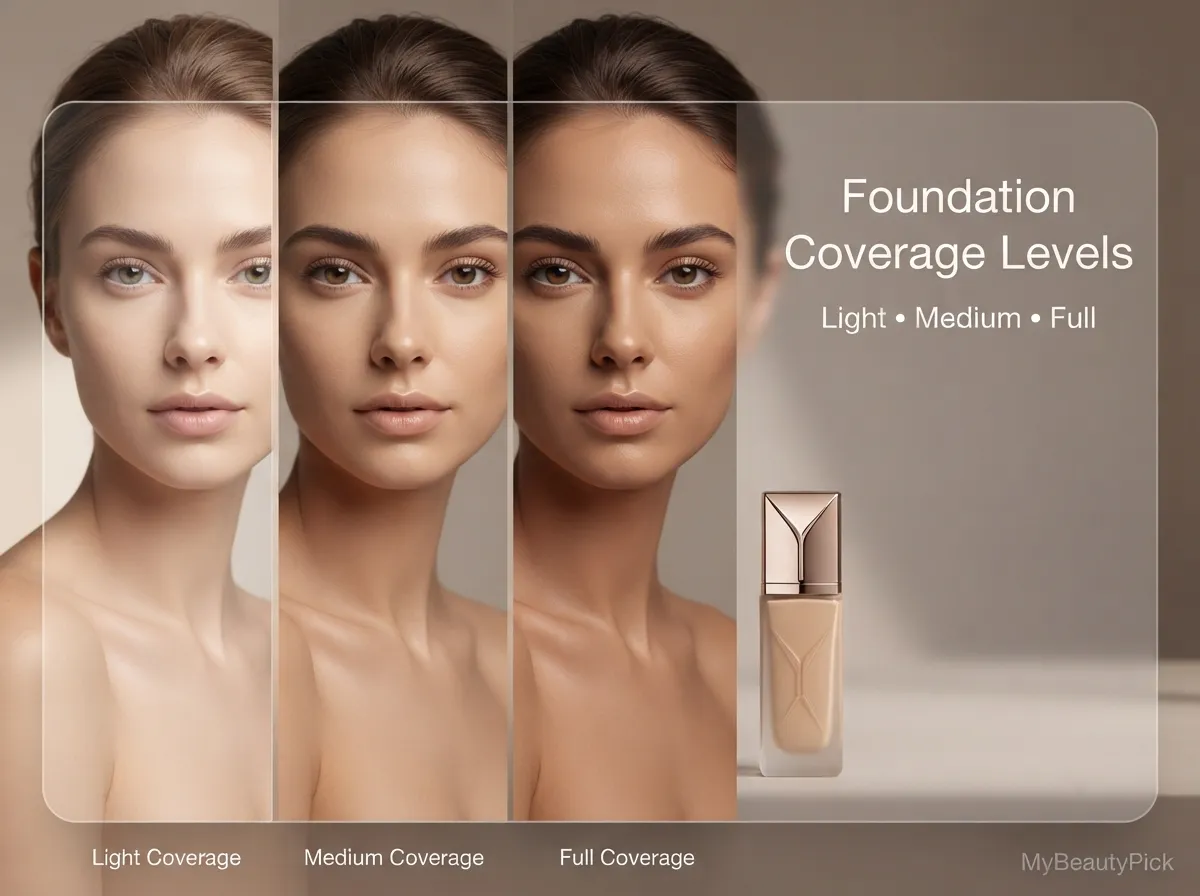
Foundation is the only one of the three that was designed primarily around coverage rather than skincare. Its job is to create an even, unified skin tone across the full face with control over finish, coverage level, and wear longevity — none of which BB or CC cream offer at the same level.
The distinction that matters most: foundation has a wide, precisely calibrated shade range with undertone coding. BB and CC creams do not. This is not a minor difference — it is the reason that BB and CC cream are genuinely not suitable substitutes for foundation for tan, brown, or dark skin. A 6-shade BB cream range cannot accurately serve the depth and undertone variety that a 40-shade foundation range does. For lighter complexions, the sheerness of BB and CC forgives a shade mismatch. For deeper complexions, a wrong shade is immediately obvious and there are fewer options to begin with.
- You need medium to full coverage — for events, photography, or long wear
- You want precise shade and undertone matching — especially important for tan and darker skin
- You are wearing makeup for more than 6 to 8 hours
- You have significant hyperpigmentation, redness, or skin concerns that need genuine coverage
- Photography or flash is involved — foundation with the right SPF type prevents flashback
- You want finish control — matte, satin, dewy — that BB and CC creams cannot offer
- You are doing a full makeup look where the base needs to hold through multiple product layers
BB Cream vs CC Cream vs Foundation for Tan and Brown Skin
This is the section that every other BB vs CC vs foundation guide skips, and it contains the most important information for a significant portion of the people asking this question.
BB cream shade range is almost always inadequate for tan to dark skin. Most BB cream ranges have 4 to 8 shades, heavily concentrated at light to medium depth. The shades nominally covering medium-tan and deeper tones in BB cream ranges are frequently too light, too grey, or too orange because the formula was not developed with those depths as the reference. This is the most common disappointment with BB cream reported by tan and brown skin buyers.
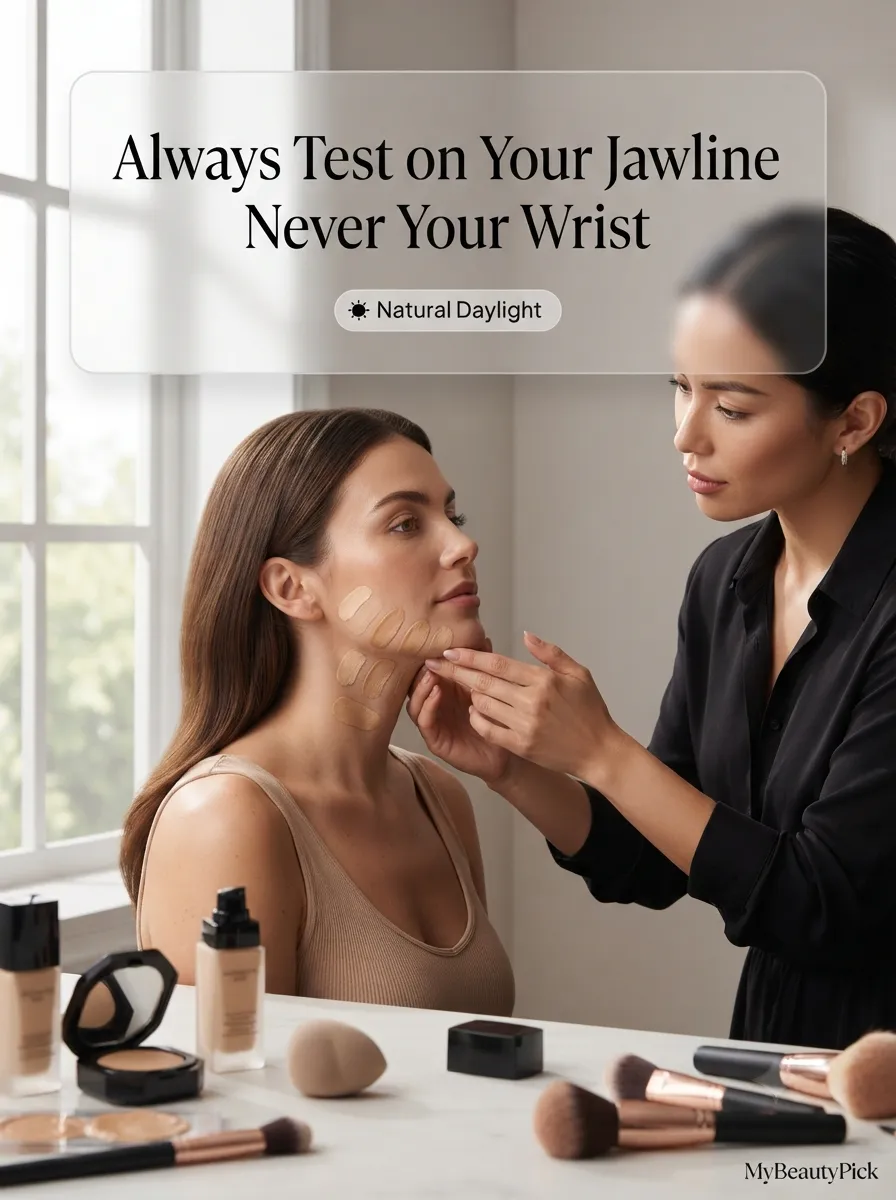
CC cream shade range is better but still limited. The It Cosmetics CC+ Cream, which has the widest shade range in the category at around 20 shades, is one of the few CC creams that genuinely serves medium to tan depth with warm and neutral undertone options. Most other CC cream ranges stop at light-medium. Test on the jaw in natural daylight before committing — CC cream’s tone-correcting tints can read grey or ashy on warm tan undertones if the shade is not right.
Oxidation in BB and CC creams on tan skin. The same oxidation that affects foundation on tan skin affects BB and CC creams — the iron oxide pigments in the formula react with skin oils over time and shift the color. Because BB and CC creams have fewer pigment options and less undertone engineering than foundation, the oxidation problem can be more pronounced. A primer underneath helps, but the limited shade range means there may not be a shade light or neutral enough to account for the shift.
SPF in BB and CC creams and flashback on tan skin. Most BB and CC creams use physical SPF (zinc oxide or titanium dioxide) as their sun protection. On tan skin in flash photography, this causes a visible white or grey cast — the same problem as foundation with physical SPF, but often more pronounced because BB and CC creams are applied more casually and over a larger area. For any photography involving flash, use foundation with chemical SPF or no SPF instead of BB or CC cream.
The better option for most tan skin needs: a serum foundation or tinted SPF. Products like Fenty Beauty Pro Filt’r, ILIA True Skin Serum Foundation, or Kosas Revealer give the lightweight skincare-meets-coverage feel of a BB cream but with 30 to 50 shades, proper undertone engineering, and the finish control that neither BB nor CC cream offers. For tan skin, these are often a better choice than any BB or CC cream on the market.
Can BB Cream or CC Cream Replace Foundation?
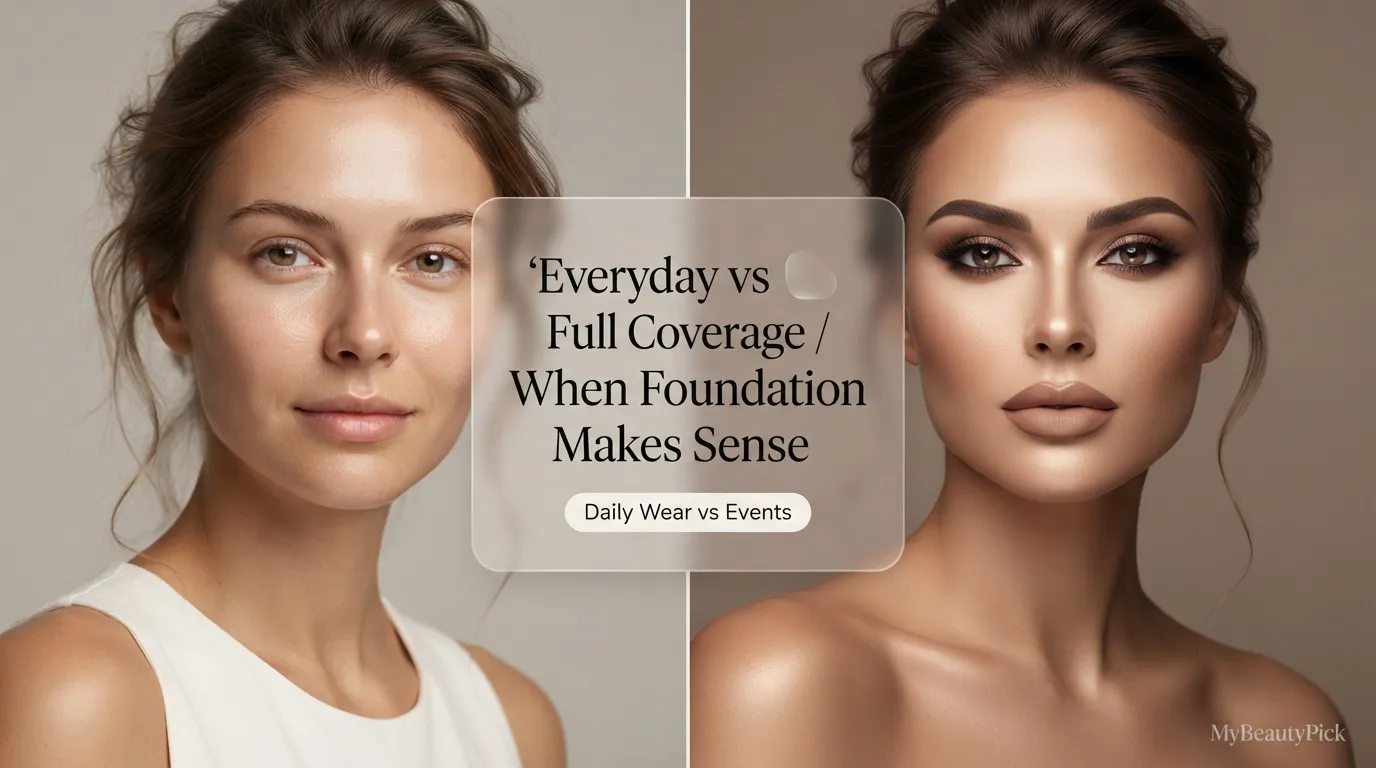
BB cream or CC cream can replace foundation for light everyday coverage on skin with minimal concerns. They cannot replace foundation for events, photography, or occasions requiring medium to full coverage. They cannot replace foundation for tan to dark skin where shade accuracy is critical and BB/CC shade ranges are too limited to serve the full depth and undertone range.
The replacement question depends entirely on what you need foundation to do. If your main goal is skin-evening and a natural look for a casual day, BB or CC cream can absolutely serve that purpose and with fewer steps than foundation requires. If you need coverage that holds for 10 hours, needs to survive photography, or needs to precisely match a medium-tan or deep complexion, neither BB cream nor CC cream is a workable substitute.
How to Choose Between BB Cream, CC Cream, and Foundation: Decision Guide
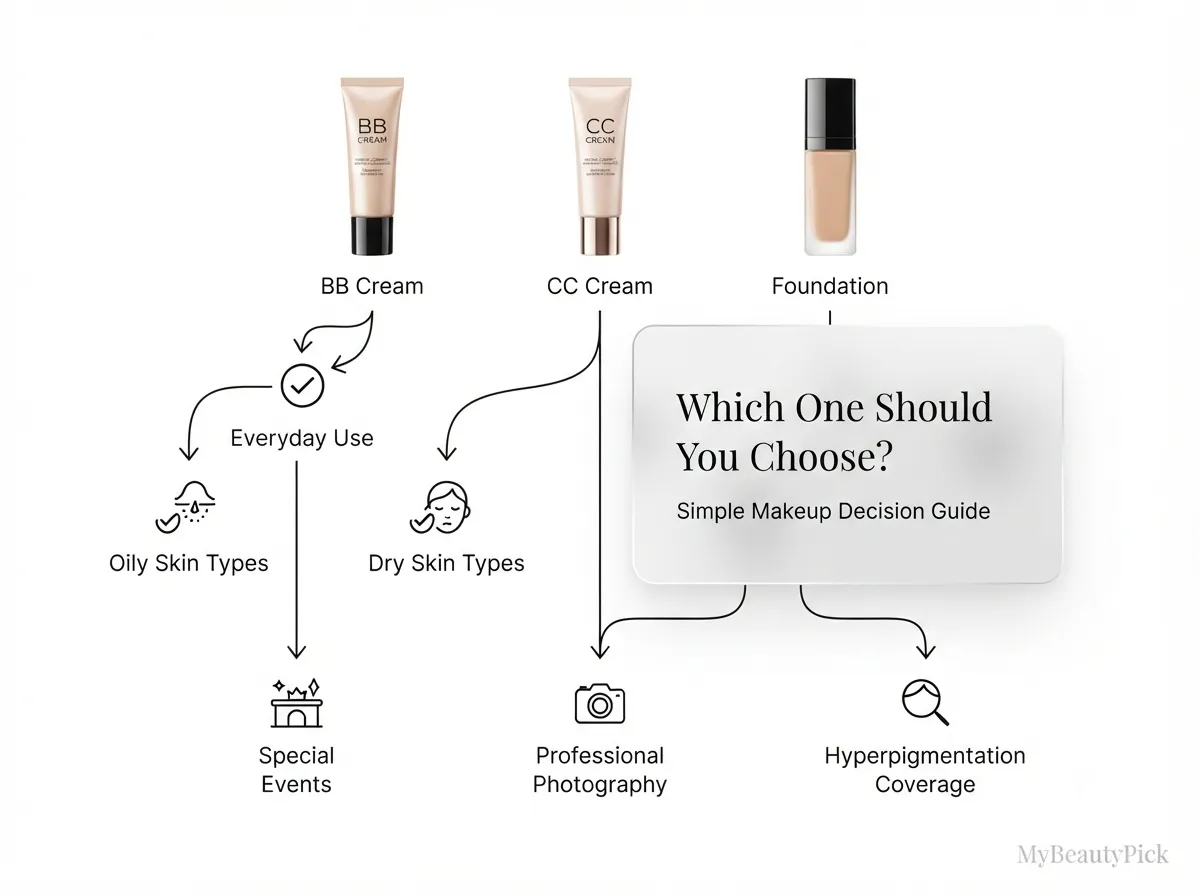
| Your Situation | Best Choice | Why |
|---|---|---|
| Quick everyday routine, light coverage, dry or normal skin | BB Cream | Combines moisturizer, light coverage, and SPF in one step |
| Redness, rosacea, or significant tone unevenness | CC Cream | Color-correcting tints specifically target discoloration |
| Medium to full coverage needed | Foundation | BB and CC cannot deliver medium to full coverage reliably |
| Photography or event with flash | Foundation (chemical SPF or SPF-free) | BB and CC’s physical SPF causes flashback on tan and dark skin |
| Tan, brown, or dark skin needing accurate shade match | Foundation | BB and CC shade ranges are too limited for deep skin |
| Wear longer than 6 to 8 hours | Foundation | BB and CC wear 4 to 8 hours — foundation with primer holds significantly longer |
| Covering hyperpigmentation or acne marks | Foundation (or CC cream for mild cases) | BB cream coverage is too sheer for significant pigmentation concerns |
| Minimal routine, light to no makeup look | BB Cream or tinted moisturizer | Most natural result with fewest steps |
Frequently Asked Questions
Foundation is coverage-first with a wide shade range and multiple finish options. BB cream is skincare-first — it combines a light tint with moisturizer and often SPF in one product, prioritizing skin conditioning over coverage. CC cream sits between the two, offering more coverage than BB with specific color-correcting tints that neutralize redness, sallowness, or dark spots. BB creams are sheerer; CC creams correct; foundation covers.
BB cream can replace foundation for light everyday coverage on relatively clear skin. It cannot replace foundation for events, photography, long wear, or for tan and deep skin tones where BB cream’s shade range — typically 4 to 8 shades — is too limited to provide an accurate match. For medium to full coverage needs or for any photography involving flash, foundation is the correct choice.
Neither is universally better — they serve different purposes. CC cream is better for a lighter, faster routine when tone correction (redness, sallowness) is the main concern. Foundation is better for greater coverage, longer wear, shade accuracy for deeper skin tones, and photography. For tan to dark skin specifically, foundation’s wider shade range makes it the more reliable choice for accurate color matching.
Foundation with a mattifying or oil-control formula is generally better for oily skin than BB cream. Most BB creams have hydrating, dewy formulas that add moisture oily skin does not need and that can break down faster due to excess oil. If you prefer BB cream, look specifically for oil-control or mattifying BB formulas and pair with an oil-control primer. For tan and oily skin, the oxidation issue with BB cream on top of excess sebum is also more pronounced than with a properly formulated foundation.
BB cream prioritizes skin hydration and conditioning with a light tint. CC cream prioritizes color correction — it contains specific pigments that neutralize discoloration like redness (green tints), sallowness (peach or yellow), or dullness (purple). CC creams generally offer slightly more coverage than BB creams and a less dewy finish. If you have redness or significant tone unevenness, CC cream is the better choice between the two.
Foundation is the best choice for tan, brown, and dark skin because it has the only shade range that accurately serves deeper complexions. Most BB creams offer 4 to 8 shades concentrated at light to medium depth, and most CC creams have similarly limited deep-shade coverage. The few that do reach medium-tan depth often have inadequate undertone options. Foundation ranges like Fenty Beauty (50+ shades), MAC Studio Fix Fluid (60+ shades), and Rare Beauty Liquid Touch (48 shades) offer the shade accuracy and undertone variety that BB and CC creams cannot.
If you have decided that foundation is the right choice but are navigating shade selection for tan or brown skin, our foundation shade guide for tan skin covers the full matching process including undertone identification and brand system navigation. If oxidation is your main concern regardless of which product you choose, our article on why foundation oxidizes on tan skin explains the chemistry and all the prevention steps.