
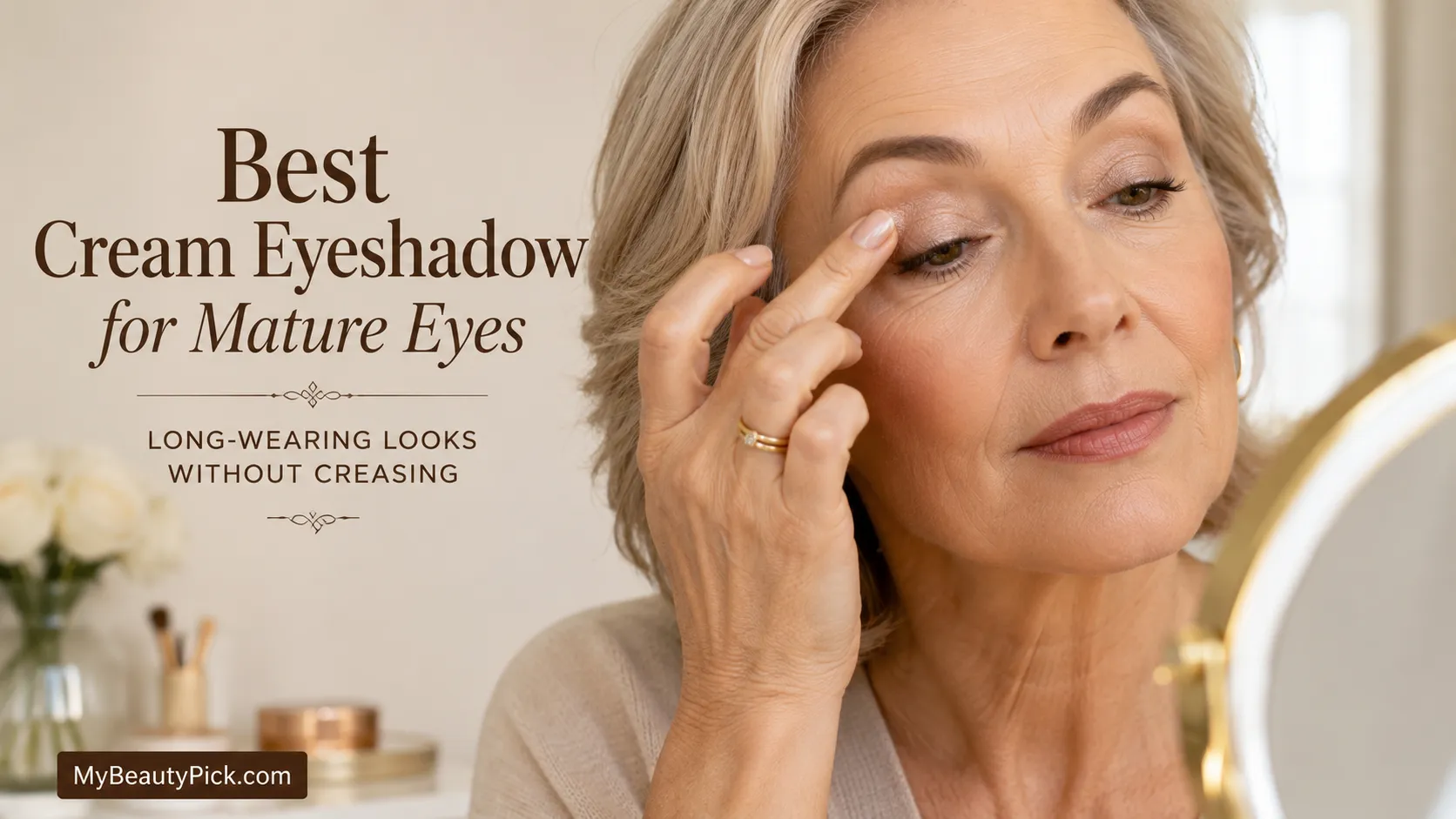
Best cream eyeshadow for mature eyes

Cream eyeshadow gets blamed for creasing more than it actually deserves. Most of the time the problem isn’t the formula, it’s a mismatch between the lid you’re working with and the technique you’re using on it. Mature eyes, hooded eyes, and crepey eyes are not the same thing, even though most articles lump them together and hand out one set of advice for all three.

I’ve applied cream shadow on every combination of these lid types, and the technique that works on a smooth mature lid can crease badly on a crepey one within an hour. Here’s how to figure out what you’re actually working with, then the picks and application steps that match.

Quick Answer

The best cream eyeshadow for mature eyes is a long-wear or waterproof formula applied in a thin layer with a patting motion, then set immediately with translucent powder. Matte finishes generally photograph and wear better than shimmer on crepey or textured lids, since shimmer particles can settle into fine lines and emphasize texture instead of softening it.

Mature, Hooded, or Crepey? What’s Actually Going On With Your Lids
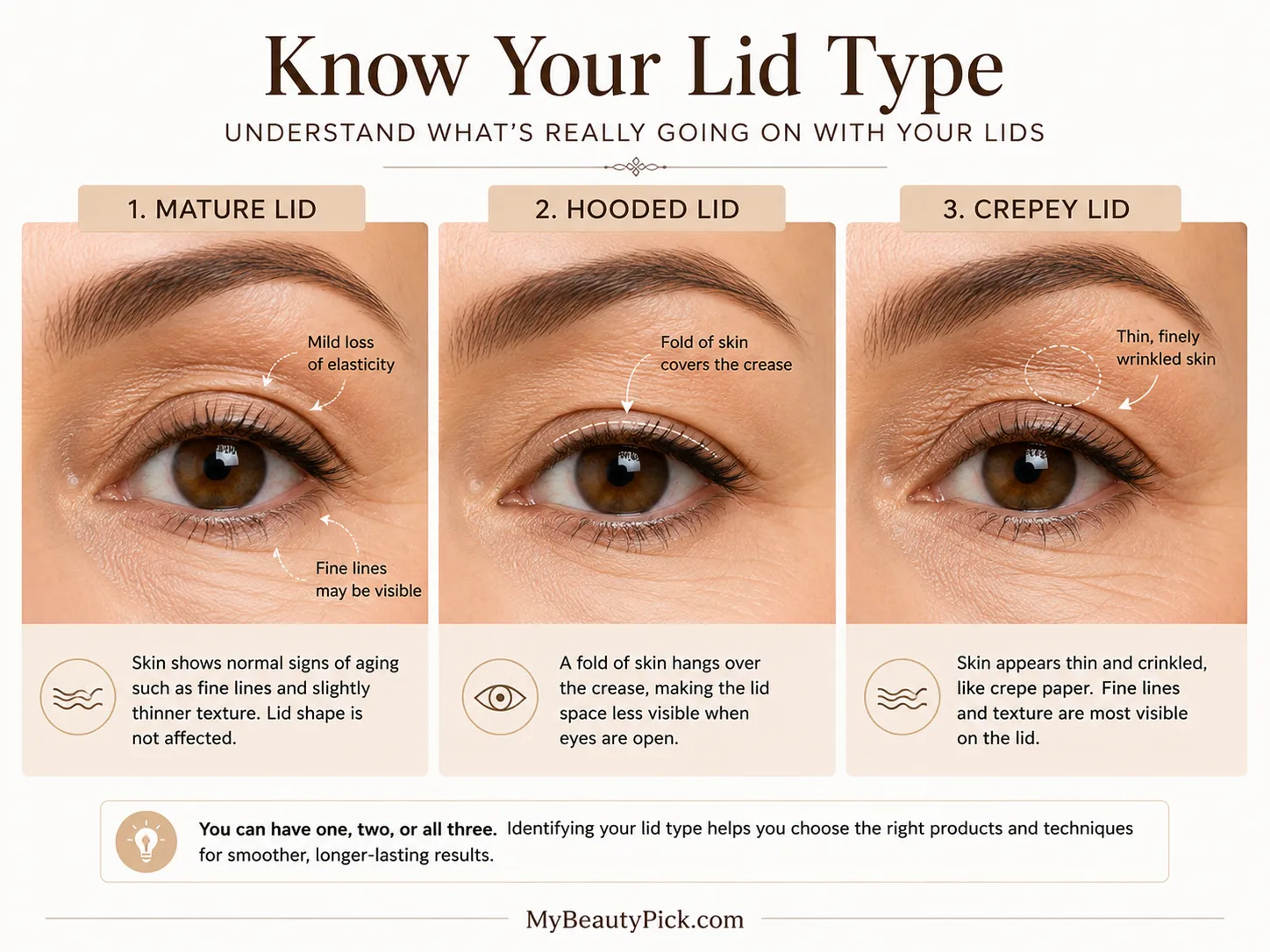
Know your lid type — mature, hooded or crepey lids and how each affects eyeshadow choice

These three terms get used interchangeably online, but they describe different things, and they call for different approaches.

Mature simply refers to skin that’s aged, which can show up as thinner skin, slightly less elasticity, and more visible fine lines, without necessarily changing the shape of the lid itself.

Hooded describes a lid shape where the crease is hidden by a fold of skin, visible whether your eyes are open or closed. This is structural and can happen at any age, though it’s common in mature eyes too.

Crepey describes a specific texture, thin, finely wrinkled skin that looks similar to crepe paper, often most visible on the lid when the eye is open.

You can have any combination of these, or none beyond simple maturity. A hooded lid needs shadow placed and blended differently to account for the fold. A crepey lid needs thinner product layers and a finish that doesn’t catch in texture. Knowing which applies to you changes which advice in this guide matters most.

Matte vs. Shimmer: What Actually Looks Best on Textured Lids
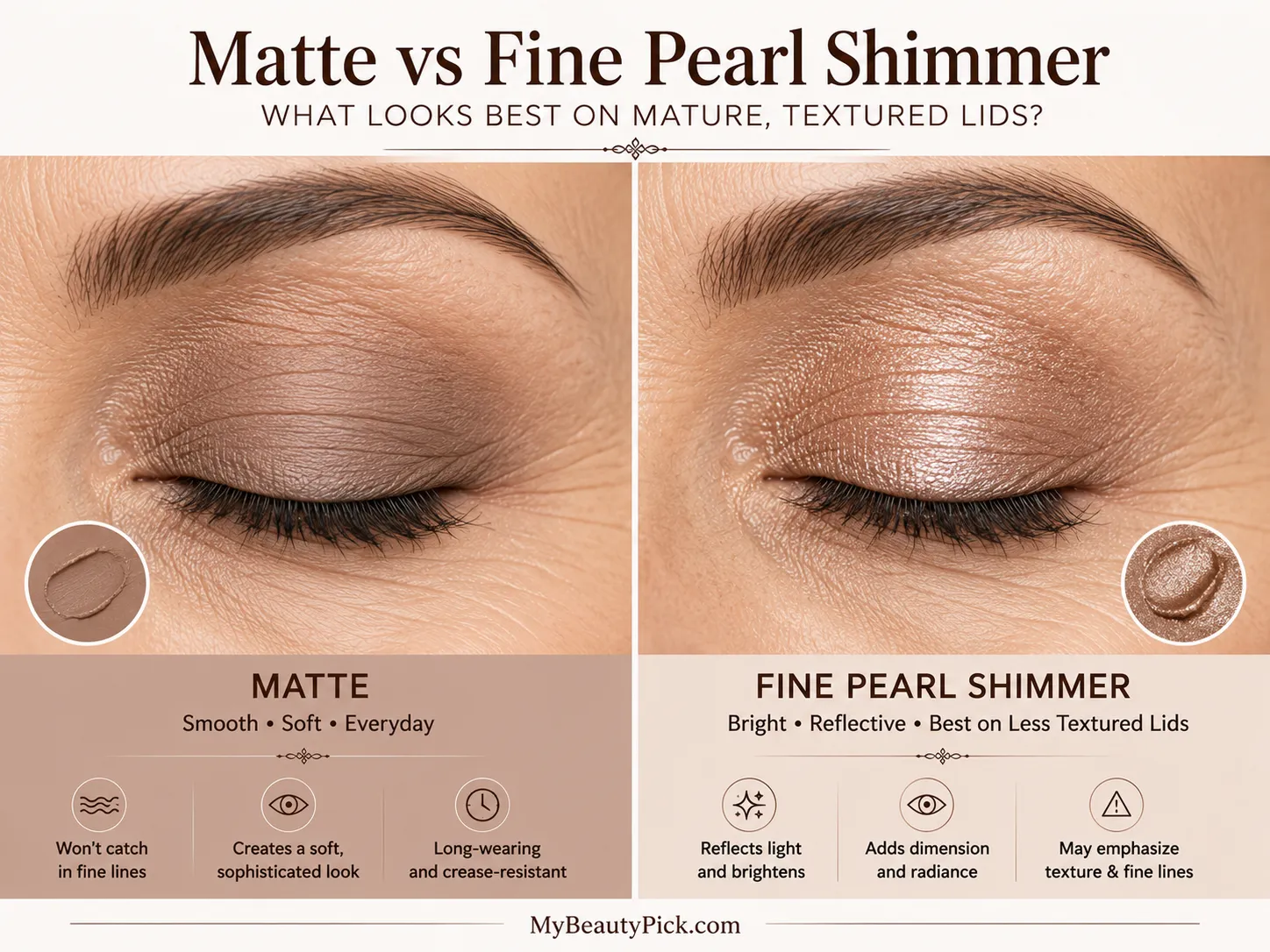
Matte vs fine pearl shimmer on mature textured lids — matte hides fine lines, shimmer brightens but can emphasize texture

Shimmer gets recommended constantly for “brightening” mature eyes, and that advice isn’t wrong, but it’s incomplete. Shimmer particles reflect light, which can genuinely open up the eye area. The same particles also catch in any crepey texture or fine lines, which can emphasize exactly what you’re trying to soften.

Matte finishes are the safer default on noticeably crepey lids, since they don’t have reflective particles to settle into texture. If you want some shimmer, a fine, soft-focus shimmer applied only to the center of the lid, away from the most textured areas, gets you brightness without the trade-off a full shimmer wash creates.

Best Cream Eyeshadow Picks
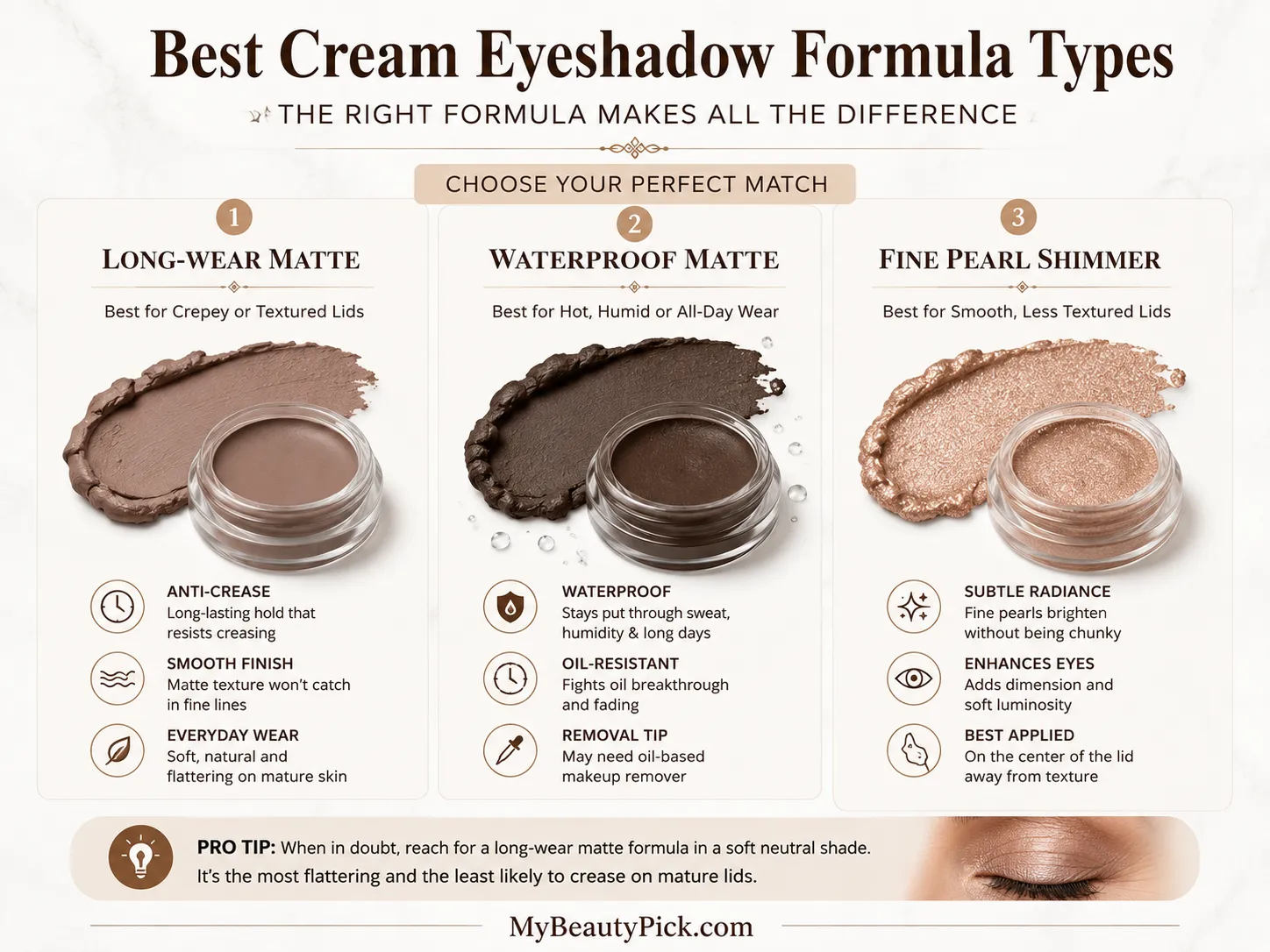
Best cream eyeshadow formula types — long-wear matte for crepey lids, waterproof matte for all-day wear, fine pearl shimmer for smooth lids
Type Best For What to Expect
Long-wear, matte Crepey or noticeably textured lids Resists creasing, won’t catch in fine lines, safest everyday choice
Waterproof, matte Hot or humid climates, all-day wear Holds up against oil breakthrough on the lid, may need oil-based remover
Subtle shimmer, fine pearl Smooth mature lids without much crepiness Adds brightness without emphasizing texture, best applied centrally

The instinct to reach for a deeply pigmented, heavily shimmery formula because it photographs well on younger, smoother lids doesn’t always translate. A long-wear matte formula in a soft neutral shade will outperform a flashier shimmer pick on most mature, textured lids, even if it looks less exciting in the pan.
Step-by-Step Application to Prevent Creasing

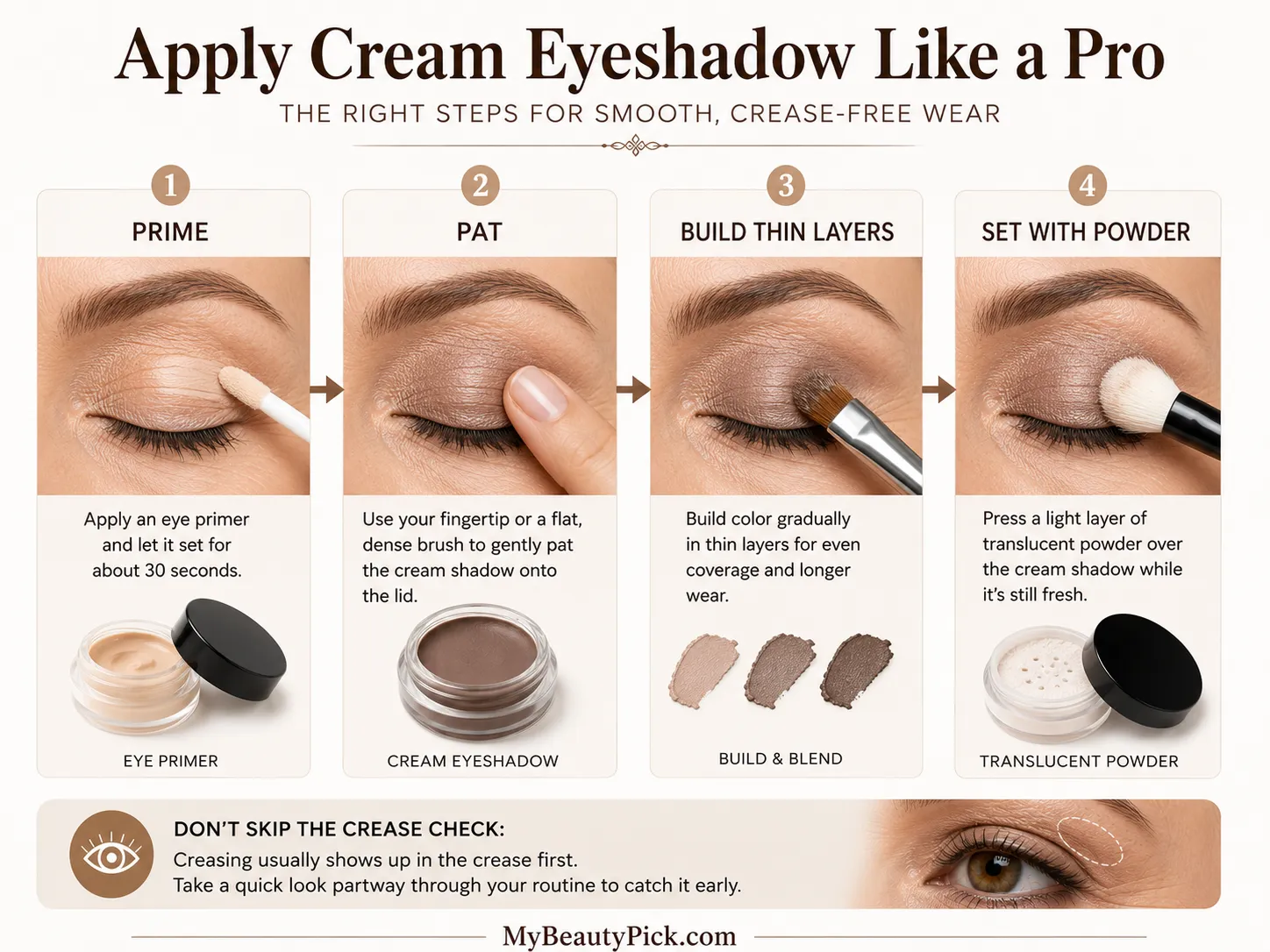
How to apply cream eyeshadow crease-free — prime, pat, build thin layers and set with powder
  1. Prime the lid first. An anti-crease eye primer gives cream shadow something even to grip, which matters more on textured skin than smooth.
  2. Pat, don’t swipe. Use a fingertip or a flat, dense brush to press product onto the lid rather than dragging it across. Swiping pulls at thin, crepey skin and unevenly distributes product into the texture.
  3. Apply in thin layers. Build color gradually instead of applying a thick single layer, which is far more likely to settle into the crease or any fine lines on the lid.
  4. Set immediately with translucent powder. Press a small amount over the cream shadow while it’s still fresh, before it has time to begin settling on its own.
  5. Check the crease area specifically. This is where creasing shows up first, so a quick look partway through your routine catches problems before they set.

If you have a hooded lid, apply your cream shadow with your eyes open rather than closed, since the visible area when your eyes are open is what actually shows once you’re done. Applying with eyes closed often hides product entirely under the fold.

Quick Prep Routine Before Applying

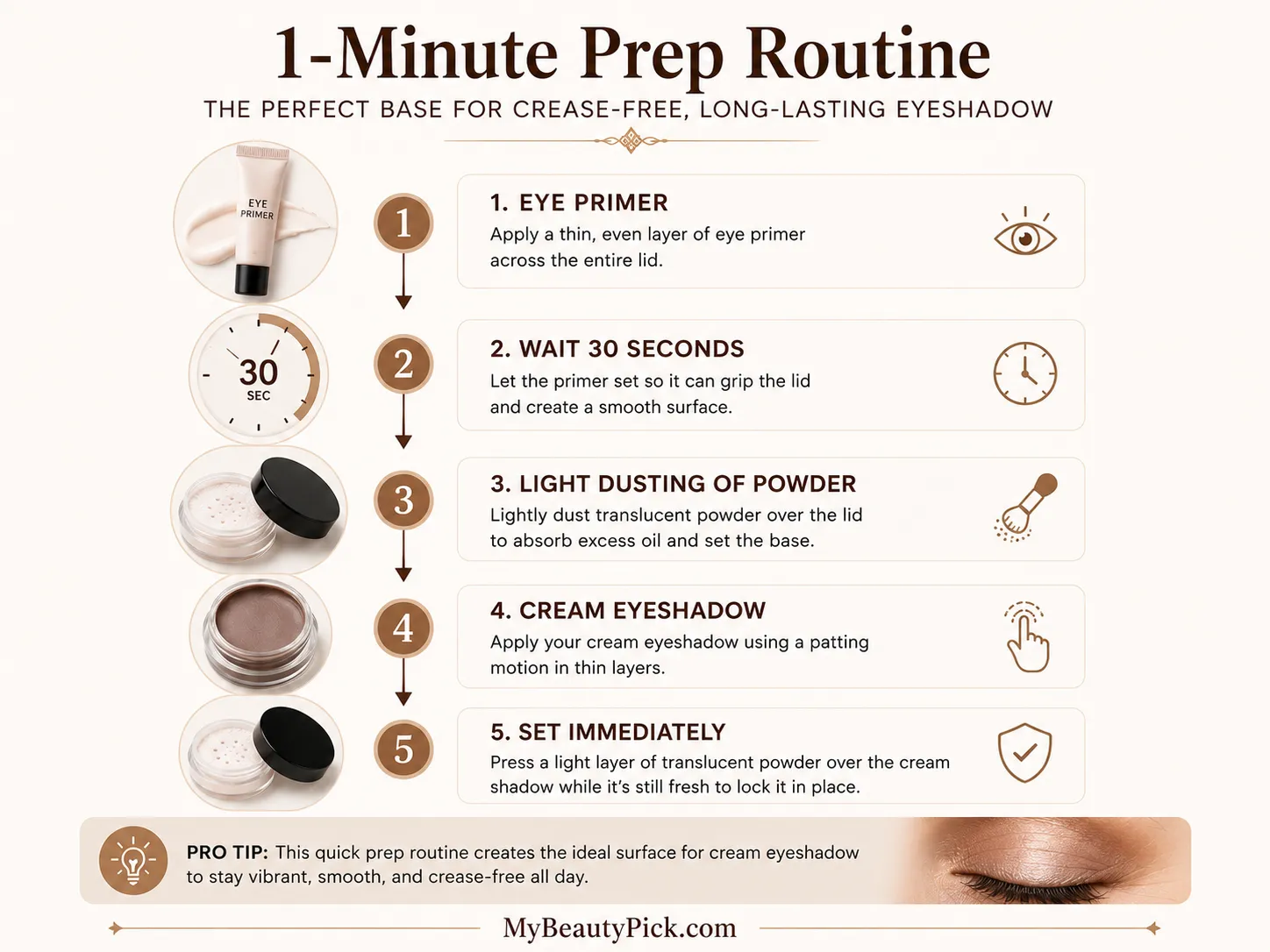
1-minute eyeshadow prep routine — eye primer, wait 30 seconds, dust translucent powder, apply cream shadow, set immediately

A short prep routine makes a bigger difference on mature lids than most people expect. Start with a thin layer of eye primer and let it set for about thirty seconds. Follow with a very light dusting of translucent powder across the lid before any color goes on, which gives cream shadow a drier surface to grip rather than sitting on bare, slightly oily skin. This two-step prep takes under a minute and meaningfully extends how long your shadow holds its place.

Common Mistakes That Cause Creasing

Frequently Asked Questions

What eyeshadow is best for mature eyelids?

A long-wear or waterproof matte cream formula applied in thin layers and set immediately with translucent powder tends to perform best. Matte finishes avoid the texture-catching issue that shimmer can create on crepey or finely lined skin.

How do you keep cream eyeshadow from creasing on older eyes?

Prime the lid first, apply shadow in thin layers using a patting rather than swiping motion, and set it immediately with a light dusting of translucent powder. Building color gradually instead of applying one thick layer is one of the most effective ways to prevent creasing.

What eyeshadow looks best on crepey eyelids?

Matte finishes generally look best on crepey eyelids, since they don’t have reflective particles that catch in fine texture the way shimmer can. A soft, fine shimmer applied only to the center of the lid can still add brightness without emphasizing the surrounding texture.

Should older women use matte or shimmer eyeshadow?

It depends on lid texture more than age alone. Smooth mature lids can often handle a subtle shimmer without issue, while noticeably crepey or textured lids tend to look better with a matte finish, since shimmer particles can settle into fine lines and draw attention to texture.

More From MyBeautyPick

If you found this article helpful, feel free to share it with others who might benefit from it.
Copy to Clipboard Share on WhatsApp Share on Facebook Share on Pinterest