

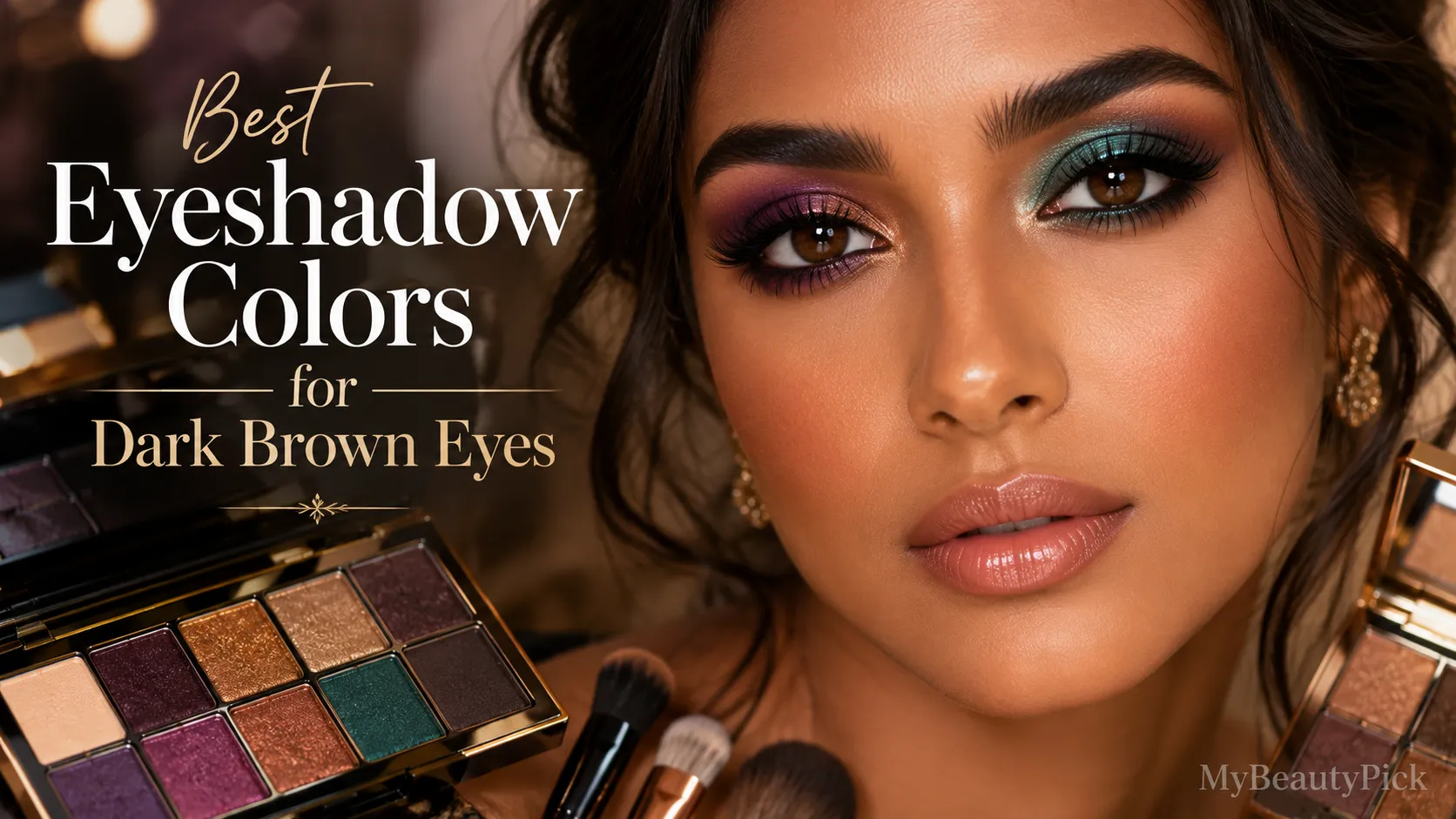
The best eye makeup colors for dark brown eyes are deep purple and plum, emerald and forest green, navy and cobalt blue, and warm gold or bronze. Dark brown irises have enough natural depth to carry richly saturated, even dramatic shades without washing out — a real advantage that lighter brown and hazel eyes do not share to the same degree.
Most “eyeshadow colors for brown eyes” guides treat every shade of brown the same way. They are not the same. A dark, almost black-brown iris behaves very differently under colour than a light honey or hazel one, and the difference comes down to one thing: how much contrast the eye can absorb before it starts to wash out instead of pop.
Here is what actually works on dark brown eyes specifically, how to adjust those shades for your skin tone, and a simple smokey eye you can build using the same colour logic.
Why Dark Brown Eyes Can Handle Bolder Color
Brown is a neutral, which is part of why it is considered the most versatile eye colour: it does not sit firmly in either the warm or cool family the way blue or green does, so it pairs well with almost anything on the colour wheel. But within “brown,” depth changes the equation significantly, and this is the distinction most guides skip entirely.
Lighter brown and hazel eyes have visible flecks of gold, green, or amber close to the surface of the iris. Pale or mid-tone eyeshadow brings those existing tones forward, which is why honey, champagne, and soft gold read so beautifully on lighter brown eyes. Apply the same pale shade to a very dark brown iris and the effect is far more muted: there simply is not the same light-reflective surface detail for a soft shade to interact with.
Dark brown eyes work the opposite way. The depth of the iris itself provides the visual weight, which means the eyeshadow’s job is to create contrast rather than to compete with existing light tones. A deep, saturated colour — plum, emerald, cobalt — sits against that dark iris and creates genuine definition. The same deep shade on a lighter hazel eye can look heavier than intended, occasionally overwhelming the lighter, brighter base colour underneath.
If your iris reads as nearly black-brown in most lighting, you can generally go one full shade deeper or more saturated than a typical “brown eyes” recommendation and it will still look balanced rather than heavy. If your brown has visible amber, gold, or green flecks in daylight, treat the lighter end of any colour family as your starting point and build up gradually.
Top Eyeshadow Shade Families for Dark Brown Eyes
Purple and Plum
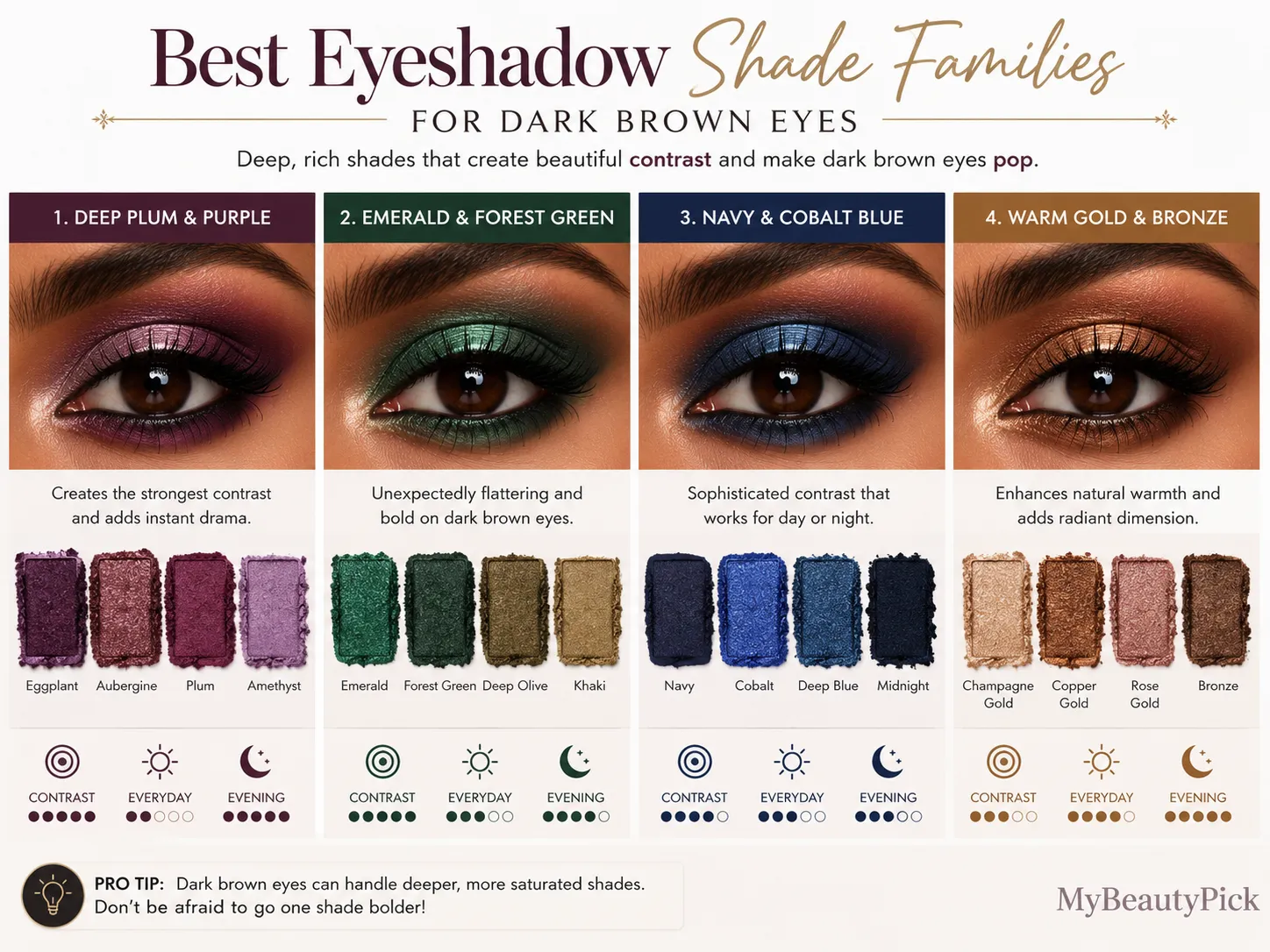
Purple is consistently named the colour theory champion for brown eyes, and dark brown eyes specifically can carry the deepest end of the family: eggplant, aubergine, and true plum. These shades sit opposite brown’s warm undertones on the colour wheel, creating the strongest contrast of any family. Plum in particular looks especially flattering on deep brown eyes and tan-to-deep skin tones, delivering the brightening effect of amethyst with more drama and depth.
Emerald and Forest Green
Deep emerald or forest green is unexpectedly flattering on dark brown eyes specifically — more so than a lighter sage or mint, which can look slightly flat against a very dark iris. Green works through a near-complementary relationship to brown’s warmth, and the richer the green, the more striking the contrast against a deep iris. Olive and khaki are softer, more wearable everyday alternatives within the same family.
Navy and Cobalt Blue
Navy is one of the most underrated bold shades for dark brown eyes. Unlike a bright, saturated blue, which can read as dated or costume-like, navy functions almost as a sophisticated neutral while still delivering real contrast and depth. It is an easy entry point into bold colour for anyone hesitant to commit to a full lid of colour — try it first as a smudged liner along the upper lash line before building to a full wash.
Warm Gold and Bronze
Gold and bronze work through complementary warmth rather than contrast, picking up the natural golden undertones that even very dark brown irises often carry. Bronze in particular bridges the gap between deep brown and shimmering gold, adding dimension without overpowering the eye. This is the most versatile family for everyday wear and pairs easily with both subtle and more dramatic looks.
| Shade Family | Best Specific Shades | Effect | Occasion |
|---|---|---|---|
| Purple / Plum | Eggplant, aubergine, true plum, amethyst | Strongest contrast; brightens and adds drama | Evening, romantic, fall/winter looks |
| Green | Emerald, forest green, deep olive | Bold definition; unexpectedly flattering on dark irises | Statement everyday or evening looks |
| Blue | Navy, cobalt | Sophisticated contrast without looking costume-like | Versatile; easy entry into bold colour via liner |
| Gold / Bronze | Champagne gold, copper-gold, rose-gold, bronze | Warm complement; adds dimension without overpowering | Everyday wear, daytime to evening |
| Burgundy / Deep Red | Garnet, wine, burgundy | Warm-toned contrast; especially striking in fall months | Autumn and evening looks |
Adjusting Eyeshadow Colors for Your Skin Tone
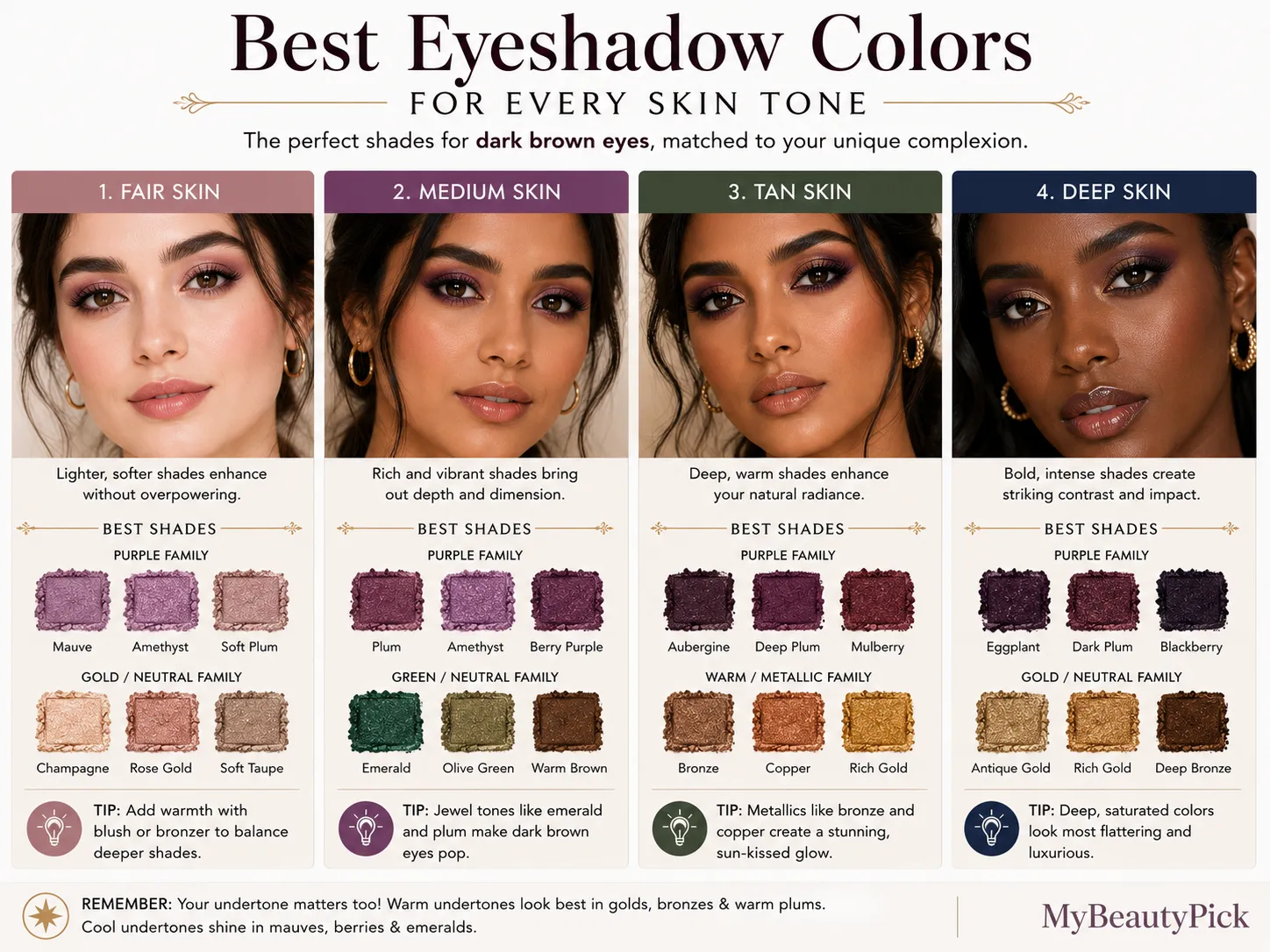
Eye colour is only half the equation. The same purple that looks luminous on fair skin can need a different undertone adjustment on deeper skin, and almost no guide addresses both filters together. Here is how to cross-reference the shade families above with your skin tone.
| Skin Tone | Purple Adjustment | Green Adjustment | Gold/Bronze Adjustment |
|---|---|---|---|
| Fair | Lean toward mauve or lighter amethyst; deep eggplant can look heavy without warm blush to balance | Soft sage or mint reads more naturally than true emerald | Light champagne and rose-gold are most flattering; deep bronze can look muddy |
| Medium | True plum and amethyst both work well; this skin tone has the most flexibility across the whole purple family | Emerald and forest green both read clearly and richly | Warm gold and copper-gold both work beautifully |
| Tan | Deep plum and aubergine are especially striking against warmer undertones | Olive and deep forest green complement tan undertones naturally | Bronze and deep copper are the strongest performers in this family |
| Deep | The deepest, most saturated purples — true eggplant, dark amethyst — have the most impact and least risk of looking washed out | True emerald and jewel-toned greens are exceptionally striking against deep skin | Rich, warm gold and copper create the strongest highlight contrast against deep skin tones |
Everyday vs. Bold Eye Looks for Dark Brown Eyes
Everyday: Warm Neutral with a Hint of Color
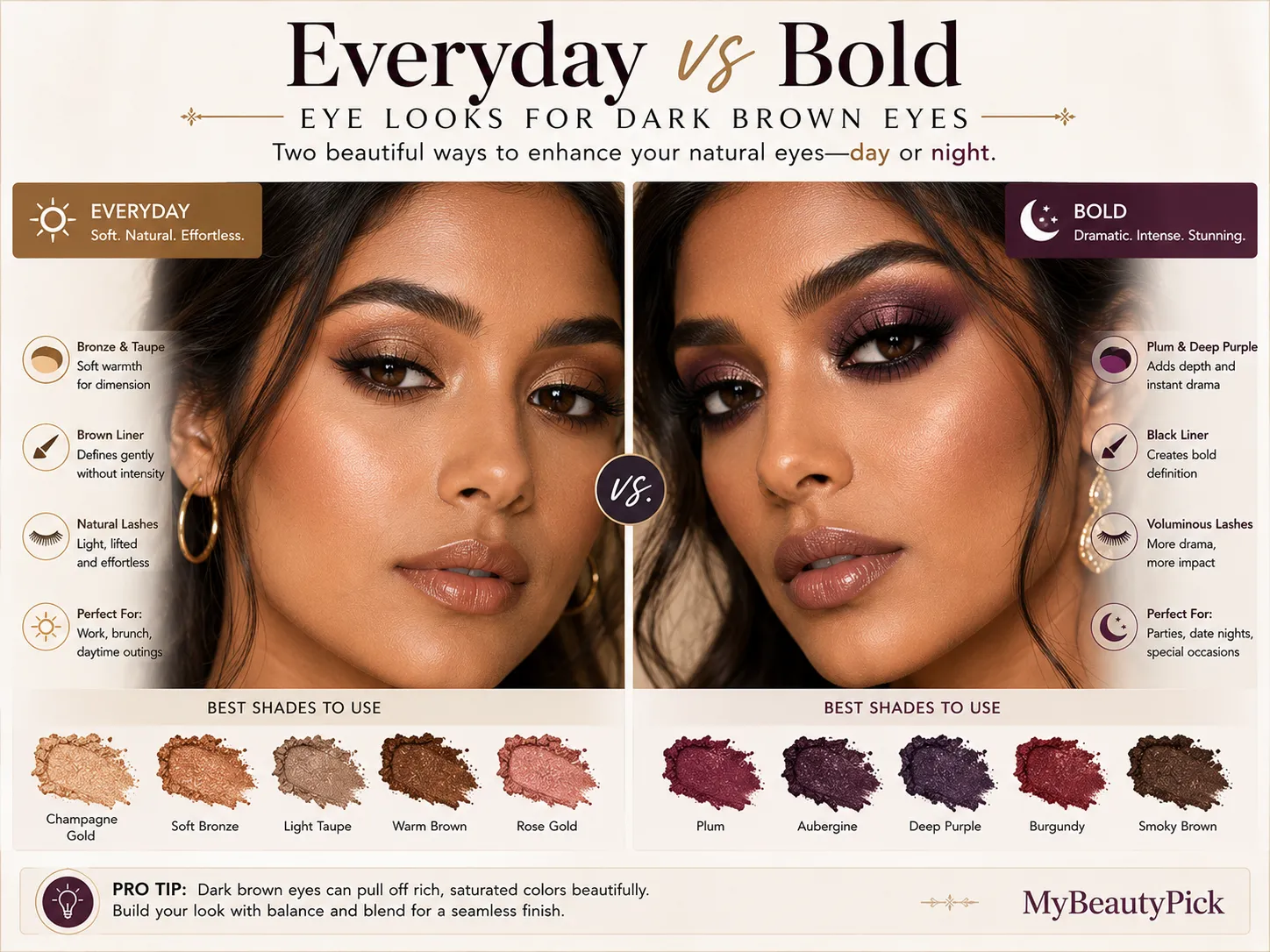
A wash of warm taupe or soft bronze across the lid, blended into the crease with a slightly deeper matte brown, gives definition without looking done-up. Add a thin line of brown or navy liner along the upper lash line only, staying close to the lash root, and one coat of mascara. This is the lowest-effort, highest-reliability look for daily wear and pairs with any outfit or setting.
Bold: Full Lid of Saturated Color
For an evening or special-occasion look, a full lid of plum, emerald, or navy applied with a flat shadow brush and blended into a slightly deeper shade of the same family at the outer corner creates genuine drama. Dark brown eyes can take this kind of saturation without it competing with the eye’s natural colour, which is the real advantage discussed above. Finish with black liner along both lash lines and a coat or two of volumising mascara.
Simple Smokey Eye Walkthrough Using These Colors
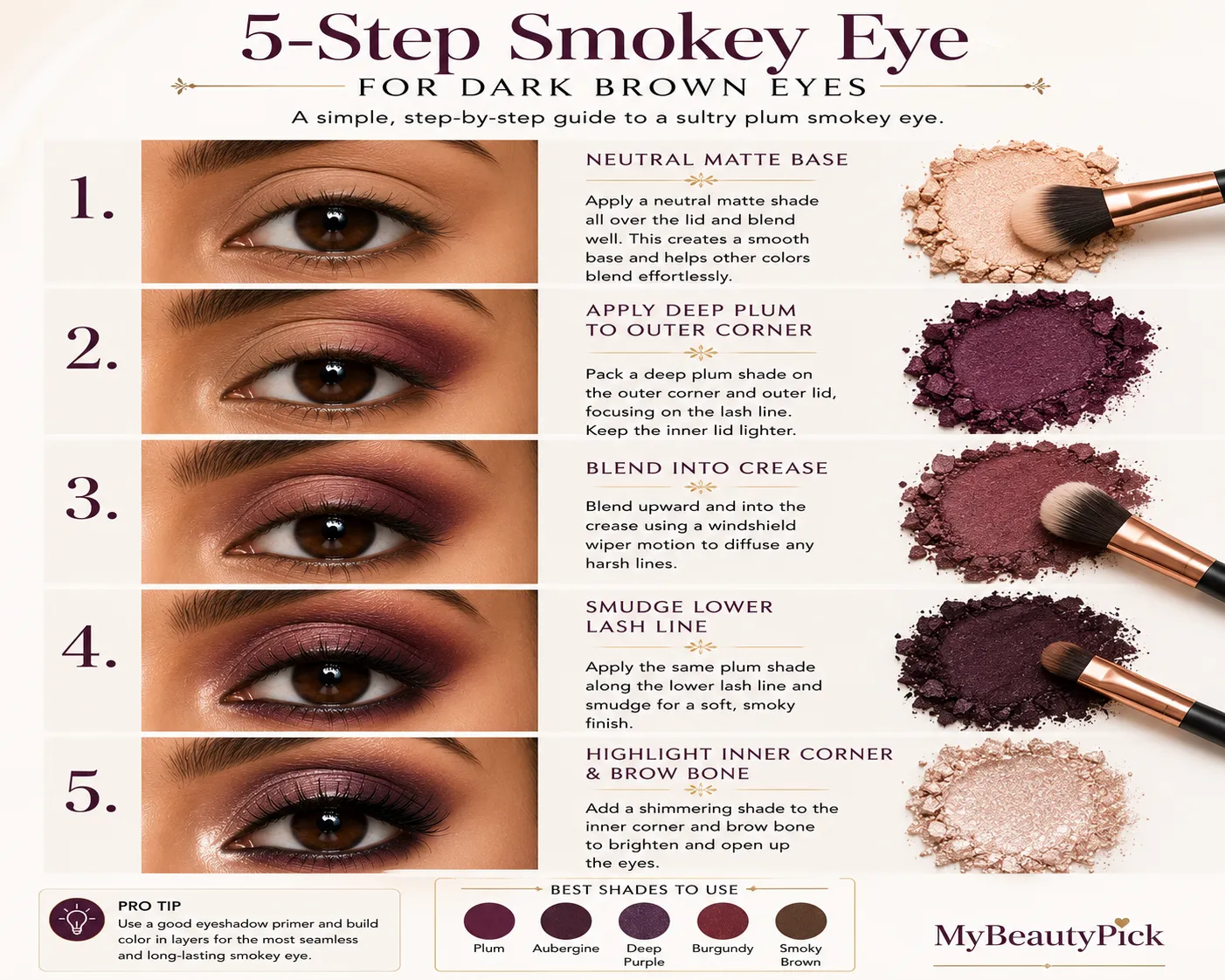
A smokey eye on dark brown irises does not have to default to black. Using one of the deep shade families above creates a softer, more dimensional smokey effect that still reads as sultry and defined.
-
1
Lay down a neutral base
Apply a matte taupe or soft brown across the entire lid as your transition shade. This creates the foundation the deeper colour will blend into and prevents harsh edges later in the process.
-
2
Apply your chosen deep shade to the outer corner
Using a small, dense brush, pack a deep plum, forest green, or navy into the outer corner of the lid in a soft V shape. Concentrate the colour at the outer third of the eye rather than spreading it evenly across the whole lid.
-
3
Blend into the crease
Using a clean fluffy blending brush, work the deep shade upward and inward into the crease in small circular motions, softening the edge so there is no visible line between the dark colour and the neutral base. This step is what separates a smokey eye from a sharp, graphic eye look.
-
4
Add depth to the lower lash line
Using the same deep shade on a small pencil brush, smudge a soft line along the lower lash line, starting heavier at the outer corner and tapering toward the inner corner. This connects the upper and lower lash lines and completes the smokey effect.
-
5
Highlight the inner corner and brow bone
A small amount of champagne or soft gold shadow at the inner corner and just under the brow bone opens the eye and adds the light contrast that keeps the look from feeling heavy. Finish with black liner along the upper lash line and two coats of volumising mascara.
This same five-step structure works with any of the deep shade families covered above. Swap the plum for forest green for a more unexpected, jewel-toned smokey eye, or for navy for a softer, more wearable daytime version. The technique stays the same regardless of which colour family you choose, which makes this one of the more versatile formulas for building a smokey eye on dark brown eyes specifically.
Colors to Use with Caution on Dark Brown Eyes
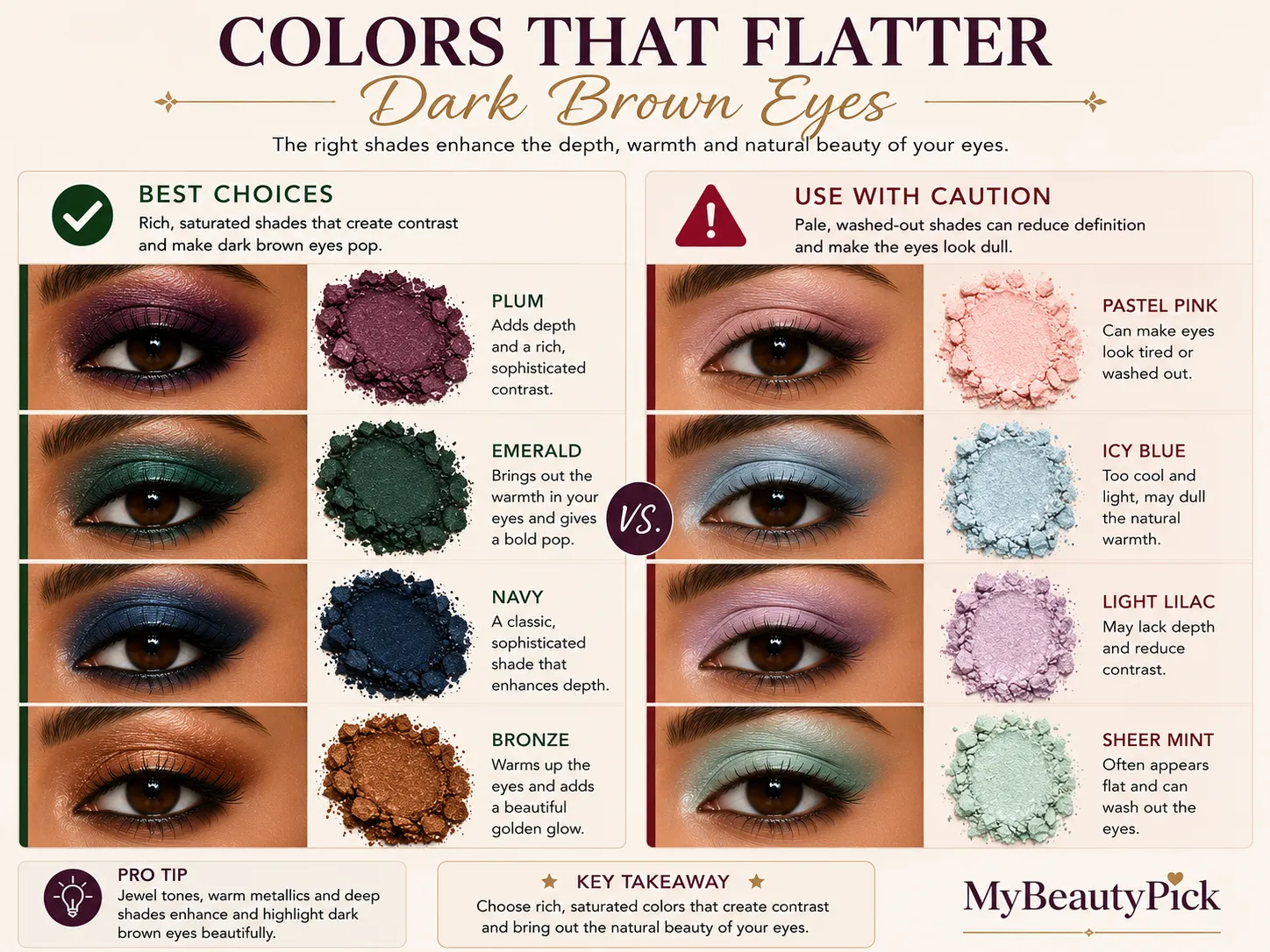
Brown eyes are genuinely the most flexible eye colour, so very few shades are off-limits entirely. That said, a few choices need more intention on dark brown eyes specifically. Very pale, sheer pastel shades — baby pink, the lightest lilac, pale icy blue — can read as washed out against a deep iris rather than brightening it, since there is less natural light-reflective surface detail for a sheer colour to interact with. If you love a pastel shade, build it up in a few thin layers rather than applying one sheer wash, or pair it with a deeper liner to add the contrast the pastel alone will not provide.
Frequently Asked Questions
What eyeshadow color makes brown eyes pop?
Purple and plum are consistently named the colour theory champions for brown eyes, since they sit in near-opposite contrast to brown’s warm undertones on the colour wheel. Green and navy blue offer similar contrast-based brightening. Warm gold and bronze work through a different mechanism, complementing brown’s natural warmth rather than contrasting it, and remain one of the most flattering and versatile choices for everyday wear.
What is the best eyeshadow for dark brown eyes specifically?
Dark brown eyes can carry deeper, more saturated shades than lighter brown or hazel eyes without washing out. Deep plum, eggplant, true emerald, navy, and cobalt are especially striking against a very dark iris, since the eye’s own depth provides enough visual weight to hold a rich, saturated colour without being overwhelmed by it.
Do purple and green eyeshadow work for brown eyes?
Yes, both work very well on brown eyes through complementary colour contrast. Purple sits opposite brown’s warm undertones on the colour wheel, creating strong, brightening contrast. Green works through a similar near-complementary relationship. On dark brown eyes specifically, deeper, more saturated versions of both — eggplant or true emerald rather than lilac or sage — tend to create the most noticeable effect.
What colors should brown-eyed people avoid?
Brown eyes are the most versatile eye colour and very few shades are truly off-limits. The main caution is for very pale, sheer pastels on dark brown irises specifically — baby pink, pale lilac, icy blue — which can read as washed out rather than brightening, since there is less light-reflective surface detail on a very dark iris for a sheer shade to interact with. Building pastel colour in thin layers, or pairing it with a deeper liner, solves this.