

The decision between brown and black lash extensions looks simple until you are sitting in the lash chair and realise you have no idea which one actually suits your colouring. Brown reads completely differently depending on your hair colour, skin tone, and what you want your extensions to do for your eye shape. Black is not one-size-fits-all either. This guide covers who each colour actually works for, what they each do in photographs and natural light, how to mix them for a custom result, and what to tell your lash tech before they open a tray.
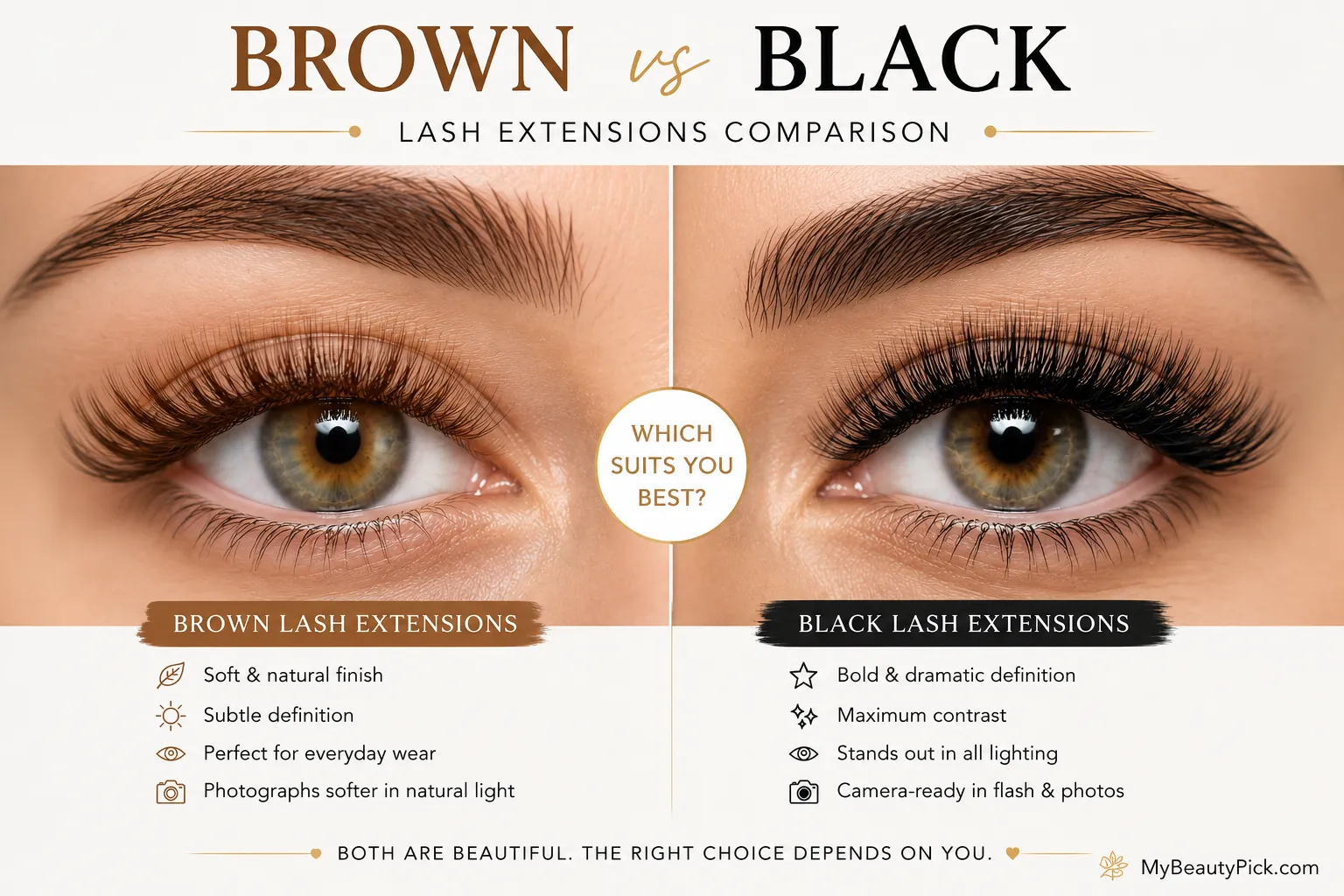
Brown Lash Extensions
- Soft, natural, “no-makeup makeup” finish
- Best for fair, blonde, red, light brown hair
- Works well on fair to tan skin tones
- Suits green, hazel, blue, and light brown eyes
- Clean girl aesthetic, everyday wear, daytime looks
- Photograph softer in natural light and flash
Black Lash Extensions
- Bold, dramatic, camera-ready definition
- Best for dark brown, black, or very dark hair
- Particularly striking on tan, olive, and deep skin
- Suits dark brown and black eyes most strongly
- Glam looks, events, full makeup wear
- Maximum contrast and lash definition in all lighting
What to Know Before You Book
- Brown and black extensions last exactly the same amount of time. The adhesive, application technique, and your natural lash cycle determine retention — not the colour of the extension fibre.
- Brown lashes do not all look the same. Shades range from light honey through milk tea, chestnut, and espresso — each reading differently on different hair and skin combinations.
- Mixing brown and black in one set is a legitimate and increasingly popular option. The resulting gradient adds dimension and suits people who fall in the middle of the decision.
- Black lash extensions show adhesive residue more visibly than brown ones. Brown fibres mask minor glue residue between appointments, which can make a set look fresher for longer between fills.
- On tan and medium-deep skin, both colours are flattering — but they do very different things. Black delivers bold, defined contrast that photographs powerfully. Brown adds definition without the drama, which suits everyday wear and lighter makeup days.
Brown Lash Extensions: Who They Work Best For
Brown extensions create depth and definition without creating obvious contrast against the skin and surrounding features. Rather than making lashes look dramatically thicker, brown extensions make them look like a longer, healthier version of your natural lashes — which is exactly the point for a large segment of the people booking lash appointments in 2025.
The Brown Lash Profile
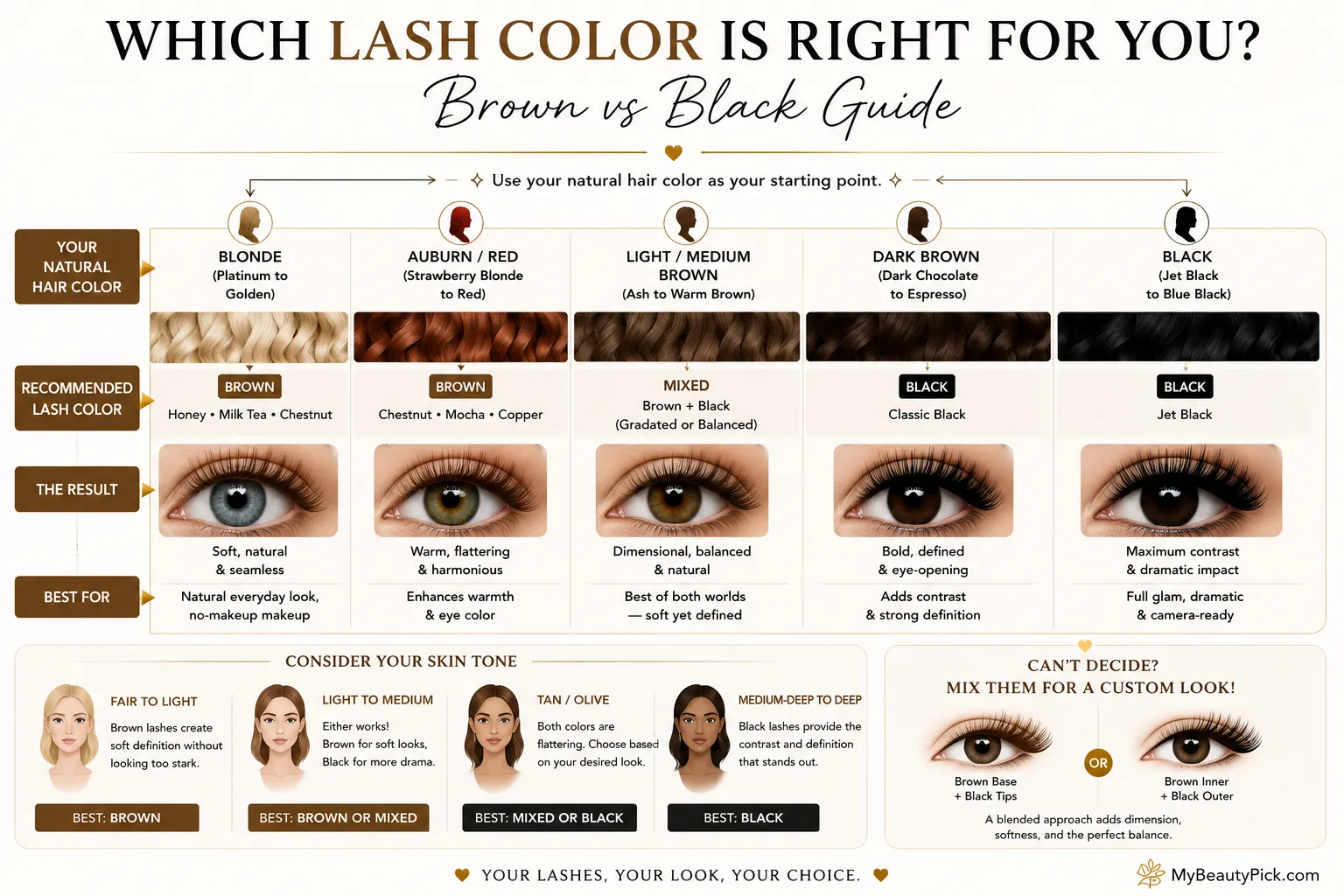
Hair colour: Blonde, red, strawberry blonde, light brown, ash brown. Brown extensions stay within the colour family of lighter hair, so the lash colour reads as a natural extension of your colouring rather than a contrast element.
Skin tone: Fair through tan. On lighter skin tones, black extensions can create a sharp, heavy look even at moderate lengths. Brown softens this without losing definition. On tan skin, brown lashes in an espresso or chestnut shade still deliver real definition — they sit at the warmer end of the spectrum, which complements the golden and olive undertones common in tan complexions.
Eye colour: Green, hazel, blue, light brown. Brown extensions enhance these colours by providing frame definition without overwhelming them. The warm tones in brown fibres can make green and hazel eyes look richer.
Aesthetic: No-makeup makeup, clean girl, everyday natural. Brown lashes suit someone who wants their eyes to look polished and defined without anyone being able to identify that they are wearing extensions.
- Fair to light-medium skin with lighter hair
- Mature clients who prefer a softer, younger-looking effect
- Anyone who wears little or no eye makeup regularly
- Tan skin wanting definition without drama
The Black Lash Profile
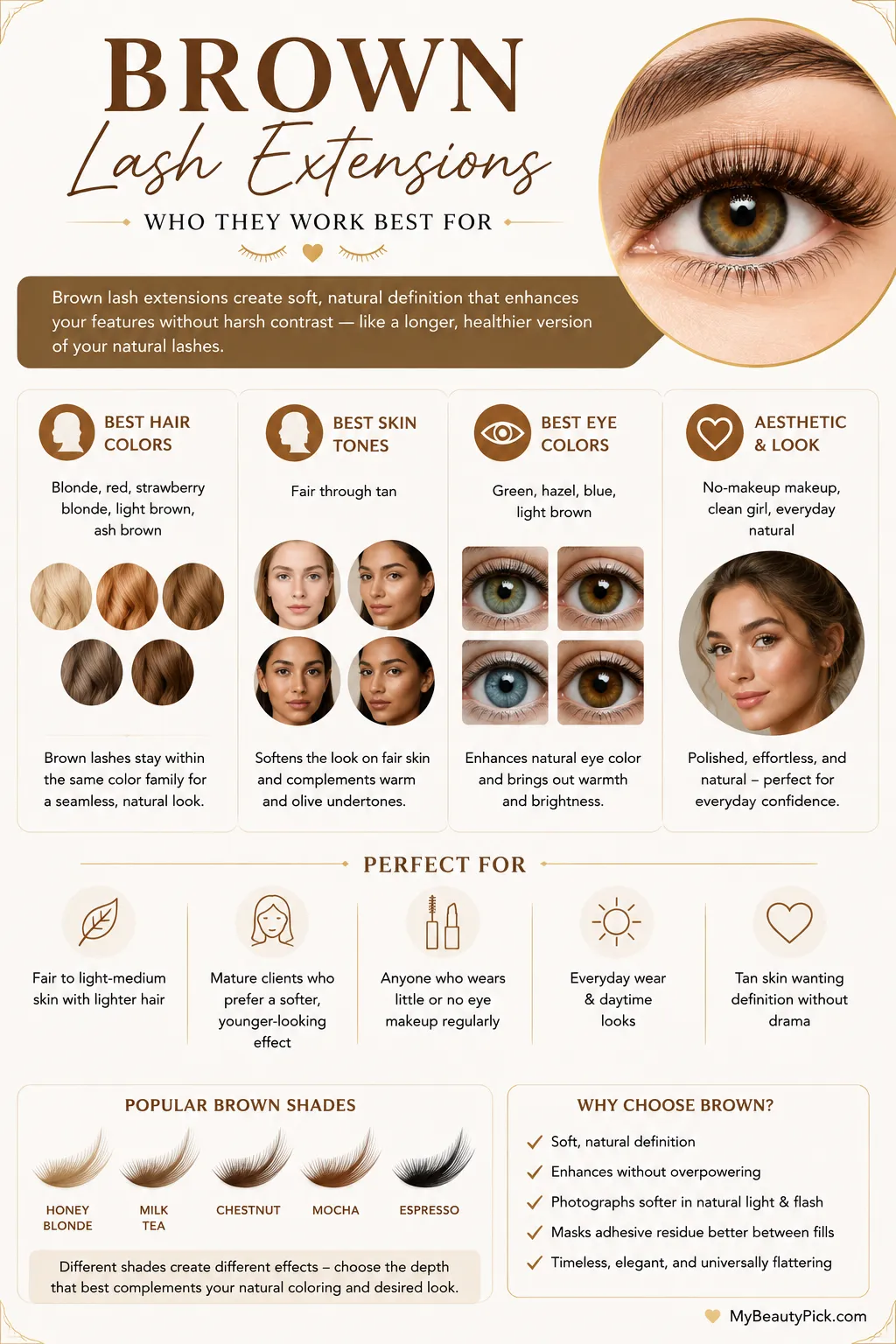
Hair colour: Dark brown, black, very dark chestnut. Black extensions align with the depth of dark hair colouring, so the lash colour reads as cohesive rather than contrasting against the hair frame.
Skin tone: All skin tones, but particularly striking on tan, olive, medium-deep, and deep skin. On deeper skin tones, black extensions deliver the level of contrast needed to make the eye area look genuinely defined and expressive. Brown extensions on deep skin can read as flat or insufficient because the contrast between extension colour and skin/eye colour is too low.
Eye colour: Dark brown, black, and deep eyes. Black extensions and dark eyes together produce the most dramatic, defined eye look available in lash extensions.
Aesthetic: Full glam, bold, camera-ready, event makeup. Black lashes suit someone who regularly wears eyeliner, smoky eye, or full makeup — the extensions amplify rather than contrast with those looks.
- Dark hair and eyes at any skin tone
- Those who wear regular eye makeup
- Special occasions, photography, events
- Anyone who prioritises visible definition above naturalism
Decision Matrix: Hair Colour, Skin Tone, and Eye Colour
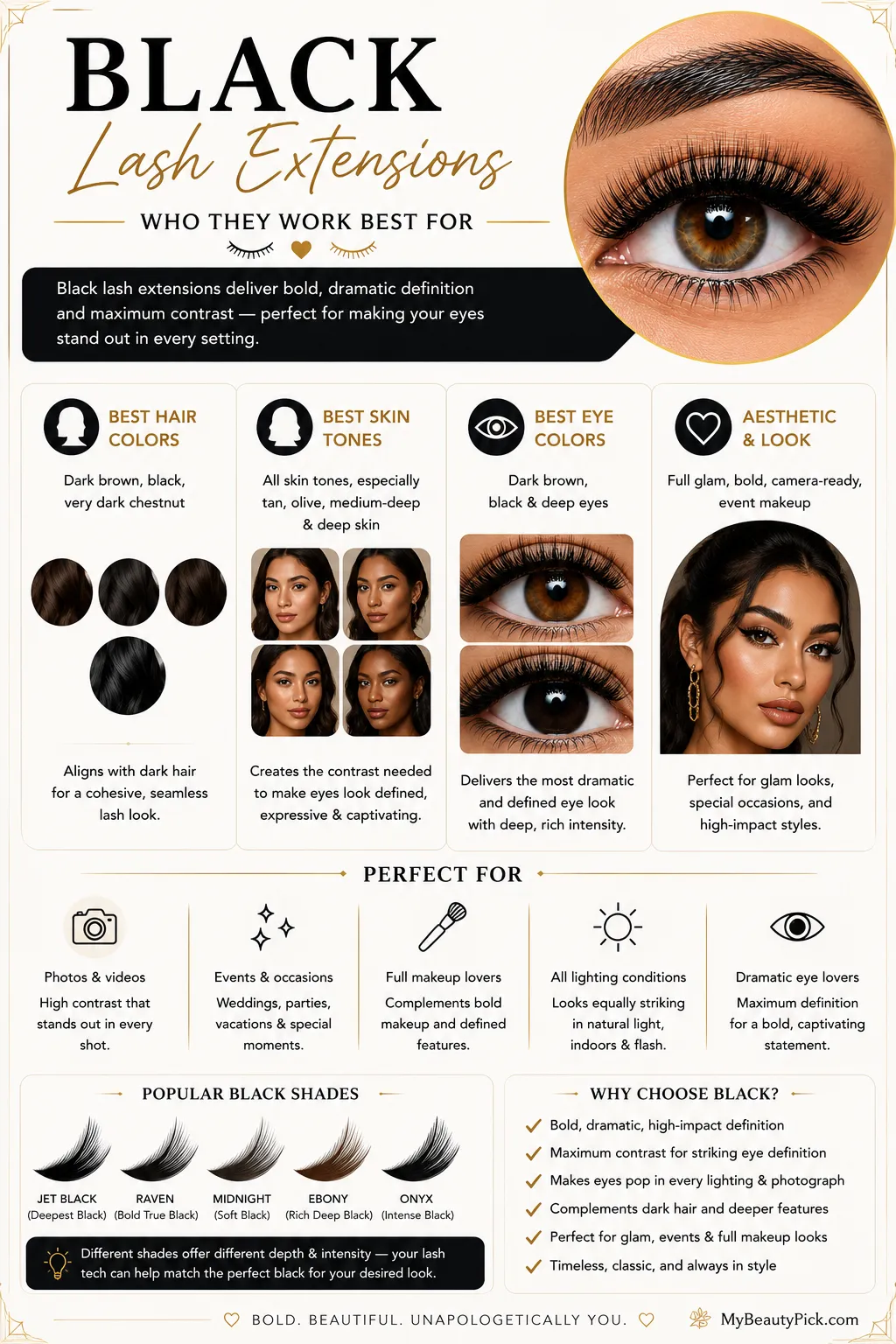
| Hair Colour | Skin Tone | Eye Colour | Recommended | Why |
|---|---|---|---|---|
| Platinum / Ash Blonde | Fair to light | Blue, grey, green | Brown (honey or milk tea) | Black creates too sharp a contrast against the hair and skin; warm brown stays within the colour family |
| Golden / Warm Blonde | Fair to medium | Green, hazel, blue | Brown (chestnut or warm brown) | Warm brown complements the gold tones in both hair and skin; black reads heavy on a naturally light canvas |
| Red / Auburn | Fair to medium | Green, hazel, amber | Brown (medium to deep brown) | Red hair creates a warm colour environment where medium brown blends naturally; black contrasts against the red framing |
| Light to Medium Brown | Light to tan | Any | Brown or mixed | The grey zone — both work. Brown for natural everyday wear; mixed (brown base, black tips) for dimension without full black drama |
| Dark Brown | Medium to tan | Brown, hazel | Black, or dark espresso brown | Dark hair benefits from extension colour that matches its depth; brown works at espresso shade, black delivers full cohesion |
| Black | Any — tan to deep | Dark brown, black | Black | Black hair and black extensions create the most harmonious, dramatic effect; brown reads washed out against very dark hair |
| Any colour — tan skin | Tan / medium-deep | Dark brown | Black, or espresso brown for softer days | Tan skin’s natural warmth and depth reads well against black; espresso brown provides definition with a warmer aesthetic |
Do Brown Lash Extensions Last as Long as Black?
Yes — and this is one of the most commonly misunderstood aspects of extension colour choice. Both colours are applied using the same technique and adhesive, so the retention time is the same. The colour of the extension fibre has no effect on how the adhesive bonds to the natural lash or how long the extension remains attached before the natural lash sheds.
What does affect retention is everything else: the adhesive quality and curing conditions during application, how well the lash tech isolates each natural lash, the weight of the extension relative to the natural lash, and aftercare in the first 24 to 48 hours after the appointment. Technique is the most significant factor within the lash tech’s control — common errors include poor isolation, incorrect attachment angles, and choosing extensions too heavy for the natural lash to support.
There is one genuine maintenance difference worth knowing. Black lashes show glue residue more prominently, requiring more meticulous cleaning. Brown lashes, due to their subtle hue, can mask minor imperfections, making them appear fresher for longer periods. This does not mean brown lashes last longer — they shed at the same rate. It means that minor adhesive debris or slight root gaps between fills are less visible on a brown fibre than a black one, so the set looks well-maintained for longer after the fill date.
If you consistently find that your lash set looks unkempt within two weeks of a fill and you are on a three-week schedule, switching from black to brown is worth trying before changing brands or lash techs. The masking effect of brown fibres on minor root debris can extend the window in which a set looks fresh — which matters if your lifestyle or budget limits how frequently you can book fills.
How Brown vs Black Lashes Photograph
Flash Photography, Selfies, and the “Instagram Test”
How lash extensions photograph is a real concern that drives booking decisions, and no editorial competitor addresses it directly. The behaviour of each colour under different lighting conditions is meaningfully different and worth understanding before you commit to a colour.
Natural and daylight photography: Brown lashes read as beautifully natural in outdoor and window-light photos. They catch the light softly and frame the eye without producing the sharp black line that a full set of black extensions creates in direct natural light. For portraits or lifestyle photos where a natural, unfiltered aesthetic is the goal, brown lashes are consistently more flattering.
Flash photography (event, party, photo booth): Black lashes dominate in flash conditions. Flash photography flattens features and reduces the natural depth and dimension of the face — black extensions counteract this by delivering contrast and definition that the flash cannot wash out. Brown lashes in flash lighting, particularly on fairer skin tones, can appear to almost disappear. On tan and medium-deep skin where there is more natural contrast, brown holds slightly better under flash, but black still produces the stronger result for any camera-forward event.
Selfies and indoor lighting: Warm indoor lighting (the most common selfie environment) is flattering to both. Brown lashes in warm indoor light look polished and defined without being visually dominant — if you want the eye to be the focus of a selfie, brown does this without overshadowing other features. Black lashes make a bolder statement in the same lighting and are the better choice if you want your lashes to be visible and prominent in selfies.
Video calls and daily screens: Brown is the stronger choice. On webcam or video call — compressed, lower-resolution, flat lighting — black lashes can read as heavy or over-styled for casual professional contexts. Brown lashes on video look like natural lashes and photograph consistently well in the low-resolution, face-only framing of a Zoom or Teams call.
Can You Mix Brown and Black for a Custom Look?
Mixed Lash Sets: The Best of Both
Mixing brown and black extensions in a single set is not a compromise — it is a technique that produces results that neither colour alone achieves. Mixing brown and black lash extensions creates depth, dimension, and a more natural gradient effect, making lashes look fuller without harsh contrast.
The most common approach is a base of brown extensions across the inner two-thirds of the lash line, transitioning to black at the outer corners and on the longest extensions at the outer edge. This creates the appearance of a natural lash line that deepens toward the outer eye — which is how natural lashes often grow, with slightly darker, more defined lashes at the outer corner. The result is dimensional and flattering on almost any hair colour and skin tone.
A second approach uses brown as the primary body colour and black only at the tips of each extension — adding the definition of black without the full-coverage black colour across the whole set. This is particularly effective for medium brown hair and tan skin, where the brown body stays cohesive with the overall colouring and the black tips add the definition that pure brown occasionally lacks on warmer skin tones.
Mixed sets are worth requesting by name at your lash consultation. Not all lash techs will suggest this unprompted — but most experienced technicians are comfortable with the technique and the result consistently performs well across a wider range of clients than a pure-brown or pure-black set.
Does Colour Affect the Cost?
In most salons, no. Brown and black extensions are typically priced identically — the difference in fibre colour has no impact on application time, technique, or adhesive used. The price you pay is determined by the style (classic, hybrid, volume), the length of the appointment, and the salon’s pricing structure rather than the colour of the extension.
The only exception is specialty or ombre brown extensions — sets that blend multiple brown tones or use hand-painted two-tone fibres. These are specialty products that some salons price slightly higher than standard single-colour sets due to the material cost. A standard brown classic set should cost the same as a standard black classic set at the same salon.
If you are not getting professional extensions and are choosing between brown and black strip lashes or lash clusters, the same rules apply. Brown strips suit daytime wear, lighter hair and skin combinations, and the clean girl aesthetic. Black strips suit glam events, dark hair, and situations involving flash photography. Brown strip lashes are available from most lash brands (Ardell, Kiss, Eylure) but in a narrower selection than black — check retailer websites for availability before assuming your preferred style comes in brown.
What to Tell Your Lash Tech at Your Consultation
The Five Things That Help Your Lash Tech Choose the Right Colour
- Your hair colour and whether it changes seasonally (darker in winter, lighter in summer) — this affects which brown shade or whether a mixed set makes more sense than committing to one colour
- What you wear your lashes for most often — daily work wear, events and weekends, or both — so they can calibrate how much definition makes sense for your primary use case
- Whether you regularly wear eye makeup. If you wear liner and shadow most days, black extensions will integrate naturally. If you prefer a bare or minimal eye, brown will look more intentional
- Any photography or events coming up. If you have a wedding, shoot, or high-photography event within the fill cycle, flagging this lets the tech factor in flash-photography performance
- Whether you are open to a mixed set. Say “I’m considering a mixed brown and black set” and a good lash tech will either confirm it suits you or explain why a different approach is better for your specific eye shape and features
Brown vs Black Lash Extensions: Full Comparison
| Factor | Brown | Black |
|---|---|---|
| Overall look | Soft, natural, dimensional | Bold, dramatic, defined |
| Best hair colour | Blonde, red, light to mid brown | Dark brown, black |
| Best skin tone | Fair through tan (esp. warm tan) | All skin tones; most striking on tan–deep |
| Best eye colour | Green, hazel, blue, light brown | Dark brown, black |
| Retention/longevity | Identical to black | Identical to brown |
| Glue residue visibility | Low — brown fibres mask minor debris | Higher — residue more visible on black |
| Natural light | Reads beautifully soft and natural | Bold definition, visible at distance |
| Flash photography | Can wash out on fairer skin | Holds contrast under flash — stronger result |
| Video calls / daily screen | Natural, professional, polished | Can read as heavy in low-res, flat lighting |
| Cost difference | Typically the same | Typically the same |
| Best occasion | Everyday, daytime, office, casual events | Glam, events, weddings, night out |
| Tan skin recommendation | Espresso or dark brown for definition | Black for maximum contrast and drama |
Frequently Asked Questions
Are brown or black lash extensions better for a natural look?
Brown lash extensions are the better choice for a natural look. They frame the eye with definition and depth without creating the visible contrast that black extensions produce. The result with brown looks like exceptionally healthy, full natural lashes rather than obvious extensions. The degree of naturalism also depends on the shade of brown — a light honey brown reads as more natural than a deep espresso, which delivers definition close to a dark black. For the most natural possible result, pair a mid-brown shade with a classic lash style (one extension per natural lash) rather than volume or hybrid mapping.
Do brown lash extensions last as long as black ones?
Yes. The colour of the extension fibre has no effect on retention. Both use the same adhesive, the same application technique, and shed with the natural lash at the same rate. What affects retention is adhesive quality, the technician’s isolation technique, extension weight relative to the natural lash, and aftercare in the first 48 hours. Brown extensions do have a maintenance advantage: the lighter fibre colour masks adhesive residue and minor root gaps between fills, so a brown set can look fresher for longer even as the natural shed begins. This is a visual advantage, not a structural one — the lashes are falling at the same rate.
Can I switch lash colours at my next fill?
Yes. Colour can be changed at any fill appointment. The lash tech will remove the outgrown or loose extensions and replace them with the new colour. Be aware that at a standard fill (rather than a full removal and fresh set), there will be a transitional period while the remaining original colour extensions shed naturally and the new colour fills in. A full colour change looks most cohesive after a complete removal and fresh set, but a gradual fill transition works well if you are shifting between similar shades (dark brown to black, for example) rather than a dramatic contrast switch.
Do brown lashes show up well in photos?
In natural light and warm indoor lighting, brown lashes photograph beautifully — they look defined, dimensional, and natural rather than overtly made-up. In flash photography, brown lashes can fade or lose definition, particularly on fair skin where there is little overall contrast in the photo. On tan and medium-deep skin, brown holds better under flash because the surrounding skin provides more contrast context. For events involving significant flash photography — weddings, parties, professional shoots — black is the stronger choice for ensuring the lashes remain visible and defined in photos.
Which colour is better for blonde or light brown hair?
Brown is almost always the better choice for blonde and light brown hair. Black extensions on a lighter hair colour create a sharp contrast at the lash line that can look heavy or disconnected from the overall colouring. Brown keeps the colour within the same warm or cool family as the hair. For very light or platinum blonde hair, a honey or milk-tea brown is the most natural pairing. For warm golden blonde or light brown hair, a chestnut or warm medium brown works well. For ash or cool-toned blonde hair, a cool-toned taupe or medium brown is more harmonious than a warm chestnut.
What about brown lash extensions for tan skin?
Brown lash extensions work well on tan skin, particularly in espresso and deep chestnut shades that provide enough contrast to be visually effective. The warm undertones in brown fibres complement the golden and olive undertones common in tan skin, making the overall eye area look cohesive and natural. For tan skin wanting everyday definition without drama, a dark brown or espresso extension delivers this. For tan skin on glam or event occasions, black produces stronger contrast and photographs more powerfully. A mixed brown-and-black set is a strong option for tan skin wanting both — brown for daytime softness, with black at the outer corner and tips for defined evening-ready glamour.