

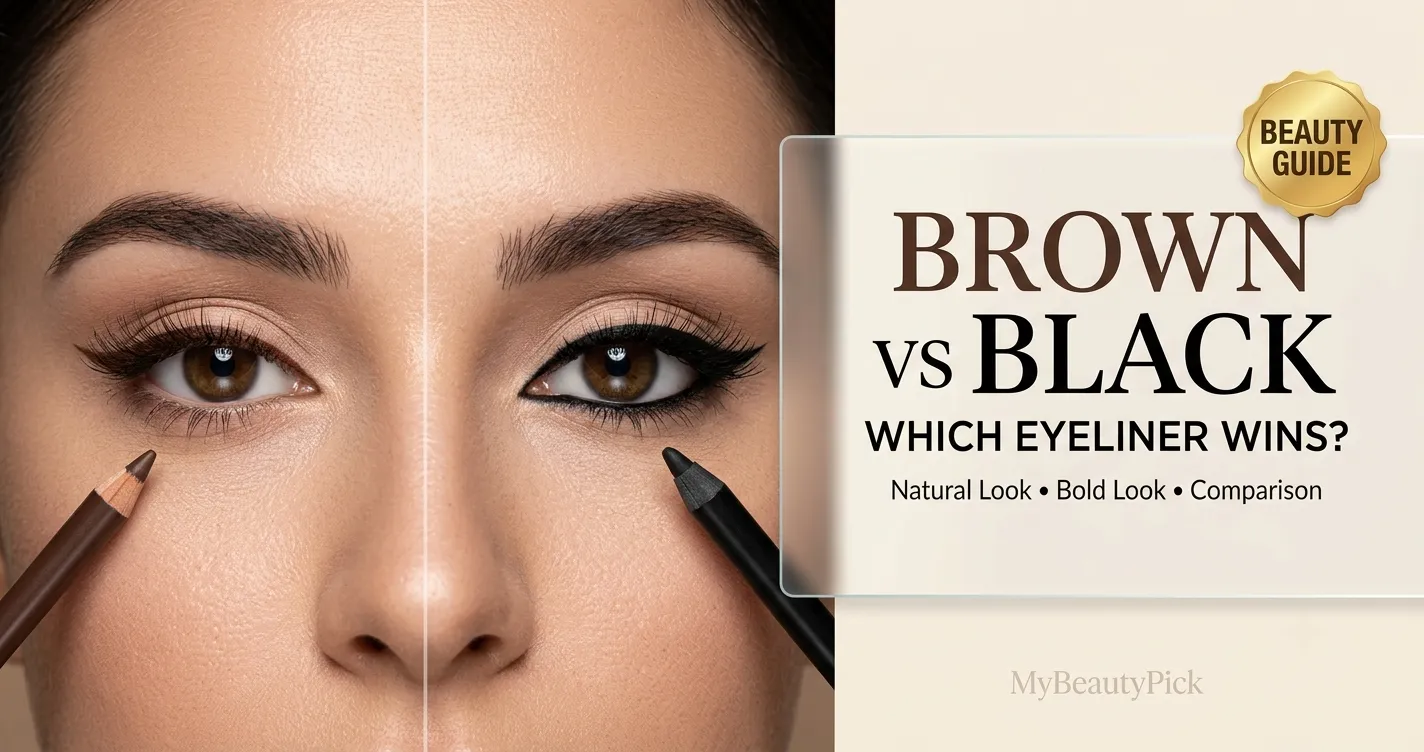
Brown or black eyeliner isn’t a question of which one is objectively better. It’s a question of what each one is actually doing to your face, and almost nobody breaks that down clearly. Black creates maximum contrast and a hard, defined line. Brown softens that same line into something that reads as natural rather than drawn-on. Once you understand that distinction, the rest of the decision gets a lot easier.
I’ve lined eyes in both colors for every combination of eye color, skin tone, and age for over twenty years, and the honest answer is that this decision has less to do with your eye color than most articles claim, and more to do with skin tone, occasion, and the effect you actually want.
Quick Answer
Black eyeliner creates the most contrast and definition, working best for evening looks and deeper skin tones. Brown eyeliner softens the line for a more natural, daytime-friendly effect and tends to suit fair to medium skin tones especially well. Eye color has minimal real impact on this choice; skin tone, occasion, and desired intensity matter far more.
The Quick Answer: Brown vs. Black Eyeliner at a Glance
| Brown Eyeliner | Black Eyeliner | |
|---|---|---|
| Look achieved | Soft, natural, lived-in definition | Sharp, dramatic, high contrast |
| Best skin tone | Fair to medium | Medium to deep |
| Best occasion | Daytime, office, everyday wear | Evening, events, photography |
| Best for mature eyes | Usually more flattering, softer on thinner lid skin | Can look harsher against textured or hooded lids |
| Intensity level | Low to medium | Medium to high |
What’s the Real Difference Between Brown and Black Eyeliner?
Black is the maximum-contrast option. It creates a hard, visible line against nearly any skin tone, which is exactly why it reads as dramatic and why it’s the default choice for bold evening looks. Brown works differently. Instead of a stark line, it diffuses slightly against the lash line, creating definition that looks like it’s coming from your natural lashes rather than from a product. That diffusion effect is the entire reason brown reads as more “natural,” it’s not a weaker version of black, it’s a genuinely different visual effect.
Brown Eyeliner: Pros, Cons, and Who It’s Best For
Why Makeup Artists Reach for Brown First
Brown is forgiving. It softens minor application mistakes that would show clearly in black, and it pairs easily with almost any eyeshadow look without competing for attention. For everyday wear, it’s often the more versatile of the two.
Best Skin Tones and Eye Colors for Brown Liner
Brown tends to look most seamless on fair to medium skin tones, where its softer contrast matches the overall lower-contrast palette of the face. It pairs well with any eye color, since the effect comes from softening the line rather than matching or contrasting eye pigment.
When Brown Eyeliner Falls Short
On very deep skin tones, brown can sometimes lack enough contrast to read clearly, especially in photographs or under bright stage lighting. It’s also simply the wrong choice if the goal is a sharp, graphic, high-drama look, since softness is brown’s defining trait.