

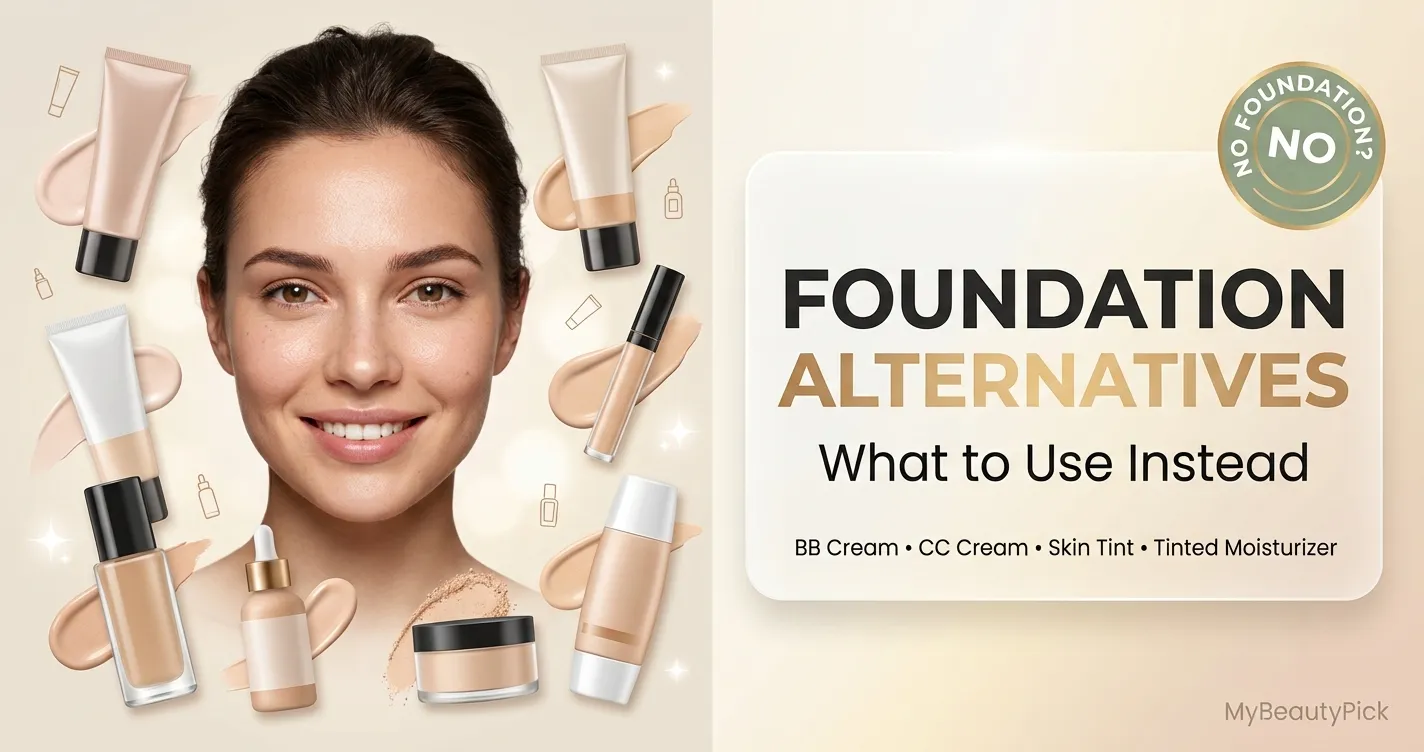
Foundation is one approach to evening skin tone — not the only one. Whether you want lighter coverage, a more natural finish, fewer products, or just a break from the routine, there are legitimate alternatives that cover a range of coverage levels and finishes. The key is knowing what each actually does and who it works for, rather than assuming any of these are simply “foundation lite.”
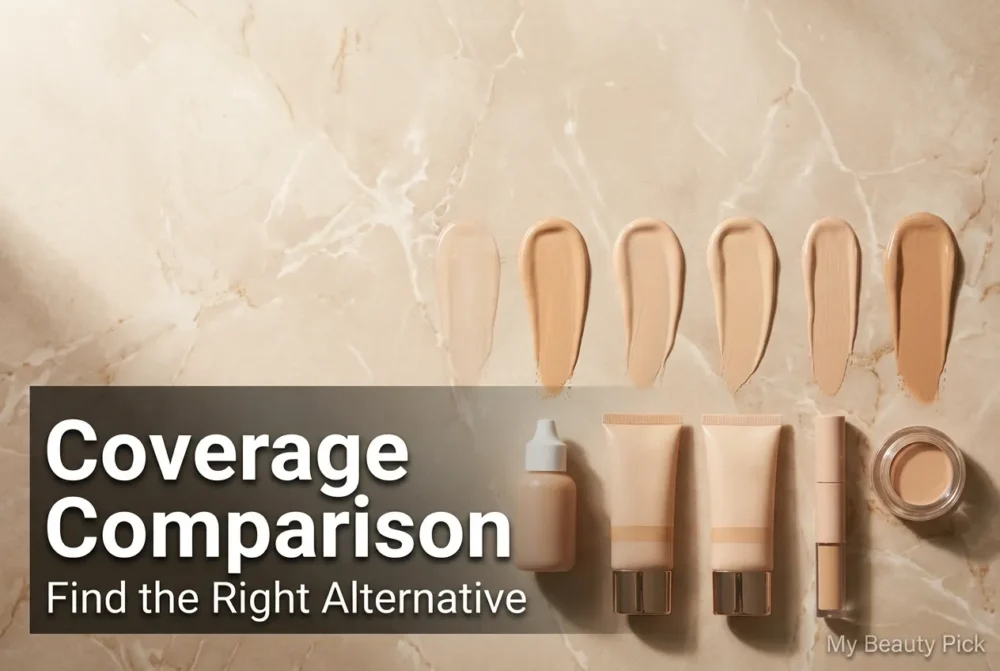
- Tinted moisturiser: lightest coverage, hydrating, natural finish. Best for even skin.
- Skin tint: sheerer than tinted moisturiser, zero coverage, just tone-evening. Best for minimal-makeup days.
- BB cream: sheer-to-light coverage, hydration, SPF. All-in-one for minimal routines.
- CC cream: light-to-medium coverage, colour-correcting. Better for redness and discolouration than BB.
- Concealer only: targeted coverage without full face. Works when concern areas are specific rather than all over.
- Tinted SPF: SPF with a wash of tint. Minimal coverage, strong sun protection.
Tinted Moisturiser vs Foundation
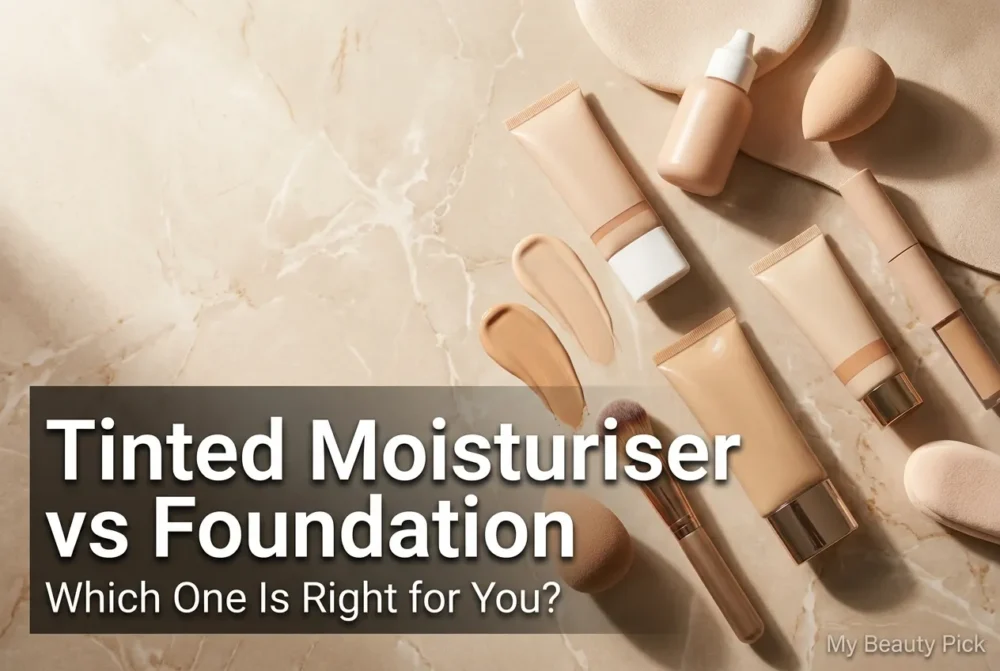
Tinted moisturiser is a moisturiser with pigment added — the formula is genuinely a skincare product with light coverage rather than a foundation thinned down. Coverage is very light to light; it evens tone without masking it. The finish is natural to dewy, matching most moisturiser textures.
Who it works for: skin with relatively even tone, minimal spots or redness, and a preference for the “I’m not wearing makeup” look. On tan skin specifically, tinted moisturiser in a well-matched warm shade can look beautifully natural because the light coverage lets the skin’s own depth and warmth show through while adding just enough evenness to look polished.
Who it doesn’t work for: skin with active breakouts, significant hyperpigmentation, rosacea, or areas needing real coverage. The sheer formula doesn’t cover — it just tones down contrast slightly.
Skin Tint
Skin tints are lighter than tinted moisturiser — they’re essentially a colour wash for the face, providing a minimal tint rather than any meaningful coverage. They’re best for skin that’s in good condition and doesn’t need anything covered; they just add a slight warmth and evenness that makes skin look more awake. Fenty Eaze Drop Blurring Skin Tint and Charlotte Tilbury Beautiful Skin are sometimes categorised here.
BB Cream
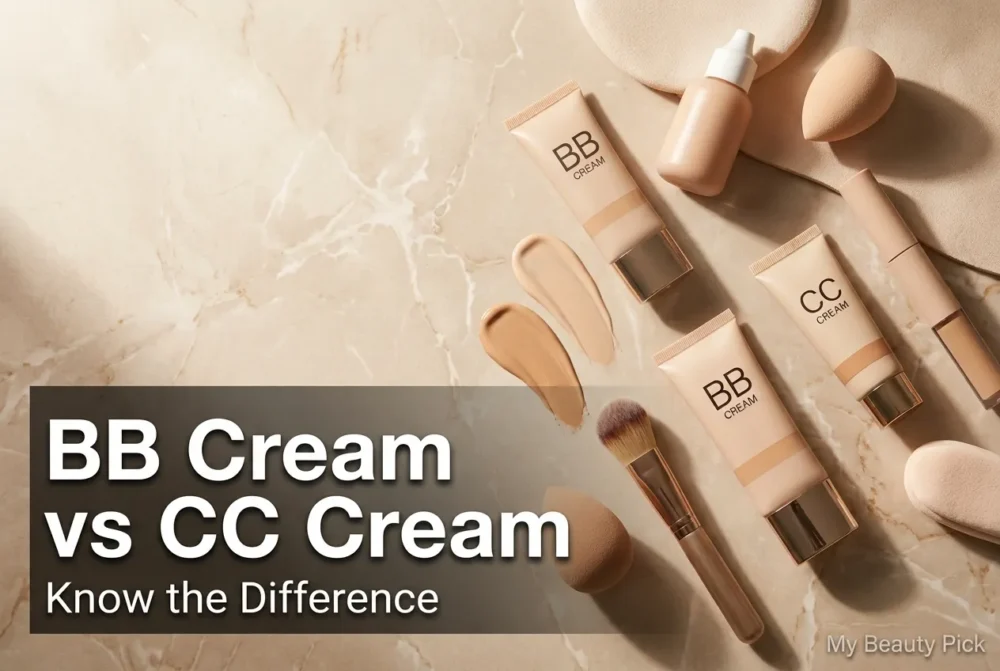
BB cream (Beauty Balm) originated in German dermatology as a post-procedure skin-protecting tinted product and was reformulated for mass-market use across Korean beauty and then global markets. The formula is a tinted moisturiser with SPF and additional skincare actives — typically hyaluronic acid, niacinamide, or similar. Coverage is sheer to light, finish is natural to dewy, and the multi-function format is the key appeal.
For someone who wants to minimise the number of products in their routine, a BB cream with SPF does the job of moisturiser, SPF, and light coverage in one step. The limitation is coverage — BB cream won’t cover spots or significant discolouration without targeted concealer on top.
CC Cream
CC cream (Colour Correcting) is specifically formulated to address colour irregularities — redness, blotchiness, discolouration — more actively than BB cream. Where BB cream adds light coverage, CC cream often contains pigments that neutralise redness or tone-even more specifically. Coverage is light to medium.
IT Cosmetics CC+ Cream is the most widely recommended CC cream for tan and deeper skin because it provides full-coverage-level pigment with SPF 50+ and anti-ageing actives — more coverage than most CC creams. The physical SPF causes flashback in photography on tan skin, which is a known limitation.
Concealer Only: When It’s Enough
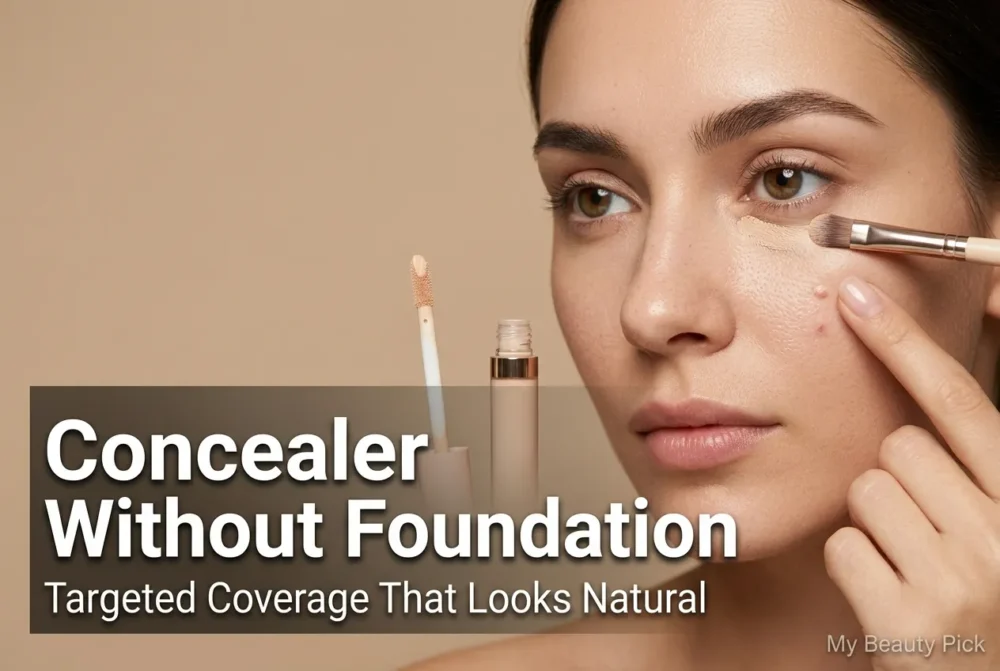
For many people, the concern areas are specific rather than all over: a couple of spots, some under-eye darkness, a patch of redness around the nose. In these cases, targeted concealer applied and blended only where needed, with the edges feathered out to nothing, gives coverage where it matters without the all-over coverage of foundation.
The technique: use a small brush to place concealer precisely on the area, then tap (not swipe) the edges with a fingertip to blend them seamlessly. Setting with a tiny press of banana powder over the concealed area extends hold without looking obvious.
| Product | Coverage | Finish | Best For | Not For |
|---|---|---|---|---|
| Skin tint | Minimal | Natural | Very even skin, minimal coverage need | Any real correction |
| Tinted moisturiser | Very light | Natural-dewy | Even skin, minimal routine | Significant hyperpigmentation, redness |
| BB cream | Sheer-light | Natural | Minimal routine, basic even tone | Coverage needs, significant skin concerns |
| CC cream | Light-medium | Natural | Redness, mild discolouration, SPF priority | Deep hyperpigmentation, full coverage need |
| Concealer only | Targeted | Matches foundation | Specific spots on otherwise even skin | All-over correction need |
| Foundation | Light to full | Varies | Any coverage level, any concern | When light coverage is the preference |
The Tinted Moisturiser + Concealer Combination
The most practical foundation alternative for most people isn’t picking one product — it’s combining tinted moisturiser or BB cream for overall tone-evening with targeted concealer on specific areas. This gives the light, natural feel of not wearing foundation, with coverage where it genuinely needs to be applied.
For tan skin: a tinted moisturiser in a warm-matched shade with banana powder on the T-zone and concealer on any spots reads as beautifully natural skin. It’s lighter than any foundation routine and takes about 90 seconds to apply. For days when full foundation isn’t the right choice but completely bare skin leaves you feeling uneven, this is the most reliable middle ground.
Frequently Asked Questions
What can I use instead of foundation?
Tinted moisturiser, BB cream, CC cream, or skin tint for overall light coverage; targeted concealer only for specific areas on otherwise even skin. The most practical combination is tinted moisturiser or CC cream plus concealer on specific areas — this gives natural coverage where you want it without the full-face coverage of foundation.
Is tinted moisturiser or foundation better?
Depends on your coverage need. Tinted moisturiser gives lighter, sheerer coverage that looks natural on even skin with minimal discolouration. Foundation gives more coverage, finish control, and better hold through oiliness and heat. For very even skin: tinted moisturiser. For any significant unevenness, redness, or hyperpigmentation: foundation or CC cream with targeted concealer gives a more reliable result.
What is the difference between BB cream and CC cream?
BB cream is a tinted moisturiser with SPF and hydrating actives — primarily an all-in-one product for light coverage. CC cream is specifically formulated to correct redness and discolouration more actively, often with colour-neutralising pigments. CC cream is better for skin with visible redness or discolouration. BB cream is better for skin needing light coverage and hydration.
Can concealer replace foundation?
Yes, for targeted coverage. Apply concealer to concern areas (spots, under-eyes, redness patches) and blend the edges outward so there’s no visible line. This gives coverage where you want it without the all-over coverage of foundation. Works best when concerns are specific rather than all over the face.