

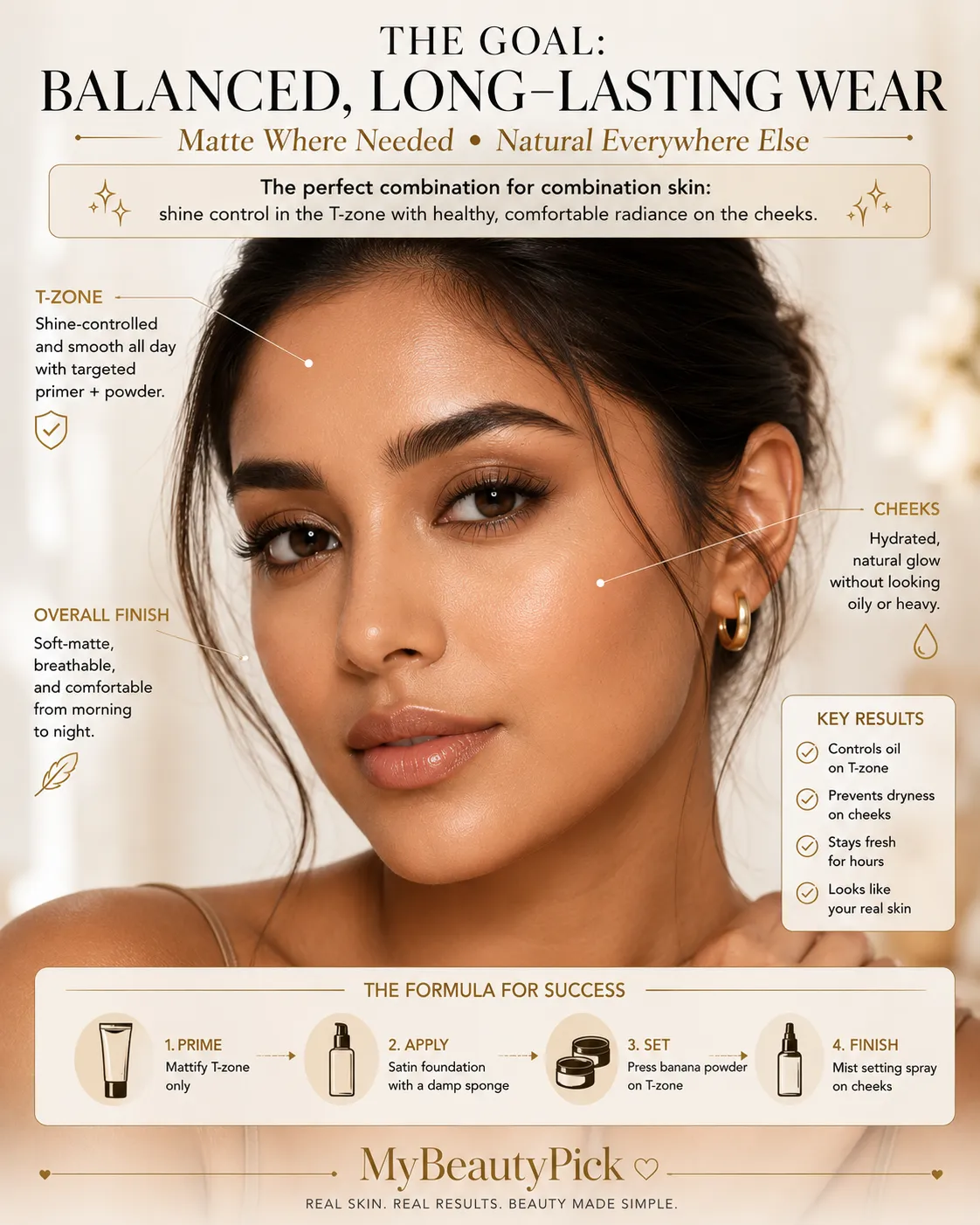
Combination skin creates a specific foundation conflict: the T-zone produces enough sebum to break down most formulas within hours, while the cheeks are drier and sometimes sensitive. A foundation that genuinely handles both zones doesn’t control oil so aggressively that it dries out the cheeks, and doesn’t hydrate the cheeks so much that the T-zone becomes unmanageable. The formulas that do this well tend to be satin or soft-matte — the middle ground between extremes — supported by a targeted primer system rather than relying on the formula alone to do all the work.
- Satin-finish foundations suit combination skin most reliably — not as oil-absorbing as full matte (which over-dries cheeks) nor as shine-amplifying as dewy (which makes the T-zone worse).
- A mattifying primer on the T-zone only before a satin foundation gives more zone control than any single formula alone.
- Set the T-zone with banana powder immediately after application. Leave the cheeks for setting spray only.
- Lightweight formulas hold better on combination skin than thick ones because thin layers adhere better through sebum activity.
- On tan skin, soft-matte formulas maintain natural warmth better than flat matte. The Fenty W shade range is among the most reliable for warm tan complexions.
Why Combination Skin Is Specifically Difficult for Foundation
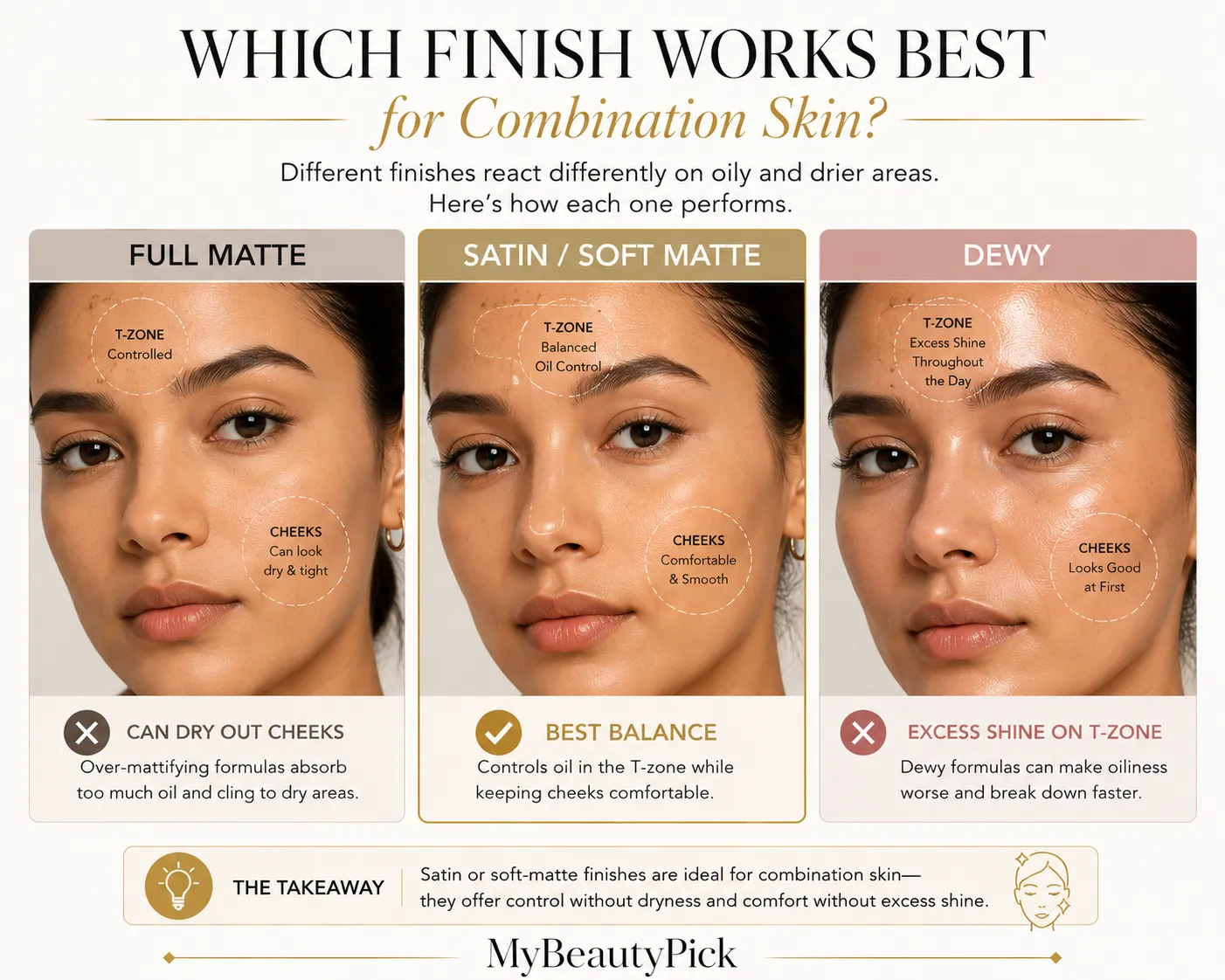
Oily and drier zones on the same face don’t just create two different skin type problems — they conflict with each other in how foundation responds. A matte formula controls the T-zone effectively but over-dries the cheeks, causing dry-patch cling and early cracking there. A dewy formula is comfortable on dry cheeks but amplifies T-zone shine within hours. A full matte applied evenly over combination skin often looks controlled in the mirror at application and then noticeably uneven by midday — matte and tight on the cheeks, shiny and broken-down on the T-zone.
The most effective approach is a zoning system: different prep for different areas, a satin foundation overall, and targeted setting on oily zones. This is more steps than a single-product solution but produces significantly more consistent results than committing to any single formula type.
The Combination Skin Zoning System
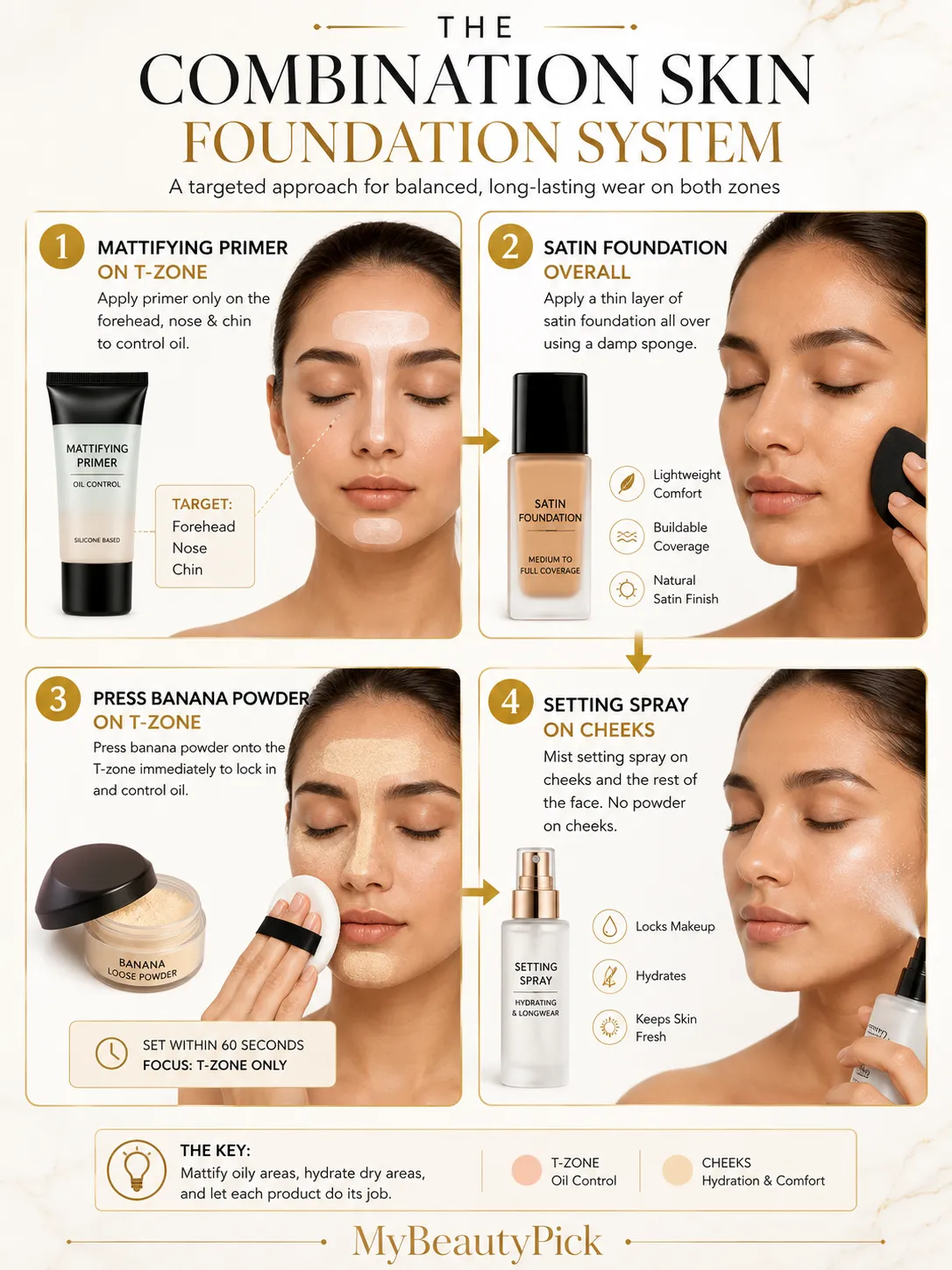
- Mattifying primer on the T-zone only. Forehead, nose, and chin. Not the cheeks, where it will over-dry and make the cheek coverage patchy. A silicone or kaolin-based primer on the T-zone creates a sebum-resistant base where it’s needed without drying the rest of the face.
- Satin or soft-matte foundation overall in a single thin layer applied with a damp sponge using pressing motions.
- Banana powder pressed on T-zone immediately. Not swept — pressed with a velour puff or dense brush. Set within 60 seconds of foundation application on the T-zone.
- Setting spray on cheeks and the rest of the face. Not powder there. This maintains moisture on the drier zones while the T-zone is powder-controlled.
Best Foundation for Combination-Oily Skin
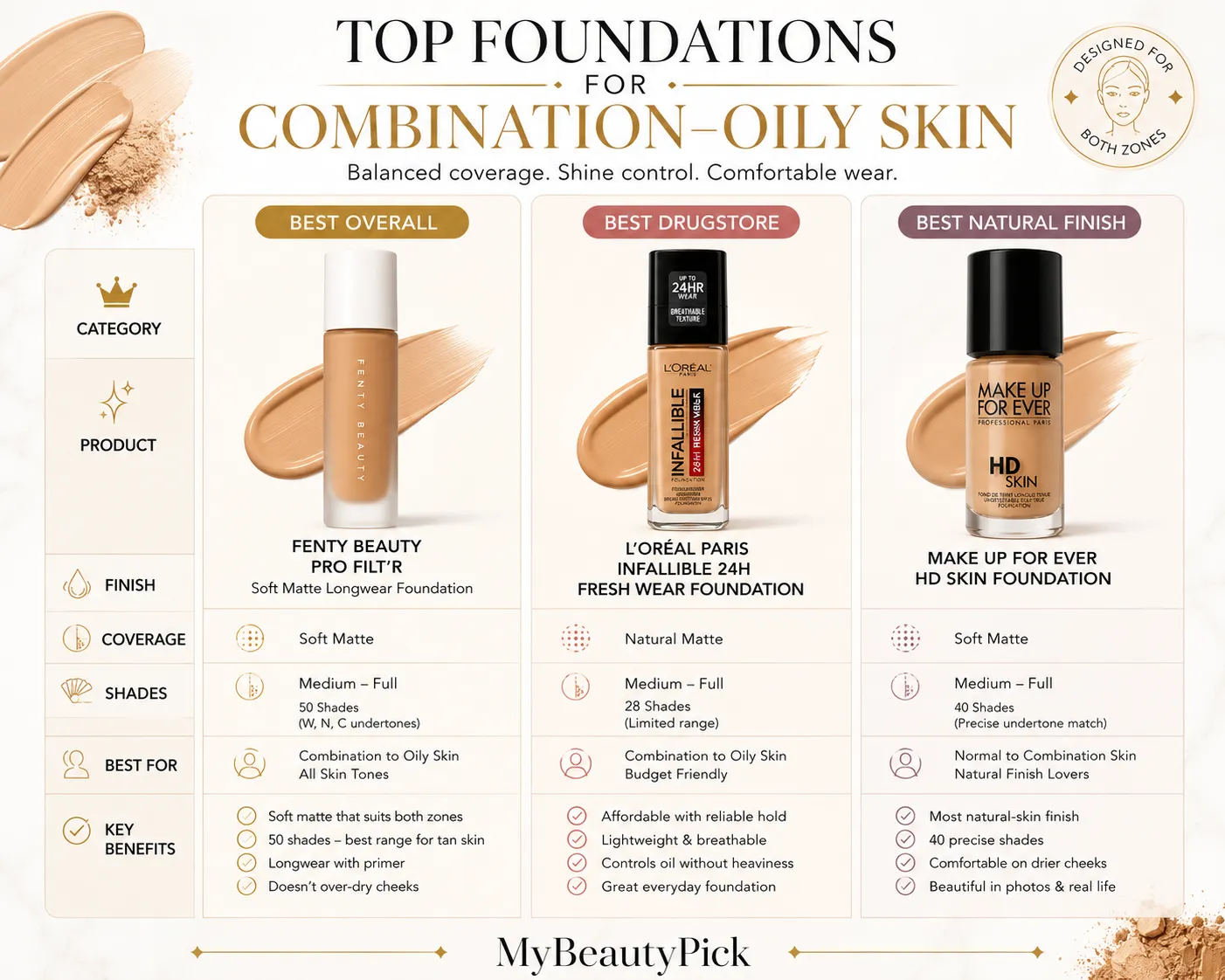
Fenty Beauty Pro Filt’r Soft Matte Longwear Foundation
The Pro Filt’r is consistently the most recommended foundation for combination and combination-oily skin because the soft-matte finish genuinely sits in the useful middle ground. It manages oil on the T-zone without the flat, over-dry quality that full matte formulas produce on drier cheek zones. A satin that reads slightly more matte than most satins — practical rather than a compromise in either direction.
The 50-shade range with W (warm), N (neutral), and C (cool) variants is the widest available at this coverage level. For tan skin specifically, the W shades in the 240W–350W range cover most of the warm medium-to-tan spectrum and hold their undertone without significant orange oxidation compared to many alternatives.
- Soft matte suits both zones without extremes
- 50 shades — best range for tan skin
- Holds well on oily zones with primer
- Doesn’t over-dry drier cheek areas
- Needs primer for max hold on very oily T-zone
- Can look slightly flat in warm candlelight
- Premium price
L’Oréal Paris Infallible 24H Fresh Wear Foundation
The Fresh Wear holds through combination skin’s mixed demands better than most drugstore alternatives. The lightweight formula doesn’t feel heavy on drier cheek zones and the natural matte finish manages T-zone oil more effectively than most options at this price. Not as comfortable as Fenty on very dry cheeks, but for combination skin where the drier zones are mild, it’s a practical and significantly cheaper alternative.
- Budget price with reliable hold
- Lightweight for combination skin comfort
- Natural matte — not flat or heavy
- Only 28 shades
- Can dry cheeks on combination-dry types
Make Up For Ever HD Skin Foundation
The HD Skin is lighter in feel than the Fenty Pro Filt’r and gives a softer, more skin-like result on combination skin. The trade-off is that it needs a stronger primer underneath to hold on very oily zones — without primer, the T-zone breaks down faster than with the Fenty formula. For combination skin where the T-zone is moderately rather than severely oily, the HD Skin’s more natural quality and excellent shade precision make it the more flattering choice.
- Most natural-skin finish of the group
- 40 precise shades
- Very comfortable on drier cheek zones
- Needs strong primer on very oily T-zones
- Premium price
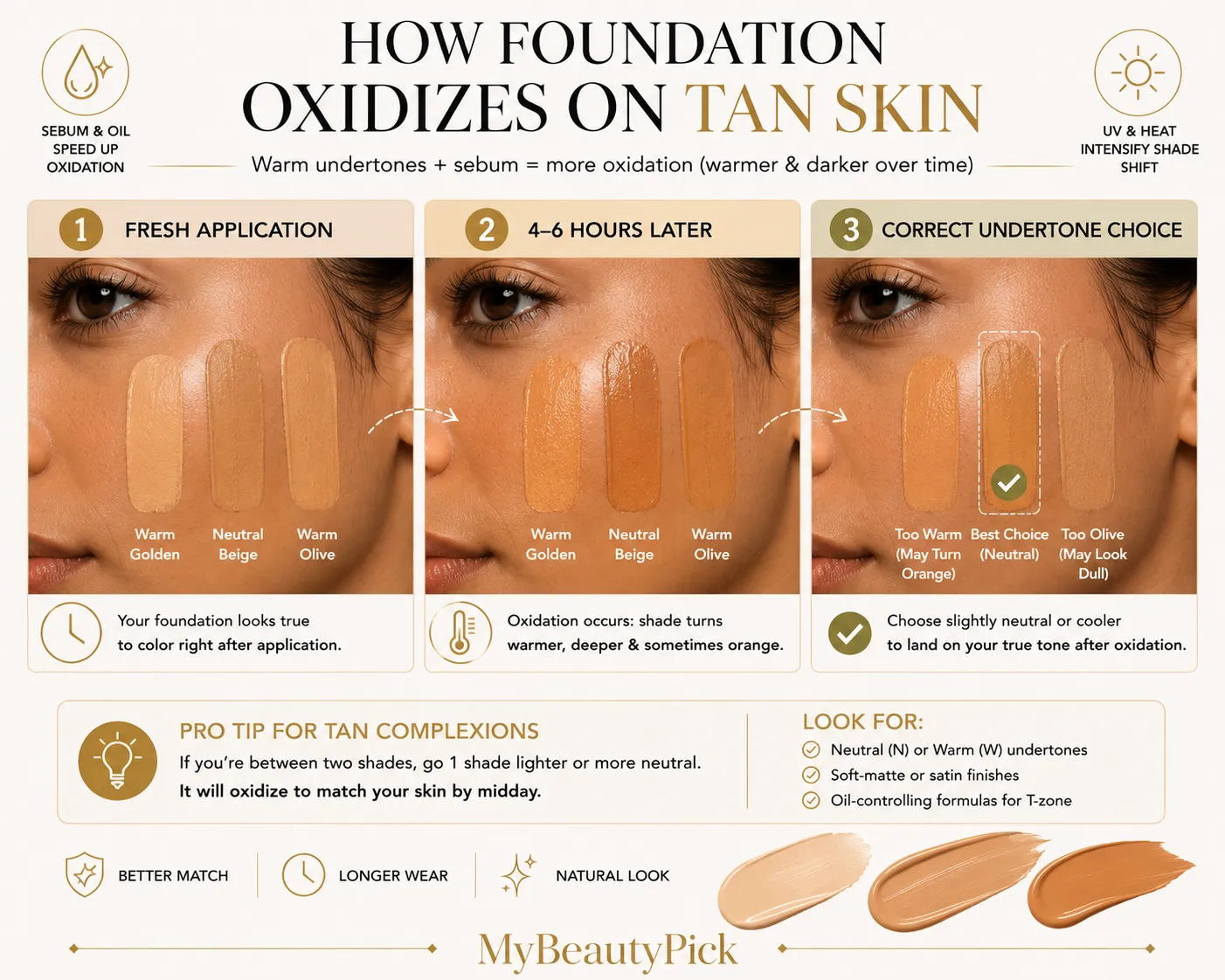
On warm tan skin with combination-oily tendencies, the Fenty W shade range is the most consistent for undertone accuracy. Warm tan skin combined with an oily T-zone has double oxidation pressure — the sebum interaction shifts foundation warmer faster. Going one shade cooler or more neutral than your exact match in the W range gives you a starting shade that oxidises back toward your true tone by midday rather than going orange.
Frequently Asked Questions
What is the best foundation for combination skin?
Satin or soft-matte foundations handle combination skin most reliably. Fenty Beauty Pro Filt’r Soft Matte Longwear is the most consistently recommended — the soft-matte finish manages oil on the T-zone without over-drying drier cheek zones. For budget alternatives, L’Oréal Infallible 24H Fresh Wear holds on oily zones while staying light enough for combination skin comfort. The most effective approach pairs any satin foundation with a mattifying primer on the T-zone only and banana powder setting immediately after application.
Should combination skin use matte or dewy foundation?
Satin is the most practical middle ground. Full matte over-dries drier cheek zones while controlling the T-zone. Dewy amplifies shine on the T-zone while being comfortable on cheeks. A satin foundation with a mattifying primer on the T-zone only and powder setting on the T-zone gives oil control where needed and comfortable coverage where it isn’t — without needing two different formulas for two different zones.
Can combination skin wear full-coverage foundation?
Yes — with the right formula. A soft-matte or satin full-coverage formula works better on combination skin than flat matte, which over-dries the cheeks. Apply in a thin layer with a damp sponge rather than building thickly — a thin layer holds better through oily zones than a thick application and is more comfortable on drier cheek areas.