

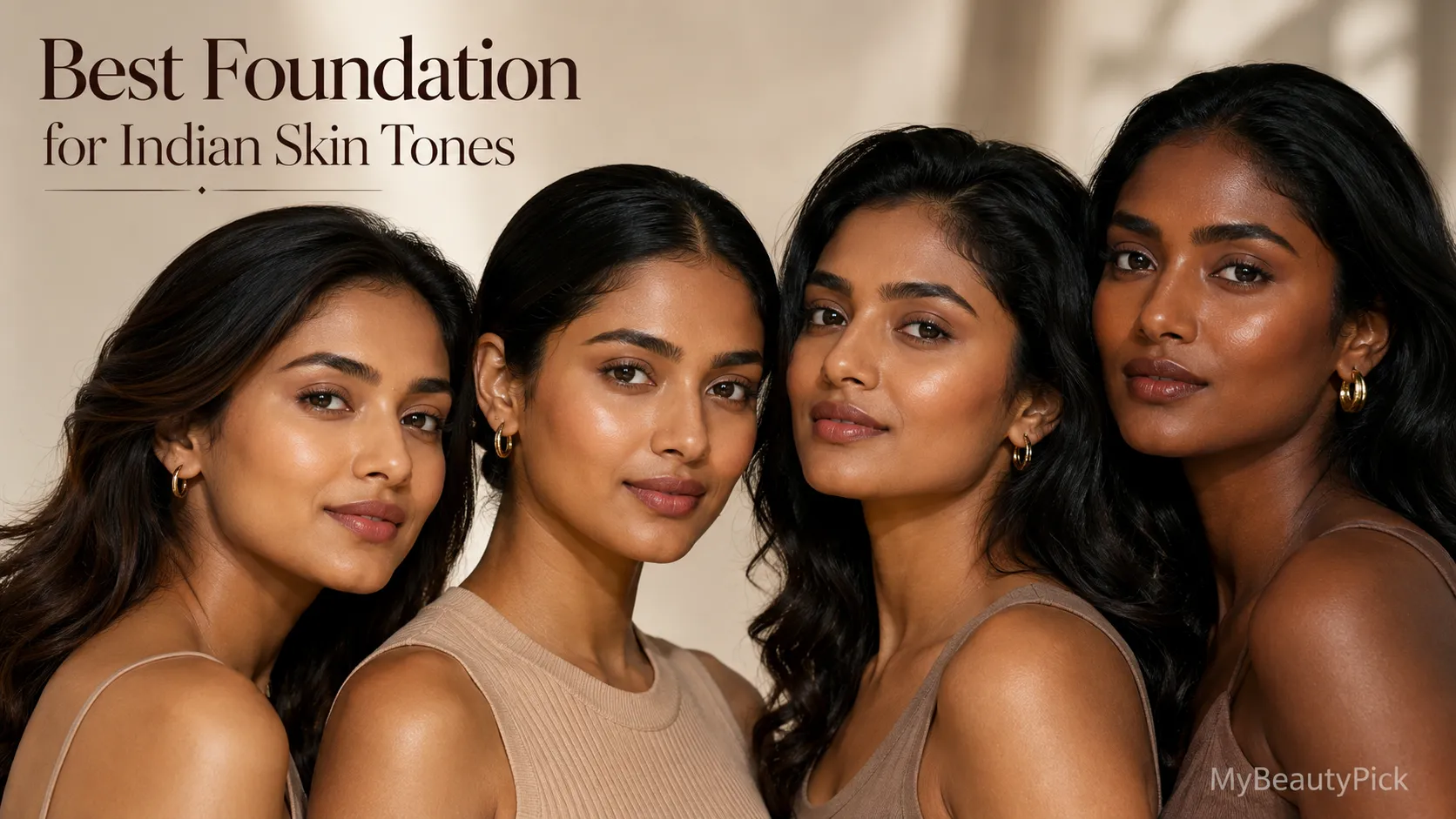
Indian skin covers an enormous range of depths and undertones — from light-medium with warm yellow undertones to deep-warm and warm-olive complexions. The challenge isn’t a lack of shade options; it’s that most brand shade ranges are designed around a narrower undertone baseline that under-serves the specific undertone variety within South Asian complexions. Finding a foundation that matches Indian skin accurately isn’t about finding an “Indian” formula — it’s about finding a brand with enough undertone variety at the right depth.
- Indian skin spans warm (yellow-golden), neutral-warm, warm-olive, and occasionally cool-neutral undertones — no single undertone describes the range.
- The most common challenge: foundation ranges that lack warm and warm-olive options at medium-to-deep depths, defaulting to neutral-pink shades that read ashy on warm and olive complexions.
- Always check W (warm) and Y (yellow) undertone variants at your depth — not the N (neutral) defaults most ranges default to first.
- Oxidation to orange is a specific concern on warm Indian skin with oily tendencies — go one shade cooler than exact match.
- Fenty Beauty (50 shades with W/N/Y variants) and L’Oréal True Match (45 shades) are the most consistently recommended for shade range quality for South Asian complexions.
Understanding Undertones in Indian Skin
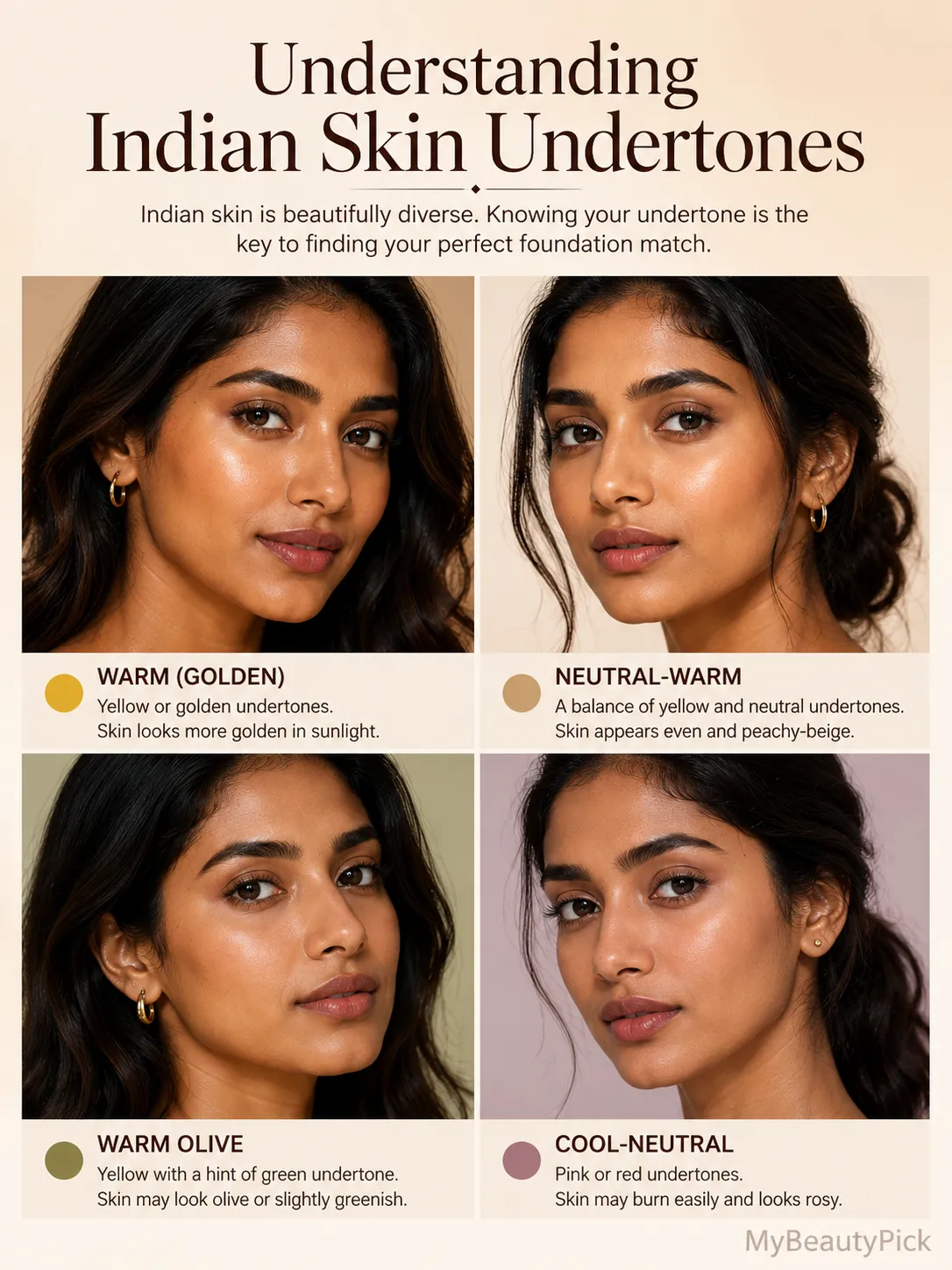
The most common undertone description for Indian skin is “warm” — but this flattens a real range. South Asian complexions include:
- Warm (yellow-golden): the most common. Foundation should have W or Y designation at your depth. Pink or neutral shades read ashy.
- Neutral-warm: balanced between yellow and neutral. N shades sometimes work; W shades at the same depth are usually the safer match.
- Warm-olive: yellow with green undertone. Very few brands have genuinely olive-undertone shade options — olive complexions often fall between warm and neutral, and need to test carefully.
- Cool-neutral: less common but present. Pink or red undertones in some North Indian complexions. C shades at the right depth are the appropriate match.
Determining your specific undertone — rather than assuming based on heritage — is more reliable for accurate shade matching. The vein test (green veins suggest warm, blue-purple suggest cool), silver vs gold jewellery preference, and how your skin reacts to sun exposure (tans golden vs pink) all give useful indicators.
The Common Shade Range Problem for Indian Skin
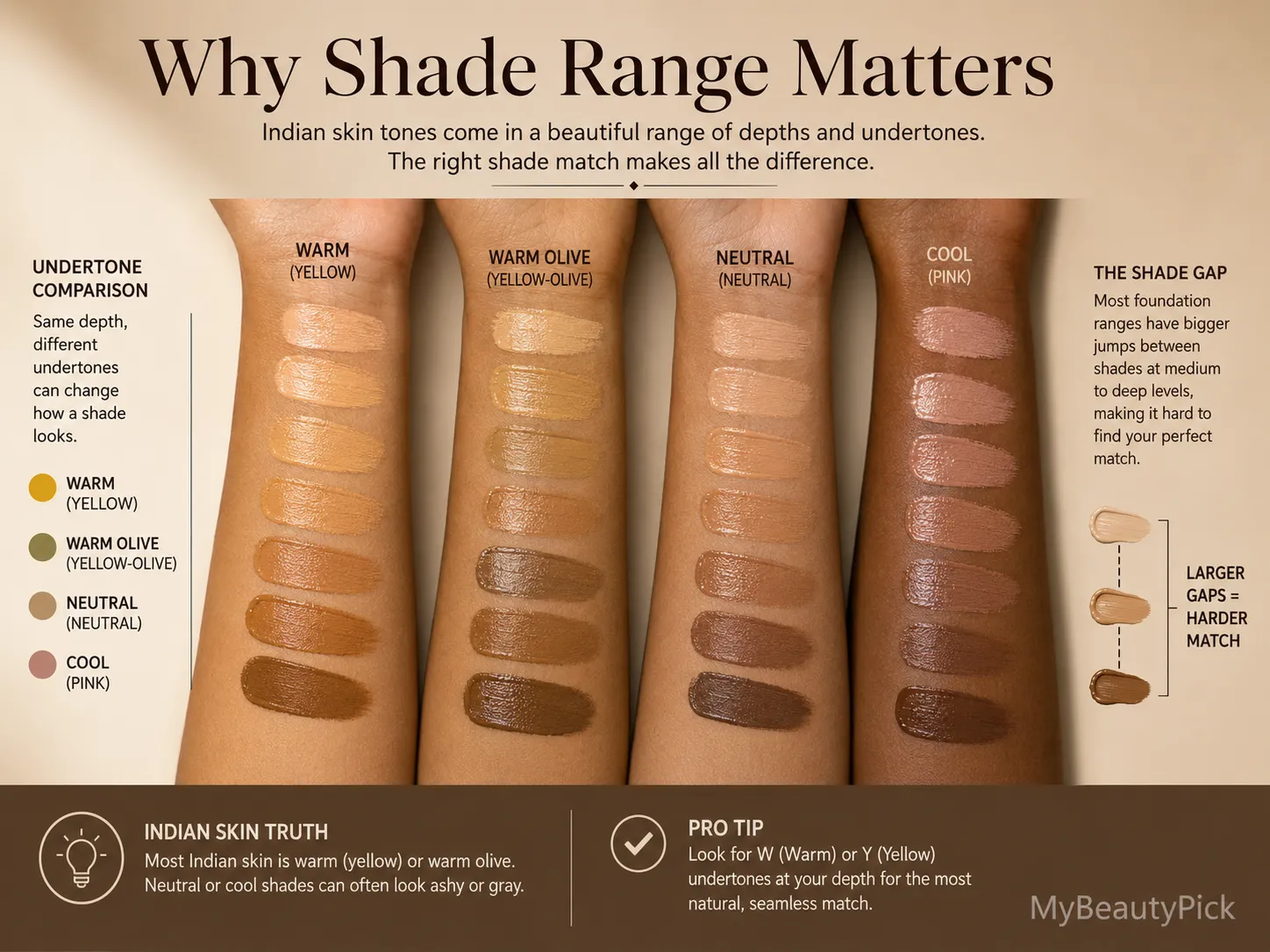
Most foundation ranges develop their shade architecture with a European baseline — they have many options at light and medium-light depths with good pink-to-neutral variety, and fewer options at medium-to-deep depths with limited warm-yellow options. This leaves medium-to-deep warm and olive Indian complexions with very few precise matches in many ranges.
The specific failure mode: a range has a “medium” and a “medium deep” in warm-undertone, with a significant depth jump between them. Indian complexions that fall between those jumps have no accurate match. Or the “warm” shade at medium depth is actually neutral-warm rather than genuinely yellow-warm, reading slightly ashy on warm-golden skin.
Best Foundation for Indian Skin Tones
Fenty Beauty Pro Filt’r Soft Matte Longwear Foundation
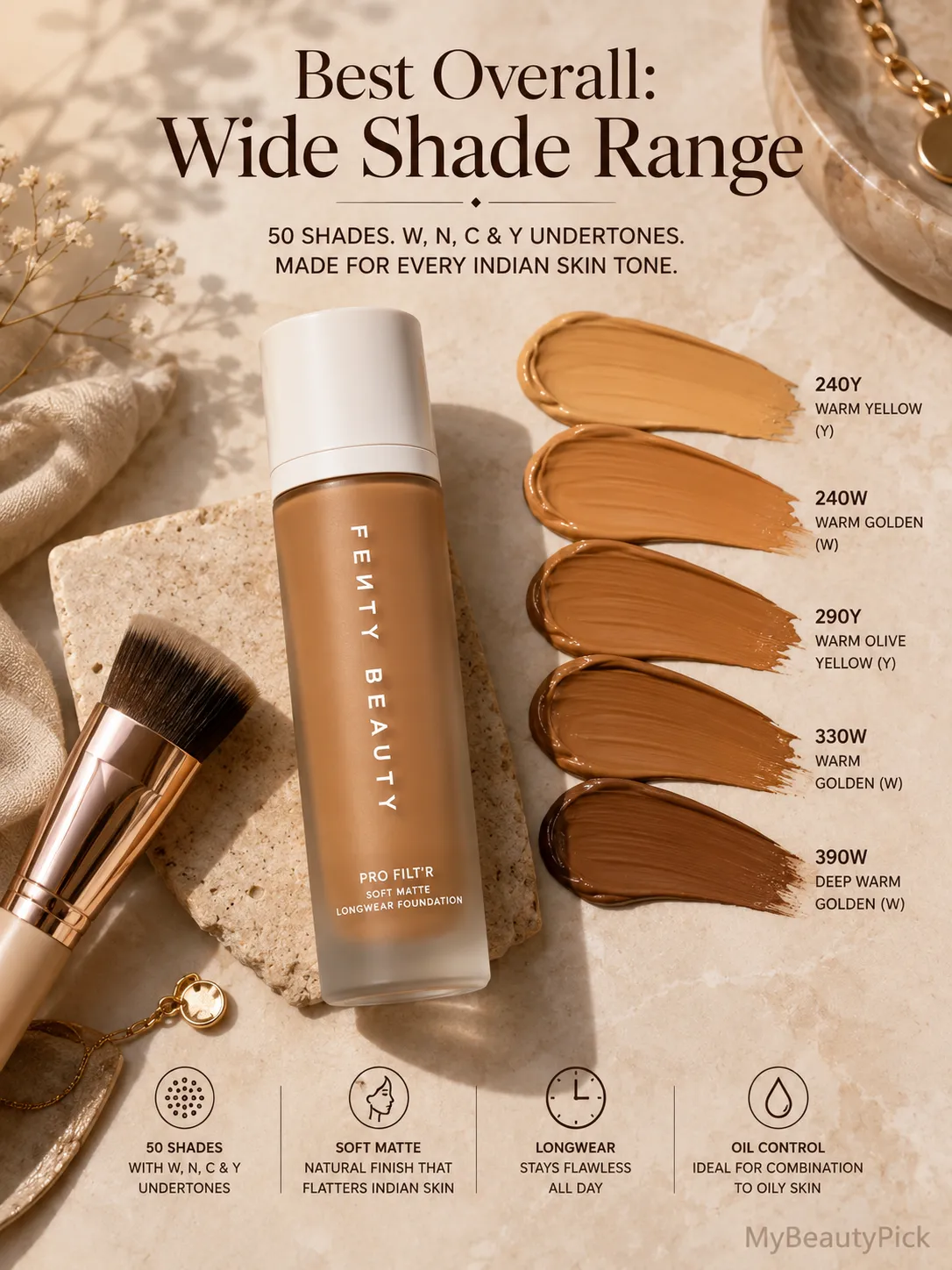
Fenty’s 50-shade range is the most consistently recommended for Indian skin specifically because it addresses the two primary shade architecture failures of other brands. First, it has Y (yellow) undertone variants alongside W (warm), which is meaningful for warm-yellow and warm-olive South Asian complexions where W can sometimes skew too orange. Second, the shade depth steps are more granular at medium-to-deep than most ranges, reducing the “between shades” problem.
For medium warm Indian skin: the 240W and 250W are frequently recommended starting points. For deeper warm Indian complexions: 360W and 390W are among the most cited. The Y variants (240Y, 290Y) are specifically useful for warm-yellow and olive-yellow undertones.
- 50 shades with Y variants for warm-yellow and olive complexions
- Granular shade steps at medium-to-deep
- Soft matte flatters warm skin tones
- Strong hold on combination and oily skin
- Needs primer for maximum longevity
- Can oxidise orange on very oily skin — go one shade cooler
L’Oréal Paris True Match Foundation
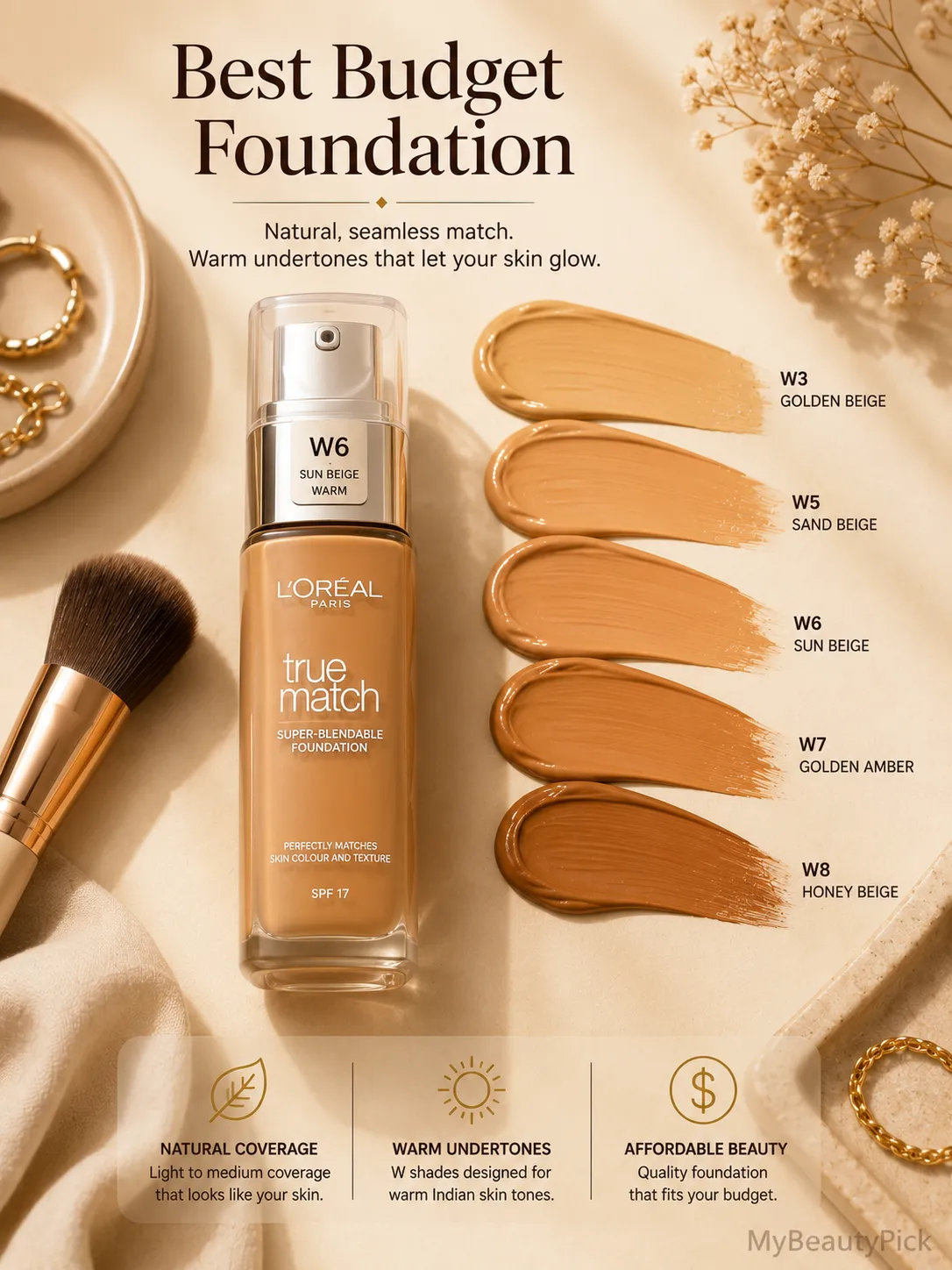
The True Match W (warm) system is genuinely warm (yellow-golden) rather than just slightly less pink than neutral — which matters for Indian skin where the distinction between warm-yellow and neutral-pink is significant. The W shades in the W5–W7 range cover most medium-to-tan warm Indian complexions with reasonable accuracy. The coverage is light to medium, which allows the skin’s natural warmth and depth to show through rather than being masked.
The limitation at deeper depths: the shade range thins for very deep South Asian complexions, with fewer steps and less warm-undertone variety above W8.
- Budget price
- 45 shades — wide for the price
- W variants genuinely warm-yellow
- Natural finish maintains skin warmth
- Thins at deeper depth range
- Shorter hold on oily skin
NARS Natural Radiant Longwear Foundation
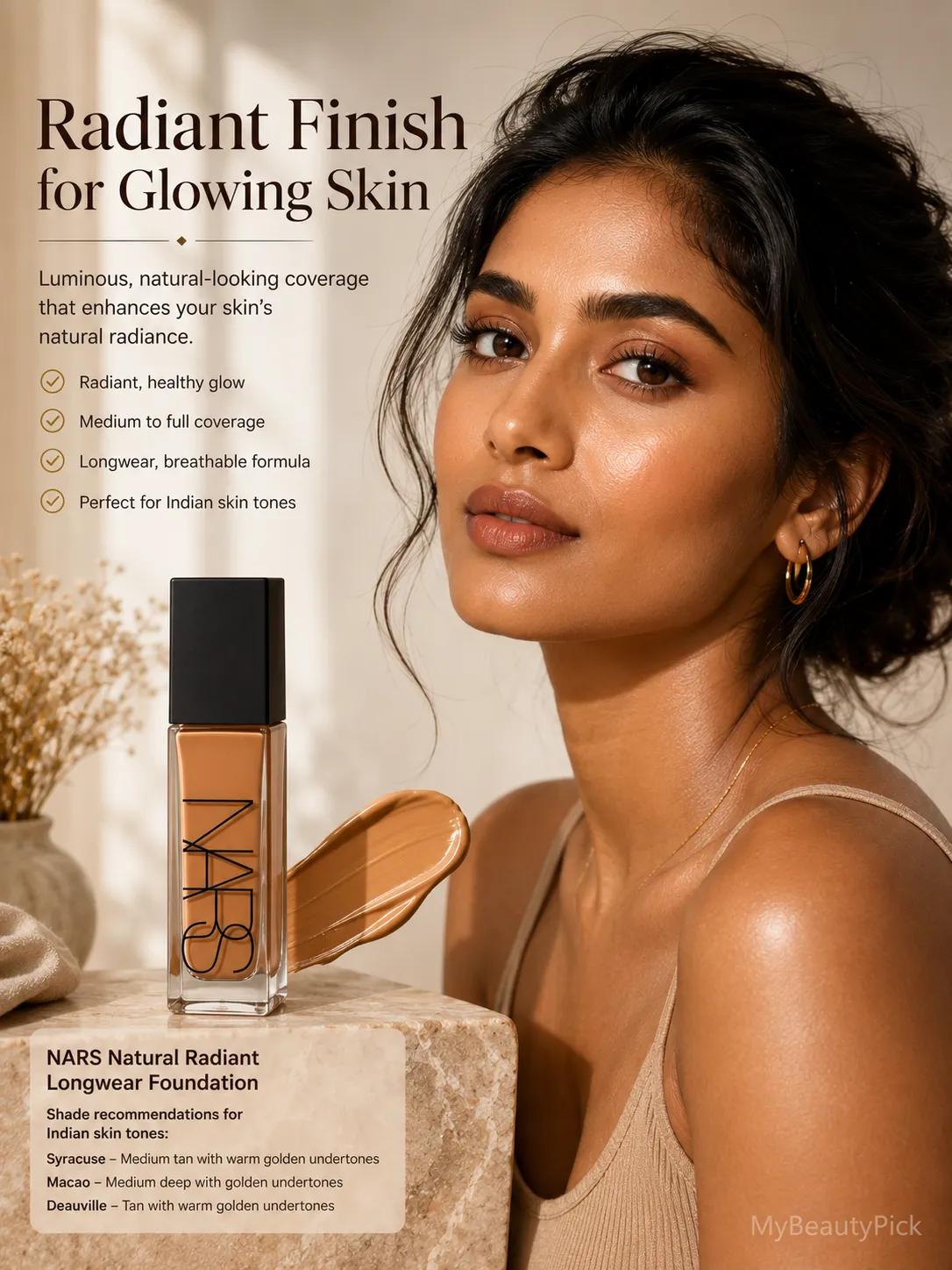
NARS has some of the most precise undertone matching at the medium-to-deep range in a radiant formula — particularly the warm shades like Syracuse, Macao, and Deauville that are frequently recommended for warm and olive South Asian complexions. The radiant finish catches light in a way that enhances warm, golden skin tones beautifully in both person and photography.
- Precise warm and olive options at medium-deep
- Luminous finish enhances warm Indian complexions
- Covers well without looking heavy
- Price is high
- Shade range still undersized at deepest end
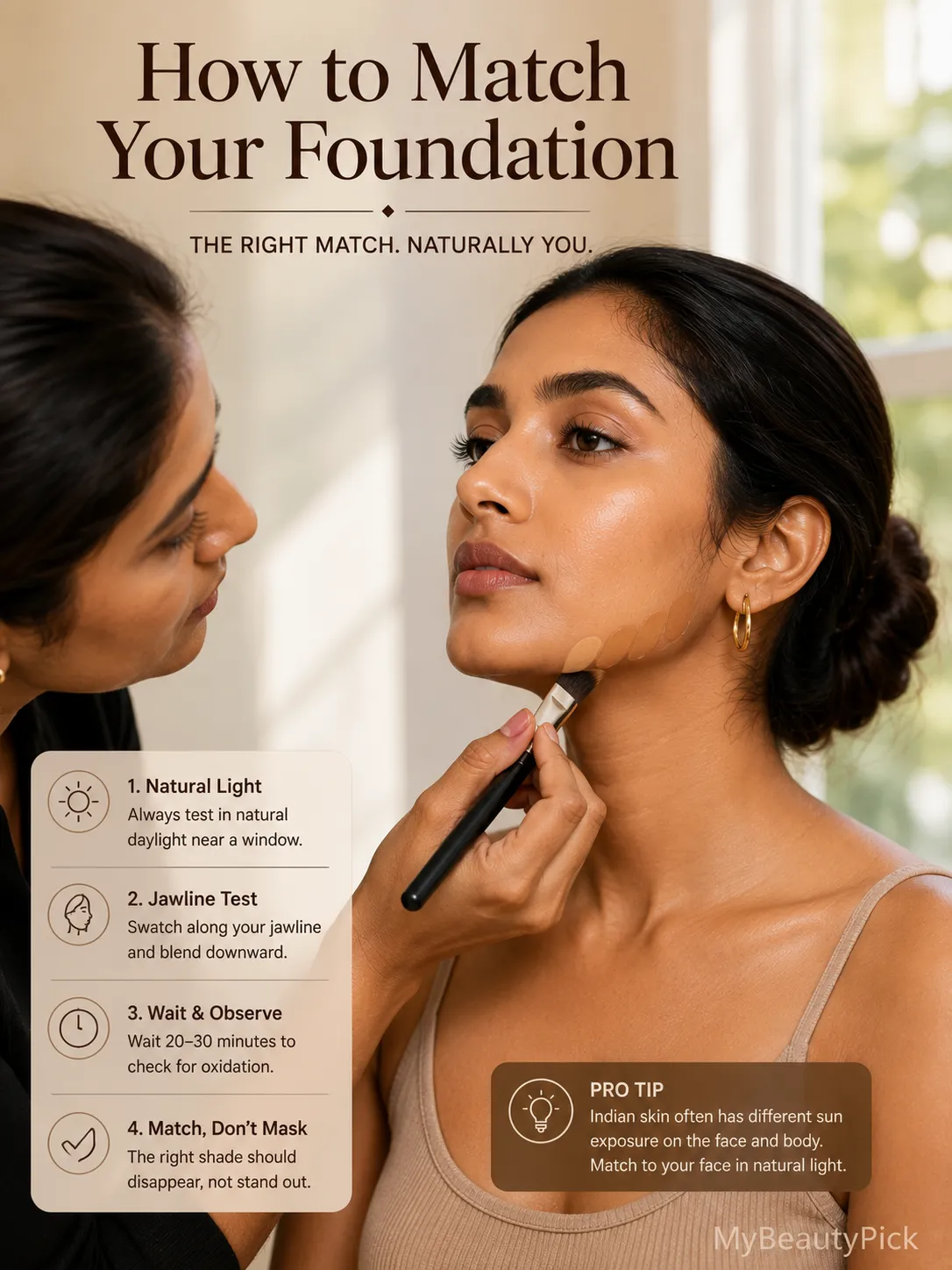
Always swatch at the jawline in natural outdoor light, not indoor lighting. Indian skin often has different sun exposure patterns between face and body — match the face in natural light. Wait 20–30 minutes after swatching before judging, since many foundations oxidise on warm skin. Start with W or Y undertone variants and only move to N if the W reads too warm-orange after the oxidation wait time.
Frequently Asked Questions
What is the best foundation for Indian skin?
Fenty Beauty Pro Filt’r is the most consistently recommended for South Asian skin because its 50-shade range with W, N, Y, and C variants covers the breadth of undertones across Indian complexions from medium to deep. L’Oréal True Match is the best budget option with 45 shades and clear undertone coding. For warm and warm-olive complexions, the W and Y shade variants are the starting point in any brand system.
What undertone do most Indian skin tones have?
Indian skin spans warm (yellow-golden), neutral-warm, warm-olive, and cool-neutral undertones. There is no single undertone for South Asian complexions. The most common is warm or warm-neutral, corresponding to W or N shades in most brand systems. Olive undertone (green-yellow) is also common. Determining your specific undertone through the vein test, sun reaction, and jewellery preference is more reliable than assuming based on heritage.
Why does foundation look ashy on Indian skin?
Foundation looks ashy on Indian skin when the shade is too cool or too neutral for a warm or warm-olive complexion. Most foundation ranges are designed around a Western European baseline that prioritises pink and neutral undertones, leaving warm and yellow undertones underserved at medium and deeper depths. Always choose W or Y undertone variants at your depth and test after 30 minutes in natural light for any drift toward pink or cool tones.
Does foundation oxidise more on Indian skin?
Foundation oxidises on all skin types, but on warm-toned Indian skin the most visible effect is an orange shift — the formula reads orange rather than matching the skin’s yellow-warm undertone. Choosing a slightly cooler or more neutral shade than your exact match, and setting immediately with banana powder, reduces the visible oxidation shift. This is particularly important on oily skin where sebum interaction accelerates the oxidation process.