

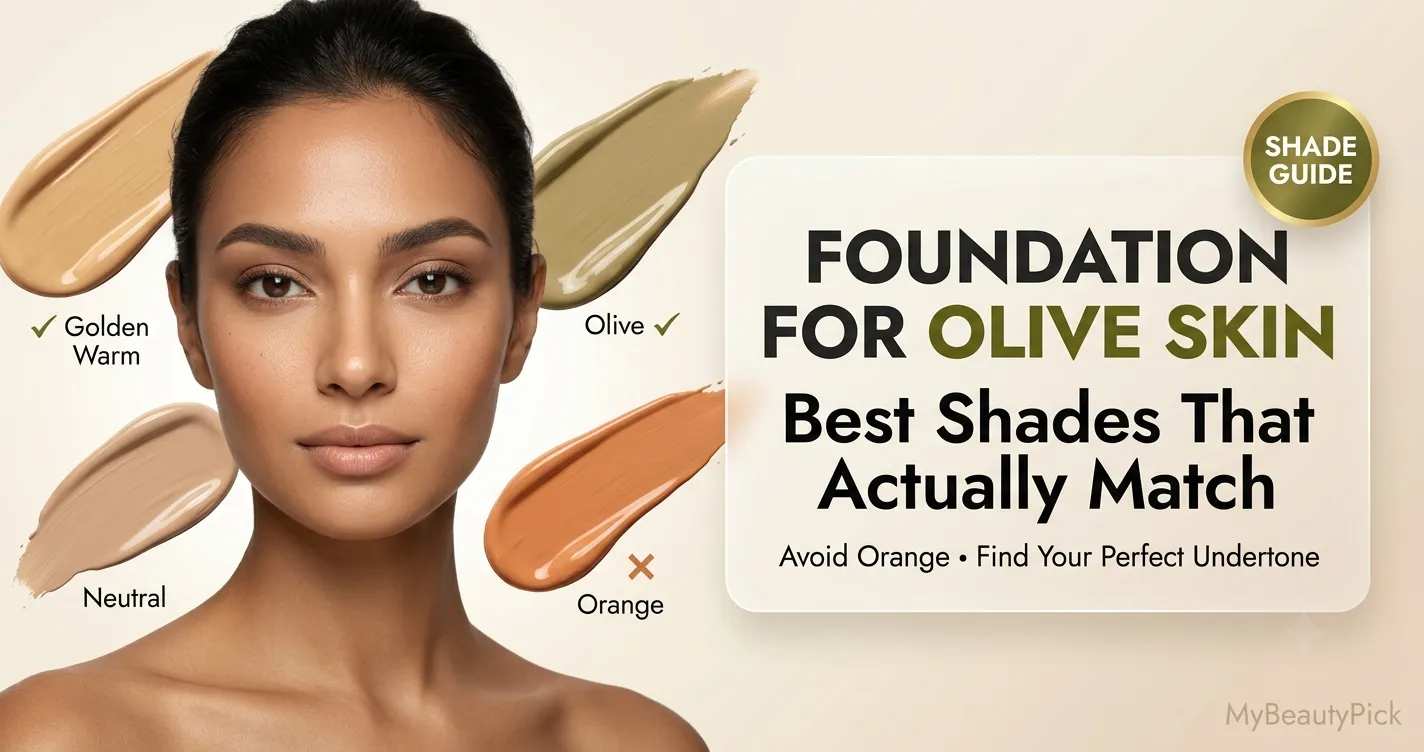
Olive skin is one of the most consistently undersupported undertones in mainstream foundation ranges. The issue is structural: most brand shade systems use W (warm) and N (neutral) as the two options at medium depth, but olive skin sits in a specific warm-neutral-with-green space that neither category captures cleanly. W shades are often too orange; N shades too pink or cool. Finding the right foundation for olive skin requires knowing which brands have shade architectures that actually include the right warmth bias — and which specific shades within those ranges to test first.
- Olive skin has a warm-neutral undertone with a green element — not pure warm (yellow-golden), not cool (pink).
- Standard W (warm) shades often read orange on olive skin because they’re red-orange biased rather than yellow-green biased.
- Look for Y (yellow) variants, or N shades from brands where neutral skews slightly warm rather than pink-neutral.
- Giorgio Armani Luminous Silk, NARS Natural Radiant, and Fenty Y variants are among the most frequently recommended for olive complexions.
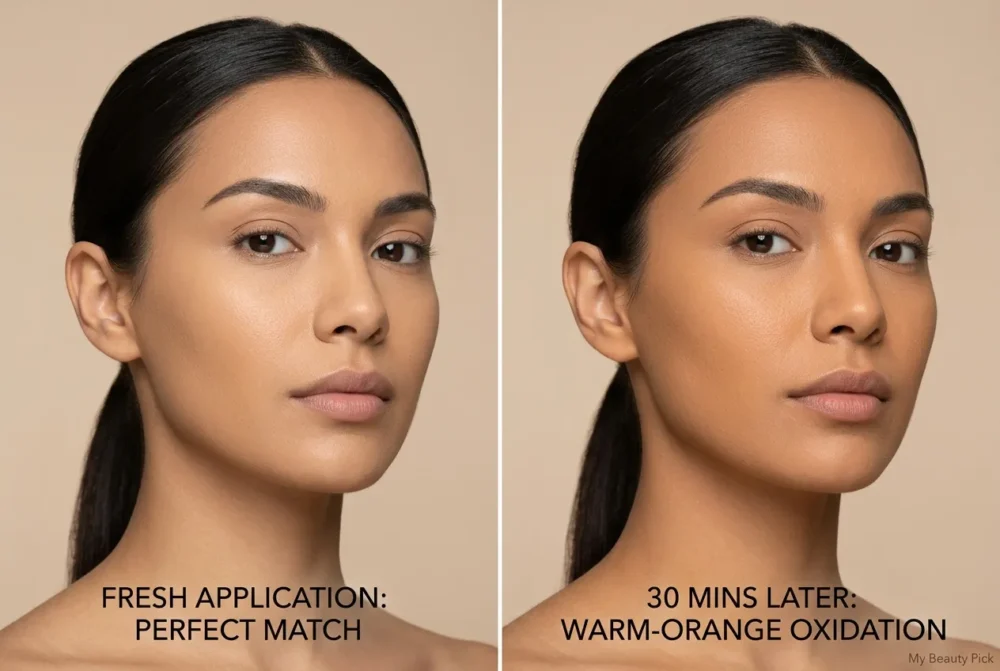
- Always test at the jawline in natural light after 20–30 minutes — olive skin oxidation can pull warm-orange within that window.
Understanding Olive Undertone
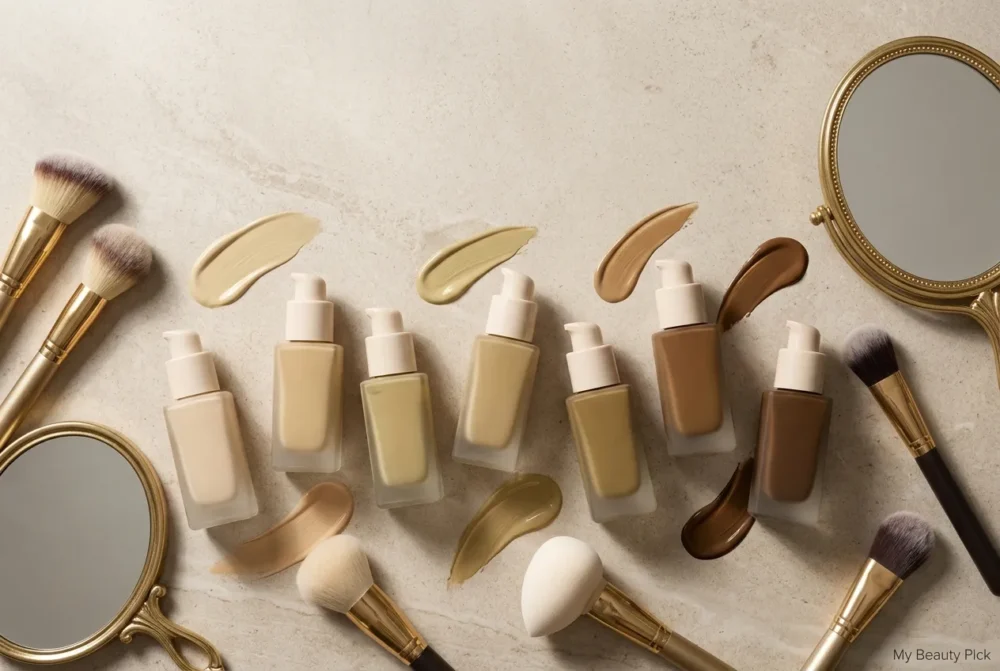
The green component in olive skin comes from the combination of yellow pigment and a subtle green-grey quality that sits under the skin surface. It’s not visible as obviously green the way a vein can look — it’s a quality of the skin’s overall warmth that leans yellow-green rather than yellow-golden or yellow-orange.
This is why olive skin doesn’t respond the same way to warm foundation shades that work for warm golden skin. A foundation with primarily red-orange iron oxide warmth — the most common warm-shade formulation — reads as too orange or too red against olive’s yellow-green base. The warmth that works for olive skin is more yellow-biased, sometimes with a slight grey-green quality that softens the orange tendency.
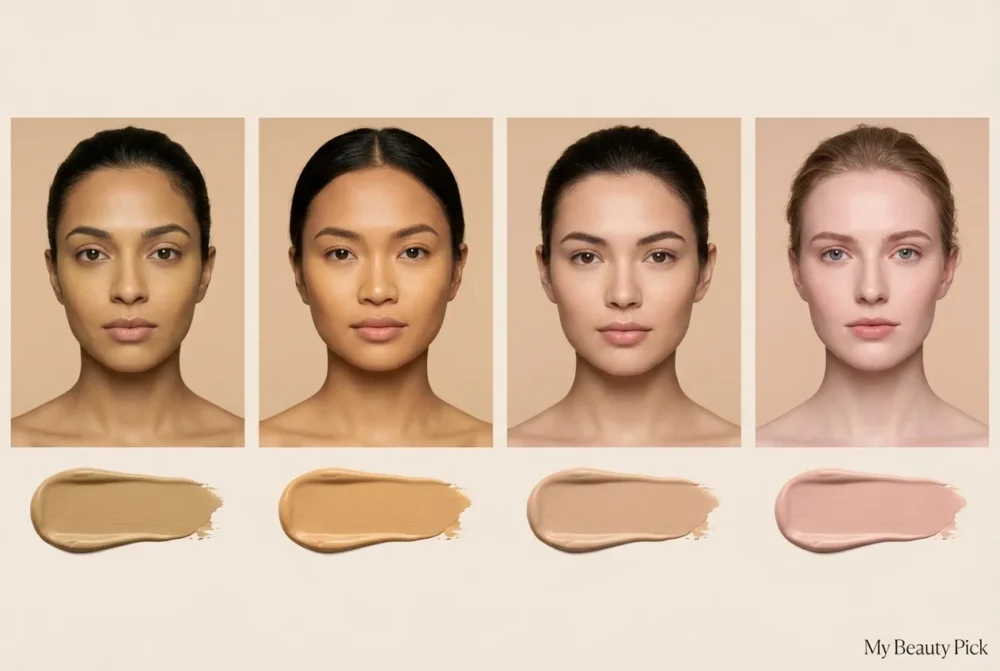
The vein test: olive skin most commonly shows green veins, which is one of the cleaner indicators. Some people with olive undertones show blue-green veins — still olive, but towards the cooler end of the olive range.
Why Most Foundation Ranges Underserve Olive Skin
Most foundation shade systems are designed around three undertone categories: warm (W), neutral (N), and cool (C). Olive doesn’t map cleanly to any of them:
- W shades — too orange-warm for olive’s yellow-green base in most brands
- N shades — can read pink or grey on olive, depending on the brand’s neutral bias
- C shades — too cool, creates ashiness
The solution some brands use: a Y (yellow) variant alongside W and N. Fenty Beauty’s Y shades specifically address yellow-biased warm undertones. Giorgio Armani Luminous Silk’s shade architecture sits in a warm-neutral range that works unusually well for olive complexions. NARS has specific shades (Deauville, Syracuse, Macao) that are consistently recommended for olive-warm complexions.
Best Foundation Brands for Olive Skin
Giorgio Armani Luminous Silk Foundation
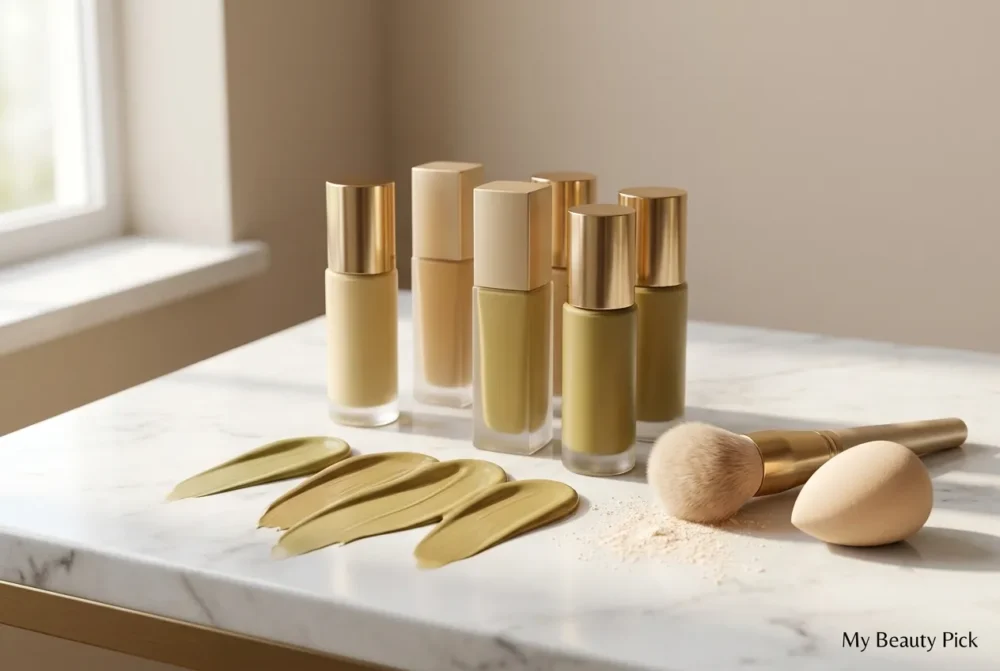
The most consistently recommended foundation for olive skin across beauty professionals and editors. Luminous Silk’s shade architecture in the medium range sits in a warm-neutral zone that complements olive undertones without going orange. Shades 5.5, 6, and 7 are the most frequently cited for light-to-medium olive complexions. The natural luminous finish enhances olive skin’s characteristic warmth and dimension.
The limitation is coverage — light to medium only. For olive skin with hyperpigmentation or significant redness, this won’t be enough on its own without targeted concealer.
Strengths
- Shade architecture hits the warm-neutral olive zone reliably
- Natural luminous finish flatters olive complexity
- Low oxidation rate
Limitations
- Light-medium coverage only
- Premium price
- Shade matching requires in-person testing
Fenty Beauty Pro Filt’r Soft Matte Foundation (Y variants)
The Y (yellow) shade variants in the Fenty range are specifically formulated for yellow-biased warm undertones — which includes olive complexions. The 240Y and 250Y are frequently cited for medium olive skin. The Y biasing makes the warmth more yellow-green than orange, which is the specific shift olive undertones need. Medium-to-full coverage with non-comedogenic formula.
Strengths
- Y variants address yellow-green undertone specifically
- Medium-full coverage
- 50 shades — widest range at this coverage
Limitations
- W shades too orange for some olive complexions — must test Y variants
- Soft matte can flatten olive skin’s natural depth in low light
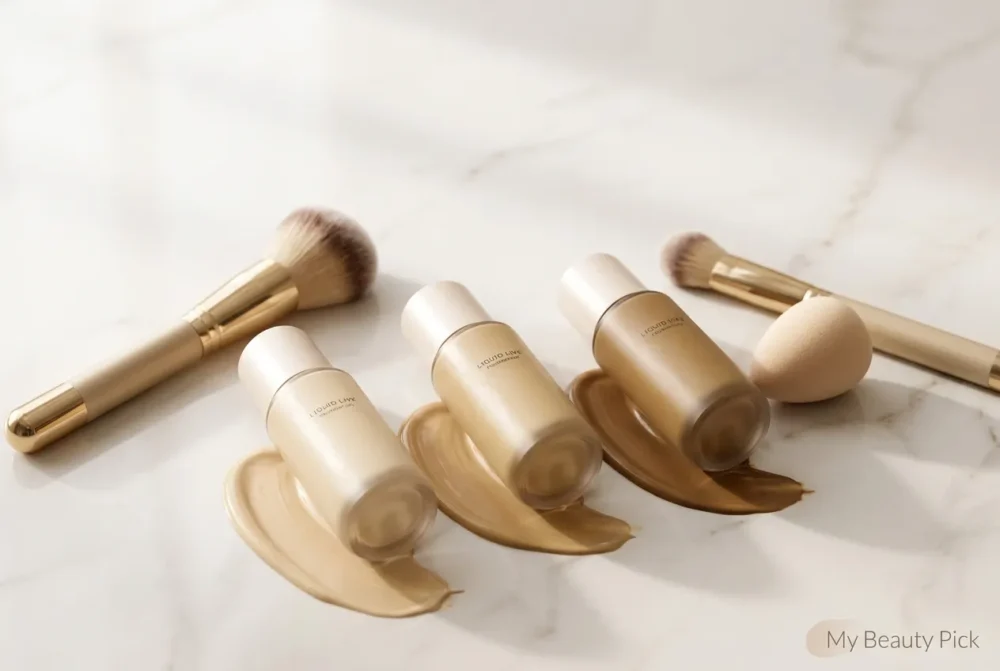
NARS Natural Radiant Longwear Foundation
Specific NARS shades are standouts for olive skin. Deauville (medium olive), Syracuse (medium-deep olive), and Barcelona (light-medium olive) are among the most precisely matched for warm-olive undertones in the 40-shade range. The radiant finish enhances rather than flattens olive skin’s natural warmth. Medium-to-full coverage that holds well through the day.
Strengths
- Specific shades precisely formulated for olive undertone
- Radiant finish flatters olive skin’s natural quality
- Good depth coverage
Limitations
- Premium price
- Radiant finish not for oily olive skin without T-zone control
How to Test Foundation for Olive Skin
The standard swatch-at-jaw-in-natural-light rule applies, but with two olive-specific additions:
- Test Y variant alongside W variant at your depth. Start with both — the Y variant is often the better fit but test both to find the right yellow bias for your specific olive tone.
- Wait the full 20–30 minutes. Olive skin can show oxidation that pulls warm-orange within this window. A shade that looks right at application may shift toward orange as it oxidises. The 30-minute check is essential for olive complexions.
- Check in multiple lighting conditions. Olive skin under different lighting looks very different — what matches in natural light may look different under warm indoor lighting. Test in both if possible.
Frequently Asked Questions
What undertone does olive skin have?
Olive skin has a warm-neutral undertone with a distinctive green or yellow-green element. It’s not simply warm (yellow-golden) and not cool (pink-rosy) — it sits in a warm-neutral or warm-olive range that most shade systems don’t have a dedicated category for. This is why standard W shades often read orange and N shades often read ashy on olive complexions.
What is the best foundation shade for olive skin?
Shades with yellow bias rather than red-orange warmth work best for olive skin. Test Y (yellow) variants in ranges that offer them (Fenty Beauty), or the warm-neutral middle ground in brands like Armani Luminous Silk. NARS shades Deauville, Syracuse, and Barcelona are specifically cited for olive complexions. Always test at the jawline in natural light after 20–30 minutes — oxidation on olive skin can pull orange within that window.
Why does foundation look orange on olive skin?
Foundation looks orange on olive skin when the warm shade is red-orange biased rather than yellow-green biased. Most W shade formulations use red-orange iron oxides that clash with olive’s yellow-green undertone. Look for Y variants or brands with warm-neutral shade architecture (Armani, certain NARS shades) that offer yellow-biased warmth without the red-orange shift.
Is olive skin warm or neutral?
Warm-neutral, with a specific green element. Most accurately described as warm-olive. In foundation terms this means needing yellow-green-biased warmth rather than the red-orange warmth typical of most W shade formulations. Vein test: olive skin most commonly shows green veins, one of the cleaner indicators of warm-olive undertone.