

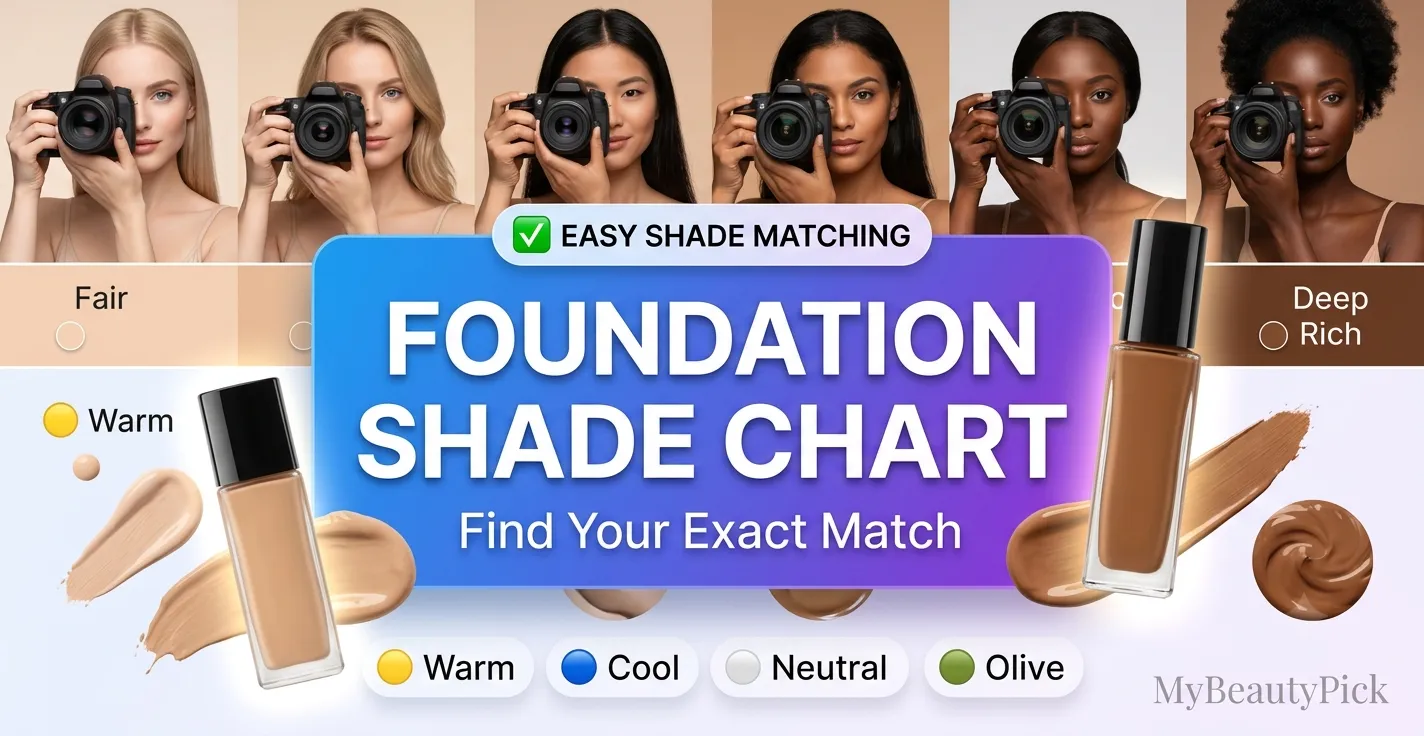
Every foundation brand has its own shade naming system, and none of them are standardised. A 230W at one brand sits at a completely different depth and undertone from a 230W at another. An “ivory” at one brand is another brand’s “porcelain.” Navigating shade charts without understanding how a specific brand structures its numbering and lettering leads to the same wrong-shade experience repeatedly — you know what your shade is in one brand, but that knowledge doesn’t transfer cleanly to the next. Here’s how the major systems work and how to use them reliably.
- Foundation shade charts are not standardised across brands — a “medium” or “4” at one brand has no direct equivalent at another.
- Numbers typically indicate depth; letters typically indicate undertone. But each brand uses its own scale.
- Undertone knowledge transfers across brands; specific shade names and numbers do not.
- The only reliable shade test is a jawline swatch in natural daylight, checked 20–30 minutes after application.
- For tan skin, shade names like “medium beige” are almost always lighter than tan skin actually needs — most brands under-label their medium-to-tan range.
How Foundation Shade Charts Work: The General Logic
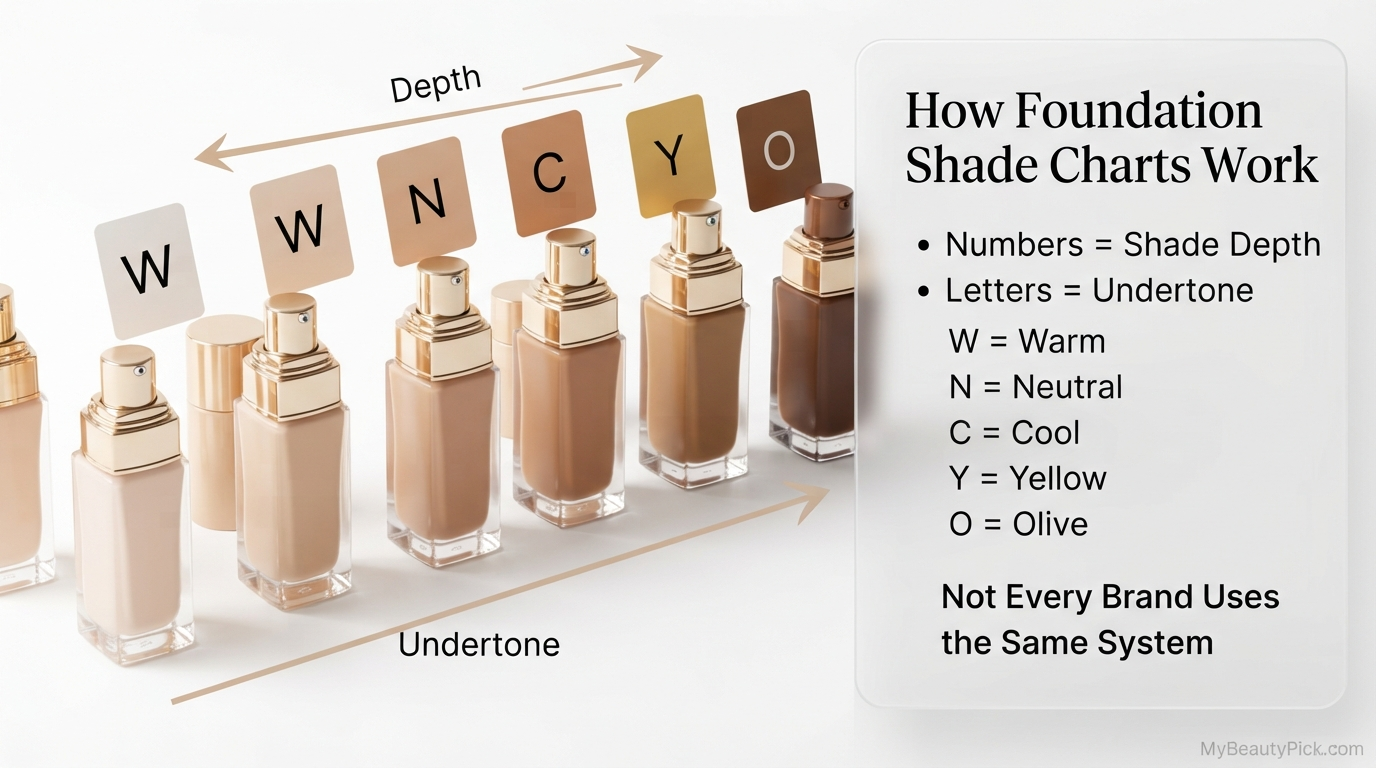
Most foundation shade charts use a combination of two variables: depth (how light or dark the shade is) and undertone (the warm, cool, or neutral colour beneath the surface).
Depth is usually indicated by a number. Lower numbers are lighter shades; higher numbers are deeper shades. The scale varies by brand — one brand might run 1–10, another 100–600, another 0–16.
Undertone is usually indicated by a letter suffix: W (warm), C (cool), N (neutral), Y (yellow), P (pink), O (olive), R (red/rosy). Not every brand uses all of these — some use only W, N, and C; others use descriptive names without letter codes.
A shade like 4W would typically mean: fourth depth level on the brand’s scale, warm undertone. A shade like 230N would mean: shade 230 on a 100–600 scale (medium depth), neutral undertone.
Brand-Specific Shade Systems: How to Read Each One
Giorgio Armani Luminous Silk Foundation
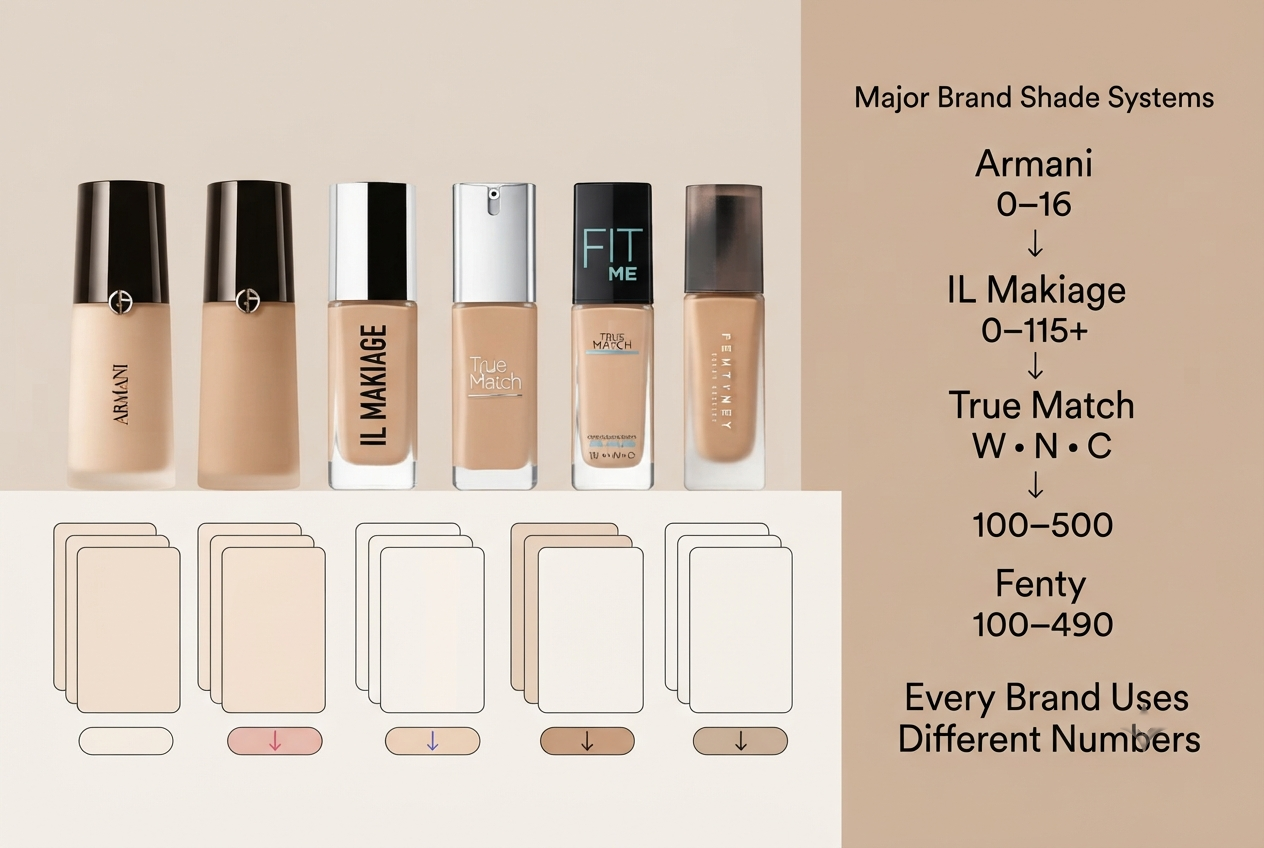
Armani uses a numeric system from 0 (very fair, cool) to 16 (deep). Half-numbers exist for in-between depths (2.5, 3.5, etc.). Armani does not use letter suffixes — the undertone is implied by the shade positioning within the range, with lower numbers leaning cool-neutral and certain mid-range and deeper shades being warm-biased.
For tan and warm skin: shades 5–9 cover most of the medium-to-tan range. Shade 5.5 and 6 are consistently recommended for warm light-to-medium tan skin. The undertone across this range tends to read warm-neutral, which works well for warm complexions without being overtly orange. The best approach is the Armani counter match, as the online quiz isn’t precise enough for undertone nuance at the tan depth.
IL Makiage Foundation (Woke Up Like This)
IL Makiage uses a numerical system (0 through 115+) with a proprietary online quiz as the primary matching method. The quiz asks about skin tone, undertone cues (vein colour, how you tan, jewellery preference), and produces a specific shade number recommendation.
For tan and warm skin: shades 45–85 typically cover the medium-to-tan range. IL Makiage’s quiz accuracy is reasonable for undertone but less precise at the tan-to-deep range — the brand’s shade architecture is stronger at fair and medium depths. Ordering two adjacent shades is advisable for first-time buyers at the tan depth.
NYX Foundation Shades
NYX uses different systems across product lines. The Can’t Stop Won’t Stop range uses descriptive shade names (Porcelain, Light, Nude, Beige, Classic Tan, True Beige, Warm Caramel, etc.) without letter codes in the primary naming. The True Match style ranges use W (warm), N (neutral), C (cool) suffixes.
The limitation with descriptive-name systems is that “Classic Tan” at NYX and “Classic Tan” at a different brand are completely different shades. The solution is reading the undertone description alongside the shade name and treating the name as depth-only information. For tan skin at NYX, shades in the “Tan” and “Warm Caramel” range with warm-undertone descriptions typically cover medium-deep tan complexions.
L’Oréal Paris True Match
The True Match system is one of the most logical for consumers to navigate. It uses a number for depth (1–10, light to deep) combined with a letter for undertone: W (warm, yellow-golden), N (neutral), C (cool, pink-beige). The letter is the first character, the number is the depth: N2, W4, C6, and so on.
For tan and warm skin: W5–W7 covers most of the medium-to-tan warm range. The W system at True Match is genuinely warm-undertone (yellow-based) rather than warm-orange, which makes it one of the more reliable systems for matching warm melanin-rich complexions without orange shift.
Maybelline Fit Me
Maybelline uses a three-digit number: the first digit indicates undertone family (1=porcelain/neutral, 2=ivory/warm, 3=buff/warm, 4=golden/warm, 5=sun beige/warm-deep). The last two digits indicate depth within that family.
For tan and warm skin: the 300s (310–355) cover light-to-medium tan; the 330, 335, 340, 355 are the most commonly recommended for warm medium-to-tan skin. Shade 330 Toffee and 340 Cappuccino are frequently cited for their warm-undertone accuracy without orange shift on tan complexions.
| Brand | Depth Indicator | Undertone Indicator | Tan Skin Range | System Quality |
|---|---|---|---|---|
| Armani Luminous Silk | Numbers 0–16 | Implied by position | Shades 5–9 | Precise but counter-dependent |
| IL Makiage | Numbers 0–115+ | Quiz-determined | Shades 45–85 | Quiz works at medium; less precise at deeper tan |
| NYX | Descriptive names | Varies by range | Tan/Warm Caramel range | Inconsistent — read descriptions carefully |
| L’Oréal True Match | Numbers 1–10 | W, N, C prefix | W5–W7 | One of the most logical consumer systems |
| Maybelline Fit Me | 100–500s system | First digit (3=warm, 4=golden) | 330–355 | Logical once you understand the number structure |
| Fenty Beauty | Numbers 100–490 | N, W, C, Y suffix | 250W–350W | Best shade range architecture for tan and deeper skin |
The Problem With Shade Names and “Medium Beige”
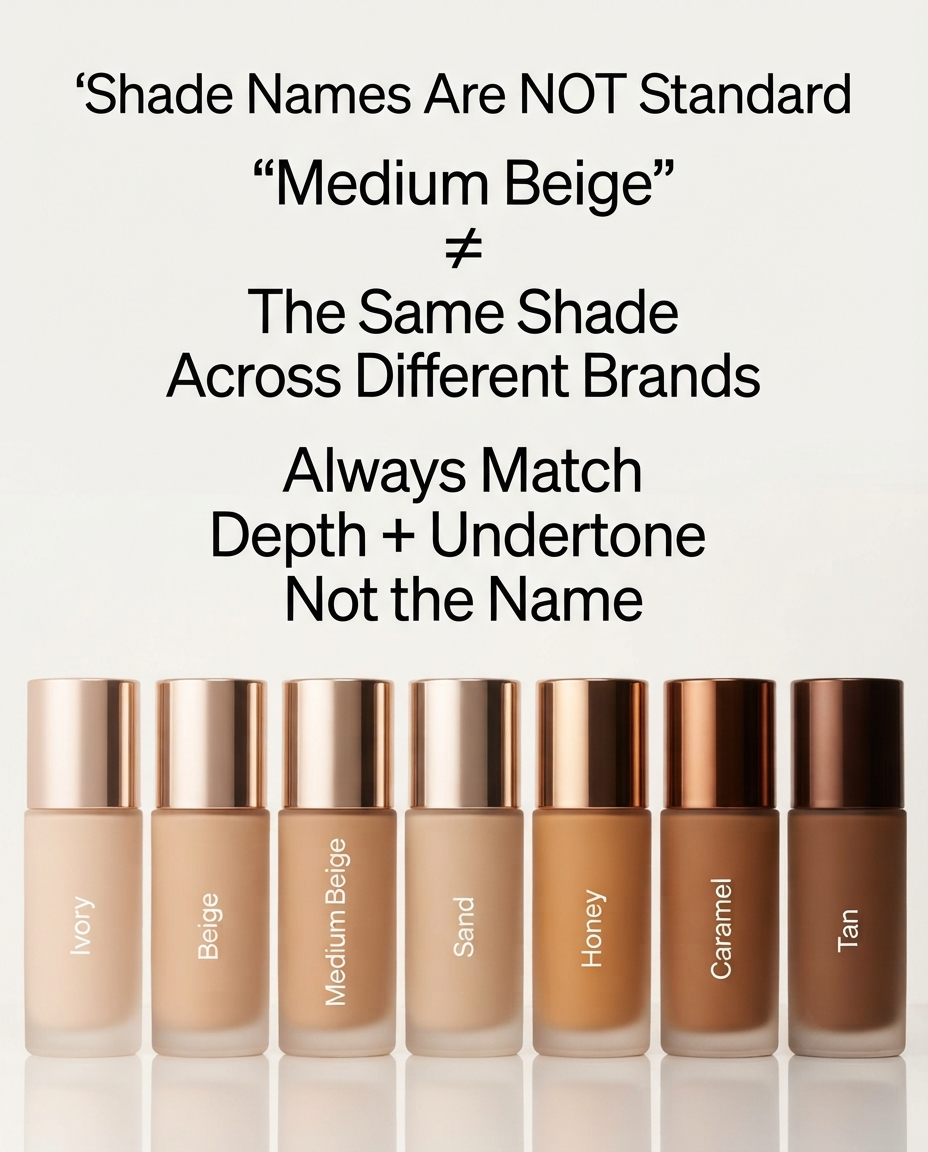
Shade names are one of the most misleading parts of foundation shopping. “Medium Beige” at one brand is a light-to-medium shade. At another it’s light. At a third it’s genuinely medium. The names don’t translate between brands and they frequently don’t describe the shade accurately within a brand.
“Beige” shades specifically are problematic for tan skin. The historical placement of “beige” in foundation ranges positioned it as a light-to-medium, neutral-to-cool tone — significantly lighter than most tan complexions. When someone with tan skin reaches for a “medium beige” from a brand range, they are almost always reaching for something too light.
For tan skin specifically: look past the name and focus on the undertone letter/description and the position of the shade within the range. A shade at the top third of a brand’s range with a warm undertone indicator is a more reliable guide than any descriptive name.
How to Use a Shade Chart Step by Step
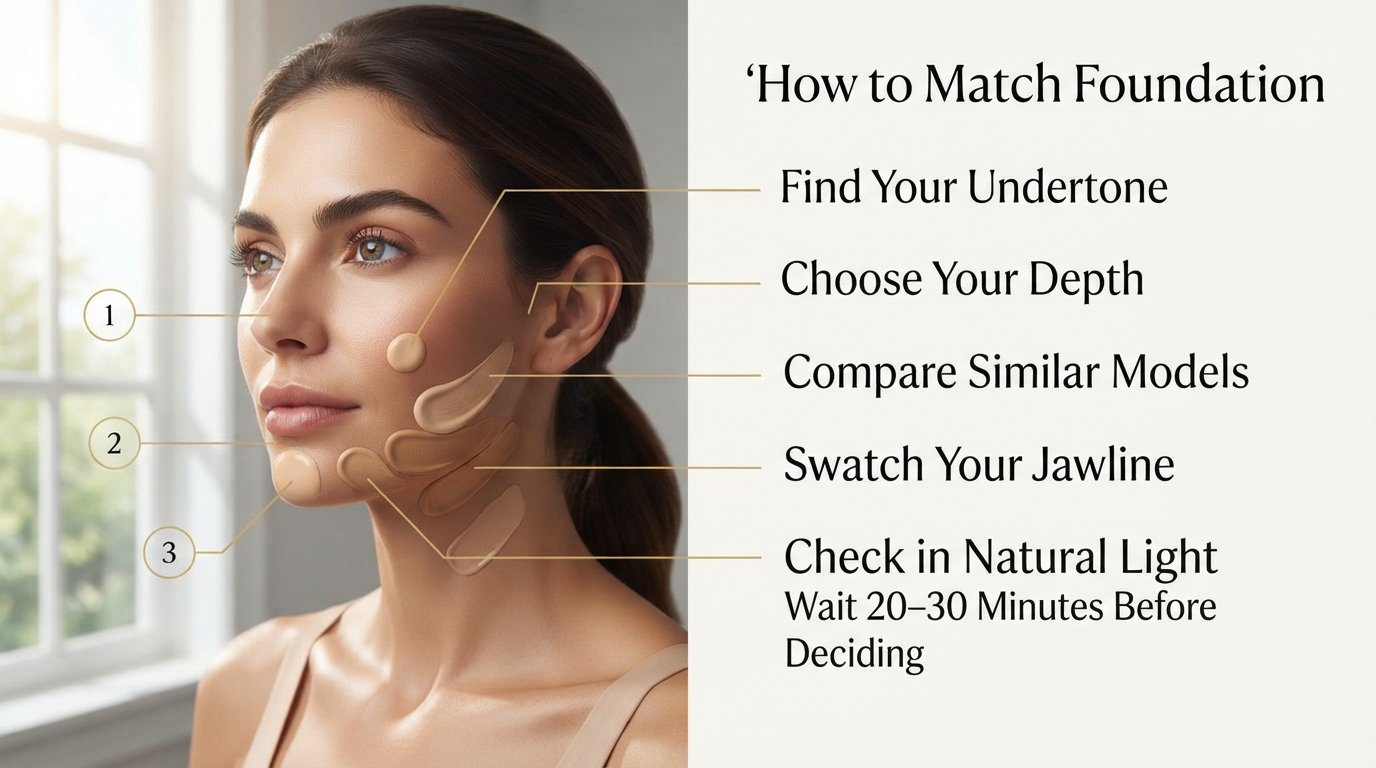
- Identify your undertone first. Warm (yellow-golden), cool (pink-rosy), or neutral (balance of both). This is the most important variable — look for the W, C, or N family in the brand’s chart.
- Find your depth within that undertone family. Most brands have 3–5 depth options within each undertone. Start at the middle and adjust.
- Check the shade chart against similar skin tones. Many brands provide model photos alongside shades — look for a complexion that resembles your own rather than relying only on the chart number.
- Order two adjacent shades if shopping online. For new brands, getting one shade in each direction from your best guess allows you to swatch both and return the wrong one.
- Test at the jawline in natural light. Not the hand. Not in bathroom lighting. Jawline in outdoor natural light, checked 20–30 minutes after application.
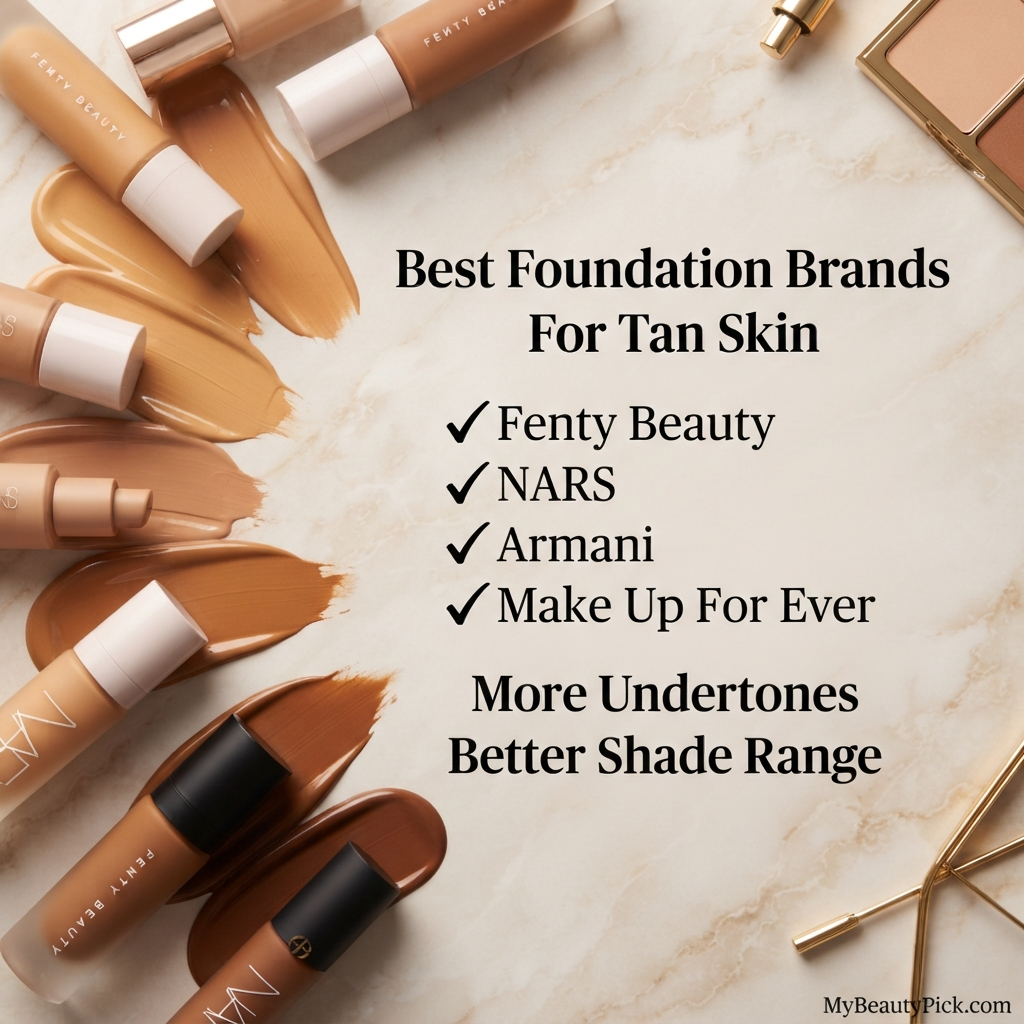
Foundation shade charts consistently under-serve tan complexions. Brands design their shade architectures around the bell curve of their customers, and in most Western markets that bell curve still sits at the lighter end. This means the tan-to-deep range at many brands is compressed — fewer shades with less undertone variety at the depth where tan skin actually sits. The brands with the most thoughtful shade architecture at tan depths are Fenty Beauty, NARS, Armani, and Make Up For Ever. If a brand’s “medium” range looks too light for your skin on the chart, trust that read and look at their deeper options before testing.
Frequently Asked Questions
How do I read a foundation shade chart?
Numbers typically indicate depth (lower = lighter, higher = deeper). Letters indicate undertone — W for warm, C for cool, N for neutral, O for olive. Some brands combine both: 1W is the lightest warm shade, 4N is medium neutral. Identify your own undertone first, then find the number in that undertone category that matches your depth. Test 2–3 options at the jawline in natural daylight and check after 20–30 minutes for the accurate result.
How do I find my Armani Luminous Silk shade?
Armani Luminous Silk uses numbers from 0 to 16 with half-numbers for in-between shades. For tan and warm skin, shades 5–9 cover most of the medium-to-tan range. The undertone is implied by position rather than a letter code. The most reliable match is at a counter or through the brand’s in-store colour-matching service — the online finder isn’t precise enough for undertone nuance at the tan depth, and the shade numbering doesn’t correspond to other brand systems.
How does the IL Makiage foundation shade range work?
IL Makiage uses numbers from 0 to 115+ with an online quiz as their primary matching method. The quiz asks about your skin tone, undertone cues, how you tan, and whether you burn. For tan and warm skin, shades 45–85 typically cover the medium-to-tan range. The quiz accuracy is better at medium depths than at deeper tan — ordering two adjacent shades on your first purchase is advisable to find the right match.
What do the letters mean in NYX foundation shades?
NYX uses different systems across ranges. The Can’t Stop Won’t Stop line uses descriptive shade names without letter codes. Some NYX ranges use W (warm), N (neutral), C (cool) designations similar to L’Oréal. Because the system isn’t consistent across all NYX foundation products, the most reliable approach is reading the undertone description provided alongside each shade name rather than relying on the name or number alone.