

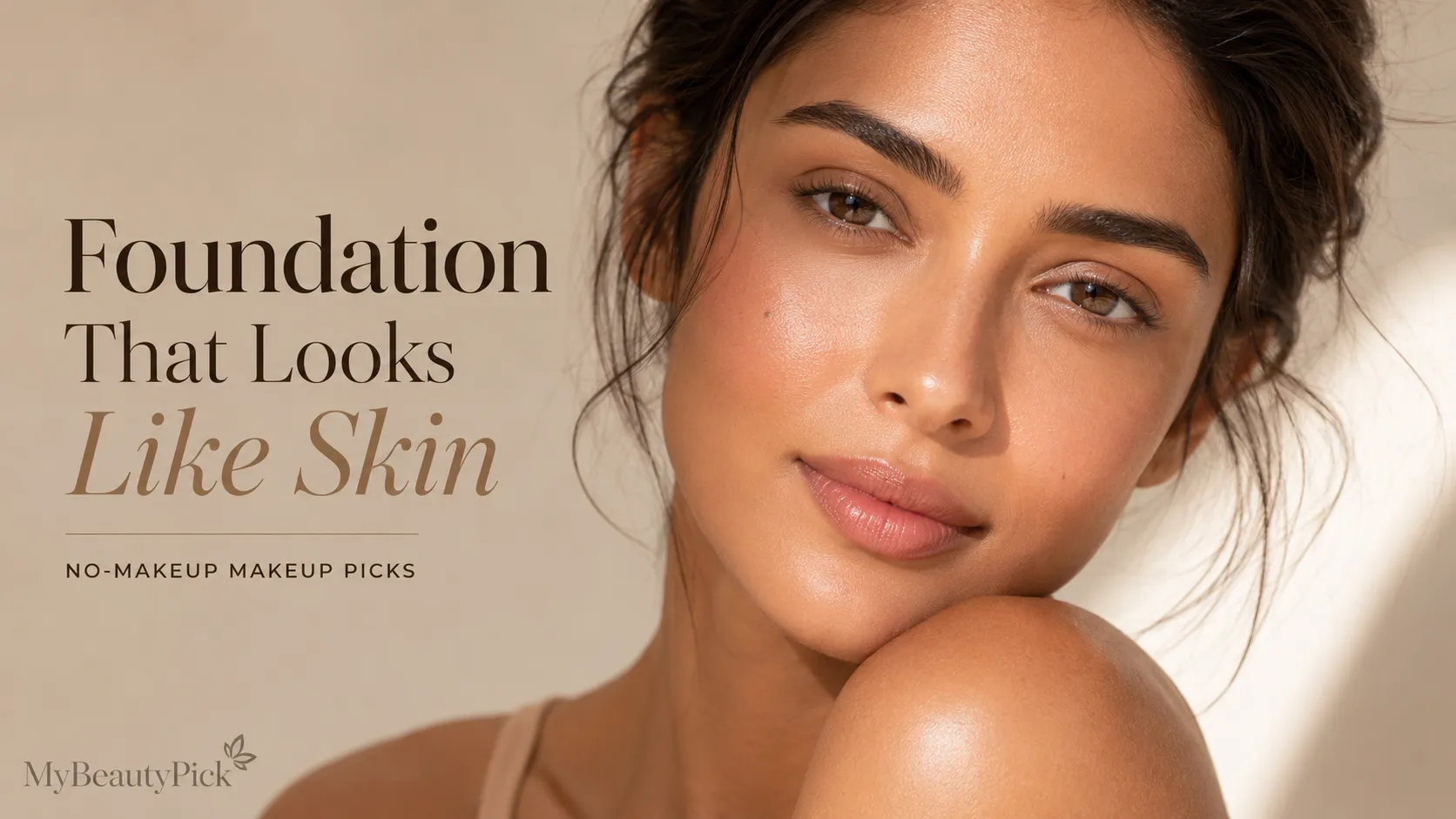
The no-makeup makeup look is probably the most commonly described aesthetic in beauty — and also the most commonly misunderstood in terms of what achieves it. It doesn’t mean no foundation. It means foundation that looks like skin. The specific quality that makes this possible is a formula where the pigment particles are fine enough and the finish natural enough that, at normal viewing distance, the coverage is invisible. What’s visible is even, healthy skin — which is exactly the goal.
- Foundation looks like skin when: applied thinly enough to let natural skin texture show, precisely matched in undertone and depth, finished with a satin or natural luminous quality rather than flat matte or very dewy.
- Too much product is the most common cause of foundation looking like makeup. Less product always reads more naturally.
- Light-to-medium buildable coverage gives the most reliable natural-skin result.
- A damp sponge applied with pressing motions gives a more skin-like finish than a brush on most skin types.
- On tan skin, a natural or warm-luminous finish maintains the skin’s natural warmth and depth — flat matte removes it.
What Makes Foundation Look Like Skin
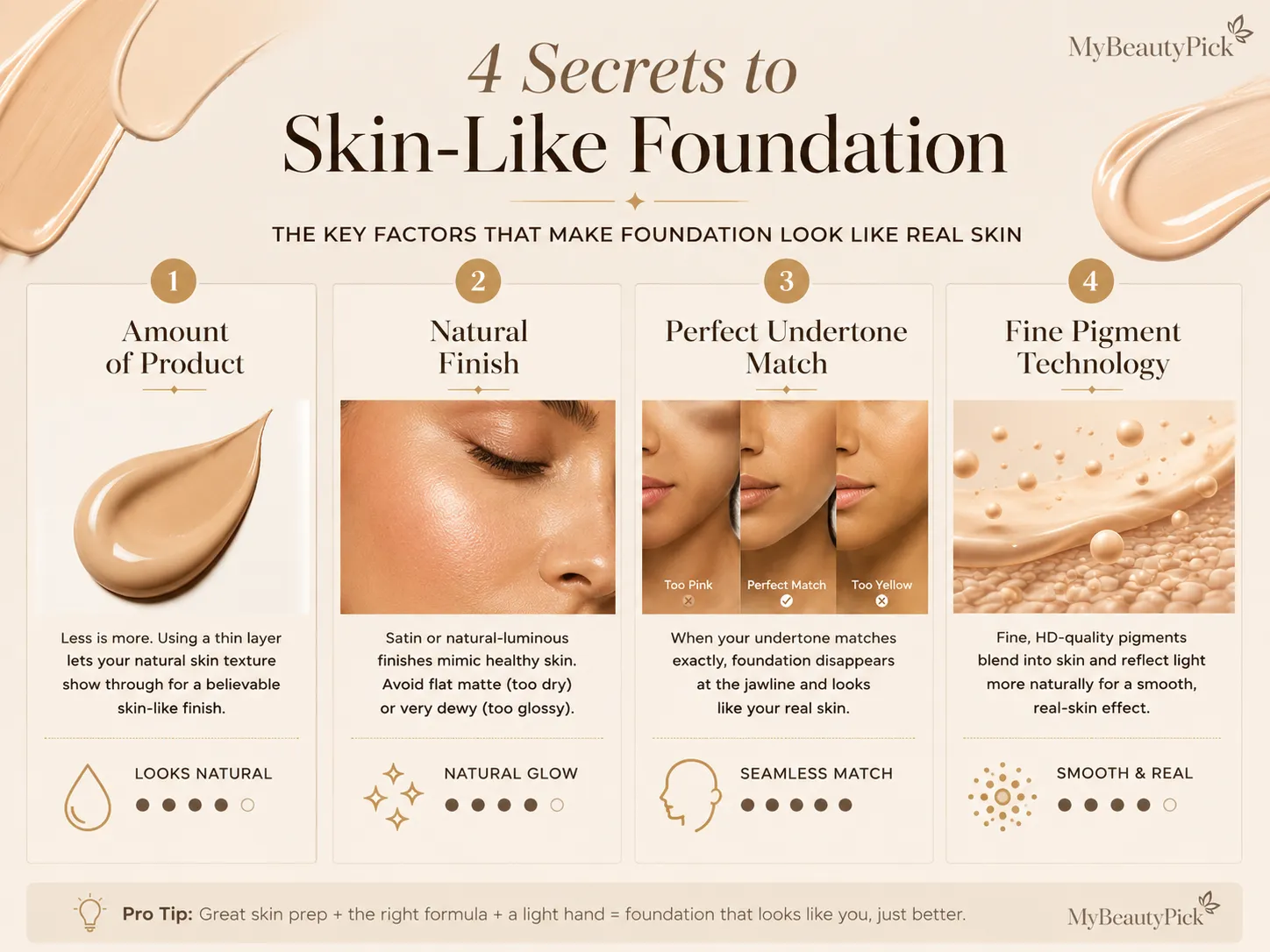
Four specific things determine whether foundation reads as skin or as makeup:
Amount of product. Foundation applied in an amount that leaves the skin’s natural texture slightly visible through it reads as skin. Foundation applied thickly enough to mask all texture reads as coverage. The threshold is lower than most people think — often half the amount people typically use gives a far more natural result.
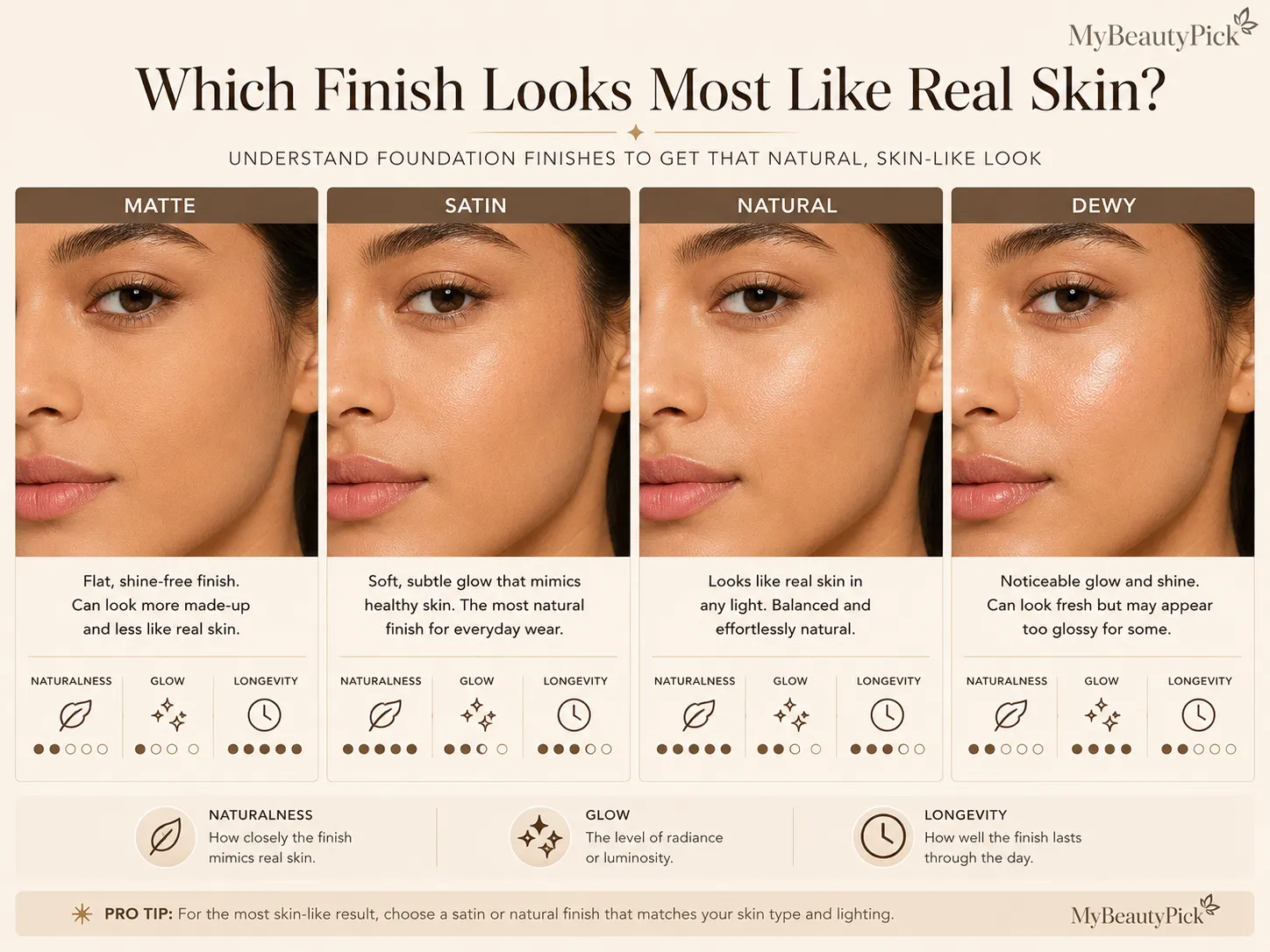
Finish type. Satin and natural-luminous finishes read as healthy skin in all lighting. Flat matte reads as uniform coverage that doesn’t match how real skin looks in light. Very dewy reads as glossy rather than natural. The target is the finish your skin naturally produces on a good skin day.
Undertone precision. A perfectly applied foundation that’s slightly wrong in undertone still looks like makeup because the face and neck are different colours. When the undertone matches exactly, the coverage becomes invisible at the jaw — which is what makes it read as skin.
Pigment particle size. HD formulas and some serum foundations use finely-milled pigment that reads as smooth skin at close range. Standard pigment particles can create micro-texture on the skin surface that’s perceptible at close distance. The difference matters most in close-up photography and at close personal distances.
Best Foundation That Looks Like Skin
Giorgio Armani Luminous Silk Foundation
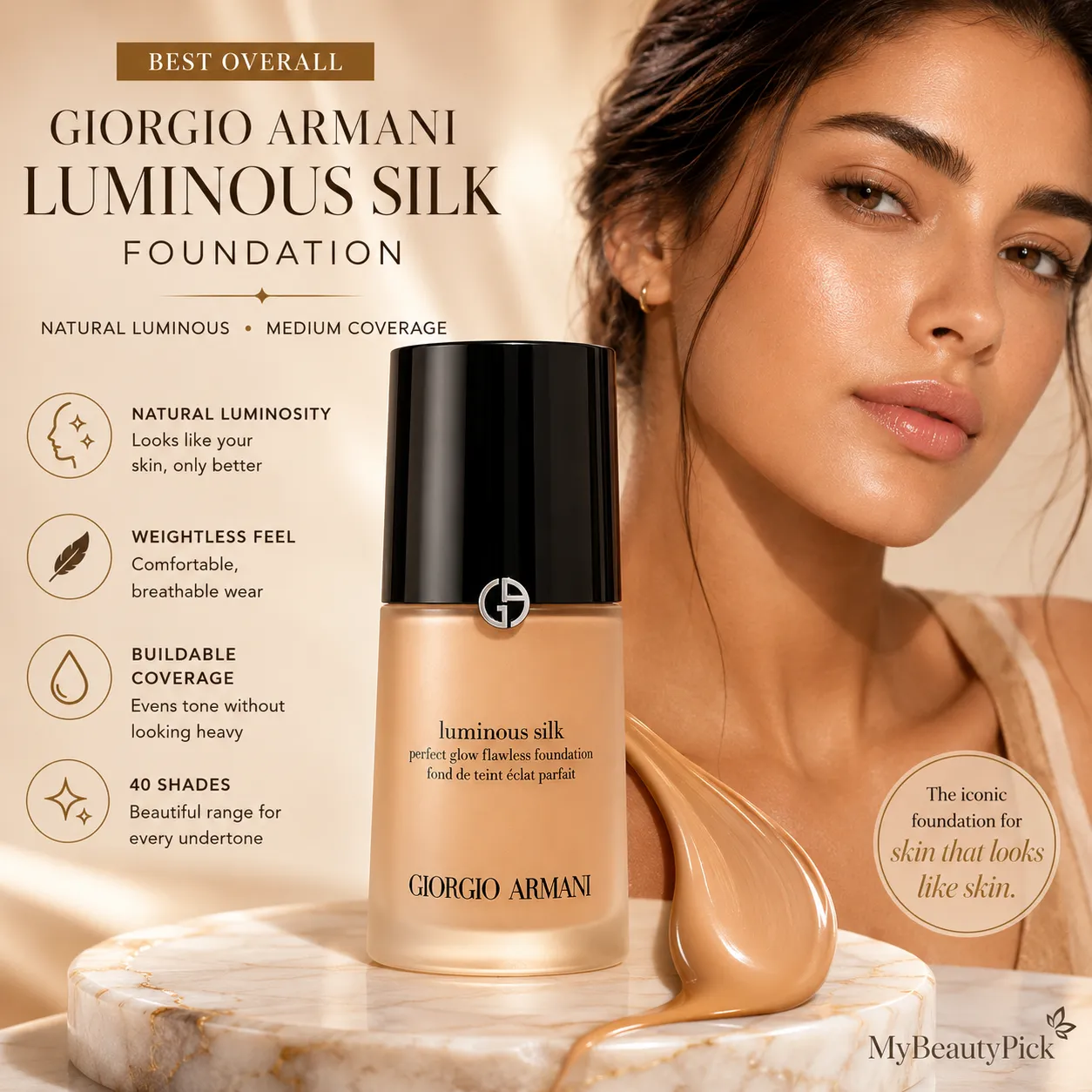
The Luminous Silk is the most cited “your skin but better” foundation for a reason that’s simple: the finish is indistinguishable from very good skin in natural light. The micro-fil technology creates light reflection that reads as internal radiance rather than applied product. The medium coverage is sufficient for most everyday needs without being heavy enough to read as obviously covered.
On tan and warm skin, the warm shade options photograph with genuine warmth and dimension that make it consistently one of the most beautiful foundations in natural light photography.
- Most convincing natural-skin finish available
- Natural luminosity looks internal, not applied
- Warm shade options flatter tan complexions
- Light-medium coverage only
- Premium price
- Not for oily skin without primer
Charlotte Tilbury Beautiful Skin Foundation
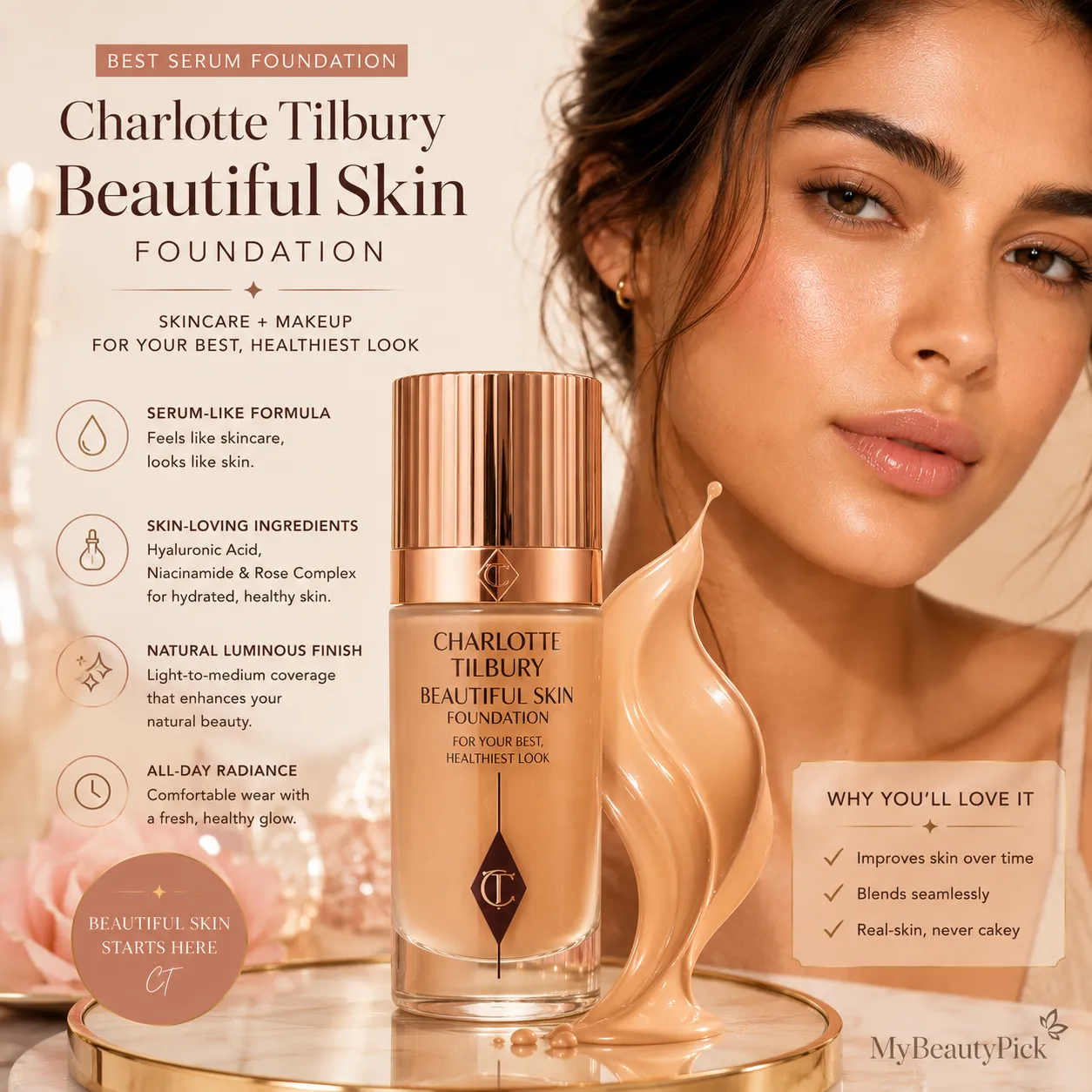
The Beautiful Skin applies and wears like a skincare product — the serum-thin texture and skin-improving actives make it feel more like treating the skin than covering it. The result is a natural, luminous coverage that’s among the hardest to detect. The limitation is the 30-shade range, which undersells the formula for a premium price and leaves a gap at the deeper tan end.
- Most skincare-adjacent application experience
- Hyaluronic acid and niacinamide at meaningful levels
- Natural luminosity on dry and normal skin
- 30 shades only
- Light-medium coverage only
- Premium price for coverage level
Fenty Beauty Eaze Drop Blurring Skin Tint
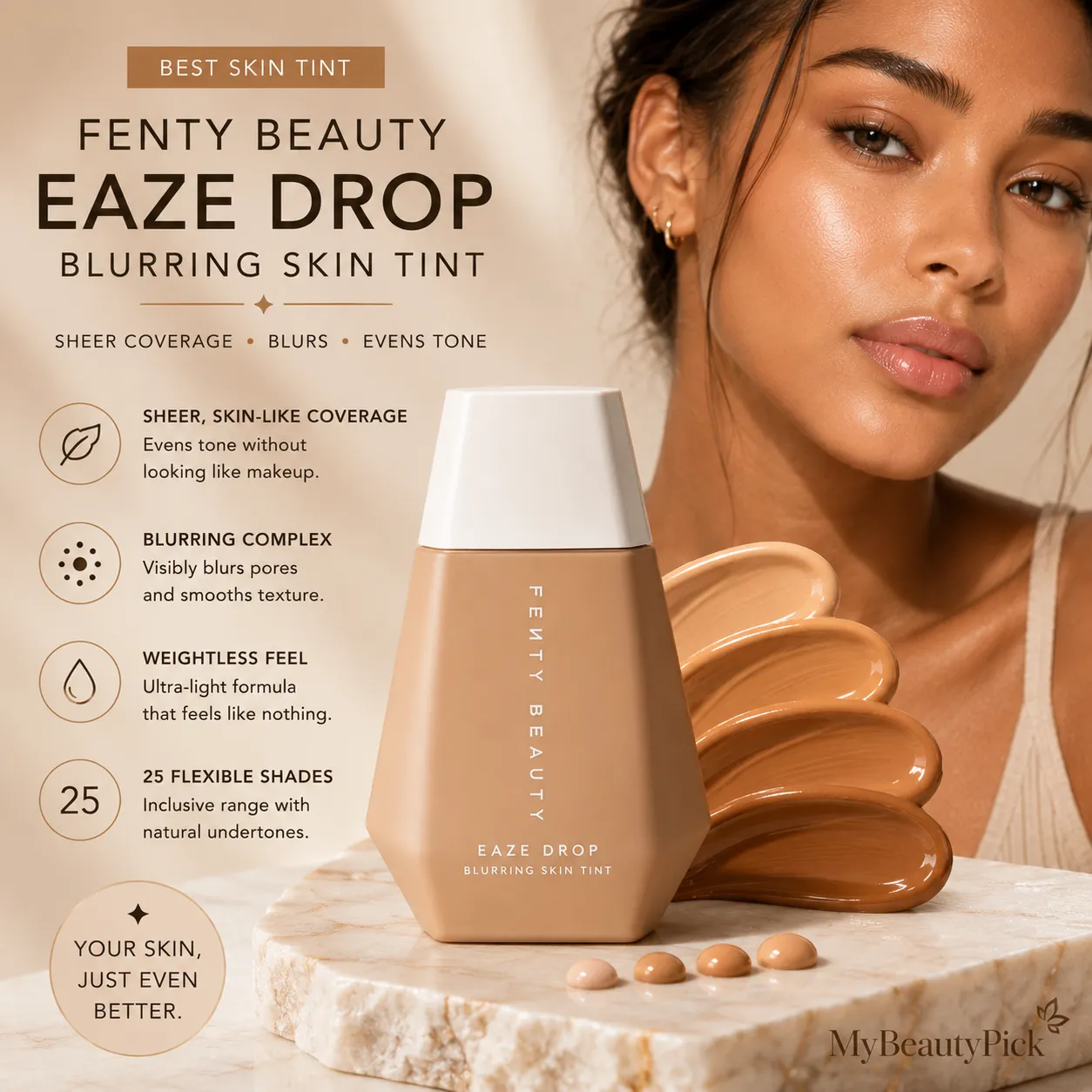
The Eaze Drop sits below true foundation coverage — it’s a skin tint that blurs pores and evens tone rather than covering. On skin that’s in reasonably good condition, it gives the most convincing “I am not wearing foundation” result possible while still providing visible evenness. On tan skin in the warm shade range, it reads as sun-kissed healthy skin rather than base makeup.
- Most undetectable coverage available
- Blurring quality without product feel
- Fenty’s shade range quality extends to skin tints
- Sheer only — doesn’t cover spots or significant discolouration
- Short hold on oily skin
NARS Natural Radiant Longwear Foundation
For those who need more coverage but want a natural result, the NARS Natural Radiant occupies a useful middle ground. Medium-to-full coverage with a finish that reads as very good skin rather than obvious coverage. The radiant quality softens the look of coverage without making it dewy. A workhorse for the no-makeup makeup aesthetic at medium-full coverage levels.
- Natural result at medium-full coverage
- Radiant quality without being dewy
- 40 shades with warm options for tan skin
- Less natural-skin look than lighter coverage alternatives
- Premium price
How to Apply Foundation So It Looks Like Skin
- Use half the amount you think you need. Load a damp sponge sparingly. The amount of product is the single biggest lever on whether foundation looks natural or applied.
- Press — don’t swipe. Swiping deposits product unevenly and creates visible application lines. Pressing with a damp sponge melds the formula into the skin surface.
- Start in the centre and let it fade outward. Heavy coverage in the centre of the face, naturally thinning toward the hairline and jaw, mimics how skin actually looks — more even in the centre, naturally varying toward the edges.
- Add concealer only where actually needed. Foundation plus targeted concealer on specific areas looks more natural than heavy all-over coverage.
- Check in natural outdoor light. Foundation that looks natural indoors often looks more obviously applied in daylight. Check before leaving home.
On warm tan skin, the natural luminosity of a well-matched foundation in natural light produces a particularly rich, warm glow that reads as naturally healthy rather than as product. The no-makeup makeup look on warm complexions is often more striking than on fairer skin because the natural warmth and depth of warm melanin-rich skin is itself luminous and dimensional when it’s just evened rather than covered. Choose a warm-matched shade and a natural or satin finish — and use half the product you’d normally use. The skin’s own quality does the rest.
Frequently Asked Questions
What makes foundation look like skin rather than makeup?
Foundation looks like skin when applied in a thin layer that lets natural skin texture show through slightly, uses fine pigment particles that don’t read as product at normal viewing distance, has a natural finish (satin or luminous rather than flat matte), and precisely matches the skin’s undertone and depth so there’s no visible colour difference at the jaw. Too much product is the most common cause of foundation looking like makeup rather than skin.
What is a skin tint foundation?
A skin tint is a sheer, lightweight base product between a tinted moisturiser and a light-coverage foundation. Coverage is intentionally minimal — it evens tone slightly without masking natural skin characteristics. The result reads as very healthy, natural skin rather than foundation. Most flattering when the skin is in good condition without significant correction needs.
What is a “your skin but better” foundation?
“Your skin but better” describes foundations that enhance the skin’s natural appearance without creating a visibly made-up look. These typically sit at light-to-medium coverage with a natural luminous or satin finish, often contain skincare actives, and use fine pigment particles that read as skin rather than product. Armani Luminous Silk and Charlotte Tilbury Beautiful Skin are among the most cited examples.
Can full-coverage foundation look like skin?
Yes — applied correctly, full-coverage foundation can look like skin. Apply in a thin layer with a damp sponge, build only where specifically needed with concealer rather than a second all-over layer, choose a natural-matte or satin finish rather than flat matte, and ensure the shade precisely matches undertone and depth. A thin, precisely matched layer of full-coverage foundation reads as very even, healthy skin. A thick, uniform layer reads as coverage.