

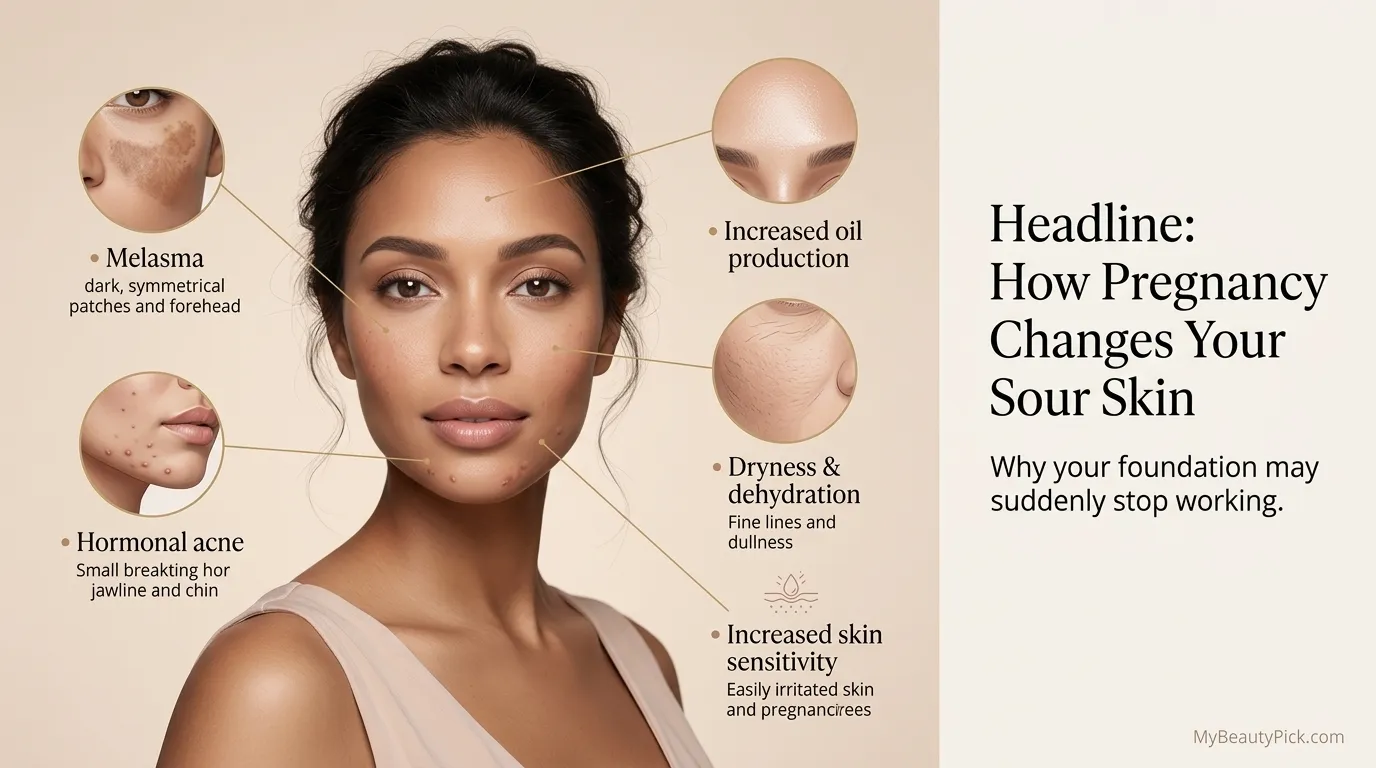
Pregnancy changes everything about how your skin behaves and what it tolerates. Hormonal shifts can bring melasma, hormonal acne, and sudden sensitivity in skin that was previously calm. At the same time, the ingredients list on your foundation suddenly matters in a way it probably didn’t before. This guide covers which foundation ingredients to avoid during pregnancy and why, what to use instead, and which specific formulas work well for the most common pregnancy skin concerns.
This article is informational and is not a substitute for medical advice. Guidance on ingredient safety in pregnancy varies between healthcare providers and continues to evolve as new research emerges. Always consult your OB-GYN or dermatologist with specific questions about products you’re unsure about. When in doubt, simpler ingredient lists are lower risk.
What Pregnancy Does to Your Skin (And Why Your Foundation Needs Change)
The skin changes of pregnancy are driven primarily by rising oestrogen and progesterone levels, increased blood volume, and a shift in immune function. These aren’t minor adjustments. Skin that was previously stable can become reactive, oily, dry, or prone to new concerns it never showed before.
The most common skin changes during pregnancy and how they affect foundation needs:
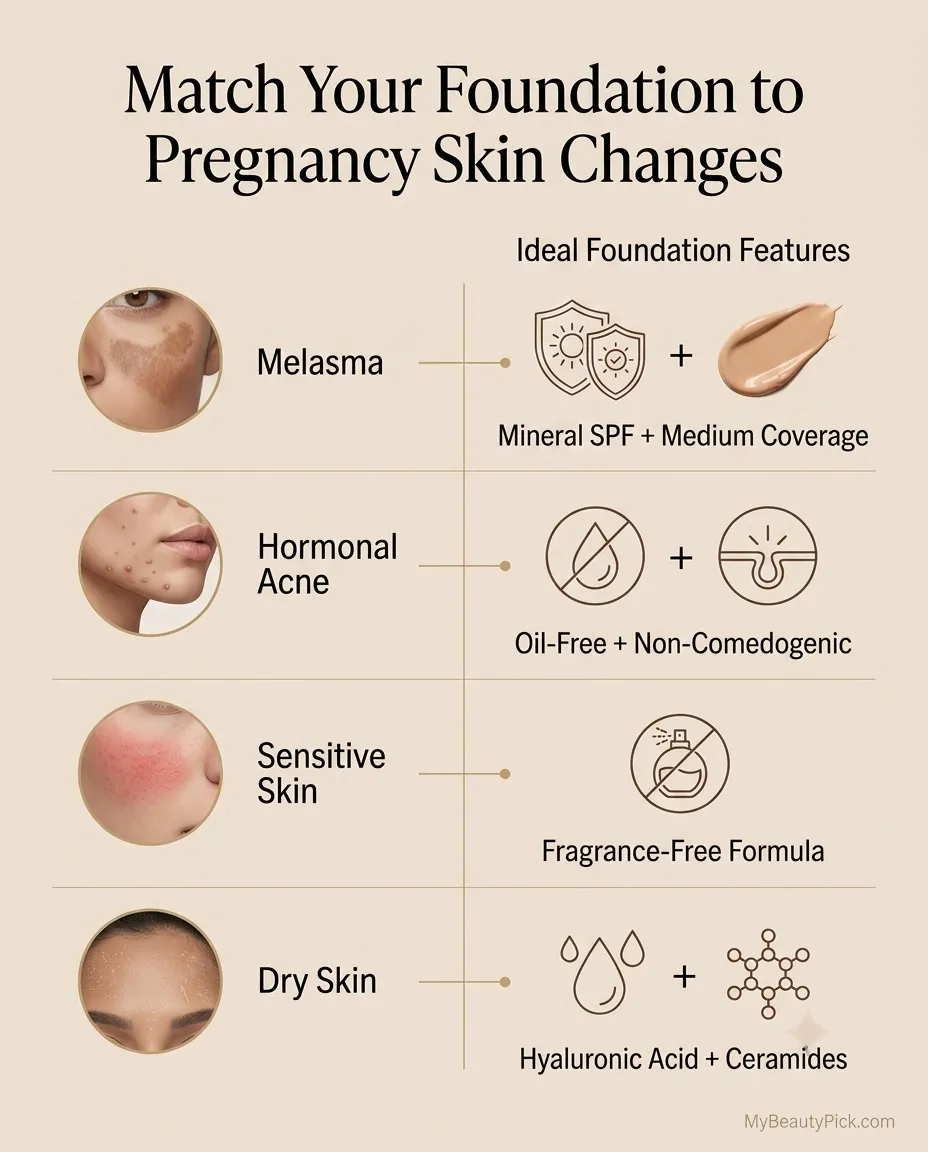
- Melasma (the “mask of pregnancy”). Hormonal shifts stimulate excess melanin production, creating symmetrical patches of hyperpigmentation on the forehead, cheeks, and upper lip. Foundation coverage becomes more important for many people during pregnancy than before it. Crucially, UV exposure darkens melasma significantly, making SPF non-negotiable, and chemical sunscreen filters are on the ingredients-to-avoid list, which pushes the choice toward mineral SPF foundations.
- Hormonal acne. Elevated progesterone increases sebum production, particularly in the first trimester. For skin that was previously clear, sudden breakouts during pregnancy create a coverage need. The problem: most acne-focused foundations contain salicylic acid, which is on the pregnancy avoidance list, meaning acne-prone pregnancy skin needs non-comedogenic formulas without active acne-fighting ingredients.
- Increased sensitivity. The immune adjustments of pregnancy can make previously tolerated ingredients suddenly irritating. Fragrances, alcohol, and certain preservatives that caused no reaction before may now cause stinging, redness, or contact dermatitis. This alone justifies switching to fragrance-free, minimal-ingredient formulas during pregnancy.
- Skin “turning over more quickly.” During pregnancy, the skin can accumulate dead skin and sometimes require more foundation, particularly as hormonal changes affect the rate of cell renewal. A good exfoliation routine (with pregnancy-safe ingredients) paired with a hydrating foundation reduces the foundation-clinging-to-dry-patches issue many pregnant people experience.
Pregnancy-Safe Foundation: Ingredients to Avoid and Why
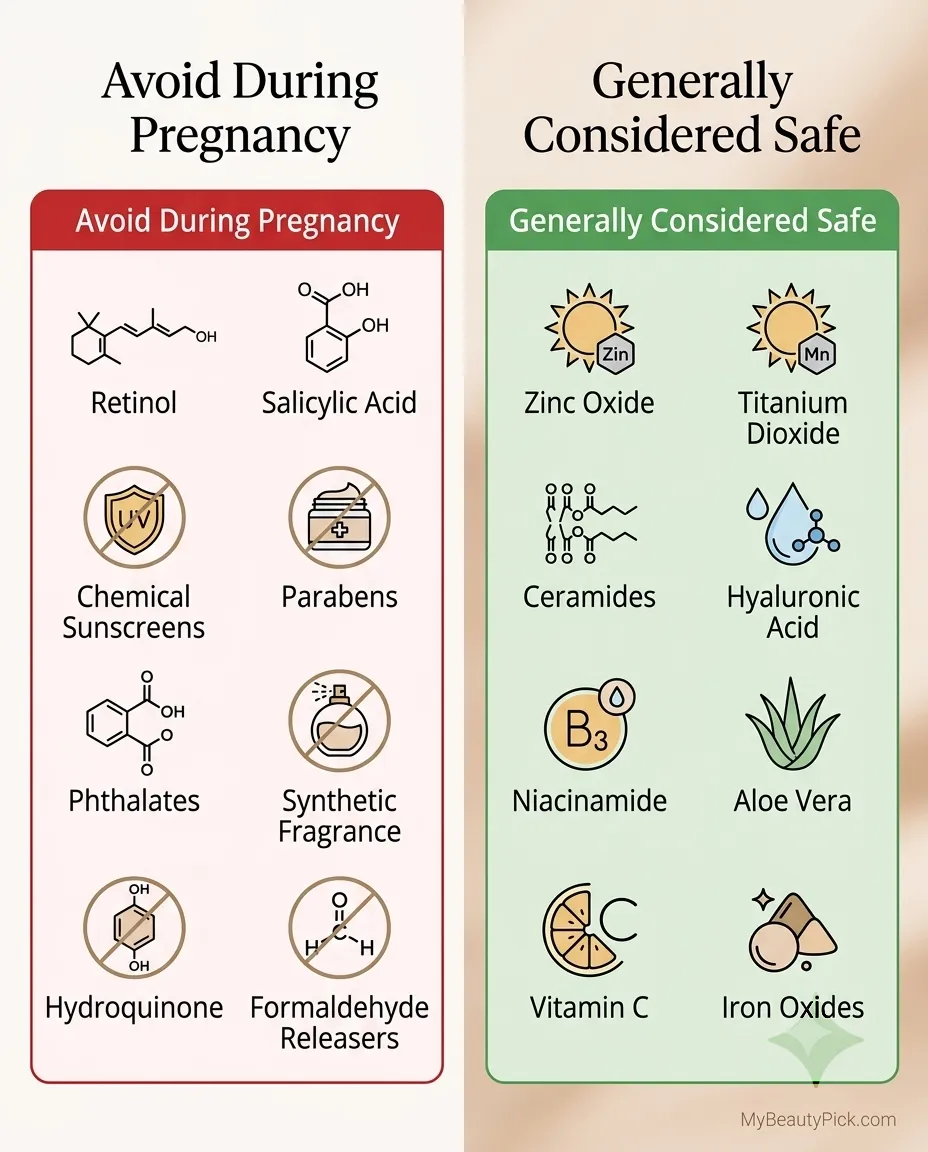
The ingredient avoidances in this category aren’t arbitrary. Each one is flagged for a specific biological mechanism that creates risk during pregnancy. Understanding the reason helps you make sensible decisions when you encounter ingredients not on any list, and avoid the opposite error of assuming everything unlisted is automatically safe.
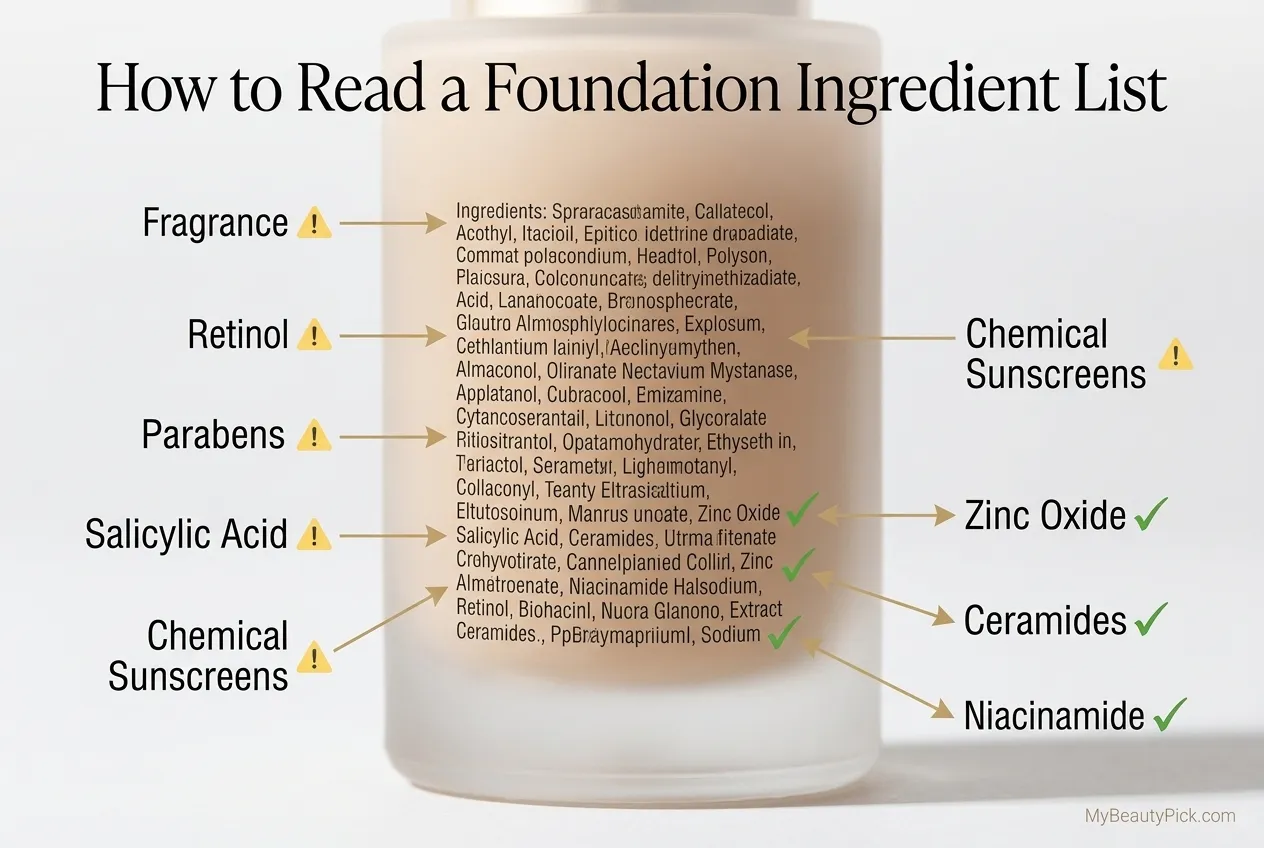
- Retinol and all retinoids (retinyl palmitate, retinyl acetate, retinoic acid, tretinoin, retinaldehyde) — vitamin A derivatives linked to fetal malformation at high doses; topical absorption is lower than oral, but dermatologists advise avoiding entirely as a precaution
- Salicylic acid above 2% — high-dose topical salicylates have been associated with risks; low-concentration (under 2%) occasional use is considered low-risk by most dermatologists, but daily foundation with SA is best avoided; check the concentration on the label
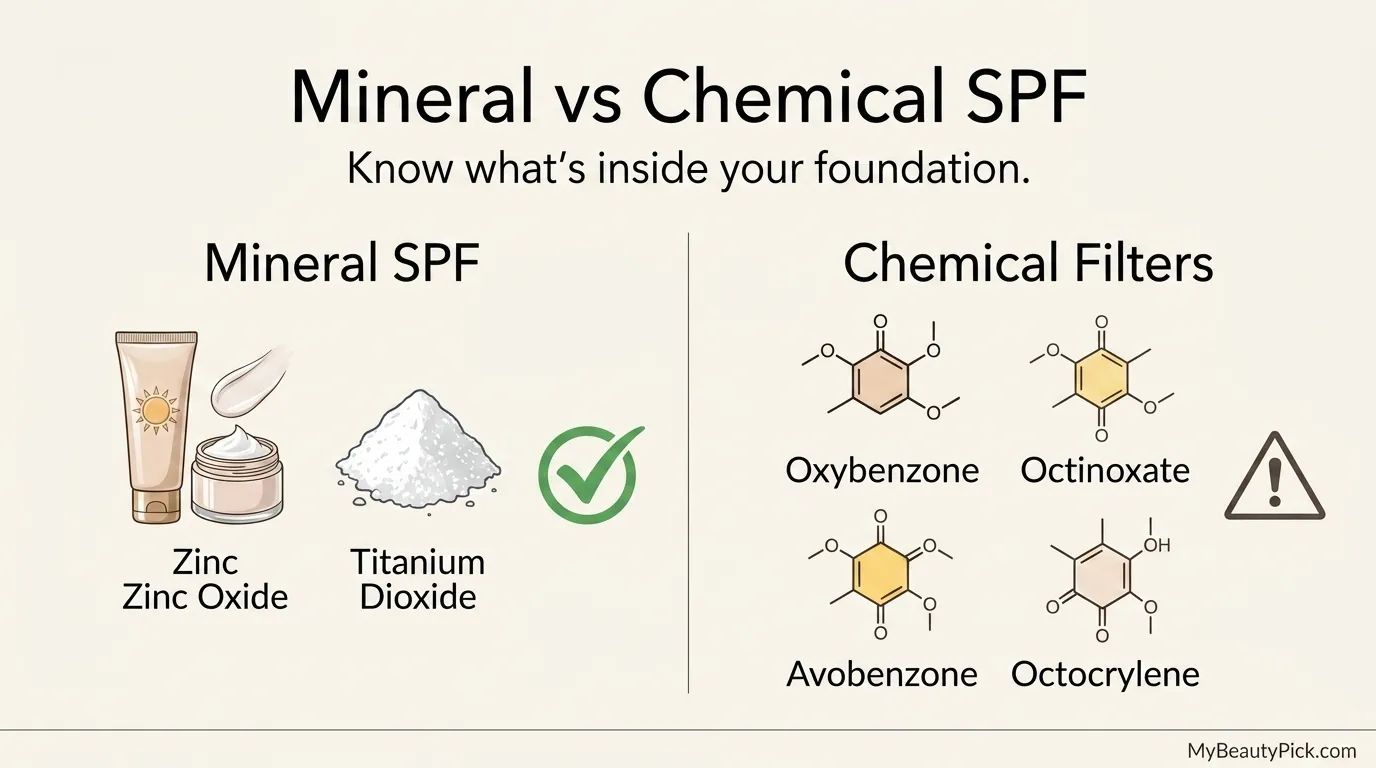
- Chemical sunscreen filters — oxybenzone, avobenzone, octinoxate, octocrylene; oxybenzone in particular has documented endocrine-disrupting properties; mineral filters (zinc oxide, titanium dioxide) are the recommended alternative
- Parabens (methylparaben, propylparaben, butylparaben, isopropylparaben) — preservatives with documented oestrogen-mimicking activity; passed to the fetus; avoid across all personal care products during pregnancy
- Phthalates — plasticisers sometimes hidden within “fragrance”; associated with reproductive system disruption; impossible to identify specifically since they’re rarely labelled individually
- Synthetic fragrance / parfum — umbrella term that can contain dozens of unlisted compounds including phthalates, musks, and hormone disruptors; the entire category is flagged during pregnancy
- Formaldehyde-releasing preservatives (DMDM hydantoin, diazolidinyl urea, imidazolidinyl urea) — carcinogenic at higher exposures; classified as skin sensitisers; avoid in products worn all day
- Hydroquinone — skin-lightening ingredient sometimes found in tinted products or foundations targeting hyperpigmentation; high systemic absorption makes it a category to avoid during pregnancy
- Zinc oxide and titanium dioxide — mineral sunscreen filters that are safe during pregnancy; zinc oxide is also anti-inflammatory, beneficial for hormonal acne and sensitivity
- Hyaluronic acid — hydrates without systemic absorption risk; universally considered safe during pregnancy; addresses the dryness and dehydration common in the third trimester
- Ceramides — barrier-replenishing lipids that support the compromised skin barrier of pregnancy-sensitised skin; completely safe
- Niacinamide (vitamin B3) — reduces redness, minimises pore appearance, calms hormonal breakouts; safe at cosmetic concentrations during pregnancy
- Glycerin — gentle humectant with no systemic concerns; excellent in hydrating pregnancy-safe foundations
- Aloe vera — soothing and anti-inflammatory; safe during pregnancy in topical cosmetic use
- Iron oxides — the mineral pigments that create colour in foundations; safe during pregnancy; do not absorb systemically
- Vitamin C (L-ascorbic acid) — antioxidant benefit; safe during pregnancy; helpful for pregnancy melasma brightening over time
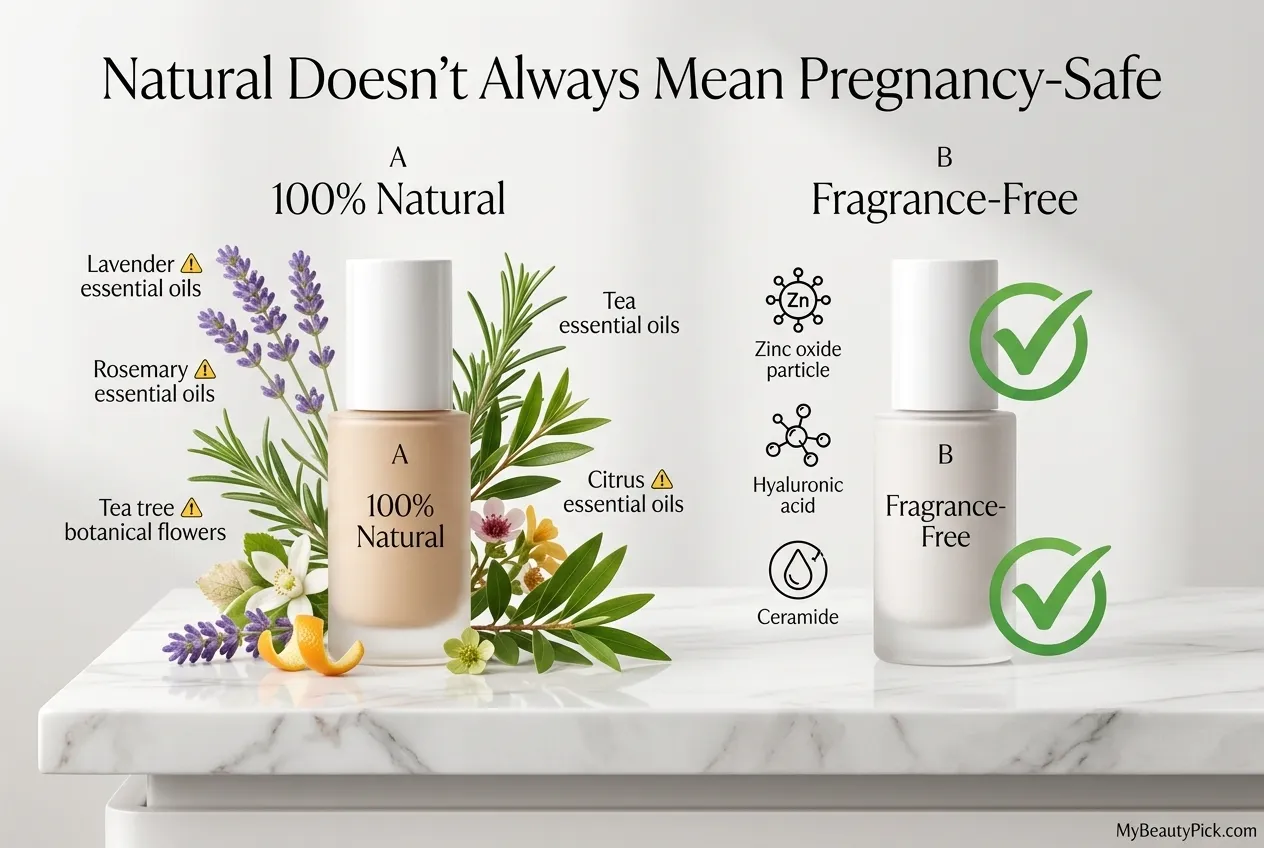
Not all natural ingredients are safe during pregnancy. Several botanical extracts used in “natural” and “organic” foundations carry specific pregnancy concerns. Essential oils including lavender, tea tree, citrus oils, rosemary, and clary sage are absorbed transdermally and some have documented effects on uterine contractions or hormonal signalling. High concentrations of these in daily-wear foundation represent cumulative exposure. Herbal extracts including chamomile, arnica, and certain adaptogens have insufficient safety data for pregnancy use in cosmetics. When choosing a “natural” pregnancy-safe foundation, fragrance-free still applies, even if the fragrance source is botanical.
How to Use the EWG Skin Deep Database
The Environmental Working Group’s Skin Deep database (ewg.org/skindeep) is the most practical tool for checking specific products during pregnancy. Every product in the database receives a hazard score from 1 (lowest concern) to 10 (highest concern) based on the known and potential health concerns of its ingredients.
How to use it effectively: search the specific product name or individual ingredients you’re unsure about. Look for a score of 1-3 for daily-wear pregnancy makeup. Be aware that some very clean-looking mineral foundations score slightly higher due to silica or bismuth oxychloride (flagged for inhalation risk in loose powder form, not relevant to cream or pressed formulas). Filter for your specific concern — reproductive toxicity, allergens, or endocrine disruption — to see the exact flags relevant to pregnancy.
Best Pregnancy-Safe Foundations: Tested Picks
“Clean-certified ingredients, aloe and squalane for pregnancy-sensitised skin, and a formula explicitly free of retinoids, parabens, synthetic fragrance, and chemical filters.”
- Coverage: Sheer-to-light buildable; natural dewy finish
- Key ingredients: Aloe vera, squalane, hyaluronic acid, vitamin B5; no parabens, no synthetic fragrance, no chemical sunscreen filters
- SPF: SPF 40 zinc oxide (mineral only) in the serum tint version
- Shade range: 30 shades
- EWG rating: 1-2 (low hazard)
- Best for: Mild pregnancy skin concerns; mostly clear skin wanting a skin-forward base with mineral SPF
Why it works during pregnancy: The aloe and squalane base soothes the heightened skin reactivity common in the first trimester without any ingredients flagged for pregnancy. The mineral SPF 40 addresses the melasma-UV connection directly — preventing UV exposure from deepening existing pigmentation — without using chemical filters. The coverage is sheer, which is more forgiving on the skin texture changes that come with pregnancy.
“Five ingredients. No parabens, no synthetic fragrance, no chemical filters, no retinoids. The most ingredient-minimal foundation available, and one of the most trusted picks in pregnancy communities.”
- Coverage: Buildable sheer to full; natural finish
- Key ingredients: Mica, bismuth oxychloride, titanium dioxide, zinc oxide, iron oxides
- SPF: SPF 15 mineral
- Shade range: 30 shades
- Best for: Sensitive, reactive, or acne-prone pregnancy skin; those who want the simplest possible ingredient list; fungal-acne-safe needs
Why it leads for pregnancy: With only five ingredients — all minerals — there is almost nothing in this formula that could be flagged during pregnancy. The zinc oxide provides anti-inflammatory benefit for hormonal breakouts alongside sun protection, and the loose powder format naturally avoids the emulsifiers, preservatives, and alcohol that create most of the ingredient concerns in liquid foundations. bareMinerals Original Loose Powder Foundation is consistently recommended by dermatologists for pregnancy use and features in almost every professionally curated pregnancy-safe foundation list.
“Mineral-only SPF 30, medium coverage, and dermatologist-used in clinical melasma management — the most clinically appropriate formula for pregnancy melasma.”
- Coverage: Medium; natural matte finish
- Key ingredients: Zinc oxide and titanium dioxide (mineral SPF 30 only); ceramides, peptides; no chemical filters; fragrance-free
- Best for: Pregnancy melasma; hormonal redness; sensitive skin that reacts to chemical UV filters
Why it’s the melasma pick: Melasma triggered or worsened by pregnancy is directly driven by UV exposure stimulating melanin-producing cells. Without consistent, daily mineral SPF protection, covering melasma with foundation is cosmetic management only — the underlying pigmentation deepens with each unprotected UV exposure. Colorescience provides mineral-only broad-spectrum SPF 30 in a medium-coverage formula that conceals existing pigmentation while actively preventing it from worsening. This dual function makes it meaningfully more practical for pregnancy melasma than a foundation with no SPF.
“NEA Seal of Acceptance, mineral SPF 30, no parabens, no fragrance, no chemical filters — and a formula specifically created for reactive, sensitive, and breakout-prone skin.”
- Coverage: Light-to-medium; natural, skin-like finish
- Key ingredients: Zinc oxide (mineral SPF 30), prickly pear extract, aloe vera, white sage; fragrance-free, alcohol-free, paraben-free
- Certifications: National Eczema Association Seal of Acceptance; clean formulation
- Best for: Hormonal pregnancy acne; sensitive or reactive pregnancy skin; those wanting independent certification of formula safety
Why it works for pregnancy acne without salicylic acid: The challenge with hormonal acne during pregnancy is that salicylic acid — the ingredient most commonly added to acne-focused foundations — is on the pregnancy avoidance list at higher concentrations. Tower 28 addresses breakout-prone skin through a different mechanism: aloe vera reduces inflammation around existing spots, zinc oxide calms reactive skin and provides mild antimicrobial benefit, and the non-comedogenic, oil-free formula avoids the pore-blocking ingredients that trigger new breakouts. It doesn’t treat acne, but it covers it without worsening it.
“Oil-free, non-comedogenic, dermatologist-tested, fragrance-free — the most accessible pregnancy-safe foundation for daily coverage at drugstore price.”
- Coverage: Medium buildable; soft matte finish
- Key ingredients: Oil-free base; non-comedogenic; fragrance-free; no parabens
- Note on salicylic acid: Contains salicylic acid at 0.5% — the lowest available concentration, considered low-risk by many dermatologists for topical daily use, but check with your provider if you’re concerned
- Best for: Hormonal acne during pregnancy; oily pregnancy skin; budget-conscious shoppers
Important note on the salicylic acid: This product contains 0.5% salicylic acid, which puts it in a cautionary zone for pregnancy. Most dermatologists consider very low concentrations of topical SA acceptable for daily use during pregnancy; others advise avoiding entirely as a precaution. If you’re uncertain, choose the bareMinerals or Tower 28 alternatives. If you’ve discussed this with your provider and are comfortable with low-concentration salicylic acid, this formula handles pregnancy hormonal acne better than most non-SA alternatives at the same price point.
Pregnancy Skin Concerns: What Changes and How Foundation Helps
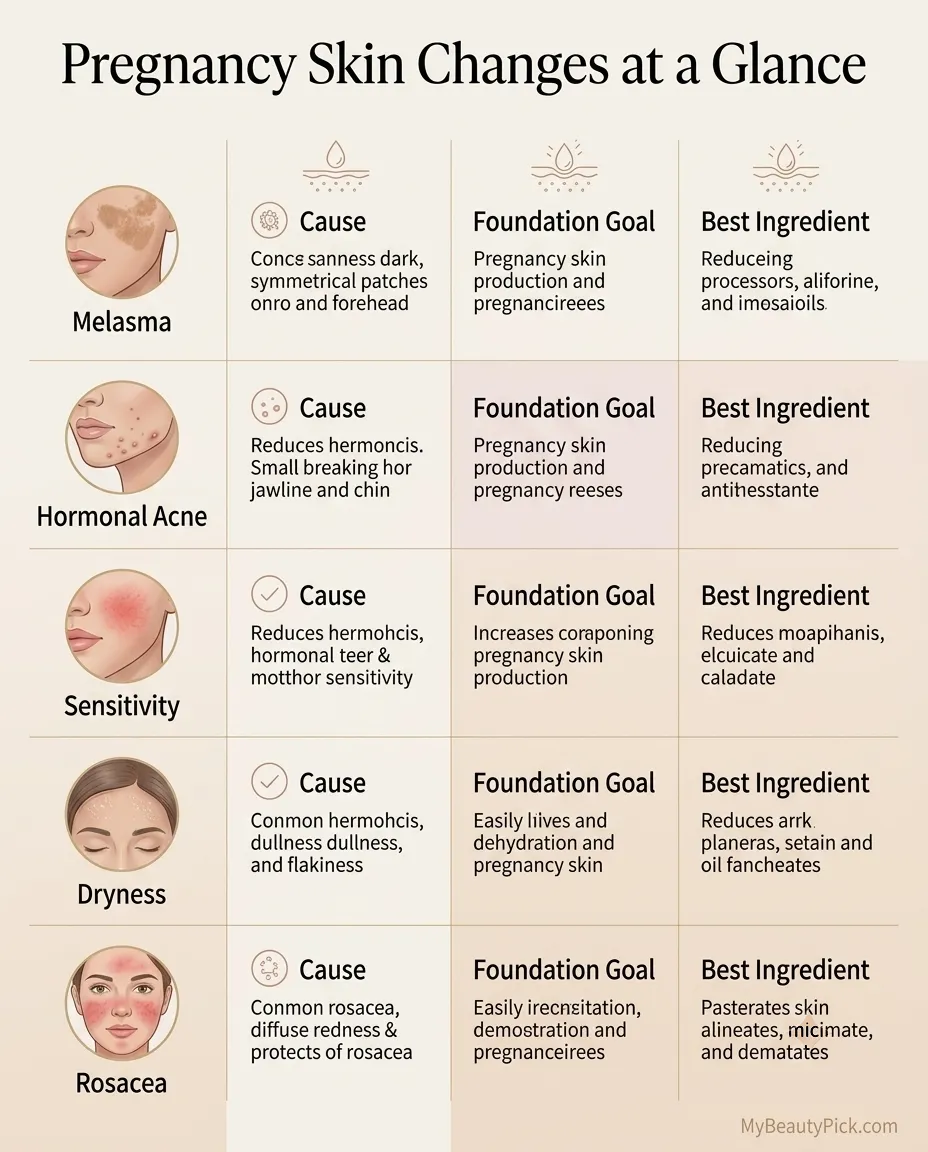
| Pregnancy Concern | Why It Happens | Foundation Approach | Key Ingredient to Seek |
|---|---|---|---|
| Melasma (dark patches) | Oestrogen stimulates melanin overproduction; UV exposure worsens it significantly | Medium-to-full coverage plus mineral SPF 30+; colour correction for deeper patches | Zinc oxide or titanium dioxide SPF; niacinamide for long-term brightening |
| Hormonal acne | Progesterone increases sebum production; first trimester most affected | Non-comedogenic, oil-free medium coverage; avoid salicylic acid unless approved by provider | Zinc oxide (mild antimicrobial), niacinamide, mineral-based formula |
| Increased redness and sensitivity | Immune adjustment and increased skin blood flow; barrier more permeable to irritants | Fragrance-free, minimal ingredient formula; mineral SPF only; gentle application technique | Aloe vera, ceramides, zinc oxide |
| Dryness and tightness | Third trimester skin stretching and moisture redistribution; some antihistamines used in pregnancy also dry skin | Hydrating serum or liquid formula with dewy or natural finish; heavy moisturiser base underneath | Hyaluronic acid, glycerin, squalane |
| Rosacea flares | Increased facial blood flow and vascular dilation are common; some women develop temporary rosacea during pregnancy | Mineral-only foundation; lightweight, cool formulas; avoid heavy occlusive bases that trap heat | Zinc oxide, titanium dioxide, ceramides |
Foundation Safety While Breastfeeding
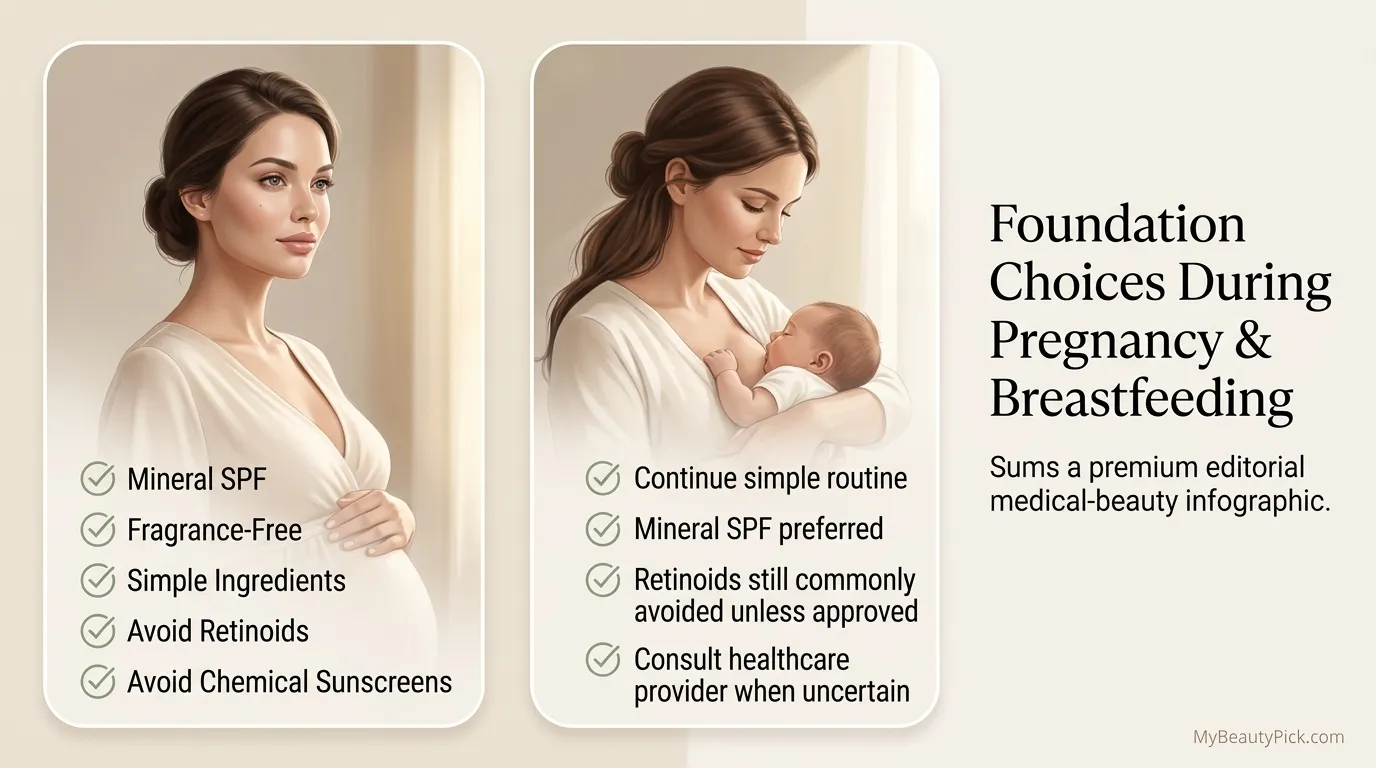
Breastfeeding safety differs from pregnancy safety in one important way: systemic absorption of topically applied ingredients reaches the baby via breast milk rather than placental transfer. The concentration and timing make this a different risk calculation than pregnancy.
Most dermatologists advise continuing pregnancy-safe practices while breastfeeding — particularly avoiding retinoids and high-dose salicylic acid — but Dr. Debra Jaliman, board-certified dermatologist, notes that foundation is generally safe while breastfeeding but recommends mineral-only sunscreen rather than chemical filters if the product contains SPF, and advises erring on the side of caution with retinol until more data is available. If you’ve used a pregnancy-safe foundation throughout pregnancy, continuing with the same formula while breastfeeding is the safest and simplest approach.
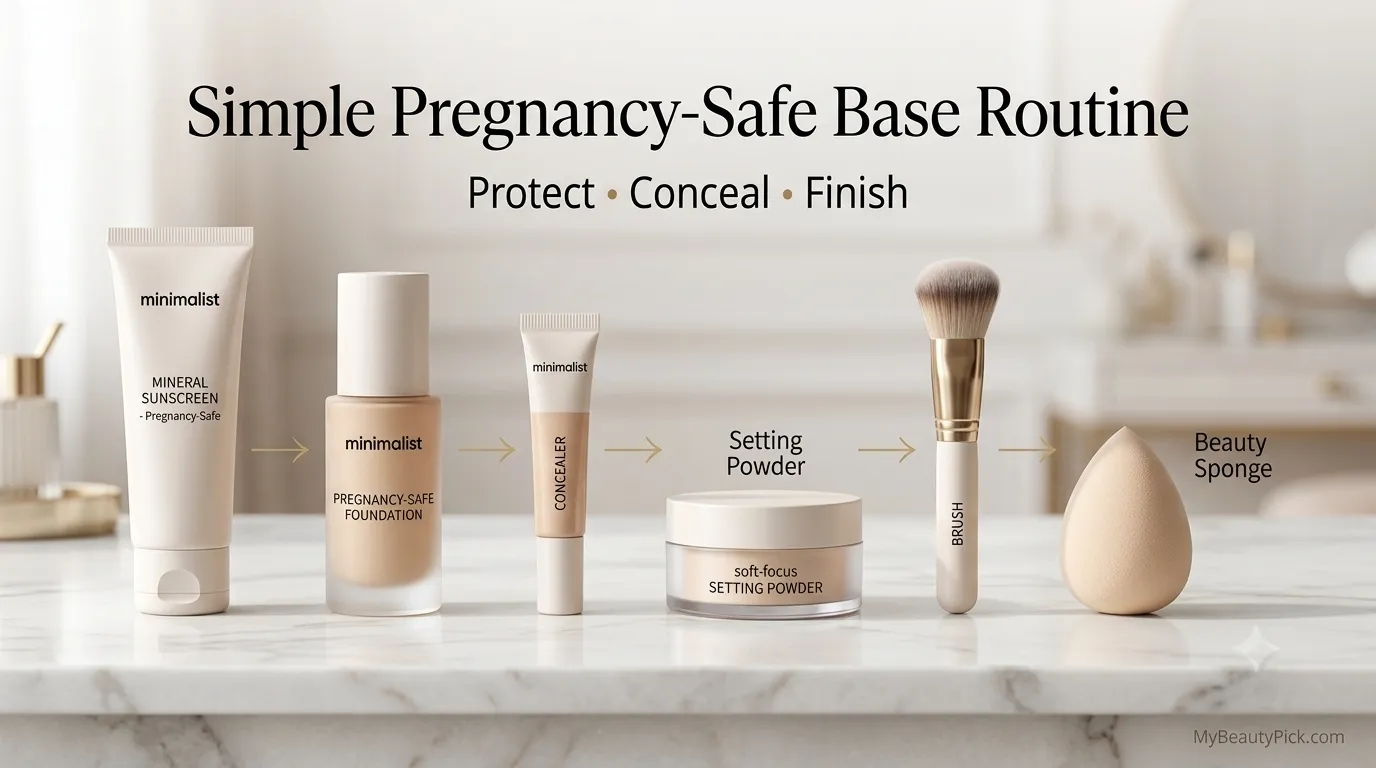
Pregnancy is an opportunity to simplify your makeup routine, not complicate it. Fewer products, shorter ingredient lists, and a routine you can assess quickly all reduce both your ingredient exposure and your decision fatigue. A fragrance-free mineral foundation, a non-comedogenic concealer, and a separate mineral SPF 30+ applied first covers the vast majority of what most people need from a pregnancy base routine.
After pregnancy, you can return to any formulas you choose. The priority now is keeping the ingredient list short enough that you can confidently verify what’s in everything you wear daily.
Frequently Asked Questions
Is it safe to wear foundation during pregnancy?
Yes, with ingredient awareness. Foundation is generally safe during pregnancy. The concern is not foundation as a category but specific ingredients found in some formulas: retinoids, chemical sunscreen filters (particularly oxybenzone), synthetic fragrance (which may contain phthalates), parabens, and high-concentration salicylic acid. A fragrance-free, paraben-free, mineral SPF foundation with no retinoids or chemical sunscreen filters is safe for daily use throughout pregnancy for most people.
If you have specific concerns about a product, your OB-GYN or dermatologist can advise based on your individual circumstances. The EWG Skin Deep database is also a useful starting point for checking specific formulas.
What ingredients should I avoid in foundation during pregnancy?
The key ingredients to avoid are: retinol and all retinoids (including retinyl palmitate, retinaldehyde, and any form of vitamin A derivative); chemical sunscreen filters (oxybenzone, avobenzone, octinoxate, octocrylene); parabens (methylparaben, propylparaben, butylparaben); synthetic fragrance / parfum (which may conceal phthalates); salicylic acid above 2% concentration used daily; hydroquinone; and formaldehyde-releasing preservatives (DMDM hydantoin, diazolidinyl urea).
Also be aware that “natural” fragrances including lavender oil, citrus oils, and tea tree oil are not automatically safer than synthetic fragrance during pregnancy.
Can I use a foundation with salicylic acid during pregnancy?
The evidence is nuanced. High-dose oral salicylates are clearly contraindicated in pregnancy. Topical salicylic acid at very low concentrations (0.5%) used on a small area is considered low risk by many dermatologists, but the guidance varies. Daily full-face application of a foundation containing salicylic acid represents more systemic exposure than spot-treating a single blemish, which makes it a more cautious choice to discuss with your provider specifically.
If you have hormonal acne during pregnancy and need foundation that doesn’t worsen breakouts, a non-comedogenic formula with zinc oxide (which has mild antimicrobial properties) and niacinamide is a safer alternative to salicylic acid-containing foundations.
What is the best foundation for pregnancy melasma?
Pregnancy melasma needs two things from a foundation: coverage and consistent mineral SPF protection. Coverage addresses the existing pigmentation; mineral SPF prevents UV exposure from deepening it. Chemical sunscreen filters (commonly used in foundations with high SPF ratings) are on the pregnancy avoidance list, so mineral-only options are the correct choice.
Colorescience Tint du Soleil SPF 30 is the most clinically trusted option for pregnancy melasma — dermatologist-recommended, mineral-only SPF 30, fragrance-free, with medium coverage. For deeper melasma that needs colour correction underneath foundation, a peach or orange corrector (pressed directly onto the dark patch before foundation) neutralises the underlying pigment and significantly reduces the coverage needed from foundation on top.
Are mineral foundations safe during pregnancy?
Yes. Mineral foundations based on zinc oxide, titanium dioxide, mica, and iron oxides are among the safest options during pregnancy. These ingredients do not absorb systemically through the skin at the concentrations used in foundation, and zinc oxide is anti-inflammatory as well as sun-protective. Mineral foundations also tend to have shorter ingredient lists, which makes them easier to verify and reduces cumulative daily exposure to any potentially concerning compounds.
One note on loose mineral powder specifically: apply using the swirl-and-tap method rather than dispensing directly on the face, to avoid inhaling a powder cloud. This is a general best practice for loose powder use, not specific to pregnancy.
Can I use the same foundation while breastfeeding as during pregnancy?
Generally yes. If a formula was appropriate during pregnancy, it is appropriate while breastfeeding. The ingredient avoidances most relevant to breastfeeding are the same core ones as pregnancy: retinoids, high-concentration salicylic acid, and chemical sunscreen filters applied heavily to large skin areas. Fragrance and parabens are also worth continuing to avoid as a precaution.
Dr. Jaliman advises that foundation is generally safe while breastfeeding, with the same mineral SPF preference over chemical filters applying. If you have specific concerns, your provider is the right person to advise based on your individual circumstances.
- Best foundation for sensitive skin: dermatologist-approved picks
- Best foundation for rosacea and redness
- Best foundation for acne-prone skin: non-comedogenic picks by coverage
- Best foundation for hyperpigmentation, dark spots, and melasma
- Skin tone vs undertone: what’s the difference and why it matters for makeup