

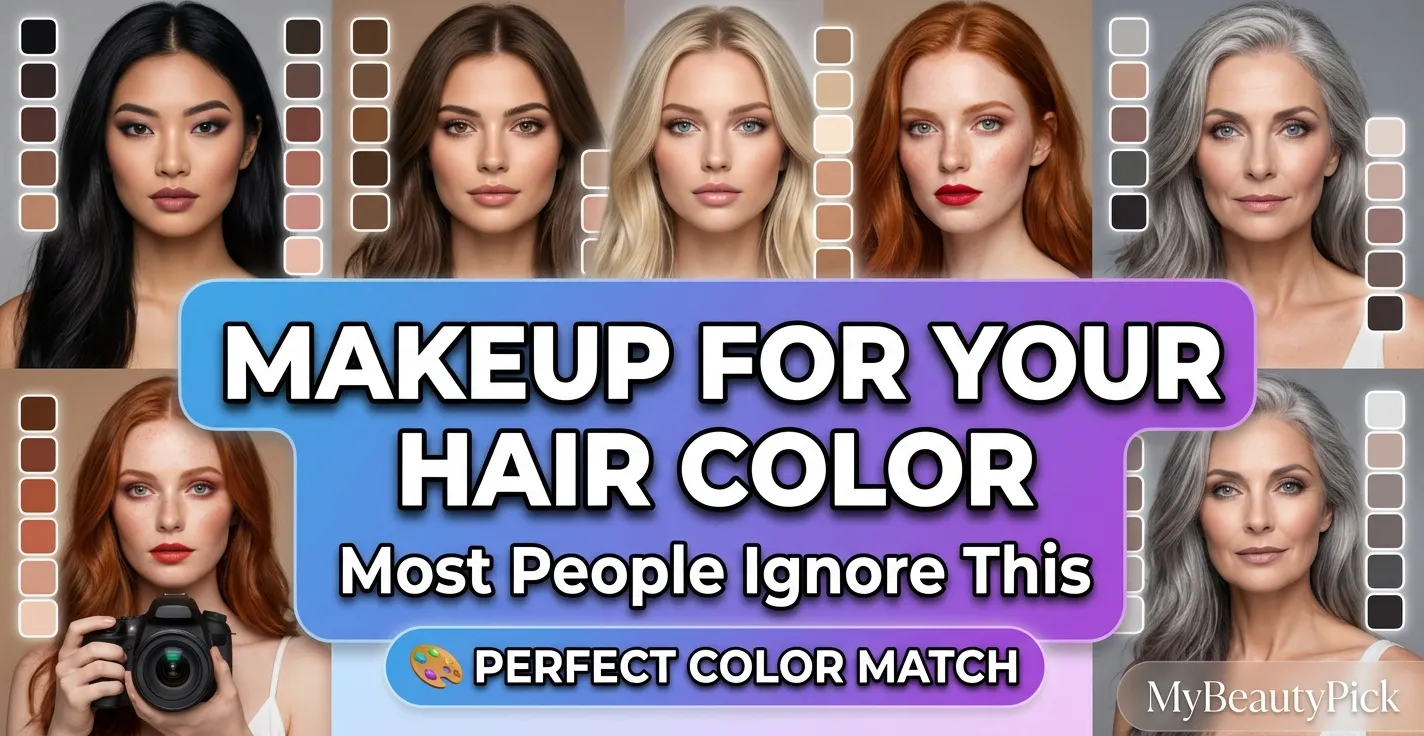
Your hair colour is one of the most visible elements of your overall appearance — and it directly influences which makeup colours work best on your face. Not because there are rigid rules, but because hair colour creates a surrounding contrast and warmth context that makes certain shades of blush, eyeshadow, and lip colour read as intentional and harmonious while others look disconnected or unexpected. Understanding that relationship gives you a significant advantage in building a makeup palette that works.
- Hair colour creates a contrast level and warmth context around the face — your makeup palette should either echo or intentionally contrast that context.
- Dark hair creates high contrast, which means both warm and cool makeup tones can work, but bold colours have more impact.
- Light or blonde hair creates a softer frame — cool or warm tones both work, but very dark, heavy makeup can overwhelm the delicate contrast.
- Red hair has the most specific palette requirements — warm golden, peachy, and earthy tones harmonise; cool blue-pinks and heavy browns can clash.
- Grey hair removes warm or cool colour from the hair context — it’s neutral, which means almost any makeup colour reads well, with some caveats.
Why Hair Colour Affects Your Makeup Palette
The face is never seen in isolation. It’s framed by hair, and the eye reads the face and hair as a single visual unit. The contrast level between your hair colour, skin tone, and eye colour determines how visible makeup colours are and how they register against the overall picture.
High contrast combinations — dark hair, fair skin, dark eyes — make makeup look more dramatic and vivid. Every colour choice registers clearly. The same eyeshadow that looks bold on this combination reads more muted on a softer, low-contrast combination.
Low contrast combinations — light hair, light skin, light eyes — have less visual contrast between elements. Heavy, dark makeup can overwhelm this combination. Soft, blended, and medium-intensity colours tend to read more naturally.
Hair warmth also matters. Warm hair tones (golden blonde, chestnut, auburn) suggest a warm palette context. Cool hair tones (ash brown, cool black, silver) suggest a cooler palette context. Makeup that echoes the warmth or coolness of the hair creates cohesion; makeup that creates deliberate contrast can be striking when done with intention.
Makeup for Dark Hair
What Dark Hair Creates
Dark hair — black, deep brown, dark espresso — creates the highest contrast frame around the face. Combined with any skin tone, dark hair makes the face look more vivid and any colour choice more impactful. This is the combination where bold makeup has its maximum effect.
Best Makeup Palette for Dark Hair
Eye Makeup
- Warm bronze, copper, and earth tones — complement any warm undertone in dark hair
- Deep berry, plum — rich contrast that reads editorial
- Smoky eye in warm brown or espresso shades — the high contrast frame makes it vivid
- Bold liner in black, dark brown, or electric blue
- Even soft neutral eyeshadow reads with definition against the dark hair contrast
Lip and Cheek
- Bold lip in warm red, deep plum, or terracotta — the contrast frame makes bold colour sing
- Warm nude to terracotta for everyday elegance
- Blush: coral, warm peach, terracotta — warm shades complement the dark warmth of the hair
- Berry blush in deeper shades for a winter editorial look
- Bronzer: warm, never ashy
What to consider: dark hair with very cool undertones (blue-black, cool espresso) can support cooler makeup tones — dusty rose, cool berry, plum — particularly when the skin also has cool undertones. Dark hair with warm undertones (dark brown, chestnut) is typically more harmonious with warm makeup choices.
Dark hair is one of the few combinations where both a bold eye and a bold lip can work simultaneously without the face reading as overdone — the high-contrast frame provides enough visual structure to support multiple strong elements. This doesn’t apply to lighter or softer hair colours, where the contrast is lower and competing bold elements read as too much.
Makeup for Medium Brown Hair
What Medium Brown Hair Creates
Medium brown hair — from light brown to medium chestnut — creates a moderate contrast frame. It’s versatile: warm enough to echo warm makeup tones, neutral enough to work with cooler choices. The medium contrast level means makeup has to do slightly more work to read clearly than on dark hair, but there’s less risk of makeup overwhelming the face than with very light hair.
Best Makeup Palette for Medium Brown Hair
Eye Makeup
- Warm taupe, warm brown, and bronze — natural extension of the hair’s warmth
- Soft copper or champagne shimmer — adds luminosity without high contrast
- Warm smoky eye in chocolate and espresso shades
- Soft plum or rose for a cooler direction
- Brown or soft black liner — bolder than the hair without overwhelming it
Lip and Cheek
- Warm nude to warm rose — reads natural and cohesive with medium brown hair
- Warm red or terracotta for bolder occasions
- Peach, coral, and warm rose blush — all work well
- Medium-depth berry for contrast without starkness
- Golden bronzer — the most harmonious finish with medium warm brown hair
Makeup for Light or Blonde Hair
What Blonde Hair Creates
Blonde hair — from golden blonde to platinum — creates a soft, low-contrast frame. The visual distance between light hair and skin is smaller than with dark hair, which means makeup colours need less intensity to register. Heavy, dark makeup on a soft blonde-skin combination can overwhelm the face. Soft, well-blended looks read more naturally and elegantly.
The distinction between warm and cool blonde matters significantly here. Golden or honey blonde has warm undertones that echo warm makeup choices. Ash or platinum blonde is cool-toned and sits more naturally with cooler makeup palettes — though warm choices work as deliberate contrast.
Best Makeup Palette for Blonde Hair
Golden Blonde
- Warm peach, warm rose, golden shimmer eyeshadow
- Soft copper shimmer lid — echoes the golden warmth
- Peach, coral, and warm rose blush
- Warm nude to apricot lips
- Soft warm bronzer for definition without heaviness
Ash / Platinum Blonde
- Cool rose, mauve, and soft lavender eyeshadow
- Silver or cool champagne shimmer lid
- Cool pink or dusty rose blush
- Cool nude or berry lips
- Light bronzer in neutral tones — avoid very warm orange bronzers
Very dark, heavily lined, or dramatic eye makeup on light blonde hair can look disproportionate — the hair creates a soft frame that heavy makeup overwhelms rather than enhances. This isn’t a rule, but it’s worth noting that the same smoky eye reads differently against platinum blonde hair than against dark brown hair. If you want drama with light hair, keep the eye soft and build drama through the lip instead, where the contrast reads as intentional rather than heavy.
Makeup for Red Hair
What Red Hair Creates
Red hair — from strawberry blonde to deep auburn — creates the warmest and most specific colour context of any hair colour. Red and orange pigments in the hair are strong and vivid, which means makeup choices either harmonise with that warmth or create clashing colour relationships. Red hair has the most specific palette requirements of any hair colour category.
Best Makeup Palette for Red Hair
Harmonising (Warm Echo)
- Warm golden, copper, and bronze eyeshadow
- Peach, coral, and warm terracotta blush
- Warm nude and peach lips
- Warm red lip (brick or orange-base) for a bold monochromatic warmth look
- Gold or warm champagne highlight
Contrasting (Intentional Cool)
- Green eyeshadow — the direct complement to red on the colour wheel
- Teal liner — creates vivid intentional contrast
- Burgundy or deep plum lips — enough cool in the purple to contrast the red hair
- Dusty rose blush — cooler than coral but warm enough not to clash
What to avoid with red hair: cool blue-pink eyeshadow and blush that has no warmth connection to the hair; orange-based lip colour that is too close to the hair colour and creates a monochromatic overload; heavy brown eyeshadow that reads muddy against the red-orange warmth of the hair.
Makeup for Grey Hair
What Grey Hair Creates
Grey hair — from salt-and-pepper to full silver to white — is the most versatile hair colour context for makeup. Because grey is neutral, it doesn’t create a warm or cool bias. This means almost any makeup colour palette works without clashing with the hair’s warmth or coolness.
The real consideration with grey hair is contrast. Grey hair naturally reduces the overall contrast level of the face, which means makeup has an important role in providing definition and warmth that the hair no longer supplies. Many people find their complexion looks more vibrant and alive with warmer blush and lip shades after their hair greys — the warmth contrast that hair used to provide needs to come from somewhere, and makeup is the most effective way to supply it.
Best Makeup Palette for Grey Hair
For Definition and Warmth
- Warm peach or coral blush — one of the most flattering choices against grey hair on any skin tone
- Warm nude to terracotta lip — adds warmth without heaviness
- Golden or warm champagne eyeshadow — adds luminosity that grey hair can diminish
- Defined brow colour matched to former hair colour — grey hair often lightens brows, which reduces facial definition
For Sophistication and Edge
- Soft plum or lavender eyeshadow — echoes the silvery quality of the hair
- Berry or cool rose lips — a deliberate cool contrast that reads as modern and intentional
- Silver highlight — harmonises with the hair’s metallic quality
- Bold red lip — high contrast against grey hair creates a striking classic look
As hair turns grey, brows often lighten to grey or white as well. Undefined, pale brows significantly reduce facial definition and can make the face appear flat. Filling brows with a warm brown pencil — not grey, which fades into the skin — is one of the highest-impact makeup changes available to someone with grey hair. The brow colour doesn’t need to match the hair; it needs to define and frame the face.
When You Change Your Hair Colour
Changing hair colour means your existing makeup palette may need adjustment. This is not hypothetical — professional makeup artists routinely update their clients’ makeup recommendations following a significant hair colour change, because the frame around the face has changed.
The most common adjustments needed after hair colour change:
- Going darker: blush and lip colour can be slightly more saturated — the contrast frame supports it now
- Going lighter or blonde: shift blush and eyeshadow toward warmer, softer versions; pull back on liner intensity initially
- Going warm (red, chestnut, auburn): shift toward warmer makeup tones; cool-pink products need reassessment
- Going grey or silver: increase blush pigment and warmth to compensate for reduced hair warmth; reassess brow colour
Frequently Asked Questions
Does hair colour affect what makeup shades look best?
Yes, directly. Hair colour creates a contrast level and warmth context around the face that influences how makeup colours read. Dark hair creates high contrast that makes bold makeup more impactful. Light or blonde hair creates a softer frame where very dark or heavy makeup can overwhelm the face. Red hair creates a warm colour context that makes certain shades — particularly warm earthy and golden tones — more harmonious than cool blue-pink shades. Grey hair is neutral, giving maximum makeup palette flexibility.
What blush suits dark hair?
Warm and bold blush shades work best with dark hair — coral, warm peach, terracotta, and deep berry all read well against the high-contrast frame that dark hair creates. The contrast level of dark hair means blush can be slightly more pigmented than with lighter hair without looking excessive. For dark hair with cool undertones (blue-black, cool espresso), cool rose and dusty rose blush can also be very flattering as a deliberate cool-complement choice.
What lip colours look best with red hair?
The most reliably flattering lip shades for red hair: warm nude-peach, warm terracotta, soft coral, and warm rose on the subtle end; warm red (orange or brick base), deep burgundy-plum, and berry on the bolder end. The key is warmth — cool blue-pinks and cool mauves tend to clash with the warm orange-red tones in red hair. Green-family or teal liner is an effective contrast choice for the eyes, as green is the direct colour-wheel complement to red.
Should grey hair change your makeup routine?
It typically warrants some adjustment. Grey hair reduces the overall warmth and contrast of the face — warmth that hair used to provide now needs to come from makeup instead. Most people find warmer blush (peach, coral), slightly more defined brows (filled with warm brown, not grey), and a warmer or more pigmented lip shade makes their complexion look more vibrant after their hair greys. The specific adjustments depend on your skin tone, but adding warmth and definition is the consistent direction.