

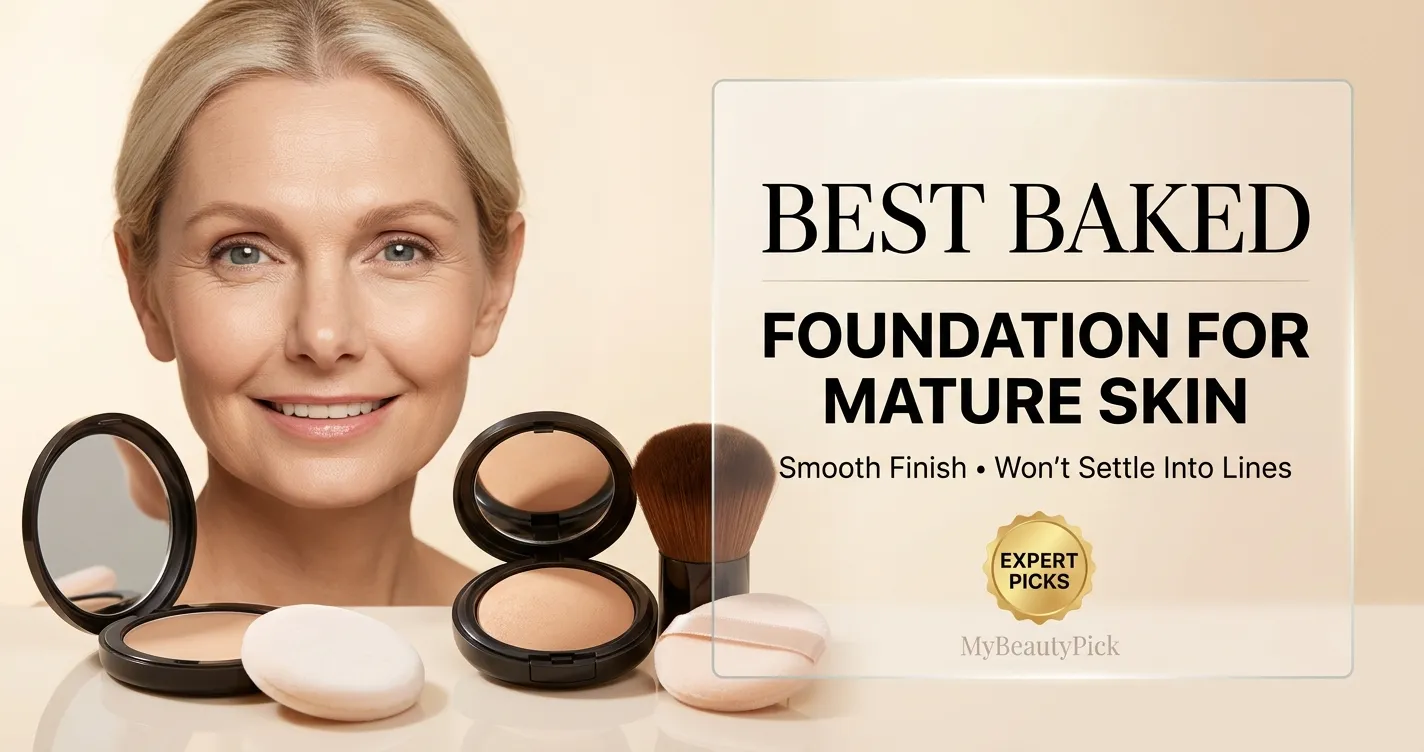
The best baked foundation for mature skin is Laura Geller Baked Balance-n-Brighten, the formula that essentially built this category, thanks to marbleized, self-adjusting pigments that color-correct without settling into fine lines. Lorac Porefection Baked Perfecting Powder is the strongest genuine alternative for anyone wanting similar crease-resistant coverage from a different brand, while NYX #NoFilter Finishing Powder delivers the same baking process at a fraction of the price.
Laura Geller earned its category-defining reputation honestly, the formula genuinely behaves differently than standard pressed powder on mature skin. That said, it’s not the only baked foundation worth knowing about. Lorac Porefection, MAC Mineralize Skinfinish, and even NYX’s budget version use the same terracotta-baking process and can be reasonable alternatives depending on your coverage needs, skin concerns, and budget.
What Is “Baked” Foundation, Exactly?
Baked foundation starts its life as a wet, swirled cream pigment rather than a pre-pressed powder. That cream gets poured onto terracotta tiles and cured under heat for an extended period, traditionally up to 24 hours for the artisanal Italian process Laura Geller’s formula is known for, which slowly evaporates the moisture and fuses the pigments into a dense, semi-baked cake.
The result behaves differently from a standard pressed powder, which is typically just powder ingredients compressed into a pan with a binder. Baked formulas retain a creamier, more velvety texture because of how the curing process works, and the marbled, swirled pigment pattern you see in the pan isn’t decorative, it’s multiple shades of pigment baked together so the product can subtly self-adjust as you blend it across different areas of your face.
Why Baked Foundation Works So Well for Mature Skin
The texture difference matters most here. Standard pressed powder sits on top of skin and tends to grab onto dry patches and fine lines, which is exactly the texture mature skin is most likely to have. Baked foundation’s creamier consistency, a result of the slow baking process rather than simple compression, blends into skin instead of sitting on the surface, which is why it’s far less prone to looking cakey or settling visibly into creases around the eyes and mouth.
The multi-toned, marbleized pigments add a second advantage specific to color-correcting. Rather than a single flat shade, baked formulas typically swirl several complementary tones together, which means the product can subtly neutralize redness or balance dullness as it goes on, without needing a separate color corrector underneath. Many baked formulas, including Laura Geller’s line, are also formulated with antioxidants like vitamin E and green tea extract, which won’t reverse signs of aging but can support comfort and hydration through a full day of wear, qualities that matter more on mature skin than on skin with stronger natural oil production.
Quick Comparison Table
| Product | Coverage | Finish | Shades | Price | Best For |
|---|---|---|---|---|---|
| Laura Geller Baked Balance-n-Brighten | Light to medium, buildable | Natural, demi-matte | 9 | $38 | Color correction, everyday wear, rosacea-prone skin |
| Laura Geller Baked Balance-n-Glow | Sheer to light, buildable | Satin, luminous | 9 | $38 | Dewy mature skin wanting added radiance |
| Laura Geller Double Take | Medium to full | Breathable matte | 9 | $38 | More coverage without losing the baked texture benefit |
| Lorac Porefection Baked Perfecting Powder | Light to medium | Smooth, matte | Several, by undertone code | $36 | Acne-prone or sensitive mature skin, salicylic acid formula |
| MAC Mineralize Skinfinish | Light, buildable | Soft, luminous | Wide range | $34 | Layering over liquid foundation, finishing touch |
| NYX #NoFilter Finishing Powder | Light | Natural, soft-focus | Limited | $12 | Budget entry point into baked formulas |
The Best Baked Foundations for Mature Skin
1. Laura Geller Baked Balance-n-Brighten Color Correcting Foundation
This is the formula that put baked foundation on the map for mature skin specifically, and it earns the reputation. Multiple color-correcting pigments are baked together so the product self-adjusts across redness, dark spots, and uneven tone in a single swipe, and the texture reads as genuinely creamy rather than powdery once it’s on skin. It carries the National Rosacea Society’s seal of acceptance and recognition from the National Psoriasis Foundation, which reflects real testing for compatibility with sensitive, reactive skin rather than just marketing language.
The trade-off is coverage level. This is a light-to-medium formula by design, buildable with layering but not built for full coverage out of the gate. If you need to fully conceal significant pigmentation or scarring, this isn’t the right pick on its own, Laura Geller’s own Double Take formula exists specifically for that heavier need.
2. Laura Geller Baked Balance-n-Glow Illuminating Foundation
A lighter-coverage sibling to Balance-n-Brighten, built around a small percentage of pearl pigment that adds a soft, satin glow rather than the more natural matte finish of the original. On mature skin, this kind of subtle shimmer can be risky, shimmer often emphasizes texture and fine lines rather than disguising them, but the pearl content here is genuinely minimal, which is why it manages to brighten without drawing attention to texture the way a heavier-handed luminizer would.
This is the right choice if your skin already looks fairly even and you mainly want a healthy glow rather than meaningful color correction. If redness or noticeable discoloration is your main concern, the original Balance-n-Brighten formula handles that better.
3. Laura Geller Double Take Baked Full Coverage Foundation
For mature skin that needs more coverage than the brand’s signature formula provides, Double Take uses the same baked process but builds in noticeably more pigment density for a fuller, breathable matte finish. The included dual-sided sponge, one side for dry application and a denser matte result, the other for wet application and heavier coverage, gives genuine flexibility depending on the day.
Because it leans more matte and full-coverage, it’s slightly more prone to looking heavy if over-applied on very dry, mature skin. A hydrating primer underneath makes a real difference here, more so than with the brand’s lighter formulas.
4. Lorac Porefection Baked Perfecting Powder
The strongest non-Laura-Geller alternative, and a genuinely different formula rather than a simple copy. Porefection uses the same baking process for a smooth, crease-resistant texture, but adds salicylic acid to the formula, a detail that makes it a more sensible pick than Laura Geller’s lineup if you’re dealing with both mature skin and occasional breakouts, a combination that’s more common than most “mature skin” content acknowledges.
The shade range runs narrower than Laura Geller’s marbleized system and doesn’t self-adjust across tones the same way, so shade matching takes a bit more care. For mature, acne-prone, or texture-sensitive skin specifically, that trade-off is often worth it.
5. MAC Mineralize Skinfinish
Less commonly marketed as a stand-alone foundation and more often used as a finishing layer over liquid or cream foundation, but the baked, mineralized formula offers the same crease-resistant benefit in a lighter, more buildable amount. This is a strong option if you already have a liquid foundation you like and want a baked powder specifically to set it without adding a heavy, flat layer on top.
It won’t function well as a true standalone foundation for anyone needing meaningful coverage on its own, it’s genuinely sheer. Think of this as a complementary product to the dedicated baked foundations above rather than a direct substitute.
6. NYX #NoFilter Finishing Powder
Built using the same fundamental baking process as far pricier options, at a fraction of the cost. It won’t match Laura Geller’s marbleized, multi-tone color correction or its dermatologist-tested claims, and the shade range is genuinely limited, but the underlying texture benefit, less likely to settle into fine lines than standard pressed powder, holds up. This is the right starting point if you want to test whether baked formulas suit your skin before investing in a pricier option.
If you’re switching from a standard pressed powder for the first time, expect a learning curve in application pressure. Baked formulas respond better to pressing and pat-blending than to swiping the way you would with traditional powder, swiping tends to pick up less product and can streak.
Is Baked Foundation Good for Sensitive Skin, Rosacea, or Dry Patches?
For rosacea specifically, baked formulas with documented testing, like Laura Geller’s National Rosacea Society-accepted formulas, are a reasonable choice. The lack of added moisture in a finished baked product (it’s fully cured, not a cream) means less risk of the kind of occlusive buildup that can sometimes trigger flushing in reactive skin, though everyone’s triggers vary and patch testing is still worth doing.
For genuinely dry, flaky patches, baked foundation performs better than standard pressed powder but isn’t a complete solution on its own. The creamier texture grips onto dry texture less aggressively, but a hydrating primer and well-moisturized skin underneath still matter more than the foundation formula itself when dryness is significant. For hyperpigmentation specifically, the multi-toned marbleized pigments in Laura Geller’s formula genuinely help camouflage dark spots more effectively than a single flat shade would, which is part of why it’s become a go-to recommendation for that specific concern.
How to Apply Baked Foundation for the Best Finish
A densely packed kabuki brush is the standard tool for baked foundation, and the density matters more than the brush shape. Swirl the brush directly into the product to pick up a mix of the marbled tones, then press, rather than swipe, the brush onto skin in light layers, building coverage gradually rather than loading on one heavy pass. A dense, flat-top brush built specifically for powder foundation will give more controlled, even coverage than a fluffy all-purpose face brush.
A damp sponge is the alternative method, and it genuinely changes the result, a wet application activates more pigment and delivers noticeably heavier coverage than a dry brush. This is useful for building toward fuller coverage with the same product rather than switching formulas entirely.
Baked vs. Regular Pressed Powder Foundation: What’s the Real Difference?
Standard pressed powder is made by compressing dry powder ingredients with a binder directly into the pan, a fast, inexpensive manufacturing process. Baked foundation starts wet and is cured slowly under heat, which changes the final texture at a molecular level, the result is less compacted and more porous, which is why it picks up and blends more like a cream despite being a powder.
In practical terms, this means baked formulas generally look less flat and matte than standard pressed powder, blend more seamlessly into skin texture, and are less prone to visibly sitting in fine lines. Standard pressed powder isn’t inherently bad, it’s often more affordable and can offer more consistent matte coverage for oilier skin types, but for mature skin specifically prioritizing a natural, second-skin look, the baked process delivers a meaningfully different result.
Frequently Asked Questions
What is the best baked foundation for mature skin?
Laura Geller Baked Balance-n-Brighten is the most established and widely recommended pick, thanks to its color-correcting marbleized pigments and dermatologist-tested formula. Lorac Porefection Baked Perfecting Powder is a strong alternative if you also deal with breakouts, since it includes salicylic acid.
Is baked foundation good for dry or mature skin, or will it look cakey?
Baked foundation generally looks less cakey than standard pressed powder on mature skin because the curing process creates a creamier, more blendable texture. It’s not immune to looking heavy if over-applied on very dry skin, so prepping with a hydrating primer still matters.
How is baked foundation different from regular pressed powder?
Pressed powder is dry ingredients compressed into a pan. Baked foundation starts as a wet cream and is slowly cured under heat, traditionally on terracotta tiles, which creates a less compacted, more porous texture that blends more like a cream and is less likely to sit visibly in fine lines.
Can baked foundation help with rosacea or redness on mature skin?
Several baked formulas, including Laura Geller’s line, carry National Rosacea Society acceptance and are formulated with skin-calming ingredients like green tea extract. The marbleized, multi-toned pigments also help visually neutralize redness as part of the application itself.
What’s the best brush or tool to apply baked foundation?
A densely packed kabuki brush, used with a press-and-pat motion rather than swiping, gives the most even, buildable result. A damp sponge is the alternative for heavier coverage, since wetting the sponge activates more pigment from the formula.
Final verdict
Laura Geller earned its dominance in the baked foundation category honestly, the formula’s marbleized, self-adjusting pigments and genuinely crease-resistant texture solve real problems mature skin has with standard powder. It isn’t the only option worth knowing, though. Lorac Porefection is a legitimate alternative for acne-prone mature skin, and NYX’s budget version proves the underlying baking process delivers real benefit even without the premium price tag. Match the specific formula to your coverage need and skin concern rather than assuming one baked foundation fits every mature-skin situation.